

How to Organize Your Wardrobe: Complete Guide to Clothing Organization (2026)
The most effective way to organize your wardrobe starts with one simple yet often overlooked step - remove all clothing from your closet first. By completely emptying your closet, you can see the true condition of your clothing collection, identify which pieces are still worth keeping, and design a better organizational system from scratch. This article walks you through step-by-step how to transform a messy closet into an organized, easy-to-maintain wardrobe space.
According to surveys conducted by several e-commerce platforms in Indonesia, the average person only wears 20-30% of their total wardrobe. The rest accumulates in the closet - forgotten, doesn't fit, or no longer matches their style. As a result, your closet feels full and cramped even though many pieces go unworn. With the right organizational system, you not only get a neat closet but also save time every morning choosing an outfit.
Step 1 - Completely Empty Your Closet
This is the most important and psychologically challenging step. Remove all clothing without exception - shirts, pants, skirts, jackets, underwear, accessories, and everything stored in your closet. Place everything on your bed or a clean floor.
Once your closet is empty, clean the inside thoroughly. Wipe all surfaces with a damp cloth, clean dust from corners, and ensure there's no mold or musty smell. If there's a smell, sprinkle baking soda on the bottom of the closet for a few hours before wiping clean.
Step 2 - Sort and Categorize Your Clothing
This is where the magic happens. Hold each piece of clothing and decide which category it belongs to:
- Keep - clothing you regularly wear, in good condition, and still fits you - Donate - clothing still in good condition but you haven't worn in the last 6-12 months - Discard - clothing that's damaged, permanently stained, or can't be repaired - Uncertain - put in a separate box, keep for 3 months. If you don't open it in 3 months, donate it
KonMari Method for Sorting Clothing
Marie Kondo teaches a simple yet powerful method - hold each piece of clothing and ask yourself: does this clothing still bring me joy? If yes, keep it. If no, thank it and let it go. This method sounds simple, but it's very effective in helping you make firm decisions about which clothing truly needs to be kept.
Step 3 - Categorize Your Clothing
After sorting, group the clothing you're keeping by category. The most practical categorization system for Indonesia's climate:
- Everyday wear - t-shirts, casual shirts, shorts, casual skirts 2. Work and formal wear - formal shirts, dress pants, blazers, formal skirts 3. Sleepwear and loungewear - pajamas, housedresses, undershirts 4. Sportswear - jerseys, training pants, sports bras 5. Special occasion wear - batik, kebaya, galabiya, suits (rarely worn but still important) 6. Outerwear - jackets, hoodies, sweaters 7. Underwear and accessories - underwear, socks, belts, scarves
Step 4 - Efficient Folding Techniques
The right folding technique can increase your closet capacity by up to 50% without adding physical space. Here are the best techniques you can apply:
KonMari Folding Method (Standing Fold)
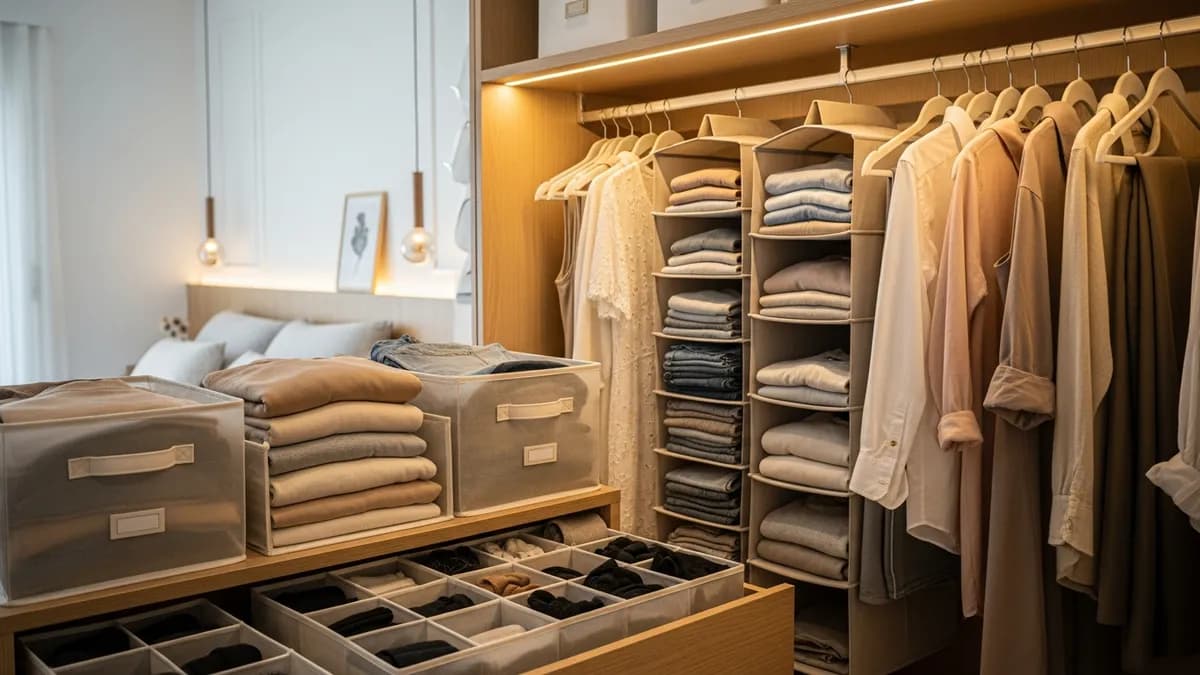
Marie Kondo's folding technique creates small rectangular-shaped clothing that can stand upright in drawers. The advantage - you can see all your clothing at once without stacking.
How to fold a t-shirt using the KonMari method:
- Lay the shirt flat facing down 2. Fold the right side to the center (about one-third) 3. Fold the sleeve back in the opposite direction 4. Repeat for the left side 5. Fold the bottom half up into two or three sections until it forms a small rectangle that can stand
Roll Folding Technique
Suitable for t-shirts, underwear, and shorts. Clothing is rolled tightly from bottom to top. This technique saves space and reduces wrinkles on certain fabrics.
File Folding Technique
Store folded clothing vertically like files in drawers, not stacked. This way, removing one piece won't disturb the others.
Step 5 - Arrange Your Closet Layout
Each section of your closet has its own optimal function. Here's a guide for efficient layout:
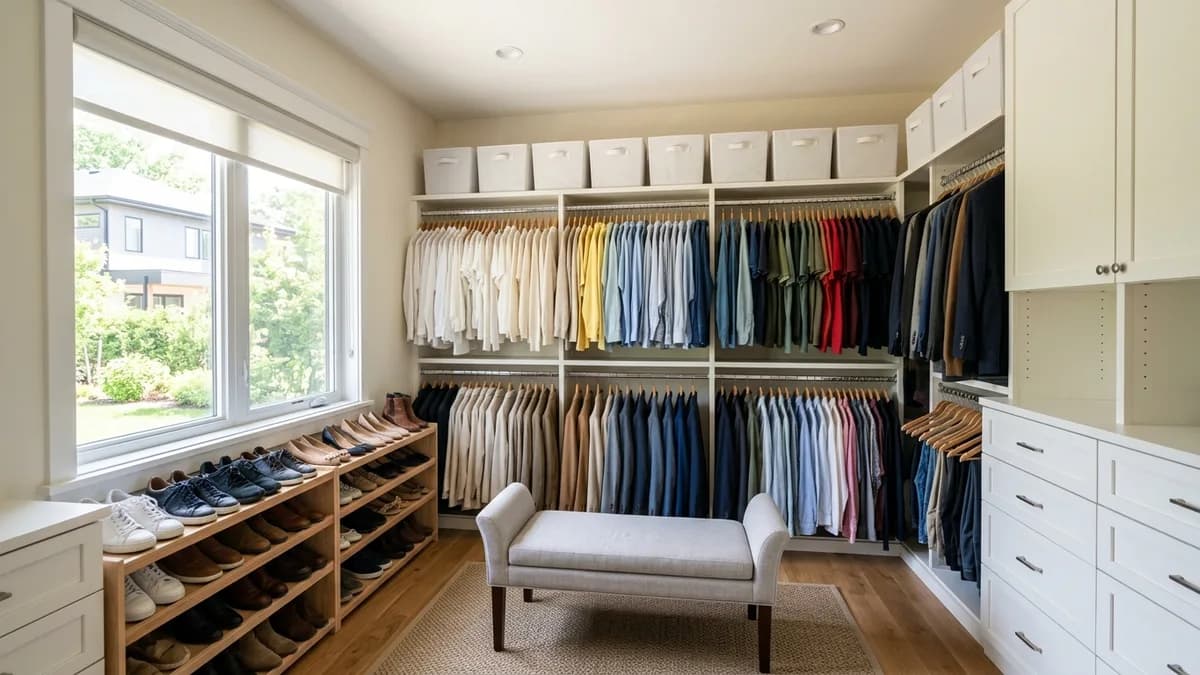
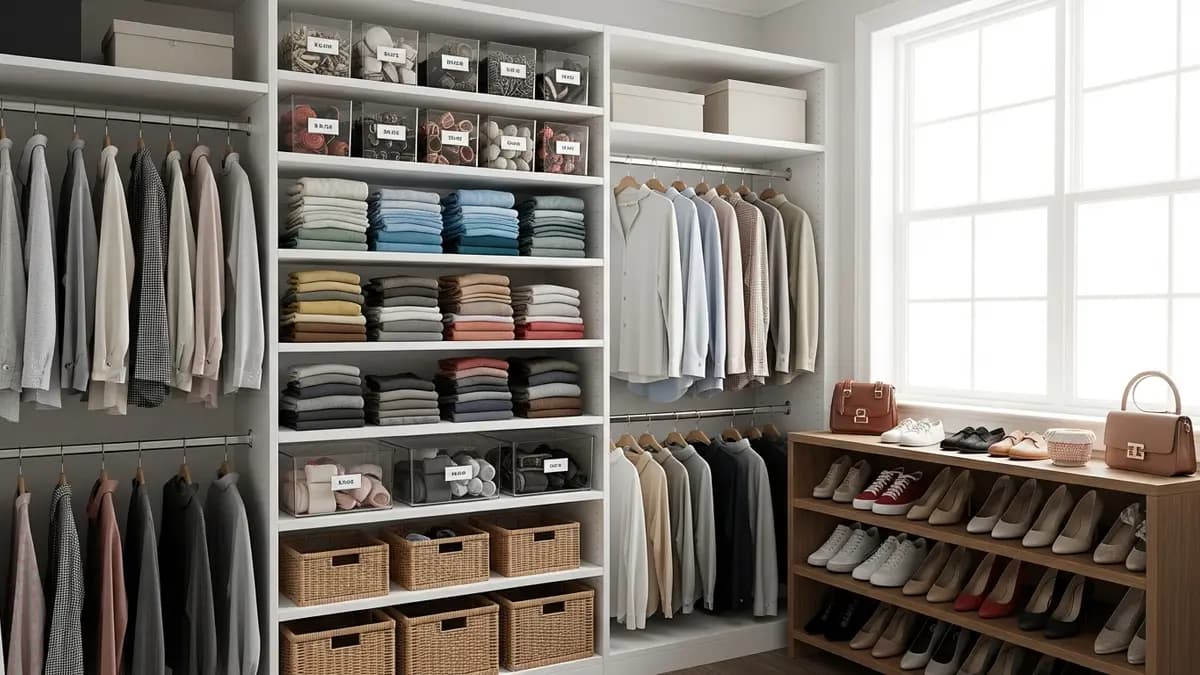
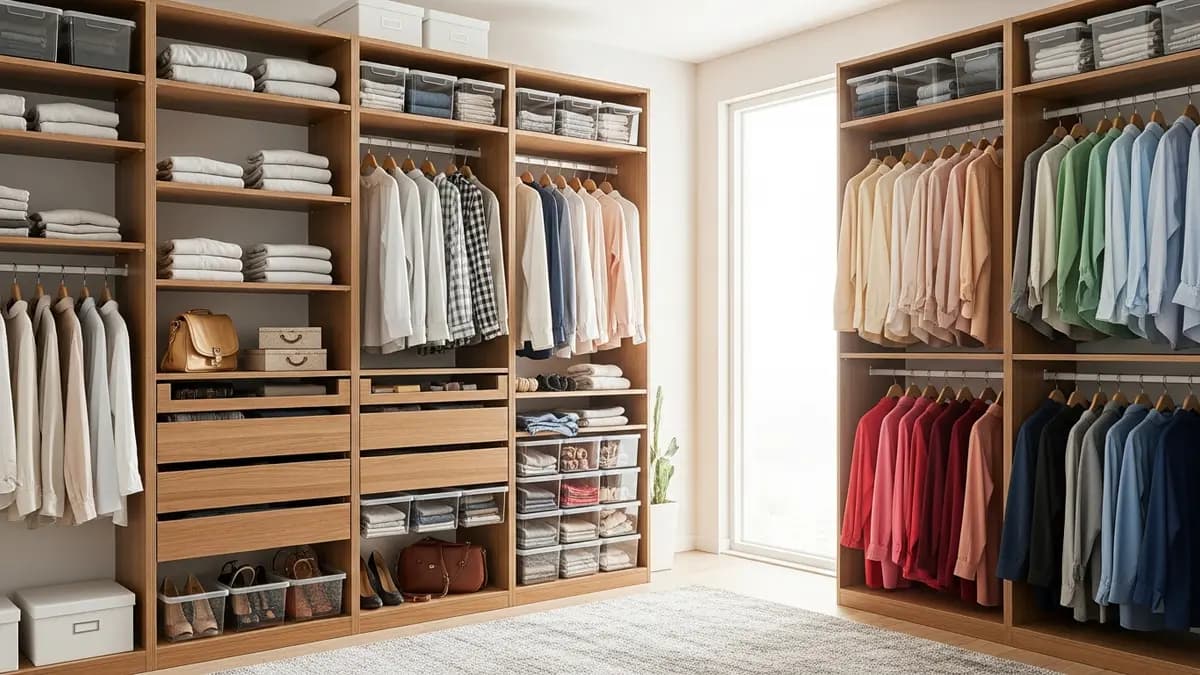
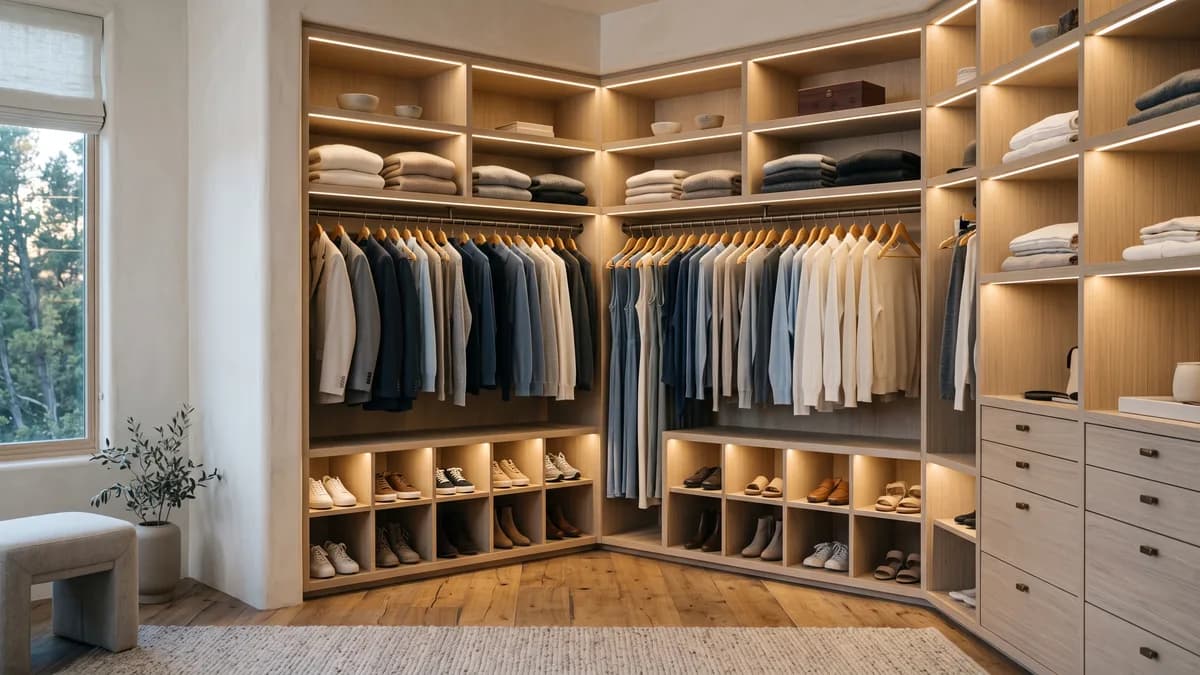
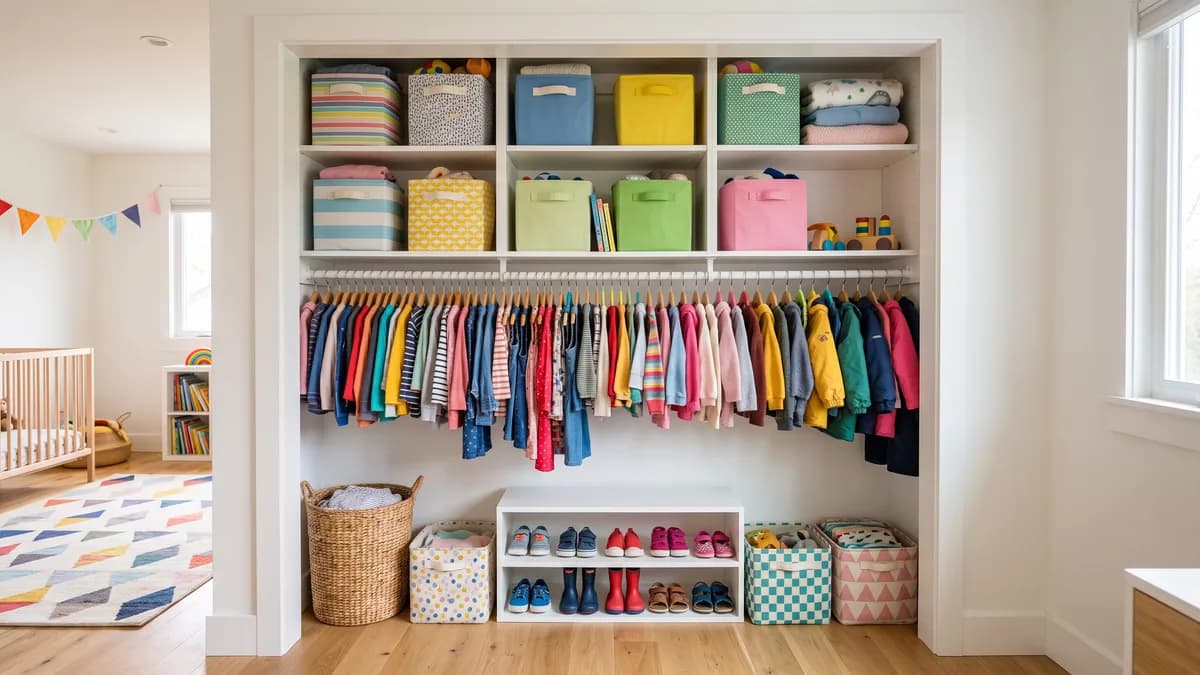
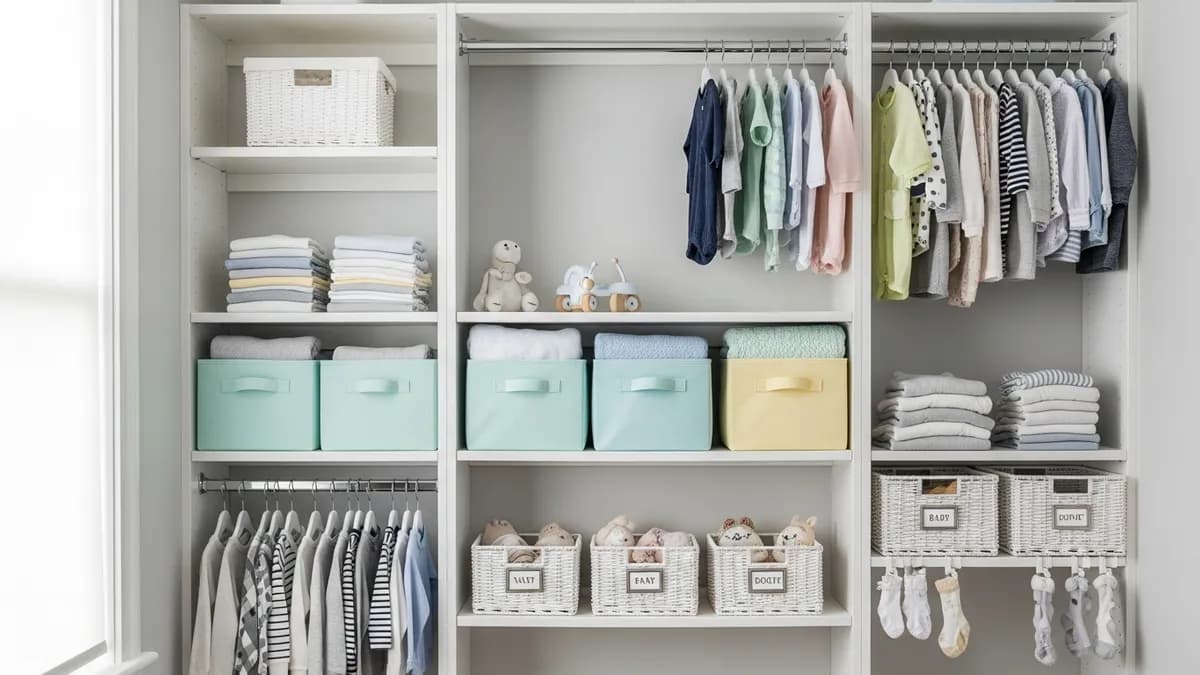
| Closet Section | Type of Clothing | Reason | --- | --- | --- | Upper shelf | Rarely worn clothing, blankets, extra pillows | Doesn't need frequent access | Main hanging rod | Shirts, blazers, dresses, batik | Maintains shape and prevents wrinkles | Middle shelf | Folded t-shirts, folded pants | Easy to reach for daily wear | Drawers | Underwear, socks, small accessories | Neatly hidden and organized | Lower shelf | Jeans that can be stacked, bags | Easy to grab without bending too far |
|---|
Tips for Proper Hangers
- Use velvet hangers for slippery clothing so they don't fall - Wooden hangers for blazers and jackets to maintain shoulder shape - Avoid wire hangers as they can damage clothing shape - Point all hangers in one direction for a neat appearance
Closet Organizers and Accessories You Should Have
Investing in the right organizers will make a huge difference in maintaining your wardrobe's neatness:
- Drawer dividers - divide drawers into small compartments for underwear, socks, and accessories - Shelf dividers - vertical separators on shelves to prevent stacks of clothing from tipping over - Hanging organizers - hanging organizers with pockets for storing scarves, belts, or small bags - [Storage boxes](/blog/storage-box-terbaik-untuk-organisasi-rumah) - labeled storage boxes for rarely used clothing - Vacuum bags - vacuum bags for storing thick clothing like blankets and heavy jackets to save space
Weekly Home Tips
Get home organization ideas, product picks, and exclusive deals delivered weekly.
No spam. Unsubscribe anytime.