Minimalist House Floor Plans: Type 36, 45, Up to 70
Choosing the right minimalist house floor plan is the first step toward creating a comfortable and functional home. Whether you're planning a new house or want to renovate an existing one, understanding space division for types 36, 45, up to 70 will help you make better and more directed design decisions.
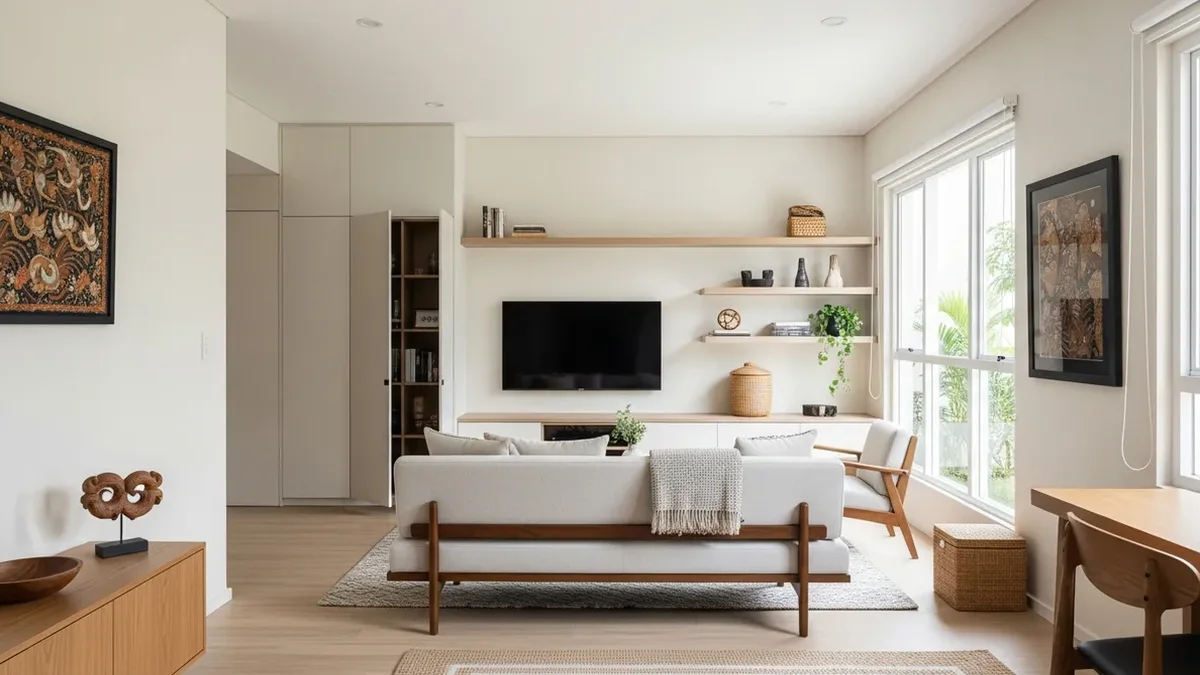
A minimalist house doesn't mean a small or simple one. The minimalist concept refers to space efficiency - every square meter has a clear function and no space is wasted. With the right minimalist house floor plan, even a type 36 house can feel spacious and comfortable for a small family.
Understanding House Types in Indonesia
Before discussing floor plans, it's important to understand what the number in a house type means. This number indicates the building area in square meters, not the land area. A type 36 house means the building area is 36 square meters, which could be built on land ranging from 60, 72, or even 100 square meters.
| House Type | Building Area | Typical Land | Best For | Number of Bedrooms |
|---|---|---|---|---|
| Type 36 | 36 m2 | 60-72 m2 | Newlyweds, small family (1-2 children) | 2 rooms |
| Type 45 | 45 m2 | 72-90 m2 | Small-to-medium family (2-3 children) | 2-3 rooms |
| Type 54 | 54 m2 | 90-120 m2 | Medium family | 3 rooms |
| Type 60 | 60 m2 | 100-150 m2 | Medium family | 3 rooms |
| Type 70 | 70 m2 | 120-200 m2 | Large family | 3-4 rooms |
Choosing a minimalist house floor plan should consider not only the current number of family members, but also plans for family growth in the future and the possibility of building expansion.
Minimalist House Floor Plan Type 36: Maximum Efficiency
Type 36 is the most commonly built house type in subsidized and commercial residential areas in Indonesia. With only 36 square meters, the main challenge is dividing the space for all basic needs without feeling cramped.
Standard Space Division Type 36
Type 36 floor plans typically consist of:
- Living/family room - 9-12 m2 (often combined into one multifunctional space)
- Master bedroom - 9 m2 (3x3 meters)
- Second bedroom - 6-7 m2 (2x3 or 2.5x3 meters)
- Kitchen - 4-5 m2 (often an open kitchen)
- Bathroom - 3-4 m2
- Front porch - 2-3 m2
Design Tips for Type 36
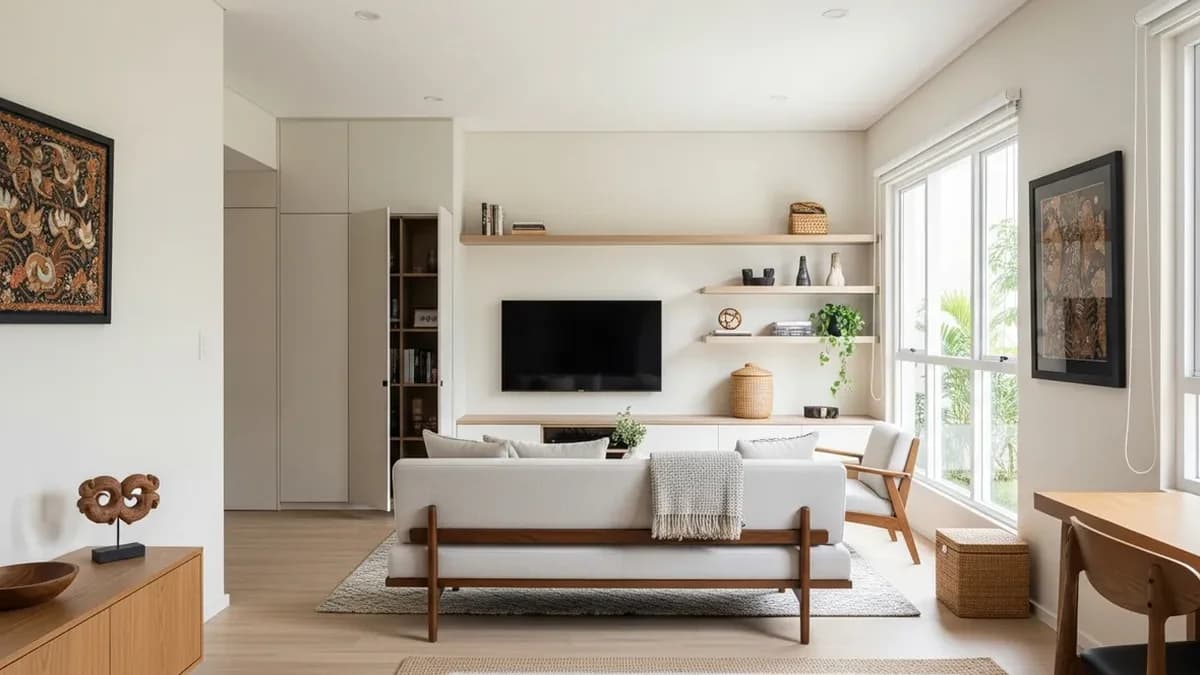
The key to successful type 36 design is the open plan concept. Combine the living room, dining area, and kitchen into one open area without permanent partitions. This will make the house feel much larger than its actual size.
For storage, utilize every vertical space. Install wall shelves along the corridor, use beds with drawers underneath, and choose multifunctional furniture like sofa beds or folding tables. Sesoris' versatile shelving collection is perfect for this type of house because its design is compact yet has large capacity.
Minimalist House Floor Plan Type 45: Balance of Space and Function
Type 45 offers an additional 9 square meters compared to type 36 - and this difference is quite significant. With this extra space, you can have a third bedroom or a more comfortable separate dining area.
Standard Space Division Type 45
- Living room - 9-10 m2 (can be separate from family room)
- Dining/family room - 6-8 m2
- Master bedroom - 9-10 m2 (can have ensuite bathroom)
- Second bedroom - 7-8 m2
- Kitchen - 5-6 m2
- Bathroom - 3-4 m2
- Porch - 3-4 m2
Type 45 Floor Plan Variations
There are several popular variations of minimalist house floor plans for type 45 in Indonesia:
- Linear layout - suitable for land measuring 6x12 meters. Rooms are arranged front to back with a side corridor as access
- Square layout - for land 7.5x10 or 8x9 meters. More flexible because room proportions are more balanced
- Two-story layout - building upward with only 22.5 m2 per floor, suitable for very small land in urban areas
For type 45 with a linear layout, make sure there's light openings in the middle of the house - could be a skylight or small void - so the interior isn't dark and stuffy.
Minimalist House Floor Plan Type 60: Comfortable Space
Type 60 starts to provide true comfort. With 60 square meters, each room can have adequate size and still leave room for transition areas like corridors and foyers.
Type 60 Advantages
- Can have 3 bedrooms with standard size (3x3 meters)
- Kitchen can be separate from dining area with adequate space for a complete kitchen set
- Living room is large enough to receive guests without feeling cramped
- Room for a second bathroom (guest bathroom)
- Carport can be integrated into the design without sacrificing interior space
For kitchen inspiration for this type, see the guide on minimalist kitchen design which discusses layouts for various kitchen sizes.
Minimalist House Floor Plan Type 70: Design Flexibility
Type 70 is a very flexible type. With 70 square meters, you have the freedom to add special rooms like a study, separate pantry, or even a closed laundry room.
Ideal Space Division Type 70
| Room | Minimum Area | Ideal Area | Notes |
|---|---|---|---|
| Living room | 10 m2 | 12-15 m2 | Can be combined with foyer |
| Family room | 9 m2 | 12 m2 | Main family gathering area |
| Master bedroom | 10 m2 | 12-15 m2 | Includes small walk-in closet |
| Bedroom 2 | 8 m2 | 9 m2 | Enough for bed and study desk |
| Bedroom 3 | 7 m2 | 8 m2 | For child or guest |
| Kitchen | 6 m2 | 8 m2 | Enough for L-shaped kitchen set |
| Master bathroom | 4 m2 | 5 m2 | With separate shower |
| Second bathroom | 2.5 m2 | 3 m2 | Toilet and sink |
Type 70 Layout Options
- Single storey (one floor) - requires minimum 120 m2 of land. All rooms are on one level, ideal for families with elderly members
- Split level - utilizes differences in floor height to create different zones without permanent walls
- Two stories - very popular because it saves land. Lower floor for public areas (living, dining, kitchen), upper floor for private areas (bedrooms)
Principles of Minimalist House Floor Plan Design
Regardless of which house type you choose, there are universal principles to consider when designing a minimalist house floor plan:
1. Air Circulation and Natural Light
A minimalist house must have cross ventilation. Make sure every room has at least one openable window. For houses with linear layout, a void or light well in the middle of the house is essential so air and light can reach all rooms.
2. Circulation Flow
Pay attention to how residents move from one room to another. The route from the entrance to bedrooms shouldn't pass through the kitchen. The kitchen should be directly accessible from the dining area and service area (laundry, drying rack).
3. Space Zoning
Divide the house into three main zones:
- Public zone - living room, porch (near entrance)
- Semi-private zone - family room, dining area, kitchen (in the middle)
- Private zone - bedrooms, bathrooms (at the back or upper floor)
Storage Solutions for Each House Type
Minimalist houses demand smart storage systems. The smaller the house type, the more creative storage solutions need to be.
Storage for Type 36-45
- Utilize the space under stairs (if two stories) for built-in cabinets
- Use storage boxes that can be stacked to store seasonal items
- Install storage cabinets with slim-fit design that don't take up much floor space
- Choose beds with drawers underneath or storage ottomans as side tables
Storage for Type 60-70
- Dedicate one small area (1-2 m2) as a pantry or storage room
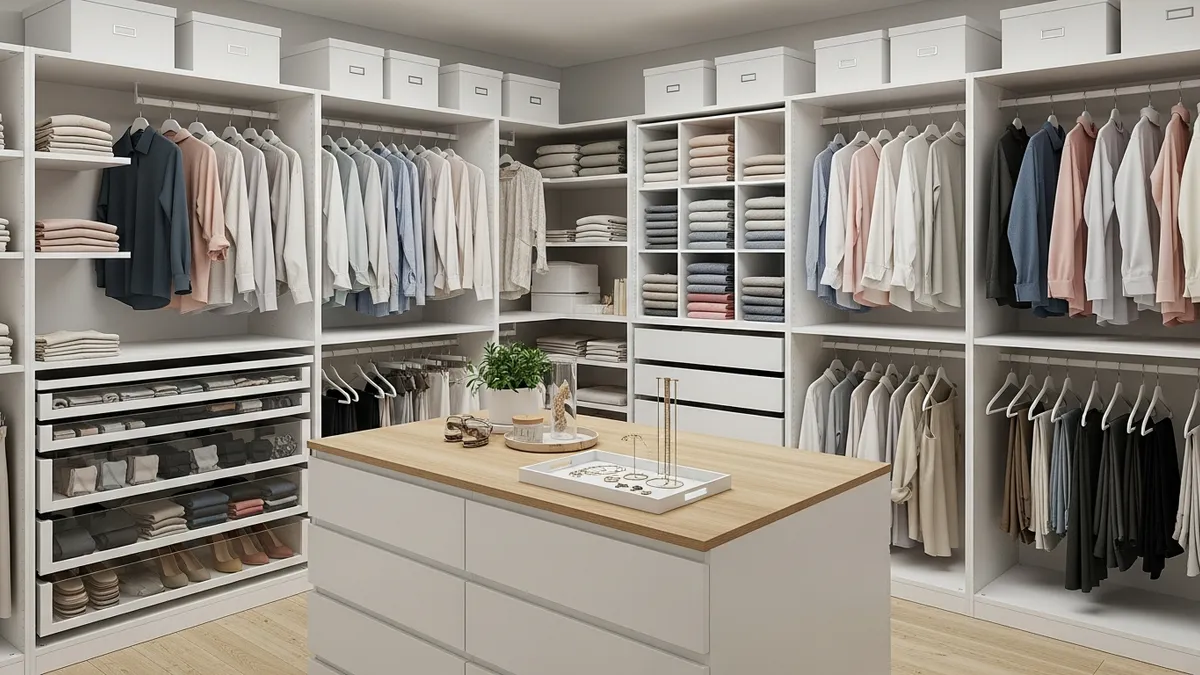
- Small walk-in closet in the master bedroom replaces large wardrobes
- Built-in shelving along the corridor for a mini library or display
- Minimalist shelves in each room for specific storage needs
Tips for Choosing the Right Floor Plan
Before deciding on a minimalist house floor plan, consider the following:
- Building orientation - position main openings facing north or south to avoid direct sunlight from east-west
- Expansion plans - leave room for adding spaces in the future, especially toward the back or upward
- Lifestyle - if you often work from home, prioritize work space. If you love cooking, allocate more kitchen space
- Budget - efficient floor plans with square or rectangular shapes are cheaper to build than L or U-shaped ones
- Local regulations - check KDB (Building Coverage Ratio) and GSB (Building Setback Line) applicable to your location
Conclusion
A good minimalist house floor plan is one that balances spatial needs, circulation, and aesthetics. Type 36 demands maximum creativity in space division, type 45 provides better balance, while type 70 offers flexibility to customize your home to your lifestyle.
Most importantly, the floor plan is just the starting point. Interior arrangement and the right furniture selection will determine true comfort. Visit Sesoris to discover various home organization solutions that help maximize every corner of your minimalist home.
Weekly Home Tips
Get home organization ideas, product picks, and exclusive deals delivered weekly.
No spam. Unsubscribe anytime.