2-Story Minimalist House Design: Maximize Limited Land
2-story minimalist house design is a smart solution for urban Indonesians who want spacious homes on limited land. With rising land prices in major cities, building upward is the most logical strategy to get adequate living space without purchasing more land.
2-story minimalist houses offer better zone separation between public and private areas, provide more privacy for bedrooms, and create a more impressive facade appearance. However, 2-story house design also has its own challenges that need attention.

Benefits of Building a 2-Story House
Land Efficiency
The most obvious advantage of a 2-story house is land efficiency. On a 60 square meter plot, you can get a building with a total area of 100-120 square meters. This is very significant in cities like Jakarta, Surabaya, or Bandung where land prices per square meter are already very high.
Better Zone Separation
With two floors, you can separate public areas (floor 1) and private areas (floor 2) vertically. Guests don't need to pass through bedrooms, and family members can rest upstairs without being disturbed by activities downstairs.
Better View Potential
The 2nd floor provides access to better views and smoother air circulation. A 2nd-floor balcony can become a favorite relaxation space to enjoy fresh air and surrounding views.
Comparison Table of 2-Story Minimalist House Layouts
| Type | Land Area | Total Building Area | Number of Rooms | Estimated Budget |
|---|---|---|---|---|
| Type 36/60 | 60 m2 | 72 m2 | 2-3 rooms | $24,000-36,000 |
| Type 45/72 | 72 m2 | 90 m2 | 3 rooms | $32,400-48,600 |
| Type 60/90 | 90 m2 | 120 m2 | 3-4 rooms | $43,200-64,800 |
| Type 70/105 | 105 m2 | 140 m2 | 4 rooms | $50,400-75,600 |
| Type 80/120 | 120 m2 | 160 m2 | 4-5 rooms | $57,600-86,400 |
Floor 1 Layout: Public and Service Areas
Floor 1 of a 2-story minimalist house is focused on public and service areas. Proper layout planning on this floor is crucial to determine daily comfort.
Guest Reception Zone
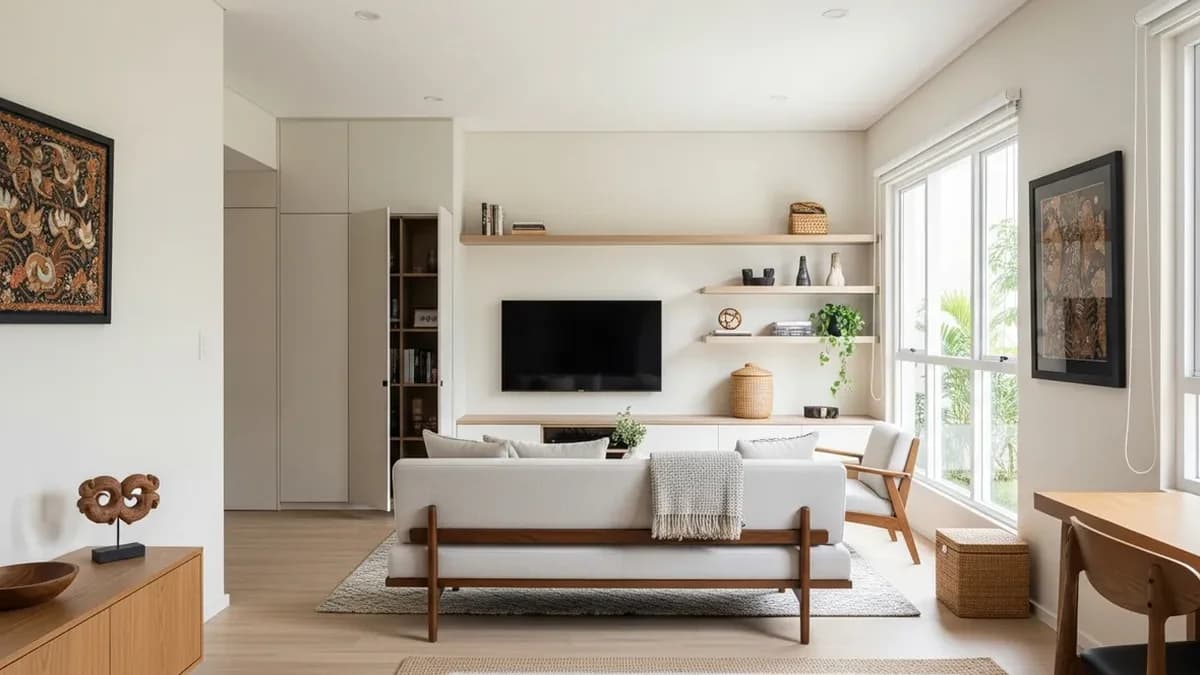
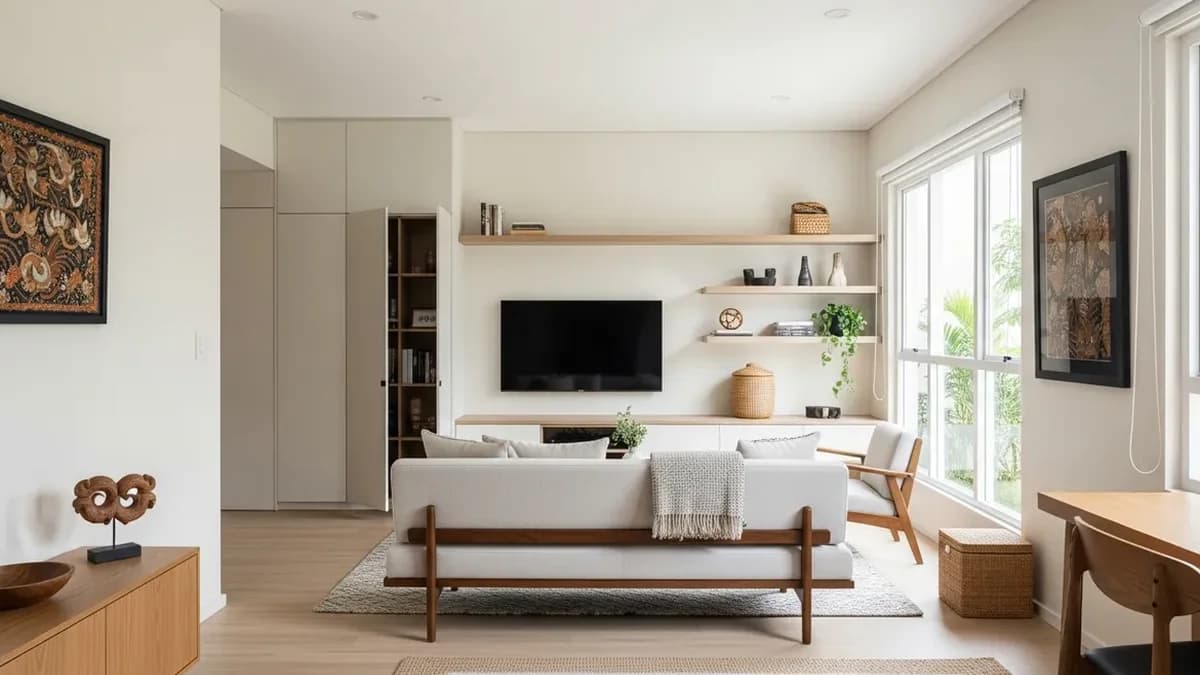
The living room on floor 1 should be directly connected to the terrace through doors or large windows. This semi-outdoor concept makes the living room feel more spacious and bright. Choose compact furniture like a 2-seater sofa or small sectional sofa proportional to the room size.
Dining and Kitchen Zone
2026 trends point toward an open kitchen concept merged with the dining area. This layout saves space and facilitates family interaction while cooking and eating together. Use a small kitchen island or bar table as a visual divider and dining area.
For an organized and neat kitchen, take advantage of stainless steel kitchen racks and aluminum kitchen racks from Sesoris. Wall racks and cooking utensil hangers free up counter space for cooking.
Service Area
Place the washing, drying, and small storage areas at the back of floor 1. This area doesn't need to be visible from the living room and should have direct access to the backyard. Set aside a minimum of 2x3 meters for the service zone.
Stairs: Key Element of 2-Story Houses
Stairs take up approximately 3-5 square meters of space. Position the stairs in a strategic location - not too close to the front (obstructs living room) and not too far back (away from bedrooms). Stairs on the side of the house are usually the best solution.
Types of stairs for minimalist homes:
- L-shaped stairs - Most common, space-saving, comfortable
- U-shaped stairs - Very space-efficient vertically, ideal for tight plots
- Straight stairs - Simple but requires a long hallway
- Spiral stairs - Most space-efficient but less comfortable for daily use
Take advantage of the area under the stairs for storage. Create built-in cabinets, bookshelves, or even a small pantry under the stairs. With storage boxes from Sesoris, the under-stair space can become a very effective storage area.
Floor 2 Layout: Private Areas
Floor 2 is dedicated to the family's private areas. A quiet atmosphere far from guest activity makes this floor ideal for rest and personal activities.
Master Bedroom
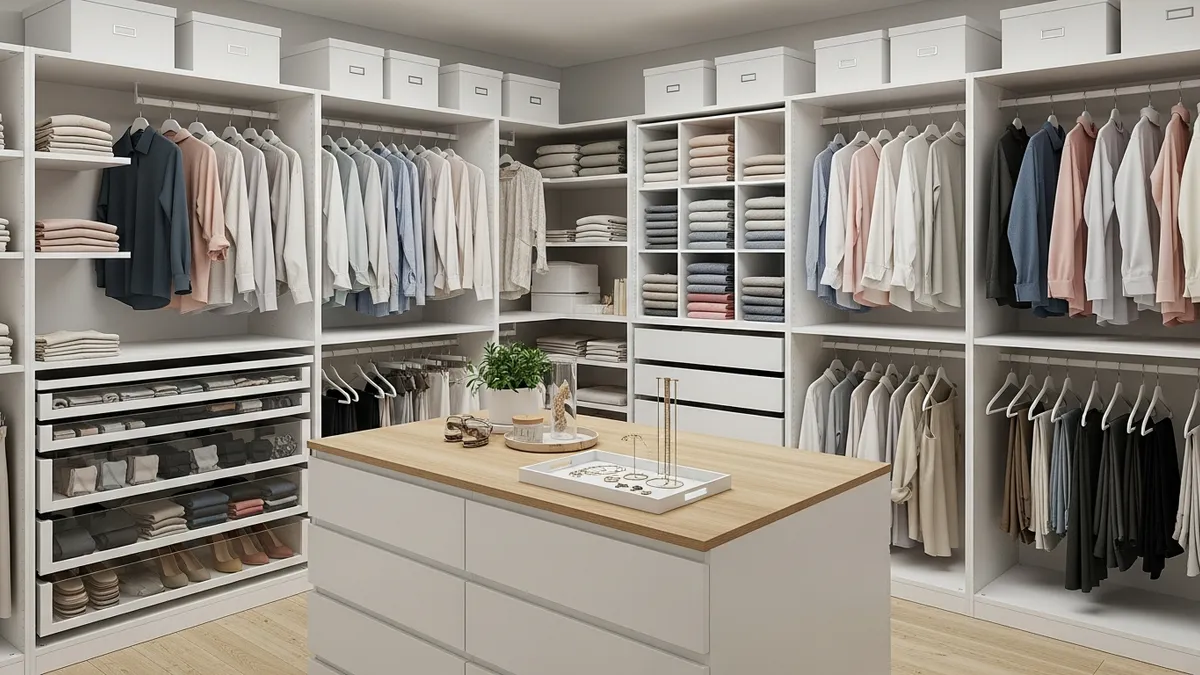
The master bedroom on floor 2 should have an en-suite bathroom and a spacious walk-in closet or built-in wardrobe. Position it in an area with the best ventilation and natural lighting. Ideal size is at least 3x4 meters, not including the bathroom.
Children's Bedroom
Children's bedrooms on floor 2 provide privacy while also being safe because they're far from the main entrance. Flexible children's room design allows layout changes as children grow. Use minimalist shelves with multiple tiers for books, toys, and school supplies.
Family Room on Floor 2
If building area permits, add a small family room on floor 2 as a private relaxation area. This room can serve as a TV room, children's play area, or reading space. Place it in the central area of floor 2 that connects the bedrooms.
Balcony
A 2nd-floor balcony adds aesthetic value to the facade while also serving as a private outdoor space. Use the balcony as a relaxation area with rattan chairs and decorative plants. Make sure the balcony has safe railings, especially if there are small children in the house.
Structure and Foundation of 2-Story Houses
Proper Foundation
2-story houses require a stronger foundation than 1-story houses. Foot plate or chicken leg foundations are usually sufficient for 2-story houses on normal soil. For soft or swampy soil, mini pile foundations may be necessary.
Always consult structural design with a professional civil engineer. This is not an area to cut costs as it concerns the safety of residents.
Columns and Beams
Reinforced concrete columns and beams must be properly designed to support the weight of floor 2. The ideal distance between columns is 3-4 meters. Columns should be positioned at room corners to avoid disrupting interior layout.
Floor 2 Slab
The floor 2 slab uses reinforced concrete with a minimum thickness of 12 cm. Ensure proper waterproofing to prevent water seepage, especially in floor 2 bathrooms positioned above floor 1 rooms.
2-Story Minimalist House Facade
Facade Design Principles
2-story house facades have more area for creativity. The main principle is creating balanced proportions between solid elements (walls) and voids (windows, openings). The ideal ratio is 60% solid and 40% void.
Popular Facade Elements for 2026
- Wooden or GRC lattice - Provides texture and privacy without blocking light
- Second skin - Additional layer in front of facade for shading and aesthetics
- Large windows - Floor-to-ceiling windows in living room or master bedroom
- Modern canopy - Canopy with clean line design as an accent
- Green wall - Climbing plants or vertical garden as green element
Facade Material Combination
Combine 2-3 materials for an attractive facade. For example, white plaster walls combined with wooden panels and natural stone accents. Or gray walls with black metal lattice and exposed brick accents.
Tips for Saving Budget on 2-Story Houses
Build in Stages
If budget is limited, consider building the 2-story house in stages. Build floor 1 first with structure already prepared for floor 2. Ensure the foundation and columns are calculated for 2-story load from the beginning.
Choose Local Materials
Local materials are usually cheaper due to no import costs and long-distance shipping. Local lightweight bricks, domestic ceramic tiles, and teak wood from community forests can save budget up to 20-30%.
Optimize Floor Plans
Efficient floor plans reduce material waste and construction costs. Avoid overly complex building shapes - square or rectangular shapes are most structurally and cost-efficient.
Invest in Proper Storage
Rather than building large cabinets in every room, invest in modular storage systems that can be customized. Home organizers and container boxes from Sesoris provide storage flexibility without permanent renovation costs.
Common 2-Story House Design Mistakes
Insufficient Foundation
A fatal error that often occurs is building floor 2 on a foundation designed only for 1 floor. This is very dangerous and can cause cracks or even collapse. Always involve professionals in structural planning.
Non-Ergonomic Stairs
Stairs that are too steep, too narrow, or lack handrails are safety risks. Ideal stair dimensions: minimum width 80 cm, height 17-19 cm, and depth 25-30 cm. Handrails must be on at least one side.
Ignoring Soundproofing
Noisy floor 2 will disturb floor 1 residents and vice versa. Use sufficiently thick floor slabs and consider soundproofing layers under floor 2 ceramic tiles.
Poor Plumbing Installation
Bathrooms on floor 2 require more complex plumbing installation. Ensure adequate plumbing shafts and perfect waterproofing to prevent leaks to the floor below.
Conclusion
2-story minimalist house design is an ideal solution to maximize limited land in urban areas. With careful planning from foundation, layout, to interior details, a 2-story house can become a comfortable, functional home with high investment value.
The key to successful 2-story house design lies in proper zone division, strong structure, and efficient storage solutions on each floor. Take advantage of every corner of the house including under-stair areas for storage.
Complete your 2-story minimalist home with home organization products from Sesoris. From multipurpose racks to storage boxes and kitchen organizers - all designed to help you live a more organized lifestyle in your dream home.
Weekly Home Tips
Get home organization ideas, product picks, and exclusive deals delivered weekly.
No spam. Unsubscribe anytime.