Quality Products, Free Shipping & Easy Returns!
Sesoris
My AccountTrack Order
BlogKitchen & Dining
Wall-Mounted Plate Racks for Your Kitchen: Selection and Installation Guide (2026)
Kitchen & Dining

Wall-Mounted Plate Racks for Your Kitchen: Selection and Installation Guide (2026)

March 29, 2026
10 min read read
BS
Budi Santoso
Travel & Outdoor Expert

Wall-mounted kitchen plate racks free up your entire counter and floor space for cooking activities. By installing a plate rack directly on the wall, you gain vertical storage that transforms empty walls into functional zones—making it the most effective solution for small to medium-sized kitchens common in Indonesian homes.

Wall-mounted kitchen plate rack with neat installation in modern kitchen

This article is a comprehensive guide to wall-mounted plate racks—from selecting the right type and material, installation methods on various wall types (concrete, brick, gypsum), load capacity calculations, to our top 10 product recommendations for 2026. We also address common safety concerns about wall-mounted plate racks.

Advantages of Wall-Mounted Plate Racks

Before diving into product recommendations, it's important to understand why wall-mounted plate racks are becoming increasingly popular in Indonesian kitchens:

  • Saves 100% of counter space – no footprint on your countertop whatsoever
  • Better air circulation – vertically mounted plates dry faster than stacked ones on traditional shelves
  • Easy access – plates are clearly visible and easy to grab one by one without disturbing others
  • Elevated kitchen aesthetics – neatly organized wall racks give your kitchen a professional appearance
  • Perfect for compact kitchens – an ideal solution when floor and counter space are severely limited

For truly small kitchens, combine wall-mounted plate racks with other strategies in our guide on organizing small kitchens effectively.

Types of Wall-Mounted Plate Racks

1. Wire Grid Rack

The most classic and popular model. Made from welded steel or stainless steel wire forming a grid pattern. Plates lean against vertical slots while the bottom supports the load. Usually comes with a drip tray underneath. Affordable starting from approximately $5.

2. Vertical Slot Plate Rack

Designed so plates stand upright in individual slots. Each plate has its own space, preventing them from touching each other—reducing the risk of scratches and breakage. This model requires relatively uniform-sized plates.

3. Hanging Plate Rack with Hooks

A horizontal rack mounted on the wall with additional hooks at the bottom for hanging cups or cooking tools. Multifunctional since you can store plates on top and hang glasses below in a single unit.

4. Foldable Wall Rack

Folds flat against the wall when not in use. Ideal for kitchens needing flexibility—open it when drying plates, fold it away when you need more space. More expensive due to complex hinge mechanisms.

5. Wall Cabinet Style Plate Rack

A combination of wall shelving with glass or acrylic doors. Plates are protected from dust and oil while remaining visible. Provides an elegant display cabinet look. This model actually comes closer to modern plate cabinets in a compact version.

Best Materials for Wall-Mounted Plate Racks

Material selection determines durability, load capacity, and appearance of your plate rack.

MaterialMax LoadRust ResistantMaintenanceAestheticsPrice
Stainless Steel 30435-50 kgExcellentMinimalPremium$12-36
Stainless Steel 20130-45 kgGoodLowStandard$7-21
Aluminum20-35 kgExcellentMinimalModern$6-18
Iron Powder Coated30-50 kgModerateModerateIndustrial$5-15
Iron Chrome25-40 kgModerateHighClassic$4-12

For kitchens frequently exposed to steam and water (near the stove or sink), stainless steel 304 and aluminum are your best investments. Powder-coated iron is a budget-friendly alternative with one caveat: inspect and repair any coating scratches immediately to prevent rust from forming.

Also read our detailed review on aluminum plate racks—advantages and how to choose for more detailed considerations.

How to Install Plate Racks on Different Wall Types

Guide for installing plate racks on concrete, brick, and gypsum walls

This is the most crucial part—incorrect installation could cause the rack to fall with your entire plate collection. Each wall type requires a different technique.

Concrete Walls

The strongest and most ideal for heavy plate racks.

    1
  1. Mark bracket positions using a level
  2. 2
  3. Drill with a concrete bit (masonry bit) sized 6mm or 8mm
  4. 3
  5. Insert plastic anchors (rawlplug) into the drilled holes
  6. 4
  7. Screw brackets firmly using 5mm x 50mm screws
  8. 5
  9. Install the rack on the brackets and lock all safety bolts
  10. 6
  11. Test the load by gradually adding plates

Capacity: concrete walls with 8mm anchors can hold 50-80 kg of pulling force per point.

Red Brick Walls

Similar technique to concrete, but requires extra care.

    1
  1. Drill into the brick, not the mortar – mortar cement is more fragile
  2. 2
  3. Use low drill speed to prevent brick cracking
  4. 3
  5. Anchors must penetrate at least 4 cm into the brick
  6. 4
  7. Avoid positions too close to brick edges – minimum 5 cm from edges

Capacity: red brick holds 30-50 kg per anchor point, slightly less than concrete.

Gypsum Walls

This is the most challenging. Standard gypsum only holds 5-10 kg.

    1
  1. Use toggle bolts or molly bolts – not standard anchors
  2. 2
  3. Locate studs (metal or wood framing) behind the gypsum using a stud finder
  4. 3
  5. If you find a stud – screw directly into the stud, can hold 20-30 kg
  6. 4
  7. If no studs are available – use toggle bolts rated for 15 kg per point
  8. 5
  9. Limit total load to a maximum of 15-20 kg for gypsum walls without studs

Recommendation: for gypsum walls, choose small plate racks and store only lightweight plates. For large and heavy plate collections, consider freestanding racks as an alternative. Also check our best plate rack recommendations for other options.

Load Capacity: How Many Plates Are Safe?

Here's a simple calculation that's often overlooked:

  • Standard dinner plate: 300-500 grams per plate
  • Bowl: 200-400 grams per bowl
  • Ceramic glass: 200-350 grams per glass
  • Large serving plate: 700-1,200 grams per plate

For a family of 4 with 24 dinner plates + 12 bowls + 8 glasses, total weight is approximately 12-15 kg. This means a stainless steel rack with 35 kg capacity still has very adequate safety margins. Always ensure total weight doesn't exceed 70% of the maximum stated capacity.

10 Best Wall-Mounted Plate Racks for 2026

NoProductTypeMaterialCapacityPrice
1Double Layer Wall Rack 80cmWire GridSS 30430 plates + 10 glasses$17
2Single Tier Minimalist RackVertical SlotAluminum15 plates$9
3Multi-Hook Wall OrganizerHanging + HookSS 20120 plates + 8 cups$12
4Foldable Drying RackFoldableIron Powder Coat18 plates$11
5Glass Door Wall CabinetClosedSS + Glass24 plates + bowls$29
6Budget Wire Rack 60cmWire GridIron Chrome18 plates$5
7Dual Function Rack + ShelfHanging + ShelfAluminum20 plates + spices$14
8Corner Wall Rack SetWire GridSS 20112 plates$9
9Over-Sink Wall Rack 90cmWire GridSS 30425 plates + 15 glasses$22
10Compact Apartment Rack 40cmVertical SlotAluminum10 plates$6

For standard household kitchens, products #1 and #3 offer the best capacity. For apartments or rental spaces with limited room, #10 (Compact Apartment Rack) is the most suitable choice. If aesthetics is your priority, #5 (Glass Door Wall Cabinet) provides the most elegant appearance.

Tips to Maximize Your Kitchen Wall Space

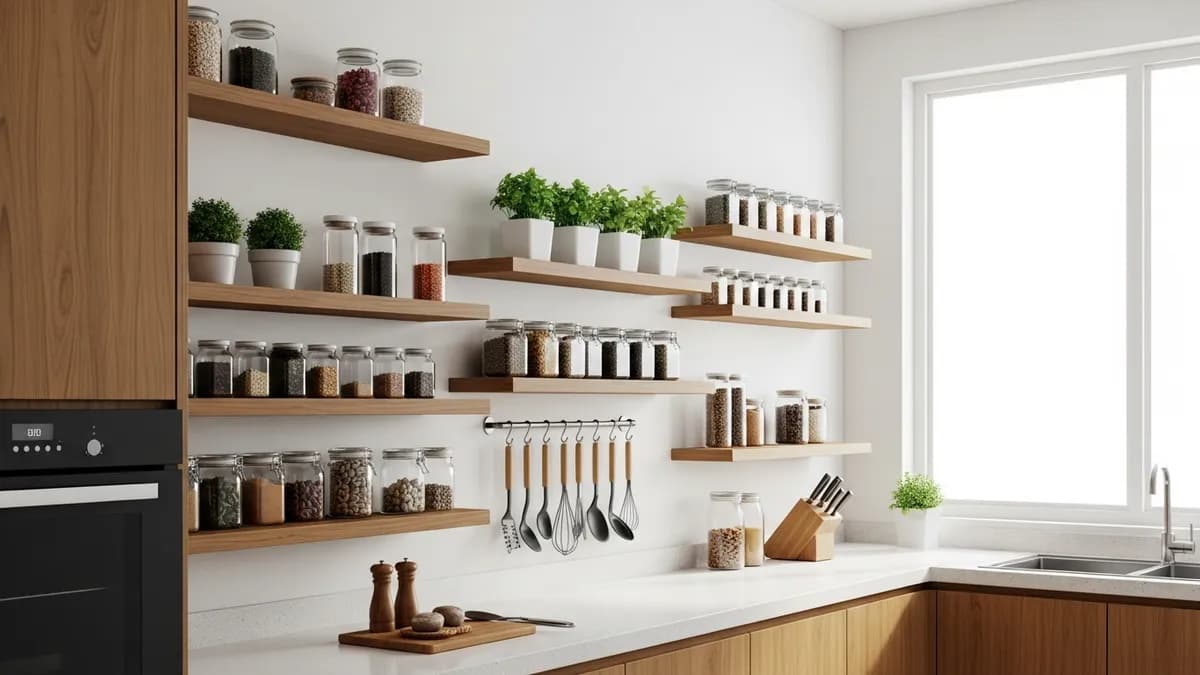
Strategy for maximizing kitchen walls with plate racks and organizers

Kitchen walls are an asset that's often underutilized. Here are strategies to maximize them:

  • Zone your walls – divide the wall into zones: plate racks near the sink, spice racks near the stove, hanging hooks near the prep area
  • Use space above windows – often overlooked, but this area can hold small shelves for spices or herb plants
  • Install a magnetic knife strip – wall-mounted knives are more hygienic and save drawer space compared to knife blocks
  • Use a pegboard – perforated board that accepts various hooks and shelves based on your needs, easy to reconfigure
  • Rail system – horizontal rails on the wall for hanging spoons, spatulas, and other cooking tools

For more comprehensive kitchen design inspiration, explore our minimalist plate rack designs for modern kitchens.

Installation Mistakes to Avoid

    1
  1. Installing too high – plate racks should ideally be at shoulder height or slightly above; don't install so high you need to stand on your toes to grab plates
  2. 2
  3. Not using a level – even slightly crooked racks can cause plates to shift and fall
  4. 3
  5. Using anchors that are too short – use anchors at least 6mm x 40mm for medium loads, 8mm x 50mm for heavy loads
  6. 4
  7. Installing on damp walls – check walls for moisture signs (stains, peeling paint) before installation
  8. 5
  9. Installing too close to the stove – racks too close to the stove are exposed to excess heat and oil; maintain at least 60 cm distance

Frequently Asked Questions (FAQ)

Is it safe to use wall-mounted plate racks for heavy ceramic plates?

Yes, as long as the rack and installation match the load. A stainless steel rack installed on a concrete wall with 8mm anchors can hold 35-50 kg—more than enough for a large family's plate collection. Always calculate the total weight of your plates before installation.

How can I install a plate rack without drilling?

Several drill-free options exist: racks with heavy-duty adhesive tape systems (3M Command Strips rated for 7 kg), tension pole racks (floor-to-ceiling pressure rods), or magnetic racks for metal walls. However, for loads over 10 kg, drilling remains the safest method.

What's the ideal distance for a plate rack from the sink?

Ideally 30-60 cm from the sink edge. Too close and you'll get excess water splashing. Too far and the drying process becomes impractical—you'll be walking back and forth carrying wet plates.

Do wall-mounted plate racks need a drip tray?

Highly recommended, especially if you place plates on the rack right after washing without air-drying first. A drip tray catches water drips so your floor and countertops below stay dry. Choose a removable drip tray for easy water disposal.

How do I clean an installed wall-mounted plate rack?

Spray the entire rack with a mixture of warm water and dish soap. Let sit for 5 minutes to soften grease and dirt. Scrub with an old toothbrush to reach wire gaps. Rinse with a damp cloth and dry. Do this every two weeks for best results.

Conclusion

Wall-mounted kitchen plate racks are the most space-efficient storage solution for Indonesian kitchens. Success depends on three key factors: choosing materials that withstand kitchen conditions (stainless steel or aluminum), installing on the right wall type with appropriate hardware, and never exceeding 70% of the maximum load capacity. With proper installation, wall racks can last for years without issues.

Find the most complete collection of plate racks and kitchen organizers at Sesoris for a neat, functional, and aesthetic kitchen.

Weekly Home Tips

Get home organization ideas, product picks, and exclusive deals delivered weekly.

No spam. Unsubscribe anytime.