Minimalist Home Interior Guide: From Living Room to Bedroom
Minimalist home interior is not just about reducing possessions - it's the art of creating functional, comfortable, and aesthetic spaces with the right elements. The principle of "less is more" becomes the foundation, where every piece of furniture and decoration has a clear purpose and contributes to the overall harmony of the room.
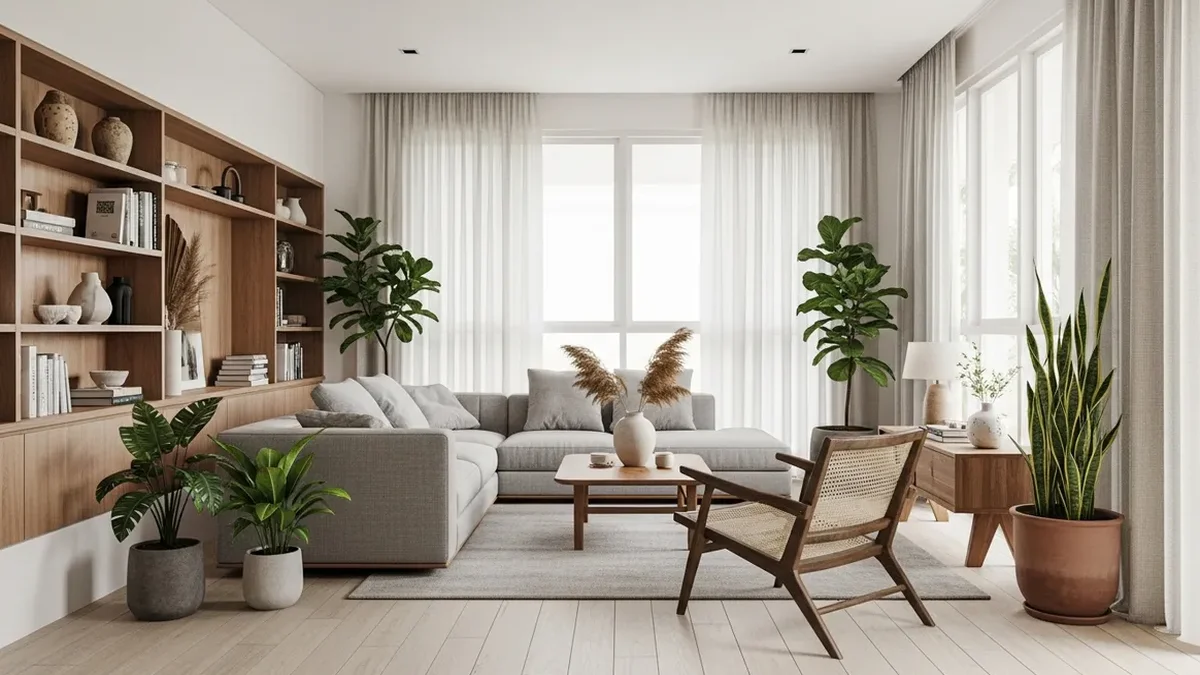
In this guide, we discuss in depth how to arrange minimalist home interiors for every room - from a welcoming living room, an efficient kitchen, to a calming bedroom. All tips can be directly applied to your home without requiring a complete overhaul.
Basic Principles of Minimalist Home Interior
Before discussing individual rooms, it's important to understand the basic principles that apply throughout a minimalist home. These principles serve as guidelines in every design decision you make, whether for renovation or rearrangement.
Simplicity and Functionality
Every item in your home must have a clear function. If a decoration doesn't add aesthetic or functional value, consider removing it. This doesn't mean your home should be empty - rather, every item that exists has been deliberately chosen and has its own place.
Color and Lighting
The minimalist home interior color palette tends to be neutral - white, gray, beige, and natural tones. However, this doesn't mean the room should be monotonous. Add color accents through pillows, green plants, or a single artwork that becomes your focal point. Natural lighting is a key element that makes a minimalist space feel warm and alive.
Material and Texture
Choose natural materials like wood, stone, linen, and cotton to create warmth. Combining different textures - such as smooth wood with natural stone - adds visual depth without needing many additional decorations.
Minimalist Living Room Interior
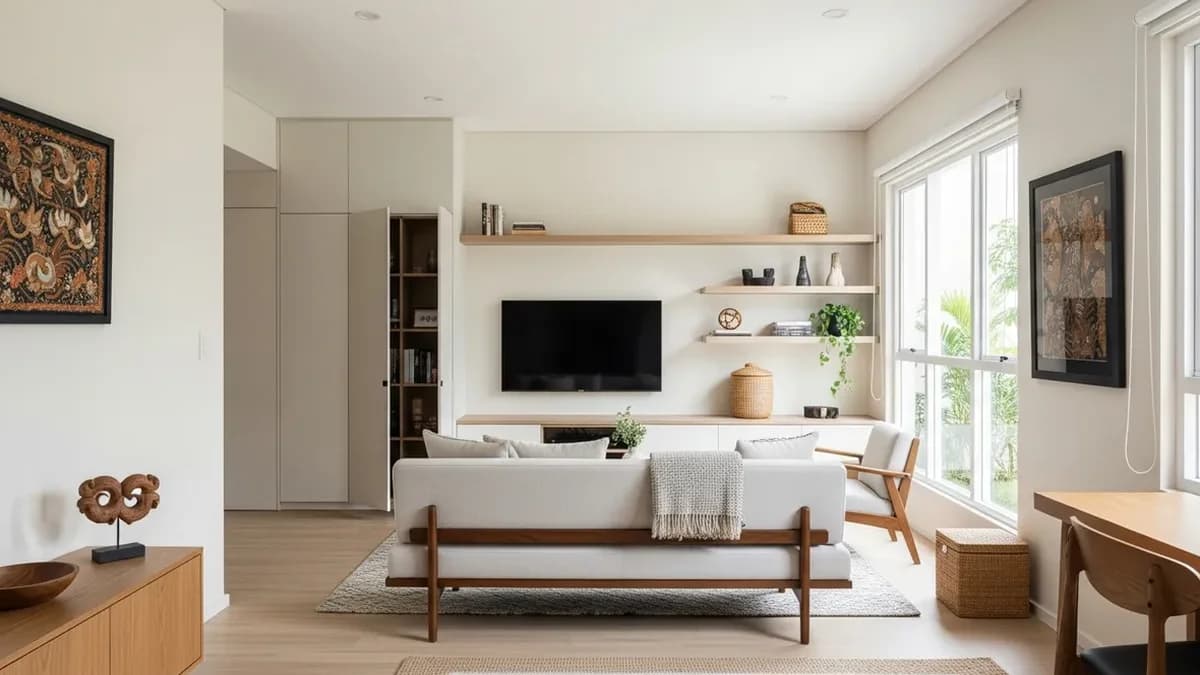
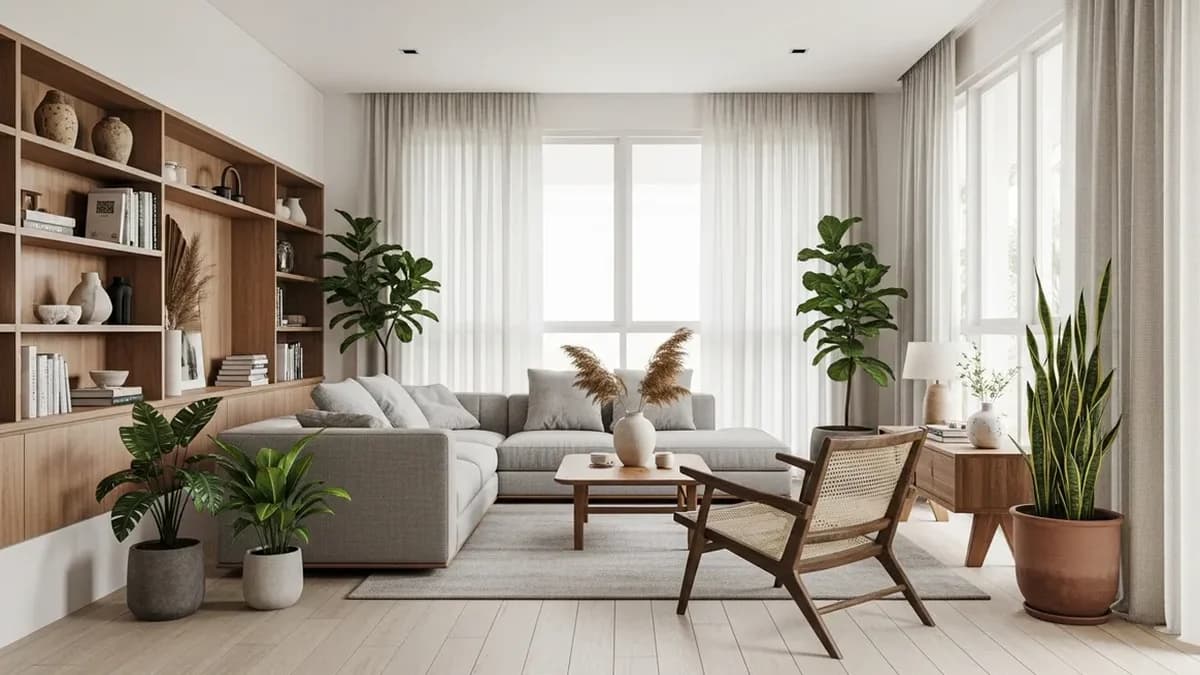
The living room is the face of your home. Minimalist home interior living room design prioritizes openness, comfort, and a welcoming impression without appearing cluttered.
Sofa and Coffee Table Selection
Choose a sofa with clean lines - without excessive carvings or overly complicated details. Neutral colors like gray, navy, or cream are safe choices that are easy to coordinate. For small living rooms, an L-shaped sofa efficiently utilizes corner space.
The coffee table should be proportional to your sofa - not so large that it overwhelms the room, but wide enough to hold glasses and books. A table with hidden storage inside is a bonus for keeping the TV remote and magazines.
Living Room Display Shelves and Storage
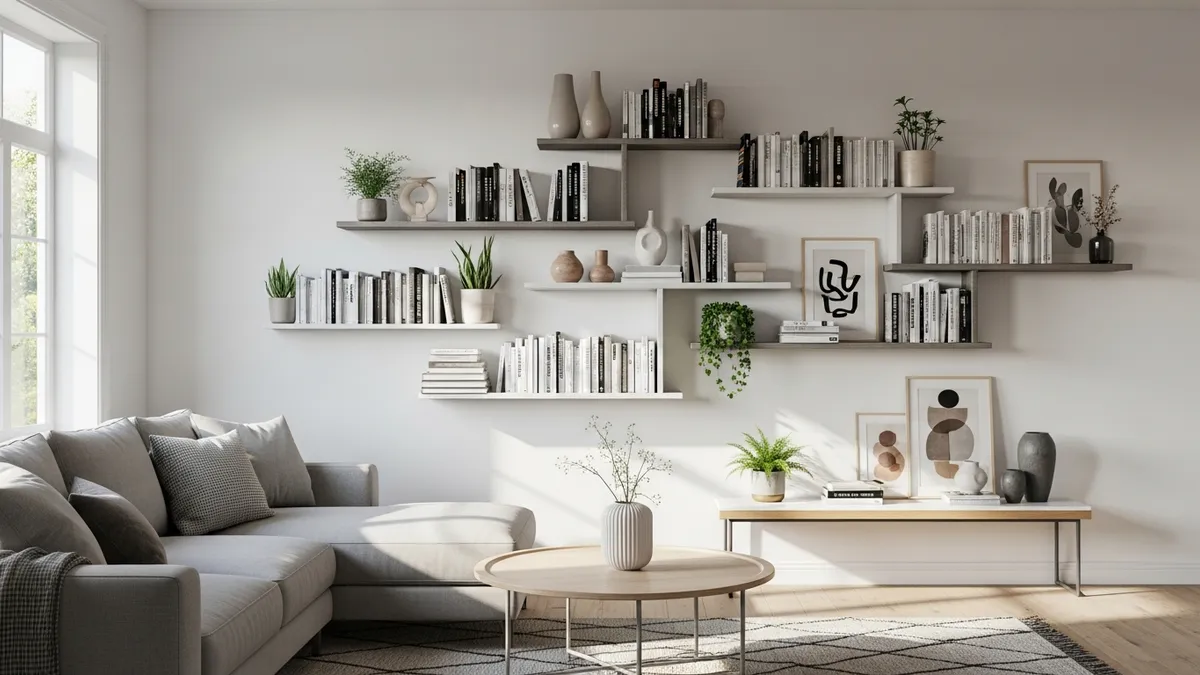
- Floating shelves on the wall to display plants or favorite books without taking up floor space
- Low TV console with closed cabinet to hide cables and electronics
- Storage ottoman as extra seating and storage for blankets or extra pillows
- Corner shelves to utilize corners that are often wasted
| Living Room Element | Minimalist Choice | Conventional Choice | Why Minimalist is Better |
|---|---|---|---|
| Sofa | Clean lines, neutral colors | Many decorative pillows, busy patterns | Room feels more spacious and calm |
| Coffee table | Simple shape with storage | Large ornately carved table | Functional without overwhelming the space |
| Display shelf | Floating shelf 2-3 tiers | Large cabinet full of decorations | Focus on a few meaningful items |
| Lighting | Simple pendant lamp | Large chandelier | Clean and modern appearance |
| Rug | Plain or simple geometric | Detailed traditional patterns | Neutral base that unifies the room |
Minimalist Kitchen Interior
Minimalist kitchen prioritizes work efficiency and visual cleanliness. The principle is simple - everything has its place, and countertops stay clear of items not in use.
Efficient Kitchen Layout
Minimalist kitchen layout follows the work triangle principle - stove, sink, and refrigerator form an imaginary triangle to minimize movement while cooking. For small kitchens, galley layout (two facing sides) or L-shape is most efficient. Make sure there's enough space between work areas for two people to work simultaneously.
Kitchen Storage System
- Upper cabinet with flat doors without protruding handles for a clean appearance
- Pull-out drawers in lower cabinets so items at the back are easily accessible
- Hidden spice rack behind cabinet side panels
- Wall hangers for spatulas, spoons, and frequently used cooking utensils
- Drawer organizers to separate cutlery and small tools
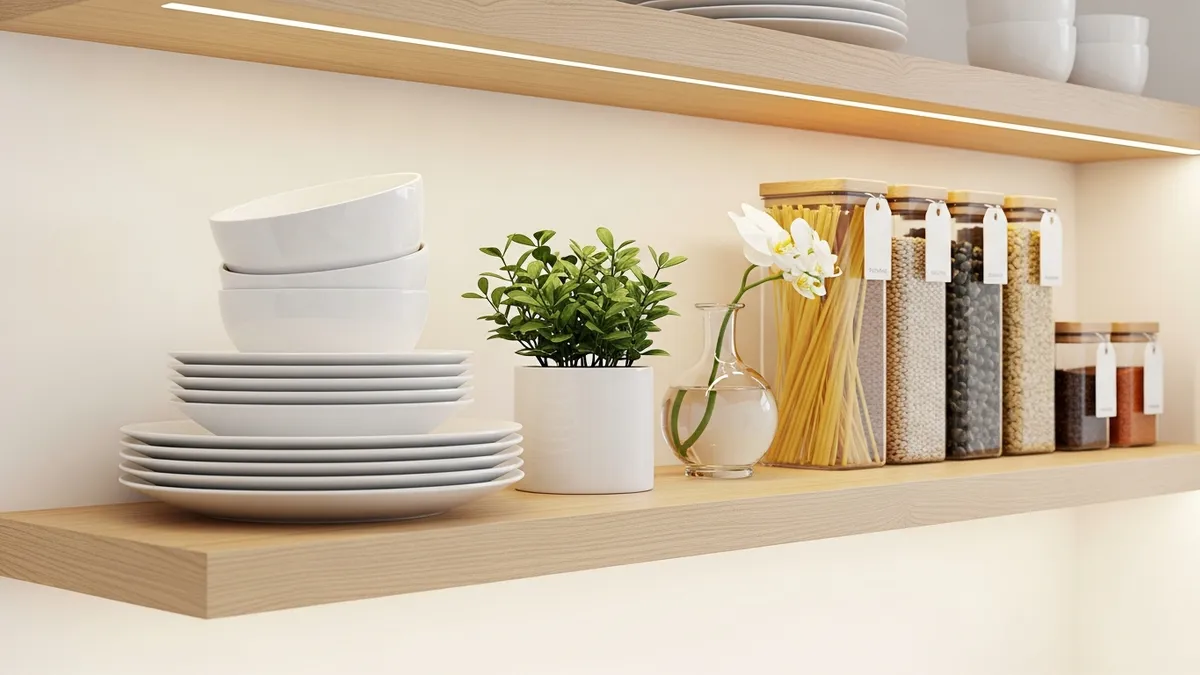
Investing in the right kitchen storage system makes a big difference. A well-organized kitchen shelf makes cooking more enjoyable and efficient.
Minimalist Bedroom Interior
The bedroom is a place of rest - its interior should support tranquility and relaxation. Minimalist bedroom eliminates visual distractions so your mind can truly rest after a day of activity.
Bed as Focal Point
The bed is the sole focal point in a minimalist bedroom. Choose a bed frame with simple design - platform bed without complicated headboard or low Japanese-style frame. Use quality bedding in neutral colors as a luxury touch you can enjoy every night.
Bedroom Wardrobe and Storage
Built-in wardrobes with sliding doors are far more efficient than standalone furniture that takes up floor space. If not possible, choose cabinets with flush design (flush with wall) and color matching your wall paint to create the illusion of a larger space.
- Minimalist nightstand - choose one with drawers to store books and chargers to keep surfaces clean
- Under-bed storage - utilize space under the bed with storage boxes or built-in drawers
- Door hooks - hang clothes that have been worn briefly but don't need washing yet
- Wall shelf above vanity - for frequently used perfume and accessories
Minimalist Bathroom Interior
Minimalist bathroom prioritizes cleanliness and a spa-like feel. With proper arrangement, even a small bathroom can feel luxurious and refreshing.
Key Elements of Minimalist Bathroom
- Wall-mounted vanity - hanging on the wall creates the illusion of more space because the floor is fully visible
- Large mirror - reflects light and makes the bathroom feel twice as big
- Shower niche - built-in wall shelf for shampoo and soap, replacing messy hanging racks
- Monochromatic color - one color palette from floor to ceiling creates a clean and unified appearance
| Bathroom Area | Storage Solution | Benefits |
|---|---|---|
| Shower area | Built-in wall niche | No rusty hanging racks |
| Sink | Vanity cabinet with drawers | All toiletries hidden neatly |
| Wall | Mirror with back cabinet | Hidden storage, spacious feeling |
| Door | Minimalist hooks or towel bar | Towels always available without piling up |
Color Selection for Minimalist Home Interior
Color plays a crucial role in minimalist home interiors. Here's a color guide for each room you can reference when decorating:
- Living room - off-white as base, gray or sage green accents for depth
- Kitchen - clean white for hygienic appearance, countertop natural colors like wood or marble
- Bedroom - warm colors like warm white, soft beige, or dusty pink for a calm atmosphere
- Bathroom - bright and light colors, accent with small green plants
Avoid using more than three main colors in one room. The 60-30-10 rule is a good guideline - 60% dominant color, 30% secondary color, and 10% accent color.
Minimalist Home Interior Lighting
Good lighting can dramatically change a room's atmosphere. Minimalist interior maximizes natural light and uses artificial lighting strategically to create the right ambiance.
Lighting Tips per Room
- Living room - combination of ambient light (ceiling light) with task light (reading lamp) and accent light (spotlight for artwork)
- Kitchen - under-cabinet LED strips for work area, pendant lights above kitchen island or dining table
- Bedroom - avoid overly bright overhead lights, use wall sconces or table lamps with warm light
- Bathroom - even lighting without shadows at mirror area, LED strips under vanity for floating effect
Minimalist Home Interior Budget
Minimalist interior doesn't have to be expensive. Because the principle is to choose fewer items, you can allocate budget for better quality on main items that are frequently used.
| Room | Budget-Friendly | Mid-Range | Premium |
|---|---|---|---|
| Living room | $300-600 | $600-1,500 | $1,500-3,000 |
| Kitchen | $480-900 | $900-2,100 | $2,100-4,500 |
| Bedroom | $240-480 | $480-1,200 | $1,200-2,400 |
| Bathroom | $300-600 | $600-1,500 | $1,500-3,000 |
Budget-saving tips: start with the most important items. Invest in quality main furniture like sofa, bed, and kitchen set. Add decorations gradually over time and consider buying quality secondhand items for supporting pieces.
Common Mistakes in Minimalist Home Interior
Many people misunderstand minimalism, resulting in uncomfortable spaces. Here are mistakes to avoid:
- Too empty - minimalism isn't about being sterile. Add warmth through plants, textures, and proper lighting
- Hiding everything - some items should actually be displayed as decorative elements, like favorite books or handmade ceramics
- Ignoring comfort - sofas can be simple but must be comfortable to sit on. Rugs can be plain but should be soft underfoot
- Overly monotonous colors - use color gradation and different textures so the room doesn't feel flat and boring
- Not adjusting to lifestyle - interior should support daily activities, not force residents to adapt to the design
Conclusion
Successful minimalist home interior is one that makes residents feel calm, comfortable, and productive. The key is balance - between function and aesthetics, between simplicity and warmth, between empty space and meaningful decorative elements.
Start with one room you use most frequently, apply the principles discussed, and feel the difference. For storage solutions that support your minimalist home interior, visit Sesoris and discover various home organization products designed specifically for minimalist living.
Weekly Home Tips
Get home organization ideas, product picks, and exclusive deals delivered weekly.
No spam. Unsubscribe anytime.