12 Ways to Organize a Small Kitchen to Keep it Tidy, Clean, and Functional (2026)
The most effective way to organize a small kitchen is to apply the work triangle principle - position your stove, sink, and refrigerator in a triangular formation with 120-270 cm between each point. With this layout, even a 4-square-meter kitchen can feel efficient and comfortable for daily cooking.
Why is Small Kitchen Layout So Important?
A disorganized kitchen is more than just an aesthetic problem - it's about safety and efficiency. Research from the Journal of Consumer Research found that poorly organized kitchens make cooking 40% longer and increase the risk of accidents like knife cuts or hot oil spills.
In Indonesia, the kitchen is the heart of the home. We cook 2-3 times a day, store various spices and seasonings, and frequently use large appliances like rice cookers and blenders. All of this needs space - and in a small kitchen, smart organization is the only solution.
Method 1: Apply the Work Triangle Zone
The work triangle concept has been used by professional kitchen designers since the 1940s and remains relevant today. Its three main points are:
- Storage zone (refrigerator and pantry) - where you get ingredients
- Preparation zone (sink and cutting board) - where you wash and prepare ingredients
- Cooking zone (stove and oven) - where you cook food
- Serving zone (nearest counter) - where you plate dishes
- Equipment storage zone (drawers and shelves) - where you keep frequently used tools
Ensure the pathway between the three main zones is unobstructed with a minimum width of 90 cm so you can move freely while cooking.
Method 2: Maximize Vertical Storage
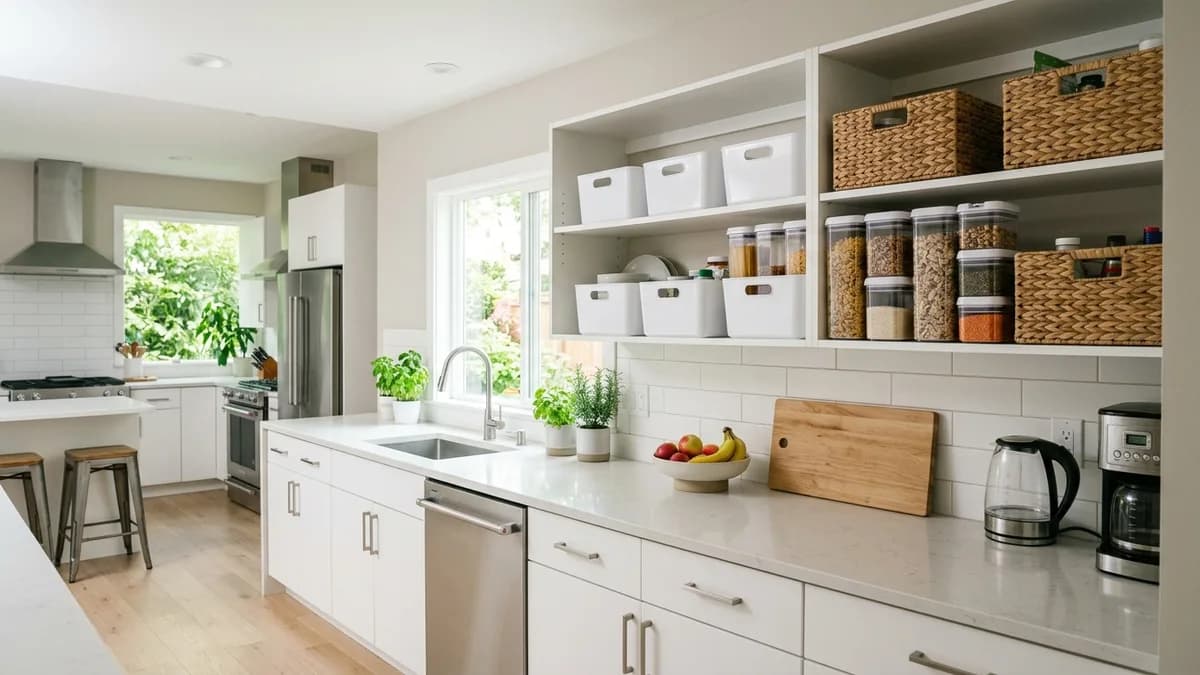
Kitchen walls are a storage asset that's often overlooked. Instead of keeping all equipment on your counter, utilize vertical space from floor to ceiling.
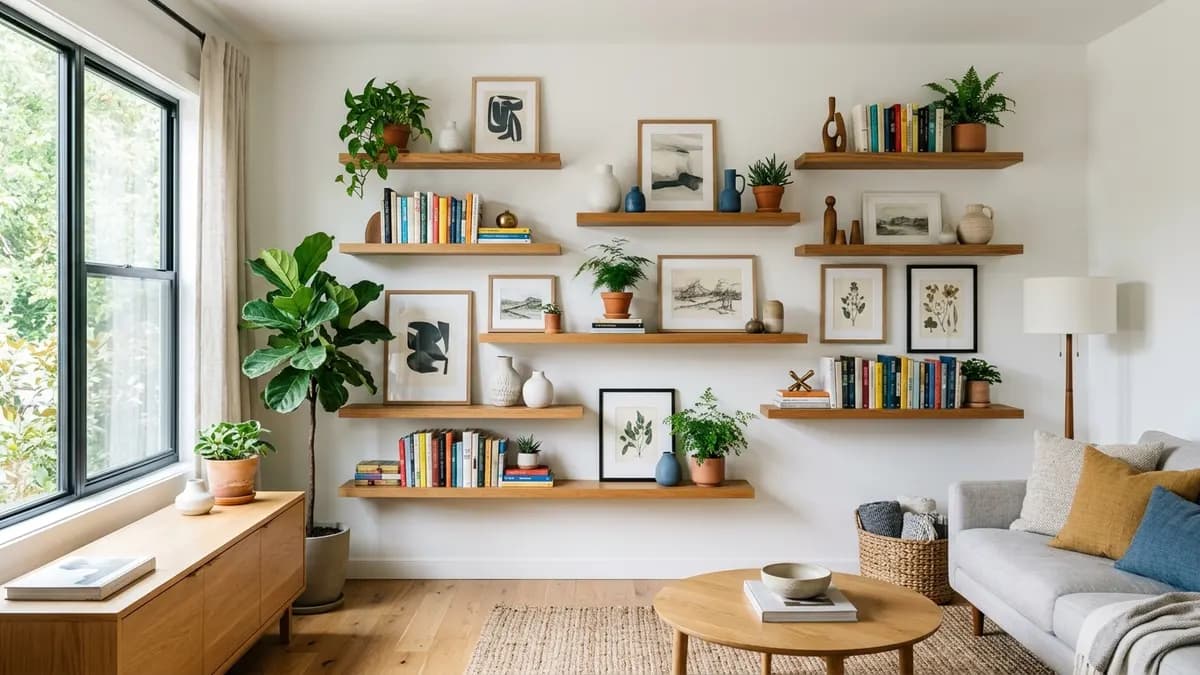
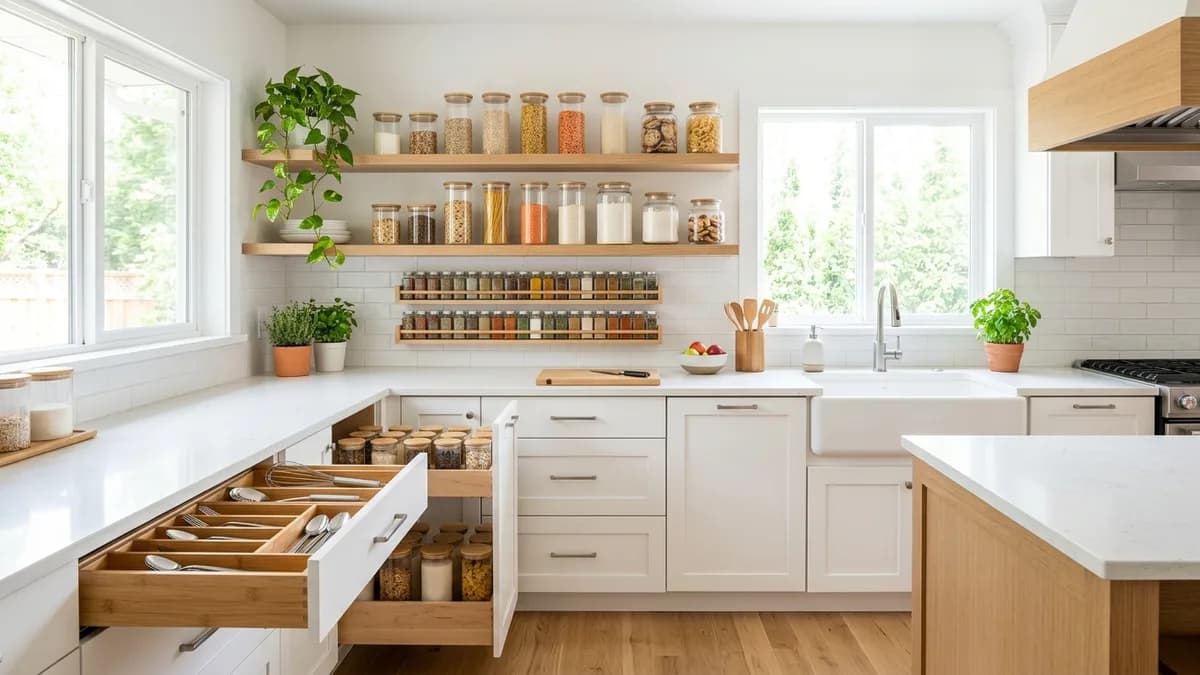
- Wall-mounted shelves for spices and dry ingredients
- Magnetic knife strip for knives - more space-efficient than a knife block
- Kitchen pegboard for hanging spatulas, ladles, and other cooking tools
- Over-door shelves for storing items you rarely use
- [Aluminum dish rack](/blog/rak-piring-aluminium-kelebihan-dan-cara-memilih) mounted on the wall for drying and storage combined
Method 3: Organize Cabinets with a Tiered System
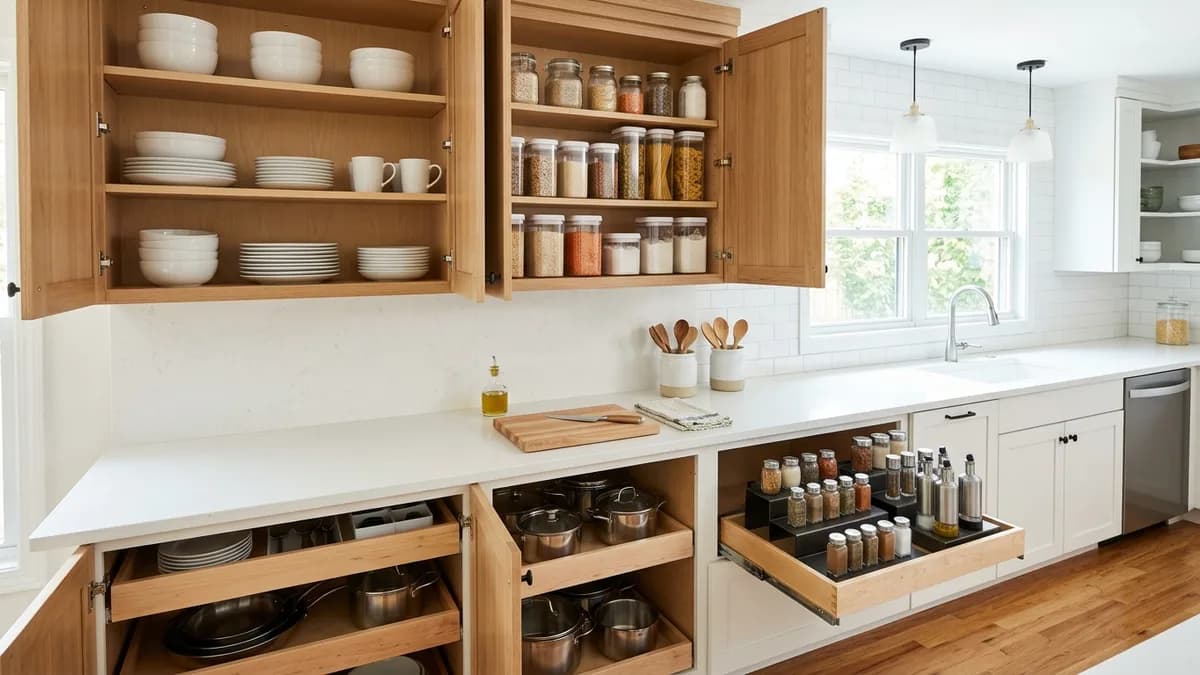
Kitchen cabinets are often only utilized at 60% capacity because items are stacked haphazardly. Use a tiered system to maximize every corner of your cabinet.
Kitchen Cabinet Organization Table
| Cabinet Level | Items to Store | Helpful Tools |
|---|---|---|
| Top (hard to reach) | Seasonal items, spare tablecloths | Step stool, labeled containers |
| Middle (eye level) | Daily spices, glasses, plates | Lazy Susan, shelf riser |
| Bottom (waist level) | Pots, pans, rice cooker | Pull-out racks, dividers |
| Under sink | Dish soap, cloths, plastic bags | Under-cabinet hanging rack |
| Drawers | Cutlery, plastic wrap, aluminum foil | Drawer organizers |
Investing in shelf risers or additional racks inside cabinets can double your storage capacity without buying new cabinets.
Method 4: Clear Your Counter - The 3-Item Rule
A counter full of items makes a small kitchen feel even smaller. Apply the 3-item rule: allow a maximum of 3 items to permanently sit on your counter. For example: stove, rice cooker, and soap dispenser.
All other appliances like blenders, toasters, and bread makers should be stored in cabinets and only taken out when needed. This also makes cleaning your counter much faster.
Method 5: Use the Inside of Cabinet Doors
The inside of cabinet doors is hidden storage space that's very useful. Install hanging organizers to store pot lids, plastic wrap, aluminum foil, or favorite recipes.
For spices, use small racks mounted on the inside of upper cabinet doors. This frees up space on main shelves while making spices easier to find while cooking.
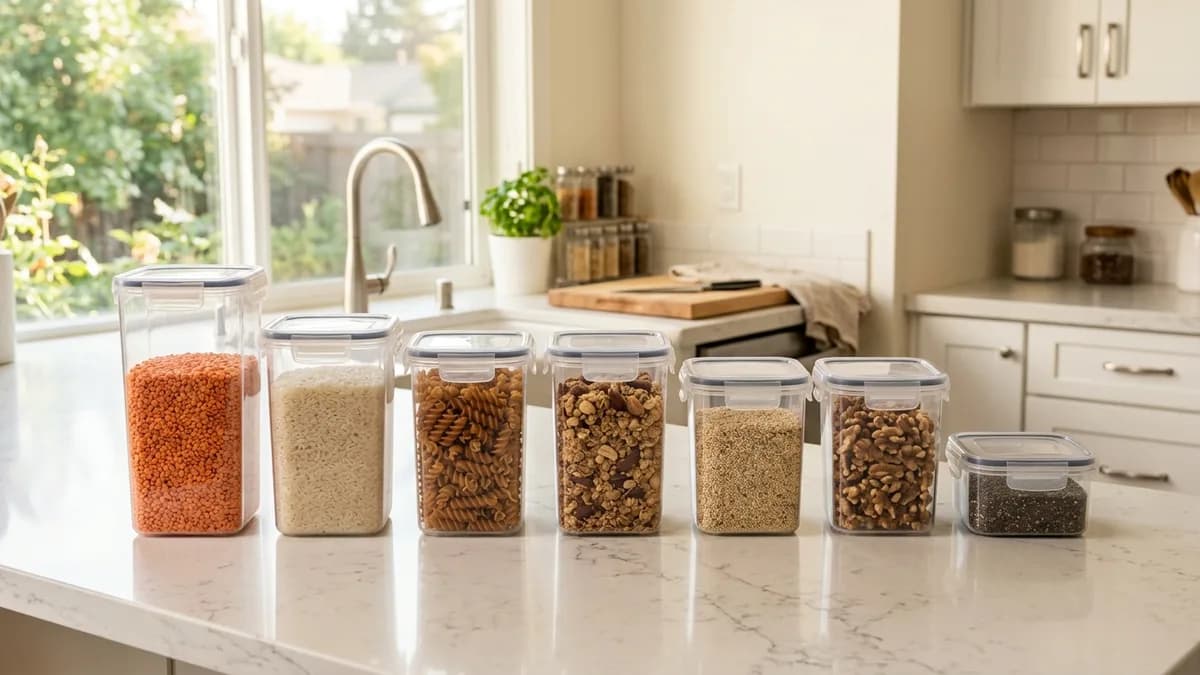
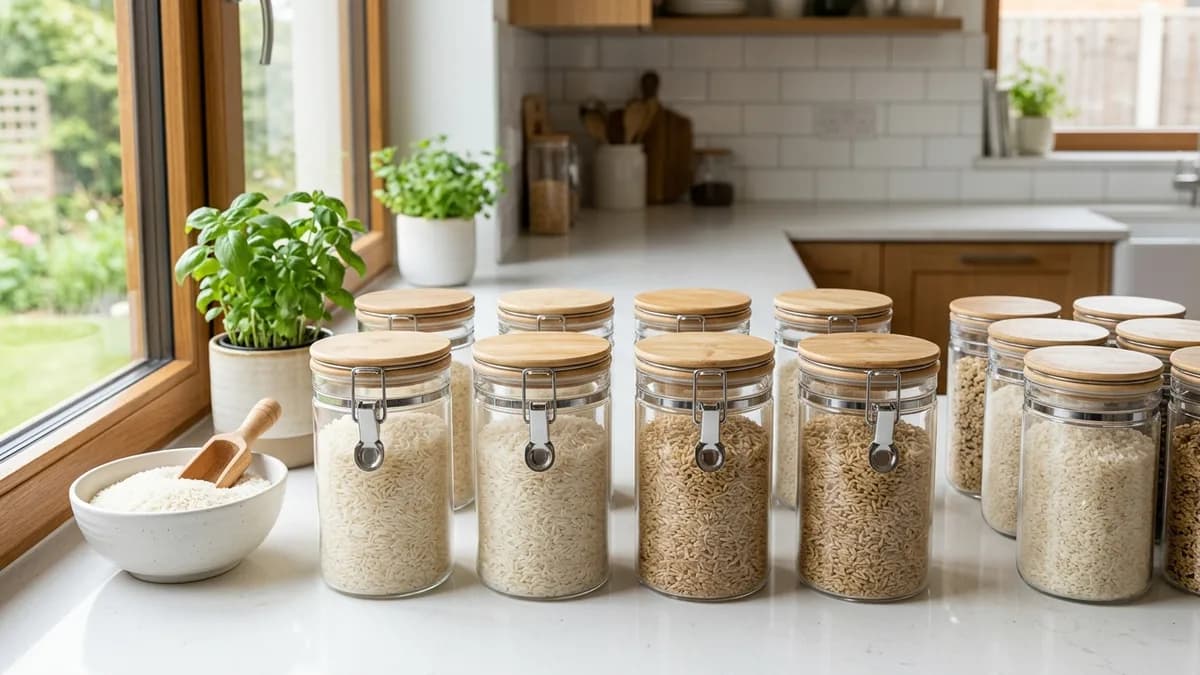
Method 6: Use Transparent Containers for Dry Ingredients
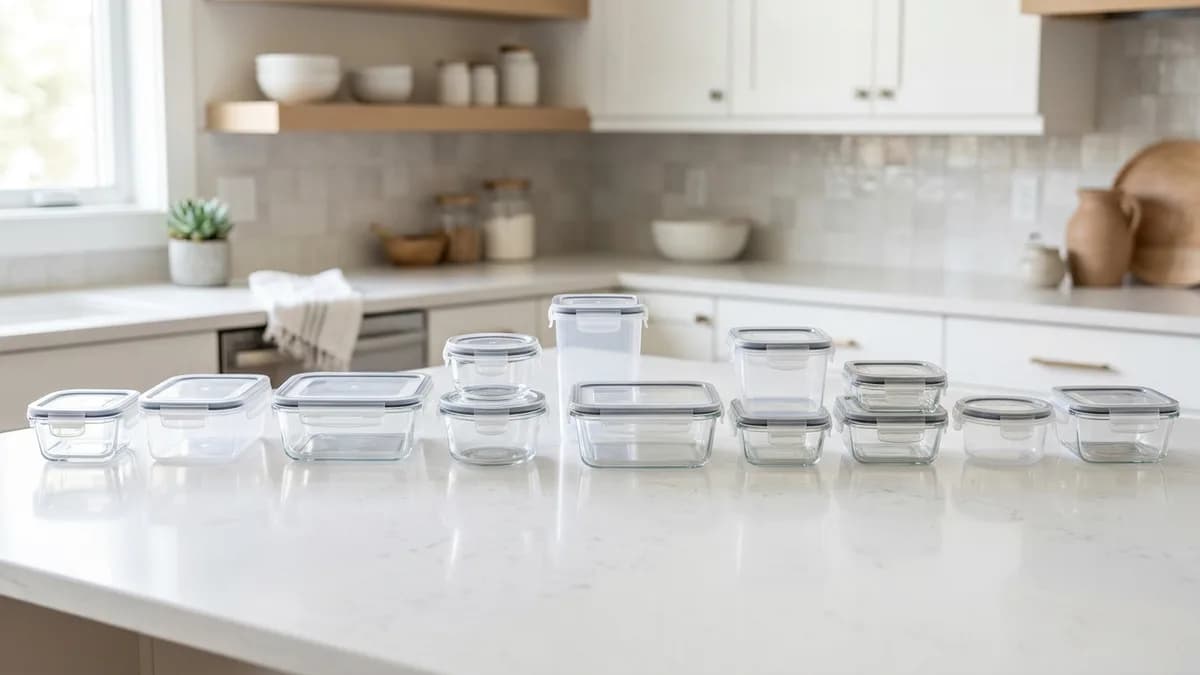
Replace original packaging for dry ingredients (flour, sugar, rice, instant noodles) with airtight transparent containers. The benefits are multiple: ingredients last longer, you can easily see remaining stock, and it looks much neater than various-sized colorful packaging.
Label each container with its contents and expiration date. Arrange containers in uniform sizes so they can be stacked and save space in your pantry or cabinet.
Method 7: Optimize Under-Sink Space
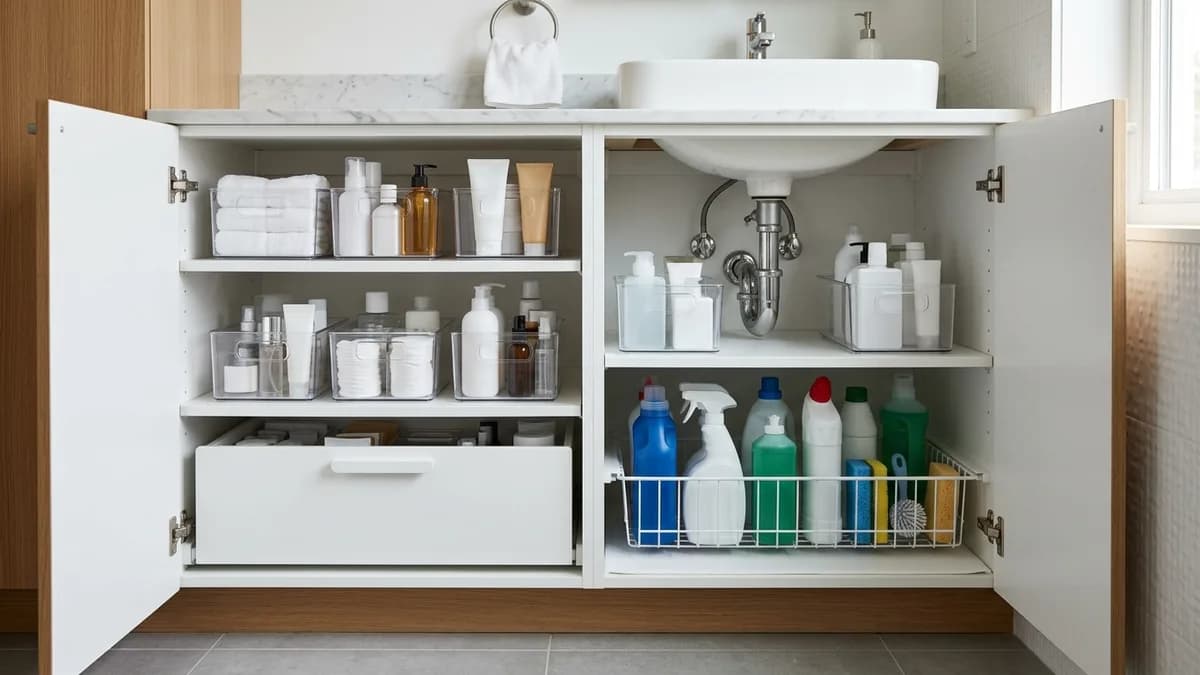
The area under the sink often becomes a dumping ground - full of disorganized items. Install hanging racks on the inside of the door to store dish soap and sponges. Use small storage boxes to group items: one box for cleaning supplies, one for plastic bags and trash.
Method 8: Choose Multi-Functional Kitchen Equipment
In a small kitchen, every appliance must work hard. Avoid buying tools with only one function. It's better to have one quality food processor than three separate tools (blender, chopper, mixer).
Essential multi-functional kitchen equipment for small kitchens: a cutting board with collection container, a collapsible strainer, and a quality knife set that replaces dozens of cheap knives. For a complete guide, read essential kitchen equipment for new households.
Method 9: Spice Organization System
Indonesian kitchen spices are very diverse - from dry spices, wet pastes, bottled sauces, to sambal pastes. Without a clear system, spices can take over your entire kitchen.
Group spices into three categories: daily spices (salt, sugar, soy sauce, cooking oil) near the stove, weekly spices (dry spices, sauces) on wall shelves, and rarely-used spices (baking ingredients, seasonal spices) in upper cabinets. Also consider making a DIY spice rack customized to your kitchen width.
Method 10: Proper Lighting
Lighting can make a small kitchen feel spacious or cramped. Use LED strip lights under your upper cabinets to illuminate work areas without adding hanging lights. Choose 4000K color temperature (natural white) which is ideal for kitchens - bright enough to work but not glaring.
If possible, add a small mirror or glossy backsplash that reflects light. This visual trick makes your kitchen look twice as large as it actually is.
Method 11: Daily Cleaning Routine
Small kitchens can't tolerate delayed cleaning. Just one meal's dirty dishes can fill your counter. Get in the habit of washing dishes right after cooking, not after eating. Wipe down counters and the stove every night before bed.
Create a weekly schedule: Monday clean the refrigerator, Wednesday check expiration dates on spices, Saturday deep clean the entire kitchen. This small consistency prevents dirt buildup that requires major effort to address.
Method 12: Choose the Right-Sized Kitchen Furniture
For a small kitchen, consider a minimalist kitchen set specifically designed for limited spaces. Choose cabinets with sliding doors (not swing doors) so they don't take up space when opened. A fold-down wall-mounted table also works great as an additional prep area that can be folded away when not in use.
Also check out minimalist modern kitchen set inspiration and minimalist dish rack design for modern kitchens for visual references you can adapt to your kitchen size.
Right Kitchen Storage Investment
An organized kitchen requires quality storage products. Visit Sesoris to find versatile racks, airtight food containers, and various kitchen storage solutions designed for Indonesian households.
FAQ - Frequently Asked Questions
1. What kitchen layout works best for small spaces?
For very small kitchens (less than 2 meters wide), a galley layout (single-sided) is the best choice. If 2-3 meters wide, an L-shaped layout provides more counter and storage space. Avoid island counters in kitchens under 8 square meters.
2. How do I eliminate odors in a small kitchen?
Install an exhaust fan with at least 150 CFM capacity and run it while cooking. Place baking soda containers in kitchen corners to absorb odors. Clean your trash bin daily and ensure drain pipes aren't clogged. Cross-ventilation (windows on two different sides) also helps significantly.
3. Can a small kitchen still look aesthetically pleasing?
Absolutely. Use a monochromatic color scheme (one color with various shades) to create a spacious feel. Add one or two small plants (herbs like basil or rosemary that are also functional). Uniform containers and consistent labeling immediately make your kitchen look professional.
4. What's the minimum budget to reorganize a small kitchen?
With $30-60 USD, you can already buy wall shelves, container sets, and pegboards. For light renovations including a cheap minimalist kitchen set, prepare $180-480 USD depending on your material choices.
5. How do I organize a small kitchen without upper cabinets?
Use open shelving made of iron or wood mounted on walls. This provides vertical storage without the heavy impression created by closed cabinets. Combine with pegboards for cooking tools and magnetic strips for knives. Make sure items on open shelves are neatly arranged since everything is visible.
Weekly Home Tips
Get home organization ideas, product picks, and exclusive deals delivered weekly.
No spam. Unsubscribe anytime.