
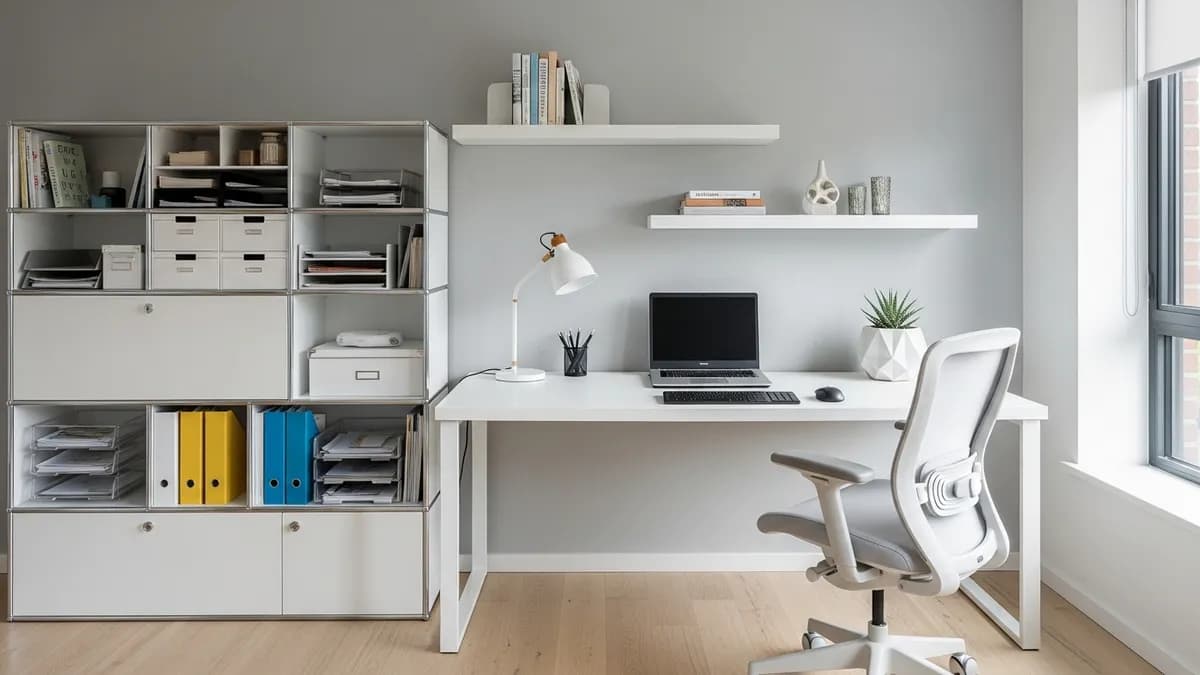
Home Office Organizer: How to Set Up a Productive Workspace
A home office organizer is a system for arranging your desk, documents, cables, and work tools so a home workspace feels productive without needing a big room. The key is not buying a pile of accessories but building a clear workflow: active items within reach, archived items away from the desk, and cables kept out of your typing zone.
In my experience, a tidy desk does not mean an empty desk. A good desk keeps the essentials in consistent positions. Laptop, notebook, charger, pens, active documents, and a water bottle can all live on the desk, as long as each has its own zone. For more background, see our <a href="/blog/home-organizer">home organizer</a> guide and our <a href="/category/office">office organizer</a> collection.
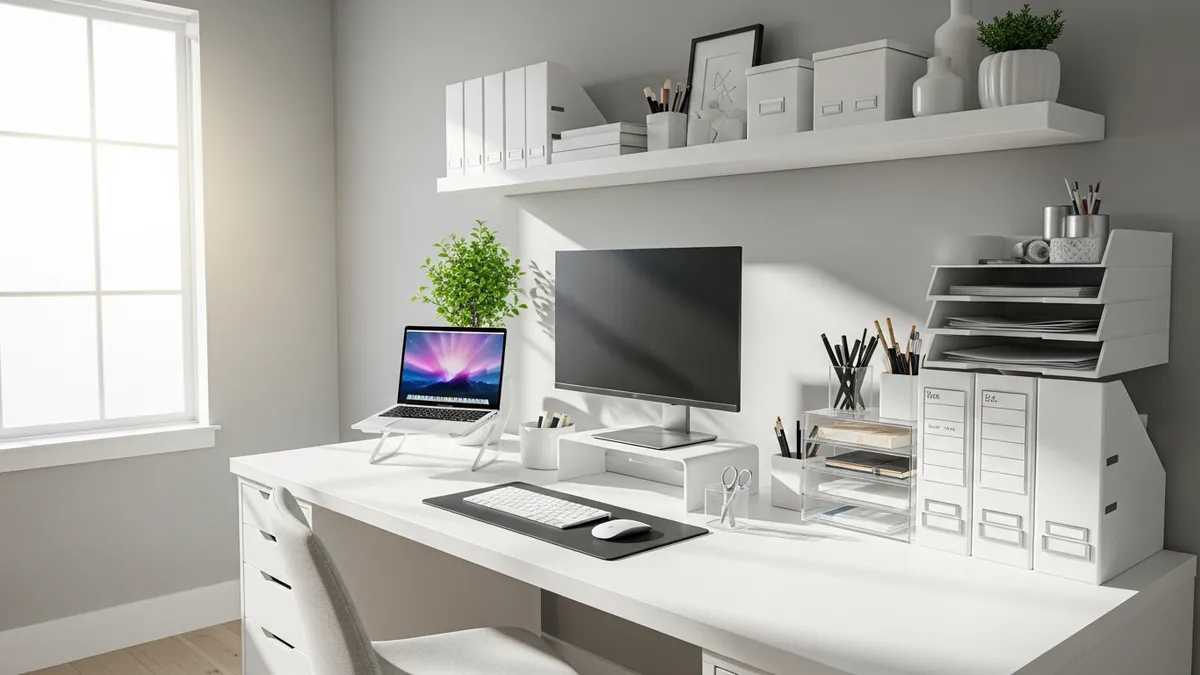
Table of Contents
- Audit your desk before buying organizers
- Productive work zones for small homes
- Organizers for documents, cables, and stationery
- Basic ergonomics people ignore
- A daily system so the desk never refills
- Recommended setups by job type
- Home office organizer FAQ
Audit your desk before buying organizers
The first step before buying any home office organizer is a desk audit. Take everything off, then sort it into four categories: used daily, used weekly, archive, and irrelevant. The last category is usually the most surprising. Old receipts, cables for devices you no longer own, brochures, empty boxes, and dead pens.
I do not recommend buying an extra drawer before the audit is finished. New drawers often help unimportant items survive longer. Reduce what lives on the desk first, then decide which organizers you truly need. The principle: storage follows your work habits, not the other way around.
After the audit, write down your three biggest friction points. Are cables a mess, do documents scatter, or do pens keep disappearing? The answers set your priorities. If cables are the main problem, buy a cable box and velcro ties. If documents are the problem, buy a tiered tray and labeled folders. If stationery is the problem, a small cup organizer is enough.
Productive work zones for small homes
A home workspace often shares a room with the bedroom, living room, or dining table. That is why zoning matters. Create a core zone within one arm's length of your seat. Only active items used while working are allowed in this area. Everything else goes into a drawer, a side shelf, or an archive box.
In a small home, a folding desk or slim desk can still be productive if you use vertical storage. Wall shelves, pegboards, and hanging organizers lift items off the desk surface. In my view, the common mistake remote workers make is assuming a small desk cannot stay tidy. A small desk actually forces a more disciplined system.
Use one inbox tray and one outbox tray for documents. The inbox holds documents that need processing. The outbox holds documents that are finished but not yet filed. This keeps paper from spreading across the whole desk. When everything lands in one pile, important work gets buried under whatever arrived last.
Organizers for documents, cables, and stationery
Home office organization most often fails on three fronts: cables, paper, and small tools. Cables need ties and a route. Documents need an order. Stationery needs a shallow container so it stays visible. Never mix all three in one big drawer, because that drawer quickly becomes a mystery box.
For cables, use simple labels like laptop, lamp, monitor, and spare charger. A cable box hides the power strip, but leave some ventilation. For documents, separate tax records, invoices, contracts, and project notes. For stationery, keep only 2 or 3 pens that actually work on the desk; the rest goes into backstock.
I like the clean-surface rule: at least 60 percent of the desk surface should be empty when you start working. Not for aesthetics, but so your brain is not constantly processing visual objects. The more items in front of your eyes, the more often your attention jumps.
Basic ergonomics people ignore
Even great organizers are useless if your working posture wears your body out. The screen should sit at eye level, the keyboard within easy reach, and your feet planted flat. The <a href="https://www.osha.gov/etools/computer-workstations">OSHA computer workstation guidance</a> emphasizes adjusting the chair, monitor, keyboard, and mouse so the body never holds an awkward position for too long.
At home, ergonomic fixes do not have to be expensive. A thick book can serve as a temporary laptop stand. A sturdy box can serve as a footrest. A small desk lamp reduces eye strain at night. What matters is that no organizer blocks your arm position or forces you to keep hunching over to grab things.
A slightly contrarian take: an Instagrammable desk is not necessarily a productive desk. Many pretty setups cram too many decorations, diffusers, figurines, and small plants into the primary work zone. If decor squeezes your hand movement, move it to a side shelf. A workspace should look pleasant, but function comes first.
A daily system so the desk never refills
The best daily system takes only 5 minutes. When you finish working, return pens to the cup, coil the cables, move the mug, toss unneeded paper, and empty the outbox tray. This small routine prevents the desk from becoming a weekend-sized cleanup project.
Use the visual shutdown rule. Before the laptop closes, the desk surface must return to ready-for-tomorrow condition. If a document is unfinished, place it in the inbox tray with a short sticky note. Never leave active documents scattered, or tomorrow you will burn time rebuilding context.
For creative workers, reserve one inspiration area, not the entire desk. It can be a small moodboard, an idea notebook, or a reference shelf. Creativity needs raw material, but raw material still needs boundaries. Without them, a creative desk turns into a project warehouse that makes starting work feel heavy.
Recommended setups by job type
Administrative workers usually need document trays, folders, labels, and a small scanner. Designers and content creators need room for a tablet, a small camera, memory cards, and hard drives. Customer service reps need a headset stand, quick-note pads, and easy cable management. Every job has a different rhythm, so the organizer setup should differ too.
If you work hybrid, prepare a small go-bag with a charger, mouse, headset, and notebook. Do not tear down your desk every morning. Duplicating cheap items like spare cables is often more efficient than hunting for your only charger. For small-space storage inspiration, take a look at these <a href="/blog/wall-to-wall-shelf-ideas-transform-home-storage-2026">wall shelf ideas</a> that suit a workspace.
The bottom line: a good home office organizer helps work start faster. If it takes 10 minutes just to clear the desk before opening the laptop, the system is not working yet. A realistic target is a desk that is ready to use in 60 seconds.
Sample desk layouts for different rooms
For a desk in the bedroom, limit visual clutter because the same room is used for rest. Use a small drawer for cables, one document tray, and a desk lamp that is not oversized. After work, close the laptop and put your gear into one box so the room feels like a resting place again.
For a desk in the living room, choose organizers with a neutral look. Fabric boxes, wooden trays, or slim drawers blend more easily with family decor. Keep sensitive documents in closed folders since guests often see this area. A living room setup has to look tidy from the front, not just feel convenient to the person at the desk.
For frequent video meetings, the area behind your chair is part of the organization too. An overstuffed shelf looks distracting on camera. Pick just two or three visual elements, for example a small plant, work books, and a closed box. A simple background makes meetings look more professional without expensive decor.
Home office organizer shopping checklist
Before buying, write down your desk's main problems. If the problem is cables, do not get tempted by a decorative shelf. If the problem is documents, do not just buy a pretty box with no labeling system. Organizer shopping should solve a specific problem, not add new objects to the desk.
Prioritize products that are easy to move, easy to clean, and sized for your desk. For remote workers, modular organizers are the safer bet because setups change. Today you use only a laptop; next month you might add a monitor. A modular system keeps the desk flexible without replacing everything.
Home office organizer FAQ
What is the most important home office organizer?
Prioritize cable management, a document tray, and a small stationery holder. These three areas are the most common sources of desk clutter.
How do I organize a small desk?
Use vertical shelving, reduce the number of active items, and keep archives away from the desk surface.
Is a pegboard a good fit for a workspace?
Yes, if you use small tools often. Just do not overload it, so it stays easy to clean.
How do I tidy up my cables?
Label every cable, use velcro ties, and hide the power strip inside a cable box.
What is the difference between a drawer and a document tray?
A drawer suits archives, while a tray suits active documents that need to stay visible.
Is decor allowed on a work desk?
Yes, but it must not occupy your primary hand zone. Move larger decor to a side shelf.
How often should a work desk be tidied?
Ideally 5 minutes at the end of every workday, so the desk is instantly ready the next morning.
Conclusion
An effective home office organizer setup starts with an audit, zoning, and a daily system. Buy products only after you know your main problem: cables, documents, stationery, or tight space. With the right organizers, a home workspace stays productive, tidy, and comfortable to use every single day.
Weekly Home Tips
Get home organization ideas, product picks, and exclusive deals delivered weekly.
No spam. Unsubscribe anytime.
Explore More Articles
- 30+ Best Kids Room Organization Ideas to Create a Fun, Tidy Space in 2026
- 30+ Best Small Kitchen Organization Ideas to Maximize Every Inch in 2026
- 25+ Best Indoor Plant Shelf Ideas to Greenify Your Home in 2026
- 25+ Best Stationery Organizer Ideas to Transform Your Desk in 2026
- How to Store Food to Last Longer: Complete 2026 Guide
- 30+ Kitchen Food Storage Ideas for a Tidy 2026
- Storage Shelving Ideas for Every Room
- Minimalist Shelf Ideas: 25+ Stylish Picks for 2026