
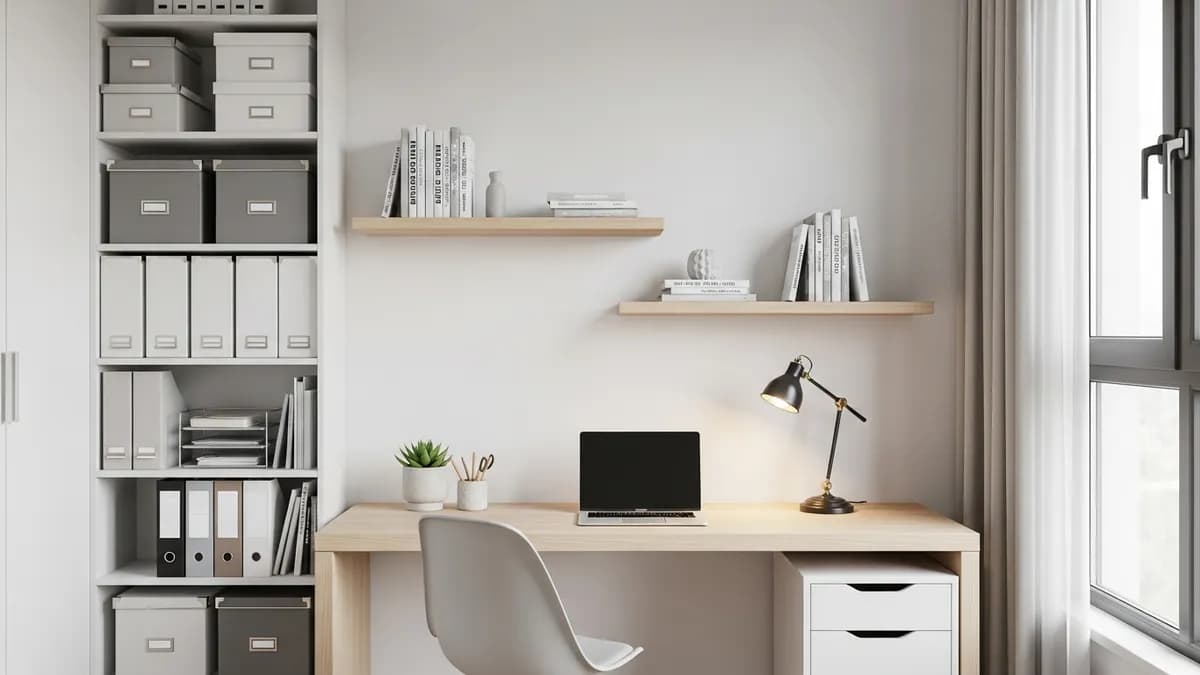
Practical Home Organizing Tips That Keep Your House Tidy
Home organizing tips only work when they match the reality of your home: humid weather, rooms that serve multiple purposes, monthly stock-up shopping, several family members, and belongings that constantly migrate between rooms. Copying a spotless minimalist feed is not enough. What a busy household needs is a system that survives daily family life.
I prefer a practical approach: cut the items nobody uses, group things by activity, then choose storage that is easy to clean. A tidy home is not a home without stuff. A tidy home is one where every important item has an address. You can start with our <a href="/blog/home-organizer">home organizer</a> guide or browse the <a href="/shop">Sesoris storage collection</a> for whatever room needs help first.

Table of Contents
- Start with how your household actually lives
- The 15-minute zone method
- A category system the whole family understands
- Storage for humid homes
- Keeping bulk shopping under control
- A weekly routine that is actually realistic
- FAQ: home organizing tips
Start with how your household actually lives
Good home organizing starts with habits, not inspiration photos. Most homes have a transition area near the front door where shoes, helmets, school bags, delivery boxes, and umbrellas all collide. If this area has no system, the whole house ends up feeling messy, because the stream of incoming stuff never stops.
Build a simple drop zone. Add hooks for keys and bags, a basket for incoming packages, a small rack for everyday shoes, and a dedicated spot for umbrellas. It does not need to be expensive. What matters is that everyone understands: things from outside the house stop here first, then move to their permanent home later.
In my experience, strict minimalism often fails in family homes because it demands emptiness. Families with kids, aging parents, or a home business legitimately need a lot of stuff. A healthier target is easy to find, easy to clean, and out of the walkway. That is far more realistic than chasing a house that always looks empty.
The 15-minute zone method
If the house feels like too much to tackle, use the 15-minute zone method. Pick one small area, say a kitchen drawer, the shoe rack, the dining table, or the medicine cabinet. Set a 15-minute timer. In that window, do three actions: empty it, sort it, put it back. Do not move to another room until the zone is finished.
This method suits busy households because few people have a full free day for decluttering. Chores, kids, work, and commutes make long sessions impossible to sustain. Short sessions slide into a daily routine much more easily. Do it 4 times a week and you have reset 16 small zones in a month.
The key to this method is boundaries. Do not open the entire closet if you only have 15 minutes; pick one shelf. Do not sort every toy while your child is mid-play; pick one toy box. Small finished progress beats a big project that stalls halfway and leaves the house messier than before.
A category system the whole family understands
The category system has to make sense to everyone in the house. Avoid hyper-detailed categories that only one person can decode. For the kitchen, use categories like spices, cookware, dry goods, snacks, and tableware. For a kid's room, use books, small toys, big toys, school, and everyday clothes.
Labels help enormously, especially with closed boxes. They do not need fancy printing; a slip of paper and clear tape is enough. For young kids, add a simple picture so they can put things back themselves. That turns organizing into a family habit instead of one person's job.
I often recommend the one category, one container rule. When a category overflows its container, do not immediately buy another container. First check whether everything inside still earns its place. If every category keeps getting extra containers, the house looks tidy for a moment, but the total amount of stuff keeps climbing. That is not organizing; that is relocating the problem into a new box.
Storage for humid homes
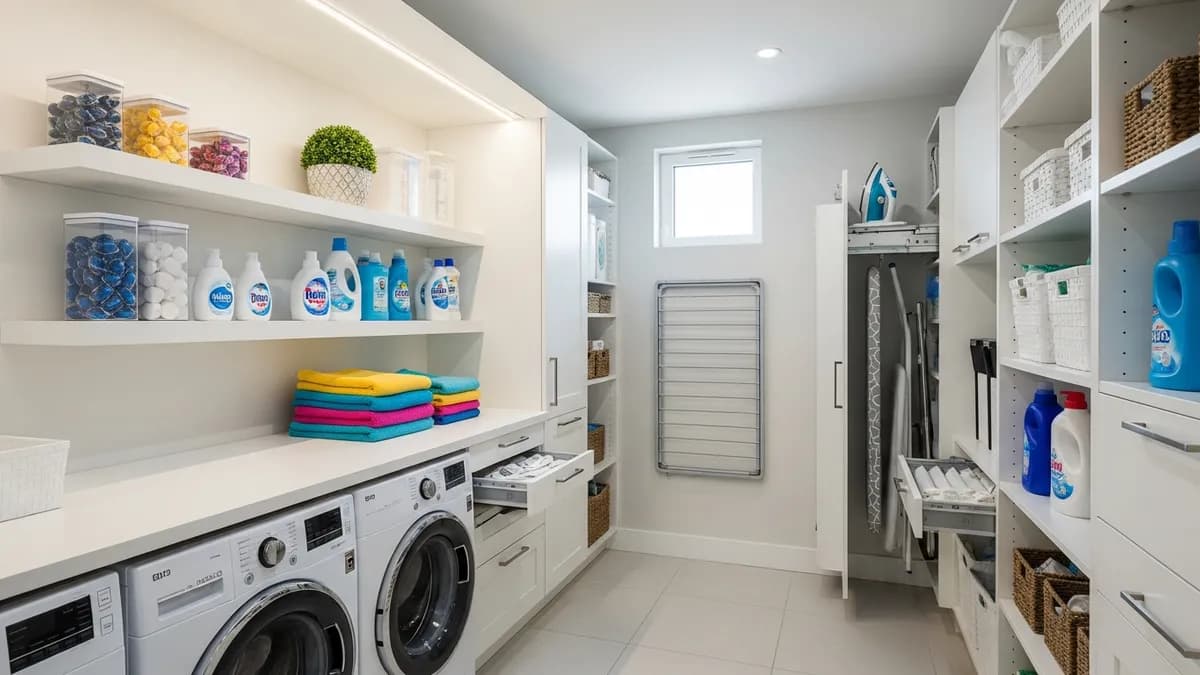
Humid homes need storage that is easy to wipe down and does not absorb moisture. For the kitchen, bathroom, laundry area, and storage room, choose thick plastic, stainless steel, glass, or boxes with tight-fitting lids. In dry areas like the living room, fabric and woven materials are still fine as long as they do not sit directly on a damp floor.
Humidity makes belongings smell, grow mildew, or discolor quickly. So never store fabric, documents, or food stock directly on the floor. Use tiered shelving or a small riser so air can circulate underneath. For food, the reduce-and-reuse principles from the <a href="https://www.epa.gov/recycle/what-you-can-do">EPA</a> apply here too: buy what you need, use safe reusable containers, and trim the excess stock that ends up wasted.
A slightly contrarian note: closed boxes are not always better. In damp areas, a sealed box with no ventilation traps odors. For items that get wet often, choose perforated baskets. Save the closed boxes, paired with silica gel and a spot away from damp walls, for documents and dry goods.
Keeping bulk shopping under control
Bulk shopping trips are often what refill a freshly organized home. Not because the shopping is wrong, but because new stock arrives before the old stock is visible. The fix is a transparent stock zone. Use clear boxes or open shelving for things you rebuy often: soap, tissues, spices, snacks, and cleaning supplies.
Apply first in, first out. Older items get used first; new items go to the back. Write the purchase month on anything that can expire. It sounds trivial, but it dramatically cuts duplicate purchases. Most people rebuy soap or spices simply because the old stock is hidden at the back of a cabinet.
In a small home, cap your stock by shelf capacity, not by the deal. A 12-bottle promotion looks like savings, but if it stuffs your storage and buries everything else, the cost in space goes up too. I would rather keep a tidy 1 to 2 month supply than a 6 month hoard that turns the house into a mini convenience store.
A weekly routine that is actually realistic
The weekly routine does not need to be elaborate. Pick one day for a quick reset: return items to their homes, check the laundry, toss empty packaging, wipe down the storage areas, and glance at your supply stock. Done consistently, the house never needs one of those exhausting marathon cleanups.
Build a checklist by room. Monday the entryway, Tuesday the kitchen, Wednesday the bathroom, Thursday the bedroom, Friday the desk, Saturday the laundry, Sunday rest or a light review. Do not cram everything into a single day. A small repeating system outlasts a cleaning marathon every time.
The step people skip is evaluation. Once a month, look at which category keeps descending into chaos. If the shoe rack is always overflowing, maybe the shoe count needs trimming or the rack is the wrong size. If the dining table keeps collecting packages, the drop zone is not working yet. Organizing is never one-and-done. It has to adapt to your family's rhythm.
Putting it into practice in the messiest areas
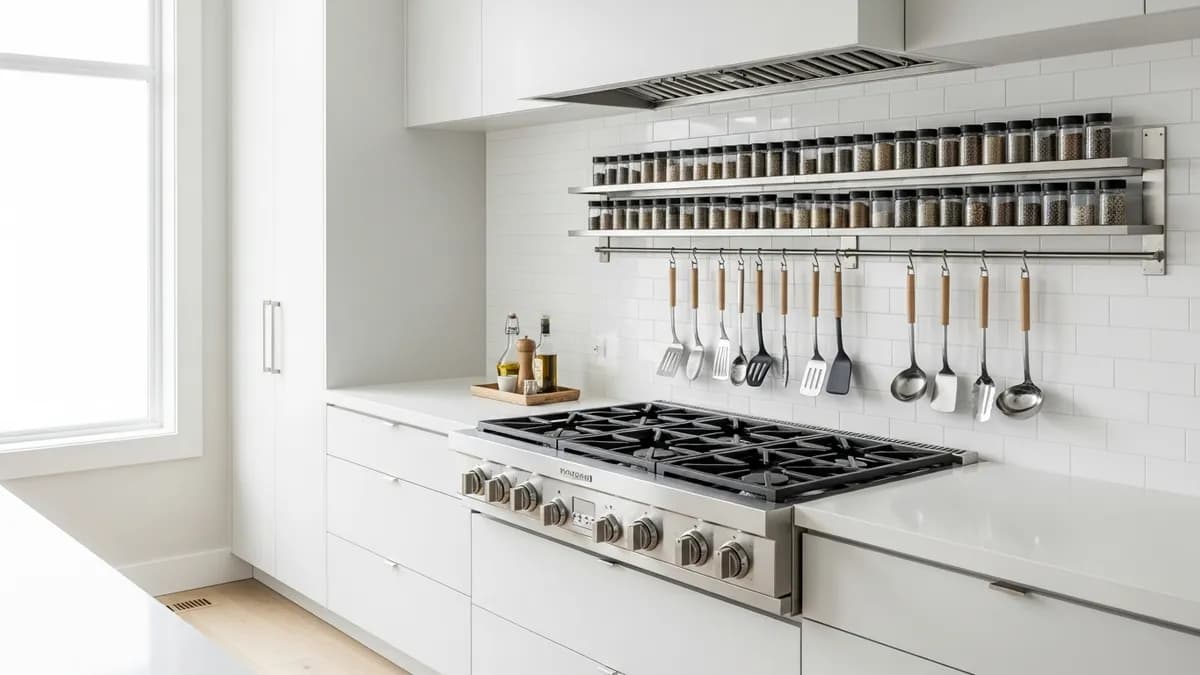
In the kitchen, start with everyday spices and cookware. Keep the spices you actually use on a tray near the stove, and move backup stock to a different shelf. Never mix active spices with reserves, or you will never see what has actually run out. In a small kitchen, one active tray is far more useful than a dozen little boxes.
In the bedroom, focus on the surfaces that collect things: the nightstand, the chair, and the floor near the closet. Add a transit basket for clothes that are clean enough to wear once more. Without a transit basket, the bedroom chair is guaranteed to become a clothing mountain. That is not laziness; it is the absence of a temporary address.
In the living room, cap how many items are allowed to live on the coffee table. Remotes, tissues, and one small catch-all basket are plenty. Kids' toys can have an open bin that slides out easily. The test: the system should reset in 5 minutes before bed, not a beautiful system that demands 30 minutes every night.
Getting the whole family on board
A household system collapses fast if only one person understands it. Bring the family into a few simple rules: shoes go back on the rack, school bags get hung up, packages go in the transit basket. Do not start with a long rulebook. Pick the three habits with the most visible payoff.
For kids, use low, easy-open storage. For older family members, avoid heavy boxes on high shelves. With your partner, agree on personal zones that do not need micromanaging. Healthy organizing provides structure while still respecting how each person uses the home.
FAQ: home organizing tips
What is the first step to organizing a messy house?
Start with one small zone, not the whole house. Pick the area that disrupts your daily routine the most.
Do I need to buy a lot of organizers?
No. Sort and declutter first, then buy organizers sized to the categories that remain.
How do I keep the house tidy with small kids?
Use low bins, picture labels, and simple categories so kids can put things back themselves.
What is the best storage for a humid home?
Thick plastic, stainless steel, glass, and perforated baskets are the safest choices for damp areas.
How long should a decluttering session be?
Start with 15 minutes per zone. Short sessions are far easier to keep up consistently.
How should I organize bulk shopping stock?
Use clear boxes, follow first in, first out, and cap your stock at what the shelf can hold.
When should an organizing system be changed?
Change it when one area keeps getting messy no matter how many times you tidy it.
Conclusion
Home organizing tips that actually stick are realistic about humidity, active families, and stock-up shopping habits. Start with small zones, use simple categories, choose moisture-tolerant storage, and run a weekly reset. With a system this easy to follow, the house feels genuinely more orderly without ever having to feel empty.
Weekly Home Tips
Get home organization ideas, product picks, and exclusive deals delivered weekly.
No spam. Unsubscribe anytime.
Explore More Articles
- Stove Cabinet: Integrated Design Solutions for Organized Kitchens
- 25 Brilliant Living Room Storage Ideas to Transform Your Space in 2026
- Essential Cleaning Supplies Organization: Transform Your Home Storage System in 2026
- Craft Storage Room Ideas: Transform Your Creative Space with Smart Organization in 2026
- 25 Creative Storage Ideas for Small Space: Transform Your Tiny Home in 2026
- Hanging Dish Racks: Perfect Solution for Kitchens Without Cabinet Storage
- BPA-Free Storage Containers for Food: Complete Tutorial Guide to Safe Food Storage in 2026
- Very Small Closet Organization Ideas: Transform Your Tiny Storage Space in 2026