
Tips to Keep Your Kid's Room Tidy
A tidy kid's room usually falls apart not because the child is lazy, but because the storage system was designed for adult height. Closet handles mounted at grown-up level, toy boxes with heavy lids, and handwritten labels a five-year-old cannot read all guarantee that cleanup always depends on a parent. This guide covers how to set up a kid's room so the child can put things away on their own, complete with measurements, budget notes, and adjustments for each age.
The goal is not a photo-ready room, but a system that still works on a rushed Monday morning. If you are just starting to organize the whole house, these whole-home organizing tips make a good foundation.
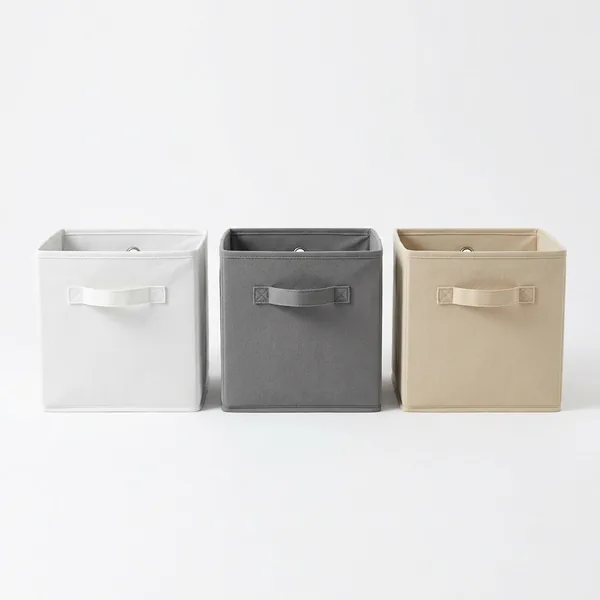
Table of Contents
- Lower Storage to Your Child's Reach - Picture Labels for Kids Who Cannot Read Yet - Toy Rotation to Stop the Pile-Up - The Five-Minute Bedtime Routine - Choosing Safe Bins for a Kid's Room - Adjusting the System by Age - Frequently Asked Questions - Conclusion
Lower Storage to Your Child's Reach
Start by measuring your child's comfortable reach: have them stand up straight and extend an arm forward, not upward. That point is the upper limit of genuinely useful shelving. For ages 2 to 4, functional storage should stop at about 30 to 35 inches, while ages 5 to 8 are usually comfortable up to about 4 feet. Everything above that line becomes the parent zone: spare bedding, toys currently out of rotation, and things your child does not need to handle every day.
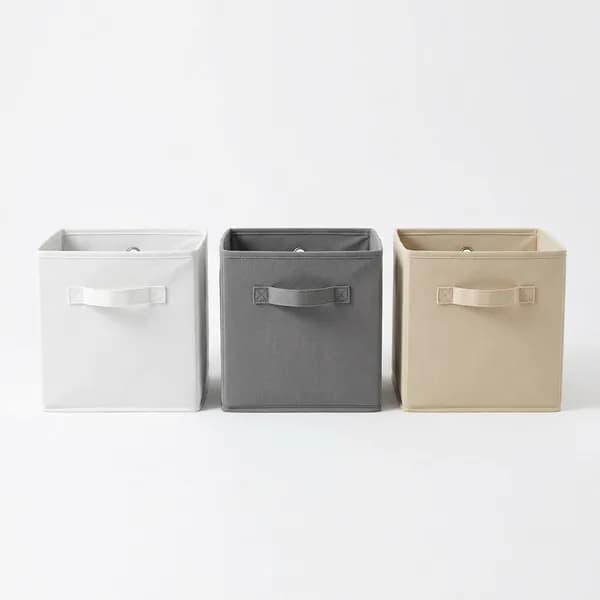
A six-cube or nine-cube shelf is the backbone of many kids' rooms because each opening fits a roughly 11-inch fabric storage bin. Cube shelves are widely available at budget-friendly prices depending on the material, and the fabric bins that go with them are inexpensive enough to buy several at once.
Inside the closet, add a second hanging rail at about 35 to 40 inches using a tension rod so your child can hang up their own jacket and school clothes. The same principle applies to drawers: everyday clothes in the bottom drawers, seasonal items on the highest shelf. The details are covered in our closet organization guide.
Quick tip: Crouch down to your child's eye level and look at the room from there. Anything they cannot see from that height might as well not exist, and that is exactly why toys on high shelves never make it back to their spot.
Picture Labels for Kids Who Cannot Read Yet
Kids ages 3 to 6 are not fluent readers yet, so word labels have almost no effect on their habits. What works far better is photo labels: snap a picture of each box's contents with your phone, print it at about 2 to 3 inches square, and stick it on the front of the bin. Your child simply matches the object in their hand to the picture on the box, so putting things away feels like a game instead of a chore.
Print all the labels at once on a single sheet at home or a local print shop for next to nothing. Cover them with wide clear tape so they survive sweaty little hands. For a child who is starting to learn letters, add one bold word under each picture, like BLOCKS, CARS, or DOLLS, so the labels double as reading practice.
The most common mistake is categories that are too specific. Labels for race cars, trucks, and tow trucks make a child stop thinking and dump everything into the nearest box. Four to eight broad categories are far easier to maintain, especially with color coding on top: blue bin for vehicles, yellow bin for art supplies. Since box contents change every few months, choose labels that are easy to swap, like washi tape.
Toy Rotation to Stop the Pile-Up
Toy rotation means only a third of the collection is active in the room, with the rest stored out of sight. Gather every toy on the floor, pull out anything broken or outgrown to toss or donate, then split what is left into three balanced groups, each with a mix of types: one building set, one pretend-play toy, one fine-motor game, and one book.
Store the two inactive groups in closed boxes, on top of the closet or under the bed. For under-bed storage, measure the gap first: most kids' beds leave 6 to 8 inches of clearance, so choose rolling boxes no more than 6 inches tall that slide out without lifting the mattress. Foldable Storage Bins work well here because they collapse flat when empty.
Swap the toy groups every two to four weeks. The payoff is not just a clearer floor: kids play longer with each toy because the choices are not overwhelming, and old toys feel brand new when they reappear a month later. Comfort objects like a favorite stuffed animal or a special blanket should never enter the rotation, because hiding those for the sake of tidiness will make your child reject the whole system.
Quick tip: Before storing a rotated toy group, photograph the contents and tape the photo to the outside of the box. You should not have to dig through three boxes just to find the one block set your child suddenly asks for.
The Five-Minute Bedtime Routine
The cleanup habit that lasts is the one that is short and happens at the same time every day. Five minutes before bed works because your child already knows what comes next: brushing teeth and a bedtime story. Play two of their favorite songs that add up to about five minutes, and when the second song ends, the session is over no matter the result, so cleanup never feels like punishment.
Set a realistic target: a clear floor and an empty desktop. The insides of drawers do not need to be perfect, because standards set too high end with you doing it all yourself every night. For kids under six, tidy up together instead of supervising. An invitation like "let's gather everything with wheels first" works far better than a command to clean the room, which feels too big to start.
Set aside one pause zone for unfinished projects, such as a tray about 16 by 12 inches for a Lego build in progress. Whatever is on it can stay until tomorrow without counting as a mess. Without this rule, kids actually avoid starting longer games because they know everything will be torn down each night.
Choosing Safe Bins for a Kid's Room
The first requirement is weight. A four-year-old is generally comfortable lifting only 3 to 4 pounds, so foldable fabric bins and woven plastic baskets are the safe picks. Solid wood boxes, stiff rattan baskets with fibers that poke, and oversized plastic totes should not be used for anything your child accesses alone.
The second requirement is shape. Choose bins with rounded corners, avoid hinged lids that can pinch fingers, and be wary of cheap thin plastic: once it cracks, the edge turns as sharp as a small knife. Fabric bins earn bonus points because they can go in the wash after a milk or watercolor spill.
The third requirement is the one most often skipped: shelf stability. Any shelf taller than about 30 inches must be anchored to the wall with inexpensive L-shaped anti-tip brackets. Kids climb shelves to reach things on top, and an unanchored shelf can tip over onto them. This is a safety issue, not a tidiness issue.
During humid months, never set cardboard boxes directly on a tile floor, because the bottoms absorb moisture and grow mold. Kids' books and comics also last longer standing upright on an open shelf than stacked flat, and the Minimalist Industrial Bookshelf is a solid option once a grade-schooler's collection starts to grow.
Adjusting the System by Age
For toddlers ages 1 to 3, the goal is dropping things in, not organizing. Three or four large open-top bins are enough, all on the floor or on shelves no higher than about 24 inches, with categories as simple as stuffed animals, blocks, and books. Do not expect items to land in the right box; success at this age means things move from the floor into any container at all.
Preschoolers ages 4 to 6 can handle six to eight picture-labeled categories, shelves up to about 35 inches, and a consistent five-minute routine. Set up one dedicated caddy for pencils and coloring supplies that can be carried to the desk and returned as a single unit, because loose art supplies almost always end up under the furniture.
Grade-schoolers ages 7 to 12 bring new problems: backpacks, school clothes, textbooks, and notes from teachers. Build a landing zone near the bedroom door with a backpack hook at about 45 to 50 inches, a basket for tomorrow's outfit, and one dedicated spot for school papers. Text labels are enough at this stage.
Teenagers from 13 up play by a different rule: a system they did not choose themselves will almost certainly go unused. Involve them in setting up categories for the stuff of this age, like cables and chargers, skincare products, and hobby gear. The growing shoe pile deserves its own solution too, as covered in these shoe storage ideas for small closets.
If siblings share the room, give each child their own bin color, split the shelf into a left side and a right side, and set up one neutral area for shared toys. Without visible ownership lines, nearly every cleanup session turns into an argument over whose stuff is whose.
Frequently Asked Questions
Q: What is the maximum shelf height that is safe and useful for a toddler's room?
Keep toddler-accessible storage at about 30 to 35 inches. Taller shelves can hold parent items, but they must be anchored to the wall with anti-tip brackets, because your child will absolutely try to climb them.
Q: My child refuses to clean up, where do I start?
First reduce the number of active toys through rotation, then cut the categories down to just three or four. Refusal usually happens because the job feels too big. Start with a three-minute session you do together, not instructions from across the room.
Q: How often should toys be rotated?
Every two to four weeks for most kids. The clearest sign it is time: one toy group sits untouched for a full week, or your child keeps complaining of boredom despite having plenty of toys.
Q: How do I make picture labels that actually last?
Print photos of each box's contents at about 2 to 3 inches square, cover them with clear tape or laminate, and stick them on the front of the bin, not on the lid. Lid labels get mixed up the moment your child opens several boxes at once.
Q: The kids' room is only about 10 by 10 feet and shared by two, what helps most?
Use vertical space and the area under the bed: rolling boxes no more than 6 inches tall for underneath, wall shelves above the desk, and different bin colors per child so you do not need a physical divider eating up floor space.
Q: Are fabric bins or plastic bins better for a kid's room?
Fabric bins are lighter, have no sharp corners, and are washable, so they are ideal for toys and clothes. Clear plastic bins suit heavier items like Lego or anything you need to see at a glance, as long as it is not thin plastic that cracks easily.
Conclusion
A kid's room stays tidy not because the child suddenly becomes disciplined, but because the system matches their height, reading level, and stage of development. Lower the storage to their reach, add picture labels for pre-readers, thin out the active toys with a biweekly rotation, then lock it in with a five-minute bedtime routine. Make sure the bins are lightweight with no sharp corners, and that tall shelves are anchored to the wall. Start with one small zone like the toy shelf, then expand once the habit takes hold.
Weekly Home Tips
Get home organization ideas, product picks, and exclusive deals delivered weekly.
No spam. Unsubscribe anytime.
Explore More Articles
- 20+ Best Shoe Storage Cabinet Ideas to Transform Your Home Organization in 2026
- How to Organize Your Closet: A Practical 2026 Guide
- 30+ Kitchen Food Storage Ideas for a Tidy 2026
- Wall Mounted Dish Rack: Complete Buying & Install Guide 2026
- Hanging Kitchen Shelf: Complete Buying Guide for 2026
- Best Storage Containers for Food: Complete Review & Buying Guide for 2026
- 30+ Best Closet Organization Ideas for Nursery: Create the Perfect Baby Storage Space in 2026
- 30+ Best Hallway Closet Organization Ideas to Transform Your Storage Space in 2026