
Minimalist Kitchen Organization: 2026 Guide
The complete 2026 guide to minimalist kitchen organization: tips to make your kitchen tidy, functional, and a joy to use every day.
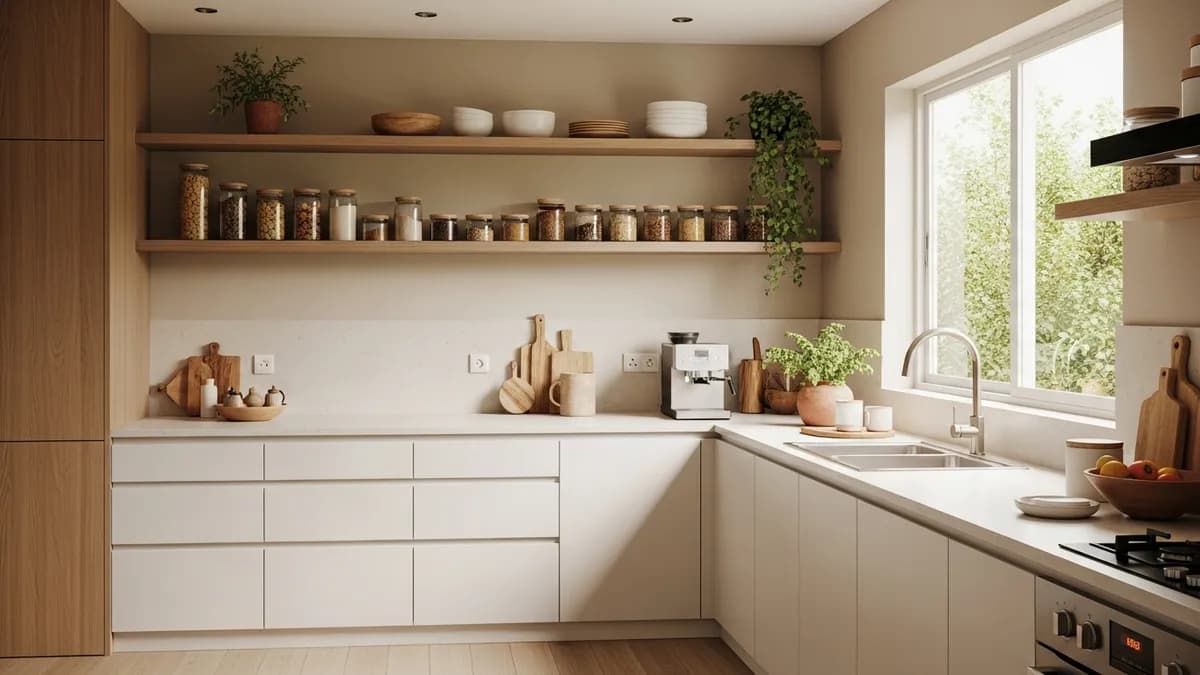
Does your kitchen feel cramped, cluttered, and stressful every time you want to cook? If so, it is time to embrace the idea of minimalist kitchen organization, an approach to setting up your kitchen that puts function, tidiness, and simplicity first, all at once. In 2026, this concept keeps growing in popularity, especially for people living in smaller homes or apartments with kitchens that are not exactly spacious. This article guides you from the very beginning: from the underlying philosophy to the organizing principles to the products that genuinely help you create a minimalist kitchen that is tidy and enjoyable.
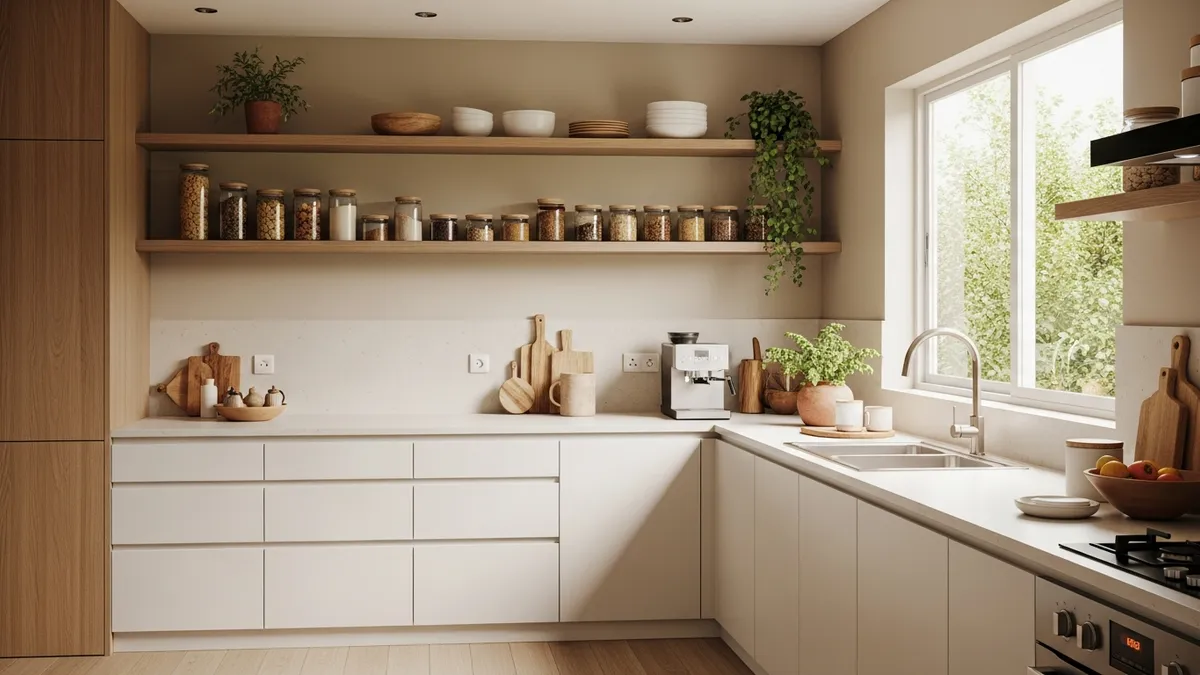
What Is Minimalist Kitchen Organization and Why Does It Matter?
Minimalist kitchen organization is an approach to setting up your kitchen that focuses on three core principles: keeping only the items you truly use, giving every item a proper home, and keeping the visual look clean and clutter-free. This is not just an aesthetic trend, it is a system that genuinely makes life easier.
According to The Spruce, a minimalist kitchen is proven to cut down the time you spend hunting for cookware, which makes cooking more efficient and more enjoyable. Imagine never having to open three different drawers just to find a potato peeler.
For families who spend a fair amount of time in the kitchen each day, having a well-organized kitchen is not just about looks, it is about quality of life. A tidy kitchen makes you more excited to cook, makes it easier to stay clean, and even saves money because you know exactly what you have and what you need to buy.
First Step: Declutter Your Kitchen Before Organizing
Before buying a single organizing product, the most important step is decluttering, the process of sorting through and getting rid of items you no longer need. Many people skip this stage and jump straight to buying new racks or containers, then wonder why their kitchen still feels full.
Here is how to declutter your kitchen systematically:
- Empty out every cabinet and drawer one at a time. Lay everything on the counter so you can see the whole picture.
- Sort into three groups: items you use often (daily or weekly), items you rarely use (less than once a month), and items you never use.
- Evaluate the items you rarely or never use. Can that tool be replaced by something else you already own? If so, donate it or toss it.
- Check the expiration dates on all your food, seasonings, and spices. Toss anything expired.
- Weed out duplicate tools. Do you have three spatulas that do the same job? Keep the single best one.
This process may feel tough at first, especially since we tend to get emotionally attached to our stuff. But once it is done, you will be amazed at how much space you can free up just by removing what you do not need.
For a more complete decluttering guide, you can read our article on decluttering tips for beginners.
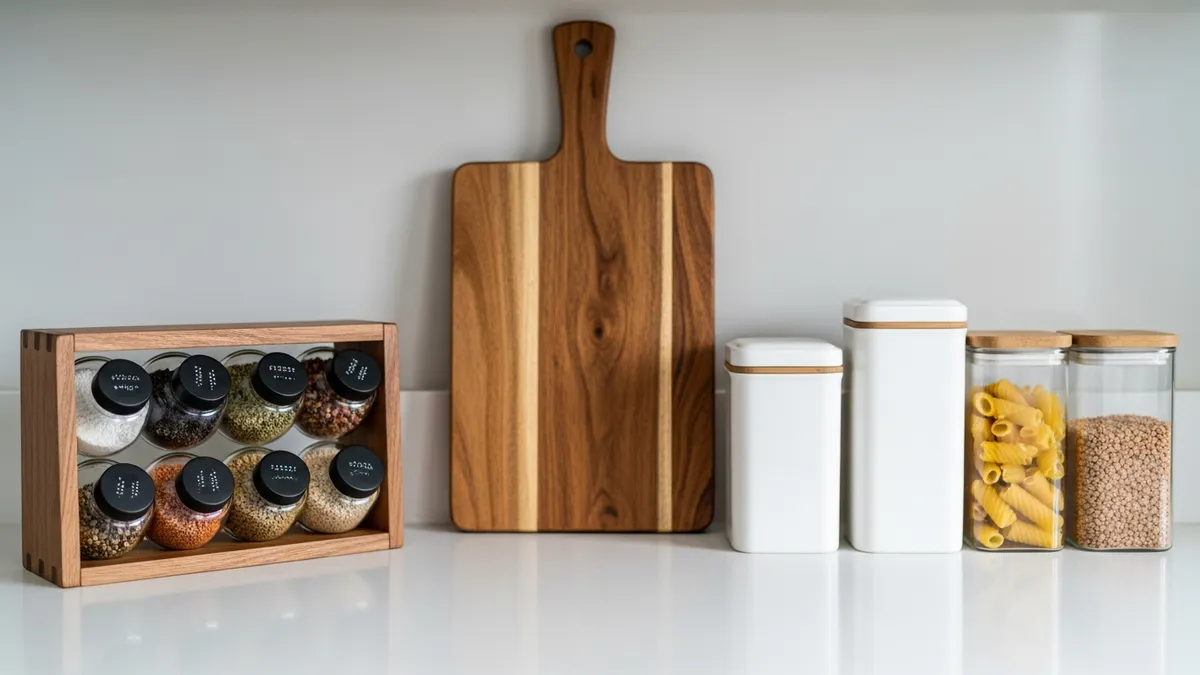
Core Principles of Minimalist Kitchen Organization You Need to Know
Once decluttering is done, it is time to apply the organizing principles. Effective minimalist kitchen organization is built on a few simple but powerful rules:
1. One Home for Each Type of Item
Every category of item needs a fixed, consistent "home." Dry spices always on the spice rack, cooking tools always in the same drawer, food storage containers always in the assigned cabinet. This consistency is what keeps the kitchen tidy even after you use it.
2. Frequently Used Items Should Be the Easiest to Reach
Put the tools you use daily in the easiest-to-reach zone: on the counter or on an open shelf right in front of you. Rarely used tools like baking pans or large pots can go on the top shelf of a cabinet or under the counter.
3. Keep Countertops Clear of Clutter
One hallmark of minimalist kitchen organization is a nearly empty countertop. Limit what sits on the counter to only the things you truly use every day: the stove, a cutting board, and maybe one soap dispenser. Everything else goes inside a cabinet.
4. Use Matching Containers
Swapping the assortment of mismatched food packaging in different shapes and sizes for visually matching storage containers makes the kitchen look far tidier. This is one of the biggest transformations you can make at a relatively affordable cost.
5. Label Every Container
A labeling system is key. When all your containers look the same, a label is the only way to know what is inside without opening each one. Use a tidy label organizer for the best results.
The Zone System: How to Divide Your Kitchen Efficiently
One of the best strategies in minimalist kitchen organization is dividing the kitchen into zones based on function. This concept is known as the *zone system*. The basic idea is simple: group items based on where and when you use them.
Here is a zone breakdown you can apply in most kitchens:
The Cooking Zone is the area around the stove. This is where you keep spatulas, turners, pans, pots, and the seasonings you use most. A stove shelf can be a big help for this zone.
The Prep Zone is the area around your cutting board and work surface. Here you keep knives, peelers, mixing bowls, and the raw ingredients you are prepping.
The Food Storage Zone is the cabinet or pantry shelf where you keep rice, flour, sugar, oil, and other dry goods. Use airtight food storage containers so ingredients stay fresh and everything looks uniform.
The Washing Zone is the area around the sink. This is where you keep dish soap, sponges, and a dish rack for draining freshly washed items.
The Tableware Storage Zone is the cabinet where plates, glasses, bowls, and other tableware live. Set it up with an in-cabinet plate rack to minimize stacking.
By dividing your kitchen into clear zones, you not only make it tidier, you also make cooking more efficient because everything you need is always near where you use it.
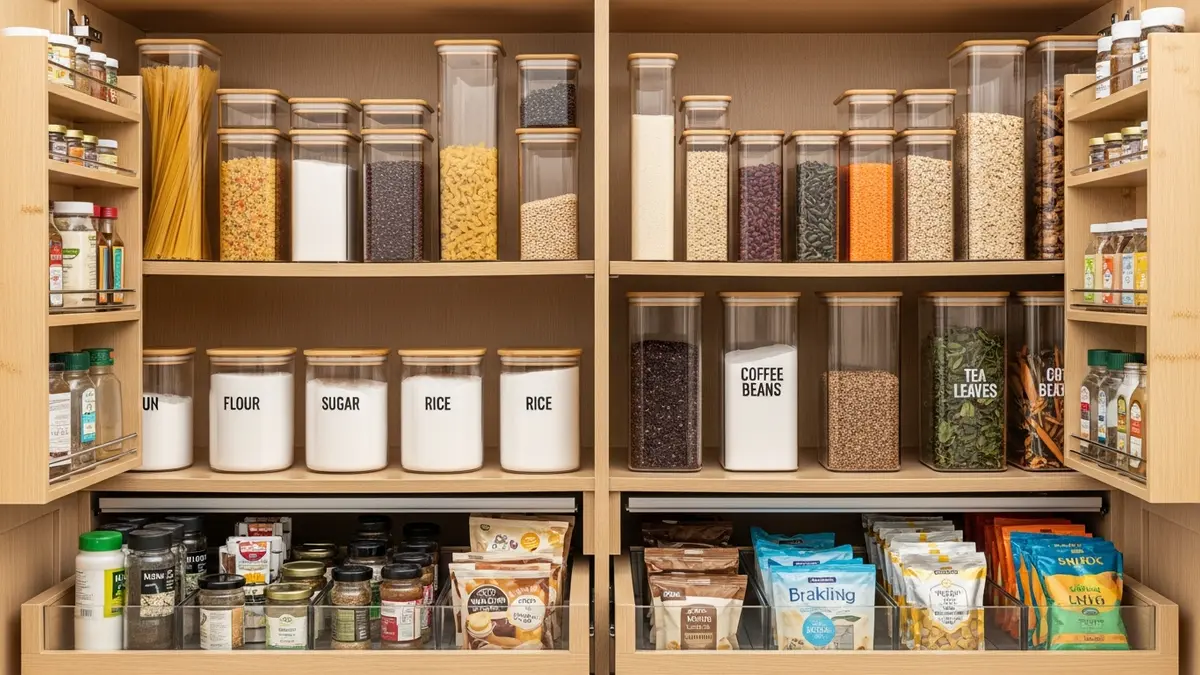
The Most Effective Kitchen Organization Products for Your Home
Not every kitchen organization product suits every kitchen. Here are the product categories most useful for putting minimalist kitchen organization into practice at home:
Airtight Food Storage Containers
This is the first and most important investment. Airtight containers (*airtight containers*) let you store rice, flour, sugar, coffee, tea, and all kinds of dry goods neatly and uniformly. Choose a set with varying sizes but a consistent design so your cabinet looks clean.
You can explore the best food storage container options available to find the choice that fits your needs and budget.
Kitchen Spice Racks
Spices are one of the biggest sources of chaos in the kitchen. An assortment of bottles in different sizes and shapes scattered on the counter or inside a cabinet can look messy in an instant. The right spice rack, whether set on the counter, hung on the wall, or mounted inside a cabinet, can solve this problem right away. Check our guide to the best kitchen spice racks for reference.
Drawer Dividers
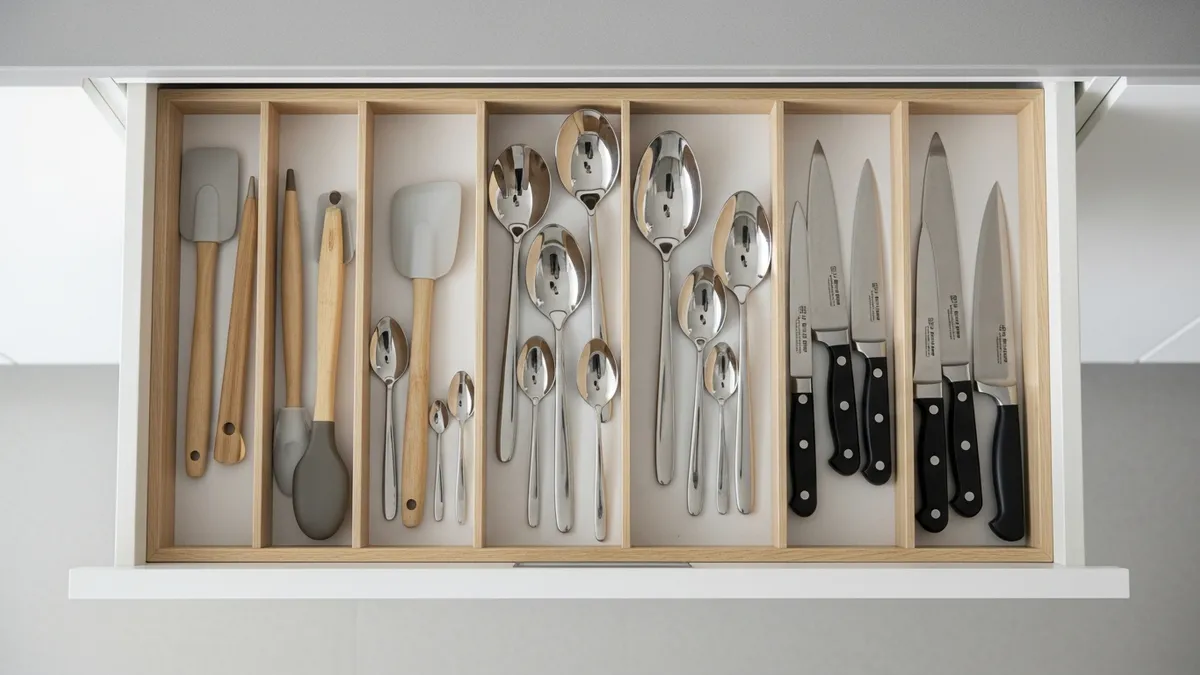
Kitchen drawers are one of the easiest areas to descend into chaos. Without dividers, spatulas, scissors, peelers, and all your other small tools get jumbled together. Drawer dividers are a cheap and cheerful solution with an outsized impact.
In-Cabinet Storage Shelves
Many people do not make the most of their cabinet height. By adding an extra shelf inside a cabinet, you can multiply your storage capacity without needing any extra room. Tiered racks for plates, hanging racks for pot lids, and drawer organizers for small tools are a few highly functional options.
Wall Shelves
In a small kitchen, the walls are real estate that often goes unused. Wall shelves can hold spices, small herb plants, or the cooking tools you use often. Check out kitchen wall shelf ideas for creative inspiration.
Minimalist Kitchen Organization Tips for Small Kitchens and Apartments
Minimalist kitchen organization becomes even more crucial when you have a tight kitchen. Here are tips designed specifically for small kitchens, including apartment kitchens:
- Use vertical space. When the floor and counter are full, look up. Install wall shelves as high as you can and use a small step stool to reach them.
- Choose multi-functional tools. One pot you can use to boil, steam, and saute is far more efficient than three separate pots. Cut down on the number of tools by choosing ones that are truly versatile.
- Use the inside of cabinet doors. The inside of a cabinet door is often ignored, yet you can mount a small rack there to store pot lids, aluminum foil, or plastic wrap.
- Choose stackable containers. Containers that stack vertically use space far more efficiently than oddly shaped ones.
- Store seasonal tools outside the kitchen. Holiday cookie molds or party jars do not need to live in the kitchen all year. Keep them in another storage space and pull them out only when needed.
- Install a magnetic knife strip. A magnetic knife strip on the wall saves a lot of drawer space and keeps your knives within easy reach.
- Use an organizer under the sink. The area under the kitchen sink often becomes a "black hole" where all sorts of things pile up. Add a rack or dedicated organizer to turn this area into efficient storage.
For more inspiration, our articles on how to organize a small apartment kitchen and space-saving small kitchen ideas make useful extra references.
Staying Consistent: Daily Routines for a Kitchen That Always Looks Tidy
The biggest challenge in minimalist kitchen organization is not organizing the kitchen at the start, it is maintaining that tidiness day after day. Here is a simple routine that can help:
Daily Routine (5 to 10 minutes):
- Clean and dry the countertops after you finish cooking.
- Return every tool to its home right after you finish using it.
- Wash and put away cookware before bed so it does not pile up.
Weekly Routine (15 to 20 minutes):
- Check the contents of your fridge and pantry, and note which ingredients are running low.
- Wipe down the inside of cabinets if there are spills or crumbs.
- Reorganize any storage containers that may have gotten messy.
Monthly Routine (30 to 45 minutes):
- Do a mini-declutter to remove items you no longer use.
- Check the expiration dates of ingredients in your pantry.
- Evaluate your setup: is there anything you can improve?
The key to a kitchen that always looks tidy is not one big cleanup, but consistency in the small routines you do every day.
According to Good Housekeeping, one of the most effective habits for keeping your kitchen tidy is the "one in, one out" principle: every time you buy a new tool or container, remove one old item that does the same job.
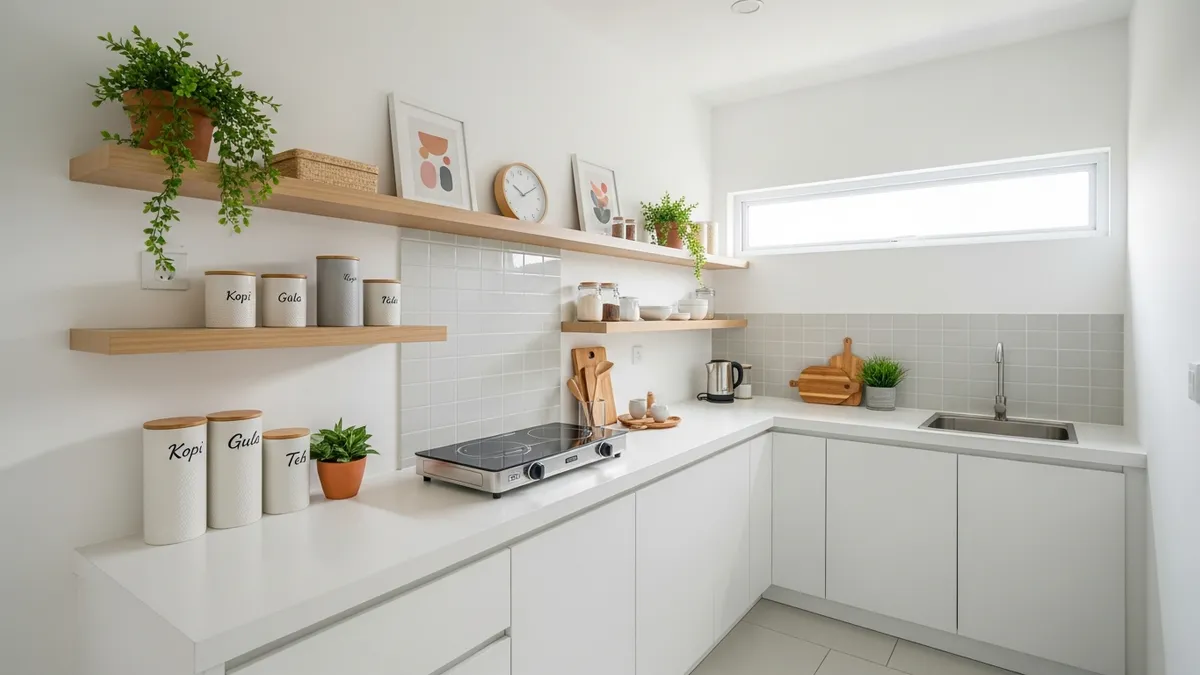
Visual Inspiration: Popular Minimalist Kitchen Organization Styles in 2026
In 2026, a handful of aesthetic styles are inspiring the world of minimalist kitchen organization the most. You can pick whichever one best fits your taste and the character of your home:
Japandi Style (Japanese + Scandinavian): A blend of Japanese minimalist aesthetics and the warmth of Scandinavian design. Its hallmarks are a neutral color palette (white, cream, light gray, natural wood), items with simple and functional shapes, and no excessive decorative ornament. A great fit for modern homes.
Clean White Monochrome Style: The entire kitchen is dominated by white, from the cabinets to the storage containers. It gives a spacious, clean impression and pairs easily with kitchen tools of any material.
Natural/Earthy Style: Uses natural materials like wood, rattan, and bamboo. Containers made from recycled materials or bamboo pair with small herb plants on wall shelves to create a kitchen that feels warm yet still tidy.
Modern Industrial Style: Dominated by metal and concrete with a touch of wood. Open shelving in black iron, clear glass containers, and steel utensil hangers create a masculine, modern look.
For more visual inspiration, Pinterest is a rich source of minimalist kitchen organization ideas from around the world, including plenty of inspiration that works for smaller kitchens.
Related Products from Sesoris
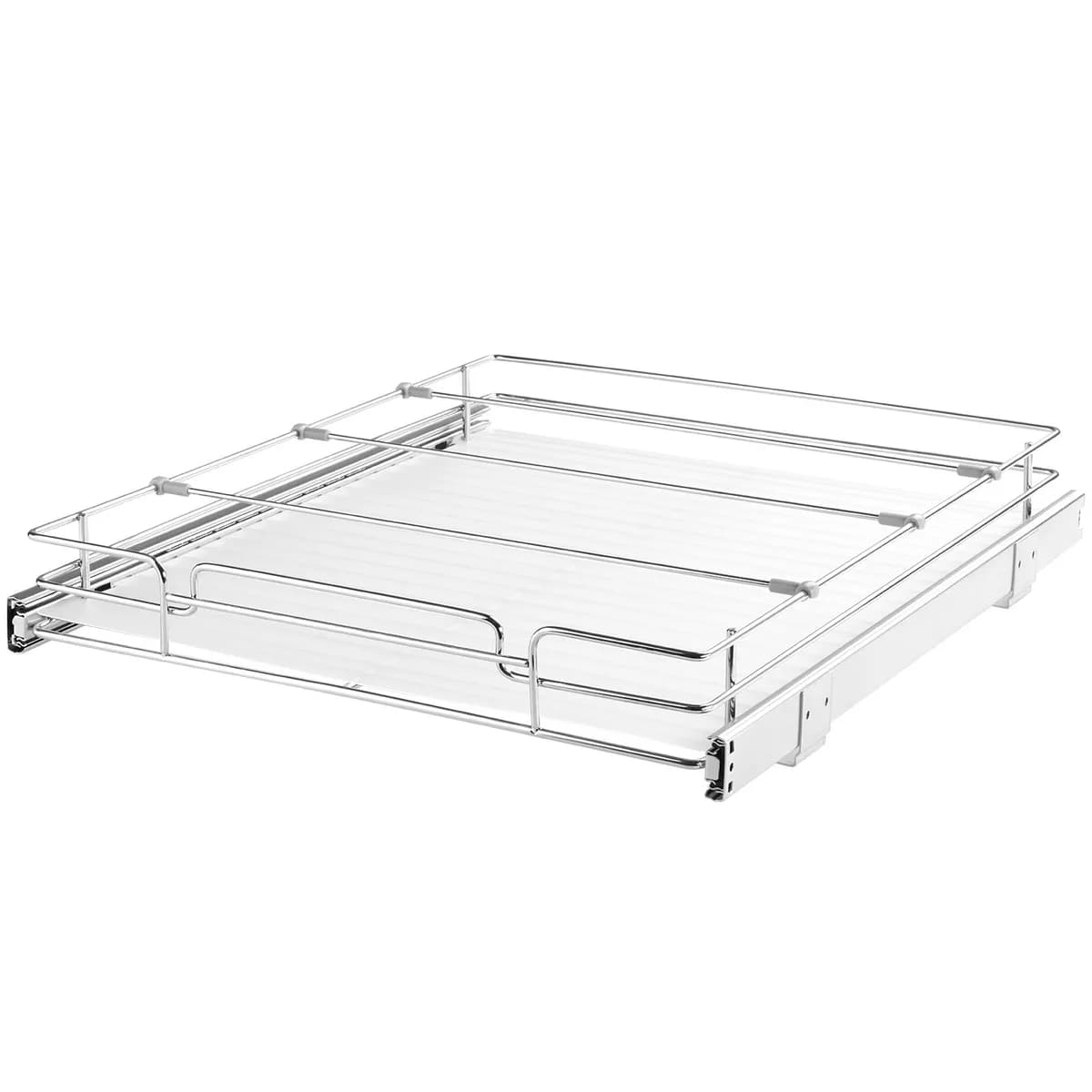
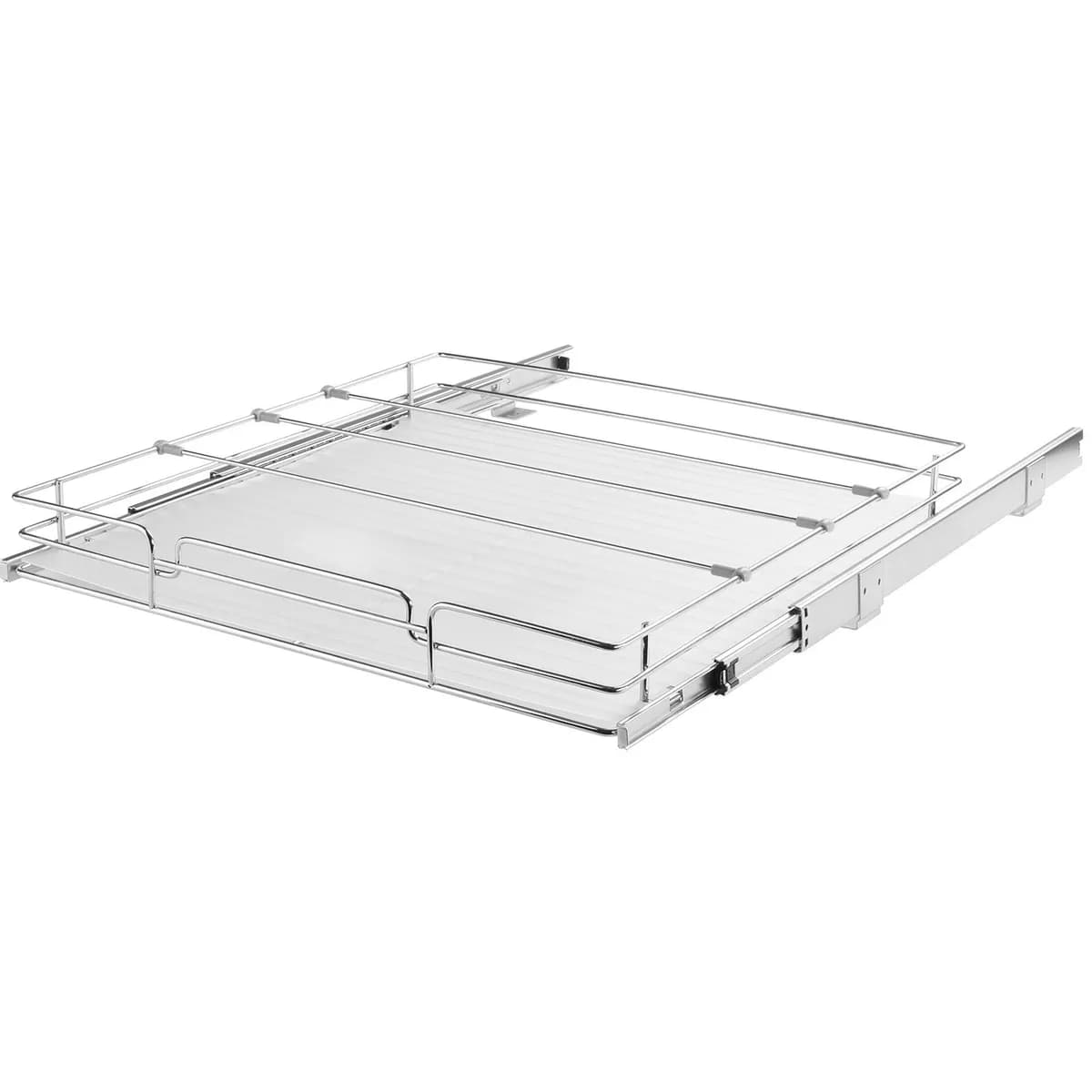
If you want to turn this guide into a real setup, start with Pull-Out Cabinet Organizer, 14 in. Wide and Double-Layer Bamboo Bread Box. For broader options, browse the Kitchen & Dining collection so the article journey does not stop at reading only.
Our practical rule: choose one product that solves the main clutter problem first, then add supporting organizers only when the daily workflow is already clear. This keeps the shopping path useful, not pushy.
FAQ: Common Questions About Minimalist Kitchen Organization
How much of a budget do I need to set up a minimalist kitchen organization?
There is no fixed number because it depends heavily on the size of your kitchen and its starting condition. What is certain is that the decluttering step costs nothing at all. For organizing products, you can start with a small budget, for example by buying one basic set of storage containers and one or two extra shelves, then adding more gear over time.
Is minimalist kitchen organization only right for modern kitchens?
Not at all. The principles of minimalist kitchen organization, keeping only what you need, giving every item its place, and staying tidy, can be applied in a kitchen of any design, whether modern, traditional, or the semi-open kitchen that is common in many homes.
I rent and cannot drill into the walls. What can I do?
There are plenty of solutions that do not require drilling. A *freestanding rack*, organizers that use a *suction cup* system, over-the-cabinet-door hooks, and adding shelves inside an existing cabinet are a few options that work great for renters.
How do I keep my storage containers looking uniform without buying them all at once?
Buy gradually from the same brand or product line. Start with containers for the ingredients you use most, then add more over time. Make sure to note the brand and product series you buy so you can add different sizes later.
Is open shelving a good fit for a kitchen that tends to be more humid and dusty?
Open shelving does require more upkeep because items get dusty and coated in cooking grease more easily. If you go with open shelving, make sure to wipe it down and clean it regularly, at least once a week. For areas near the stove, closed cabinets may be more practical.
Conclusion: Start Your Minimalist Kitchen Organization Journey Today
Minimalist kitchen organization is not about having a magazine-perfect kitchen. It is about creating a system that works for you and your family: a kitchen that is easy to use, easy to clean, and enjoyable to spend time in every day.
Remember, the key is to start with decluttering, apply a zone system that matches your cooking style, choose the right storage products, and build simple routines to keep it tidy. You do not have to do everything at once, even small changes can make a big difference.
If you are looking for quality kitchen organization products to support your minimalist kitchen organization journey, visit Sesoris and browse our full collection of home organization gear. From food storage containers and spice racks to drawer organizers, everything is here to help you create the tidy, functional kitchen you have been dreaming of. Because at Sesoris, we believe: Live More Organized starts in your kitchen.
Liked this guide?
Get new organizing guides and the occasional new product by email. No spam, unsubscribe anytime.
Related articles
Explore more articles
- Mini Aluminum Dish Racks: Perfect Space-Saving Solutions 2026
- Aluminum Stove Tables: Lightweight & Rust-Resistant Kitchen Solutions 2026
- Small Dish Racks: Perfect Solutions for Compact Kitchens 2026
- 25+ Creative Shelf in Wall Ideas to Transform Your Living Space in 2026
- Plastic Storage Boxes: How to Choose and Use
- Freezable Food Storage Containers: Ultimate Guide to Safe Freezer Organization in 2026
- Rice Food Storage Containers: Ultimate Guide to Fresh Rice Storage in 2026
- Stainless Steel Food Storage Containers: Ultimate Guide to Durable Food Storage in 2026