
15 Practical Small Closet Organization Ideas With Planning Costs
Measure a small closet, plan 15 practical storage ideas, and compare clearly labeled budget estimates without buying a complete new wardrobe system.
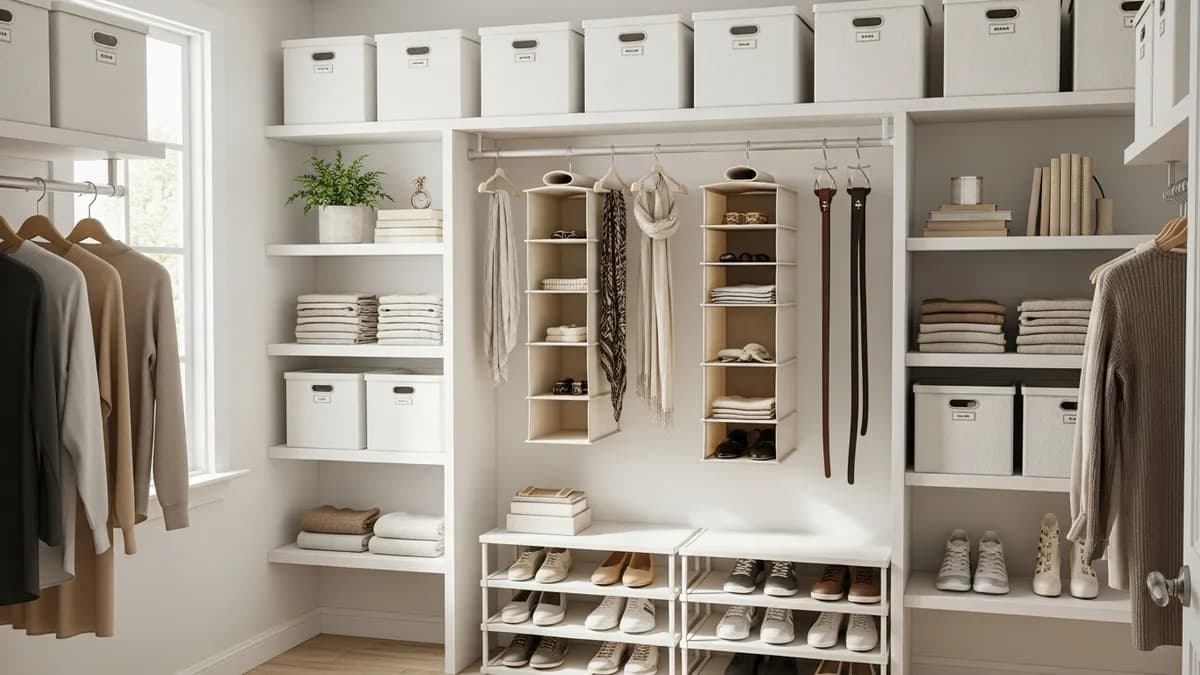
For a small closet, start by editing the contents, measuring usable hanging and shelf space, and assigning a visible home to each clothing category. Add a second rod only where short garments leave room, use shelf dividers for folded items, and keep shoes clear of the door path. These small closet organization ideas focus on reach-in wardrobes and shallow closets, so choose the options that fit your actual measurements rather than copying a large walk-in layout.
Why Small Closet Organization Ideas Matter More Than Ever in 2026
A closet can fill faster than the room around it changes. When your closet is overflowing, getting dressed in the morning becomes a chore, you misplace items constantly, and the mess tends to spill over into the rest of your room. A good system reduces those daily points of friction instead of merely hiding them behind a door.
The shift toward intentional, organized living has made closet organization a genuine lifestyle priority in 2026. Whether you rent an apartment with a shallow reach-in closet or own a home with a small walk-in, the principles of smart organization are the same: maximize vertical space, reduce clutter, and use every available inch strategically.
Before you buy a single bin or hook, it helps to understand what is actually making your small closet feel overwhelming. Most of the time, it comes down to three root causes:
- Too much stuff with too little space, meaning a declutter is the very first step
- No defined zones, so everything gets shoved in randomly without a system
- Underutilized vertical space, since most closets have 8 feet of height but only use the bottom 4
Once you identify which of these is your biggest issue, the small closet organization ideas below will make a whole lot more sense.
Keep the daily reach-in layout separate from the reset routine. Use the closet maintenance walkthrough to plan regular returns and removals, while closet shelf organization helps decide where folded categories can be lifted out without disturbing the next stack.
Start With a Declutter: The Foundation of Any Small Closet Organization Plan
Organizers do not create room for clothing you cannot comfortably reach or return. Before changing a small closet, take out its contents and decide what belongs in that specific space. Keep the daily wardrobe separate from items that can live elsewhere.
Here is a simple process that works really well:
- Empty the closet completely so you can see the actual space you are working with
- Sort items into four piles: keep, donate, trash, and relocate (things that belong elsewhere in your home)
- Apply the one-year rule: if you have not worn or used it in the past year, it is time to let it go
- Check for duplicates: most people have far more of certain items, like black t-shirts or spare blankets, than they actually need
- Group what remains by category before putting anything back
A decluttered closet is easier to organize, easier to maintain, and honestly feels like a completely different space even before you add a single organizer. Leave visible breathing room between categories so you can remove and return items without collapsing the entire arrangement.
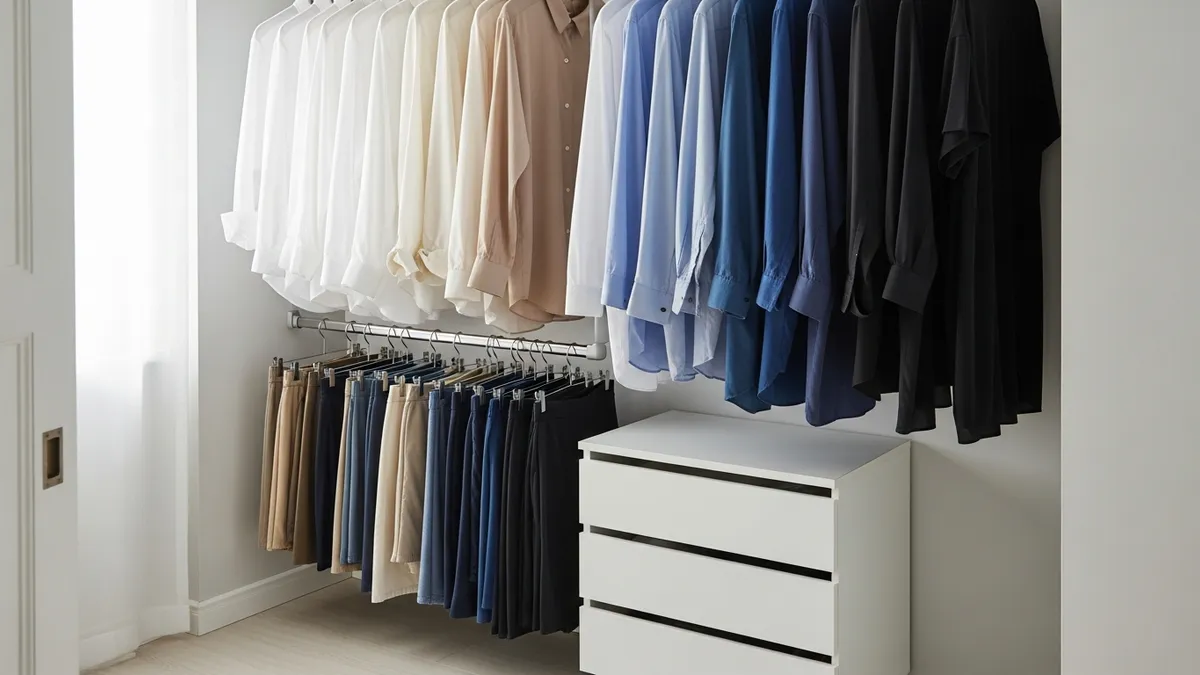
15 Small Closet Organization Ideas to Test Against Your Measurements
Work through these options one constraint at a time. None guarantees a fixed storage multiplier; garment thickness, access clearance and the load limits of the existing closet determine what will fit.
1. Install a Double Hanging Rod
Measure the drop of the shirts and trousers you actually hang. A second hanging level is useful only where short garments leave clear space below, and where you can reach both rods without climbing on furniture.
A compatible hanging rod extender can add a second position for short garments without replacing the main rod. Check its attachment method, stated load limit and the existing rod supports before loading it. Some systems need tools or fixed brackets, so do not assume every extender is a no-drill retrofit.
2. Switch to Slim Velvet Hangers
Use a few slim hangers as a trial before replacing a full set. Their narrower profiles may reduce the space taken by the hangers themselves, but bulky clothing still needs its own room. Match the hanger shape and surface to the garment and leave enough clearance to remove a shirt without pulling its neighbors.
3. Use Every Inch of Vertical Space with Extra Shelving
Most reach-in closets have a single shelf above the hanging rod and nothing else. Adding a shelf riser, a freestanding shelving unit, or even stackable cubes above and below the existing shelf can completely transform the storage capacity of the space.
Consider adding:
- A shelf riser on top of the existing shelf for hats, bags, or seasonal items
- Stackable clear bins or storage boxes to organize folded items on shelves
- A small freestanding cube organizer on the closet floor for shoes, folded sweaters, or accessories
4. Maximize the Back of the Door
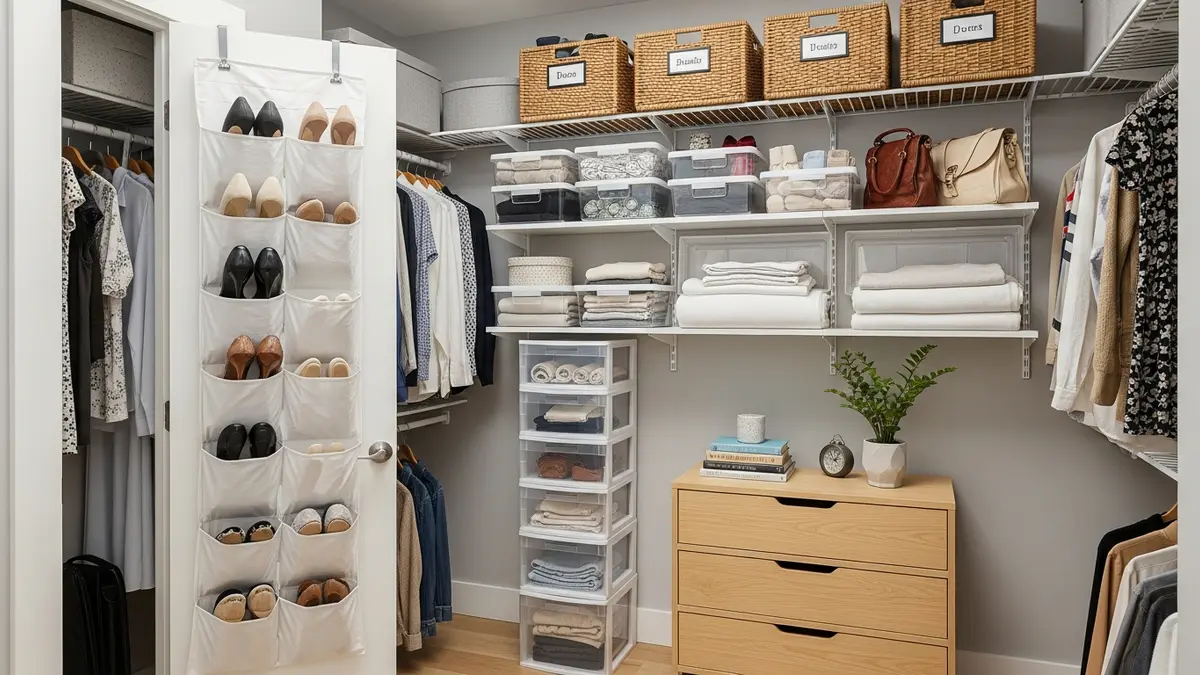
The back of your closet door is prime real estate that most people completely ignore. An over-the-door organizer can hold shoes, accessories, cleaning supplies, or any number of small items without taking up any floor or shelf space at all.
Over-the-door solutions that work great in small closets include:
- Shoe pockets for footwear or small accessories
- Hooks for bags, belts, or scarves
- A mounted mirror with integrated storage on the back
- A small mounted organizer for jewelry or sunglasses
5. Add Hooks on Every Available Wall
The side walls inside a closet are another underused space. A few adhesive hooks or a mounted hook strip can hold bags, robes, belts, hats, or anything you need to grab quickly. This keeps those items visible and accessible without taking up rod or shelf space.
6. Use Shelf Dividers to Keep Stacks Neat
One of the most frustrating things about small closets is that neatly folded stacks of sweaters or jeans collapse the moment you pull one item. Clear acrylic or wire shelf dividers clip onto your existing shelves and create defined sections, so your stacks stay upright and your shelves stay tidy.
7. Reserve a narrow long-garment section
Keep dresses, long coats and other full-length items together instead of adding a second rod across the entire closet. Measure their actual hanging drop and mark the boundary with a single divider hanger. This keeps a useful double-hang zone from creating a new pile of creased clothing on the floor.
8. Give everyday shoes one shallow row
Place the pairs you reach for most in a single row you can see with the door open. Test the door swing with the shoes in place before adding a rack. If another pair fits only behind the first row, store it elsewhere rather than turning the floor into a daily excavation.
9. Assign handbags individual shelf spaces
Stand a structured handbag in its own shelf position where it can be removed without dragging out the next bag. Use a compatible divider only if the shelf has enough width. Check each bag maker's care advice before hanging a heavy bag by its straps or compressing it inside another bag.
10. Put belts and scarves on a reachable rail
Choose one reachable side-wall position for accessories that otherwise slip to the closet floor. Try the rail with a full-length scarf and open the door completely so the fabric cannot catch. Keep the rail clear of hanging sleeves and use fixings suitable for the wall and stated load.
11. Make a removable bin for workout clothing
Use one shallow, open bin for clean workout tops or leggings if a small closet has no drawer. Fold items so the ones used first remain visible. Lift the whole bin out to reset it rather than pushing another layer behind the clothes. Keep worn or damp items out of this clean-storage zone.
12. Label a measured seasonal-storage position
Give off-season pieces a defined location with a label showing category and size, not just a generic seasonal label. Check the volume after cleaning garments as their care labels direct. A box belongs on the shelf only if it can be removed comfortably and stays within the shelf manufacturer's stated load.
13. Leave one return space for tomorrow's outfit
Choose a single hanger or small clear shelf patch for clothing that will be worn next. Keep it separate from an overflowing chair or a permanent holding pile. At the next reset, return unused pieces to their category so this temporary position does not become a second storage system.
14. Keep a donation bag outside the main reach zone
An existing tote can collect clothing you have already decided to give away, but do not let it consume the most reachable shelf. Label the tote and set a date to move it out. Check that none of its handles or straps obstructs the closet door, walking path or nearby drawers.
15. Run a three-action access test
After any change, remove one shirt, retrieve one pair of shoes and return one folded item while the closet is loaded normally. If a task requires moving an unrelated category, adjust that zone before buying another organizer. Photograph the layout for your own reference and repeat the same access test after a week.
Planning Costs for the 15 Small-Closet Ideas
These are rough editorial planning allowances in US dollars, not checked retailer prices, product offers or installation quotes. Reusing an item can cost nothing. Tax, delivery, labor and structural repairs are excluded; measure first and confirm actual prices before buying. Hardware must suit the existing structure, and a higher budget does not make an unsuitable attachment safe.
| Idea | Editorial planning allowance | What to confirm before spending |
|---|---|---|
| 1. Second hanging level | US$15 to US$35 | Rod compatibility and load rating |
| 2. Trial set of slim hangers | US$10 to US$25 | Garment support and actual spacing |
| 3. Additional shelf or riser | US$15 to US$60 | Shelf dimensions and rated load |
| 4. Door organizer | US$10 to US$35 | Door thickness and closing clearance |
| 5. Side-wall hooks | US$5 to US$20 | Surface and fixing instructions |
| 6. Shelf dividers | US$10 to US$30 | Shelf thickness and stack width |
| 7. Long-garment zone | US$0 to US$10 | Garment drop and adjacent floor access |
| 8. Everyday shoe row | US$0 to US$35 | Shoe depth and door swing |
| 9. Individual bag positions | US$0 to US$25 | Shelf width and bag care instructions |
| 10. Accessory rail | US$5 to US$25 | Wall attachment and hanging length |
| 11. Workout-clothing bin | US$0 to US$20 | Bin removal and clean clothing only |
| 12. Labeled seasonal position | US$0 to US$30 | Care labels and reachable storage |
| 13. Outfit return position | US$0 to US$5 | One temporary space, not overflow |
| 14. Donation tote | US$0 to US$10 | Clear walkway and planned removal date |
| 15. Access test | US$0 | Three everyday actions while fully loaded |
| Closet constraint | Try first | Fit check |
|---|---|---|
| Short garments with unused space below | A second hanging level | Measure the actual garment drop and rod clearance |
| Folded stacks collapse | Shelf dividers | Check shelf thickness and divider compatibility |
| Shoes block the door | A shallow rack or door pockets | Open the door fully with shoes loaded |
| Seasonal clothes hide daily outfits | Labeled, separate seasonal storage | Follow each fabric's cleaning and storage instructions |
| A deep corner is hard to reach | A removable bin with a handle | Check that it can slide out without moving the neighboring stack |
Smart Storage Products That Make Small Closet Organization Ideas Work
Having the right organizational tools makes the difference between a closet that looks good for two weeks and one that stays organized for years. Here are the product categories worth investing in for your small closet.
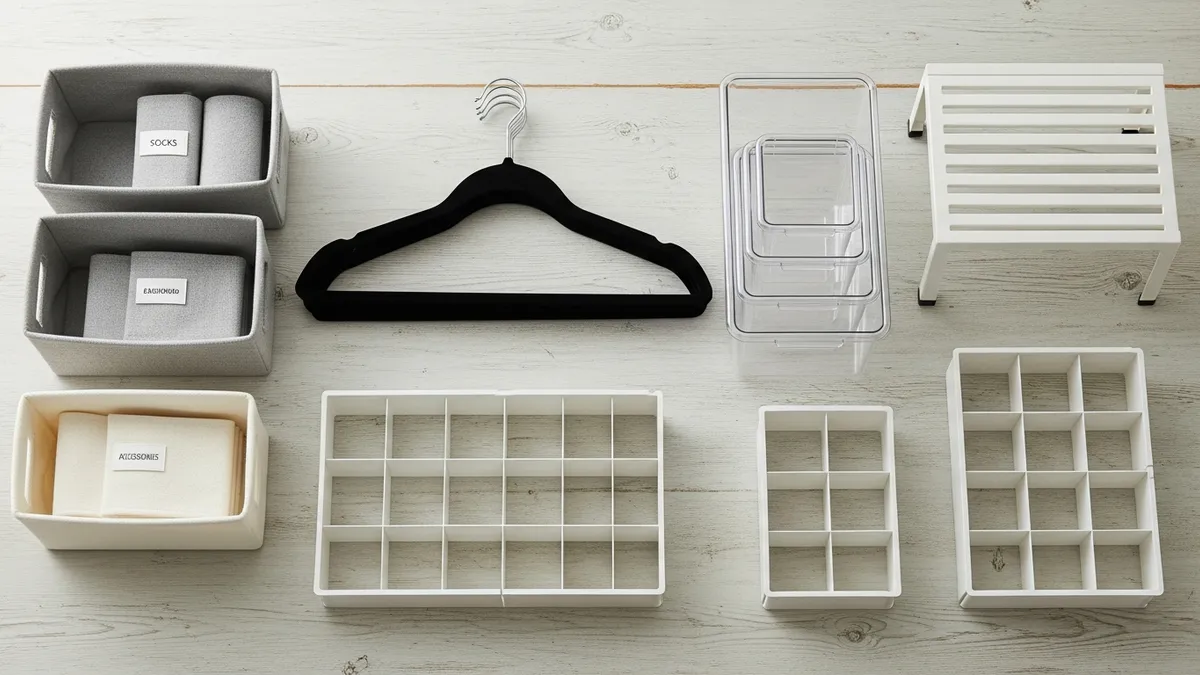
Clear Stackable Bins and Boxes
Clear containers are a must in a small closet because they let you see what is inside without pulling everything out. Stackable bins make use of vertical shelf space, and uniformly sized containers create a clean, polished look. Browse the Sesoris collections for a range of storage containers that work beautifully in small closets.
Labeled Fabric Baskets
Soft fabric baskets are great for bulkier items that do not stack neatly, like scarves, workout gear, or extra linens. Adding labels to each basket transforms a casual storage solution into a genuinely organized system. Look for collapsible versions that fold flat when not in use, which is especially helpful in a small space.
Drawer Organizers and Dividers
If your small closet includes a built-in dresser or drawer unit, interior drawer organizers are essential. Without them, smaller items like socks, underwear, and accessories turn into a tangled mess. Adjustable dividers let you customize compartments to fit your specific items.
Shoe Storage Solutions
Shoes are often the biggest floor-space culprit in small closets. Smart shoe storage options include:
- Clear stackable shoe boxes for heels or dress shoes you want to protect
- An over-the-door shoe pocket organizer for everyday pairs
- A slim shoe rack that fits along the closet floor without blocking the door
- A hanging shoe organizer that drops from the rod for sneakers and flats
For more shoe-specific ideas, check out this guide on closet shoe storage ideas that covers everything from casual sneakers to formal footwear.
Vacuum Storage Bags for Seasonal Items
Bulky seasonal items like heavy winter coats, extra blankets, and sweaters eat up enormous amounts of space. Vacuum storage bags compress these items to a fraction of their original size, freeing up prime closet real estate for everyday essentials.
Small Closet Organization Ideas by Closet Type
Not all small closets are the same, and the best approach depends on what kind of closet you are working with.
Reach-In Closets
Reach-in closets are the most common type in American homes and typically measure 6 to 8 feet wide by about 2 feet deep. The key strategies here are maximizing vertical space with added shelving, using the full door, and keeping the floor clear. A double hang rod combined with floor-level shoe storage and high shelves for seasonal items is usually the most efficient layout.
For reach-in closets used as bedroom closets specifically, the bedroom closet organization ideas guide has a ton of tailored advice.
Coat Closets
Coat closets near the entryway tend to become catch-all spaces for everything from jackets and umbrellas to holiday decorations and random bags. The trick here is to assign every item a dedicated zone and resist the urge to use it as general overflow storage. A few well-placed hooks, a small shelf for hats and gloves, a shoe rack at the bottom, and a labeled bin for accessories can completely transform a coat closet. The coat closet organization ideas guide covers this in detail.
Hall and Linen Closets
Hall closets used for linens benefit enormously from shelf dividers, labeled bins, and consistent folding methods like the popular rolling method for towels. Grouping items by category, such as all bath towels together, all guest bedding together, and all cleaning supplies together, makes the closet intuitive to use and maintain.
Nursery Closets
Small closets in a nursery need layouts that can adapt as clothing sizes change. Keep daily supplies reachable by an adult without using furniture as a step, and follow the CPSC furniture tip-over prevention guidance for anchoring freestanding furniture. A shelf or high storage bin does not stabilize a dresser. Our nursery closet guide covers category planning for small garments.
DIY Small Closet Organization Ideas on a Budget
Organizing a small closet does not have to be expensive. Some of the most effective transformations happen with very little money. Here are budget-friendly approaches that genuinely work:
Repurpose What You Already Own
- Use shoeboxes as drawer organizers or shelf dividers
- Hang an old belt on a hook to store more belts or scarves neatly
- Repurpose a tension rod under a shelf to hang spray bottles, scarves, or small bags
- Use magazine holders on shelves to store clutches, small bags, or folded t-shirts vertically
DIY Shelf Additions
Adding a simple plank shelf above an existing one is a weekend project that costs very little. A piece of 1x10 pine board cut to width, a couple of shelf brackets, and a bit of paint can add significant storage capacity for under US$30. For more detailed DIY approaches, the DIY ideas for closet organization article has step-by-step guidance.
Use Tension Rods Creatively
Tension rods are inexpensive, require no tools, and can be used in a variety of creative ways inside small closets:
- Horizontal between shelves as a mini rod for hanging smaller items
- Vertical in a corner to create an additional hanging zone
- At the bottom of a deep shelf to keep items from falling off the edge
How to Maintain Your Small Closet Organization System Long-Term
The biggest challenge with closet organization is not getting it tidy, it is keeping it that way. Here are the habits and systems that make the difference between a one-time clean-up and a lasting organizational system.
"An organized closet is not a one-time project. It is a daily habit of putting things back where they belong."
Do a Quick Weekly Reset
Spend five minutes once a week just returning misplaced items to their correct spots. This prevents small messes from snowballing into full-on chaos. If you do this consistently, your closet will never need a complete overhaul again.
Shop Your Closet Before Buying New
Before purchasing anything new to wear or store, take a look at what you already have. This prevents the most common cause of closet overflow: accumulation without subtraction.
Follow the One-In, One-Out Rule
For every new item you bring into your closet, one old item should leave. This is especially important in small closets where there is zero buffer capacity. Donating, gifting, or selling items regularly keeps the overall volume manageable.
Schedule Seasonal Swaps
Twice a year, usually at the start of fall and the start of spring, swap out your seasonal wardrobe. Move off-season clothes to vacuum bags or labeled bins and bring current-season items to the front and center of your closet. This keeps your active wardrobe accessible and your total in-closet volume manageable.
For a broader look at home organization strategies that complement your closet work, the home decluttering tips guide is a great companion read.
Small Closet Organization Ideas Inspired by Design Experts
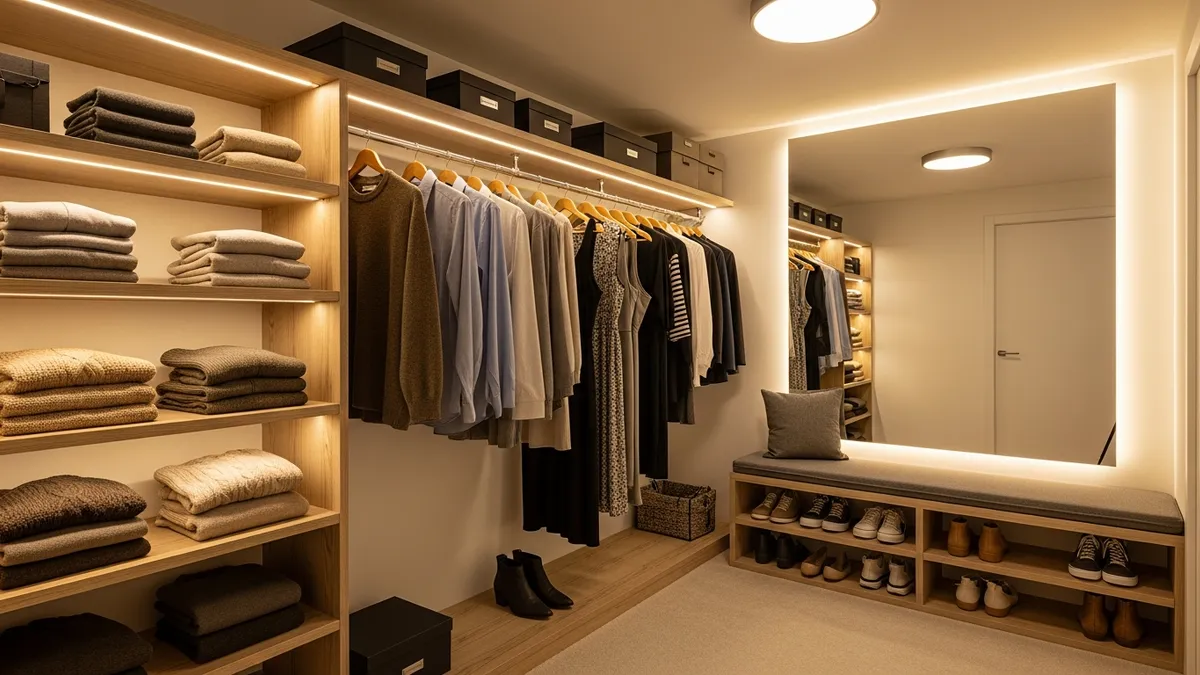
Modular shelving systems, integrated lighting, and customizable drawer inserts are practical closet upgrades because they can adapt as your wardrobe changes. These do not have to be expensive to implement. Many affordable modular systems at home improvement stores can be configured to fit a small closet and swapped out as your needs change.
Some design-forward ideas worth considering:
- Add LED strip lighting inside your closet so you can actually see what you have, especially in deep shelves or dark corners
- Use a consistent color palette for your storage containers and hangers to create a visually calm, cohesive look
- Install a small full-length mirror on the back wall or door to make the space feel larger and serve double duty as a dressing area
- Choose open shelving over closed cabinets in a small closet since it keeps the space feeling airy and makes items easier to locate at a glance
For inspiration beyond the basics, save only examples that match your actual closet type and dimensions. A beautiful walk-in layout is not a useful reference for a shallow reach-in closet.
Related Products from Sesoris
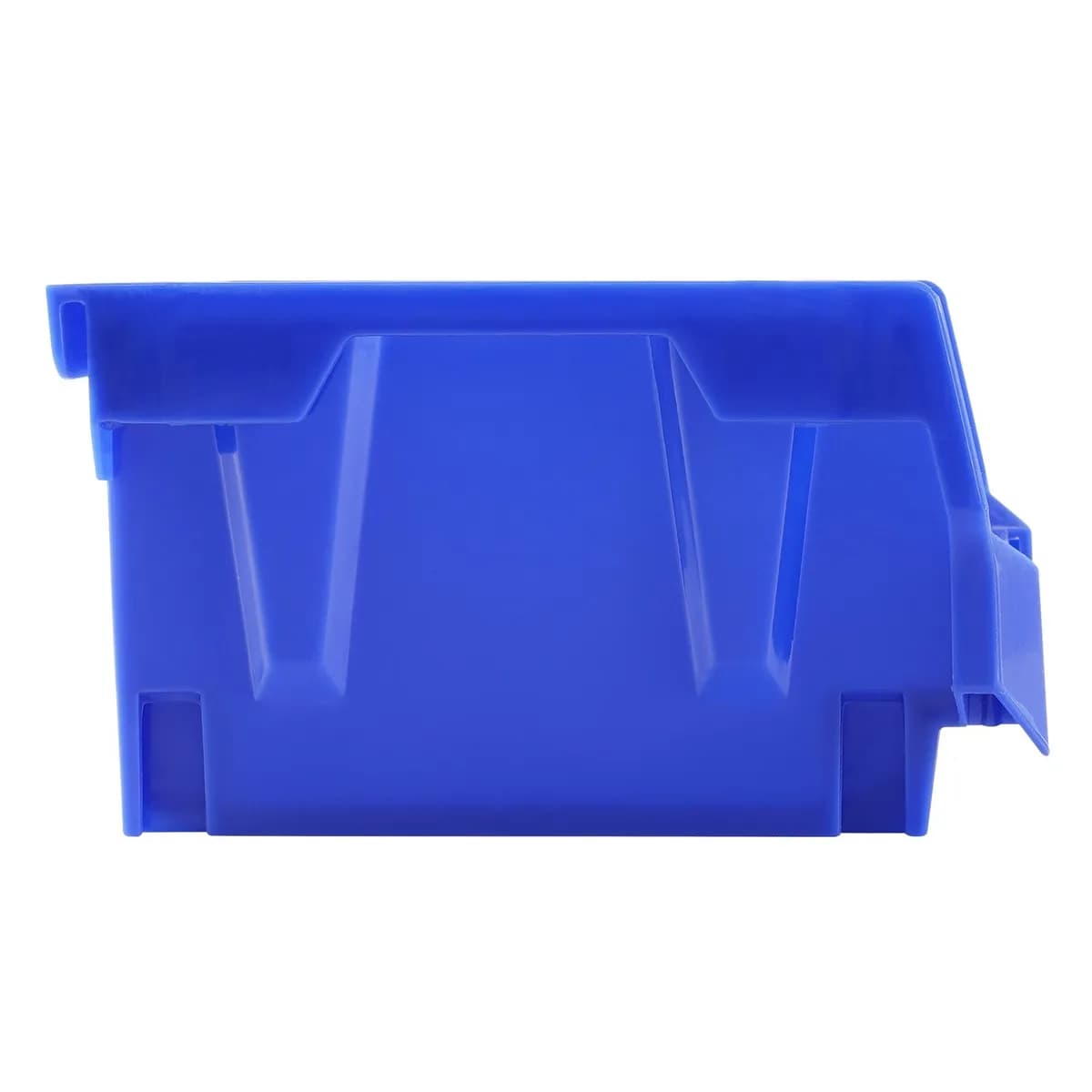
Use Stackable Storage Bins, 24 Pack only where their measured footprint leaves enough space to remove a bin without disturbing the neighboring stack. A Pull-Out Cabinet Organizer, 17 in. Wide needs its own clear opening and installation check; do not treat it as a universal retrofit for every wardrobe. Compare the Home & Decor collection against a written list of closet dimensions before ordering.
Test the closet with the garments and boxes you already own before adding hardware. Open the door fully, take a folded item from the lowest shelf, and return a pair of shoes without moving another category. If one of those ordinary actions fails, change that specific zone first instead of buying a complete matching storage set.
FAQ: Frequently Asked Questions About Small Closet Organization Ideas
What is the most effective first step when organizing a small closet?
The most effective first step is always a thorough declutter. Before buying any organizers or rearranging anything, pull everything out and honestly assess what you actually use and need. Removing even a quarter of the items in a small closet can make a bigger difference than any organizational product.
How do I organize a small closet with no shelves?
If your closet has no shelves at all, the best starting points are freestanding shelving units or cube organizers that you can place on the floor, over-the-door organizers that hang from the door without any installation, and hanging fabric organizers that drop from the existing rod. These solutions require no drilling or permanent changes, making them ideal for renters.
What are the best storage products for a small closet?
Slim velvet hangers, clear stackable bins, labeled fabric baskets, an over-the-door shoe organizer, shelf dividers, and a double hang rod extender are consistently the highest-impact products for small closets. You can find a curated selection of home organization essentials at Sesoris to help you get started.
How do I keep a small closet smelling fresh?
Start by identifying the odor source, cleaning the space and putting away only dry garments. Do not rely on fragrance as pest control. University of California IPM recommends clean, pest-free susceptible fabrics in airtight storage and notes that cedar's effectiveness against clothes moths is limited. Persistent dampness or visible damage calls for finding and correcting the underlying problem, not simply adding cedar or a scented sachet.
Can I organize a small closet without spending a lot of money?
Absolutely. Many of the most effective small closet organization ideas, such as switching to slim velvet hangers, using shelf dividers, adding hooks to the walls, and using existing boxes as organizers, cost very little. Strategic decluttering is completely free and often produces the most dramatic results.
Should I buy storage before measuring the closet?
Measure first. Record interior width, depth, usable shelf height and the door-opening path, then check those figures against each product. Try the layout with existing boxes and actual garments before committing to a matching set.
Does adding a high shelf prevent furniture tip-overs?
No. A high shelf or storage bin does not stabilize a dresser or freestanding wardrobe. Follow the furniture manufacturer's anchoring instructions and the CPSC tip-over prevention guidance linked above; keep tempting objects from encouraging a child to climb.
Conclusion: Transform Your Space with These Small Closet Organization Ideas
A small closet does not have to feel like a daily frustration. With the right small closet organization ideas, even the most cramped reach-in or shallow hall closet can become a genuinely functional, pleasant-to-use space. The key is to start with a thorough declutter, make smart use of vertical space and the back of the door, invest in a few quality organizational products, and build habits that keep the system running long-term.
Whether you are working with a tiny bedroom closet, a shallow coat closet, or a compact linen closet, the strategies in this guide give you a clear roadmap for 2026. The best time to start is today, even if that just means spending 10 minutes pulling everything out and taking stock of what you actually have.
Ready to find the right products to bring your closet organization vision to life? Explore the full range of home organization solutions at Sesoris and check out our best sellers for the most popular storage picks. You can also browse new arrivals for the latest additions to our home organization lineup. Live More Organized starts right here.
Liked this guide?
Get new organizing guides and the occasional new product by email. No spam, unsubscribe anytime.
Related articles
Explore more articles
- Best Storage Solutions for the Bedroom: 30+ Smart Ideas to Organize Your Space in 2026
- Home Organization Trends 2026: Invisible Storage to Smart Organizers
- Garage Wall Shelf Ideas for Better Storage
- Zero Waste Kitchen: A Practical Guide
- 35+ Brilliant IKEA Pantry Organization Ideas to Transform Your Kitchen Storage in 2026
- Ultimate Cleaning Closet Organization: 25+ Smart Solutions to Transform Your Storage Space in 2026
- IKEA Entryway Organization: 30+ Smart Ideas to Transform Your Home's First Impression in 2026
- Organization and Cleaning Services vs DIY: Complete Guide to Home Organization Solutions in 2026