
Bathroom Closet Organization Systems: How to Set Up Zones, Shelves, and Bins
How to build a bathroom closet organization system: which systems work best (shelf risers, labeled bins, door racks, wire shelving), a step-by-step setup, and what goes on each shelf.
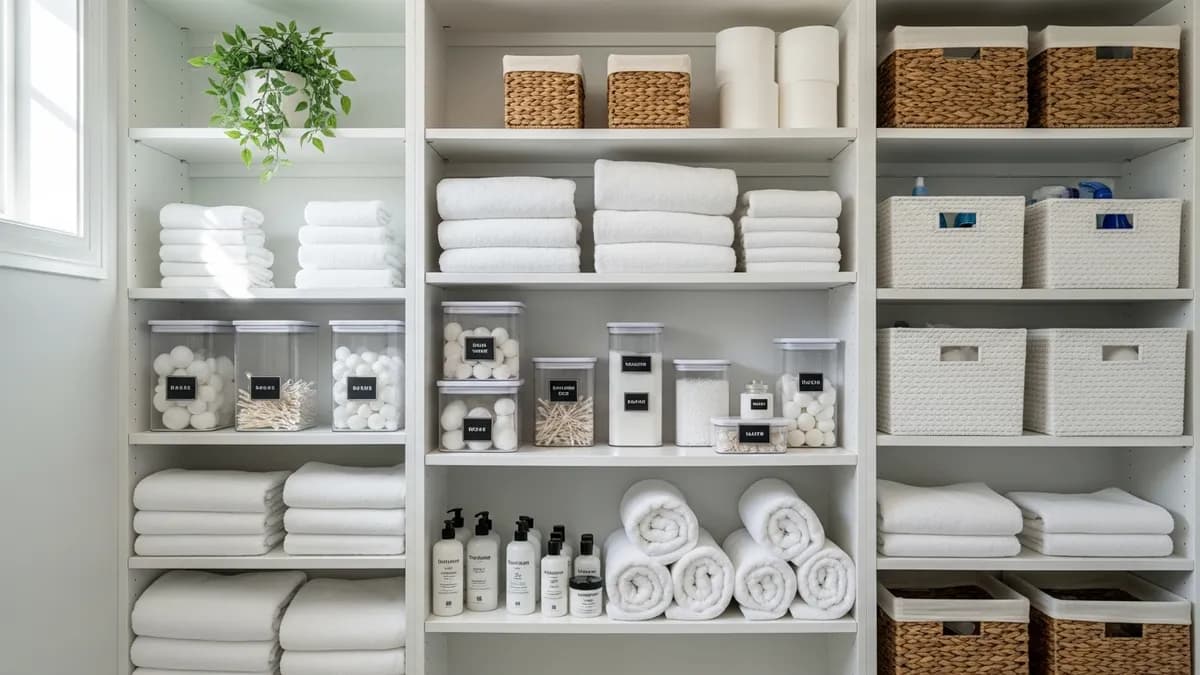
Most bathroom closets fail for the same reason: everything goes in wherever it fits, so nobody can find anything and duplicates pile up. A system fixes that by deciding in advance where each category lives. You do not need a custom build. Shelf risers, labeled bins, an over-the-door rack, and a simple routine cover most closets, and you can add pieces one at a time.
Key Takeaways:
- Zone by how often you use things: daily items at eye level, backups in labeled bins below, rarely used items on the top shelf.
- Measure each shelf (width, depth, and clear height) before buying risers, bins, or a door rack.
- Give every bin one category and a label so anyone in the house can find the spare toothpaste or the first aid kit.
- Keep medicine in its original packaging in one labeled container, out of reach of children.
- A five-minute weekly reset keeps the system working.
What is a bathroom closet organization system?
It is a set of rules plus the hardware that makes those rules easy to follow. The rules are the zones (what goes where) and the routine (when you reset). The hardware is whatever holds each zone in place: shelves, risers, bins, door racks, or small drawers. If you only buy containers and skip the rules, the closet looks tidy for a week and then drifts back. If you set rules without containers, categories slide into each other on a deep shelf.
A working system passes one test: someone else in the house can find the spare toothpaste or the first aid kit without asking you.
Which bathroom closet organization systems work best?
The right system depends on what your closet is missing. Use this table to match the problem to the type of hardware.
| System type | Best for | What it solves | Watch out for |
|---|---|---|---|
| Shelf risers | Deep shelves with wasted height | Adds a second level so small items are not stacked on each other | Measure shelf width and the clear height above before buying |
| Labeled bins or baskets | Backup supplies and loose small items | Keeps each category together and makes restocking a pull-out job | Bins deeper than the shelf hide what is behind them |
| Over-the-door rack | Closets with a solid door and little shelf space | Turns the back of the door into shallow, visible storage | Needs enough clearance behind the door to close |
| Freestanding wire shelving | Closet floors or closets with only one shelf | Creates shelves where there are none, no drilling | Check the footprint against the door swing |
| Small drawer units | Medicine, hair accessories, travel sizes | Hides small clutter and keeps it sorted | Drawers that stick get ignored, test before filling |
Shelf risers: double a deep shelf
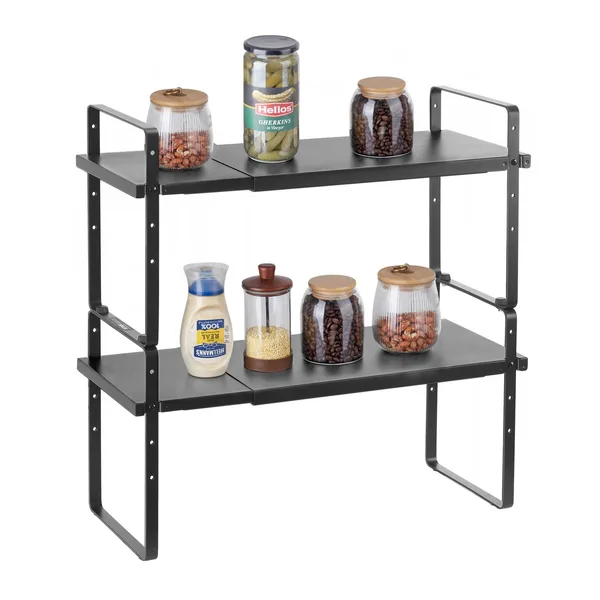
A shelf riser is the cheapest way to add capacity without changing the closet. It creates a second level on one shelf, so bottles sit on the bottom and lighter items like cotton rounds or spare soap sit on top. Expandable risers are the easiest to fit because the width adjusts to the shelf. For example, our Expandable Stacking Cabinet Shelves expand from 16 to 25.6 in. wide, are 8.7 in. deep, adjust from 3.9 to 7.1 in. tall, and are rated at 22.05 lbs per shelf by the supplier.
Over-the-door racks: use the back of the door
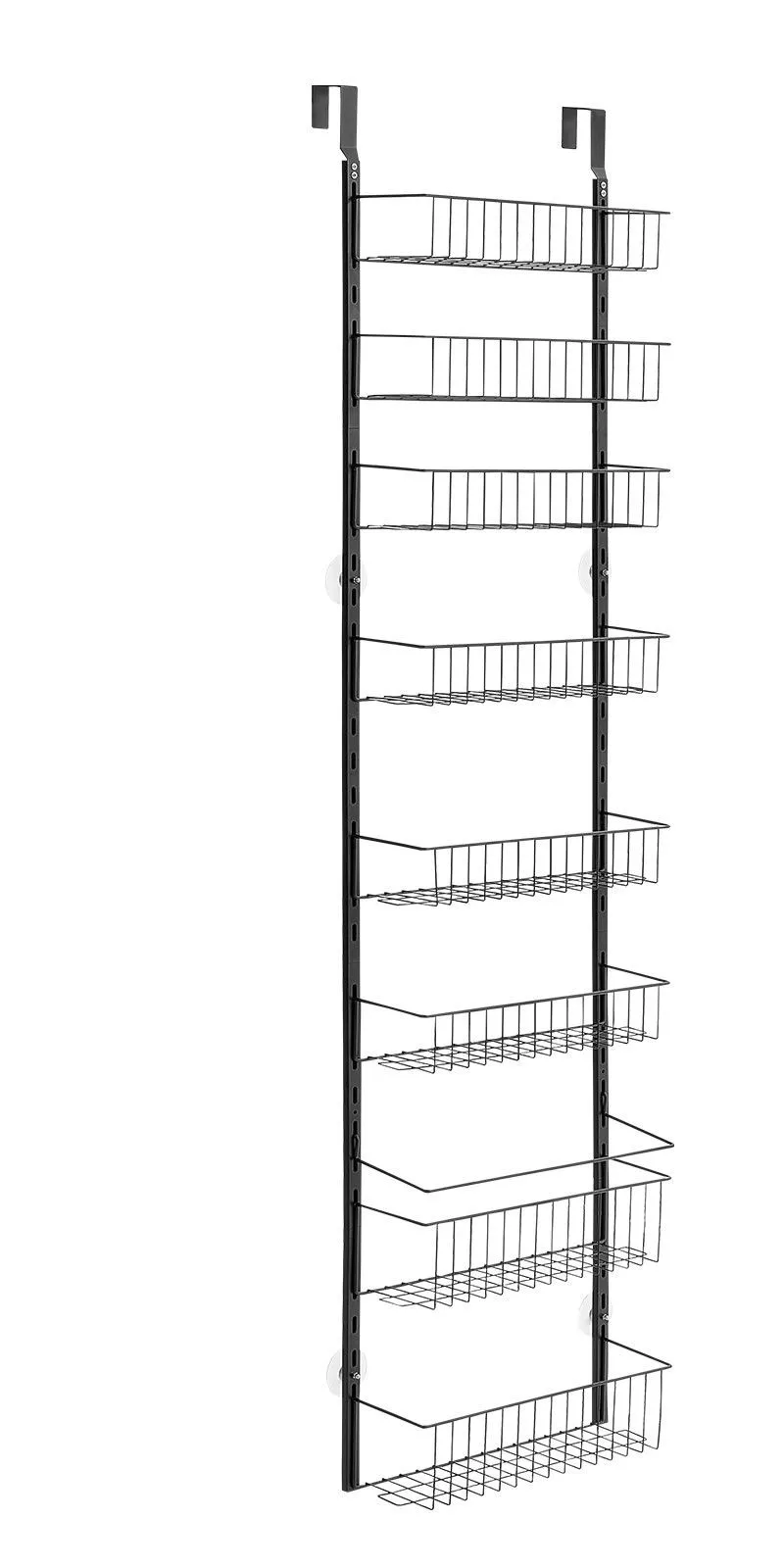
The back of a closet door is usually empty, and it is the right depth for things you grab often: hair tools, lotions, spare toilet paper rolls, or cleaning sprays. Before you buy, measure two things: door thickness and the space between the closed door and the front of the shelves. The 8-Tier Over-the-Door Organizer we sell, for instance, fits doors up to 2 in. thick and needs 7.1 in. of clearance behind the door. Its baskets are 16 x 4.9 in. and rated at 3.31 lbs each, so it suits bottles and rolls, not heavy towel stacks.
Labeled bins: one category per container
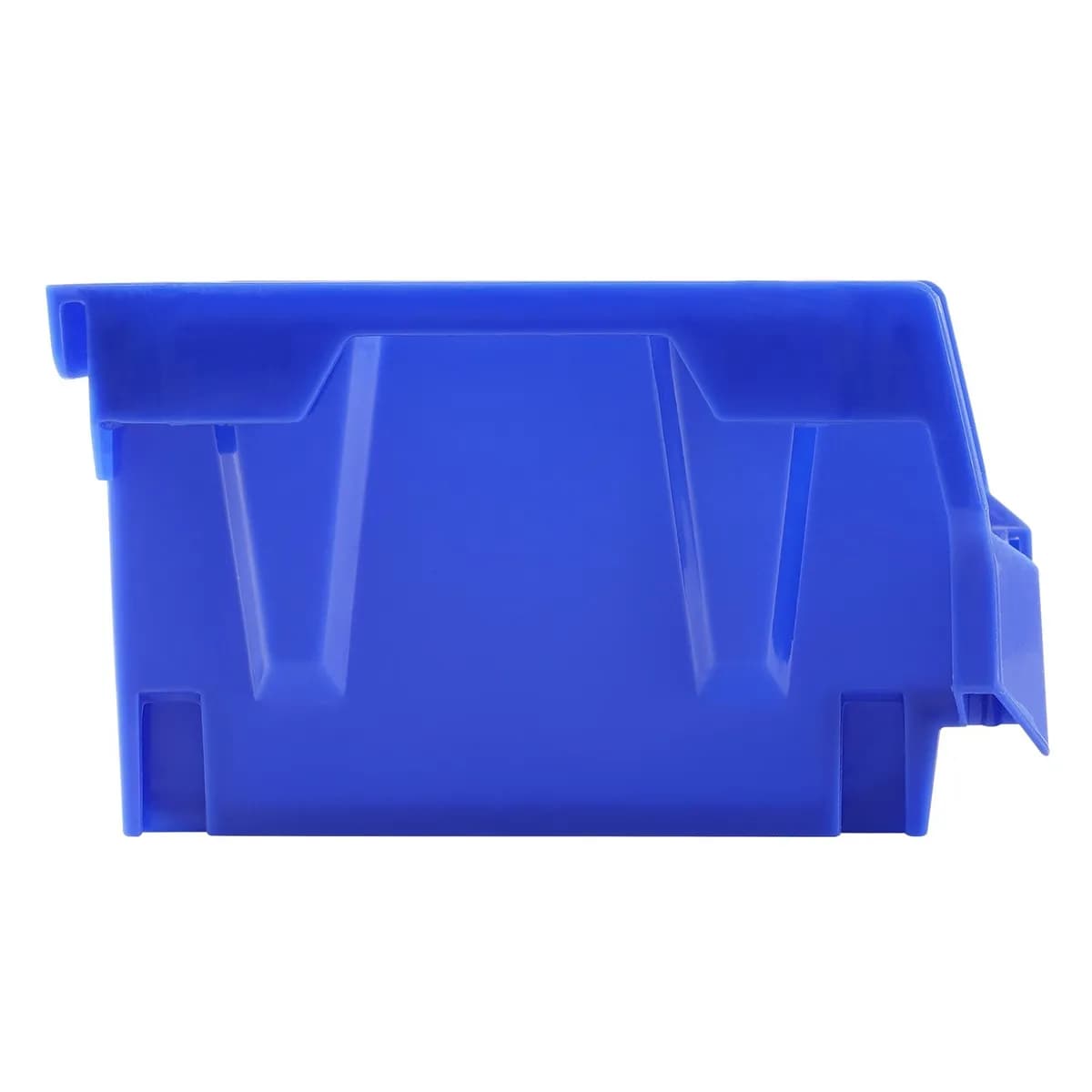
Bins do the real sorting work. Give each bin a single category and a label, such as Hair Care, First Aid, Dental, Travel Sizes, or Cleaning Refills. Pick bins that are no deeper than the shelf, and choose wipeable plastic or coated wire over unlined fabric in a closet that gets steam from the shower. Open-front bins are useful on low shelves because you can see and reach in without pulling the bin out.
Freestanding shelving: add shelves where there are none
Some bathroom closets are just a narrow cavity with one shelf, or a floor that collects bags of toilet paper. A small freestanding wire rack creates shelves without drilling, and wire lets air move around damp items. Our 3-Tier Wire Shelving Rack is 11.8 x 11.8 x 23.6 in. and rated at 66 lbs per shelf, a size that fits the floor of many narrow closets. Measure the opening and the door swing first.
How do you set up a bathroom closet system step by step?
Plan on one session of about an hour for a standard closet. Work in this order so you only buy what you actually need.
- Empty the closet completely and wipe the shelves. You cannot plan zones around things you have not seen.
- Sort into piles by category: daily toiletries, backups, towels and linens, medicine and first aid, cleaning supplies, and rarely used items.
- Remove what does not belong: expired products, empty containers, and duplicates you will not finish. Follow local guidance for disposing of old medicine.
- Assign zones by frequency of use: daily at eye level, weekly in the middle, backups below, seasonal and rarely used on the top shelf.
- Measure each shelf (width, depth, and clear height) and write the numbers down. Then choose risers, bins, or a door rack that fit those numbers.
- Label every container and put things back zone by zone. Leave a little empty space in each bin for restocking.
What belongs on each shelf of a bathroom closet?
What belongs at eye level?
The products you use every day: face wash, toothpaste, deodorant, daily skincare, and a couple of hand towels. Give each person a shallow tray or open bin so their daily kit stays together and comes out in one move.
What goes on the middle and lower shelves?
Weekly items such as hair masks and nail care sit in the middle. Backups (unopened toiletries, spare toothbrushes, extra soap, toilet paper) go lower in labeled bins. Group backups by category, not brand, so you can see at a glance when a category is running low and avoid buying duplicates.
What should go on the top shelf?
Things you reach for a few times a year: extra bed linens, seasonal items like sunscreen in winter, and gift sets. Use lidded bins up there so nothing falls when you pull one down.
What belongs on the closet floor?
Heavy or bulky items that are safer low: bulk toilet paper, refill jugs, and a small caddy of cleaning supplies. Keep cleaning products away from children, ideally in a closed or latched container.
How should you store towels in a bathroom closet?
Fold bath towels in thirds lengthwise and then in half or thirds again so the folded edge faces out and stacks look even. Rolling works well for hand towels and washcloths in a basket. Keep only as many towels as the shelf holds without cramming; damp air moves better around stacks that are not packed tight. Store guest towels and beach towels on a higher shelf so the everyday set stays within reach.
How do you store medicine and first aid in a bathroom closet?
Put medicine and first aid in one dedicated, clearly labeled container, keep it out of children's reach, and keep medications in their original packaging so the dosage and expiry stay with them. Check the storage instructions on each label: many say to keep the product in a cool, dry place, and a closet next to a hot shower is not always that, so move anything sensitive to a drier spot. Review the container every few months and remove expired items.
How do you organize a shared bathroom closet?
Give each person one bin or one half-shelf for personal items, and keep shared supplies (toilet paper, soap refills, cleaning products) in common, labeled bins. Color-coded bins help children find their own things. Agree on one rule for the shared area: whoever opens the last item of a category adds it to the shopping list.
What if your bathroom has no closet?
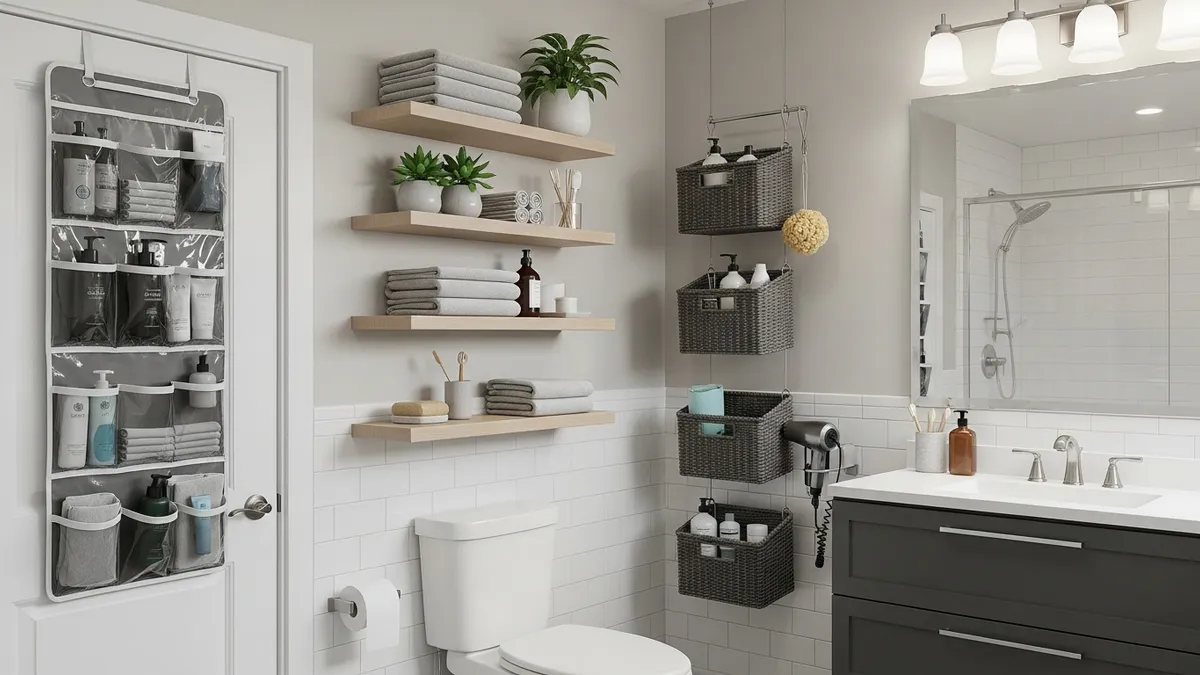
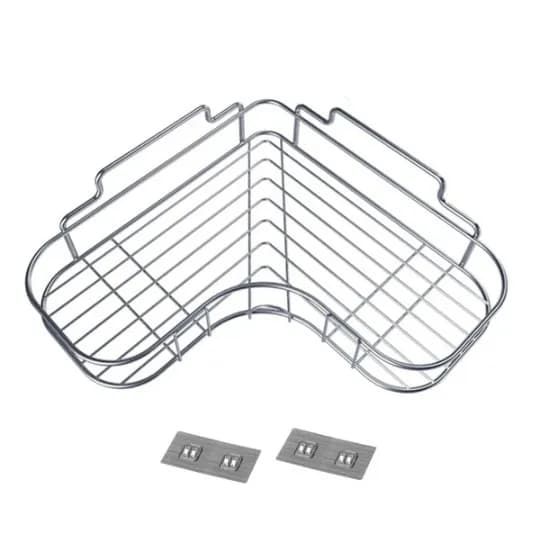
Then the same zoning rules apply, but the storage moves to the walls, corners, and the vanity. Shower corner shelves, a toilet paper holder with a shelf, and a pull-out organizer under the sink add storage without using floor space. We compared seven of these by floor space used, size, and rated load in Bathroom Organizers for Small Spaces: 7 Picks Ranked by Floor Space Used, so use that guide if you need products for the room itself rather than the closet.
How do you keep the system working?
A system only stays organized if resetting it is quick. Two short routines are enough:
- Weekly (5 minutes): return stray items to their zone, pull older backups to the front, and throw out empty packaging.
- Every few months (20 minutes): check expiry dates, wipe the bins and shelves, and adjust zones if something keeps ending up in the wrong place.
If one category keeps overflowing, that is a signal to either use it up before buying more or give it a bigger container, not to squeeze it in.
FAQ: Bathroom Closet Organization Systems
Q: What is the best organization system for a small bathroom closet?
Combine three pieces: a shelf riser on the most crowded shelf, labeled bins for backups, and an over-the-door rack if the door is solid and has clearance. That covers vertical space, sorting, and door space without any drilling.
Q: How often should I reorganize my bathroom closet?
Do a five-minute reset every week and a fuller check every few months. A complete reorganization is only needed when your household or routines change.
Q: Should I use open shelving or closed containers in a bathroom closet?
Use both. Keep daily items open at eye level so they are fast to grab, and put backups, medicine, and small loose items in closed or lidded containers.
Q: How do I stop buying duplicates of toiletries?
Store backups by category in labeled bins and keep only one bin per category. When the bin is full, stop buying; when it is empty, it goes on the list.
Q: What should not be stored in a bathroom closet?
Anything that warns against heat or humidity on its label, such as some medicines, plus paper documents and electronics. Store those in a drier room.
Bottom line
Start with zones and labels, then add hardware only where a shelf or the door is clearly underused. For products that help, browse the Sesoris shop, and if you are working with the bathroom itself rather than a closet, see our bathroom organizers for small spaces.
Liked this guide?
Get new organizing guides and the occasional new product by email. No spam, unsubscribe anytime.
Related articles
Explore more articles
- Home Decluttering Tips: A Simple System for a Calm, Organized Home in 2026
- Complete Guide to Closet Organization: Transform Your Wardrobe in 2026
- Ultimate Cleaning Closet Organization: 25+ Smart Solutions to Transform Your Storage Space in 2026
- Multi-Purpose Spice Racks: Ultimate Guide to Versatile Kitchen Storage Solutions in 2026
- DIY Storage Box Ideas from Simple Materials
- Organization and Cleaning: Complete Tutorial Guide to Transform Your Home in 2026
- 15 Brilliant Toy Storage Ideas for Living Room: Transform Your Family Space in 2026
- Essential Cleaning Supplies Organization: Transform Your Home Storage System in 2026