
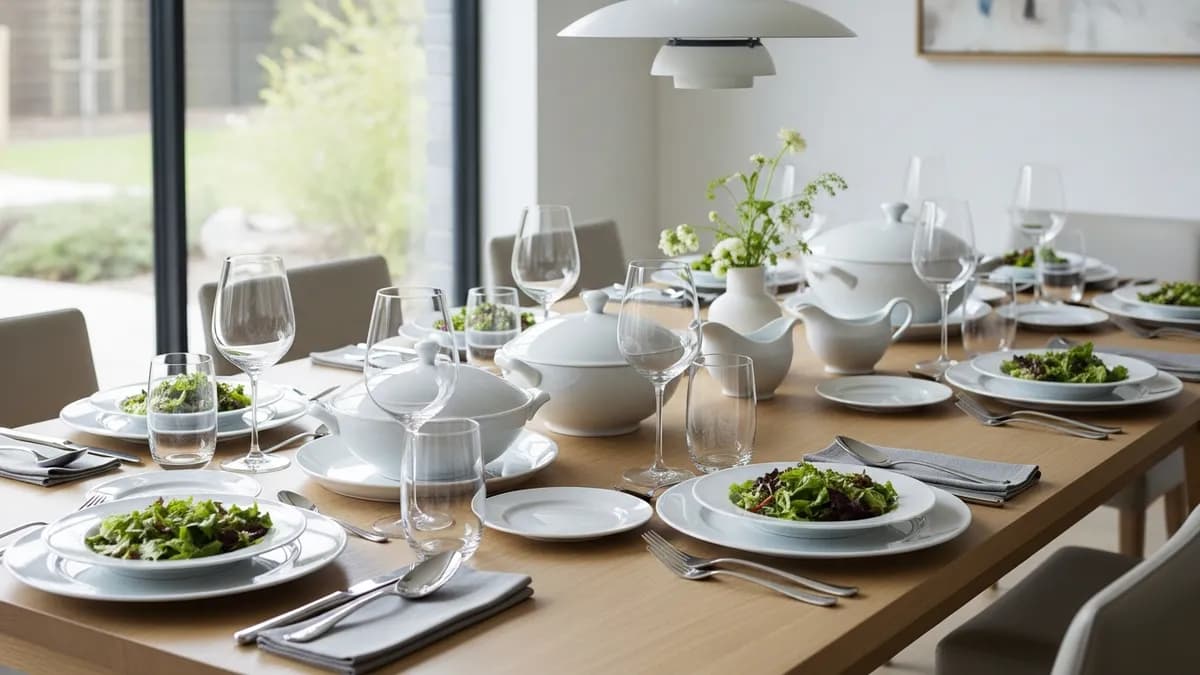
Eid Table Setting Tips for Small Homes
Setting the table for Eid al-Fitr rarely looks like those gorgeous catalog photos. The reality: your table is barely four feet long, the pot of opor is still on the stove, guests arrive in waves from 9 a.m. until evening, and half the family eats standing up. This article covers table setups that actually work under those conditions, from the serving order of ketupat and opor to fast cleanup techniques after each wave of guests heads home.
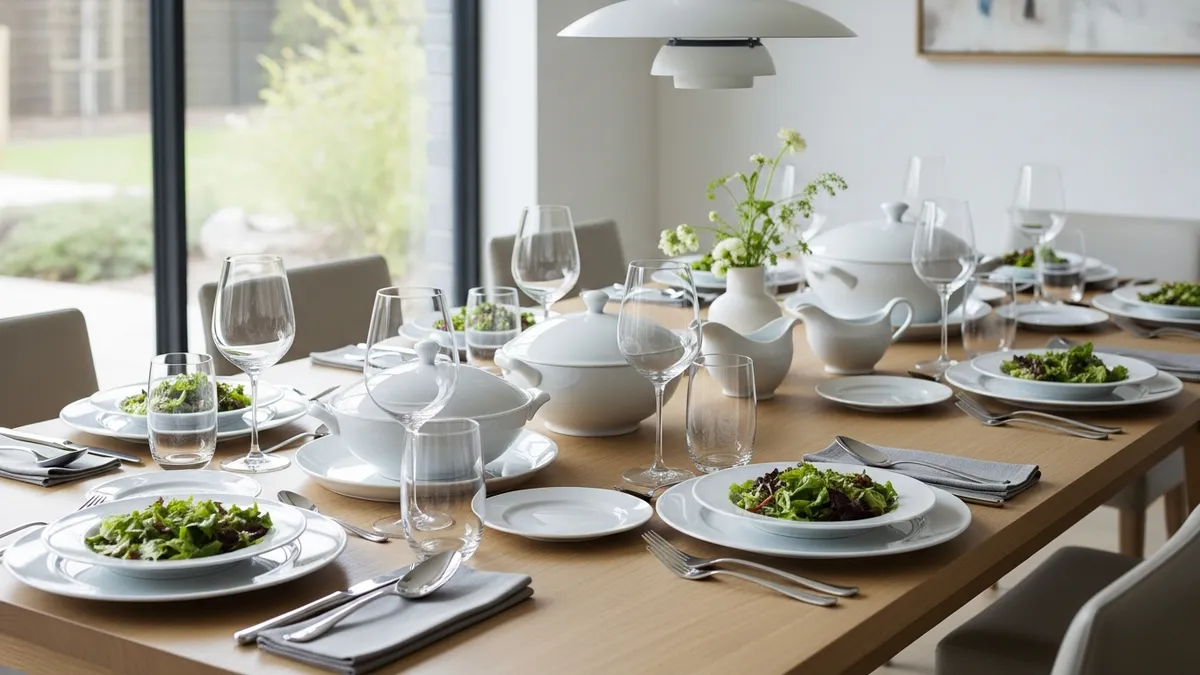
Table of Contents
- Map the Serving Flow for Ketupat and Opor - A Table Setup for Guests Arriving in Waves - Table Covers That Can Handle Curry Spills - Arranging Plates, Glasses, and Cutlery - Simple Decor That Doesn't Steal Space - Fast Cleanup After Guests Leave - Frequently Asked Questions - Conclusion
Map the Serving Flow for Ketupat and Opor
An Eid menu has a natural order that often gets ignored when setting the table: people take ketupat or lontong rice cakes first, then opor (coconut chicken curry), then rendang or braised beef, followed by spicy sides and crackers, and finally a drink. If your serving dishes are placed at random, guests end up zigzagging back and forth and a line builds up in the middle of the table. Arrange everything in one direction, left to right following that order, and place the stack of empty plates at the far left as the starting point.
Cut the ketupat into quarters before guests arrive instead of serving them whole with a knife on the side. Whole ketupat look beautiful, but they force every guest to cut their own at the table, which means crumbs and a queue. Keep the cut pieces in a wide covered dish or under a clean cloth so they don't dry out and harden, especially with a fan or air conditioning running.
Don't transfer opor or gulai into regular ceramic bowls. Coconut milk drops in temperature within 30 to 40 minutes and starts to separate, with a layer of oil rising to the surface that looks unappetizing. It's safer to use a small slow cooker, a lidded stainless steel pot, or a simple budget-friendly food warmer. If you don't have one, serve only half the pot at a time, keep the rest on the stove over the lowest flame, and refill whenever the dish on the table drops to a third full.
Pro tip: give every soupy dish its own ladle and rest the ladle on a small saucer, not directly on the tablecloth. This one simple move eliminates nearly all of those yellow coconut curry stains that are the hardest thing to wash out of a tablecloth.
A Table Setup for Guests Arriving in Waves
Eid guests never arrive all at once. There are usually three waves: immediate family and close neighbors in the morning, extended relatives around midday, then friends and coworkers in the afternoon. Putting out all the food first thing in the morning means sacrificing food quality for the last wave, and the table looks messy all day long.
The solution is to divide the table into two zones. The front zone holds the food actively being served to the current wave. The back zone, or a separate side table, holds covered backups: jars of cookies, crackers in airtight containers, and extra drinking water. With this split, you only swap out the front zone at each changeover instead of rebuilding the entire table.
If you live in a small home or studio apartment where the dining table only seats four, don't force everything onto one table. Move drinks to a separate surface. An ironing board draped with a tablecloth works fine, and so does a bench near the door. Splitting off the drink station keeps guest traffic from piling up in one spot and frees real space for serving dishes. It's the same zoning principle covered in our practical home organizing tips, just applied to one very busy day.
Also set up one hidden container for dirty dishes, such as a Foldable Storage Bin lined with a plastic bag and tucked under the table or in a corner near the kitchen. Without a dedicated spot, dirty plates pile up on the corner of the dining table, and that's the first thing the next wave of guests sees.
Table Covers That Can Handle Curry Spills
Cotton or brocade tablecloths are beautiful, but opor broth and rendang oil soak in within seconds and the yellow stains are often permanent. If you still want fabric for the look, layer the center of the table, where the saucy dishes sit, with a vinyl runner or a glass table protector. The combination gives you a warm look at the edges and a wipe-clean surface in the middle.
A more realistic alternative for homes with small children: a PVC or water-resistant coated tablecloth, which is inexpensive and easy to find in various sizes. Choose a solid color, because Eid food is already colorful with yellow curry, red sambal, and crackers. A busy pattern makes the table look crowded before the food even lands.
The thing people forget most often is trivets. A pot of opor straight off the stove can leave a permanent ring on a wooden table or even melt a PVC cover. Set out at least three trivets, whether woven, ceramic, or silicone, and put them in position before the food arrives, not while balancing a hot pot in one hand.
Arranging Plates, Glasses, and Cutlery
For Eid, a buffet setup makes far more sense than a formal place setting per chair. Stack plates no more than 10 to 12 high; anything taller gets wobbly and guests hesitate to take from the top. If you're expecting more than 20 guests, make two separate stacks at two spots so the line splits in two.
Don't scatter spoons and forks flat on a tray. Stand them upright in tall glasses or a ceramic holder, handles up, spoons separated from forks. This takes far less table space than a flat tray, and guests can grab one without touching the part that goes in the mouth.
For glasses, prepare about 1.5 times your expected guest count, since people tend to grab a fresh glass each time they come back for a drink. Don't line glasses up on the main food table; put them at the separate drink station with the tea, cordial, and water. After the party, glasses are what pile up fastest and highest, so set up a drying rack like the Stainless Steel 2-Tier Dish Rack next to the sink first thing in the morning. Choosing a dish rack with enough capacity is covered in more detail in our kitchen dish rack guide.
Pro tip: count your plates and glasses three days before Eid, then wash everything the day before. Plenty of hosts discover they're three serving plates short on the morning of Eid itself, when stores are closed and there's no time to shop.
Simple Decor That Doesn't Steal Space
The most common mistake on an Eid table is decor that steals functional space. A tall flower vase in the middle of the table blocks guests reaching for food from the other side and keeps getting bumped. If you want flowers, choose a low arrangement no taller than 6 inches and place it at the end of the table.
The most effective decor for a small table actually comes from things that are already functional: clear glass cookie jars lined up neatly, a clean stack of white plates, and cloth napkins in a matching color. Those three alone make the table look intentional without adding a single extra item you'll have to clean later.
If your table is genuinely tight, move the decor to vertical surfaces: small potted plants on a wall shelf or in a corner add color without giving up a single inch of serving space. Skip candles and diffusers near the food, since their scent clashes with the aroma of opor. Also avoid long draping lace tablecloths if there's a toddler in the house, because one tug can bring the whole table down.
Fast Cleanup After Guests Leave
Eid cleanup feels crushing because it all gets done at once, late at night, when you're already exhausted. Switch to a staggered approach: every time a wave of guests leaves, spend 10 minutes carrying dirty plates to the sink, wiping spills, and refilling anything running low. The table is ready for the next wave, and the nighttime workload shrinks dramatically.
The most efficient final cleanup order: scrape leftover food from plates into one container first, then soak all the dishes in hot soapy water for 10 minutes. While they soak, wipe the table and move any food still worth keeping into airtight containers. After soaking, the oil and coconut milk residue lets go far more easily and dishwashing time is cut nearly in half.
Don't cram leftovers into the fridge in their big pots. Transfer them into small, uniform containers so one pot doesn't hog half a shelf. Opor and rendang keep for 2 to 3 days in the fridge as long as you bring them to a full boil each time you reheat, and how to arrange them so nothing gets forgotten and spoils is covered in our fridge organizer guide.
Finally, return the serving dishes and spare tablecloths to their usual spots within 24 hours. Put it off, and they'll camp out in the corner of the living room for weeks.
Frequently Asked Questions
My dining table only seats 4, but I might have 25 guests. How do I set it up?
Don't use the table for seated dining. Turn it into a buffet table and pull the chairs away so people can circulate around it. Set up a separate seating area in the living room with side tables or lap trays. Eid guests generally eat briefly while chatting, not through a formal hour-long sit-down meal.
How do I keep ketupat from turning hard or slimy through the day?
Keep uncut ketupat at room temperature, hung up so air can circulate, and cut only what each wave of guests needs. Cut ketupat left uncovered for more than 4 hours starts drying out on the surface, so keep the dish covered and cut a fresh batch when the next wave arrives.
Should the cookie jars go on the dining table or the coffee table?
The coffee table, away from the main food. Cookies get eaten while chatting, whereas opor and ketupat need a plate and room to serve. Mixing the two crowds everyone around one table and sends cookie crumbs into the curry dishes.
How many plates and glasses should I prepare?
For plates, prepare enough for your single busiest wave, not the whole day's total, since plates can be washed between waves. For glasses, prepare 1.5 times one wave's headcount, because people often grab a fresh glass when they refill.
How do I get coconut curry stains out of a fabric tablecloth?
Soak the stained area in warm water with a little dish soap, not laundry detergent, because dish soap is formulated to break down grease. Soak for 20 minutes, then rub gently. Never iron the cloth before the stain is completely gone, since heat sets the stain permanently.
Conclusion
A successful Eid table isn't the one that photographs best. It's the one that can serve wave after wave of guests without the host melting down in the kitchen. Three decisions matter most: arrange the food along the natural serving flow (ketupat, opor, mains, crackers, drinks), split the drink station off from the food table, and set up a hidden dirty-dish bin from the start.
Short on time? Do just these three things: wash every plate and glass the day before, lay a spill-proof runner down the center of the table, and put a drying rack by the sink. That's what saves you when guests arrive all at once and the kitchen starts to overflow.
Weekly Home Tips
Get home organization ideas, product picks, and exclusive deals delivered weekly.
No spam. Unsubscribe anytime.
Explore More Articles
- 25+ Best Indoor Plant Shelf Ideas to Greenify Your Home in 2026
- Best Budget Kitchen Racks in 2026: Top Picks for Every Home
- How to Keep Your Kitchen Organized: Complete 2026 Guide
- Home Storage Solutions: 2026 Guide to a Tidy Home
- How to Organize a Small House: Complete 2026 Guide
- Garage Storage Solutions Near Me: Complete Review & Buying Guide for 2026
- Kitchen Dish Rack Guide: Best Kitchen Plate Storage Solutions for 2026
- 30+ Stunning Living Room Wall Shelf Decor Ideas to Transform Your Space in 2026