
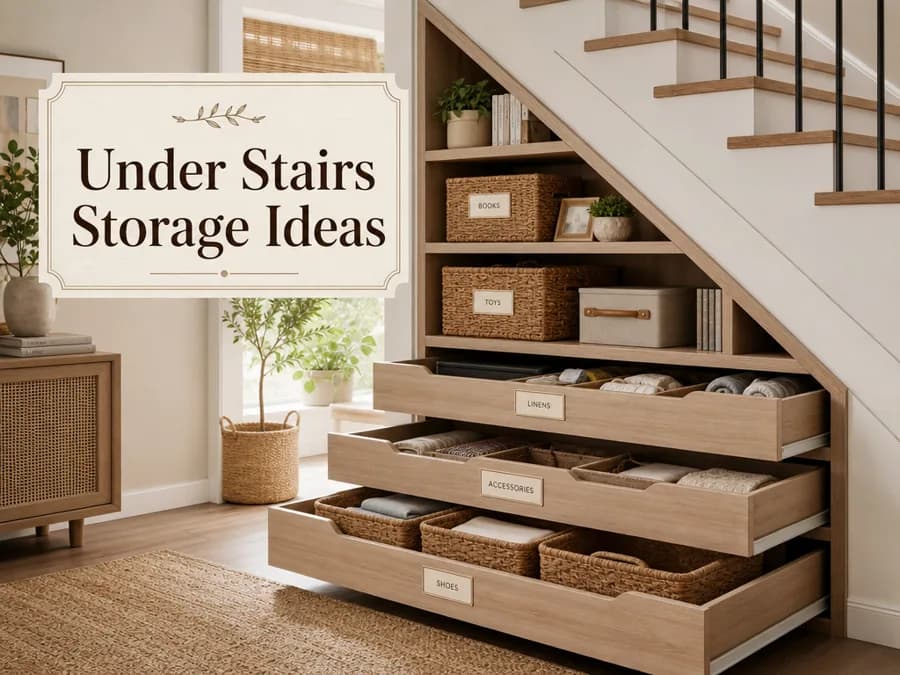
Under Stairs Storage Ideas: Smart Ways to Transform Awkward Space in 2026
Looking for under stairs storage ideas that actually make your home feel calmer, not just fuller? The awkward space below a staircase can become one of the most useful storage zones in the house when you plan it around access, lighting, ventilation, and the items you reach for every week. Instead of treating the triangle under the stairs as a dumping corner, use it as a compact system for shoes, cleaning tools, books, pantry overflow, pet supplies, travel gear, or seasonal decor.
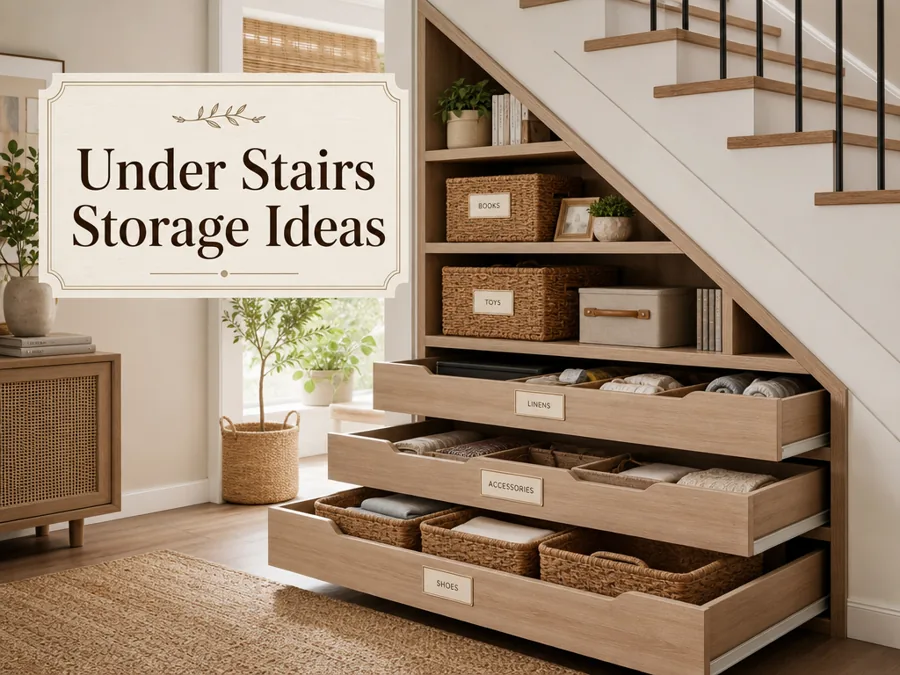
The best under stairs storage ideas start with a simple question: what does this space need to solve for your household? A family with kids may need school bags and shoes near the entryway. A small apartment may need pantry overflow or cleaning supplies. A minimalist home may want hidden drawers that keep visual clutter away. This guide gives you practical layouts, material choices, and maintenance tips so the finished storage is beautiful, safe, and easy to use.
Why Under Stairs Storage Works So Well
Under-stair space is valuable because it sits inside the existing footprint of your home. You do not need to add a cabinet that steals walkway space, and you do not need to move furniture around every time you want to organize. The structure is already there, so the opportunity is about turning empty volume into reachable storage.
Most homeowners waste this area because the shape feels difficult. The ceiling slopes, the depth changes, and the back corner can be dark. But those same limitations are exactly why a planned system works better than random baskets. Pull-out drawers solve depth. Open cubbies solve quick access. Doors solve visual clutter. Lighting solves the dark corner problem.
A good under-stair setup also improves daily routines. If it is near the front door, it can hold shoes, umbrellas, tote bags, sports gear, and pet leashes. If it is near the kitchen, it can hold dry goods, serving trays, or small appliances. If it is near the living room, it can become a bookshelf, media cabinet, board game zone, or toy storage wall.
Measure the Space Before Choosing a Layout
Before buying baskets or commissioning cabinets, measure the under-stair area carefully. Record the width, deepest point, shallowest point, floor-to-slope height, and any obstacles such as electrical outlets, pipes, baseboards, or uneven flooring. Photograph the space from the front and both sides so you can compare product dimensions more accurately.
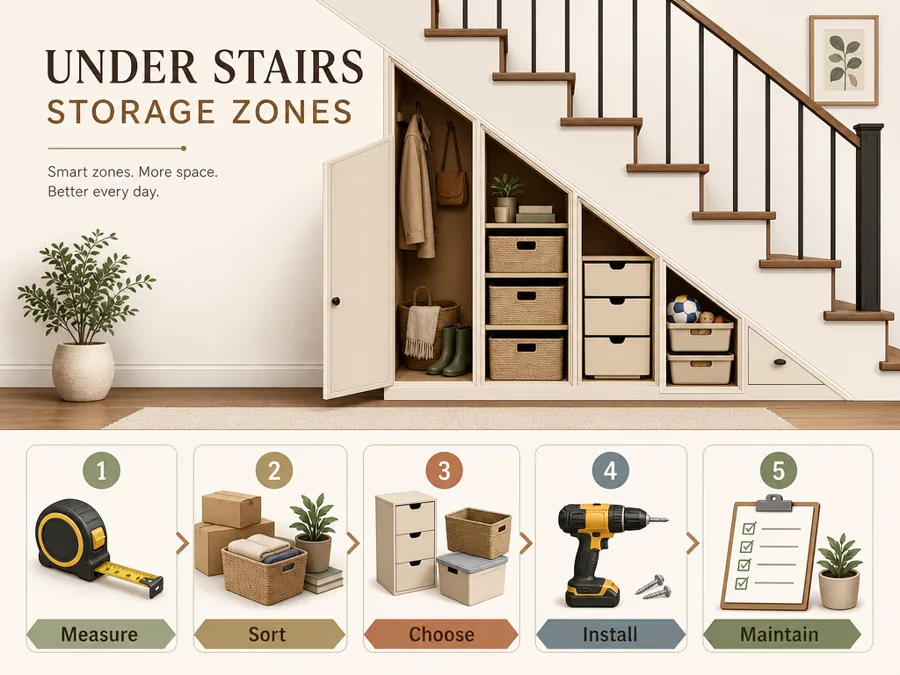
Divide the space into three zones. The tallest zone can hold coats, cleaning tools, vacuum accessories, or a vertical shelving column. The middle zone works well for drawers, toy bins, shoes, or pantry containers. The lowest zone is best for flat items such as gift wrap, spare linens, pet beds, or archive boxes.
Depth matters more than people expect. A very deep under-stair cavity looks generous, but items disappear if you use fixed shelves. For any area deeper than 60 centimeters, consider pull-out trays, rolling bins, or drawer slides. For shallow areas, open shelves and labeled baskets may be enough.
Also think about traffic flow. Doors that swing outward can block hallways. Sliding doors, pocket doors, open cubbies, or push-to-open drawers are better for narrow corridors. If the staircase is close to an entryway, avoid handles that catch bags or clothing.
Best Under Stairs Storage Ideas by Use Case
For entryway storage, build a combination of shoe cubbies, hooks, and closed drawers. Put daily shoes at the lowest reachable level, bags at waist height, and seasonal items higher up. Add a small tray for keys and sunglasses if the area functions as a landing station.
For pantry overflow, use clear airtight containers, shallow pull-out shelves, and labels facing forward. Store heavy items low and lightweight dry goods higher. Avoid storing fresh produce unless the space has good airflow and stable temperature. If humidity is common, choose plastic or metal containers rather than untreated wood baskets.
For cleaning supplies, safety comes first. Use a locked cabinet if there are children or pets at home. Keep chemicals upright in a washable tray, mount brooms vertically, and avoid placing cleaning liquids directly above food or fabric items. A motion-sensor light makes this setup much easier to use.
For books and decor, open shelving can turn the staircase into a design feature. Use a mix of books, boxes, baskets, and negative space so the shelves do not look crowded. This works especially well in living rooms where hidden storage might feel too heavy visually.
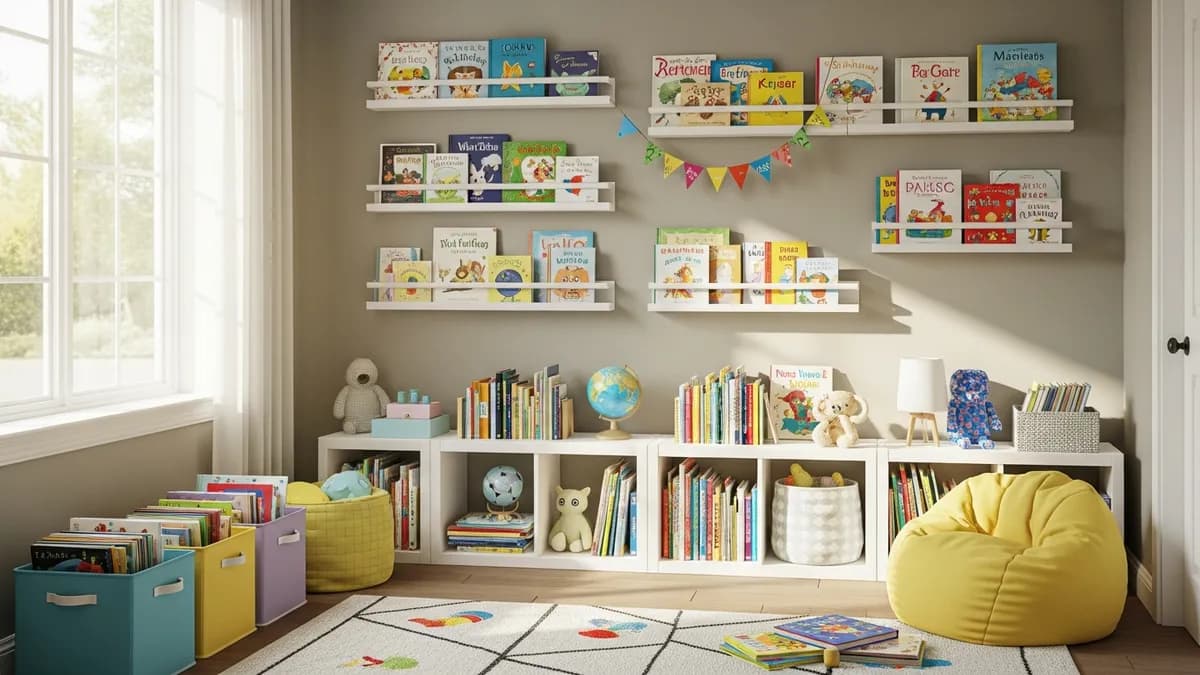
For kids' toys, choose open bins and picture labels. Children are more likely to return toys when the system is obvious. Keep small pieces in lidded boxes, larger toys in fabric bins, and art supplies in removable caddies that can move to the table.
Materials, Hardware, and Safety Details
The right materials depend on what you store. Plywood and MDF are common for built-ins, but they need proper finishing if the area is humid. Solid wood feels premium and warm, while metal shelving works well for utility storage. For baskets, choose woven materials for visible areas and washable plastic bins for cleaning or pantry zones.
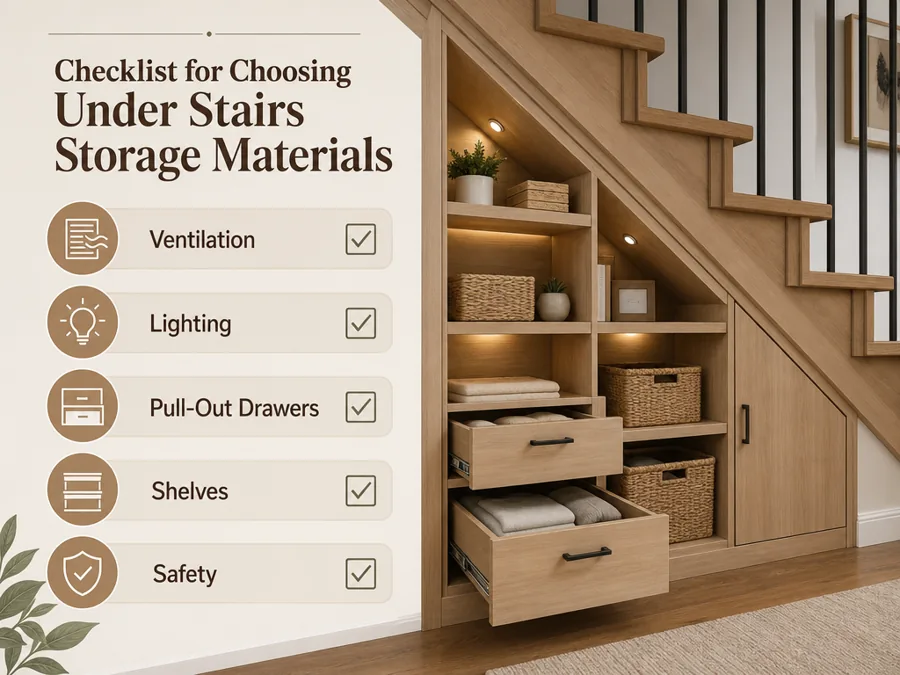
Hardware quality determines whether the storage feels premium or annoying. If you choose drawers, use full-extension slides so the back of the drawer is reachable. Soft-close hardware is worth it in a hallway because it reduces noise and protects fingers. For cabinet doors, check whether hinges can open fully without hitting the staircase trim.
Lighting is not optional for deep under-stair storage. Battery-powered LED strips, plug-in motion lights, or low-voltage cabinet lights make the space easier to use. Place lighting near the front and middle rather than only at the back, otherwise your body will block the light while searching.
Ventilation is another overlooked detail. Closed under-stair cabinets can trap musty smells, especially if the area is near an exterior wall or under a basement staircase. Add small vents, use breathable baskets, and avoid overpacking. If you store shoes, include charcoal bags or silica packs to control odor and moisture.
For safety context, review home fire safety guidance from NFPA and general ventilation principles from the U.S. Department of Energy. These references are not styling rules, but they are useful reminders that closed storage should still respect airflow, access, and household safety.
Budget Planning: DIY, Modular, or Custom Built-In
DIY is the fastest option if you need a simple upgrade. A combination of freestanding shelves, stackable boxes, and labeled baskets can transform the space in one afternoon. This is ideal for renters or anyone testing a layout before investing in cabinetry.
Modular storage is the middle path. Cube shelves, adjustable racks, and rolling drawers give you flexibility without a full renovation. Choose modular pieces that fit the slope and depth, but do not force a perfect wall-to-wall look if it creates awkward gaps. Sometimes a small intentional gap for an umbrella stand or vacuum hose is more useful than a forced cabinet.
Custom built-ins cost more, but they make sense when the staircase sits in a visible area or when the shape is very irregular. A carpenter can create drawers that follow the stair angle, hidden doors that match the wall, or a hybrid system with open shelves on one side and closed storage on the other.
Our practical rule: invest in custom work only after you know the storage category will not change. If you are still deciding whether the area should become shoe storage, pantry overflow, or a reading nook, start modular. Once your routine proves the use case, upgrade the finish.
Common Mistakes to Avoid
The first mistake is filling the space before editing your belongings. Under-stair storage should not become a museum of things you forgot you owned. Sort first, donate what you no longer use, and only design storage for items that deserve to stay.
The second mistake is choosing deep shelves without pull-out access. Deep shelves look efficient on paper, but the back row becomes invisible. If the space is deep, use drawers, trays, wheels, or baskets with handles so items come toward you.
The third mistake is ignoring safety. Stair structures may hide utilities, and some walls may be load-bearing or contain wiring. For anything involving cutting, electrical work, or built-in cabinetry, consult a qualified professional. The storage should support your home, not compromise it.
The fourth mistake is making everything closed. Closed doors look clean, but if every item is hidden, family members may stop using the system correctly. Mix hidden storage for clutter with open or labeled zones for daily items.
The fifth mistake is skipping maintenance. Even a beautiful built-in fails when nobody resets it. Schedule a 10-minute monthly review: remove trash, return items to zones, check for moisture, wipe shelves, and adjust labels as your routines change.
Styling Tips That Keep the Space Calm
Use one visual language. If your staircase has warm wood, repeat warm baskets, brass hooks, or cream labels. If the home is modern, choose flat cabinet fronts, matte handles, and clear bins. Repetition makes the under-stair area feel intentional instead of improvised.
Limit visible categories. Open shelves look best when they hold fewer types of objects. For example, combine books, two basket sizes, and one decorative object group. Too many colors and shapes make the area feel busy, even if it is technically organized.
Label quietly. Large labels are useful in utility spaces, but in living rooms you may prefer small tags, matching label holders, or transparent bins that reveal contents without visual noise. The goal is easy retrieval without turning the staircase into a storage warehouse.
Finally, leave breathing room. A storage system that is 80% full is easier to maintain than one that is 100% full. Empty space is not wasted space. It is the buffer that keeps the system working when groceries, guests, kids, or seasonal items arrive.
FAQ: Under Stairs Storage Ideas
Q: What is the best use for under stairs storage?
The best use depends on location. Near an entryway, use it for shoes, bags, coats, and pet supplies. Near a kitchen, use it for pantry overflow or small appliances. Near a living room, use it for books, toys, media equipment, or hidden clutter.
Q: Are under stairs storage drawers better than shelves?
Drawers are better for deep spaces because they bring items forward. Shelves are better for shallow or decorative spaces. Many homes work best with a hybrid layout: drawers at the bottom, shelves in the middle, and closed cabinets for bulky items.
Q: How do I keep under stairs storage from smelling musty?
Avoid overpacking, add ventilation, use breathable baskets, and keep moisture-sensitive items in sealed containers. If the area stores shoes, use charcoal odor absorbers or silica packs and clean the floor regularly.
Q: Can renters use under stairs storage ideas without renovation?
Yes. Renters can use freestanding cube shelves, rolling bins, tension rods, baskets, and removable LED lights. Choose solutions that do not require drilling or cutting unless your landlord approves.
Q: What should not be stored under stairs?
Avoid storing flammable chemicals, damp fabrics, valuable documents without protection, or heavy items on weak shelves. If the space has poor ventilation, avoid items that trap moisture or odors.
Q: How much does custom under stairs storage cost?
Costs vary widely based on materials, drawer hardware, lighting, and labor. DIY can be inexpensive, modular systems sit in the middle, and custom built-ins cost more but create a cleaner permanent finish.
Q: How do I make under stairs storage look stylish?
Repeat colors and materials from the rest of the room, use matching baskets or boxes, hide messy categories behind doors, and leave some empty space. Good lighting also makes the area feel designed rather than forgotten.
Conclusion
The most effective under stairs storage ideas are not just clever photos. They are systems built around your real routines, the shape of your staircase, and the items you reach for every week. Start by measuring, decide the main use case, choose access-friendly storage, add lighting and ventilation, then maintain the setup monthly. Done well, this awkward triangle becomes one of the most practical and attractive storage zones in your home. Explore more home organization ideas at Sesoris and keep building a space that feels calm, functional, and easy to live in.
Weekly Home Tips
Get home organization ideas, product picks, and exclusive deals delivered weekly.
No spam. Unsubscribe anytime.
Explore More Articles
- Container Storage Box: Best Space-Saving Solutions Guide 2026
- Refrigerator Organizer: How to Arrange Your Fridge Neatly and Save Electricity
- Ultimate Nursery Organization Guide: 35+ Creative Ideas to Transform Your Baby's Space in 2026
- 30+ Creative Kitchen Drawer Organizer Ideas to Transform Your Cooking Space in 2026
- Simple Ramadan Decoration Ideas to Create a Festive Home Atmosphere
- 35+ Creative Wall Book Shelf Ideas to Transform Your Home Library in 2026
- Aluminum Dish Cabinets: Strength Meets Style in Modern Kitchen Storage
- 30+ Brilliant Bathroom Closet Organization Ideas to Transform Your Storage Space in 2026