
Wall Mounted Dish Rack: Complete Buying & Install Guide 2026
Find the best wall mounted dish rack for your kitchen. A complete guide to choosing, installing, and caring for a wall dish rack so your kitchen stays tidy.
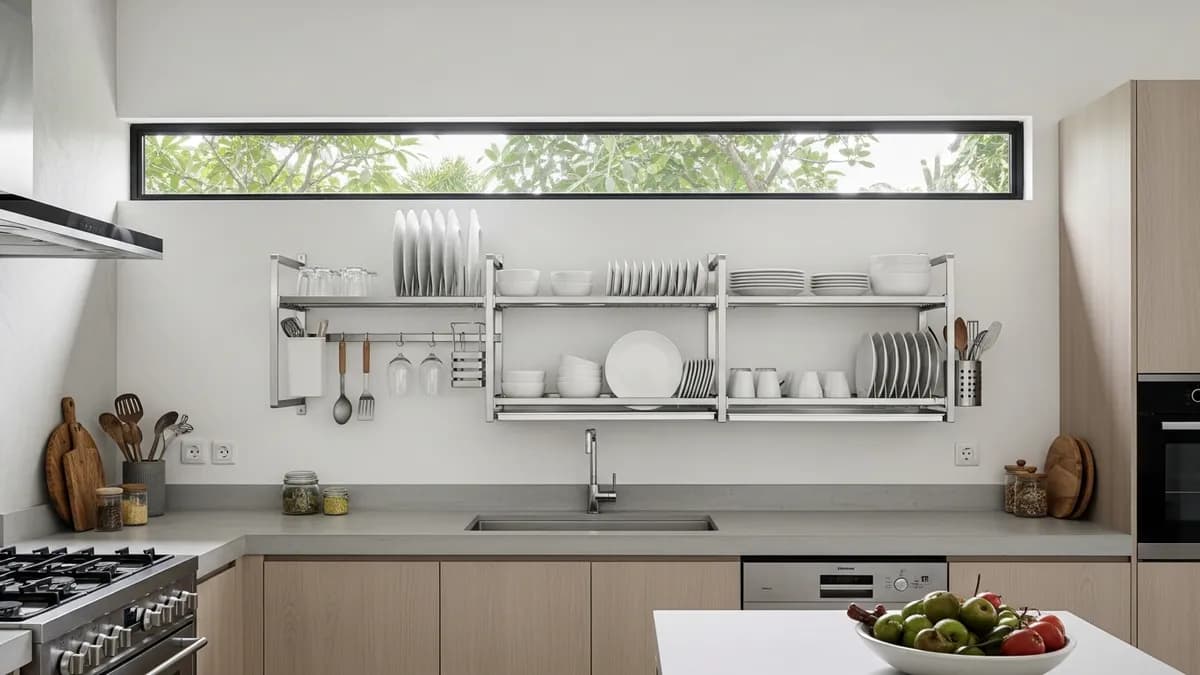
If you're looking for a way to save counter space while keeping your dishwashing area tidy, a wall mounted dish rack is a solution well worth considering. A dish rack that mounts on the wall isn't just practical, it can also be a decorative element that dresses up the look of your kitchen. In 2026, the minimalist kitchen trend is pushing more and more households to switch from conventional dish racks to more efficient wall-mounted models. In this guide, I'll cover everything: what a wall mounted dish rack is, the different types, how to choose the right one, how to install it, and care tips.
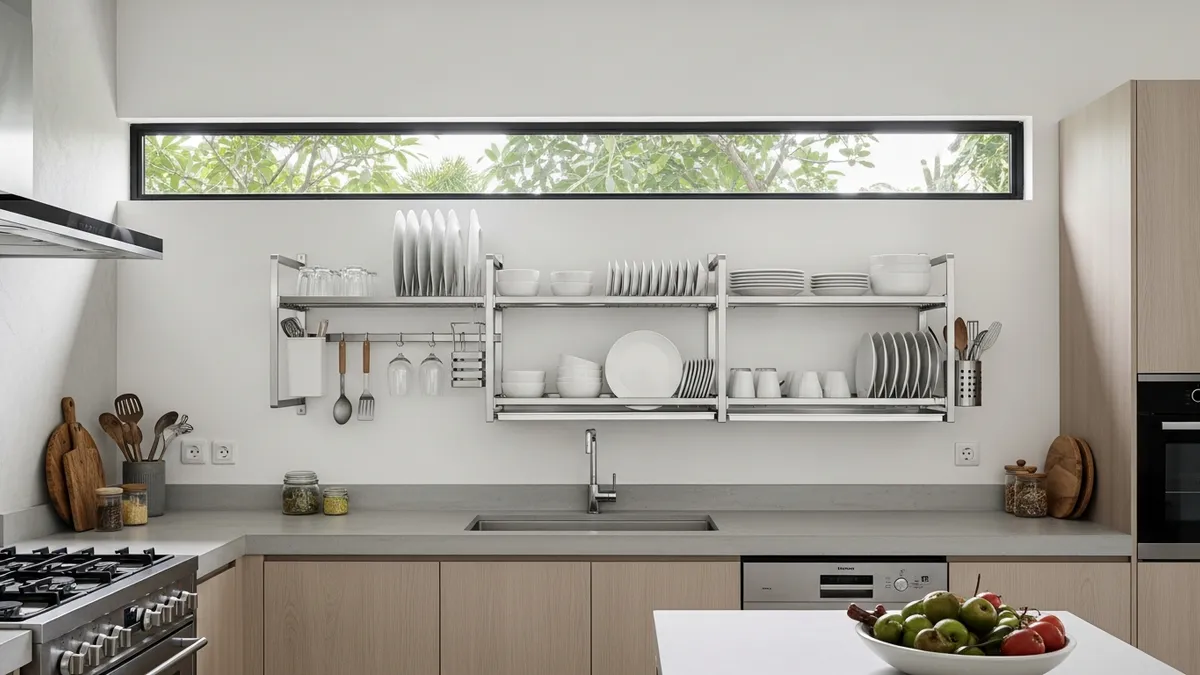
What Is a Wall Mounted Dish Rack and Why You Need One
A wall mounted dish rack is a dish rack installed directly onto the wall, usually above the sink or along the side of a kitchen wall. Unlike an ordinary dish rack that sits on the counter or table, this type makes use of vertical space that often goes underutilized.
The concept has long been popular in regions with more compact kitchens, and it's increasingly relevant for smaller homes, apartments, and minimalist kitchens everywhere. According to The Spruce, using vertical storage in the kitchen is one of the most effective ways to maximize limited kitchen space.
A few of the main reasons so many people switch to a wall mounted dish rack include:
- Saving counter space so your cooking prep area feels roomier
- Dishes and tableware dry faster thanks to better air circulation when hung
- A tidier, more organized kitchen because nothing takes up counter space
- Greater capacity by making the most of the wall
- Easy to reach because it sits at eye level while you stand at the sink
If you're interested in other kitchen storage solutions, our article on over-the-sink racks and organizing the dishwashing area is a very useful extra reference.
Types of Wall Mounted Dish Racks Available on the Market
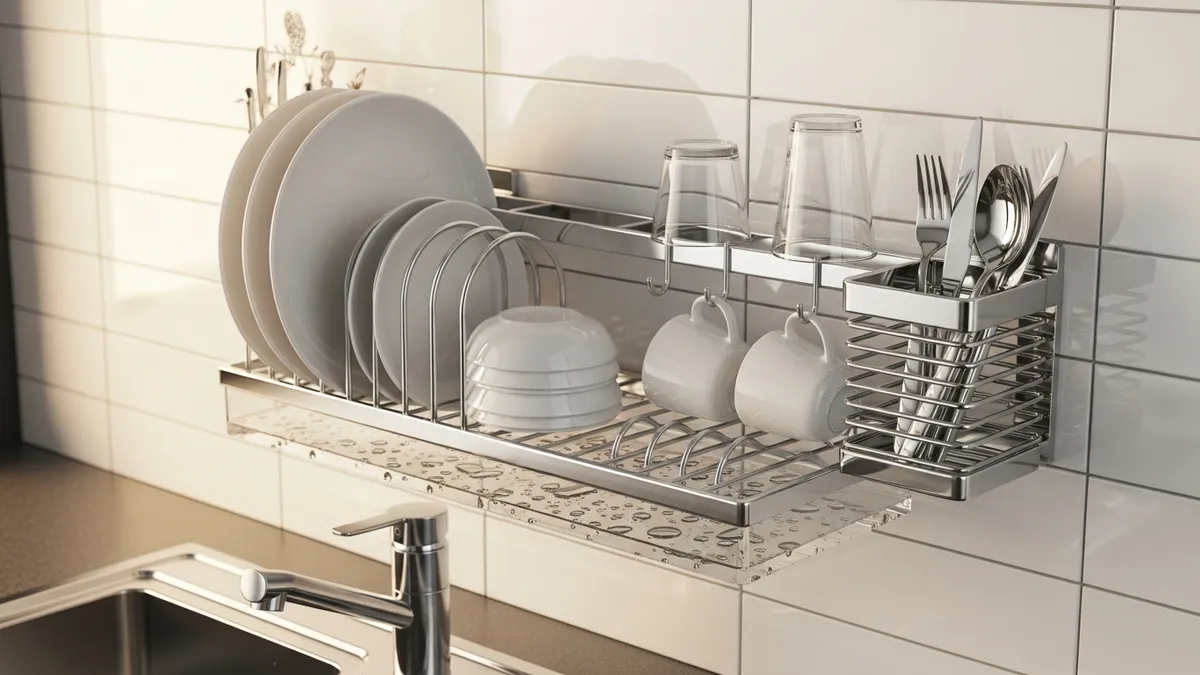
Before buying, it's important to understand the different types of wall mounted dish rack available. Each has its own pros and cons, and the best choice depends heavily on your kitchen's conditions and your needs.
1. Stainless Steel Wall Mounted Dish Rack
This is the most popular and most-recommended type. Stainless steel offers long-term durability, resists rust even with frequent exposure to water and kitchen humidity, and is easy to clean.
- Pros: Long-lasting, rust-resistant, modern clean look, easy maintenance
- Cons: Relatively higher price than other materials, can show fingerprints
- Price range: roughly $25 to $70 depending on size and brand
2. Aluminum Wall Mounted Dish Rack
Aluminum is lighter than stainless steel but still rust-resistant. It's a good fit for walls that can't support too much weight.
- Pros: Lightweight, rust-resistant, affordable, available in many colors
- Cons: Less sturdy than stainless, can dent from a hard impact
- Price range: roughly $18 to $45
3. Chrome Wire Wall Mounted Dish Rack
A chrome-plated wire rack gives an elegant, modern look. The plating offers rust protection, though it can peel over time if it isn't cared for properly.
- Pros: Attractive look, good air circulation, many design options
- Cons: Chrome plating can peel, needs extra care
- Price range: roughly $15 to $40
4. Covered Wall Mounted Dish Rack
This variant comes with a cover or canopy on top to protect dishes from dust. It's a great fit for kitchens that aren't fully enclosed or areas that tend to get dusty. For a full review of this type, read our article on covered dish racks for anti-dust kitchen storage.
- Pros: Dishes protected from dust and splashes, more hygienic
- Cons: Larger footprint, slightly reduced air circulation
- Price range: roughly $30 to $80
How to Choose the Right Wall Mounted Dish Rack for Your Kitchen
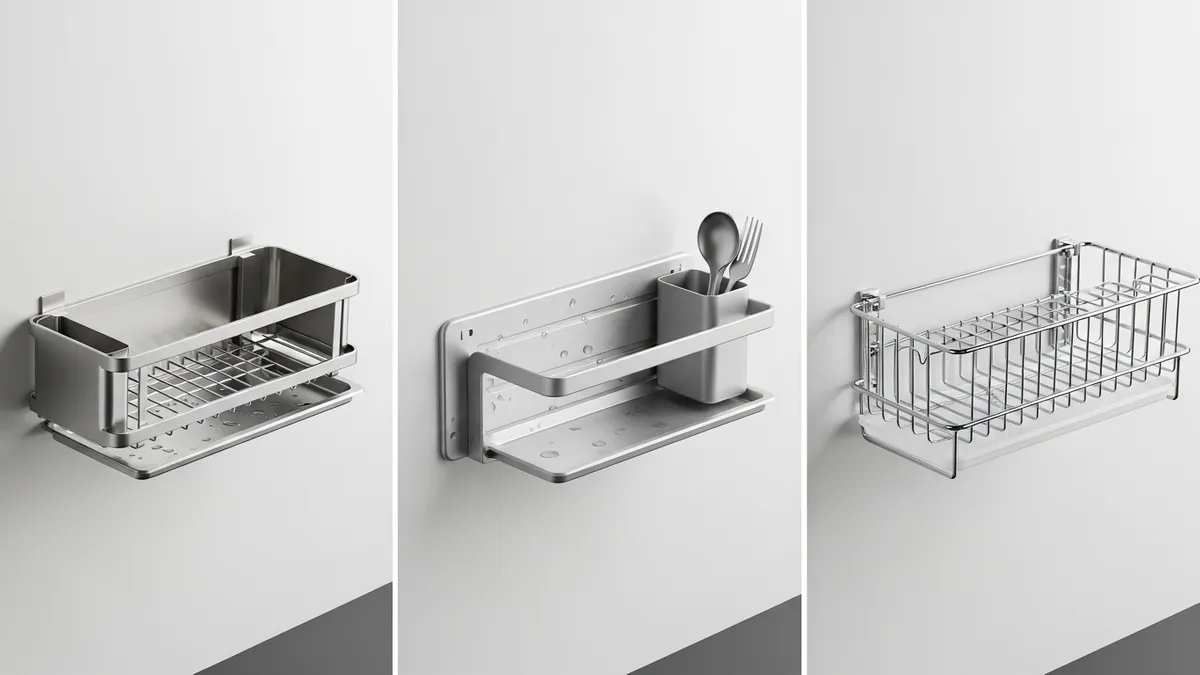
With so many options on the market, choosing the most suitable wall mounted dish rack can feel confusing. Here are the important factors to consider:
Size and Capacity
Rack size should match your household size and the volume of dishes you typically wash each day. For a household of 2-3 people, a medium rack about 16-24 inches wide is usually enough. For larger households, consider a rack 28-36 inches wide or a two-tier rack.
Also make sure the rack has enough compartments for:
- Large and small dinner plates
- Bowls and glasses
- Utensils like spoons, forks, and spatulas
- Pot or pan lids
Material and Durability
For humid, warm climates, a rust-resistant material is a must. I strongly recommend grade 304 stainless steel as the best choice for long-term durability. Quality aluminum is also a good, more affordable option.
Avoid materials that are only coated with paint or thin chrome, because that coating tends to peel within 1-2 years from constant exposure to water and humidity.
Drip Tray System
This is an often-overlooked but very important feature. A drip tray is the water-catching tray beneath the rack that collects drips from freshly washed dishes. Make sure the drip tray:
- Is easy to remove for cleaning
- Has a drainage channel or a direct connection to the sink
- Is made of the same material as the rack so it doesn't rust easily
Mounting System
There are two main mounting systems you should know about:
- Bolt-to-wall system - Stronger and more stable, suited to large or high-capacity racks. Requires drilling into the wall.
- Adhesive (stick-on) system - Uses strong glue or a special adhesive, doesn't damage the wall, but has a more limited weight capacity. Best for small, lightweight racks.
For safety, racks with a capacity above about 10 lbs are strongly recommended to use the bolt system.
Design and Aesthetics
In 2026, a wall mounted dish rack is no longer just a functional tool, it's also a kitchen decor element. Choose a design that matches your kitchen theme, whether that's modern minimalist, industrial, or classic. Houzz has plenty of kitchen design inspiration to help you find the style that fits best.
Tutorial: How to Install a Wall Mounted Dish Rack Correctly
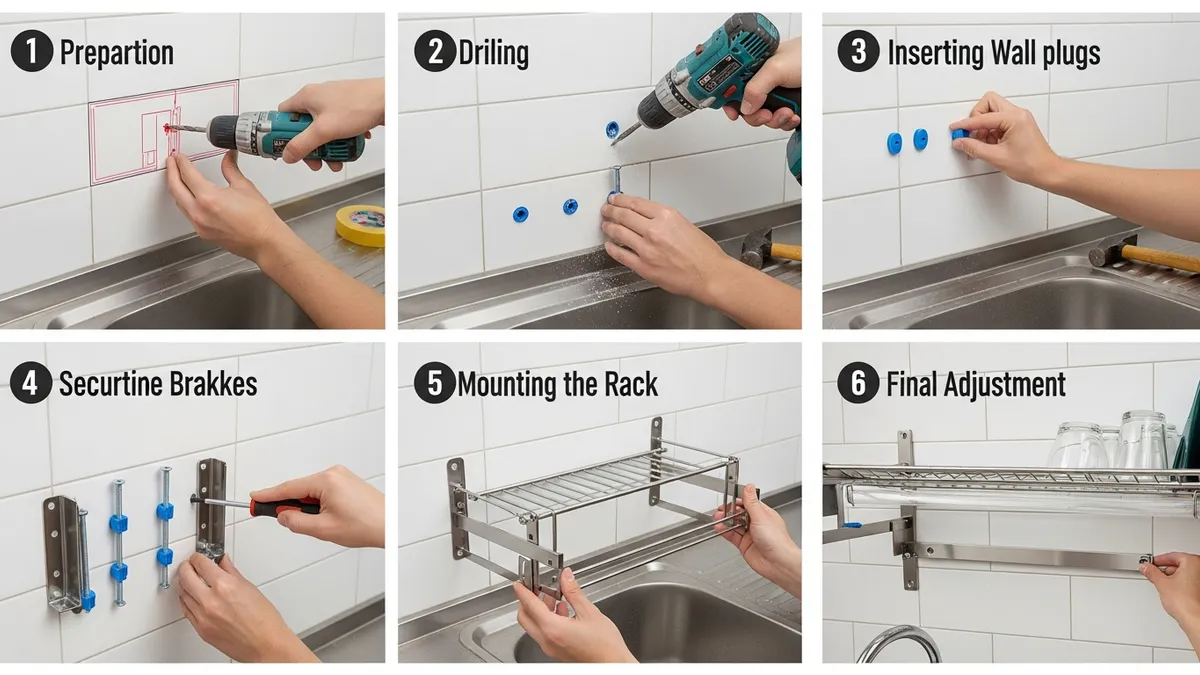
Installing a wall mounted dish rack correctly is the key to long-term safety and convenience. Here's a step-by-step guide you can follow:
Tools and Materials You'll Need
- A power drill or hand drill
- Drill bits suited to your wall type (concrete, brick, or tile)
- Concrete nails or wall anchors of the right size
- A screwdriver
- A spirit level (to make sure it's straight)
- A pencil to mark the drill points
- Masking tape to protect tile while drilling
Installation Steps
- Determine the ideal position - The best spot is directly above the sink, at least 12 inches above the sink base so the rack is easy to reach. Make sure there are no hidden pipes or electrical wires behind that section of wall.
- Mark the drill points - Use a spirit level to make sure the rack will be perfectly horizontal. Mark each bolt-hole point with a pencil.
- Protect the tile surface - Place masking tape over the points to be drilled to prevent the tile from cracking during drilling.
- Drill the holes - Use the appropriate drill bit. For tile, use a dedicated tile bit. Drill slowly at low speed so the tile doesn't crack.
- Insert wall anchors - Push a plastic anchor into each hole to give the bolts a strong grip.
- Tighten the bracket bolts - Attach the bracket or rack hanger and tighten the bolts with a screwdriver or wrench.
- Mount the rack onto the bracket - Place the rack onto the installed bracket and make sure it locks securely.
- Test the strength - Before loading it with dishes, test the rack by applying gentle downward pressure. Make sure there's no wobble.
Important safety tip: If you're unsure about the wall's condition or don't have the right tools, don't hesitate to ask an experienced handyman for help. An incorrect installation risks the rack falling and damaging your dishes or even injuring someone.
Tips to Get the Most Out of a Wall Mounted Dish Rack in a Small Kitchen
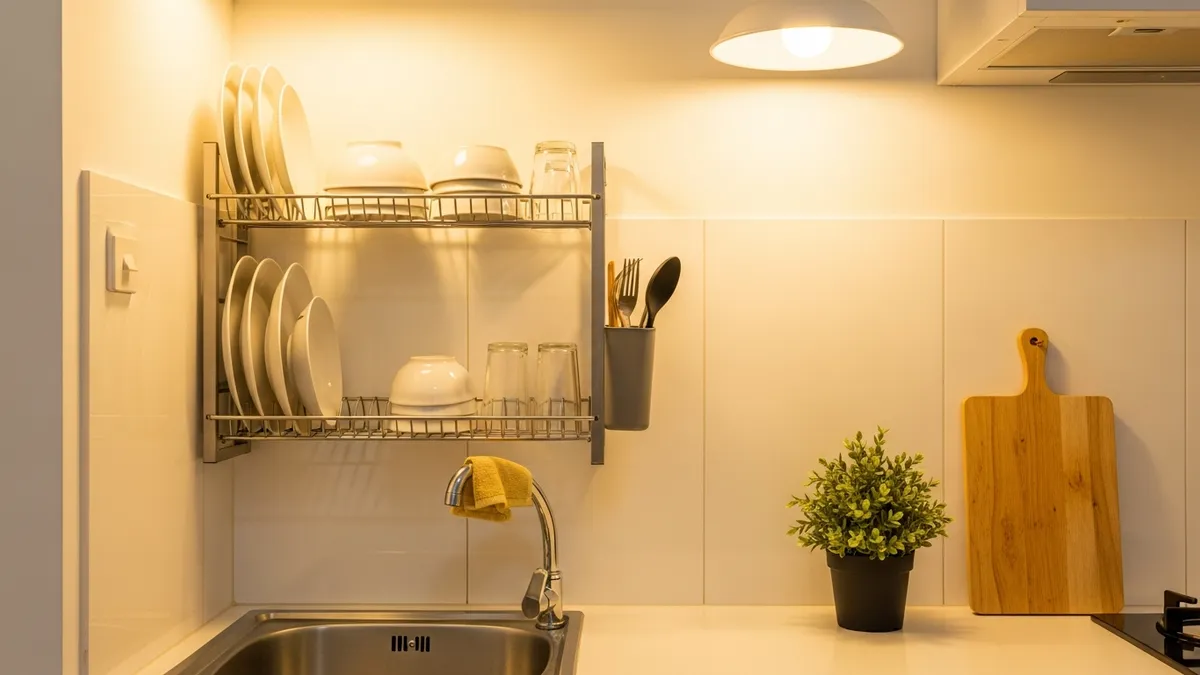
For apartment dwellers or anyone with a cramped kitchen, a wall mounted dish rack can be an incredible space-saver. Here are some tips to maximize it:
Use Add-On Accessories
Many wall mounted dish racks can be equipped with add-on accessories such as:
- Extra hooks for hanging mugs, ladles, or spatulas
- A small spice rack that mounts on the side to hold seasonings
- A towel bar for your kitchen towel
- An extra basket for fruit or small vegetables
For more small-kitchen organization inspiration, see our article on tips for organizing a small apartment kitchen, which is very relevant for urban living.
Place Items Strategically
Put the tableware you use most often in the easiest-to-reach positions. Large plates can go toward the back or bottom of the rack, while the glasses and bowls you use more often can go up front.
Combine With Other Storage Solutions
A wall mounted dish rack works best when combined with other kitchen storage solutions such as:
- A wall spice rack to store seasonings. Read our wall mounted spice rack guide for reference
- In-cabinet drawers for cookware you don't use very often
- Under-cabinet hanging racks for mugs and glasses
According to Real Simple, a smart combination of vertical and horizontal storage is the key to a small kitchen that stays functional and tidy.
How to Care for a Wall Mounted Dish Rack So It Stays Durable and Clean
Investing in a quality wall mounted dish rack should be balanced with proper care. Here's the maintenance routine I recommend:
Daily Routine Cleaning
- Wipe the rack surface with a damp cloth every day to remove leftover water and stains
- Clean the drip tray every 1-2 days to prevent standing water that can harbor germs
- Make sure no dishes or utensils are stuck in a way that blocks air circulation
Weekly Deep Cleaning
- Remove all tableware from the rack
- Clean the rack with a sponge and dish soap, then rinse thoroughly
- For stubborn stains or water scale, use a 1:1 mix of white vinegar and water
- Dry the rack with a clean cloth before using it again
Material-Specific Care
Stainless steel: Avoid steel wool or abrasive scrubbers that can leave scratches. Use a microfiber cloth to clean and polish along the grain of the steel to keep its shine.
Aluminum: Avoid overly acidic or alkaline liquids, as they can damage the oxide layer that protects aluminum from corrosion.
Chrome: Dry it immediately after it gets wet to prevent water spots. Use a dedicated chrome cleaning cream if hard-to-remove stains or spots appear.
Review: Must-Have Features in a Quality Wall Mounted Dish Rack for 2026
Based on observing various products available on the market in 2026, here's a checklist of features that separate a quality wall mounted dish rack from an ordinary one:
A good wall dish rack isn't just about price, it's about the combination of material, design, and features that suit your kitchen's specific needs.
Must-have features:
- Rust-resistant material (grade 304 stainless steel or anodized aluminum)
- An easy-to-remove, easy-to-clean drip tray
- Separate compartments for plates, glasses, and utensils
- A strong mounting system with quality bolts
- A smooth surface with no sharp edges that could injure your hands
Bonus features that add value:
- Expandable or adjustable capacity
- Included add-on hooks
- An attractive design in line with 2026 trends
- A manufacturer's product warranty
- A food-grade certification for materials that touch your tableware
If you're also looking for a way to store tableware inside your cabinets, our article on a dish rack for a kitchen cabinet can offer a useful extra perspective.
Related Products from Sesoris
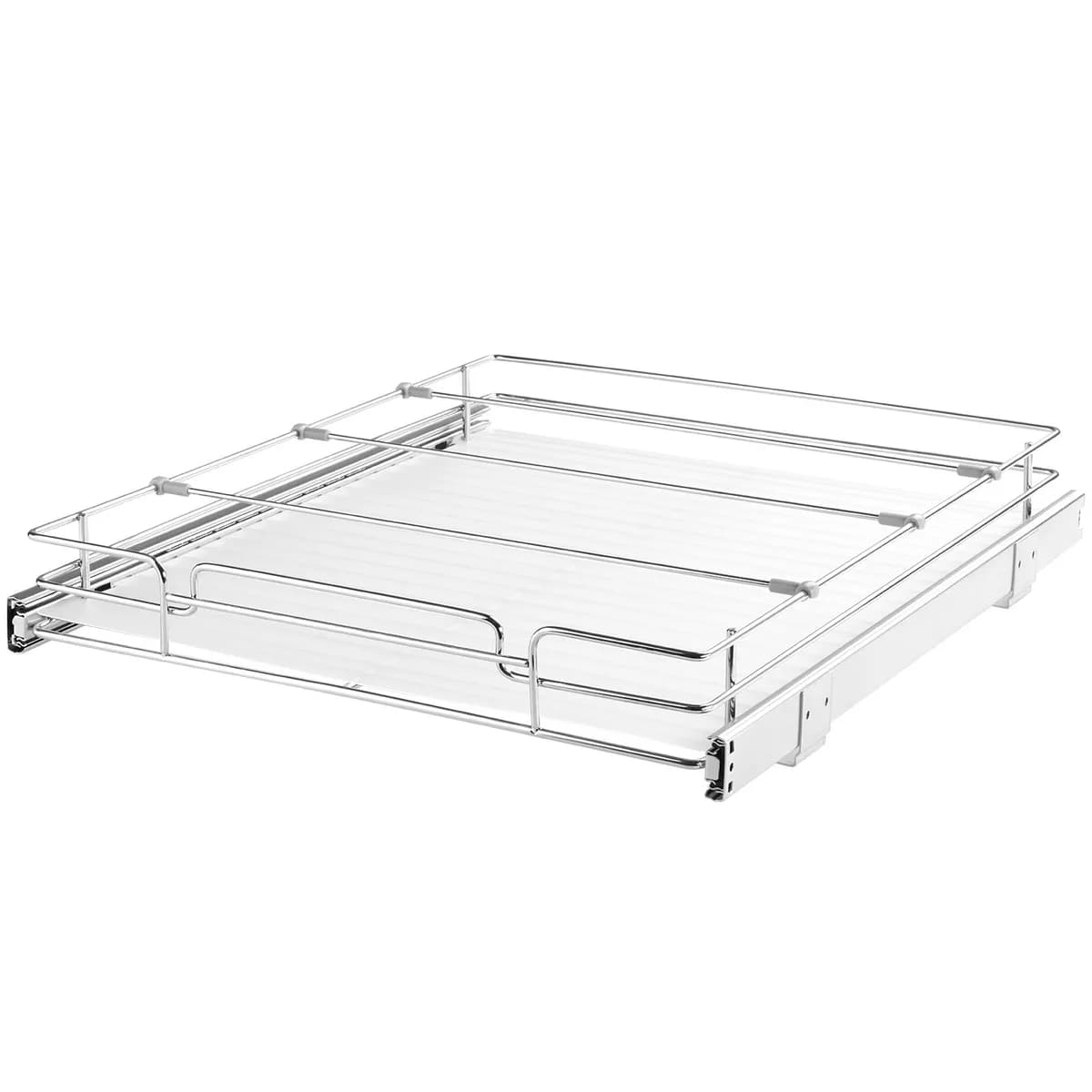
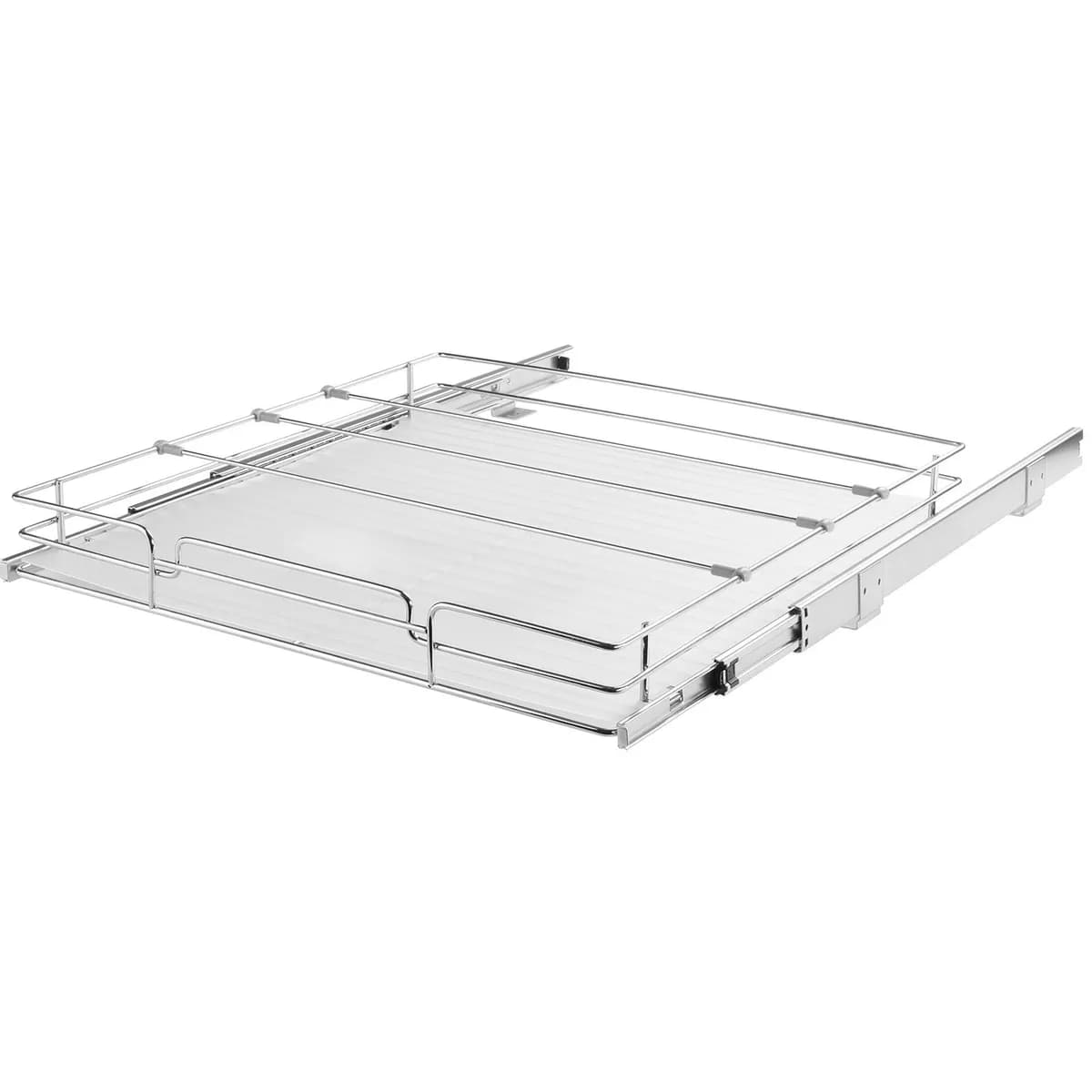
If you want to turn this guide into a real setup, start with Pull-Out Cabinet Organizer, 14 in. Wide and Double-Layer Bamboo Bread Box. For broader options, browse the Kitchen & Dining collection so the article journey does not stop at reading only.
Our practical rule: choose one product that solves the main clutter problem first, then add supporting organizers only when the daily workflow is already clear. This keeps the shopping path useful, not pushy.
FAQ: Common Questions About Wall Mounted Dish Racks
Q: Is a wall mounted dish rack safe to install on tile kitchen walls?
Yes, a wall mounted dish rack is very safe on tile walls as long as it's installed correctly. Use a dedicated tile drill bit and drill at low speed to prevent the tile from cracking. Insert plastic anchors sized to your bolts before tightening the bracket.
Q: What's the maximum safe weight capacity for a wall mounted dish rack?
It depends heavily on the rack type and mounting system. A rack bolted into a solid wall can generally support up to 30-45 lbs. For safety, always follow the manufacturer's maximum-capacity guidance and never exceed the recommended limit.
Q: How often should the drip tray be cleaned?
Ideally, clean the drip tray every 1-2 days, especially if you often wash a lot of dishes. Standing water left too long can become a breeding ground for bacteria and cause unpleasant odors.
Q: Can a wall mounted dish rack be moved to another location?
Yes, but moving it requires removing the bolts and reinstalling in the new spot. The old bolt holes need to be filled with spackle or wall filler. Consider this before deciding on the installation location so you don't have to move it often.
Q: Are there wall mounted dish racks that don't require drilling?
Yes, some models use a strong adhesive or tension-rod system that needs no drilling. However, their weight capacity is more limited and they're less suitable for large racks. These models are better for small racks or temporary use.
Q: What's the price range for a wall mounted dish rack in 2026?
Prices vary quite a bit depending on material, size, and brand. For small-to-medium aluminum or chrome-wire models, expect roughly $15 to $40. For premium large stainless steel models, prices can reach $45 to $90 or more.
Conclusion: A Wall Mounted Dish Rack Is a Smart Investment for a Tidier Kitchen
After reading this complete guide, I hope you now have a clearer picture of how a wall mounted dish rack can transform your kitchen into something more organized, tidy, and efficient. From the range of types to how to choose the right one, the correct installation guide, and care tips, all of this information is meant to help you make the right decision.
Remember, the key to choosing the perfect wall mounted dish rack is understanding your kitchen's specific needs: the size of the space, the number of people in the household, a material that stands up to a humid climate, and a design that matches your home's aesthetic. Don't be tempted by cheap prices alone; prioritize material quality and a strong mounting system for long-term safety.
Ready to create the tidier kitchen of your dreams? Visit Sesoris to find a complete collection of the best kitchen and home organization products. From dish racks and food storage to stylish kitchen accessories, everything is here to help you live a more organized life. Check out our best sellers and new arrivals, which we keep updating in line with 2026 trends!
Liked this guide?
Get new organizing guides and the occasional new product by email. No spam, unsubscribe anytime.
Related articles
Explore more articles
- Best Food Storage Containers Glass: Complete 2026 Review & Buying Guide for a Smarter Kitchen
- Plastic Storage Containers Food: The Complete 2026 Guide to Safe, Fresh Kitchen Organization
- Very Small Closet Organization Ideas: 25+ Smart Solutions to Transform Your Tiny Space in 2026
- Glass Storage Food Containers with Lids: The Complete 2026 Review & Buying Guide
- 30+ Best Organization Closet Ideas to Transform Your Storage Space in 2026
- 25+ Best Yarn Storage Ideas to Keep Your Craft Room Organized in 2026
- 30+ Best Corner Shelf Ideas to Transform Every Room in Your Home in 2026
- 30+ Best Laundry Room Shelving Ideas to Maximize Every Inch in 2026