
Household Storage Rack: The Complete Guide to a Tidy Home
The complete guide to choosing a household storage rack: rack types, best materials, ideal sizes, budget tips, and room-by-room organizing ideas.
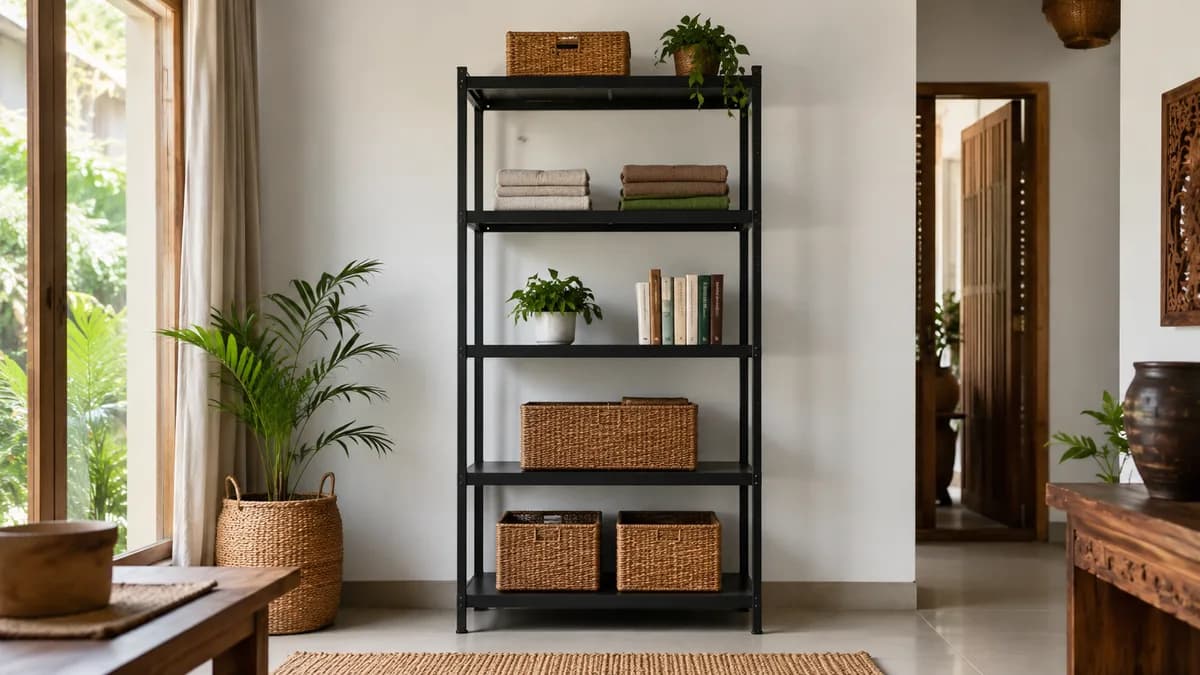
A tidy home starts with the right storage system, not with cleaning marathons every day. A household storage rack is the backbone of that system: one well-chosen rack can absorb the contents of three small cabinets, clear your floors, and give every item a place to come home to. The problem is the overwhelming number of options on the market, from budget five-tier metal shelving to custom modular systems that cost many times more. This guide helps you choose a storage rack that fits your room, your load, and even a humid climate.
What Is a Household Storage Rack and Why Your Home Needs One
A household storage rack is a multipurpose shelving unit for storing household items outside of closed cabinets: pantry stock, cleaning supplies, kids' toys, even book collections. Unlike a cabinet, open shelving keeps items visible and reachable in a single motion, which makes them easier to grab and, just as important, easier to put back.
For compact homes and apartments, vertical storage racks are the cheapest way to add capacity without renovating. A 9-foot wall that usually sits empty can turn into storage space equal to an entire closet.
A few signs your home needs a household storage rack:
- Items pile up on the floor or on tables because the cabinets are already full
- You keep buying duplicates because the old stock "disappears" under a pile
- Utility areas like the kitchen, storage room, or laundry corner feel cramped
- Seasonal items (suitcases, fans, holiday decorations) have no permanent home
Common Types of Household Storage Racks on the Market
1. Metal Shelving Unit
This is the most popular type in online marketplaces. A steel-tube or light-gauge steel frame with 4 to 5 tiers, usually rated for 45 to 110 lbs per shelf depending on material thickness. Great for storage rooms, back kitchens, and laundry areas. Choose a powder-coated finish so it resists rust in humid air.
2. Modular Cube Storage
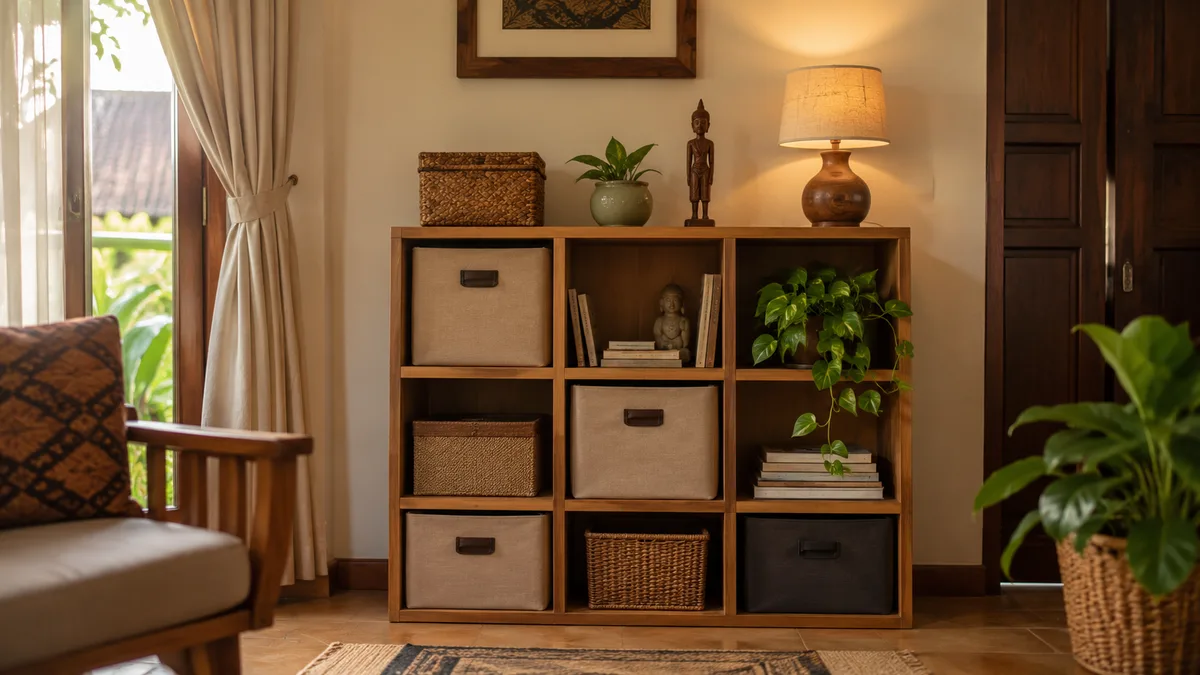
Box-shaped units you can stack and arrange however you need, usually made of particle board or ABS plastic. Their strength is flexibility: run them low under a window or stack them tall in a corner. A good fit for living rooms and kids' rooms because they look neat and accept fabric bins as makeshift drawers.
3. Rolling Cart
A slim 3 to 4 tier rack on wheels, often only 6 to 10 inches wide. The champion of narrow gaps beside the refrigerator or washing machine. Because it pulls out, cleaning the space behind it is easy too.
4. Wall-Mounted Shelf
Attaches to the wall and takes up zero floor space. Best for light, frequently used items: spices, books, or display pieces. If your focus is the kitchen, we cover the details in our kitchen storage rack guide and our kitchen wall shelf ideas.
5. Multipurpose Stainless Steel Rack
For wet areas like the kitchen and bathroom, stainless steel racks resist rust and wipe clean easily. They cost more, but they last the longest. We break this down in our article on stainless steel racks as a long-term investment.
How to Choose the Right Household Storage Rack
Measure the Space Before Buying
The most common mistake is buying a rack that "looks like it will fit." Measure the width, depth, and height of the available area, then subtract 2 inches for clearance. Watch out for door swings, windows, and outlets that the rack must not block.
Calculate the Load You Will Store
Books, cookware, and water jugs count as heavy items; a shelf packed with books can easily exceed 65 lbs. Check the per-shelf capacity in the product specs, and choose a rack rated for at least 1.5 times your estimated load so the shelves do not sag over years of use.
Match the Material to the Room
The practical rule is simple. Wet and humid areas (kitchen, bathroom, near the laundry): choose stainless steel, aluminum, or thick plastic. Dry areas (living room, bedroom): wood, particle board, or powder-coated steel are all safe. Avoid particle board in damp areas because it swells and warps.
Consider Mobility
If you rent or like rearranging rooms, a rolling cart or modular rack makes more sense than a wall shelf that requires drilling. Renters also avoid patching drill holes when they move out.
Room-by-Room Rack Placement Recommendations
Kitchen and Pantry
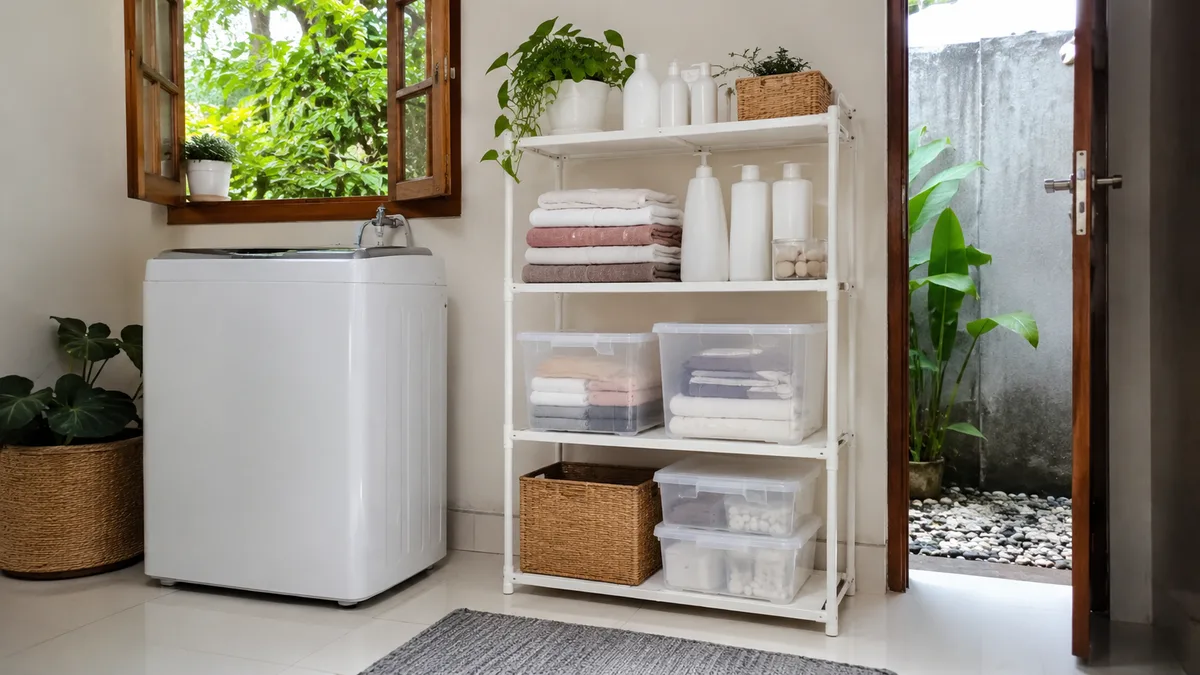
Use a metal or stainless shelving unit for dry goods, water jugs, and large cookware. Group items by category in clear containers so you can see your stock at a glance. For more layout ideas, borrow from our pantry organization guide.
Laundry and Utility Area
A rolling cart fits the gap beside the washing machine for detergent and brushes. Keep cleaning chemicals on the top tier, out of children's reach, and heavy items like buckets on the bottom.
Living Room
Modular cube storage pulls double duty as storage and display. Apply the 70/30 rule: 70 percent closed bins for functional items, 30 percent open space for decor so the unit does not look stuffed.
Bedroom and Storage Room
Take tall racks up close to the ceiling for seasonal items. Rarely used items go up high; everyday items live between eye level and waist height. We cover this zoning principle further in our practical home organizing tips.
How Much Does a Household Storage Rack Cost
As a general picture, plastic rolling carts sit at the budget-friendly end, 4 to 5 tier metal shelving units land in the low to mid-range depending on frame thickness, modular cube sets run mid-range per set, and quality stainless steel racks start at mid-range and climb toward premium. Prices vary by seller and change over time, so treat these tiers as a rough compass, not exact figures.
The best-value principle: pay more for racks in areas you use every day (kitchen, laundry), and economize on storage-room racks you rarely touch.
Care Tips to Make Your Storage Rack Last for Years
- Wipe metal racks with a dry cloth after any water splash to prevent rust
- Tighten bolts and joints every 3 to 6 months, especially on racks you assemble and disassemble often
- Never exceed the load rating; a shelf that starts to bow is telling you to lighten it
- For wood or particle board racks, keep them away from damp walls and add moisture-resistant foot pads
- Rotate the contents during every deep clean so unused items surface quickly and can be cleared out
Related Products from Sesoris
Need supporting gear for your storage system? Check out the Pull-Out Cabinet Organizer, 14 in. Wide for the kitchen, or browse the Kitchen & Dining collection for more storage solutions.
FAQ: Frequently Asked Questions About Household Storage Racks
Which storage rack material lasts longest in a humid climate?
Stainless steel is the most durable choice for damp areas because it does not rust. In dry areas, powder-coated steel and solid wood both last for years with basic care. Avoid particle board in wet areas because steam and moisture break it down quickly.
Are open racks or closed cabinets better for home storage?
They complement each other. Open racks win for frequently used items because access is instant, while closed cabinets suit things you rarely use or would rather hide. Combining open shelving with fabric storage bins balances easy access with a tidy look.
What is a safe load capacity for a metal shelving unit?
It depends on the product, but household units are typically rated 45 to 110 lbs per shelf. Always check the listing, distribute weight evenly, and put the heaviest items on the bottom tier so the rack stays stable and cannot tip.
Is it safe to mount wall shelves on drywall or block walls?
Yes, as long as you use the right anchors: toggle or butterfly anchors for drywall, and sleeve anchors or specialty plugs for lightweight concrete block. For loads above roughly 20 lbs per mounting point, anchor into studs or solid masonry, never into the surface layer alone. When in doubt, bring in an experienced handyman.
How do I keep a metal rack from rusting near the laundry area?
Choose a quality powder-coated or chrome finish, wipe it dry as soon as it gets wet, and keep it at least 12 inches from splash sources. Rubber caps under the feet protect the coating on the bottom from scraping against a wet floor.
What kind of rack works best for a rental home?
Choose freestanding or rolling racks that never need to be drilled into a wall. Modular racks are also practical because they break down easily and move with you without leaving a mark on the rental.
Conclusion: The Right Rack Is the Foundation of a Tidy Home
A household storage rack is not just a place to put things; it is the system that determines whether your home stays easy to tidy or easy to trash. The keys are three: measure your space and load before buying, match the material to each room's conditions, and place items by how often you use them.
Start with the one area that frustrates you most, usually the kitchen or laundry corner, then extend the system to other rooms. Within a few weeks you will feel the difference: things are found faster, floors are clearer, and tidying up no longer feels like a major project.
Ready to get organized? Visit Sesoris and explore our home organization products to find the right fit for your space.
Liked this guide?
Get new organizing guides and the occasional new product by email. No spam, unsubscribe anytime.
Related articles
Explore more articles
- Pretty Food Storage Containers: Transform Your Kitchen with Stylish Organization Solutions 2026
- Food Storage Containers with Lids: Complete Guide to Fresh Food Organization in 2026
- DIY Plant Care Station Tutorial: Create an Organized Plant Care System at Home in 2026
- How to Set Up an Indoor Plant Watering Station: Complete Step-by-Step Tutorial for 2026
- How to Organize Kitchen Cabinets Step by Step: Complete Tutorial for a Functional, Clutter-Free Kitchen in 2026
- How to Plan a Craft Storage Room That Actually Works: A Practical 2026 Guide
- Food Storage Containers for Rice: The Complete 2026 Tutorial Guide to Keeping Rice Fresh
- Best Storage Solutions in Garage: 30+ Smart Ideas to Transform Your Space in 2026