
30+ Brilliant Craft Closet Organization Ideas to Transform Your Creative Space in 2026
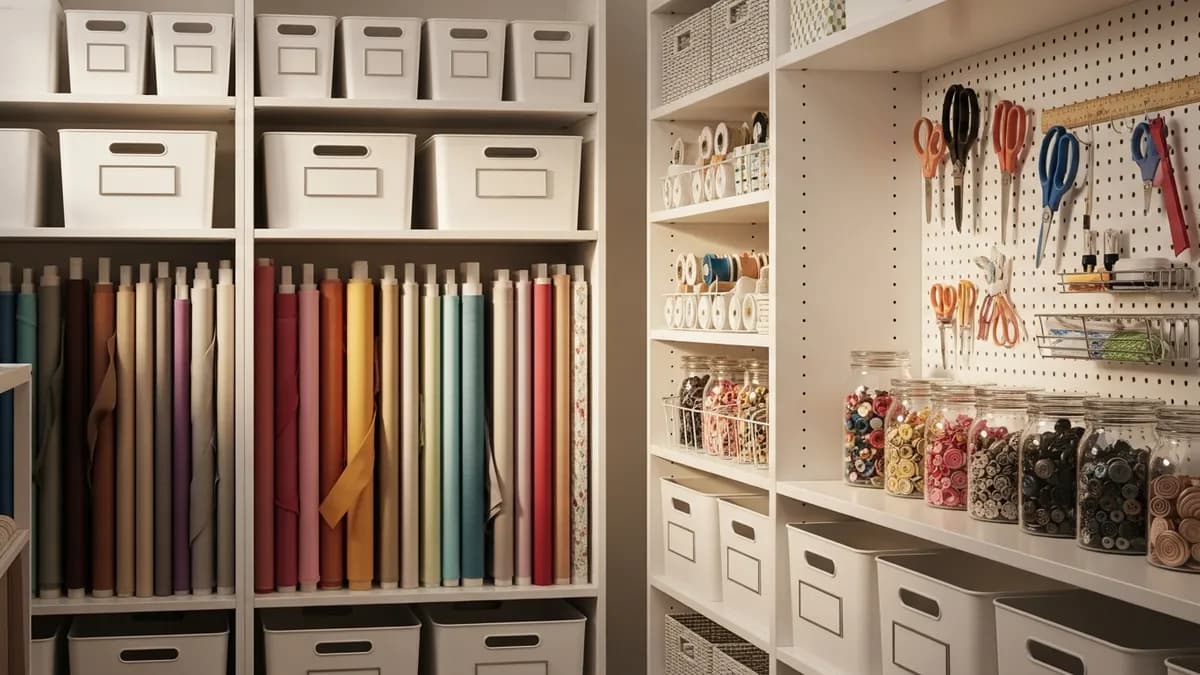
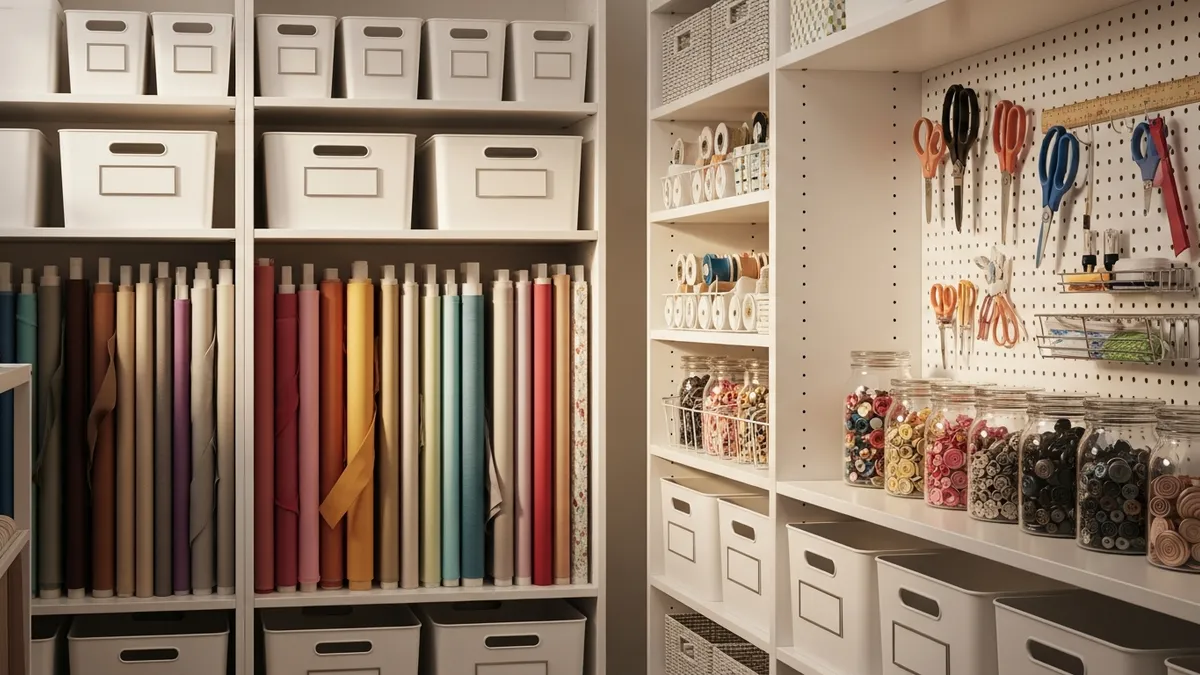
If your craft supplies have taken over every drawer, shelf, and spare corner of your home, it's time to reclaim your creative space with smart craft closet organization ideas. Whether you have a dedicated walk-in closet, a small reach-in cupboard, or even just a converted wardrobe, the right organization system can reduce clutter by up to 40% and make every crafting session feel genuinely enjoyable instead of frustrating. In 2026, more crafters than ever are investing in thoughtful storage solutions - and the results are nothing short of transformational. From clear container systems to pegboard walls and label-everything approaches, this guide covers 30+ of the best craft closet organization ideas to help you build a space that's as functional as it is beautiful.
Why Craft Closet Organization Ideas Matter More Than Ever in 2026
The crafting hobby market has grown significantly in recent years, with millions of people worldwide collecting everything from yarn and fabric to stamps, stickers, paint, and scrapbooking paper. According to The Spruce, an organized creative space can increase productivity and inspire more frequent crafting sessions - yet most crafters admit their supplies are stored haphazardly across multiple rooms.
A dedicated, well-organized craft closet solves several problems at once:
- Saves time - You spend less time hunting for supplies and more time actually creating
- Protects your investment - Craft materials can be expensive; proper storage extends their lifespan
- Reduces stress - A clutter-free environment promotes a clearer, more creative mindset
- Maximizes small spaces - Even a closet as small as 2 feet deep and 4 feet wide can hold an impressive amount when organized correctly
- Makes projects easier - When supplies are visible and accessible, you're more likely to start and finish projects
The key is choosing the right combination of storage products, layout strategies, and labeling systems for your specific closet size and craft type. Let's dive into the best ideas for 2026.
The Best Craft Closet Organization Ideas for Every Budget
You don't need to spend a fortune to create a beautifully organized craft closet. These ideas range from budget-friendly DIY hacks to mid-range and premium solutions, so there's something for every crafter.
1. Start with a Full Clear-Out and Sort
Before buying a single storage product, empty your entire craft closet and sort everything into categories. This is the most important step - and it's completely free. Group your supplies by type: paper goods, fabric and yarn, tools, adhesives, embellishments, paints, and so on. You'll quickly realize what you actually have, what's expired or dried out, and what truly needs a home.
2. Use Clear Bins and Containers as Your Foundation
Clear, stackable bins are the backbone of any great craft closet organization system. Being able to see your supplies at a glance - without opening every box - saves enormous amounts of time. Look for options starting at around $9.99 per bin in various sizes.
- Small bins (6" x 4"): perfect for buttons, brads, stickers, washi tape
- Medium bins (12" x 8"): ideal for ribbon spools, paint tubes, markers
- Large bins (16" x 12"): great for fabric scraps, yarn skeins, paper pads
Explore the Sesoris shop for a curated range of clear storage containers suited to craft closet organization.
3. Install Adjustable Shelving for Maximum Flexibility
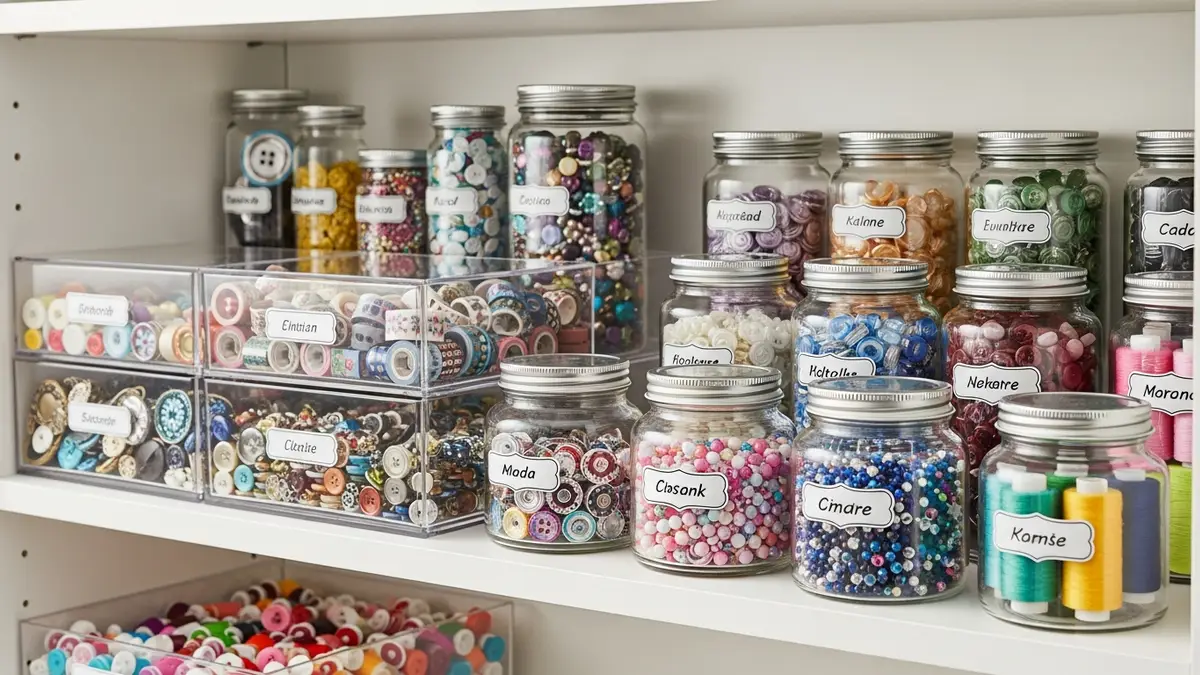
Fixed shelves are the enemy of a growing craft collection. Opt for adjustable shelving systems that let you change shelf heights as your needs evolve. A standard 24-inch deep closet can accommodate shelves spaced 8-12 inches apart, giving you multiple tiers for storage without wasting any vertical space.
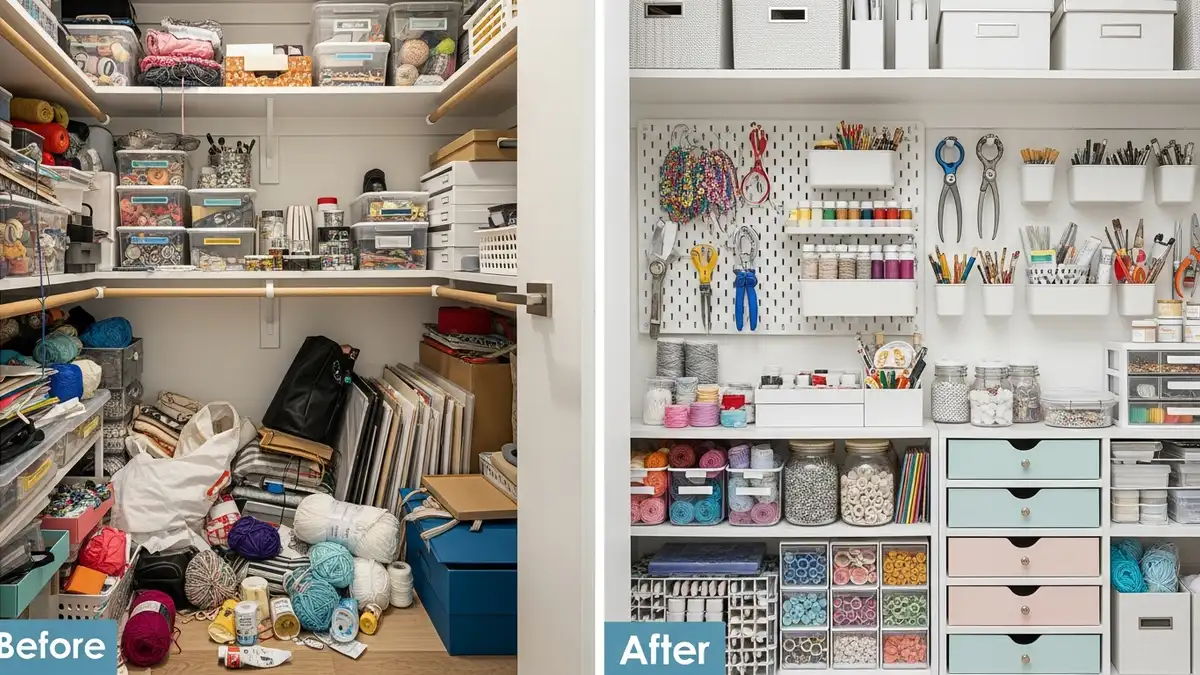
4. Add a Pegboard Wall for Frequently Used Tools
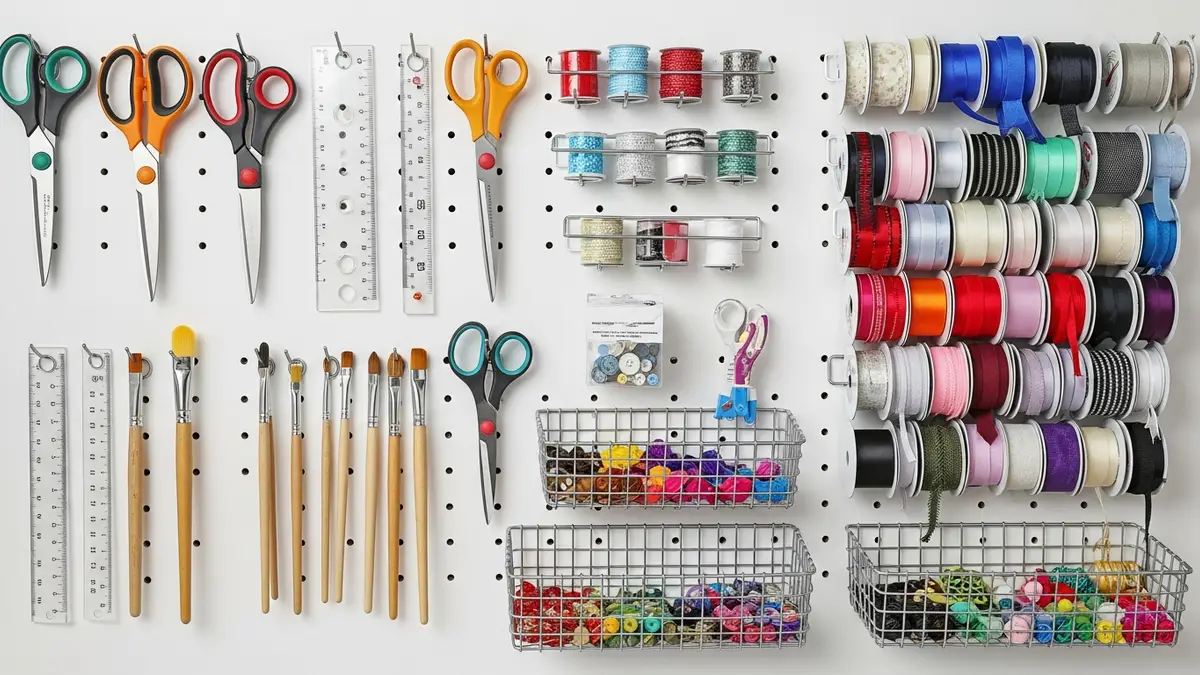
A pegboard panel, typically costing $15 - $40 depending on size, is one of the smartest investments for a craft closet. Mount it on the back wall or inside the closet door to hang scissors, rulers, punches, paint brushes, and ribbon spools. This keeps your most-used tools visible, accessible, and off your shelving - freeing up precious bin space for supplies.
5. Use the Closet Door for Extra Storage
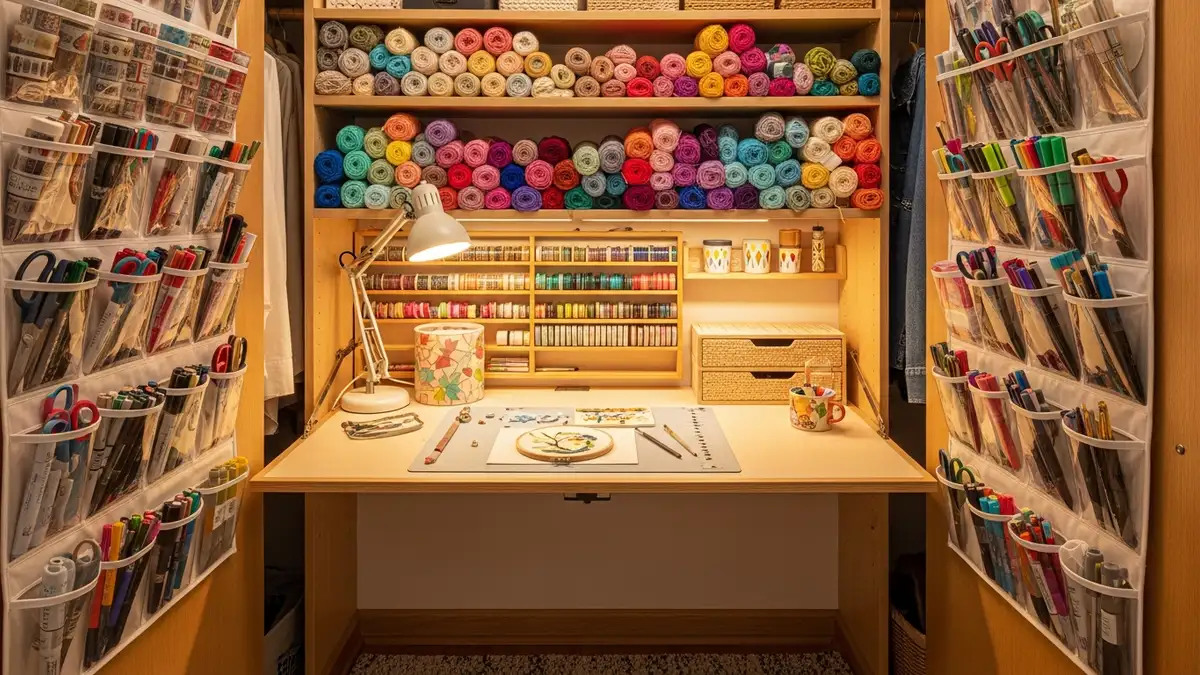
The inside of your closet door is prime real estate that most people ignore. Over-the-door organizers with clear pockets (starting at around $12.99) are perfect for holding small items like glue sticks, pens, stickers, and embellishments. Shoe organizers with multiple pockets can hold dozens of individual small craft items.
6. Label Absolutely Everything
According to professional organizers featured on Good Housekeeping, labeling is the single most important habit for maintaining an organized space long-term. Labels eliminate the guesswork, make it easy for family members to return items to the correct spot, and help you do a quick inventory at a glance. Use a label maker for a clean, consistent look, or print labels from free online templates.
Craft Closet Organization Ideas by Supply Type
Different craft supplies require different storage approaches. Here's how to tackle the most common categories:
Organizing Paper and Cardstock
Paper goods are notoriously tricky to store because they come in so many sizes and are easily damaged. Try these approaches:
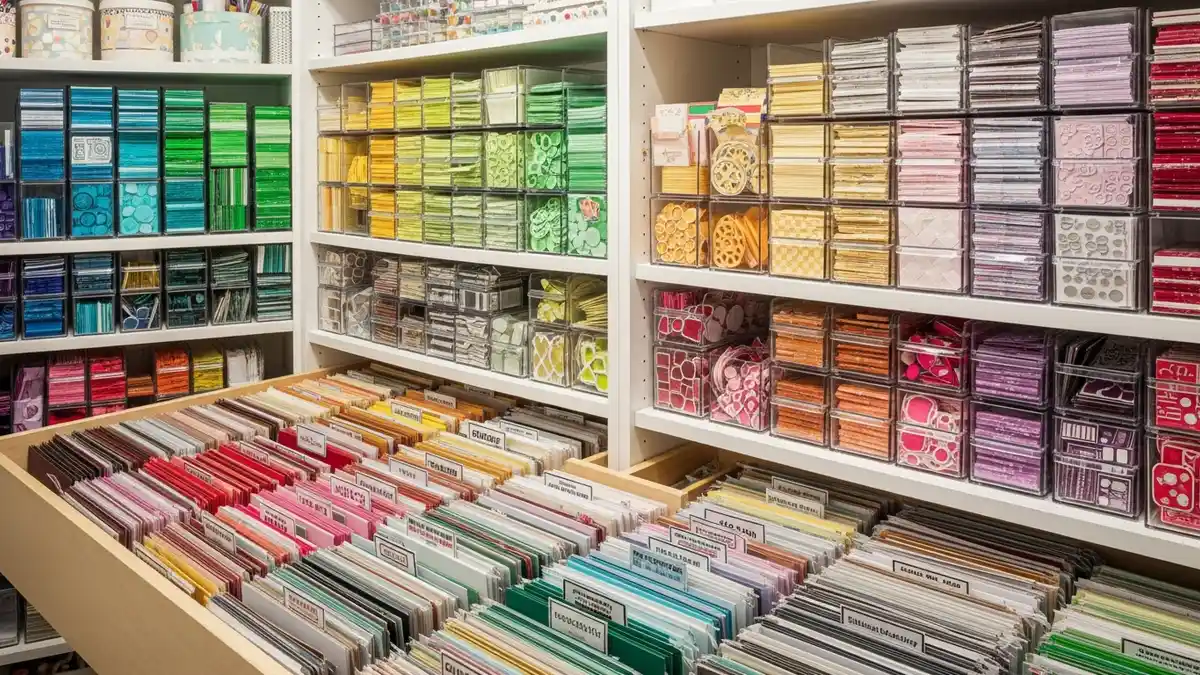
- Vertical file folders or magazine holders - Stand paper upright sorted by color or size; keeps paper flat and prevents curling
- Rolling paper carts - A 3-drawer rolling cart (around $25 - $45) can hold multiple paper pad sizes and rolls out easily when you need access
- Flat stackable drawers - Perfect for cardstock sheets; label the front of each drawer with the color family inside
- Hanging file folders - Excellent for smaller paper punches, die-cut shapes, and printed sheets
Pro Tip: Store paper away from direct sunlight and humidity to prevent fading and warping. A cool, dry closet is ideal.
Organizing Fabric and Yarn
For sewers and knitters, fabric and yarn are often the biggest space challenges. These craft closet organization ideas make a real difference:
- Fold fabric around cardboard inserts and stand pieces upright in a bin - you can see every fabric at a glance
- Use wine rack-style cubbies to store yarn skeins - each skein sits in its own compartment and stays tangle-free
- Hang a tension rod near the top of your closet and drape fabric bolts over it for easy access
- Store yarn in clear zip bags by color - this also keeps it dust-free and moth-protected
- Label each bin with the fiber content and yardage if possible so you don't have to dig through to plan a project
Organizing Paints, Inks, and Adhesives
These supplies need to be stored upright and at stable temperatures. Try:
- Turntable organizers (lazy Susans) - A rotating base lets you access paints stored at the back without moving everything in front; prices start at about $8.99
- Tiered shelf risers - Allow you to see multiple rows of paint bottles or ink pads at once
- Small stackable bins for adhesives like glue sticks, glue guns, and tape runners - group by type
- Pegboard hooks for hanging glue gun cords so they don't tangle
Organizing Embellishments and Small Notions
Buttons, beads, brads, rhinestones, sequins - these tiny items cause the most organizational chaos. The solution is dedicated small-item storage:
- Glass jars with labels look beautiful and keep small items visible and contained; mason jars work perfectly and cost very little
- Compartmentalized tackle boxes or bead organizers are excellent for mixed embellishments; look for ones with adjustable dividers
- Small stackable bins with lids for larger embellishment collections - stack by category
- Clear drawer organizers inside larger bins to subdivide space even further
Smart Layout Strategies for Different Closet Sizes
Your craft closet organization approach should match the size and configuration of your space. Here's how to work with what you have:
Small Reach-In Closet (Under 4 feet wide)
A small reach-in closet can still be a powerhouse of organization with the right approach. In 2026, the trend is to maximize every cubic inch rather than just floor-level and eye-level storage.
- Install shelving from floor to ceiling - use upper shelves for rarely-needed supplies stored in labeled bins
- Add a fold-down work surface that closes flush with the door - this creates a mini craft desk inside the closet without taking up room when not in use (fold-down shelf kits start at around $35)
- Use the inside of both door panels if you have bi-fold doors
- Hang a tension rod about 12 inches below the upper shelf to hang small buckets or S-hooks
Standard Reach-In Closet (4-6 feet wide)
This is the most common size and offers the most flexibility:
- Divide the closet into zones - tools zone, paper zone, fabric zone, embellishments zone
- Place most-used zones at eye level (approximately 4-5 feet from floor) for easiest access
- Add a double hanging rod section if you want to hang fabric or bag organizers
- Install a pegboard panel on one side wall for additional vertical storage
- Use rolling carts or bins at floor level that can be pulled out completely
Walk-In Craft Closet
If you're lucky enough to have a walk-in, the world is your oyster. Check out our detailed guide to walk-in closet organization ideas for full inspiration. For craft-specific layouts:
- Dedicate each wall to a different supply category
- Install a central island or rolling cart for a work surface
- Use floor-to-ceiling shelving on all three walls with a rolling library ladder for high shelves
- Create a dedicated wrapping/cutting station with a long, flat surface at counter height
DIY Craft Closet Organization Ideas on a Budget
You don't need to spend hundreds of dollars to have a beautifully organized craft closet. These DIY approaches deliver impressive results for a fraction of the cost:
Repurpose Everyday Items
- Shoeboxes make excellent dividers inside larger bins - cover them with decorative paper for a stylish look
- Ice cube trays are perfect for sorting tiny embellishments, beads, or earring components
- Cereal box dividers can section off a drawer or larger bin
- Tension rods (about $3 - $5 each) installed horizontally in a bin create dividers for paper pads or fabric boards
- Egg cartons are surprisingly good for sorting small paint tubes or individual buttons
Build Your Own Shelf Inserts
Simple plywood shelf inserts cut to size can double the storage capacity of any shelf. For under $20 in materials, you can create a tiered riser that lets you see two rows of product in the space normally used by one. Pinterest has thousands of examples of crafter-built shelf systems that look professional without the price tag.
Use Tension Rods Creatively
A single tension rod installed vertically inside a bin creates a divider. Installed horizontally across the width of a shelf, it can keep rolls of ribbon, washi tape, or tulle from unrolling. Three or four tension rods spaced across the bottom of a shelf create a spray paint storage rack. The possibilities are genuinely endless.
Product Recommendations for Craft Closet Organization in 2026
Here are the categories of products that consistently deliver the best results for craft closet organization. You can find many of these in the Sesoris collections:
Clear Stackable Storage Bins - **$9.99 - $24.99**
The single most essential product category. Look for bins with secure locking lids that are also easy to open, uniform sizing for clean stacking, and visibility from all four sides. Modular systems where bins nest inside each other when empty are especially space-efficient.
Label Makers and Label Sets - **$12.99 - $29.99**
Invest in a quality label maker with tape in multiple widths. Alternatively, a set of chalkboard labels (around $8.99) and a white chalk pen creates a beautiful, customizable labeling system.
Pegboard Kits - **$15.99 - $49.99**
Complete pegboard kits include the board, mounting hardware, and an assortment of hooks and small shelves. Look for kits that include horizontal shelf brackets for holding jars and small bins.
Adjustable Shelf Organizers - **$14.99 - $39.99**
Expandable shelf organizers that fit inside your existing closet shelves can double or triple usable surface area by creating tiered levels. Ideal for paints, inks, and small bottles.
Over-the-Door Pocket Organizers - **$12.99 - $22.99**
Clear-pocket door organizers with 24-48 pockets are among the most versatile products for craft closet organization. Each pocket becomes a dedicated home for a specific item category.
Rolling Carts - **$24.99 - $54.99**
A 3- or 5-drawer rolling cart is a craft room essential. Use it at floor level inside the closet and roll it out when working on a project. Many crafters dedicate one cart to works-in-progress and another to specific supply categories.
Browse Sesoris best sellers and new arrivals for the latest home organization products that work beautifully in a craft closet setup.
Maintaining Your Craft Closet Organization System
Even the most beautifully organized craft closet will descend into chaos without a maintenance routine. Here's how to keep it working in 2026 and beyond:
The One-In-One-Out Rule
Every time a new supply enters your craft closet, something old leaves. This prevents the gradual accumulation that leads to overflow and disorder. It's especially important for crafters who shop sales or subscribe to monthly craft boxes.
Monthly 15-Minute Resets
Set a recurring reminder on your phone for a monthly 15-minute craft closet reset. During this time, return anything that's migrated to the wrong bin, toss empty packaging, and note any supplies running low. Studies show that short, frequent maintenance is far more effective than occasional major overhauls.
Zone Your Closet by Project Type
If you work on multiple types of crafts - say, scrapbooking, knitting, and watercolor painting - consider zoning your closet by project type rather than by supply category. This way, when you sit down to work on a specific project, everything you need is in one zone. This approach, often called project-based organization, is gaining popularity among serious crafters in 2026.
Take Inventory Before Shopping
One of the biggest causes of craft closet clutter is duplicate supplies. Before any craft store visit or online order, do a quick visual inventory of your closet. Clear containers make this fast and easy - you can see at a glance what you already have.
Craft Closet Organization Ideas for Specific Crafts
Different creative hobbies have unique storage needs. Here's a quick-reference guide:
For Scrapbookers
- Store paper pads vertically in magazine files labeled by color family
- Use a rotating desktop organizer for stamps and ink pads
- Keep a dedicated "currently working" bin for active project materials
- Store die-cut machines on a lower shelf with dies organized alphabetically in binder cases
For Sewers and Quilters
- A thread rack (wall-mounted or freestanding) keeps thread visible, organized by color, and tangle-free
- Store finished quilt blocks in flat, labeled bins sorted by project
- Keep a magnetic pin dish near your sewing supplies
- Hang fabric by color on dowel rods for easy selection
For Painters (Watercolor, Acrylic, Oil)
- Store brushes bristle-up in tall cups or containers - never store them bristle-down
- Use a tiered rack for paint tubes, organized by color
- Keep a dedicated "dirty tools" tray for cleaning brushes and palettes
- Store canvases vertically in a tall, narrow bin
For Card Makers
- Invest in a stamp storage system with clear pockets - you can see each stamp without opening cases
- Store dies on magnetic sheets inside a binder for easy browsing
- Keep sentiment strips sorted alphabetically in a recipe box
- Use small stackable bins for each color family of cardstock
FAQ: Craft Closet Organization Ideas
Q: How do I organize a craft closet when I have very limited space?
Even the tiniest closet can be highly functional with smart vertical storage. Use floor-to-ceiling shelving, add over-the-door organizers, mount a pegboard on the back wall, and use the full depth of shelves with tiered risers. You might also be interested in our guide on very small closet organization ideas for more specific tips.
Q: What are the best containers for organizing craft supplies?
Clear, stackable containers with secure lids are universally recommended. Modular systems where all bins are the same brand ensure consistent sizing for stacking. For tiny items like beads and buttons, compartmentalized organizers or small glass jars work best. Avoid opaque bins wherever possible - not being able to see contents defeats the purpose of organization.
Q: How much does it cost to organize a craft closet?
A basic craft closet organization setup can be done for as little as $50 - $100 using a combination of repurposed items and budget-friendly clear bins. A mid-range system with quality stackable bins, a pegboard kit, and label maker typically runs $150 - $300. Premium custom shelving and complete storage solutions can cost $400 - $800+ but deliver professional-grade results that last for years.
Q: Should I organize craft supplies by color or by type?
Most professional organizers recommend organizing primarily by type (all papers together, all paints together, all embellishments together) and secondarily by color within each category. This hybrid approach makes it easy to find what you need for any project. However, if you primarily work on one type of craft, organizing by project or by usage frequency may work better for your workflow.
Q: How do I keep my craft closet organized after tidying it?
The secret to maintaining organization is making it easier to put things away correctly than to leave them out. Every item should have a clearly labeled, dedicated home. Do a 15-minute monthly reset, follow the one-in-one-out rule for new purchases, and resist the urge to add supplies without also adding storage. Consistently returning items to their correct spots becomes a habit within 4-6 weeks.
Q: Can I turn a regular bedroom closet into a craft closet?
Absolutely - this is one of the most popular home organization projects in 2026. A standard reach-in bedroom closet (typically 24 inches deep and 48-72 inches wide) can be transformed into a fully functional craft center with the right shelving, bins, and door organizers. The key is removing the existing clothing rod and replacing it with floor-to-ceiling adjustable shelving.
Conclusion: Your Organized Creative Space Starts Today
Implementing these craft closet organization ideas in 2026 is one of the best investments you can make in your creative hobby. When your supplies are sorted, visible, labeled, and accessible, you'll spend less time searching and more time doing what you love - creating. Whether you start small with a set of clear bins and some labels, or go all-in with a complete shelving system and pegboard wall, every step toward a more organized craft closet is a step toward more joyful, productive crafting.
Remember: the best organization system is the one you'll actually maintain. Start with what you have, add products thoughtfully as your needs evolve, and resist the urge to buy everything at once. A phased approach - zone your closet first, then add storage products that solve specific problems - leads to a system that truly works for your crafting style.
Ready to get started? Explore the full range of home organization solutions at Sesoris - from clear stackable bins to modular shelving accessories, everything you need to build your dream craft closet is waiting for you. Check out our all products page and start organizing your creative life with ease today.
Weekly Home Tips
Get home organization ideas, product picks, and exclusive deals delivered weekly.
No spam. Unsubscribe anytime.
Explore More Articles
- Garage Storage Solutions Near Me: Complete Review & Buying Guide for 2026
- 30+ Best Closet Shelf Organization Ideas to Transform Your Storage Space in 2026
- Home Organization Trends 2026: Invisible Storage to Smart Organizers
- Wall-Mounted Spice Rack: Complete Review & Buying Guide 2026
- Small Apartment Kitchen Organization Guide
- Eid Table Setting Tips for Small Homes
- Bathroom Corner Shelves: Make Use of Dead Space
- Wardrobe Organizer Guide: How to Organize Your Closet