
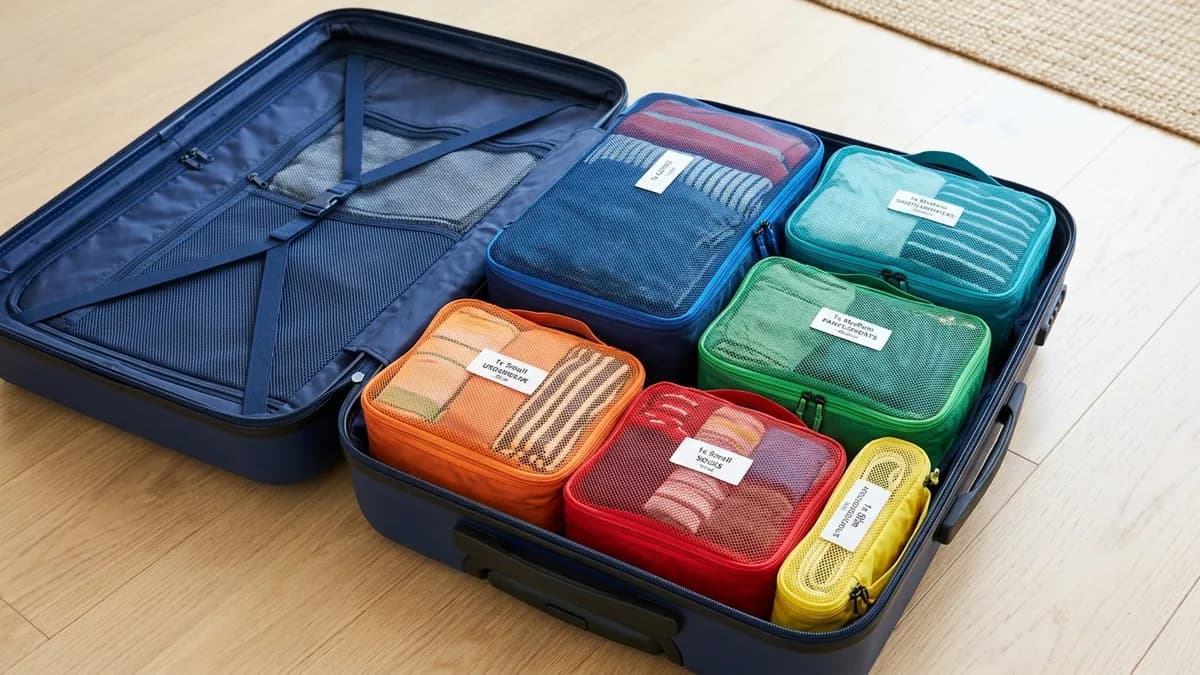
Packing Cubes: Efficient Packing Method That Transforms Your Travel Style (2026)
Packing cubes are fabric organizer boxes with zippers that divide your suitcase into organized compartments, making packing 3x faster and unpacking almost instant. With packing cubes, you can find the clothes you need without unpacking your entire suitcase.
One thing our team at Sesoris keeps learning: every home has unique organization needs, no single solution fits all.
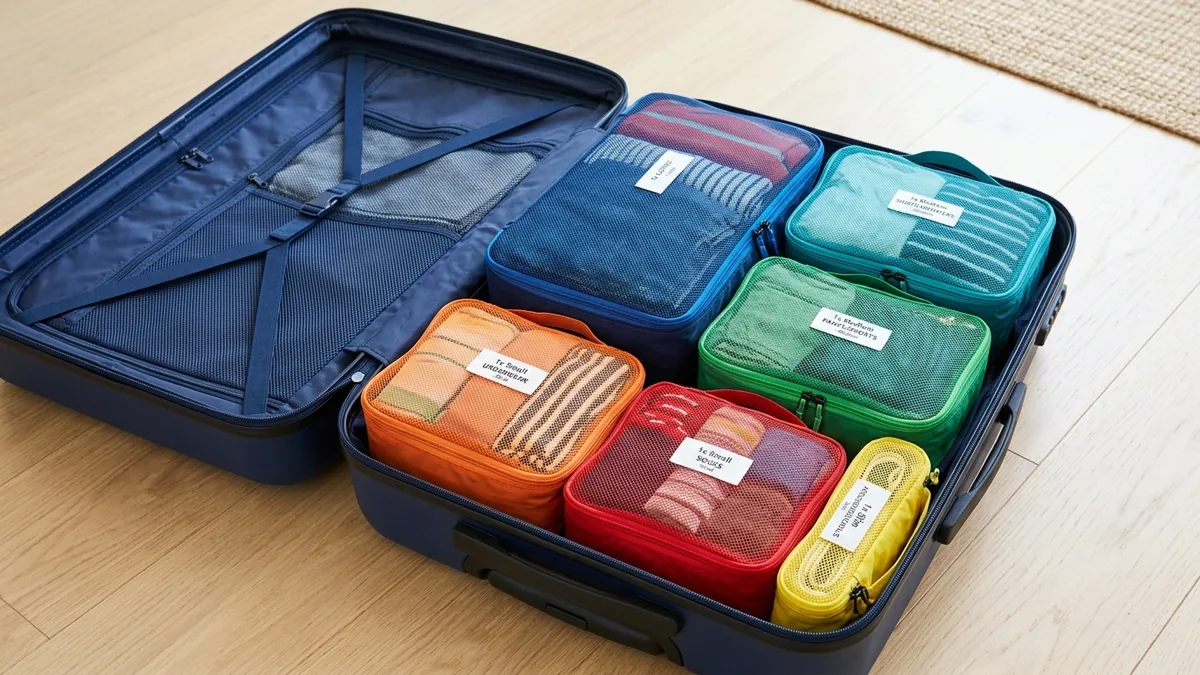
If you've ever been frustrated unpacking your entire suitcase just to find one shirt, packing cubes are the answer. This simple accessory has transformed how millions of travelers pack their belongings. This article covers everything you need to know - from how to use them, different types, to the best product recommendations in 2026.
Key Takeaways: > - Choose products with clear safety labels (food-grade, BPA-free) for daily use > - Investing slightly more in quality materials (glass, grade 304 stainless steel) saves long-term costs > - Match sizes to family needs, neither too large nor too small > - Local marketplaces like Tokopedia, Shopee, and Sesoris offer competitive prices with maintained quality
What Are Packing Cubes?
Packing cubes are rectangular box-shaped organizers made from lightweight fabric (usually nylon or polyester) with a zipper on one side. Their main function is to divide the space inside your suitcase or travel bag into several organized compartments. For additional information, also see the guide from The Spruce.
The concept is simple - instead of dumping all your clothes directly into your suitcase, you pack clothes into packing cubes by category, then arrange the cubes inside your suitcase. The result is an organized, structured, and easily accessible suitcase.
Brief History
Packing cubes were first popularized by travel gear brands in the early 2000s. Once considered a luxury accessory, packing cubes have now become standard for travelers worldwide thanks to increasingly affordable prices and proven benefits.
Why Should You Use Packing Cubes?
- Visual organization - know exactly where everything is based on cube color or size
- Fast packing - just put cubes in your suitcase, done in minutes
- Instant unpacking - move cubes directly into hotel drawers without emptying them
- Wrinkle-free clothes - compression cubes keep clothes tight and neat
- Category separation - clean, dirty, and formal clothes can be separated
- Space-saving - compression cubes can save 30-60% of suitcase volume
- Flexible - works with suitcases, backpacks, duffel bags, or any bag
Compression Packing Cubes vs Standard: Which is Better?
This is the most frequently asked question by potential buyers. Let's compare:

| Aspect | Standard Packing Cubes | Compression Packing Cubes |
|---|---|---|
| Zipper | 1 zipper (main opening) | 2 zippers (opening + compression) |
| Space Savings | 10-20% | 30-60% |
| Weight | Lighter (30-60g per cube) | Slightly heavier (50-90g per cube) |
| Price | Cheaper ($3 - $7 per set) | More expensive ($6 - $15 per set) |
| Ease of Access | Easier to open and close | Need to unzip 2 zippers |
| Wrinkle Prevention | Moderate | Better (clothes more compressed) |
| Best for | Short trips, thin clothes | Long trips, thick clothes |
Verdict: If you're only buying one set, choose compression cubes. The 30-60% space savings is very significant, especially for travelers who frequently use cabin baggage without additional checked luggage.
Packing Cubes Size System
Packing cubes come in several standard sizes. Understanding this system is important so you choose the right combination: For additional information, also see the guide from Real Simple.
Extra Small / Slim
Around 25 x 10 x 8 cm. Perfect for underwear, socks, and small accessories. Usually slimmer in shape and can fit in suitcase gaps.
Small
Around 28 x 18 x 10 cm. Ideal for t-shirts, complete underwear sets, or children's clothes. One cube can hold 3-5 rolled t-shirts.
Medium
Around 36 x 25 x 10 cm. The most versatile size. Fits shirts, shorts, or several pajama sets. This is the most commonly used size.
Large
Around 45 x 33 x 10 cm. For long pants, light jackets, dresses, or towels. One large cube can hold clothes for 3-4 days of travel.
Extra Large
Around 50 x 36 x 12 cm. For thick jackets, sweaters, or as a laundry cube. Not all sets include this size.
How to Use Packing Cubes Correctly
Here are the steps for packing with cubes for optimal results:
- Choose your folding/rolling method - decide whether you'll roll, fold, or bundle (explained below)
- Categorize your clothes - separate by type: tops, bottoms, underwear, pajamas
- Place into appropriate cubes - use cube sizes that match your clothing categories
- Fill until full but not forced - cubes work best when 80-90% full
- Compress if needed - for compression cubes, close the compression zipper after the main zipper
- Arrange in suitcase - place large cubes at bottom, medium in middle, small on top or in gaps
- Adjust orientation - cubes can be placed horizontally or vertically depending on suitcase shape
Three Best Packing Methods for Packing Cubes
Rolling Method
Roll each piece of clothing into a tight cylinder before placing in cube. This is the most popular method because:
- Minimizes wrinkles on t-shirts and casual clothes
- Maximizes space with no dead space
- Easy to see all clothes without unpacking
How: fold clothes lengthwise, then roll from bottom to top tightly. Place rolls upright (not lying flat) in the cube.
Folding Method
Fold clothes neatly and stack them in the cube. Better suited for:
- Formal shirts and pants that need to stay pristine
- Delicate fabrics that wrinkle easily
- When you need quick packing without rolling each item
Tip: fold clothes to match cube size so nothing is folded multiple times.
Bundling Method
Wrap clothes in multiple layers around a core item (usually the smallest piece in the center). This method:
- Most effective at preventing wrinkles - even for suits
- Takes the longest
- Not practical if you need to grab one item from the middle
Recommendation: use bundling only for formal clothes that absolutely must stay wrinkle-free.

Best Packing Cubes Recommendations 2026
| No | Product | Type | Set Contents | Material | Price Range |
|---|---|---|---|---|---|
| 1 | Classic Packing Cube Set | Standard | 6 pcs (S/M/L x2) | Nylon ripstop | $5 |
| 2 | Compression Cube Premium | Compression | 4 pcs (S/M/L/XL) | Nylon 40D | $9 |
| 3 | Ultralight Cube Set | Standard | 5 pcs (XS-L) | Sil-nylon 15D | $7 |
| 4 | Mesh Top Organizer Set | Standard | 6 pcs (S/M/L x2) | Polyester + mesh | $4 |
| 5 | Double Compression Set | Compression | 6 pcs (S/M/L x2) | Nylon ripstop | $12 |
| 6 | Eco Packing Cubes | Standard | 4 pcs (S/M/L/XL) | RPET recycled | $7 |
| 7 | Color-Coded Family Set | Standard | 8 pcs (4 colors) | Nylon 210D | $8 |
| 8 | Pro Compression Cubes | Compression | 3 pcs (M/L/XL) | Cordura nylon | $15 |
Best Choices by Category
Best Value: Classic Packing Cube Set - $5 for 6 pieces is incredible value. Nylon ripstop material is durable and zippers work smoothly.
Best Compression: Double Compression Set - offers the best compression with 6 pieces covering all sizes. Ideal for 20-inch carry-on suitcases.
Best for Families: Color-Coded Family Set - 8 pieces in 4 different colors make it easy for each family member to identify their cube.
Tips to Maximize Packing Cubes
- Different colors for different categories - for example, blue for tops, green for bottoms, red for underwear
- One cube for one outfit - for short trips, put one complete outfit per cube
- Last cube for laundry - keep one empty cube at the start of your trip for dirty clothes
- Don't forget small cubes - XS cubes are very useful for socks, chargers, and small accessories
- Vacuum bags for thick jackets - for winter clothes, vacuum compression bags work better than compression cubes
To complete your packing system, also consider travel bag organizers for electronics and toiletries that don't fit in packing cubes.
Packing Cubes FAQ
Do packing cubes really save space or just organize?
Standard packing cubes focus more on organization than space-saving - they save about 10-20%. However, compression packing cubes truly save significant space, up to 30-60%, by pressing air out of clothes. So if your main goal is space-saving, choose compression type.
How many packing cubes do I need?
For solo travelers, a set of 4-6 pieces is ideal. The most common configuration is 2 medium (tops and bottoms), 1 small (underwear), 1 large (jacket/heavy clothes or laundry). For couples sharing a suitcase, add 2-3 more cubes. For families, consider a color-coded set to prevent mixing.
Can packing cubes be washed?
Yes, almost all packing cubes can be washed. The best way is hand wash with cold water and mild soap, then air dry. Some nylon and polyester products can go in the washing machine on gentle cycle, but use a laundry bag to protect the zippers. Don't use a machine dryer as heat can damage the coating.
Mesh or solid packing cubes, which is better?
Mesh top (transparent top section) is more practical because you can see contents without opening the zipper. This is very helpful when looking for specific clothes. Fully solid cubes are better for compression and privacy (like for underwear). Ideally, have both - mesh for general clothes and solid for personal items.
Are packing cubes suitable for backpackers?
Very suitable, arguably more important for backpackers than suitcase users. Travel backpacks don't have structured compartments like suitcases, so without packing cubes, backpack contents tend to get messy. Packing cubes make a backpack as organized as a suitcase. Choose cubes sized appropriately for your backpack shape.
Conclusion
Packing cubes are one of the smallest travel investments that deliver the biggest impact. At prices starting from $4 per set, you get an organized suitcase, faster packing, and a much more comfortable travel experience.
For beginners, start with a standard 6-in-1 set to understand the organization system. Once comfortable, upgrade to compression cubes for maximum space savings. Combine with the rolling method for best results.
Find quality packing cubes at affordable prices at Sesoris - available in various sizes, colors, and types for every travel style.
Frequently Asked Questions (FAQ)
Here are answers to the most frequently asked reader questions on this topic.
Q: How long do quality home organization products typically last?
With proper routine care, food-grade plastic products last 3-5 years, while borosilicate glass and grade 304 stainless steel can last 10+ years. Key factors are consistent maintenance and avoiding extreme temperature exposure.
Q: Is this product food-safe?
Ensure the product is labeled "food-grade" or "BPA-free" before using it for food storage. Safe materials include borosilicate glass, grade 304 stainless steel, and certified food-grade plastic. Avoid plastic without food safety certification, especially for hot or oily foods.
Q: How do I clean and maintain it?
Wash with mild dish soap and warm water. Avoid abrasive sponges that can scratch the surface. For stubborn stains, use a baking soda and water paste as a natural cleaner. Dry completely before storing to prevent mold and bacteria.
Q: What is the price difference between local and imported products?
Local Indonesian products are typically 30-50% more affordable than imports of similar quality. For daily home organization needs, local products meet the standard. Consider imports only if you need specific features not available in the local market.
Q: Where should I buy products like this?
You can buy at offline stores like ACE Hardware, IKEA, or major hypermarkets, or via online marketplaces like Tokopedia, Shopee, and Sesoris. Check seller ratings, real product photos, and return policies before buying online.
Related Articles
Explore other guides from Sesoris to complement your knowledge:
About Tim Sesoris
The Sesoris editorial team consists of experienced writers in home organization, minimalist lifestyle, and Indonesian e-commerce. We test products, review market trends, and craft guides based on in-depth research and field experience. All recommendations are curated to give you accurate, practical, and relevant information for Indonesian households.
For questions or suggestions, contact us through the Sesoris contact page.
Weekly Home Tips
Get home organization ideas, product picks, and exclusive deals delivered weekly.
No spam. Unsubscribe anytime.
Explore More Articles
- Refrigerator Organization: The Complete 2026 Guide to a Cleaner, Smarter Fridge
- 30+ Best Bathroom Shelf Ideas to Maximize Every Inch of Your Space in 2026
- 30+ Best Small Pantry Ideas to Maximize Every Inch of Your Kitchen Storage in 2026
- DIY Shelves: How to Build Beautiful, Functional Shelves on Any Budget in 2026
- 25+ Best Entryway Closet Organization Ideas to Transform Your Home's First Impression in 2026
- 25+ Best Purse Organization Ideas to Keep Your Handbag Tidy in 2026
- 25+ Creative DIY Plant Stand Ideas to Elevate Your Home Decor in 2026
- 25+ Best Bathroom Storage Cabinet Ideas to Maximize Every Inch in 2026