
Compression Packing Cubes: The Complete 2026 Review & Buying Guide for Smarter Travel
If you have ever struggled to close an overstuffed suitcase or dug through a chaotic bag searching for a single shirt, compression packing cubes might be the travel upgrade you never knew you needed. In 2026, these cleverly engineered organizers have become one of the most searched travel accessories in the US, and for good reason. Compression packing cubes do not just keep your clothes tidy - they actively squeeze out excess air so you can fit significantly more into your luggage without checking a bag. Whether you are a frequent flyer, a weekend road-tripper, or a once-a-year vacationer, this guide reviews everything you need to know before buying.
What Are Compression Packing Cubes and How Do They Work?
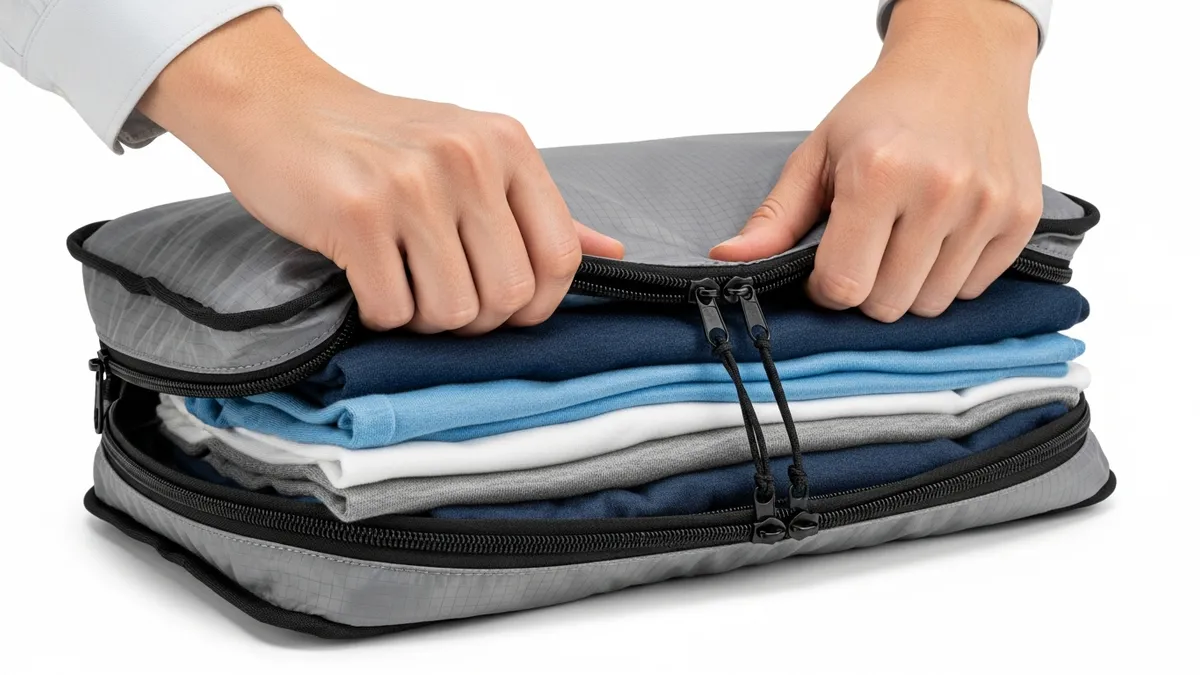
Compression packing cubes are zippered fabric organizers designed to hold folded clothing and other travel items. Unlike standard packing cubes, compression versions feature a secondary compression zipper that, once closed, collapses the cube by pushing out trapped air and compacting the contents. This dual-zipper system is the defining feature that separates them from regular cubes.
The basic mechanism works like this: you fill the main compartment through the primary zipper, then close the compression zipper on the opposite side. As you pull that zipper around the perimeter, the cube flattens and shrinks - sometimes by as much as 50 to 60 percent of its original stuffed volume, though actual results will vary depending on the fabric type and how tightly items are packed.
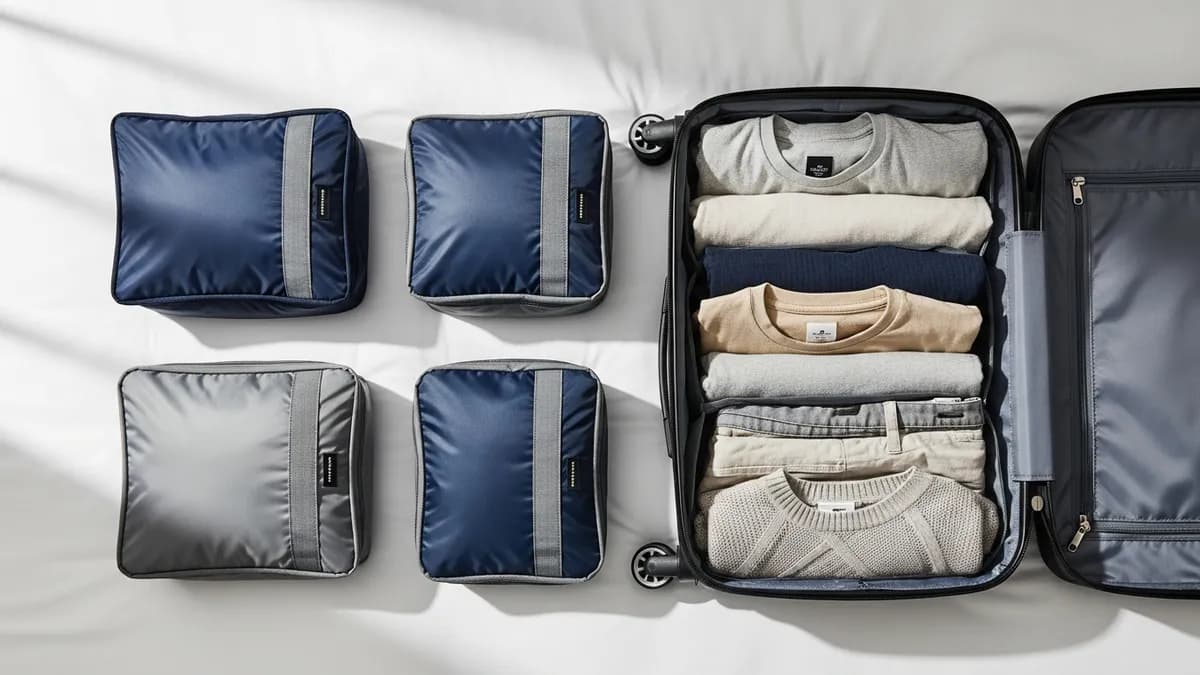
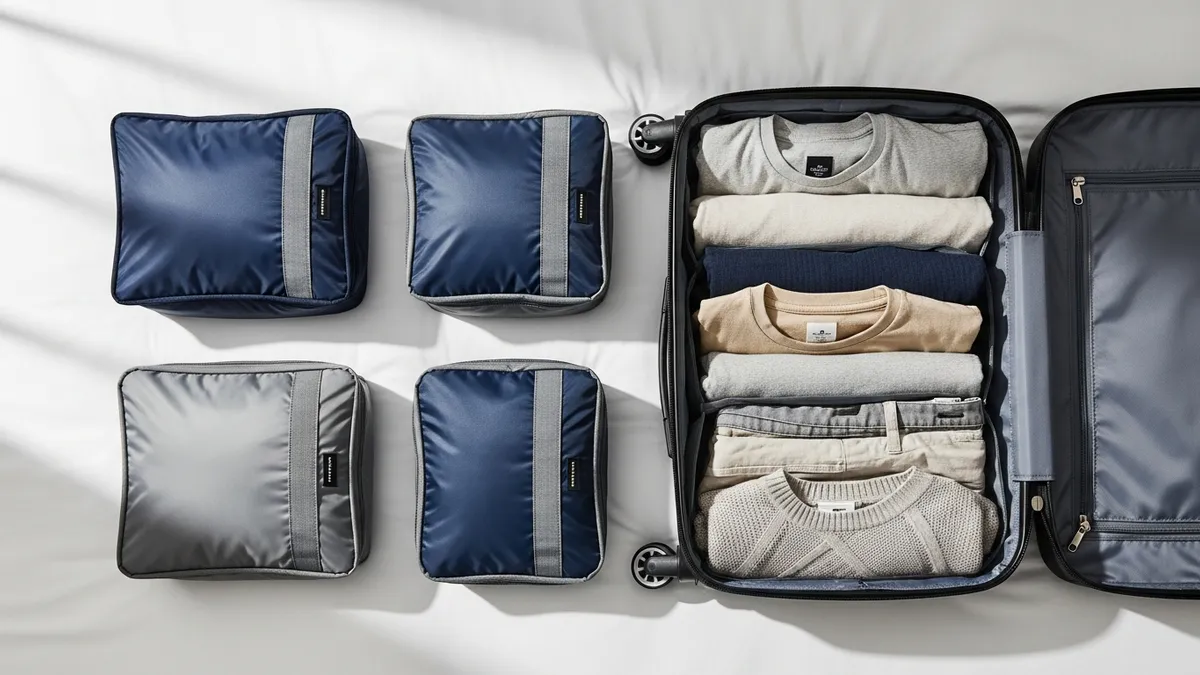
Packing cubes create a consistent, modular system that can be rearranged to fit different luggage shapes.
The Difference Between Regular Packing Cubes and Compression Packing Cubes
- Regular packing cubes organize your clothes into sections but do not reduce their volume
- Compression packing cubes use a secondary zipper to actively collapse and compact your clothes
- Compression cubes are best for bulkier items like sweaters, jeans, and fleece layers
- Regular cubes work great for lighter fabrics like T-shirts, underwear, and workout clothes
- Both types help you find items faster without rummaging through your entire bag
If you are looking for a broader overview of travel organization, check out our guide on packing cubes and efficient packing methods for a solid foundation.
Key Features to Look for When Buying Compression Packing Cubes
With dozens of options on the market in 2026, knowing what actually matters separates a great purchase from a regrettable one. Here is what I always check before recommending any compression packing cube to a friend or buying one myself.
1. Material and Durability
The outer shell should be made from a ripstop nylon or high-denier polyester. These materials resist tearing when the cube is under compression stress. Look for reinforced zipper seams, as the compression zipper takes a lot of repeated force over time. Lightweight materials around 210D to 420D nylon offer a great balance of strength and weight savings.
2. Zipper Quality
The zipper is the heart of any compression cube. Look for YKK zippers or similar quality hardware. A smooth, sturdy zipper will not jam under pressure, which is critical when you are trying to compress a cube stuffed with bulky clothes. Double-pull zippers make it easier to open and close the cube with one hand.
3. Mesh Panel vs. Solid Panel
- Mesh top panels let you see what is inside without opening the cube - great for quick identification
- Solid panels on both sides tend to compress more uniformly and are slightly more water-resistant
- Some cubes use a mesh panel on the expansion side, which helps ventilate the contents
4. Size Options
Most brands sell compression packing cubes in sets that include small, medium, and large sizes. A typical small cube measures around 10 x 7 x 3 inches when compressed, a medium around 13 x 9 x 3 inches, and a large around 17 x 12 x 4 inches. Having a variety of sizes lets you allocate space efficiently - smaller cubes for undergarments and socks, larger cubes for pants and sweaters.
5. Water Resistance
Look for a DWR (Durable Water Repellent) coating or water-resistant fabric. Your bag may encounter rain, spills, or wet overhead bins. Water resistance does not mean waterproof, but it adds meaningful protection for your clothes.
6. Handles and Loops
A top carry handle or a loop makes it easy to pull the cube out of a tightly packed bag. This small feature makes a big difference when you are digging through a full suitcase in a dimly lit hotel room.
Compression Packing Cubes by Type: Which One Is Right for You?
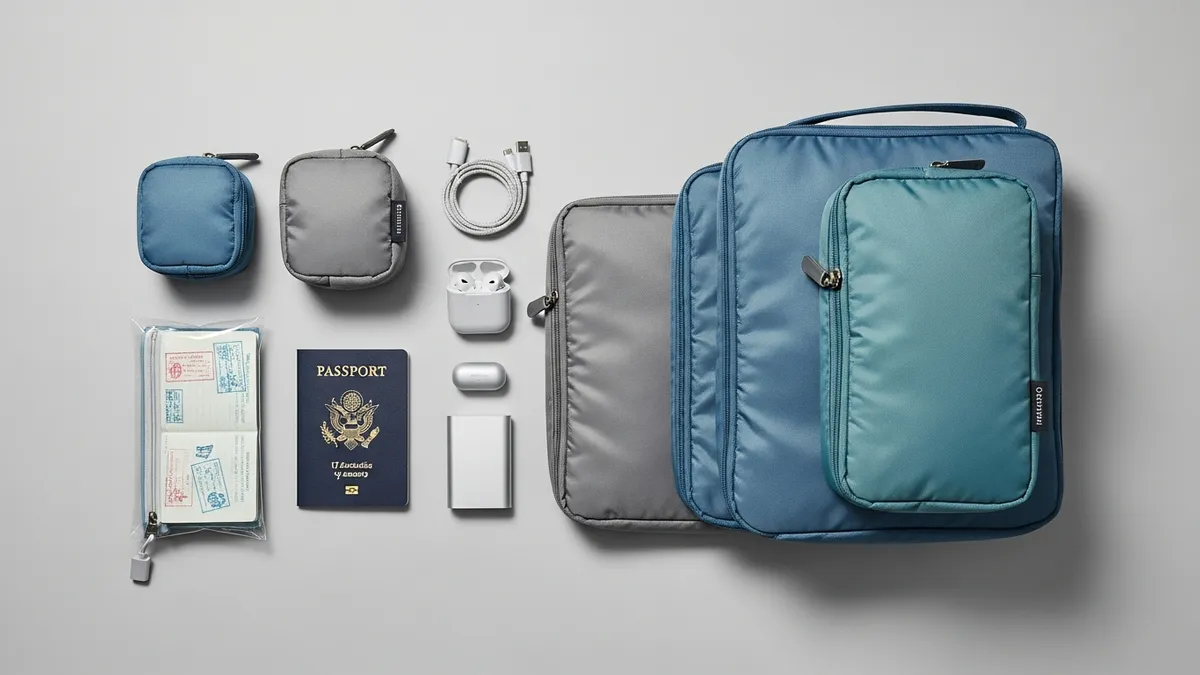
Not all compression cubes are built for the same traveler. Here is a breakdown of the main types available in 2026:
Ultralight Compression Cubes
Built for minimalist and ultralight travelers, these cubes weigh as little as 1 to 2 ounces each. The fabric is thinner, usually around 210D nylon, which saves precious weight in your carry-on. The trade-off is slightly less durability, so they are best suited for short trips or careful packers.
Heavy-Duty Compression Cubes
Made from thicker 420D or 600D nylon, heavy-duty cubes are designed for adventure travelers, backpackers, or anyone checking luggage into the cargo hold. They handle being tossed around and can withstand the added stress of tightly packed hiking gear or multiple compression cycles.
Expandable Compression Cubes
These hybrid cubes have an expansion panel that lets you pack more on the way there and compress on the way back - ideal if you plan on shopping during your trip or packing light for the return flight.
Set-Based Compression Cubes
Most brands sell cubes in sets of 3, 4, or 6, typically including a mix of sizes. A set is the best starting point for most travelers because you can organize different clothing categories: tops in one, bottoms in another, and undergarments and socks in a smaller cube.
For more smart packing and organization ideas, browse the Sesoris travel accessories collection.
How to Pack Compression Packing Cubes for Maximum Space Savings
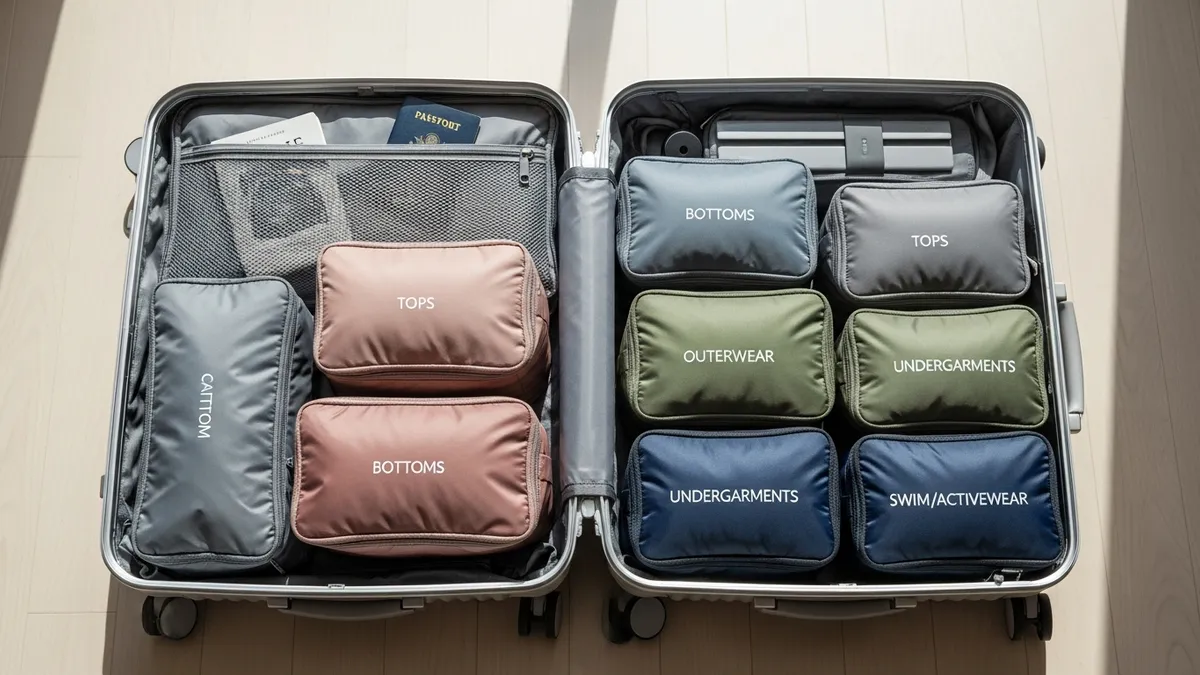
Owning compression cubes is only half the battle. Packing them correctly is what delivers real results. Here is the method I use and recommend:
- Fold, do not roll for compression cubes. Rolling works great for standard cubes, but for compression cubes, flat folding creates a more uniform shape that compresses evenly across the cube's surface.
- Layer heavier items on the bottom. Place jeans, sweaters, and heavier fabrics at the bottom of the cube before adding lighter layers on top.
- Fill the cube fully before compressing. An underfilled cube does not compress as effectively. Pack it snugly so the contents resist the compression zipper evenly.
- Close the main zipper first. Always secure the primary compartment zipper before attempting the compression zipper. Trying to do both at once leads to jamming.
- Work the compression zipper slowly. Pull it steadily around the perimeter without forcing it. If it resists, open the main compartment slightly and redistribute the load.
- Assign each cube a category. Color-code or label your cubes - tops, bottoms, underwear, gym clothes. This makes unpacking and repacking at your destination effortless.
- Pack cubes flat in your suitcase. Lay compression cubes flat and stack them like a layer cake rather than standing them upright. This distributes weight evenly and makes the most of your suitcase's depth.
Pro tip: Compression packing cubes are especially powerful for bulky fabrics. A thick fleece jacket or a pair of denim jeans that might take up a third of a standard suitcase can be compressed down dramatically, freeing up room for shoes, toiletries, and other essentials.
Compression-style organizers can make carry-on-only travel more practical by separating clothing categories and reducing wasted gaps between soft items.
For additional organization strategies that translate well from home to travel, take a look at our article on the best organizer travel bag guide and our tips on travel bag organizers.
Compression Packing Cubes vs. Vacuum Storage Bags: Which Should You Choose?
A common question I get is whether compression packing cubes are better than vacuum storage bags for travel. Both compress clothing, but they serve very different purposes.
- Compression packing cubes are reusable, self-contained, and do not require a vacuum or pump - you compress them manually with the zipper
- Vacuum storage bags require a vacuum or a hand pump to remove air, which is not always practical when you are on the go
- Compression cubes keep your clothes organized and accessible without undoing the compression
- Vacuum bags are better suited for long-term home storage of seasonal items like winter coats or bulky blankets
- Compression cubes can be repacked and re-compressed dozens of times during a single trip without any extra tools
If you need vacuum-style compression for home storage, check out our detailed guide on vacuum storage bags for seasonal clothing. For travel, compression packing cubes are the clear winner for convenience and reusability.
What to Expect to Pay: Compression Packing Cube Pricing in 2026
Compression packing cubes span a wide price range in the US market in 2026. Here is a general breakdown by tier:
- Budget tier (US$15 to US$30 per set): Entry-level options with basic compression zippers, thinner fabrics, and limited size options. Fine for occasional travelers.
- Mid-range tier (US$30 to US$55 per set): The sweet spot for most travelers. You get YKK or equivalent zippers, ripstop nylon, and a multi-size set. Brands at this level typically offer good durability for frequent use.
- Premium tier (US$55 to US$90+ per set): Ultralight materials, lifetime warranties, and specialized designs for serious adventurers or minimalist travelers. The weight savings and build quality are noticeable.
I generally recommend starting in the mid-range if you travel more than a few times a year. The premium jump is worth it once you know compression cubes are a tool you will use consistently.
You can browse the latest travel organization products available at Sesoris and check out the best sellers to find highly rated options.
At a Glance: Which Option Fits You
Not all compression is the same. This table compares the formats you will actually see on the shelf so you can pick by trip length rather than by packaging claims.
| Type | Best for | How it compresses | Typical set | Cost |
|---|---|---|---|---|
| Zippered compression cube | Bulky clothes | Second zipper | Three to six pieces | $$ |
| Roll-and-seal bag | Long trips | Manual roll pushes air out | Two to four pieces | $$ |
| Standard cube | Organizing only | No compression | Four to eight pieces | $ |
| Vacuum storage bag | Coats and home storage | Pump or vacuum | Two to six pieces | $$ |
Related Products from Sesoris
If you want to turn this guide into a real setup, start with Travel Toiletry Bag and Mesh Zipper Pouches Set. For broader options, browse the Travel & Outdoor collection so the article journey does not stop at reading only.
Our practical rule: choose one product that solves the main clutter problem first, then add supporting organizers only when the daily workflow is already clear. This keeps the shopping path useful, not pushy.
FAQ: Frequently Asked Questions About Compression Packing Cubes
Q: Will compression packing cubes damage my clothes?
In general, no. Compression cubes apply even, gentle pressure across the entire surface of the fabric, which is much less damaging than stuffing loose clothes into a bag. However, delicate fabrics like silk or structured blazers should not be compressed, as they can wrinkle or lose their shape. Stick to casual fabrics like denim, cotton, fleece, and synthetic athletic wear for best results.
Q: Can I use compression packing cubes in a backpack?
Absolutely. Compression cubes work especially well in travel backpacks because they create uniform, flat blocks that stack cleanly inside a rectangular pack. Many backpackers use one or two larger compression cubes for their main clothing layers and a smaller standard cube for accessories.
Q: How many compression packing cubes do I need?
For a one-week trip, most travelers do well with a set of three to four cubes: one large for pants and sweaters, one medium for tops, and one small for underwear and socks. If you pack shoes separately, a dedicated shoe bag or small cube is also worth considering.
Q: Are compression packing cubes TSA-friendly?
Yes. Compression packing cubes do not interfere with TSA screening. If a TSA officer needs to inspect your bag, the cubes can be easily removed and replaced without undoing your entire packing system.
Q: Do compression packing cubes actually save significant space?
Results vary based on the brand, fabric type, and how tightly you pack the cube. Bulky fabrics like fleece or thick knits compress the most. Lightweight fabrics compress less dramatically. Most users report fitting a noticeably larger volume of clothes into their luggage compared to packing without cubes.
Conclusion
Compression packing cubes are one of the most practical travel investments you can make in 2026. They solve two problems at once: disorganized luggage and wasted space. By combining the organizational benefits of standard packing cubes with active volume reduction through the compression zipper, they give you a genuinely smarter way to travel. Whether you are trying to avoid checked bag fees, fit more into a carry-on for a two-week trip, or simply stop rummaging through a chaotic suitcase, compression cubes deliver real, repeatable results.
When shopping, prioritize zipper quality, material durability, and a multi-size set so you can build a full packing system. The mid-range tier hits the sweet spot for most American travelers who want quality without overspending.
Ready to pack smarter? Explore the full range of travel organization products at Sesoris and check out our new arrivals for the latest additions to our travel lineup. You can also browse our complete shop for home and travel organization essentials that help you live more organized - wherever your next adventure takes you.
Weekly Home Tips
Get home organization ideas, product picks, and exclusive deals delivered weekly.
No spam. Unsubscribe anytime.



Explore More Articles
- 25+ Under Sink Organizer Ideas for a Tidy 2026
- Wall Mounted Dish Rack: Complete Buying & Install Guide 2026
- Household Storage Rack: The Complete Guide to a Tidy Home
- Laundry Room Organization Containers: Complete Tutorial Guide to Transform Your Space in 2026
- Bathroom Storage Ideas to Keep a Small Bathroom Tidy
- 25+ Brilliant Bathroom Wall Shelf Ideas to Transform Your Space in 2026
- Productive WFH Setup for a Small Minimalist Home
- 25+ Brilliant Storage Space Ideas for Small Bathroom: Maximize Every Inch in 2026