
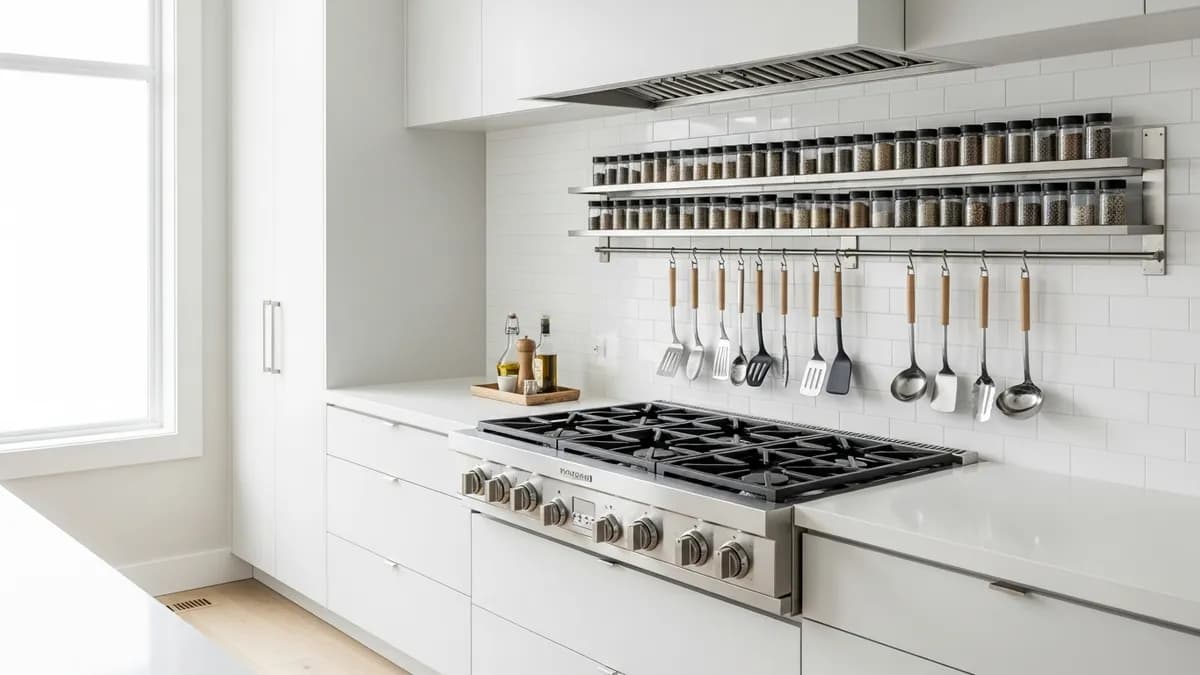
Stove Rack Storage: Organize Your Cooking Area for Maximum Efficiency
Did you know that stove rack organization can reduce cooking time by up to 30% while significantly improving kitchen safety? The area around your stove is the heart of culinary activity, yet it's often the most cluttered and disorganized space in many kitchens.
One thing our team at Sesoris keeps learning: every home has unique organization needs, no single solution fits all.
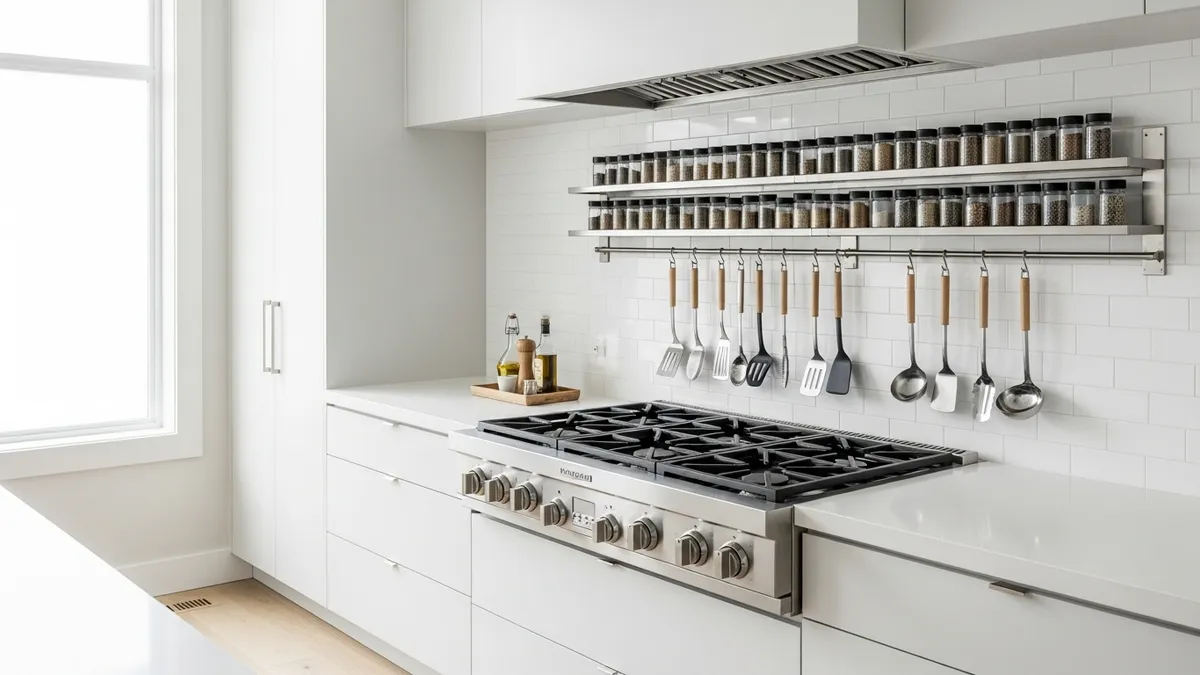
A well-designed stove rack system transforms your cooking experience by keeping essential items within arm's reach while maintaining safety standards. From heat-resistant materials to strategic placement, proper stove organization enhances both functionality and aesthetics in your kitchen.
Key Takeaways: > - Choose products with clear safety labels (food-grade, BPA-free) for daily use > - Investing slightly more in quality materials (glass, grade 304 stainless steel) saves long-term costs > - Match sizes to family needs, neither too large nor too small > - Local marketplaces like Tokopedia, Shopee, and Sesoris offer competitive prices with maintained quality
In this comprehensive guide, you'll discover how to select the right stove rack materials, implement safety protocols, organize cooking essentials efficiently, and create a cooking station that rivals professional kitchens.
Why Proper Stove Rack Organization Matters
The cooking area experiences extreme temperature fluctuations, steam, and frequent use, making it one of the most challenging spaces to organize effectively. Stove rack systems address these unique challenges while providing practical benefits. For additional information, also see the guide from The Spruce.
Price range in Indonesia (2026): Home organization products are generally available from $3 for entry-level options, $9.5-$31 for quality mid-range, and $50+ for premium imports. Compare prices on marketplaces like Tokopedia or Shopee before buying.
Efficient stove organization reduces cooking stress by keeping frequently used items accessible. Professional chefs understand that mise en place, having everything in its place, is crucial for successful cooking. This principle applies equally to home kitchens.
Safety considerations are paramount when organizing around heat sources. Proper rack placement prevents accidents while ensuring easy access to emergency shut-offs and fire suppression equipment.
The visual impact of an organized cooking area extends beyond functionality. A well-arranged stove station creates a focal point that enhances your kitchen's overall aesthetic appeal and demonstrates attention to detail.
Essential Safety Guidelines for Stove Rack Installation
Heat clearance requirements form the foundation of safe stove rack installation. Maintain minimum distances of 18 inches above gas burners and 12 inches above electric cooktops to prevent overheating and fire hazards. For additional information, also see the guide from Real Simple.
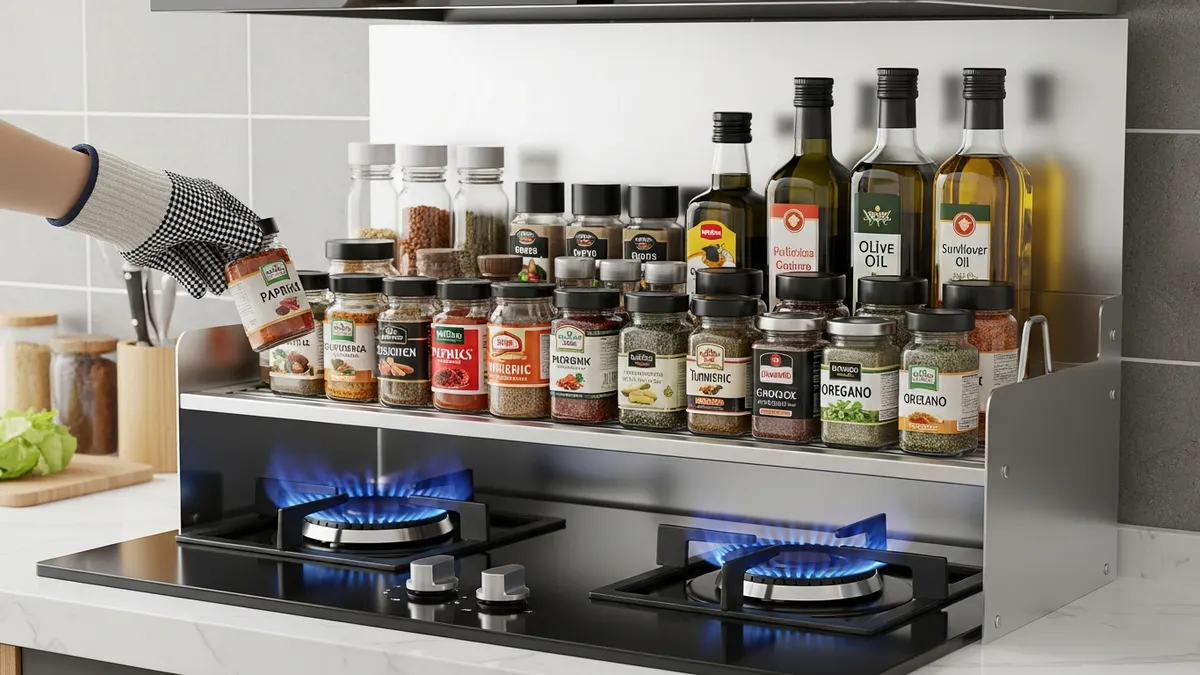
Material selection directly impacts safety performance. Choose heat-resistant materials rated for continuous exposure to temperatures exceeding 200°F. Avoid plastic components near direct heat sources, even those labeled as heat-resistant.
Ventilation considerations ensure proper airflow around cooking surfaces. Never block exhaust fans or natural air circulation patterns with storage solutions. Adequate ventilation prevents moisture buildup and maintains air quality.
Fire safety protocols require easy access to stove controls and emergency shut-offs. Design your organization system to allow quick access during emergencies without moving stored items.
Choosing the Right Materials for Stove Rack Systems
Stainless steel dominates professional kitchens for good reason. This material withstands high temperatures, resists corrosion, and maintains hygiene standards while providing excellent durability for daily use.
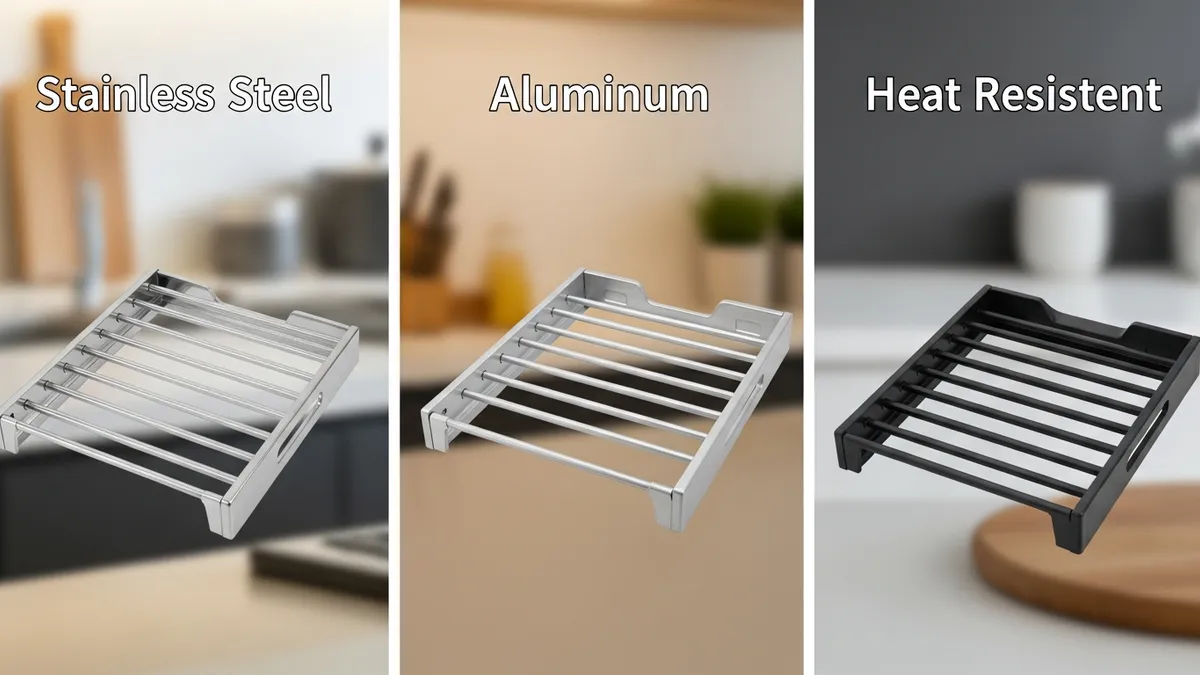
Aluminum offers lightweight alternatives with excellent heat dissipation properties. Food-grade aluminum racks provide corrosion resistance while reducing overall system weight, making installation easier.
Heat-resistant glass shelving creates modern aesthetics while maintaining safety standards. Tempered glass rated for kitchen use withstands temperature fluctuations and provides easy cleaning maintenance.
Powder-coated metal finishes combine durability with aesthetic appeal. These treatments resist heat damage while offering color coordination options that complement your kitchen design scheme.
Strategic Placement and Installation Tips
Above-stove installations maximize vertical space while keeping items visible and accessible. Wall-mounted racks distribute weight evenly and provide adjustable shelf configurations for different container sizes.
Side-mounted solutions offer alternative placement when overhead space is limited. These systems extend horizontally from adjacent walls or cabinets, creating accessible storage without interfering with ventilation.
Counter-level organization utilizes space beside the cooking surface for frequently accessed items. Kitchen set integration ensures seamless appearance while maintaining functional access to cooking essentials.
Weight distribution calculations prevent structural problems and safety hazards. Calculate total load including containers, contents, and safety margins before finalizing installation methods.
Organizing Cooking Essentials Effectively
Spice organization benefits from proximity to cooking surfaces while requiring protection from direct heat. Use labeled containers with tight-fitting lids to maintain freshness and prevent contamination from cooking vapors.
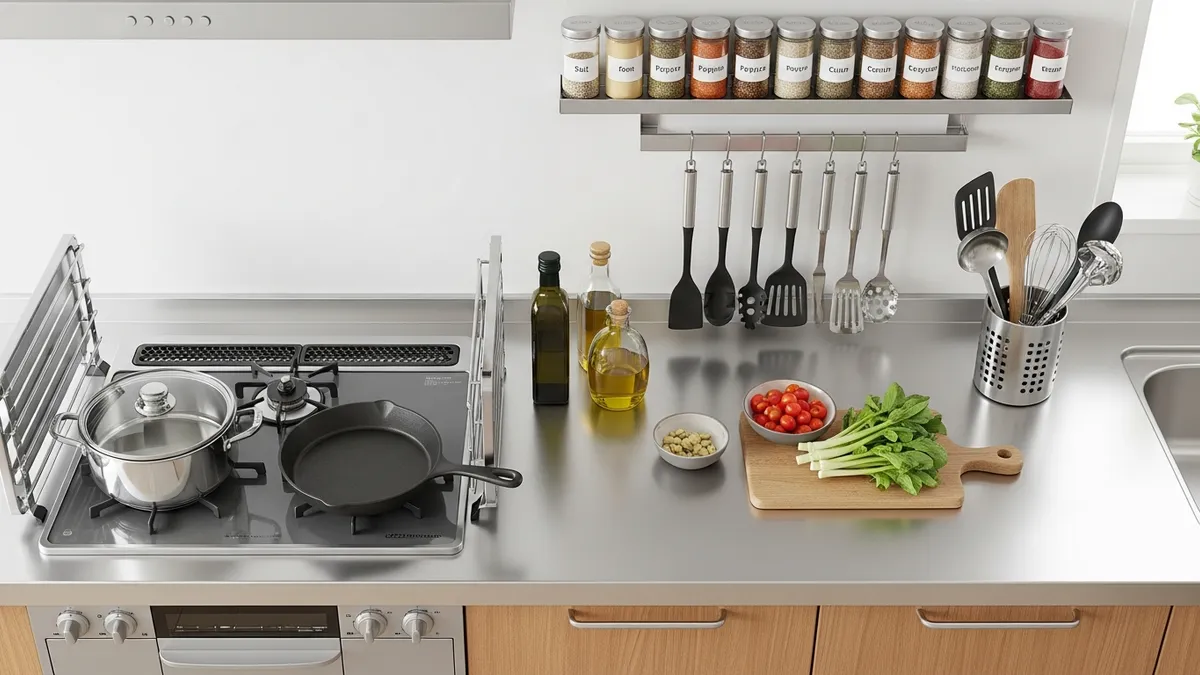
Cooking oil storage requires careful consideration of heat exposure and accessibility. Store oils in heat-resistant containers away from direct heat while maintaining easy pouring access during cooking.
Utensil placement follows the "golden triangle" principle, positioning frequently used tools within arm's reach of primary cooking zones. Heat-resistant holders prevent damage while maintaining quick access.
Peralatan masak organization creates designated zones for different cooking activities. Group related items together: baking supplies, stir-fry essentials, and sauce-making ingredients in separate areas.
Common Mistakes and How to Avoid Them
Overcrowding represents the most frequent organizational error. Maintain adequate spacing between items to ensure proper air circulation and prevent heat buildup that could damage stored goods.
Incorrect material selection leads to premature wear and potential safety hazards. Research heat ratings and kitchen-specific certifications before purchasing any organizational components for stove areas.
Ignoring weight limits results in structural failure and safety risks. Check manufacturer specifications and consider dynamic loads from daily use, not just static weight calculations.
Poor maintenance scheduling allows grease buildup and contamination. Establish weekly cleaning routines that address both visible surfaces and hidden areas where vapors accumulate.
Product Solutions for Every Kitchen Size
Compact kitchen solutions maximize limited space through multi-functional designs. Look for racks that combine spice storage, utensil holders, and small appliance platforms in single units.
The Sesoris collections feature space-saving designs specifically engineered for small kitchens while maintaining professional-grade functionality and safety standards.
Medium-sized kitchens benefit from modular systems that adapt to changing needs. Expandable racks grow with your cooking requirements while maintaining consistent aesthetic appeal throughout your kitchen.
Large kitchen installations can accommodate comprehensive organization systems. These setups include specialized zones for different cooking styles and accommodate larger quantities of ingredients and equipment.
Browse our best sellers for proven solutions that combine functionality with durability, backed by thousands of satisfied customers' experiences.
Maintenance and Cleaning Guidelines
Daily maintenance prevents grease accumulation and maintains hygienic storage conditions. Wipe surfaces with higienis cleaning solutions that won't leave residues affecting food safety.
Weekly deep cleaning addresses areas exposed to cooking vapors and heat cycling. Use appropriate cleaning agents for different materials, avoiding harsh chemicals that could damage protective coatings.
Quarterly inspections identify wear patterns and potential safety issues before they become problems. Check mounting hardware, weight distribution, and material condition during these assessments.
Annual replacement schedules ensure optimal performance and safety standards. Budget for consumable components like seals, gaskets, and protective coatings that experience regular wear.
Enhancing Kitchen Efficiency Through Smart Organization
Workflow optimization reduces cooking time and effort through strategic placement of frequently used items. Analyze your cooking patterns to determine optimal positioning for maximum efficiency gains.
The organisasi dapur philosophy emphasizes logical grouping and easy maintenance. This approach reduces stress while improving cooking outcomes through better ingredient and tool management.
Professional techniques from restaurant kitchens translate effectively to home environments. Implement prep station concepts and ingredient pre-positioning to streamline your cooking process.
Technology integration options include smart storage solutions with temperature monitoring and inventory tracking. These systems provide alerts for maintenance needs and ingredient replacement schedules.
Design Integration with Modern Kitchen Aesthetics
Contemporary design trends emphasize clean lines and minimal visual clutter. Choose fungsional solutions that complement your kitchen's aesthetic while providing practical benefits.
Color coordination creates cohesive visual flow throughout your cooking space. Select rack finishes that complement existing hardware and appliance finishes for professional appearance.
Style compatibility ensures your organizational solutions enhance rather than detract from your kitchen's design theme. Research manufacturer options that offer customization for seamless integration.
The Sesoris shop provides extensive style options designed to complement modern home aesthetics while delivering superior functionality and safety performance.
Conclusion
Implementing an effective stove rack organization system transforms your cooking experience through improved safety, efficiency, and aesthetics. The investment in quality materials and proper installation pays dividends through enhanced cooking enjoyment and kitchen functionality.
Remember that successful organization requires ongoing attention to safety protocols, regular maintenance, and adaptation to changing cooking needs. Start with basic solutions and expand your system as experience guides your preferences.
Transform your cooking space today with professional-grade organization solutions from Sesoris. Our comprehensive selection combines safety, functionality, and aesthetic appeal to create the kitchen of your dreams.
Related Articles
Explore other guides from Sesoris to complement your knowledge:
- Over-the-Sink Racks: Organize Your Dishwashing Area
- Shoe Racks and Storage: Organize Your Shoe Collection
- Kitchen Spice Racks That Make Spice Organization Easy
FAQ: Frequently Asked Questions About Stove Rack Organization
Q: What's the minimum safe distance between a stove rack and gas burners?
Maintain at least 18 inches clearance above gas burners and 12 inches above electric cooktops. This prevents overheating and reduces fire risk while ensuring proper ventilation.
Q: Can I use wooden racks near my stove?
Avoid wooden components in direct heat zones. If using wood, ensure it's treated with heat-resistant finishes and positioned well outside the heat zone with adequate air circulation.
Q: How much weight can a typical stove rack support?
Weight capacity varies by design and installation method. Wall-mounted systems typically support 15-25 pounds per linear foot, while countertop solutions may handle 30-50 pounds.
Q: What materials should I avoid for stove rack construction?
Avoid untreated wood, standard plastics, and materials not rated for kitchen use. These can release harmful fumes, melt, or create fire hazards when exposed to cooking heat.
Q: How often should I clean my stove rack system?
Clean daily with basic wiping, perform weekly deep cleaning with appropriate cleaners, and conduct monthly inspections for wear or damage that could affect safety or performance.
About Tim Sesoris
The Sesoris editorial team consists of experienced writers in home organization, minimalist lifestyle, and Indonesian e-commerce. We test products, review market trends, and craft guides based on in-depth research and field experience. All recommendations are curated to give you accurate, practical, and relevant information for Indonesian households.
For questions or suggestions, contact us through the Sesoris contact page.


Weekly Home Tips
Get home organization ideas, product picks, and exclusive deals delivered weekly.
No spam. Unsubscribe anytime.



Explore More Articles
- Steel Wire Dish Racks: Strong and Economical Kitchen Storage Solutions
- 15 Brilliant Toy Storage Ideas for Living Room: Transform Your Family Space in 2026
- IKEA Garage Storage Solutions: Complete Guide to Organizing Your Garage in 2026
- Best Desk Organizers for a Productive Work Desk
- Aluminum Stove Tables: Lightweight & Rust-Resistant Kitchen Solutions 2026
- Small Entryway Shoe Storage Ideas: 30 Smart Solutions for Tiny Spaces in 2026
- 30+ Walk-In Closet Organization Ideas to Transform Your Dream Wardrobe Space in 2026
- Craft Storage Room Ideas: Transform Your Creative Space with Smart Organization in 2026