
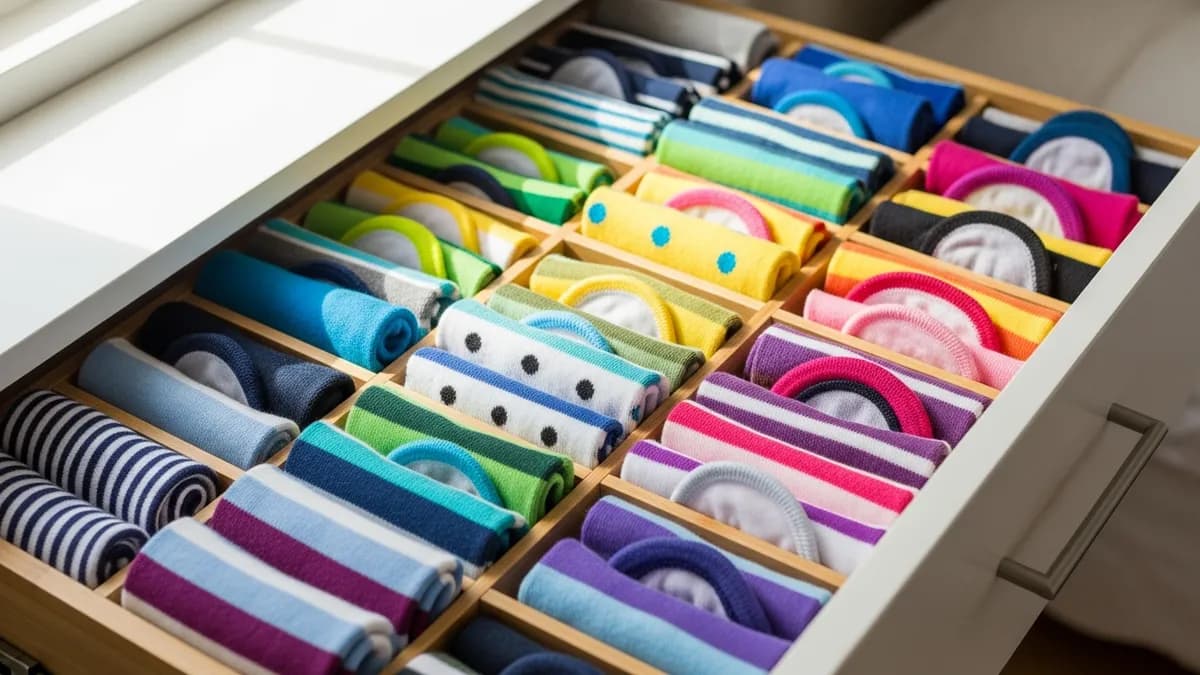
Sock Drawer Organization: The Complete 2026 Guide to a Tidy, Stress-Free Dresser
If you have ever spent five minutes digging through a tangled mess of socks every morning just to find a matching pair, you already know exactly why sock drawer organization matters. It sounds like a small thing, but a chaotic sock drawer is one of those daily friction points that quietly drains your time and energy before the day even starts. In 2026, with minimalist living and intentional home organization at an all-time high, getting your sock drawer under control is one of the simplest upgrades you can make to your bedroom routine. This guide covers every method, tool, and tip you need to finally get that drawer looking neat and actually keeping it that way.
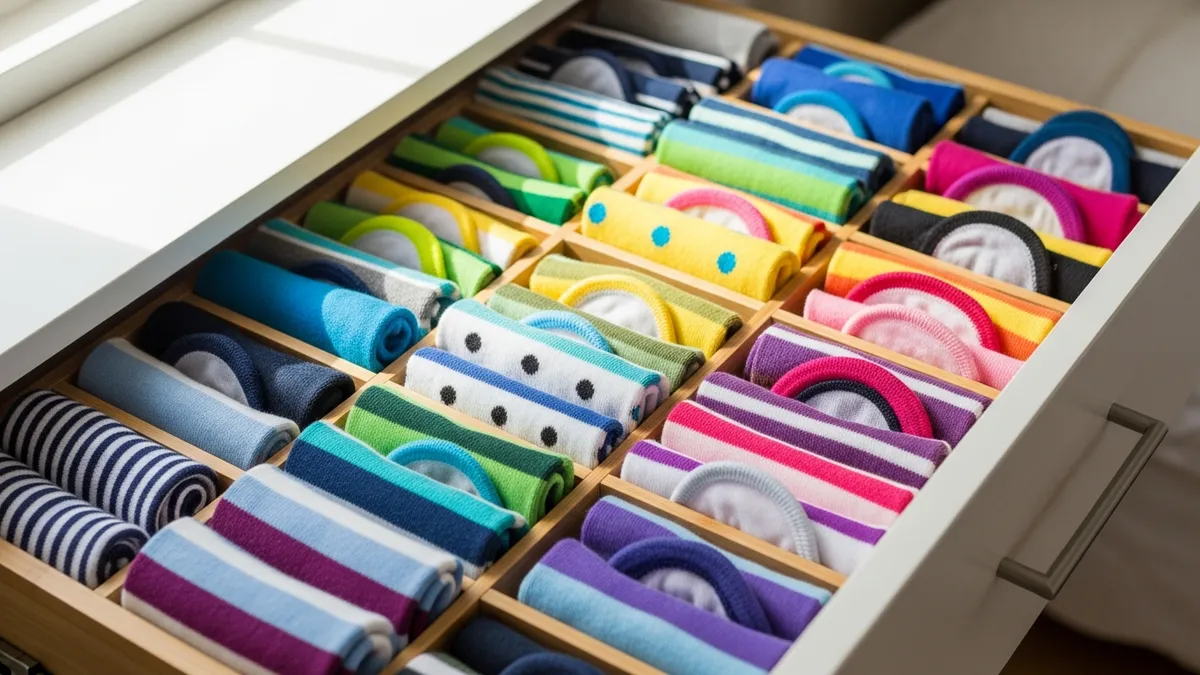
Why Sock Drawer Organization Is Worth Your Time
It is easy to dismiss drawer organization as a minor detail, but the truth is that a well-organized sock drawer pays dividends every single day. When your socks are neatly arranged and easy to see at a glance, you make faster decisions, experience less morning stress, and actually get more use out of every pair you own. Socks that are buried at the bottom of a pile often get forgotten entirely, which means you end up rewearing the same few pairs while others go unworn for months.
A tidy drawer also helps your socks last longer. Balling socks by stretching the cuff over the folded pair puts stress on the elastic over time, eventually causing it to lose its shape. Proper folding and storage preserves the integrity of the fabric and keeps pairs matched so you are not spending mental energy sorting through a pile every morning.
Beyond function, there is a real psychological benefit to an organized space. According to Good Housekeeping, small organizational wins in the bedroom contribute meaningfully to an overall sense of calm and control at home. A sock drawer might be tiny, but it is a space you interact with every single day.
The First Step: Declutter Before You Organize
Before you buy a single organizer or learn a single folding technique, you need to start with a clean slate. Pull every single sock out of your drawer and pile them on your bed. This step is non-negotiable. You cannot organize around clutter.
Go through the pile and sort into three categories:
- Keep - pairs that are complete, in good condition, and that you actually wear
- Donate - complete pairs that are still in decent shape but that you have not worn in over a year
- Toss - single socks without a match, socks with holes, or socks with worn-out elastic
Be honest with yourself during this process. Most people hold onto far more socks than they actually need. Good Housekeeping recommends keeping about seven to ten pairs of everyday socks per person as a practical baseline, adjusting up if you have specific athletic or specialty needs.
Once you have your keep pile sorted, group socks by type before moving on to folding. Common categories include:
- Ankle socks
- Crew socks
- No-show socks
- Knee-high or compression socks
- Athletic or sport-specific socks
- Dress socks
- Cozy or lounge socks
Sorting by type first makes it much easier to decide which folding method and which organizational tools will work best for your specific collection.
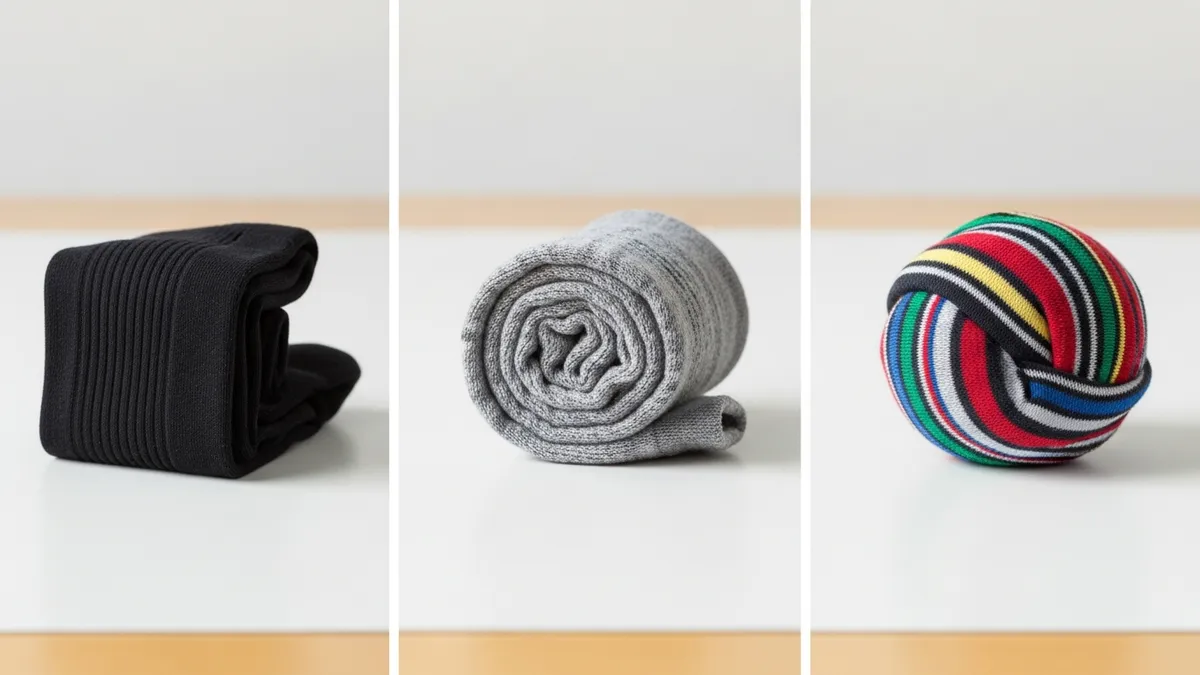
Best Folding Methods for Sock Drawer Organization
The way you fold your socks is just as important as the tools you use. The right folding method keeps pairs together, saves space, and makes every pair visible at a glance. Here are the three most popular methods and when each one works best.
The KonMari Rectangle Fold
Popularized by organizing consultant Marie Kondo, this method involves folding socks into a compact, self-contained rectangle that stands upright in the drawer. Lay one sock on top of the other, fold the toe end up about a third of the way, then fold the remaining portion up again. The result is a small rectangle that stands on its own. Arranged side by side vertically in the drawer, you can see every single pair at a glance without disturbing anything.
Best for: Drawer-primary storage, thin ankle socks, no-show socks, and dress socks.
The Burrito Roll
Lay both socks flat on top of each other and roll them tightly from toe to cuff into a cylinder. The cuff holds the roll together naturally. These rolled cylinders stand upright beautifully in divider cells or small bins.
Best for: Crew socks, athletic socks, and thicker fabrics that hold their shape when rolled.
The Flat Fold and Stack
This is the classic approach where you lay one sock on top of the other and fold the pair in half, then half again. The pairs stack flat in the drawer. While this works in deep drawers with plenty of vertical space, the main downside is that you can only see the top layer. It works best if you have very few socks or are using labeled bins.
Best for: Tall, deep drawers with a small sock collection.
Pro tip: No matter which folding method you choose, always fold socks in matched pairs immediately after laundry. Never let unmatched socks sit in the drawer waiting for their partner - it creates chaos fast.
Choosing the Right Tools and Organizers for Your Drawer
Once you have your socks folded and sorted by category, the right organizational tools will keep everything in place and make the system easy to maintain. Here is a breakdown of the most effective options for different drawer sizes and needs.
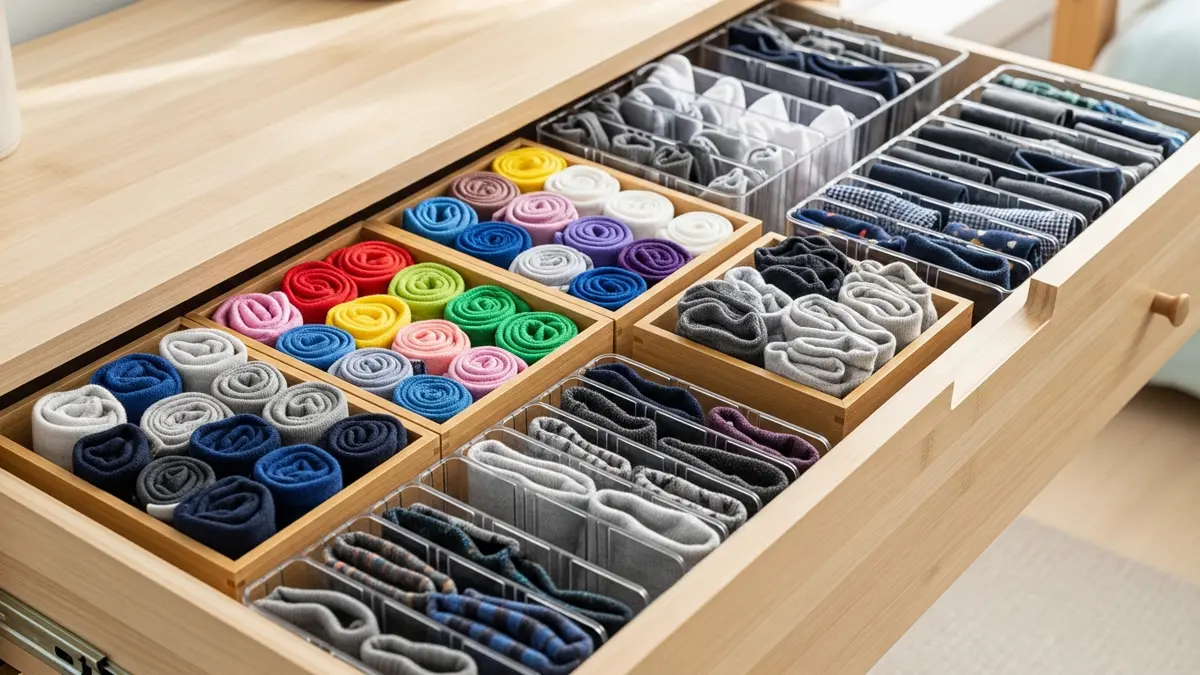
Drawer Dividers
Adjustable drawer dividers are the workhorse of sock drawer organization. They slot into the drawer and create customizable compartments for each sock category. Most are spring-loaded or clip-based and fit drawers ranging from about 10 inches wide up to standard dresser widths of 18 to 24 inches. Look for dividers with a smooth finish so socks do not snag.
Key features to look for:
- Adjustable width to fit your specific drawer dimensions
- Non-slip base so they stay put when you pull socks out
- Material options include bamboo (eco-friendly and attractive), clear acrylic (sleek and modern), and coated wood
Grid Organizer Inserts
These are pre-formed inserts with individual cells, usually made from fabric, foam, or rigid plastic. Each cell holds one rolled or folded pair upright. They are especially great for shallow drawers because the cells hold socks at a consistent height, making every pair visible at a glance. Many come in standard sizes but you can also find expandable versions.
Grid inserts work exceptionally well for:
- No-show socks and thin ankle socks
- Small drawers under 6 inches deep
- Anyone who wants a Pinterest-perfect, uniform look
Small Fabric Bins
If your drawer is on the larger side, you can use a set of small fabric bins or baskets to create informal zones. Group categories together in each bin and label them if needed. This approach is looser and more flexible than grid inserts, which makes it great for households where kids are doing their own sock organization.
Honeycomb Drawer Organizers
Relatively new on the market, honeycomb-style organizers use interlocking hexagonal cells to fill any drawer shape without wasted space. They are particularly popular in 2026 because they adapt to irregular drawer sizes that standard rectangular inserts cannot fit neatly.
You can browse the full range of drawer organization tools and home essentials at Sesoris to find the right fit for your specific drawer dimensions and lifestyle.
Sock Drawer Organization Ideas for Small and Shallow Drawers
Not everyone has a spacious dresser. If you are working with a compact or shallow drawer, you need a strategy that maximizes every inch of limited space.
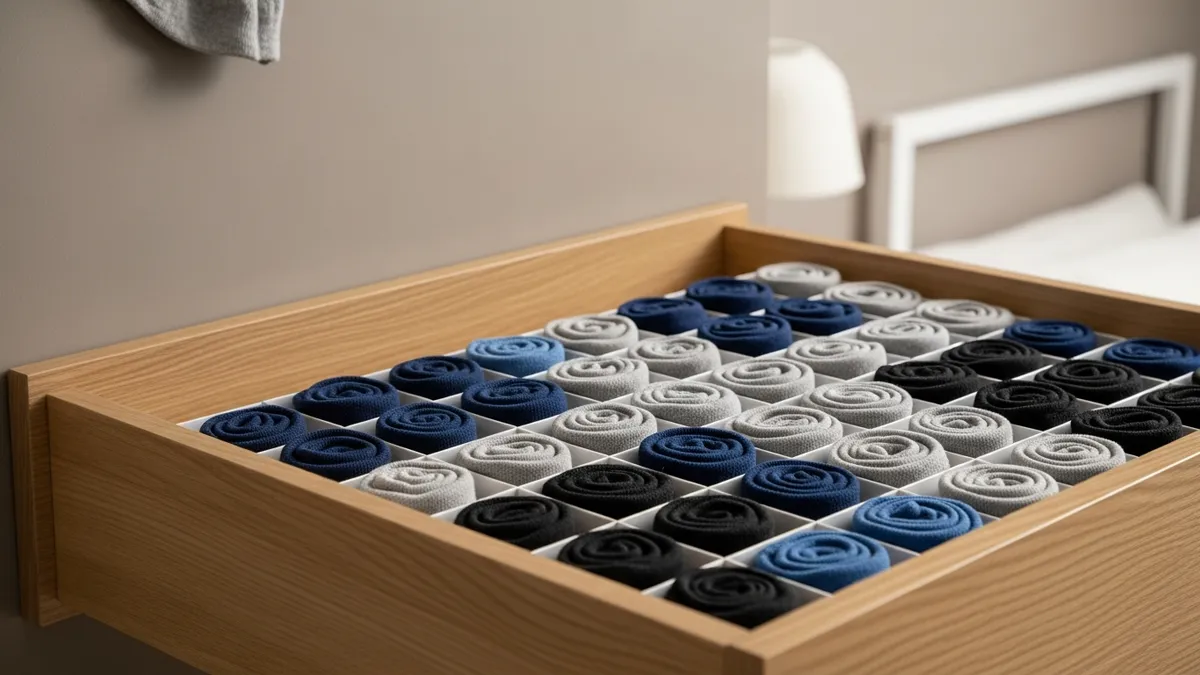
- Go vertical first. Standing socks upright rather than laying them flat is the single biggest space-saving move you can make in a shallow drawer. Even a 3-inch-deep drawer can fit upright folded socks comfortably.
- Use a matching set of small bins. Two or three identically sized small bins keep the drawer looking intentional and make it easy to grab a whole category when you need it.
- Edit aggressively. In a small drawer, there is simply no room for socks you do not wear regularly. Keep only your most-used pairs in the drawer and store seasonal or specialty socks in a labeled box elsewhere.
- Double up with over-door organizers. If your dresser drawer genuinely cannot hold all your socks, consider adding a small over-door pocket organizer to the inside of your closet door for overflow. Each pocket can hold one or two rolled pairs cleanly.
- Label everything. In a compact space, labels make it faster to return socks to the right spot, which helps maintain the system long-term.
For more clever ideas tailored to tight bedroom spaces, check out our guide on bedroom storage solutions for small bedrooms.
How to Organize Socks by Category and Lifestyle
A functional sock drawer organization system is one that reflects how you actually live, not a one-size-fits-all grid. Consider your lifestyle when deciding how to divide your drawer.
For the Active Household
If you run, cycle, hike, or hit the gym regularly, your athletic socks are probably your most-used category and deserve prime real estate in the front of the drawer. Separate them from dress socks and everyday casual socks so you are not digging past them every morning.
For Remote Workers
If you work from home, you likely rotate between comfortable no-show socks, cozy lounge socks, and maybe a pair of dress socks for video calls. Organize your drawer with those three categories front and center, and keep specialty socks toward the back.
For Families with Kids
Keep each family member's socks in a separate drawer or clearly labeled bin within a shared drawer. Using color-coded bins by person eliminates the morning sorting guesswork and teaches kids organizational habits early. Good Housekeeping recommends involving kids in the organizing process so they understand the system and are more likely to maintain it.
For the Seasonal Wardrobe
Rotate your sock collection seasonally just like you do with clothes. In summer, thick wool socks and heavy boot socks have no reason to take up prime drawer real estate. Store off-season socks in a labeled vacuum storage bag or small container, and swap them back in when the weather changes.
Maintaining Your Organized Sock Drawer Long-Term
Getting your sock drawer organized is the easy part. Keeping it that way is where most people struggle. Here are the habits that make the biggest difference:
- Fold immediately after laundry. Do not toss clean socks into the drawer unfolded with the intention of sorting them later. That intention rarely becomes action. Make folding part of your laundry routine.
- Do a quick monthly audit. Once a month, spend two minutes pulling out any mismatched singles, worn-out pairs, or socks that have migrated out of their zone. It takes less time to correct small drift than to redo the whole system.
- One in, one out. When you buy a new pack of socks, remove an equivalent number of worn or unwanted pairs. This keeps the volume manageable and prevents the drawer from creeping back toward overload.
- Assign a home to every type. Every category of sock should have a designated zone in the drawer. When everything has a place, putting things back correctly is automatic rather than a decision.
- Do not overfill. Leave a little breathing room in each compartment. A drawer that is crammed to capacity is nearly impossible to maintain because pulling one pair out disturbs everything around it.
For a broader look at keeping your entire bedroom tidy, the bedroom closet organization ideas guide on the Sesoris blog is a great companion resource.
Related Products from Sesoris
If you want to turn this guide into a real setup, start with Stackable Storage Bins, 24 Pack and Pull-Out Cabinet Organizer, 17 in. Wide. For broader options, browse the Home & Decor collection so the article journey does not stop at reading only.
Our practical rule: choose one product that solves the main clutter problem first, then add supporting organizers only when the daily workflow is already clear. This keeps the shopping path useful, not pushy.
FAQ: Frequently Asked Questions About Sock Drawer Organization
Q: How many pairs of socks should I keep in my drawer?
There is no universal number, but a practical guideline for most adults is between seven and fourteen pairs of everyday socks, plus whatever specialized socks you need for sports or specific occasions. The right number is whatever fits comfortably in your drawer without overcrowding, while covering your laundry cycle without running out.
Q: What is the best folding method to save space in a sock drawer?
The KonMari rectangle fold and the burrito roll are both excellent space savers because they allow socks to stand upright in the drawer. This vertical storage approach lets you see every pair at once and typically fits more pairs into the same drawer space than flat folding and stacking.
Q: Should I sort socks by color or by type?
Sorting by type is generally more practical for most people because it aligns with how you actually choose socks in the morning. You pick based on what you are wearing or doing that day, not by color. That said, within each type category, arranging by color from light to dark is a nice visual touch that makes the drawer even easier to navigate.
Q: What kind of drawer organizer works best for thin no-show socks?
No-show socks are notoriously difficult to keep tidy because they are small and tend to slip around. A grid insert with small, snug cells works best for this type. Alternatively, a small fabric bin with low walls keeps them contained without the socks collapsing on each other.
Q: Is it better to use drawer dividers or bins for sock storage?
It depends on your drawer. Adjustable dividers work better in wider, shallower drawers where you want maximum flexibility. Small bins or baskets work better in deeper drawers where you need some vertical containment. Many people use a combination of both, with dividers creating major zones and small bins within those zones for specific sock types.
Q: How do I stop socks from losing their match in the laundry?
The most reliable method is to clip or pin pairs together before they go into the laundry hamper. Small sock clips or even a safety pin through the cuffs keep pairs together through the wash and dry cycle, so you never have to sort singles again.
Conclusion: Start Your Sock Drawer Organization Today
Sock drawer organization might seem like a small project, but the daily impact is anything but small. A drawer where every pair is visible, matched, and easy to reach sets a calm, organized tone for the entire morning. Whether you start with a simple declutter and the KonMari fold or you invest in a full set of drawer dividers and a grid insert, any step you take toward a more organized sock drawer is a step toward a smoother daily routine.
The key principles are simple: declutter first, fold vertically for maximum visibility, use dividers to create dedicated zones for each sock type, and build habits that keep the system intact over time. Pair those habits with the right tools and you will never lose a sock to the bottom of the drawer again.
Ready to upgrade your bedroom organization from the ground up? Browse the Sesoris collections for drawer organizers, storage bins, and home essentials that make it easy to live more organized, one drawer at a time. Check out the best sellers for the tools our customers love most, or explore new arrivals for the latest organization products in 2026.
Weekly Home Tips
Get home organization ideas, product picks, and exclusive deals delivered weekly.
No spam. Unsubscribe anytime.

Explore More Articles
- 30+ Best Bathroom Shelf Ideas to Maximize Every Inch of Your Space in 2026
- 30+ Best Small Pantry Ideas to Maximize Every Inch of Your Kitchen Storage in 2026
- DIY Shelves: How to Build Beautiful, Functional Shelves on Any Budget in 2026
- 25+ Best Entryway Closet Organization Ideas to Transform Your Home's First Impression in 2026
- 25+ Best Purse Organization Ideas to Keep Your Handbag Tidy in 2026
- Office Supplies Organization Ideas for Desks
- Small Laundry Room Organization: 20+ Smart Tips to Transform Your Compact Space in 2026
- 30+ Best Pantry Organization Ideas to Transform Your Kitchen Storage in 2026