
Storage Bins with Lids: Complete 2026 Home Guide
Learn how to choose and use storage bins with lids for a tidier home. Practical tips, stacking systems, labeling ideas, and the best picks for 2026.
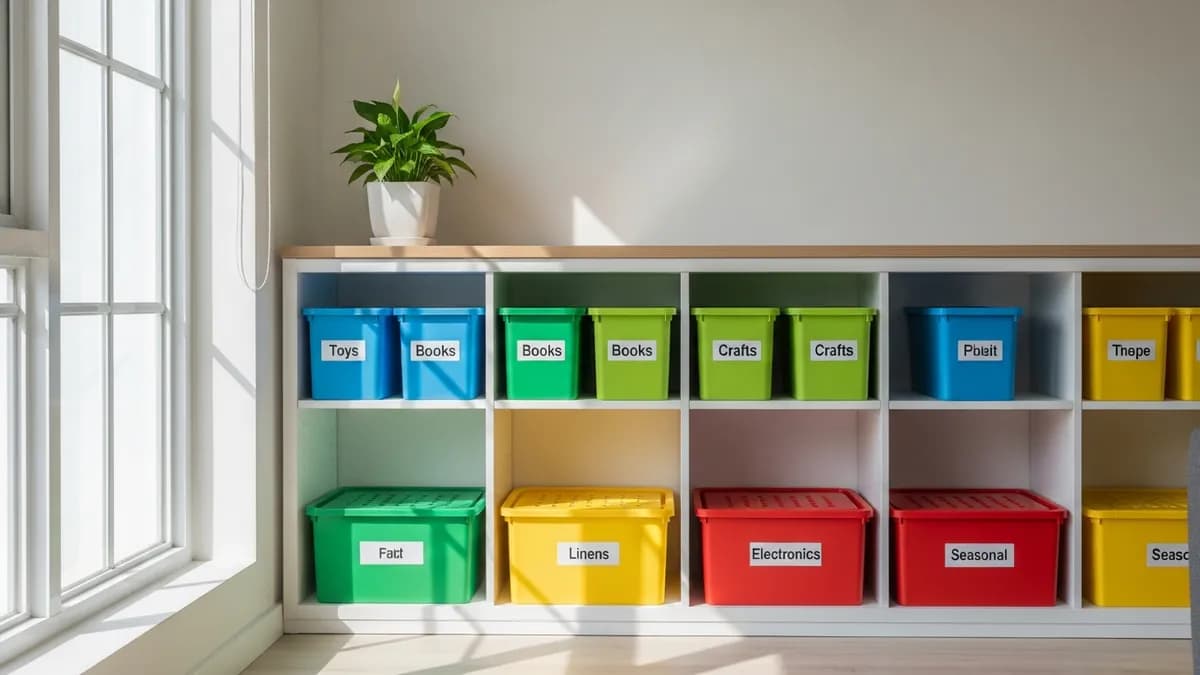
Does your closet, garage, or storage space always look messy no matter how many times you reorganize it? I went through the exact same thing until I discovered a solution that is simple yet remarkably effective: storage bins with lids. These are not just ordinary containers. With tight-fitting lids, organized stacking, and increasingly varied designs, storage bins with lids have become one of the most essential tools in modern home organization in 2026. In this complete tutorial, I will walk you through everything from choosing the right type, to stacking and labeling, to room-by-room usage tips.
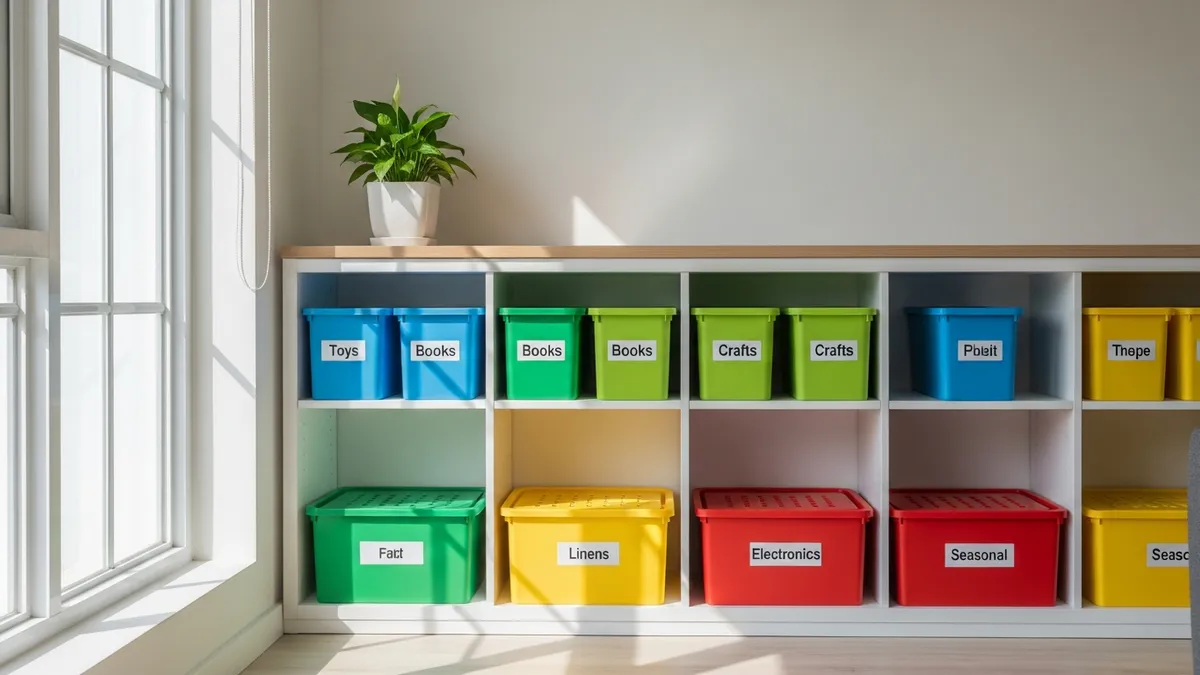
What Are Storage Bins with Lids and Why Do They Matter?
Storage bins with lids are boxes or containers equipped with a cover, whether a snap-on lid (pressed down to lock), a sliding lid, or a flip-top lid. Unlike ordinary open storage boxes, the lidded versions offer several real advantages for everyday households.
First, the lid protects the contents from dust, insects, and moisture. This is especially relevant in humid climates, where items stored in the open are vulnerable to mold and pests. Second, your storage area looks tidier and more uniform because nothing is left visibly scattered. Third, lidded storage bins are generally stackable, which lets you maximize vertical space that would otherwise go to waste.
The US Environmental Protection Agency emphasizes that moisture control is the key to preventing mold growth. That is why a lidded storage bin should only be filled with items that are completely dry. The lid helps block dust and splashes, but it will not save fabric that goes in damp.
Types of Storage Bins with Lids You Should Know
Before buying, it is important to understand that not all storage bins with lids are created equal. Each type has strengths and weaknesses that should be matched to your needs and your space.
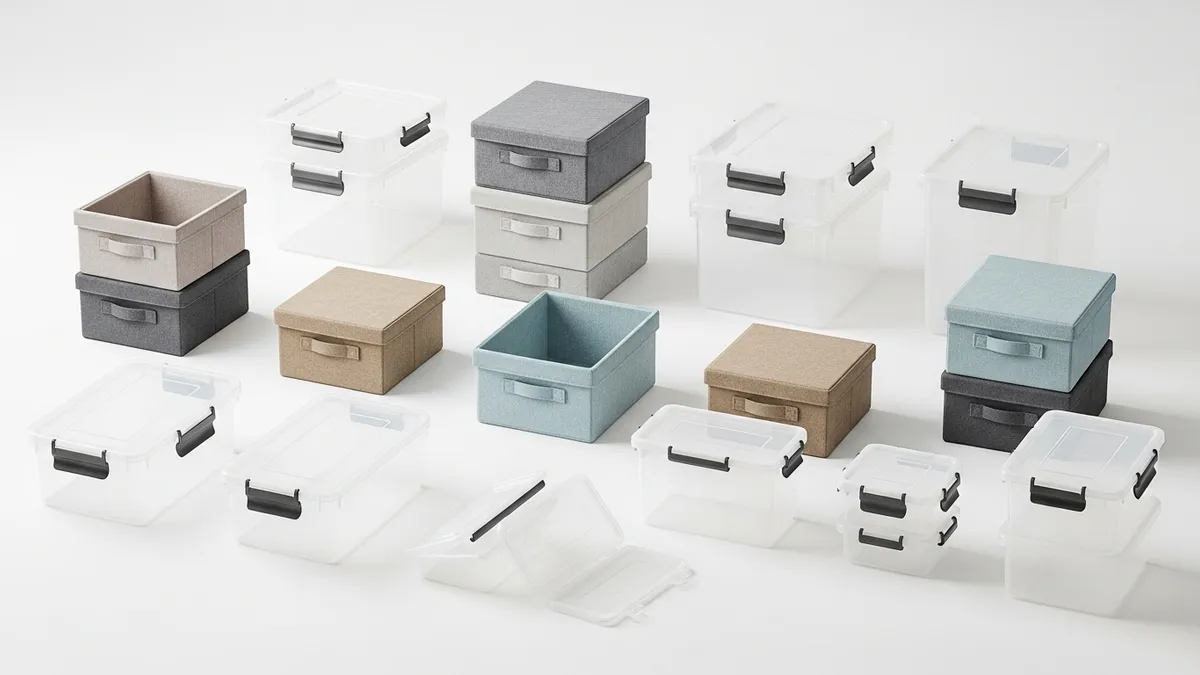
1. Clear Plastic Storage Bins with Lids
This is the most popular and most versatile type. The hard plastic material (usually PP or polypropylene) makes them durable, easy to clean, and resistant to dents. The main advantage of the clear version is that you can see what is inside without opening the lid. They are great for kitchen supplies, kids' toys, documents, and seasonal clothing.
- Pros: Durable, easy to clean, contents are visible, stackable
- Cons: Less attractive for living areas, can yellow after years of use
- Typical price range: Budget-friendly, with larger sizes costing more
2. Fabric Storage Bins with Lids
These bins are made of fabric or canvas with a lid usually made of the same material or a combination with a hardboard top. This type is lighter, more flexible, and more visually appealing for spaces that stay in view, like bookshelves or open closets.
- Pros: Lightweight, attractive, available in many colors and patterns
- Cons: Not waterproof, lids seal less tightly than plastic, harder to clean
- Typical price range: Budget-friendly to mid-range depending on size and material
3. Airtight Storage Bins
This type comes with a rubber or silicone seal in the lid, making it truly airtight and moisture-proof. It is ideal for storing dry food ingredients, grains, flour, or anything sensitive to humidity. If you are interested in food-specific options, our article on airtight food storage containers is a very useful additional reference.
- Pros: Maximum protection from air, moisture, and insects
- Cons: More expensive, usually not stackable
- Typical price range: Mid-range, pricier than standard plastic bins
4. Collapsible Storage Bins with Lids
One of the most popular innovations of 2026 is the storage bin that folds flat when not in use. When you need it, simply pop it open and attach the lid. It is a huge space saver for short-term or seasonal storage. Read more in our guide to the collapsible storage box for similar options that can round out your storage system.
- Pros: Saves space when not in use, lightweight, easy to carry
- Cons: Not as sturdy as rigid bins, lids sometimes fit less precisely
- Typical price range: Budget-friendly, comparable to standard plastic bins
Step-by-Step Tutorial: How to Use Storage Bins with Lids Effectively
Owning great storage bins with lids is not enough on its own. How you use them determines whether your storage system lasts or falls back into chaos within weeks. Here is a complete tutorial you can put into practice right away.
Step 1: Audit and Sort Your Belongings First
Before buying a single storage bin, do a thorough audit of the items you want to store. Take everything out of the closet or storage area, then separate it into three piles:
- Keep: Items you genuinely use on a regular basis
- Donate or sell: Items still in good condition but no longer needed
- Toss: Items that are broken, expired, or no longer useful
This process may take time, but it is the foundation of a good storage system. You do not want to buy a stack of storage bins just to store things that never needed storing in the first place. If you want a more detailed guide to this process, read our article on how to declutter your home for beginners.
Step 2: Group Items by Category
Once sorting is done, group the items you are keeping into logical categories. Some examples of effective grouping:
- All cleaning supplies in one group
- All kids' toys in one group
- All important documents in one group
- All seasonal clothing in one group
- All hobby gear in one group
The golden rule of home organization: one category, one container. Do not mix unrelated categories in a single storage bin, or finding things later becomes a headache.
Step 3: Measure Your Storage Space Before Buying
This step is often skipped, yet it is crucial. Measure the height, width, and depth of your shelves, closet, or storage area before buying storage bins. Make sure the bins you choose:
- Fit comfortably into the available space
- Allow closet doors or drawers to close completely
- Are not so small that you need too many bins
- Are not so large that they become too heavy when full
Step 4: Choose the Right Bin Size for Each Category
Use this simple guide to pick sizes:
- Small bins (under 5 liters): Accessories, cables, jewelry, stationery
- Medium bins (5 to 15 liters): Toys, books, spare toiletries, snacks
- Large bins (15 to 30 liters): Seasonal clothing, light blankets, spare bed sheets
- Extra-large bins (over 30 liters): Jackets, shoes, sports equipment, holiday decorations
Step 5: Label Every Storage Bin Clearly
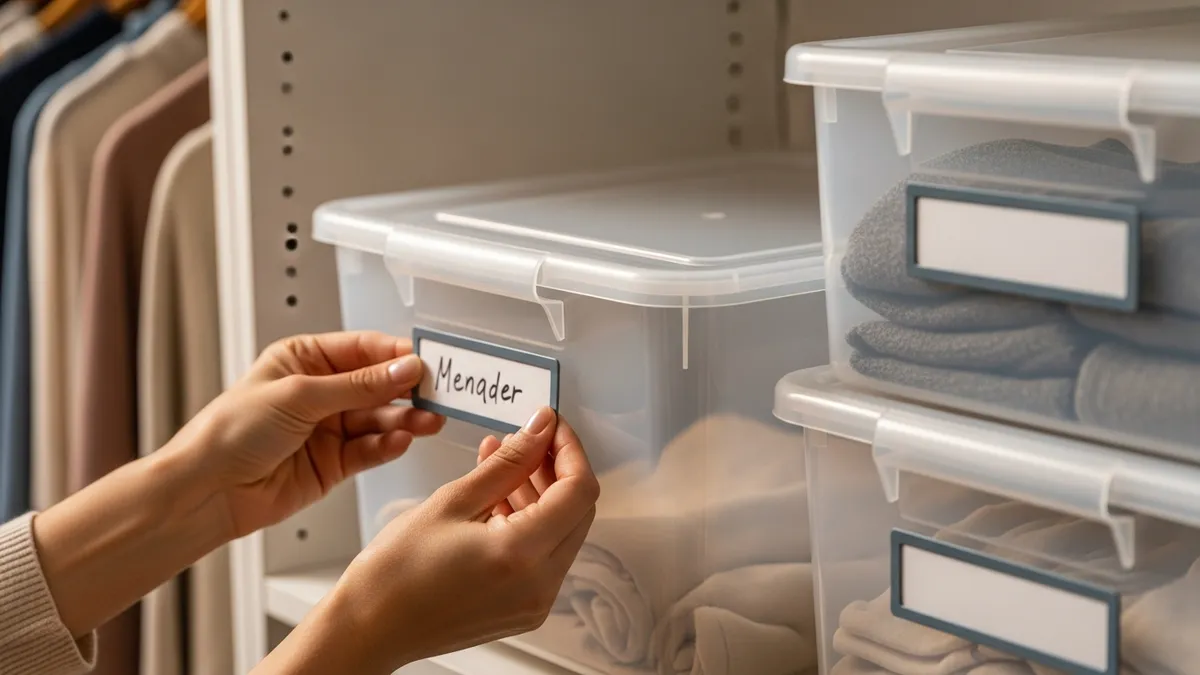
This is the step that makes the biggest difference between a storage system that works and one that does not. Every storage bin with a lid should have a clear label, even if the bin is transparent. Labels help everyone in the household, including kids, know exactly what belongs in each bin and where to return items after use.
Here are a few labeling methods you can use:
- Permanent stick-on labels, handwritten or printed
- Clip-on labels you can swap out when the contents change
- Chalkboard labels that can be erased and rewritten
- Color-coded labels for a color system per family member or per category
For a more advanced labeling system, see our complete guide to the label organizer, which covers various labeling methods for the home.
Step 6: Arrange Your Bins with a System That Makes Sense
The order in which you arrange storage bins with lids has a big impact on day-to-day convenience. Apply these principles:
- Most frequently used items: Place them where they are easiest to reach, from waist to eye level
- Rarely used items: Place them on the top or bottom shelves
- Heavy items: Always keep them at the bottom to avoid tipping shelves and to make lifting easier
- Kids' items: Place them at a level children can reach on their own to encourage independence
How to Use Storage Bins with Lids in Every Room
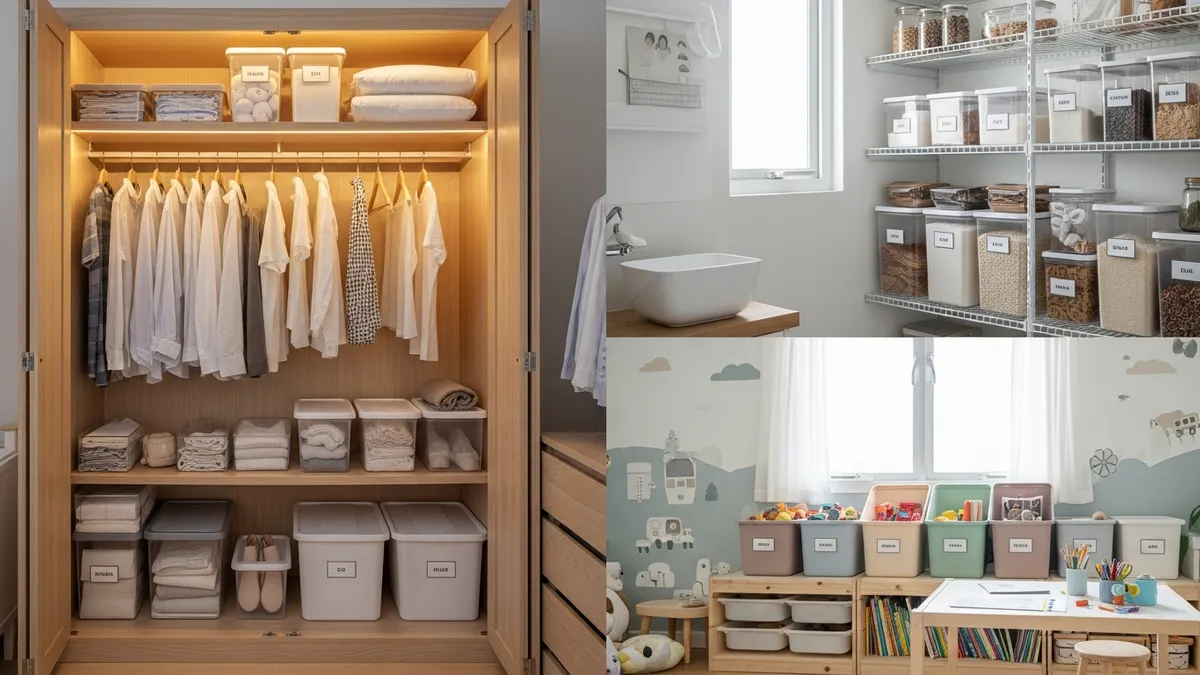
One of the biggest strengths of storage bins with lids is their flexibility across nearly every room. Here is a room-by-room guide.
In the Bedroom
The bedroom holds more personal items than any other room. Storage bins with lids are especially effective for:
- Storing off-season clothing (for example, heavy jackets during the warmer months)
- Organizing accessories like belts, scarves, and hats
- Keeping spare sheets and pillowcases under the bed
- Tidying up rarely used personal care products
For more bedroom organization inspiration, check out our article on bedroom storage solutions for small bedrooms.
In the Kitchen and Pantry
In the kitchen, storage bins with lids are most useful in the pantry area. Use clear lidded bins for dry goods like sugar, flour, beans, and cereal so they are easy to see and protected from moisture and insects.
- Group instant seasonings and sauce packets in one bin
- Keep kids' snacks in a labeled bin on a shelf they can reach
- Use small bins to organize kitchen drawers
Also read our complete guide on how to create a neat, organized kitchen pantry for more in-depth tips.
In the Storage Room or Garage
This is the area that benefits most from storage bins with lids. In practice, labeled containers make it easy to find things without opening every box and help you see what you already have before buying duplicates.
- Use extra-large bins for holiday decorations that only come out once a year
- Keep important documents in medium bins with tight-fitting lids
- Group sports or hobby equipment in separate bins
In the Kids' Room
Storage bins with lids are the perfect solution for kids' rooms that always seem to overflow with toys. A labeled bin system teaches children to tidy up their own toys because they know exactly where each toy belongs.
- Use different bin colors for different toy categories
- Choose bins with lids that are easy for children to open
- Store bins of toys that are out of rotation on a high shelf
Find more ideas in our article on tips for keeping kids' rooms tidy.
Tips for Maximizing Vertical Space with Lidded Storage Bins
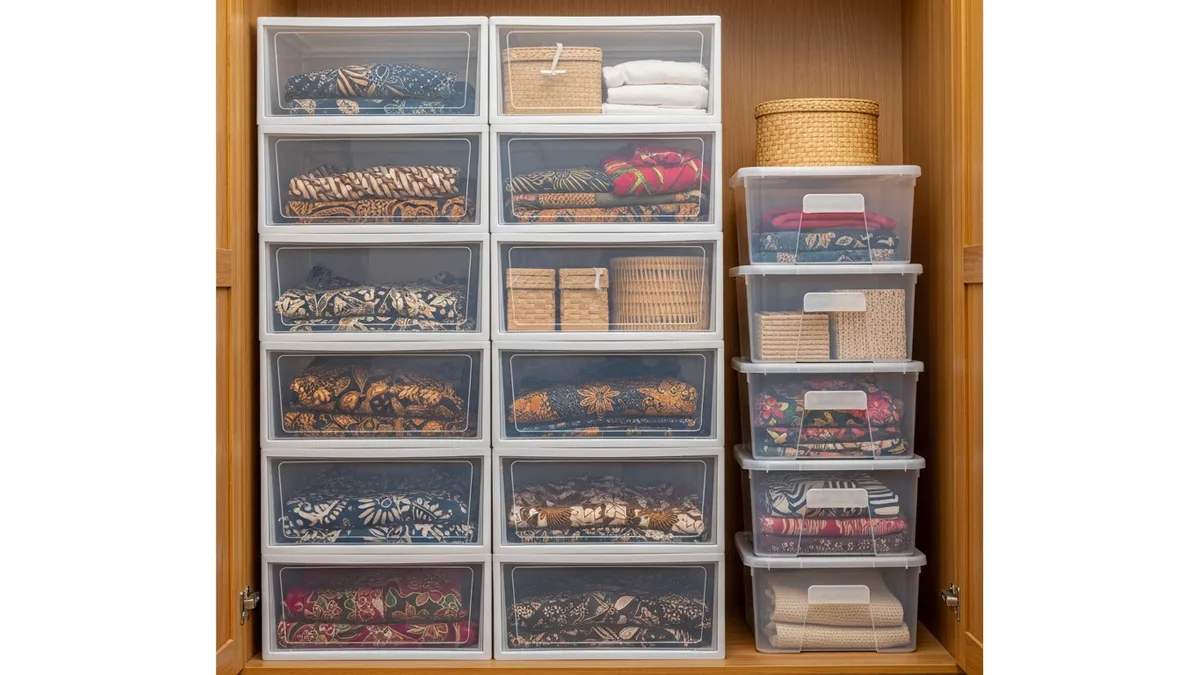
One of the biggest advantages of storage bins with lids over open baskets is their stackability. This lets you take advantage of vertical space that often goes to waste, especially in closets, garages, or tall shelving.
Here are tips for stacking storage bins safely and efficiently:
- Choose bins designed for stacking: Check whether the base of the bin has grooves or ridges that fit the lid of the bin below. This design keeps bins from sliding off.
- Stack heavy on the bottom: Never place a heavy bin on top of a light one. Besides being unsafe, it can also crush the lid of the bin underneath.
- Limit stacks to 4 or 5 bins: Stacks that are too tall are hard to access and risk toppling over.
- Use shelves to break up the levels: If you have many bins, invest in shelving so each shelf level holds only one or two layers of bins.
- Consider bins with wheels: For large bins you move often, choose a version with wheels on the bottom so it is easier to slide around.
The small-space solutions roundup from Houzz also highlights vertical areas and hidden spaces as recurring storage patterns. Apply those ideas safely with stable shelving and stacks that stay within each product's load limits.
Explore the full collection of storage products at Sesoris Best Sellers to find storage bins that fit your needs.
Common Mistakes to Avoid with Storage Bins with Lids
Now that we have covered the right way to do things, it is just as important to know the mistakes that often cause storage bin systems to fall apart.
- Buying too many bins at once before testing: Start with a few bins for one area, evaluate, and only buy more once the system proves itself
- Skipping labels: Unlabeled bins quickly turn into dumping grounds for random items
- Overfilling bins: Overstuffed bins are hard to close, damage their lids, and become heavy to lift
- Mixing too many categories: The one-category-per-bin principle speeds up both finding and returning items
- Buying every bin in the same size: Storage needs vary, so make sure you have a mix of sizes
- Ignoring aesthetics: Especially in visible areas, choose bins with colors or designs that match the room's decor
Related Products from Sesoris
If you want to turn this guide into a real setup, start with Stackable Storage Bins, 24 Pack and Pull-Out Cabinet Organizer, 17 in. Wide. For broader options, browse the Home & Decor collection so the article journey does not stop at reading only.
Our practical rule: choose one product that solves the main clutter problem first, then add supporting organizers only when the daily workflow is already clear. This keeps the shopping path useful, not pushy.
FAQ: Frequently Asked Questions About Storage Bins with Lids
Q: Are storage bins with lids safe for storing food?
Not all storage bins are safe for direct contact with food. Only use products that carry food-use guidance from the manufacturer. The FDA explains the use of BPA in food contact materials, but a BPA-free label alone does not automatically prove a container is suitable for every type of food. A bin made for clothing may not meet food storage requirements.
Q: How do I clean plastic storage bins with lids?
For routine cleaning, simply wipe the inside and outside of the bin with a damp cloth and mild soapy water. For stubborn stains or odors, soak the bin in a solution of water and white vinegar for 30 minutes, then rinse and dry before using it again. Make sure the bin is completely dry before closing the lid to prevent mold growth.
Q: How long do plastic storage bins usually last?
Material quality and usage patterns determine lifespan. Replace a bin when the lid no longer seals, the walls crack, the surface becomes brittle, or the handles break. Avoid prolonged direct sunlight and never load beyond the manufacturer's guidelines.
Q: Are clear storage bins better than colored ones?
Each has its place. Clear bins are ideal for enclosed storage areas like closets or garages because you can see the contents without opening every bin. Colored bins work better in visible areas like bookshelves or playrooms because they look nicer. A combination of both is often the most practical choice.
Q: Can a lidded storage bin completely prevent mold?
No. The lid helps keep out dust and splashes, but mold can still grow if items go in damp or the bin is stored in a wet area. Dry the contents, clean the bin, and check its condition regularly. Do not rely on silica gel as a substitute for controlling the source of the moisture.
Q: How do I stack storage bins safely?
Place the heaviest and least frequently opened bins at the bottom. Follow the manufacturer's load limits, align the sides of the bins, and stop stacking if a lid starts to bow or the stack wobbles. For bins you access often, use shelving so you can pull one bin without dismantling the whole stack.
Q: Where can I buy quality storage bins with lids?
You can find a full selection of storage bins with lids at Sesoris, an e-commerce store dedicated to home organization products and household essentials. Visit the Sesoris product collections page for the widest selection, or check out the latest new arrivals to discover the newest storage innovations of 2026.
Conclusion: Start Your Journey to an Organized Home with Storage Bins with Lids
Storage bins with lids are more than just ordinary storage boxes. Used correctly, following the tutorial above, they can become the foundation of a home storage system that is tidy, efficient, and built to last. Success comes down to three things: choosing the right type and size for your needs, labeling every bin clearly, and arranging them with a logic that makes them easy for the whole family to access.
In 2026, with more storage bins with lids available than ever, there is no excuse to let our homes drown in clutter. Start with one small area, perhaps a kitchen drawer or a shelf in the kids' room, put the steps in this tutorial into practice, and feel the difference for yourself.
Ready to start? Visit Sesoris and discover the full collection of storage bins with lids along with many other home organization products that will help you build a more organized home. Do not forget to explore the Sesoris blog for more inspiration and practical home organization tips every day.
Liked this guide?
Get new organizing guides and the occasional new product by email. No spam, unsubscribe anytime.
Related articles
Explore more articles
- Capsule Wardrobe Women: The Ultimate 2026 Guide to a Stylish, Organized Closet
- 35+ Best Bedroom Storage Ideas to Maximize Every Inch of Your Space in 2026
- 25+ Best Plant Stand Ideas to Elevate Your Home Decor in 2026
- How to Pack a Suitcase Efficiently: The Complete 2026 Step-by-Step Tutorial
- Cheap Kitchen Storage Racks: Best Budget-Friendly Options to Organize Your Kitchen in 2026
- 40+ Best Kitchen Decor Inspiration Ideas to Transform Your Cooking Space in 2026
- How to Store Food to Last Longer: Complete 2026 Guide
- Wall Mounted Spice Rack: 2026 Buying and Install Guide