
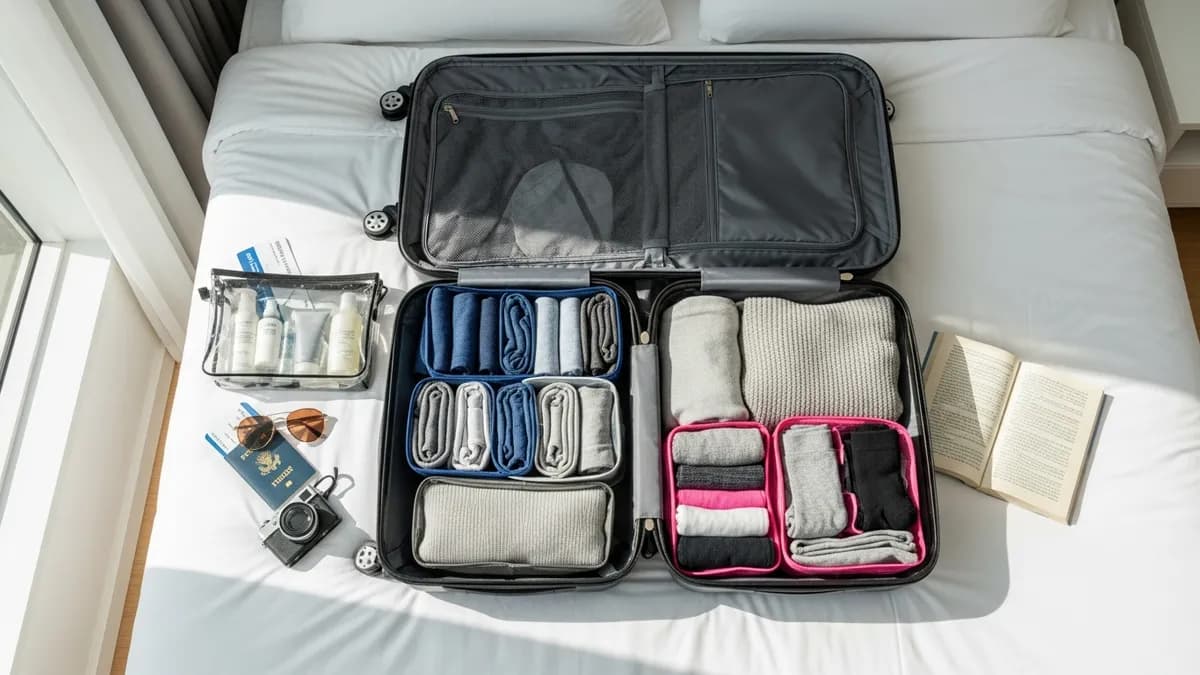
How to Pack a Suitcase Efficiently: The Complete 2026 Step-by-Step Tutorial
If you have ever shown up at your destination with a suitcase that exploded open or realized you forgot something important, you already know how frustrating poor packing can be. Learning how to pack a suitcase efficiently is one of the most practical travel skills you can develop, whether you are heading out for a weekend getaway or a two-week international trip. In 2026, with airline baggage fees higher than ever and carry-on limits tighter, packing smart is not just a convenience, it is a real money-saver. In this step-by-step tutorial, I will walk you through everything you need to know to pack like a pro every single time.
Why Packing a Suitcase Efficiently Matters in 2026
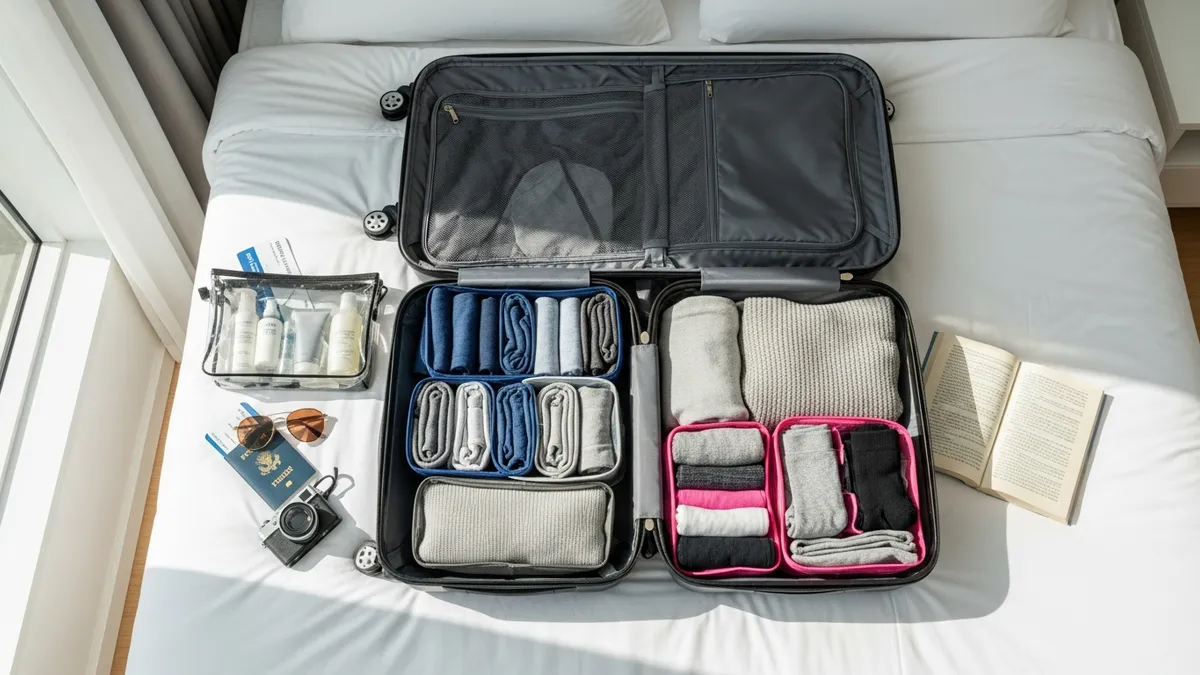
Most Americans check luggage without thinking twice about the cost. An organized packing system saves physical space and reduces the time you spend searching through your bag at the hotel. Beyond comfort, packing efficiently can help you avoid checked bag fees by fitting everything into a carry-on, protect your clothes from wrinkles, and make unpacking at your destination fast and painless.
Beyond the financial angle, there is a real lifestyle benefit here. When your bag is organized, your whole trip feels more intentional. You spend less time digging and more time actually enjoying where you are. That philosophy connects closely to what we believe at Sesoris, live more organized, travel more freely.
Step 1, Choose the Right Suitcase for Your Trip
Before you pack a single item, make sure you are working with the right bag. Your suitcase choice sets the foundation for everything else.
Hardshell vs. Softshell
Hardshell suitcases protect fragile items better and are typically more water-resistant. Softshell bags, on the other hand, often have external pockets that add extra storage flexibility. For most domestic trips, a softshell 22-inch carry-on is ideal. For longer international travel, a hardshell 26- to 28-inch checked bag gives you structure and protection.
Carry-On vs. Checked Bag
In 2026, most major US airlines allow carry-on bags up to 22 x 14 x 9 inches. If you can pack everything into that footprint, you skip baggage fees entirely. For trips longer than seven days or when you need formal wear, a checked bag may be unavoidable, but the packing principles below still apply.
Key Suitcase Features to Look For
- Spinner wheels for easy maneuvering through airports
- TSA-approved locks built into the zipper or latch
- Interior compression straps to hold clothes in place
- Multiple interior pockets for separating small items
- Lightweight construction so the bag itself does not eat into your weight allowance
Step 2, Build a Smart Packing List Before You Touch Your Suitcase
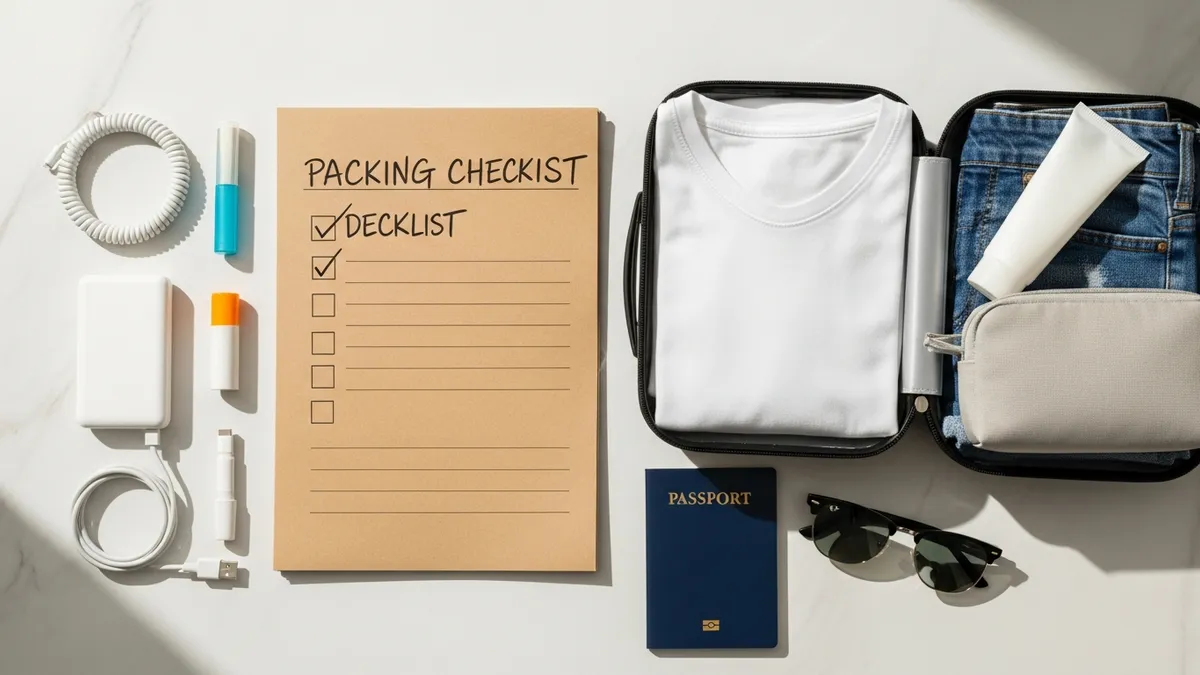
One of the most overlooked steps when figuring out how to pack a suitcase efficiently is creating a written packing list before you open the bag. This prevents the classic mistake of overpacking, throwing in items "just in case" and ending up with a 50-pound bag for a three-day trip.
How to Build a Packing List That Works
- Write down every day of your trip and the planned activity for each day (beach, dinner out, hiking, city tour).
- Assign one outfit per day, plus one backup outfit for the entire trip.
- List toiletries and personal care items separately from clothing.
- Add travel documents, electronics, and chargers as their own category.
- Review the list and remove any item that appears fewer than twice, if you can only wear it once, it probably does not earn its weight.
"The goal is not to pack everything you own. The goal is to pack exactly what you need and nothing more."
Many travelers pack more outfit combinations than they use. A neutral color palette makes pieces easier to mix and match, so fewer garments can cover more situations.
Step 3, Master the Best Clothes-Folding Techniques
How you fold or arrange your clothes is the single biggest factor in how much fits inside your bag. There are three main methods used by experienced travelers, and the best approach often depends on the type of clothing.
The Rolling Method
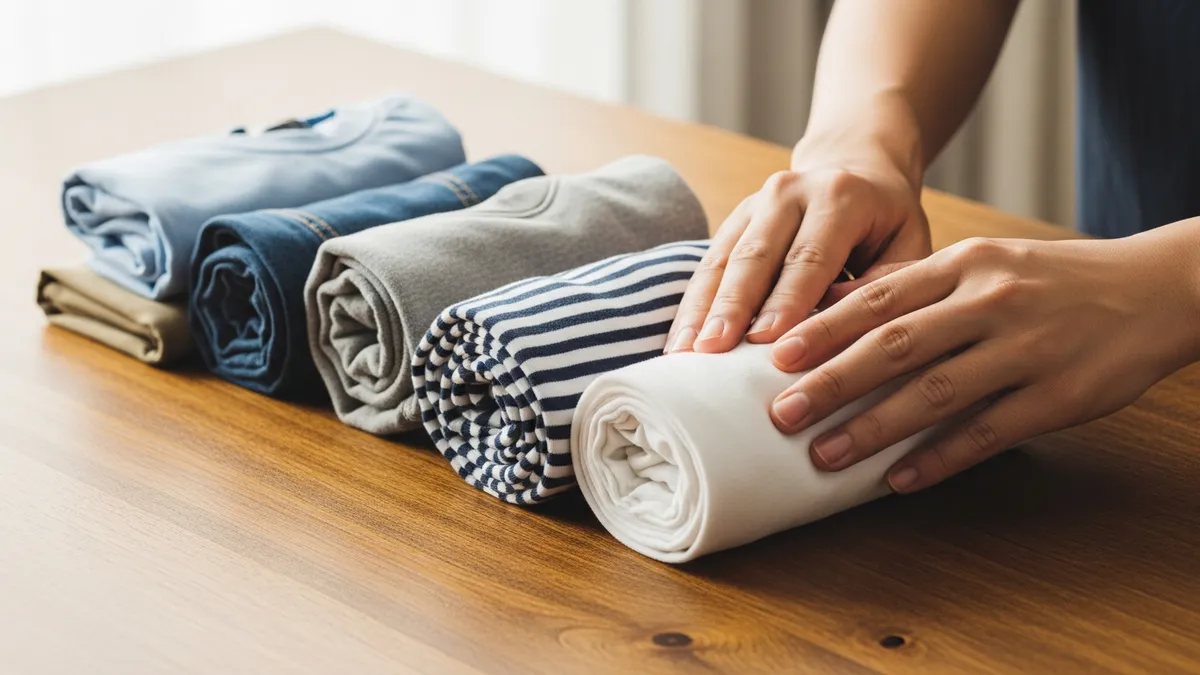
Rolling is the gold standard for casual, wrinkle-resistant fabrics like t-shirts, jeans, leggings, shorts, and underwear. To roll correctly:
- Lay the garment flat and smooth out any wrinkles.
- Fold the bottom hem up about 2 inches to create a cuff.
- Roll the garment tightly from the top down toward the cuff.
- Fold the cuff back over the roll to lock it in place.
Rolled clothes pack into corners and gaps much more efficiently than flat-folded items, and they are less likely to wrinkle during transit.
The Flat-Fold Method
For structured pieces like blazers, dress shirts, and trousers, flat folding along the natural seams reduces creases. Lay the garment face-down, fold in the sleeves, then fold the whole piece in thirds lengthwise. Place these items on top of your roll-packed base layer.
The Bundle Wrapping Method
Bundle wrapping is a technique favored by frequent business travelers. You wrap multiple garments around a central core object (like a toiletries bag) so that each layer cushions the one beneath it. This method is extremely effective for preventing wrinkles but requires practice.
Pro Tip: Stuff Socks Inside Shoes
Never leave your shoes hollow. Stuff socks, charger cables, or small accessories inside your shoes to fill dead space. Shoes should always sit sole-down along the bottom of the suitcase near the wheels.
Step 4, Use Packing Cubes and Organizers to Maximize Space
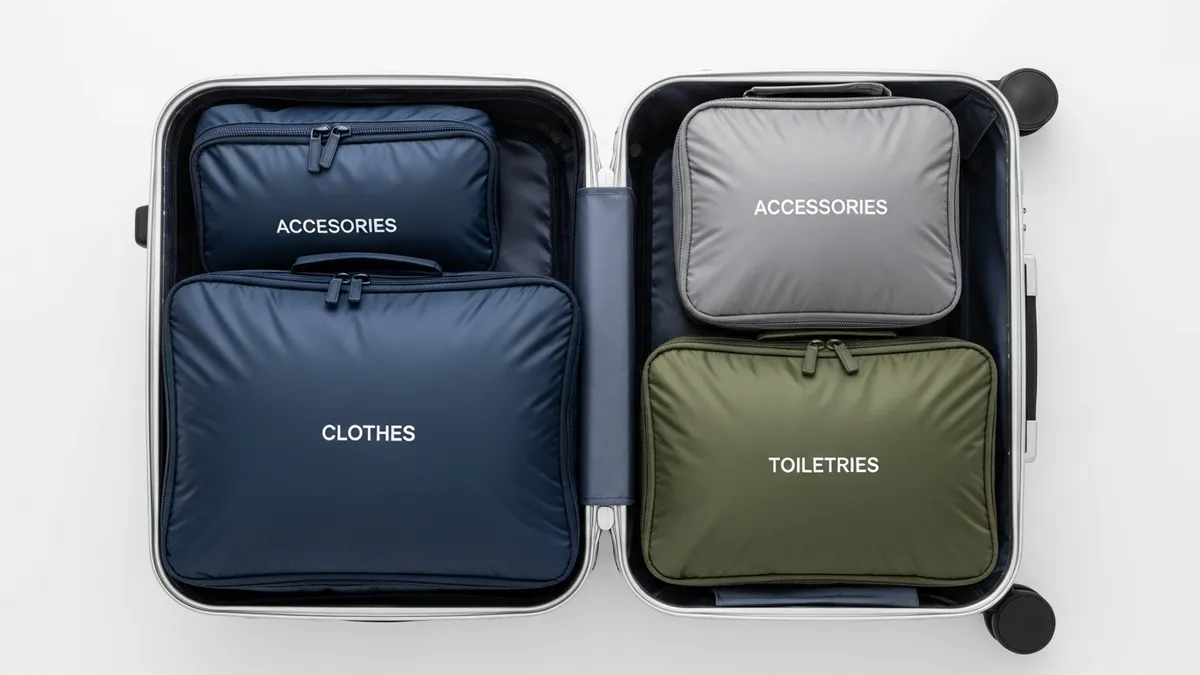
This step is a game-changer. Packing cubes are rectangular fabric pouches with zippers that compress and categorize your belongings inside the suitcase. If you have never used them, you are missing out on one of the easiest ways to pack a suitcase more efficiently.
How to Use Packing Cubes
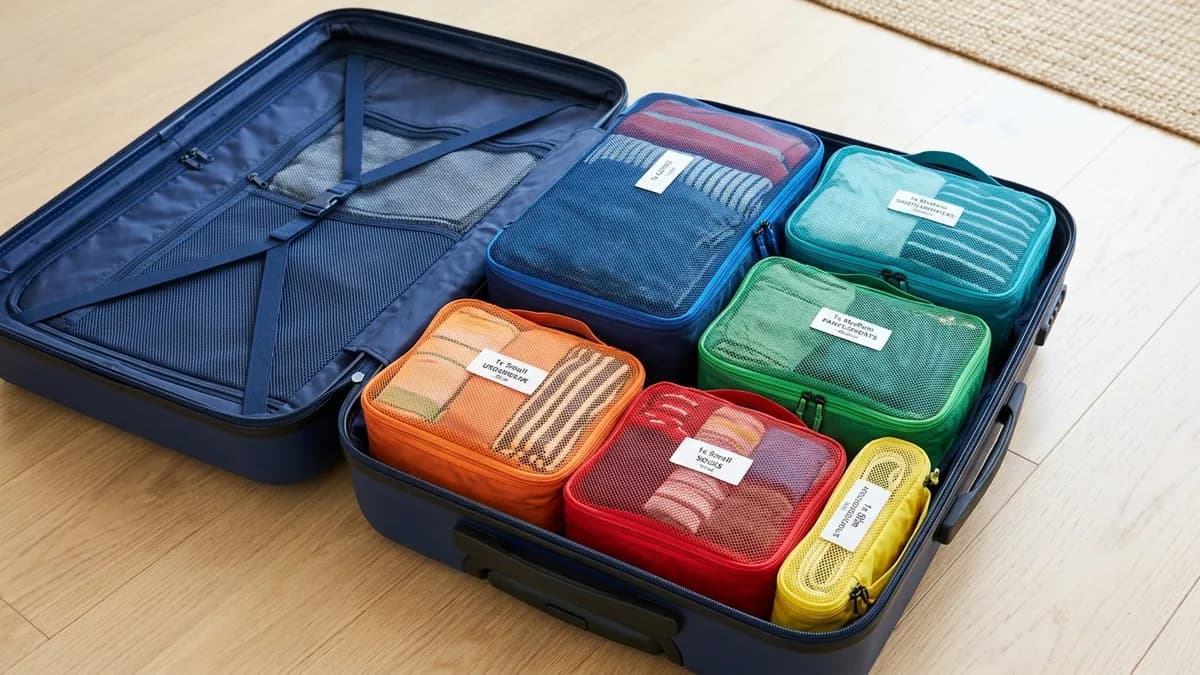
- Use one cube for tops, one for bottoms, and one for undergarments and socks.
- Use a compression packing cube for bulky items like sweaters and hoodies, these zip down to roughly half the uncompressed volume.
- Use a small pouch or flat cube for electronics accessories and cables.
- Use a toiletry bag or clear zip pouch for liquids, keeping it TSA-compliant.
The Sesoris travel organizer collection covers everything from slim document pouches to full compression cube sets. Having a dedicated system means you always know exactly where everything is, which saves time both at security and when you arrive at your hotel.
Organizing Your Suitcase Layer by Layer
Think of your suitcase in three zones:
- Bottom zone (near the wheels): Heaviest items, shoes, jeans, heavy sweaters.
- Middle zone: Packing cubes with your main clothing.
- Top zone: Delicate items, documents, the things you need first when you arrive.
Keeping heavier items near the wheels keeps the suitcase balanced when you are rolling it through the airport.
Step 5, Pack Shoes and Toiletries the Smart Way
Shoes and toiletries are responsible for a large portion of wasted space in most suitcases. Getting these two categories right makes a huge difference.
Packing Shoes Efficiently
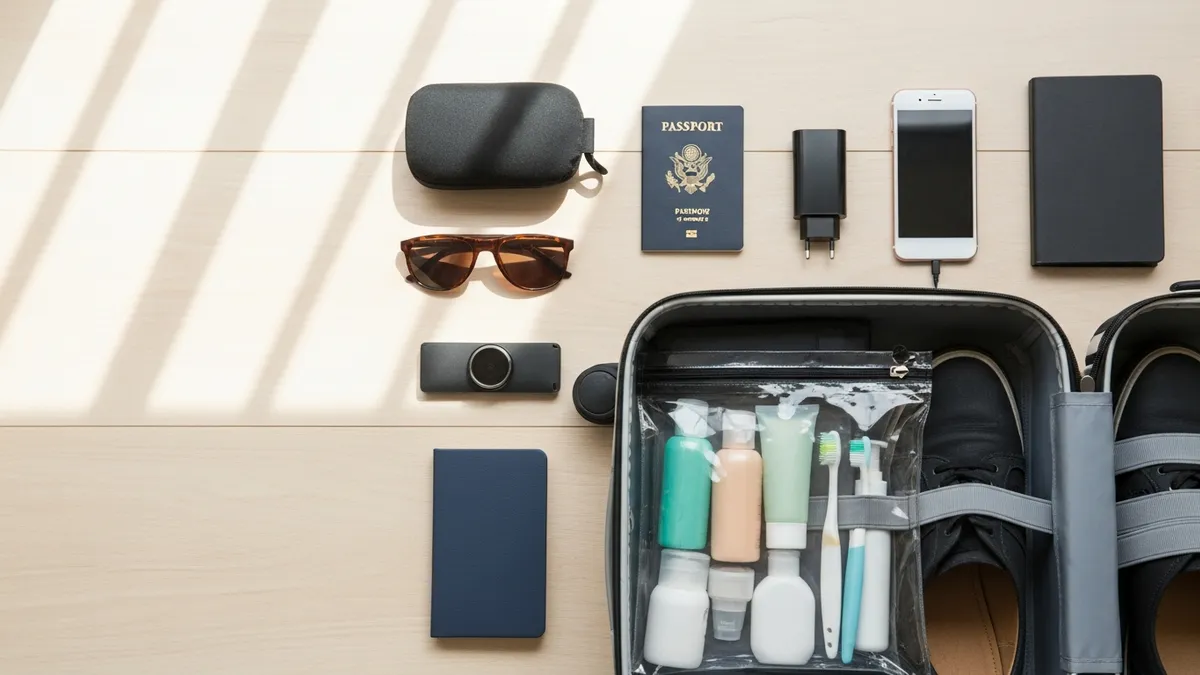
- Limit yourself to three pairs of shoes maximum: one for walking or casual use, one for activities or exercise, and one for dressier occasions.
- Wrap each shoe individually in a reusable shoe bag or a shower cap to protect your clothes from dirt.
- Pack shoes heel-to-toe (one shoe facing forward, the next facing back) along the bottom of the suitcase to interlock them and save space.
- Always stuff the insides of shoes with socks or small items.
Packing Toiletries Efficiently
- Decant full-size products into travel-size bottles (3.4 ounces or less for carry-ons, per TSA rules).
- Place all liquids in a clear, quart-sized zip-top bag for easy airport screening.
- Use solid toiletry alternatives (solid shampoo bars, solid conditioner, toothpaste tablets) to eliminate liquids entirely when possible.
- Pack your toiletry bag last so it sits on top and is easy to access at security.
If you travel frequently, check out the best organizer travel bags on the Sesoris blog for curated picks that keep toiletries, cables, and accessories separated and accessible.
Step 6, Fill Dead Space and Use Every Inch
Even after you have packed your cubes and shoes, there is almost always dead space in a suitcase. Efficient packers use every available gap.
Tricks for Filling Dead Space
- Stuff small items into gaps around shoe soles. Rolled belts, charging cables, and folded scarves fit perfectly.
- Pack a belt inside a shirt collar to help the collar keep its shape and use space simultaneously.
- Use the inside of hats. A baseball cap can hold sunglasses, a small wallet, or earbud cases inside the crown.
- Tuck slim items in the side pockets. Flat documents, e-readers, and tablet sleeves fit perfectly in the narrow side panels of most suitcases.
- Use vacuum storage bags for bulky items. For trips that require heavy coats or multiple blankets, vacuum storage bags compress items to a fraction of their original size without any pump required on travel-friendly versions.
"Dead space is wasted potential. Every gap in your suitcase is an opportunity to pack smarter."
How to Pack a Suitcase Efficiently for Specific Trip Types
The general principles above apply to all travel, but a few adjustments help for specific trip types.
Weekend Trips (1-3 Days)
A carry-on is almost always enough. Stick to two full outfits plus one backup top. Skip the full toiletry kit and use hotel amenities for basics like shampoo and body wash. One pair of walking shoes and one pair of dressier shoes cover nearly all scenarios.
One Week or Longer
Plan to do laundry at least once. Pack for five days and plan a mid-trip laundry session. This approach cuts your clothing load by almost 30 percent. A small packet of travel laundry soap weighs almost nothing and fits in your toiletry bag.
Business Travel
Use the bundle wrapping method for suits and dress shirts. A lightweight garment bag that folds in half can fit inside most checked bags and keep formal wear perfectly pressed. Use compression cubes for casual clothes and keep your formal items unwrapped on top.
Family Travel with Kids
- Pack each child their own small carry-on with their own cubes.
- Label every cube and bag with the child's name using luggage tags or label stickers.
- Pack a separate personal item bag with immediate-access items: snacks, entertainment, a change of clothes, and wipes.
For family organization at home and on the road, explore the Sesoris collections page for organizers designed to make family packing a smoother process.
Common Packing Mistakes to Avoid
Even well-intentioned packers fall into the same traps. Here are the most common mistakes and how to sidestep them.
Packing Too Many Shoes
Shoes are the heaviest and bulkiest items in any bag. More than three pairs for a single trip is almost always unnecessary. Choose versatile shoes that transition from daytime to evening.
Ignoring the Weather Forecast
Check the forecast for your destination every day you will be there before you finalize your list. Packing heavy layers for a destination that turns out to be mild, or vice versa, wastes valuable space.
Packing Full-Size Toiletries
Full-size bottles of shampoo, conditioner, and body wash take up disproportionate space and add weight. Travel-size containers or solid alternatives solve this completely.
Leaving Packing Until the Last Minute
Rushed packing leads to overpacking. Start laying out your items two to three days before your trip. You will naturally identify items you do not need when you have time to think clearly.
Not Weighing Your Bag Before Leaving the House
A simple luggage scale (widely available for under US$15) saves you from the humiliating airport bag-fee moment. Most domestic checked bags must come in under 50 pounds, and international flights sometimes cap at 44 pounds for economy class.
For more tips on staying organized in every area of your life, browse the Sesoris blog for hundreds of home, kitchen, and lifestyle organization guides.
At a Glance: Which Option Fits You
Every packing method trades space against wrinkles. This table puts the techniques side by side so you can mix the right ones for your trip.
| Technique | Space saved | Wrinkle risk | Best for |
|---|---|---|---|
| Rolling | High | Low | T-shirts, jeans, casual wear |
| Flat folding | Medium | Low | Dress shirts and knitwear |
| Bundle wrapping | High | Lowest | Business trips |
| Compression cubes | Highest | Medium | Long trips and bulky items |
| Filling gaps and shoes | A little extra | None | Socks, chargers, small items |
Related Products from Sesoris
If you want to turn this guide into a real setup, start with Foldable Storage Bins and Floating Wall Shelf Set. For broader options, browse the Home & Decor collection so the article journey does not stop at reading only.
Our practical rule: choose one product that solves the main clutter problem first, then add supporting organizers only when the daily workflow is already clear. This keeps the shopping path useful, not pushy.
FAQ: Frequently Asked Questions About How to Pack a Suitcase Efficiently
Q: What is the most space-efficient way to pack clothes?
Rolling casual fabrics and using packing cubes to compress them is the most space-efficient method for the majority of travelers. For formal or structured garments, flat folding along natural seams paired with bundle wrapping prevents wrinkles while still conserving space.
Q: Should I use packing cubes even for a short trip?
Absolutely. Even for a one-night or two-night trip, packing cubes help you find items instantly without digging through your whole bag. They also make unpacking and repacking at your hotel much faster.
Q: How do I keep clothes from wrinkling in a suitcase?
Roll wrinkle-prone fabrics rather than folding them. Place heavier, wrinkle-resistant items at the bottom. Use dry-cleaning bags (like the thin plastic ones from the cleaners) between layers of folded dress clothes, the slippery surface prevents friction that causes creases. A small travel steamer or wrinkle-release spray is a great backup for any creases that do form.
Q: How do I pack a suit or blazer in a suitcase without ruining it?
Turn the jacket inside out, fold in the shoulders so one shoulder tucks inside the other, then fold the jacket in half lengthwise. Place it on top of your packed bag or use the bundle wrap method. For a very formal suit, a foldable garment bag inside your checked luggage is the safest option.
Q: What are the best tools to pack a suitcase more efficiently?
Packing cubes (especially compression cubes), a luggage scale, a clear TSA-compliant quart bag for liquids, shoe bags, and a travel organizer bag for electronics and accessories are the five tools that make the biggest difference. Check the Sesoris best sellers and new arrivals for the latest travel organization products.
Q: How early should I start packing?
Start laying out items two to three days before your departure. This gives you time to realize what you actually need versus what you are tempted to bring. Do the final pack the night before your trip so you are not rushing.
Conclusion
Knowing how to pack a suitcase efficiently is one of those skills that pays off every single time you travel. From choosing the right bag and building a smart packing list, to mastering the rolling method and using packing cubes, every step in this tutorial is designed to help you arrive at your destination with everything you need and nothing you do not. In 2026, with smarter travel tools and organization products more accessible than ever, there is no reason to ever deal with an overstuffed, disorganized bag again.
Whether you are a frequent flyer or an occasional vacationer, the right travel organizers make all the difference. Browse the full range of travel and home organization solutions at Sesoris and discover products designed to help you live more organized, at home and everywhere you go. Check out the Sesoris shop to find everything from packing cubes and travel bags to home storage solutions that keep your pre-trip prep stress-free.
Weekly Home Tips
Get home organization ideas, product picks, and exclusive deals delivered weekly.
No spam. Unsubscribe anytime.


Explore More Articles
- Refrigerator Organizer: How to Arrange Your Fridge Neatly and Save Electricity
- Aluminum Kitchen Racks: Complete Guide to Durable Kitchen Storage Solutions 2026
- IKEA Entryway Organization: 30+ Smart Ideas to Transform Your Home's First Impression in 2026
- 30+ Creative Kitchen Counter Organizer Ideas to Transform Your Cooking Space in 2026
- 25 Brilliant Living Room Storage Ideas to Transform Your Space in 2026
- DIY Wooden Spice Rack: Complete Step-by-Step Tutorial for Kitchen Organization
- Small Kitchen Cabinet Ideas: 2026 Design and Storage Guide
- 20+ Creative Kitchen Cabinet Organizer Ideas to Transform Your Cooking Space in 2026