
Children's Shoe Storage Ideas: 13 Ways to Tame the Pile by the Door
Children's shoe storage ideas that kids can use on their own: low cubbies, baskets, boot trays, door racks and a simple system for sizes they will grow into.
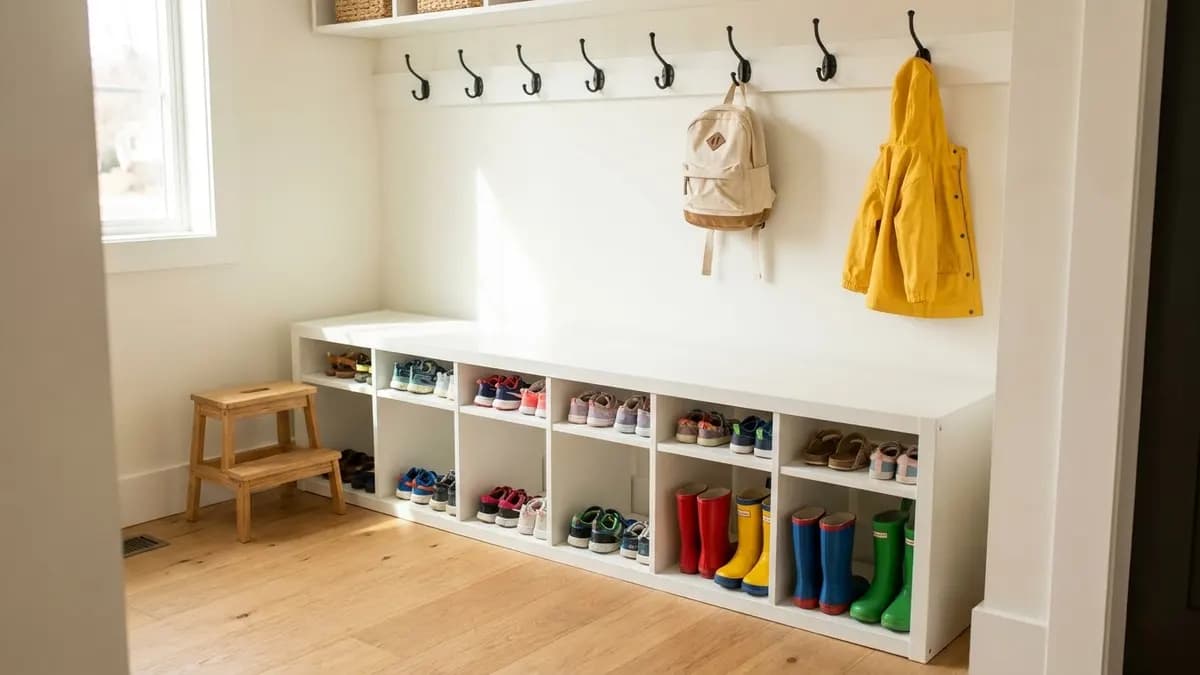
The best children's shoe storage ideas have one thing in common: a child can use them without help. Put everyday shoes in low, open cubbies or baskets right by the door, keep rain boots and muddy sneakers on a tray, give sports shoes their own bin and store the next size up out of reach in a lidded box. When the system sits at kid height and each child has a clear spot, shoes stop piling up in the hallway and mornings get faster.
Kids' shoes are a special storage problem. There are lots of small pairs, they come in and out several times a day, they get wet and muddy, and children outgrow them before they wear out. Adult storage, with high shelves and tight drawers, rarely works for them. This guide covers 13 practical ideas, how to set storage up by age, a simple system for handling sizes and the safety basics every family should know. If you are organizing a whole room, our guide to kids' room organization ideas is a good companion. For the adults' shoes in the same hallway, our hidden shoe storage ideas and our main shoe storage ideas guide cover the rest of the family.
Why Kids' Shoes Need Their Own System
Children's shoes behave differently from adult shoes, and storage that ignores this fails within a week.
Kids cannot reach high storage. A rack that starts at an adult's waist is useless to a four-year-old. If the child cannot put shoes away alone, the job falls to a parent, and the pile wins.
There are more pairs per child than you think. Most kids have school shoes, play sneakers, sandals, rain boots, winter boots, slippers and often sports shoes or dance shoes. Small pairs add up quickly.
Kids' shoes get dirty. Mud, sand and wet grass come in on small feet, so the storage closest to the door needs to cope with dirt and water.
Sizes change constantly. Children outgrow shoes long before they wear them out, so families end up with outgrown pairs to pass on and bigger pairs waiting for later. Without a plan, both end up in the same pile.
The fix is a system with three parts: a daily spot at kid height, a place for dirty and seasonal shoes and a separate store for sizes that do not fit right now.
Kids' Shoe Storage Ideas at a Glance
Use this table to match each idea to the age and spot it suits best.
| Idea | Best age range | Best spot | Why it works |
|---|---|---|---|
| Low open cubbies | Toddler to school age | Entryway, mudroom | One cubby per child, no doors to open |
| Floor baskets or bins | Toddler to preschool | Entry, bedroom closet | Kids just drop shoes in |
| Boot tray | All ages | Next to the door | Catches mud and water |
| Low wall hooks | Preschool and up | Mudroom, entry | Holds boots and bags off the floor |
| Over-the-door rack, lower tiers | School age and up | Bedroom or closet door | Uses the door, kids reach the low rows |
| Lidded bench | School age and up | Entryway | Kids can sit to put shoes on |
| Clear lidded box | Adults only | Closet shelf, under bed | Stores the next size up |
Age ranges are a rough guide, not a rule. Watch your child use the storage for a week and adjust what does not work.
13 Children's Shoe Storage Ideas
- Give every child one low cubby. An open cube shelf on the floor, with one cubby per child, is the simplest system there is. Everyone knows where their shoes go. 2. Use baskets for toddlers. Toddlers do not line up pairs. A soft basket they can drop shoes into is a realistic goal, and it still keeps the floor clear. 3. Add a picture label. Children who cannot read yet can match a photo of themselves or a simple shoe picture taped to the cubby or basket. 4. Put a boot tray by the door. A tray under rain boots and muddy sneakers keeps dirt off the floor and gives wet shoes a place to drain. 5. Hang low hooks for boots. Hooks mounted at child height hold tall rain boots upside down so they dry, and they double as backpack hooks. 6. Use the lower tiers of a door rack. On an over-the-door rack, give the bottom rows to the kids and keep the top rows for adults. 7. Choose a bench with cubbies underneath. A bench lets kids sit while they put on shoes, and the cubbies below keep each pair in reach. 8. Keep a slipper basket in the bedroom. House shoes and slippers live where they are put on, not by the front door. 9. Give sports shoes their own bin. Cleats, dance shoes and swim shoes are used on specific days. A labeled bin with the matching gear saves the frantic search before practice. 10. Store the next size up in a lidded box. Hand-me-downs and bigger pairs bought on sale go in a clear box on a high shelf or under a bed, out of the daily system. 11. Keep a donation bag ready. When a pair no longer fits, it goes straight into a bag for donation or the next sibling instead of back into the cubby. 12. Use a shoe caddy for the car or stroller. A small bin in the car holds spare shoes and sandals for the park, so muddy pairs never reach the house. 13. Rotate by season. Swap winter boots and summer sandals twice a year so the daily spot only holds what fits the weather.
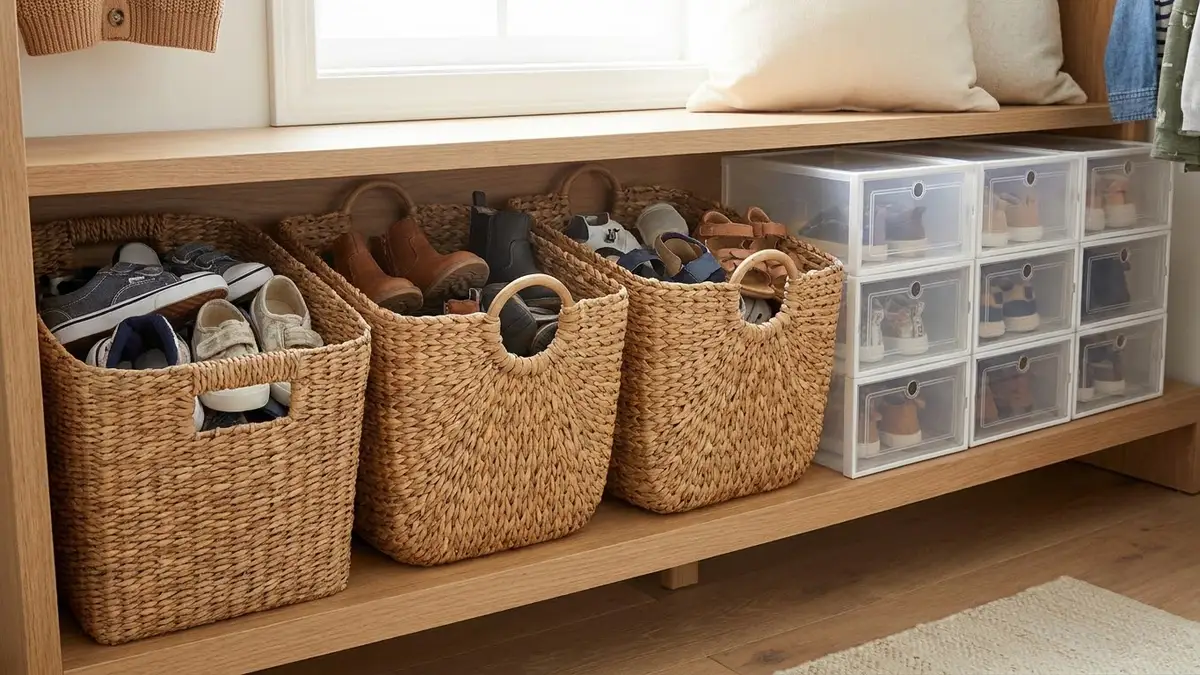
Baskets and clear boxes work well together in a closet. Baskets take the shoes your child wears most, and clear drop-front boxes hold special-occasion pairs that should stay clean. Because the boxes are clear, kids can see what is inside without pulling everything out.
Set Storage at Kid Height
The single most important rule in this guide is height. If children can reach their storage and open it with one hand, they will use it. If they cannot, they will drop shoes wherever they are standing.
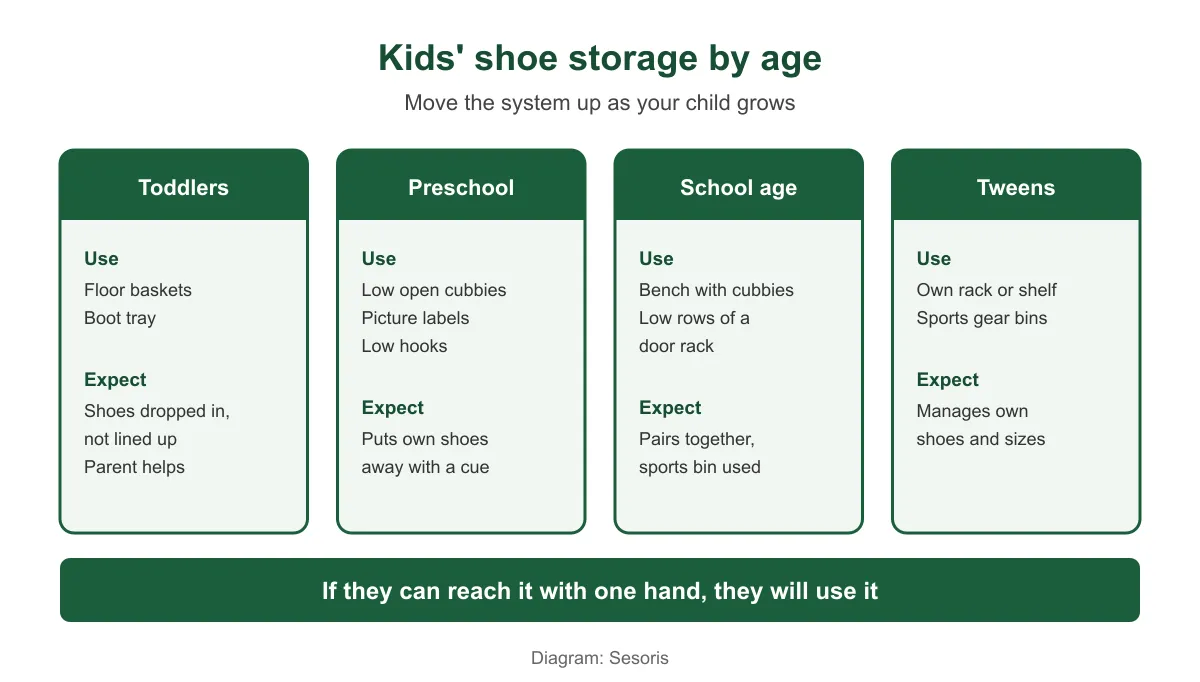
Get down to your child's eye level and look at the storage the way they see it. Can they see their spot? Can they reach the back of the cubby? Is there a door, lid or latch that needs two hands? Small changes, like taking a door off a cabinet or swapping a lidded box for an open basket, often make the biggest difference.
As children grow, move the system up with them. A tween can manage a regular shoe rack and keep their own sports gear sorted, while a toddler still needs a basket on the floor. If you need ideas for the rest of the bedroom, our kids' bedroom storage ideas cover beds, closets and shelves at child height.
Use a Simple Size Rotation System
Most of the clutter in kids' shoe storage is shoes that do not fit right now. A simple rotation system keeps them out of the daily spot.
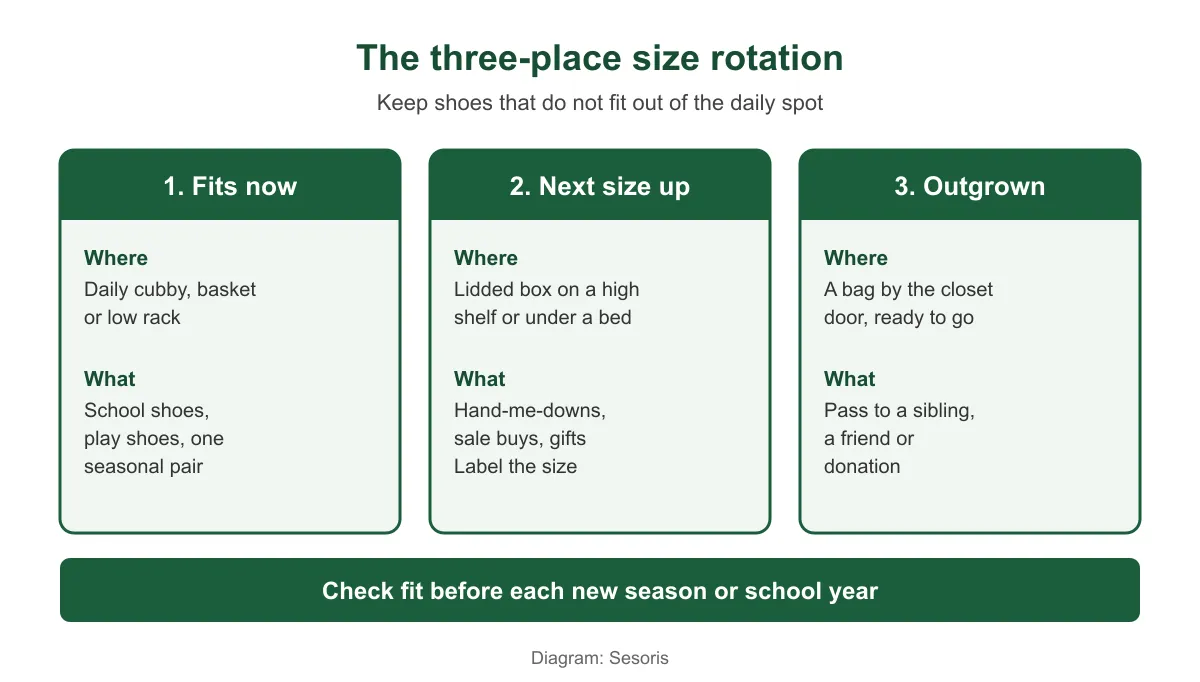
Use three places:
- Fits now. Only shoes that fit today go in the daily cubby, basket or rack. 2. Next size up. Hand-me-downs, sale purchases and gifts that are still too big go into a lidded box, labeled with the size, on a high shelf or under a bed. 3. Outgrown. Pairs that are too small go straight to a younger sibling's box, a friend or a donation bag.
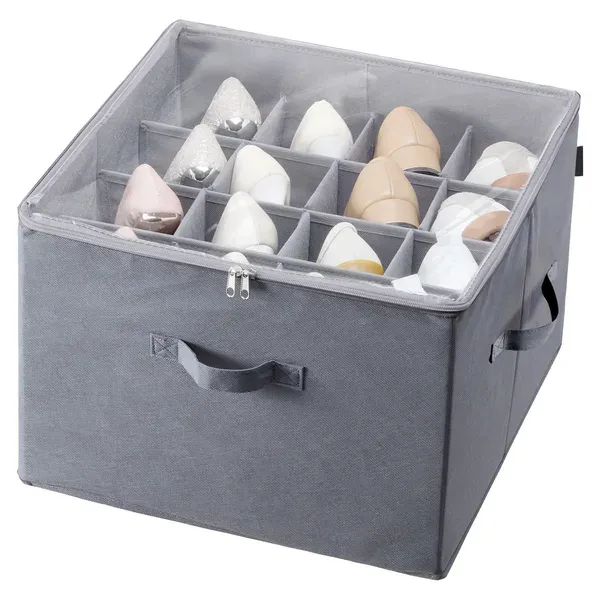
A divided box works well for the "next size up" store because each pair keeps its own compartment and you can see what is waiting without opening it. Our under-bed shoe storage box with 16 compartments has adjustable dividers and a clear lid, so small pairs fit as easily as adult ones. Check fit regularly, especially before a new school year or season, and move pairs between the three places as you go.
Storage for Boots, Sports Shoes and Messy Pairs
Some kids' shoes need special handling because they are wet, muddy or only used on certain days.
Rain boots and snow boots. Keep them on a boot tray or hang them upside down on low hooks so they drain and dry. Never put wet boots into a closed bin. The U.S. Environmental Protection Agency advises keeping indoor humidity below 60 percent to limit mold, according to its brief guide to mold, moisture and your home, and damp boots shut away in a box are a small version of the same problem.
Sports shoes. Cleats carry dirt and turf, so store them in a bin near the door with shin guards and socks, or in the garage. Our garage shoe storage ideas work well for sports gear that should not come into the house.
Beach and pool shoes. Rinse them, let them dry on a tray and keep them in a mesh bag with the swim gear.
Party and dress shoes. Store them clean in a clear box on a higher shelf so they stay nice for the next event.
Where to Put Kids' Shoes in Each Part of the House
The best spot depends on how your family comes and goes. Use this table to plan each area.
| Area | What to store there | Best storage | Tip |
|---|---|---|---|
| Front door or entry | Daily school and play shoes | Low cubbies, bench | One spot per child |
| Mudroom or back door | Boots, muddy sneakers | Boot tray, low hooks | Keep a towel nearby |
| Bedroom | Slippers, dress shoes | Basket, closet box | Keep out of the walkway |
| Closet | Next size up, special pairs | Clear lidded boxes, door rack | Label the size on each box |
| Garage | Cleats, sports shoes | Bin with matching gear | Group by sport |
If you have a mudroom, our guide to mudroom shoe storage ideas shows how to split the space between adults and kids. For a small front hall, see our shoe storage ideas for a small entryway.
Use the Back of a Door
Doors are one of the best places for family shoe storage because they take no floor space. On a bedroom or closet door, a rack can hold a whole family's flats, sneakers and sandals.
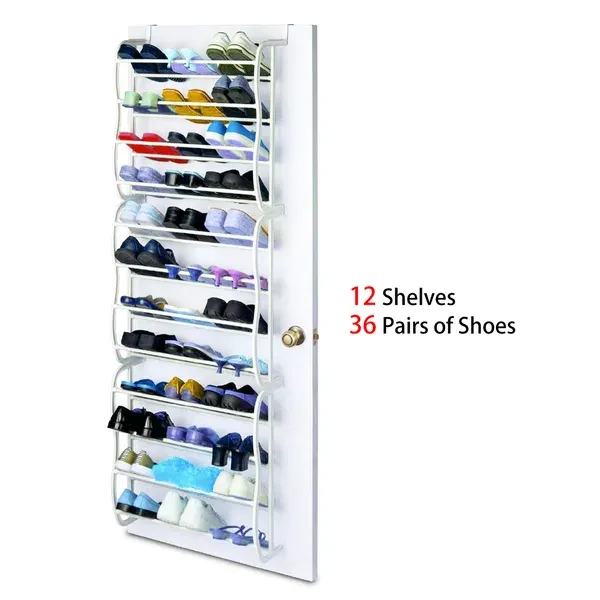
Our over-the-door shoe rack with 12 tiers holds up to 36 pairs. Give children the lowest rows, which they can reach, and keep adult shoes up high. Check that the door is no thicker than the hooks allow and that the rack clears anything behind the door when it closes.
Safety Basics for Kids' Shoe Storage
Children climb, pull and swing on furniture, so shoe storage in a family home needs a few safety checks.
The U.S. Consumer Product Safety Commission's Anchor It! campaign says that anchoring all furniture with drawers, doors and shelves to the wall prevents tip-over injuries and deaths. That includes tall shoe cabinets and cube shelves. Use the wall anchor that comes with the piece and fix it into a stud or a suitable wall anchor.
A few more habits help:
- Choose benches with soft-close or supported lids so they cannot drop on small fingers. - Keep heavy boots on the lowest level. - Mount hooks with rounded ends and place them away from where children run. - Do not let kids stand on drawers, shelves or open cubbies.
Common Mistakes With Kids' Shoe Storage
Putting storage too high. If a child needs help to reach it, they will not use it. Start at the floor.
Using lids and doors for daily shoes. Every extra step is a reason to drop shoes on the floor. Open storage works best for daily pairs.
Mixing sizes. Outgrown and too-big pairs crowd out the shoes that fit. Use the three-place rotation system.
One big bin for everyone. A shared bin quickly becomes a jumble. Give each child a spot of their own.
Forgetting the mess. Without a tray or mat by the door, muddy shoes go straight onto the floor or into a cubby.
If the whole house needs a reset, our kids' book storage ideas and hidden toy storage ideas use the same kid-height principles for books and toys.
Frequently Asked Questions
How do you organize kids' shoes by the front door?
Give each child one low cubby or basket near the door, add a boot tray for wet and muddy pairs and keep only the shoes that fit right now in that spot. Store everything else elsewhere.
What is the best shoe storage for toddlers?
Open baskets or bins on the floor. Toddlers can drop shoes in without lining them up, and there are no doors, lids or shelves to struggle with.
How do you store shoes your kids will grow into?
Put them in a lidded box labeled with the size, on a high shelf or under a bed. Check the box before each new season or school year and move pairs into the daily spot as they start to fit.
How can I get my kids to put their shoes away?
Make it easy. Put the storage at their height, give each child their own spot, use picture labels for young children and keep the storage open so it takes one step to use.
Where should kids' sports shoes go?
In a bin with the matching gear, near the door or in the garage. Cleats and turf shoes carry dirt, so keep them out of bedrooms and closets.
How many pairs of shoes should a child have in the daily spot?
Only what they wear in a normal week, usually school shoes, play shoes and one seasonal pair. Everything else can live in a closet, bin or box.
Do shoe cabinets and cube shelves need to be anchored?
Yes. The U.S. Consumer Product Safety Commission recommends anchoring all furniture with drawers, doors and shelves to the wall to prevent tip-overs. Use the bracket that comes with the piece.
What should I do with shoes my kids have outgrown?
Pass them to a younger sibling or friend, donate pairs in good condition and recycle worn-out ones where a program exists. Keep a bag ready so outgrown pairs leave the daily spot right away.
Final Thoughts
Children's shoe storage works when kids can use it on their own. Keep daily shoes in low, open spots by the door, give wet and muddy pairs a tray, store sports shoes with their gear and move the next size up and outgrown pairs out of the daily system. Set it up once at your child's height, adjust it as they grow, and the hallway pile will start to disappear.
Liked this guide?
Get new organizing guides and the occasional new product by email. No spam, unsubscribe anytime.
Related articles
Explore more articles
- Seasonal Decor Storage: The Complete 2026 Guide to Organizing Holiday & Seasonal Items
- Storage Bin Labels: The Complete 2026 Guide to a Perfectly Organized Home
- 30+ Best Under Sink Organization Ideas to Maximize Every Inch in 2026
- 20+ Best Hidden Toy Storage Ideas to Keep Your Home Tidy in 2026
- 35+ Best Small Home Organization Ideas to Maximize Every Inch in 2026
- 25+ Best Plant Stand Ideas to Elevate Your Home Decor in 2026
- 40+ Best Kitchen Decor Inspiration Ideas to Transform Your Cooking Space in 2026
- How to Keep Your Kitchen Organized: Complete 2026 Guide