
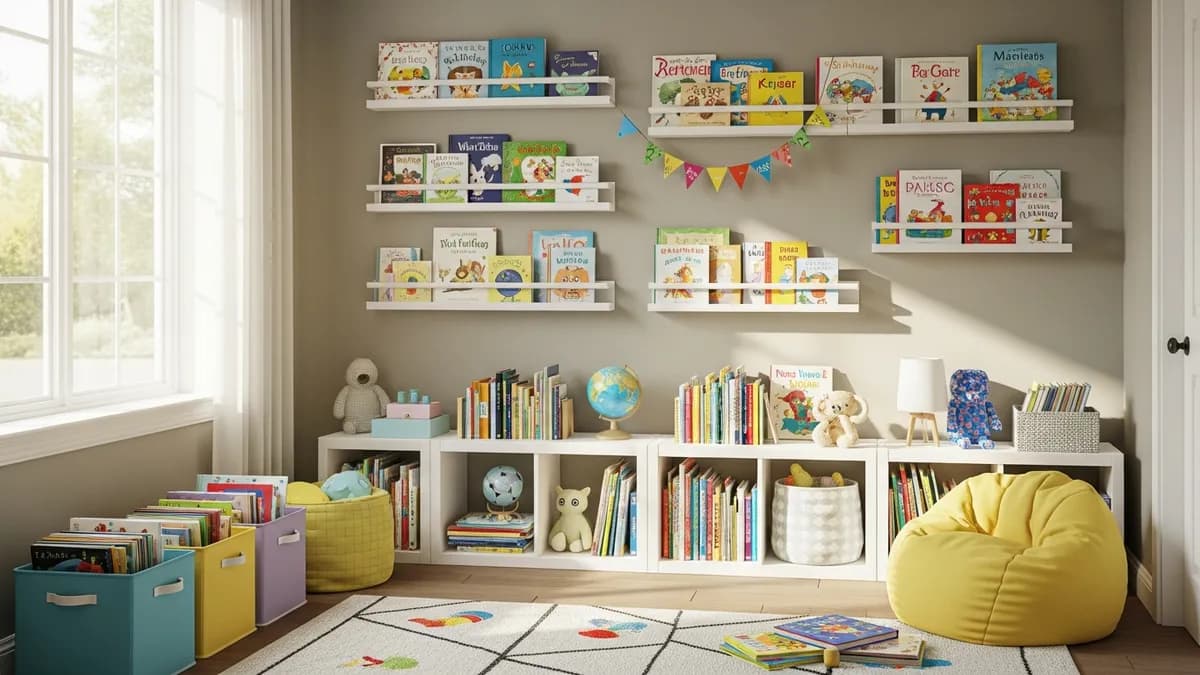
25+ Best Kids Book Storage Ideas to Create a Tidy, Reading-Friendly Space in 2026
If you have young readers at home, you already know the struggle: books everywhere, stacked on the floor, shoved under the bed, or piled in corners that never quite stay neat. Finding the right kids book storage ideas can completely transform your child's room or playroom, making books easy to reach, easy to put away, and genuinely fun to explore. In 2026, parents have more creative and affordable storage options than ever before, and I am here to walk you through the very best ones. Whether you are working with a tiny nursery, a shared bedroom, or a dedicated playroom, there is a book storage solution on this list that will work perfectly for your space.
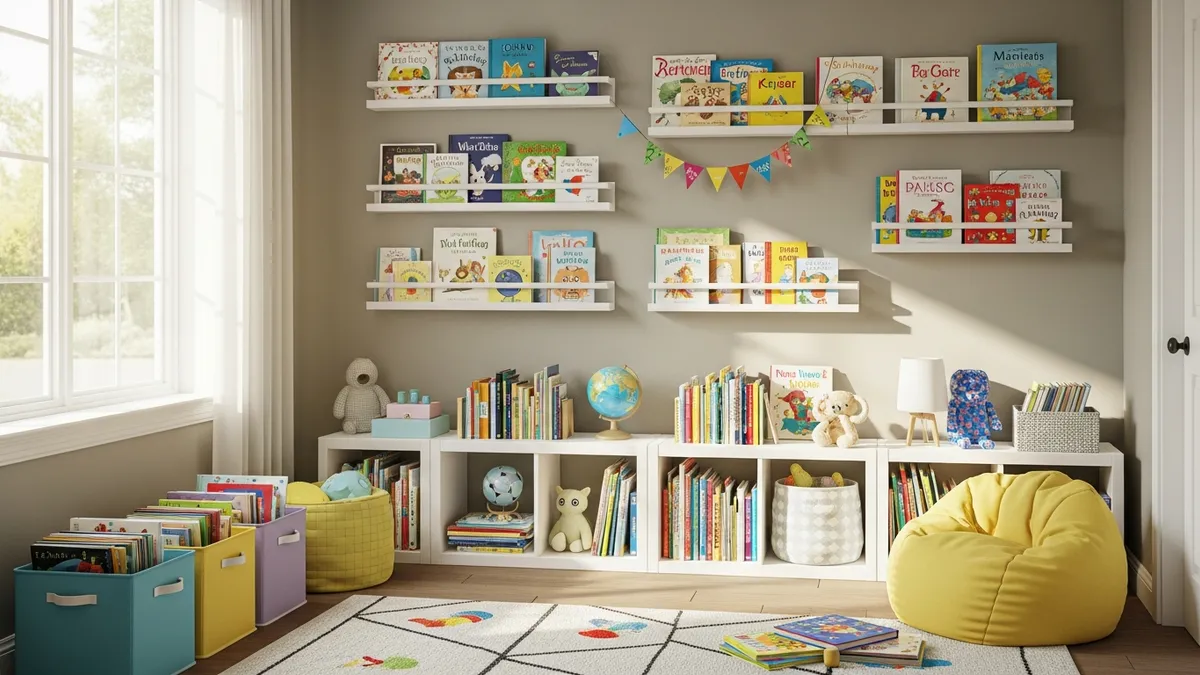
Why the Right Kids Book Storage Ideas Actually Matter
It might be tempting to just grab any old bin and call it a day, but thoughtful book storage does a lot more than keep things tidy. According to research shared by the American Academy of Pediatrics, having books visible and accessible at home is one of the most powerful ways to encourage early literacy habits. When kids can see the covers of their books and reach them independently, they are far more likely to pick one up on their own.
The best kids book storage setups share a few things in common:
- Books are stored at the child's eye level and within arm's reach
- Covers face forward so titles and pictures are visible, not just spines
- Storage is easy for kids to use independently so they can put books back without help
- The setup grows with your child, adapting from board books to chapter books over time
- The storage blends into the room's decor so the space stays visually calm
Getting these basics right makes a huge difference in how often your child actually reads and, just as importantly, how often the books actually get put away.
25+ Kids Book Storage Ideas Organized by Type
I have sorted these ideas by storage type so you can jump straight to what fits your space and budget. Mix and match across categories to create a system that works for your whole family.
1. Forward-Facing Bookshelves
Forward-facing shelves display book covers instead of spines, which is a game changer for young kids who cannot yet read titles. These low, open units are typically 12 to 18 inches tall per shelf and sit close to the floor so even toddlers can browse independently.
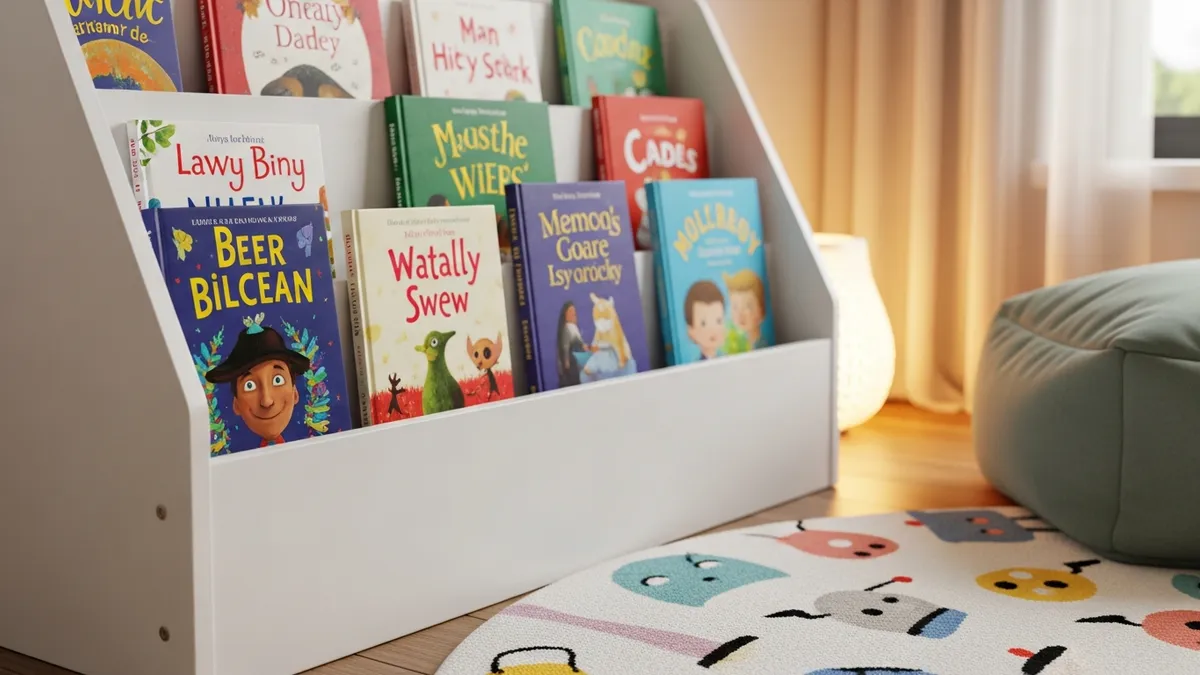
- Look for units no taller than 36 inches so the top shelf stays within reach
- Solid wood or MDF with a smooth finish is easiest to wipe clean
- Paint the back panel in a bold accent color to make covers pop visually
- Great for picture books, board books, and early readers
2. Wall-Mounted Book Ledges
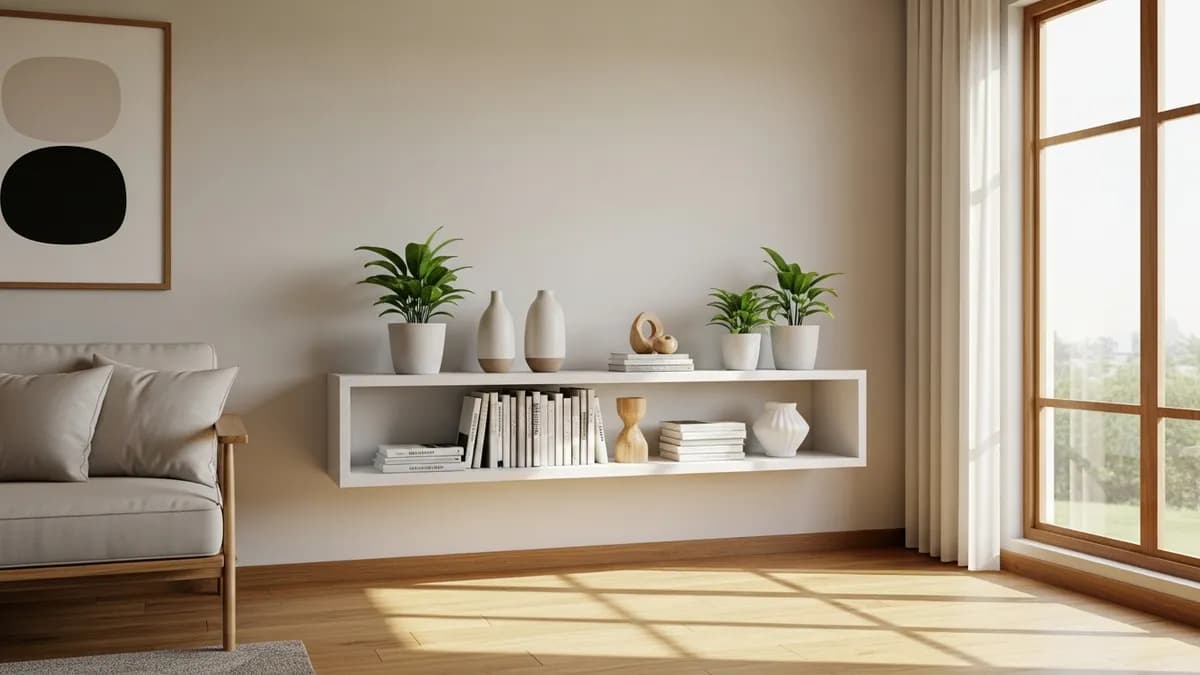
Floating book ledge shelves are one of the most popular kids book storage ideas right now, and for good reason. They mount directly to the wall at whatever height you choose, keep floor space completely clear, and look incredibly clean and modern. You can install a single ledge above a changing table or stack three or four of them across an entire wall to create a mini library.
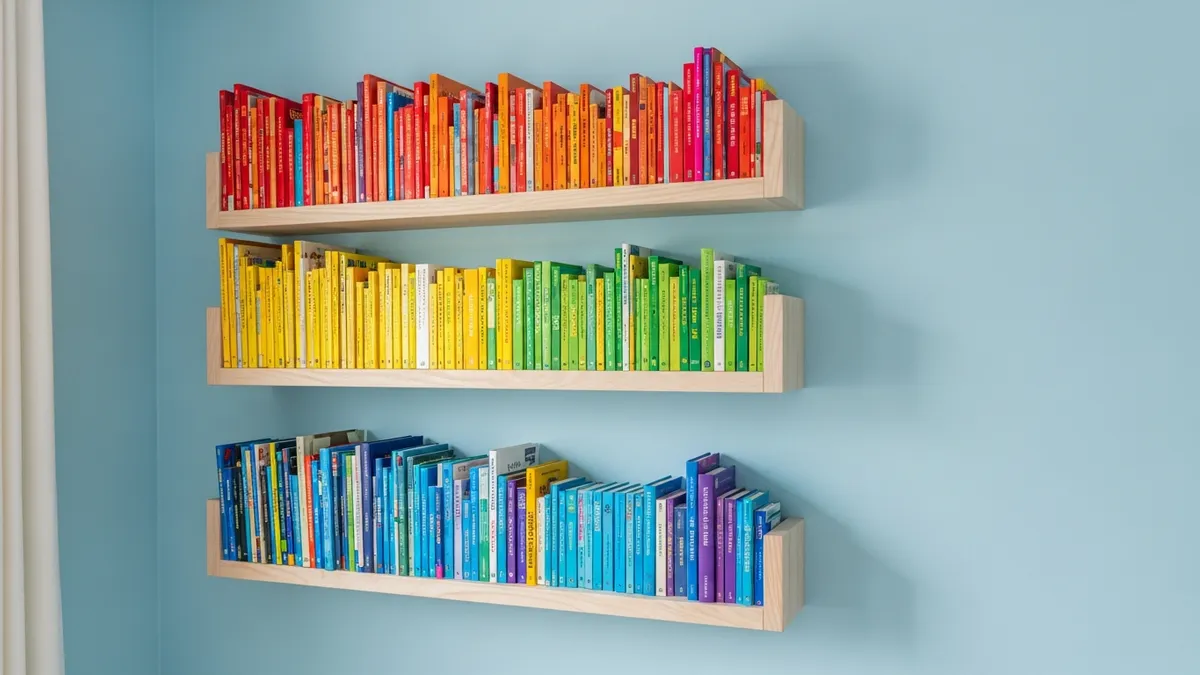
- Install the lowest ledge at about 18 to 24 inches off the floor for toddlers
- Use a stud finder and wall anchors to make sure ledges can hold the weight
- Standard picture ledges hold 4 to 6 books per foot of length
- Rainbow-organizing books by spine color adds a beautiful visual element
- Check out Good Housekeeping's bookshelf guide for installation tips
3. Built-In Reading Nook with Bookshelves
If you have the budget and the wall space, a built-in reading nook with flanking bookshelves is an absolute dream setup. A bench with a cushion fits into a window alcove or a corner, with low shelves on either side holding hundreds of books. Kids absolutely love having their own dedicated reading cave.
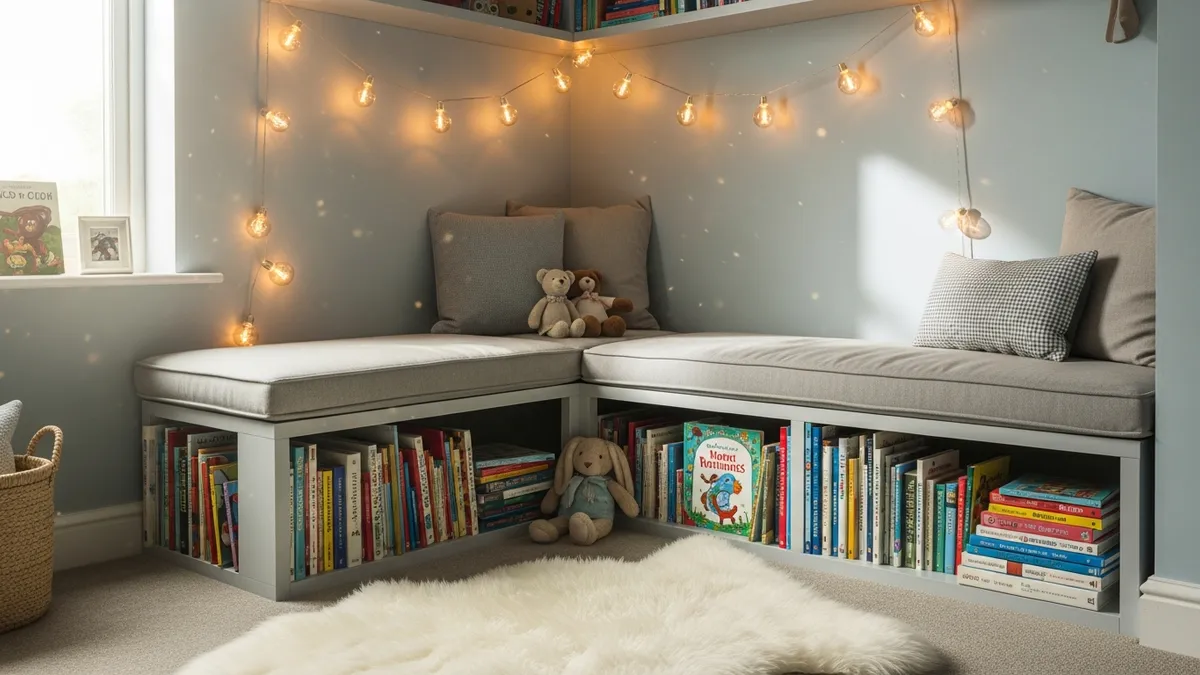
- Plan bench height at 14 to 16 inches off the floor for comfortable seating
- Add a 3-inch foam cushion covered in a durable, washable fabric
- Keep shelves open and accessible rather than adding doors
- String lights or a small reading lamp make the nook feel extra special
- Add a small storage drawer under the bench for stuffed animals or bookmarks
4. Fabric Bins and Wicker Baskets
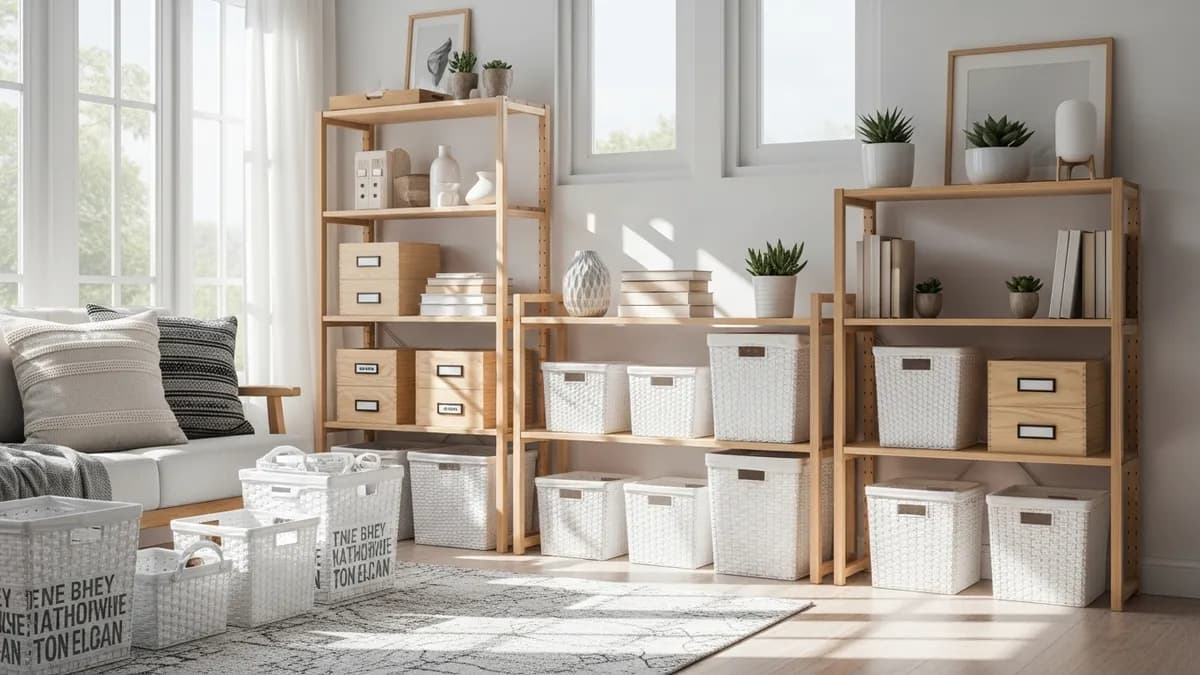
Bins and baskets are one of the most budget-friendly and flexible kids book storage solutions. They work in any room, require zero installation, and can be swapped out as your decor changes. The key is to use wide, low bins rather than tall, deep ones so kids can see and reach every book without digging.
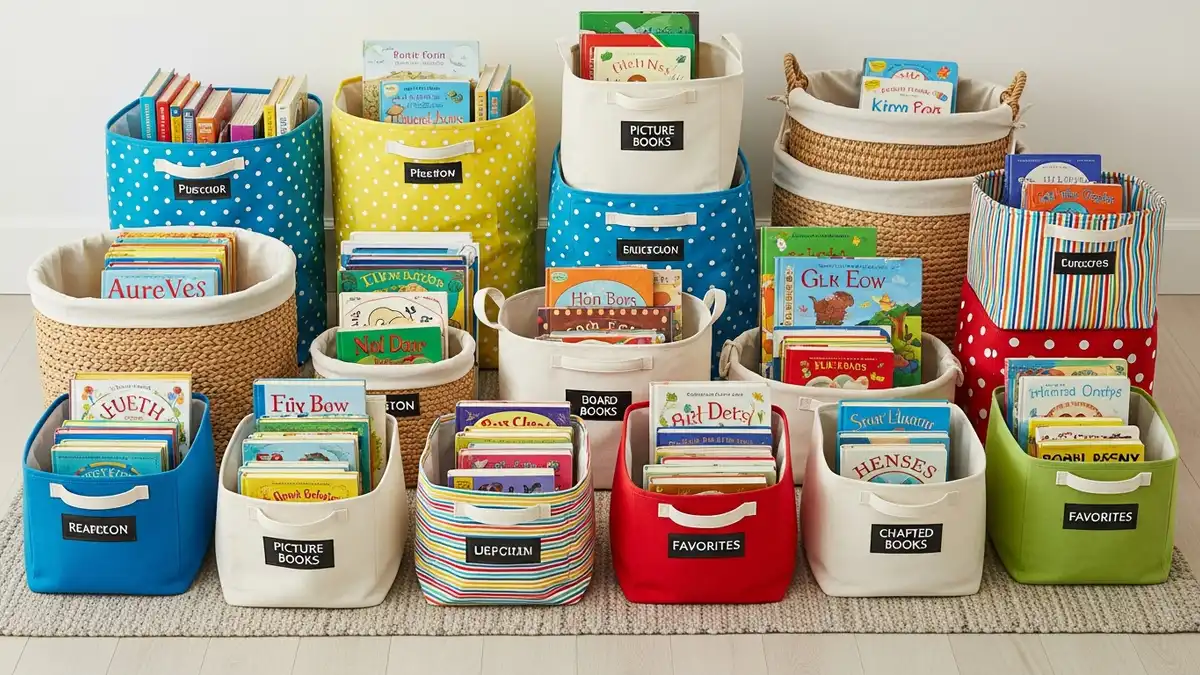
- Choose bins no deeper than 10 inches so books do not get buried
- Label each bin with a picture label for pre-readers
- Wicker, rope, or canvas materials all work beautifully and look great in photos
- Use one bin per genre: bedtime books, funny books, learning books, favorites
- Houzz has a great roundup of basket storage for kids rooms if you need visual inspiration
5. Repurposed Rain Gutters as Book Ledges
This is a wildly creative and incredibly affordable idea that has been circulating among DIY parents for years and is still going strong in 2026. Vinyl rain gutters from the hardware store are cut to length, end caps are glued on, and the whole unit is painted and mounted to the wall. Each gutter holds a row of books displayed cover-forward.
- Cost is typically well under US$30 for a full wall setup
- Paint with any color of spray paint to match your room
- Space gutters about 8 to 10 inches apart vertically
- Each standard 4-foot section holds roughly 15 to 20 picture books
6. Cube Storage Units with Open Cubbies
Modular cube shelving is one of the most versatile kids book storage ideas out there. You can use some cubbies for books displayed face-out, others for bins and baskets, and others for toys or stuffed animals. As your child grows, simply rearrange or add units.
- A standard 4-cube unit measures about 13 inches per cube, which is perfect for picture books
- Use fabric drawer inserts in some cubbies and leave others open for book display
- Place units horizontally as a low bench or vertically as a tower
- Anchor any tall units to the wall with anti-tip straps for safety
- Browse Sesoris storage solutions for stylish bin options that fit standard cube shelves
7. Hanging Fabric Pockets and Organizers
Over-the-door organizers and hanging fabric pocket systems are brilliant for small spaces or as a secondary storage spot. Hang them on the back of a bedroom door, on the side of a dresser, or on a wall hook rail. Each pocket holds two to four books depending on thickness.
- Great for storing library books separately from owned books
- Use clear pockets so covers stay visible
- Ideal for apartments or rooms where floor space is extremely limited
- Works well inside closet doors to keep books accessible without cluttering the room
8. Rotating Bookstands and Carousel Displays
Rotating bookstands, sometimes called carousel displays, look like small versions of the spinning racks you see at libraries and bookstores. They hold books cover-forward on all sides and spin so kids can browse all the way around. These are especially great in playrooms or living rooms where books share space with toys.
- A standard 4-sided carousel holds 24 to 40 books depending on pocket depth
- Keeps books off the floor and visually exciting for young readers
- Easy to spin means kids feel in control of their browsing
- Look for units with a weighted base so they do not tip when little hands grab books
9. Under-Bed Rolling Book Carts
The space under a child's bed is prime real estate that most families leave completely empty. A low rolling cart or flat drawer unit slides under a standard bed frame and holds dozens of books flat or at a slight angle. Pull it out at bedtime to pick a story, then slide it back in the morning.
- Look for carts no taller than 6 inches to fit under most bed frames
- Add casters so kids can pull it out themselves without help
- Organize by series, character, or reading level so favorites are easy to find
- This pairs perfectly with other bedroom storage solutions for a fully optimized kids room
10. Tree-Shaped or Novelty Bookshelves
For maximum fun factor, novelty bookshelves shaped like trees, houses, clouds, or geometric shapes double as wall decor and book storage at the same time. Kids love them, they encourage interaction with the bookshelf, and they genuinely look amazing in a well-decorated nursery or big kid room.
- Tree-shaped units typically feature branches as shelves at varying heights
- These work best for display of a curated selection rather than the entire collection
- Pair with a simple forward-facing shelf below to hold the overflow
- Check Good Housekeeping bookshelf inspiration to find styles that match your room
11. Bookcase Headboard
A bookcase headboard is a smart two-in-one solution: it frames the bed, creates a cozy focal point, and keeps bedtime stories right within arm's reach. Many children's furniture lines offer beds with integrated headboard shelving specifically sized for books.
- Choose a headboard with lips or rails on each shelf so books do not slide off during the night
- Keep only current favorites here; store the rest elsewhere
- Add a small built-in nightlight or clip-on reading lamp for late-night reading sessions
12. Step Stool with Built-In Book Storage
Some kids step stools are designed with a hollow interior or open sides that hold books. This is an incredibly clever piece because it serves two purposes and takes up almost no extra space. Kids step up to reach the sink or a high shelf and the stool doubles as a mini book bin.
13. Pegboard Book Display
Pegboard is typically associated with garages and craft rooms, but it works brilliantly in a playroom or kids bedroom too. Mount a painted pegboard panel on the wall and use angled peg shelves to display books cover-forward. The modular nature of pegboard means you can rearrange shelves any time.
- Paint the pegboard in a fun color before mounting for a polished look
- Use a combination of book ledge pegs and hook pegs for toys and accessories
- A 2 x 4 foot panel provides plenty of display space for a rotating selection
14. Repurposed Wooden Crates
Wooden crates stacked or mounted on the wall make charming, rustic book storage that looks right at home in a farmhouse-style or boho kids room. Stack three vertically, lay them on their sides, or mount them to the wall in a grid pattern. Sand and paint or stain them to match your room.
- A standard wooden crate measures about 12 x 18 inches, which fits most picture books perfectly
- Wall-mount with heavy-duty brackets for a permanent gallery-wall effect
- Leave them free-standing and stack them for a flexible, rearrangeable system
15. Magnetic Wall Panels
Magnetic panels are a newer trend in 2026 kids room design. Metal panels mount to the wall and special magnetic book pockets attach to them, holding books cover-forward with no shelf needed at all. You can rearrange the pockets in any configuration and add more as your collection grows.
16. Repurposed Lockers
Vintage or reproduction school lockers are having a real moment in playroom design. A row of narrow lockers gives each child their own dedicated compartment with a hook for backpacks at the top and space below for books, shoes, and everyday items. They are incredibly sturdy and virtually impossible to tip.
17. Laundry Basket Library Method
This one is beautifully simple and completely free if you already have a spare laundry basket. A wide, low laundry basket makes a surprisingly functional book bin when placed on its side. Kids can flip through books easily, it is soft-sided so there are no sharp edges, and it can be moved room to room.
18. Behind-the-Door Tension Rod Shelves
Thread a tension rod horizontally across the back of a closet door and lean books against it, or use multiple rods to create tiers. This completely invisible storage hack uses dead space most families never think about and costs just a few dollars.
19. Hanging Canvas Hammock
A stuffed animal hammock hung in the corner of a room works just as well for lightweight board books and paperback readers. Clip it to two walls in a high corner to keep the floor clear, or hang it low for easy toddler access.
20. Repurposed Pallets
A single wooden pallet sanded smooth and leaned against the wall creates instant rustic shelving. The gaps between slats hold books perfectly when the pallet is horizontal. Add casters to the bottom so it rolls out of the way during playtime.
21. Bookshelf Bench or Window Seat
A bench with open cubbies or shelves underneath is a classic multitasker. Place it under a window for a window seat reading spot, use the cubbies below for books, and add a cushion on top for seating. This is one of the most popular kids book storage ideas in family homes right now.
22. Clear Acrylic Wall Pockets
Clear acrylic wall pockets mount flat against the wall and hold one or two books each at an angled display. They look sleek and modern, take up almost no visual space, and make the book covers the star of the show. Great for a curated selection of current reads or library returns.
23. Tiered Plant Stand Repurposed as Bookshelf
A three-tier round plant stand is the right height for kids and the right depth for picture books. Place it in a reading corner and arrange books in a spiral on each tier. It is unexpected, charming, and genuinely functional.
24. Toy Chest with a Book Section
If you are choosing a new toy chest, look for one with a dedicated book section, typically a shallow front compartment or side pocket, built right in. This keeps books separate from toys but within the same piece of furniture, reducing visual clutter.
25. Mounted Planter Boxes as Book Ledges
Long rectangular planter boxes, the kind meant for window herb gardens, mount beautifully to a wall and hold books cover-forward with the depth and lip that keeps everything in place. Paint them to match your room and you have custom book ledges for a fraction of the price.
Bonus: Rotating Book Display Stands
A free-standing wire or wood rotating display is a fantastic addition to a playroom or living room. Kids love spinning it to find their next pick, it holds books cover-forward on all sides, and it keeps the collection contained in one easy-to-access spot.
How to Choose the Best Kids Book Storage for Your Home
With so many kids book storage ideas to choose from, it helps to narrow things down with a few practical questions before you buy or build anything.
The best storage system is the one your child will actually use. Prioritize accessibility and visual appeal over maximum capacity.
Consider your child's age and height. Toddlers need storage no higher than about 24 inches off the floor. School-age kids can reach up to 48 inches comfortably. Mount or place storage accordingly so your child never needs help accessing their own books.
Think about how many books you own. A small collection of 30 to 50 books needs very different storage than a library of 300 plus. Start with what you need now and plan for a system that can scale.
Match the storage to the room. A nursery benefits from wall-mounted ledges that keep the floor clear for a crib and changing table. A playroom can handle freestanding units. A shared bedroom might call for under-bed solutions or over-door organizers that do not eat up limited floor space.
Factor in rotation. Many families keep a smaller active collection accessible and rotate books from storage every few weeks. This keeps things fresh and makes the active selection feel manageable. Good Housekeeping's bookshelf guide covers related display ideas if you want to explore this approach.
Set a realistic budget. You do not need to spend a lot. Rain gutter shelves cost under US$30. Fabric bins are often under US$15 each. Forward-facing bookshelves range from about US$40 to US$200 depending on size and material. Even a US$100 budget gives you a lot to work with.
For a wider range of storage and organization products that work beautifully alongside these ideas, browse the Sesoris best sellers for bins, baskets, and organizers that fit right into any kids room setup.
How to Organize Kids Books Once You Have the Storage
Even the best storage system falls apart if the books inside are not organized in a way that makes sense for your child. Here are the most effective organization methods for different ages.
For babies and toddlers (0 to 3 years): Keep all books in one or two low bins or a single forward-facing shelf. Separation by category is not necessary at this age. The goal is simply keeping books accessible and undamaged.
For preschoolers (3 to 5 years): Introduce simple categories using picture labels. Common categories include bedtime books, funny books, animal books, and favorites. Keep no more than 20 to 30 books in the active collection and rotate the rest.
For early readers (5 to 8 years): Kids this age benefit from having their own section separate from younger siblings' books. Organize by series or by reading level. Label bins clearly and involve your child in the organization process so they feel ownership over the system.
For independent readers (8 years and up): Spine-out shelving becomes practical now that kids can read titles. Alphabetize by author or organize by genre. A dedicated bookcase or built-in shelving becomes worthwhile at this stage as collections tend to grow quickly.
One universal rule across all ages: involve your child in the process. Kids who help set up their own book storage are dramatically more likely to maintain it. Let them choose bin colors, decide on categories, and arrange their own shelves.
Also, be ruthless about purging. Books that are too babyish, damaged, or simply never get read are taking up valuable real estate. Donate them to a local library, school, or Little Free Library and let someone else enjoy them. A leaner, more curated collection is almost always more functional than an overflowing one.
For more whole-room organization inspiration that complements your book storage setup, check out the Sesoris new arrivals for the latest home organization products designed to make family living easier.
Related Products from Sesoris
If you want to turn this guide into a real setup, start with Stackable Storage Bins, 24 Pack and Pull-Out Cabinet Organizer, 17 in. Wide. For broader options, browse the Home & Decor collection so the article journey does not stop at reading only.
Our practical rule: choose one product that solves the main clutter problem first, then add supporting organizers only when the daily workflow is already clear. This keeps the shopping path useful, not pushy.
FAQ: Frequently Asked Questions About Kids Book Storage Ideas
Q: How many books should be in my child's active collection at one time?
Most child development experts suggest keeping 20 to 40 books in the active accessible collection for children under 6, and rotating in new books every few weeks. For school-age children, a larger collection of 50 to 100 books is manageable when organized well. The key is that every book in the active collection should be visible and reachable, not buried.
Q: What is the best kids book storage for a very small bedroom?
Wall-mounted solutions are your best friend in a small room. Book ledges, clear acrylic wall pockets, pegboard displays, and over-the-door fabric organizers all use vertical and dead space without taking any floor area. Under-bed rolling carts are another excellent option that adds huge capacity with zero visual footprint.
Q: How do I stop my kids' books from ending up all over the floor?
The most effective solution is making it genuinely easy to put books away. If the system requires effort, kids will not use it. Forward-facing shelves, open bins, and low baskets with no lids are all much more likely to get used consistently than systems with drawers, doors, or complicated categories. Make the storage obvious, accessible, and zero friction.
Q: At what height should I mount wall book ledges for kids?
For toddlers, mount the lowest ledge at about 18 inches off the floor. For preschoolers, 24 inches works well. For school-age kids, you can go up to 36 to 48 inches. The top ledge in any stack should be no higher than your child's eye level so they can see and reach every book independently without climbing.
Q: Should I organize books by color?
Rainbow organizing books by spine color looks absolutely beautiful and is a popular aesthetic choice, especially for Instagram-worthy nurseries. However, it is purely decorative and makes it harder to find specific books. For functional family spaces, organizing by category, series, or reading level is far more practical. If you want both, try rainbow-organizing the display shelf visible from the doorway and using a practical system for the rest of the collection.
Q: What is the most affordable kids book storage idea?
Rain gutter shelves are consistently the most budget-friendly forward-facing display option, often costing under US$30 for an entire wall. Repurposed wooden crates, laundry baskets, and tension rod solutions are also very inexpensive. If you already have cube shelving, simply rotating some cubbies to display books face-forward costs nothing at all.
Conclusion
Finding the right kids book storage ideas for your home does not have to be complicated or expensive. Whether you go with wall-mounted book ledges, a cozy built-in reading nook, repurposed rain gutters, or a simple collection of well-chosen fabric bins, the goal is the same: make books visible, accessible, and irresistible to little hands. When storage works the way it should, kids read more, spaces stay tidier, and bedtime routines become a whole lot smoother.
Start with one or two ideas from this list that fit your space and budget, get your child involved in setting it up, and build from there. The best book storage system is always the one your family will actually use every single day.
Ready to create a more organized home for your whole family? Explore the full range of storage and organization solutions at Sesoris and find the perfect products to bring your favorite kids book storage ideas to life in 2026.
Weekly Home Tips
Get home organization ideas, product picks, and exclusive deals delivered weekly.
No spam. Unsubscribe anytime.
Explore More Articles
- How to Declutter Office: The Complete 2026 Step-by-Step Guide to a Clean, Productive Workspace
- 30+ Best Shoe Rack Ideas to Organize Your Home in 2026
- 30+ Best Bathroom Organization Ideas to Maximize Every Inch in 2026
- Modular Shelving System: What to Compare
- Under-Bed Storage Ideas for Dorm Rooms
- 30+ Stunning Indoor Plant Wall Shelf Ideas to Greenify Your Home in 2026
- 30+ Best Under Sink Organization Ideas to Maximize Every Inch in 2026
- 40+ Best Home Storage Ideas to Organize Every Room in 2026