
30+ Best Ideas for Shoe Storage to Organize Every Corner of Your Home in 2026
If you have ever tripped over a pile of shoes near your front door or spent ten minutes hunting for a matching pair before work, you already know how badly you need smart ideas for shoe storage. Shoes are one of the most cluttered categories in American homes, and without a dedicated system, they tend to pile up in entryways, closets, and garages almost immediately. The good news is that 2026 has brought a wave of creative, functional, and budget-friendly shoe storage solutions designed for every type of home, from sprawling suburban houses to compact studio apartments. Whether you are starting from scratch or refreshing an existing setup, this guide covers more than 30 of the best ideas for shoe storage that will help you live a more organized life every single day.
Why Good Ideas for Shoe Storage Matter More Than You Think
Shoes are bulky, oddly shaped, and tend to multiply faster than almost any other household item. According to the American Cleaning Institute, clutter near entryways is one of the top sources of daily household stress, and shoes are a major contributor. Beyond the visual chaos, a lack of proper shoe storage can shorten the lifespan of your footwear, cause tripping hazards, and make getting out the door in the morning feel like a small emergency.
A well-designed shoe storage system solves several problems at once. It keeps your floors clear, protects your shoes from scuffing and crushing, makes every pair easy to find, and instantly elevates the look of any room. Whether you prefer open shelves for easy grab-and-go access or closed cabinets that hide everything behind clean doors, there is a shoe storage approach that fits your lifestyle and your square footage.
Before diving into the ideas themselves, it helps to take stock of your collection. Count your pairs, note which types you wear most often, and identify where shoes tend to pile up most in your home. That quick audit will make it much easier to choose the right solution from the list below.
Ideas for Shoe Storage in Entryways and Mudrooms
The entryway is the most common battleground for shoe clutter, and it is also the place where a great storage solution will make the biggest daily impact. Here are some of the most effective options for this high-traffic zone.
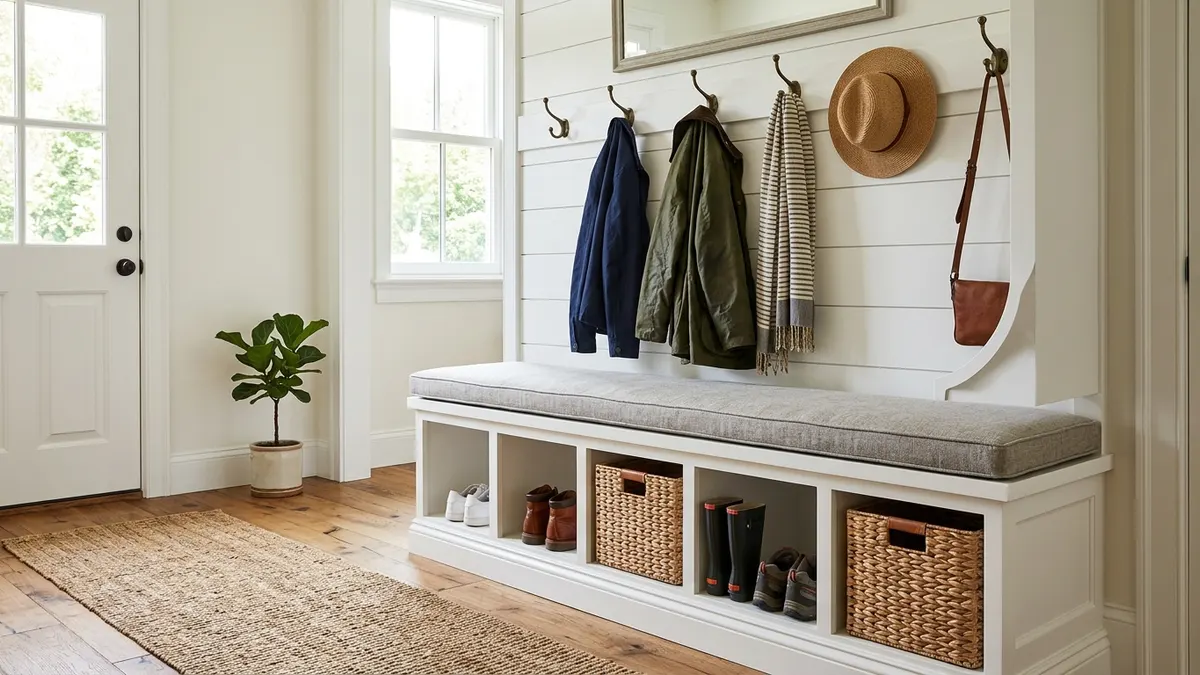
Storage Bench with Hidden Compartments
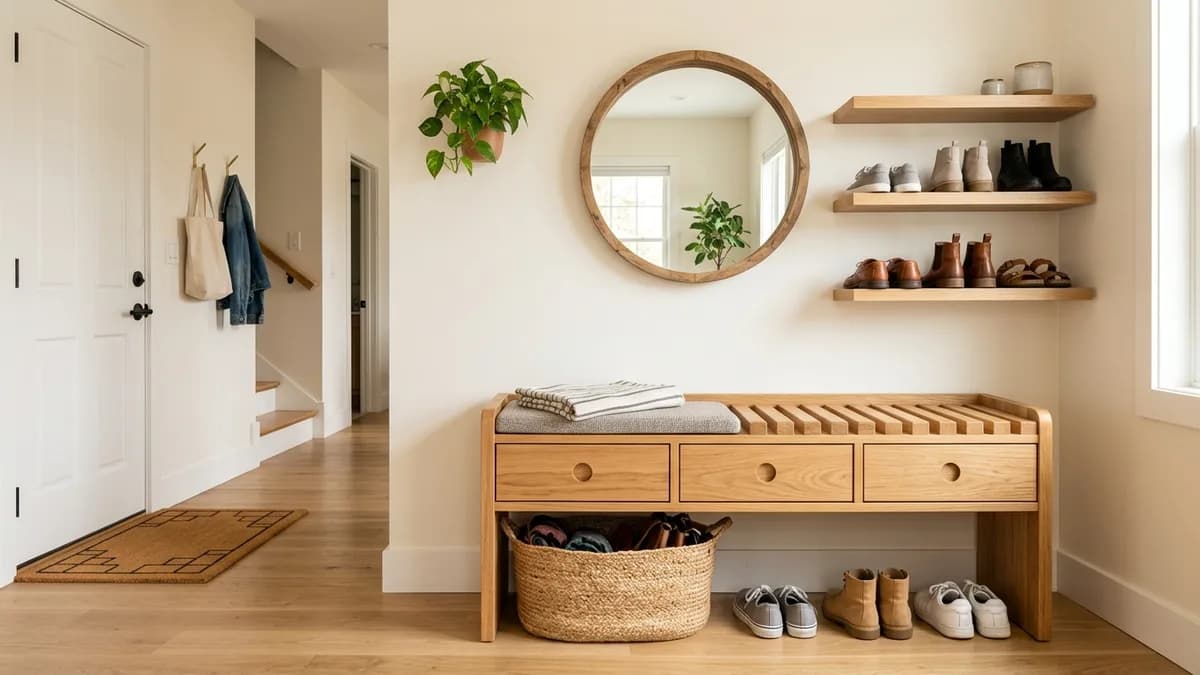
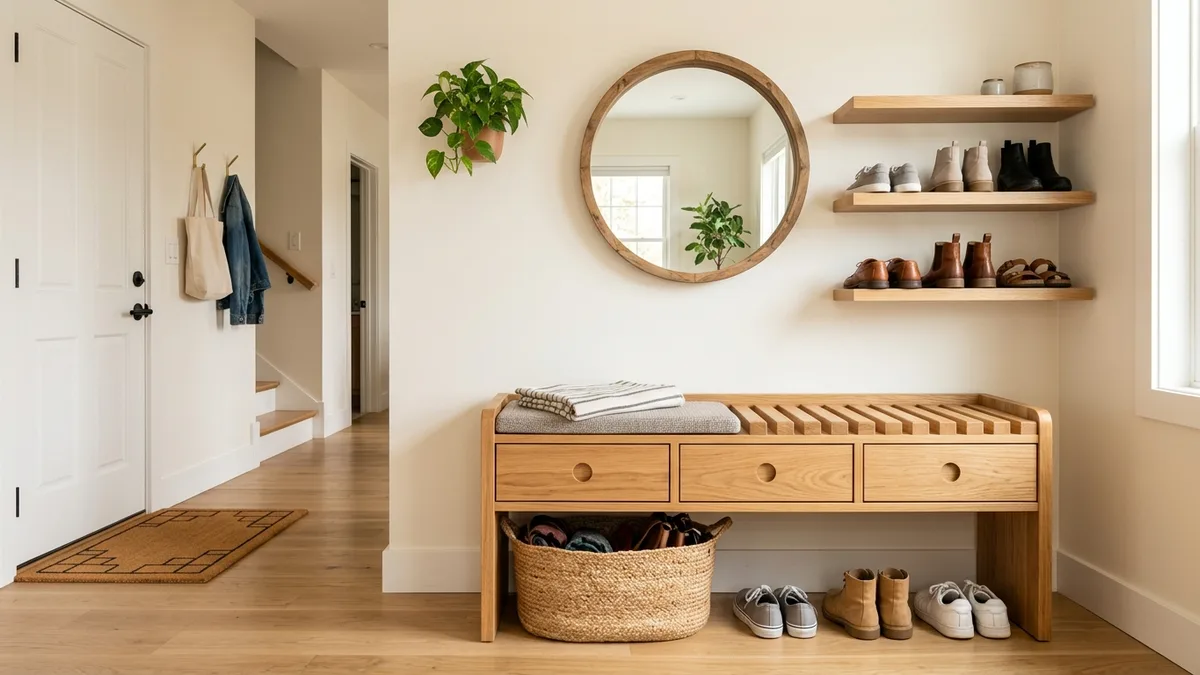
A storage bench is one of the most versatile ideas for shoe storage because it gives you seating, storage, and a finished look all in one piece of furniture. Look for benches with lift-up lids that reveal a deep interior compartment, or models with open cubbies beneath the seat. Cubbies sized at roughly 12 inches wide by 12 inches deep work well for most adult shoe sizes.
- Place frequently worn shoes in the cubbies for the easiest daily access • Use the interior compartment for off-season or less-used pairs • Add a cushion on top for comfortable seating while putting shoes on and off
Slim Shoe Cabinet for Narrow Entryways
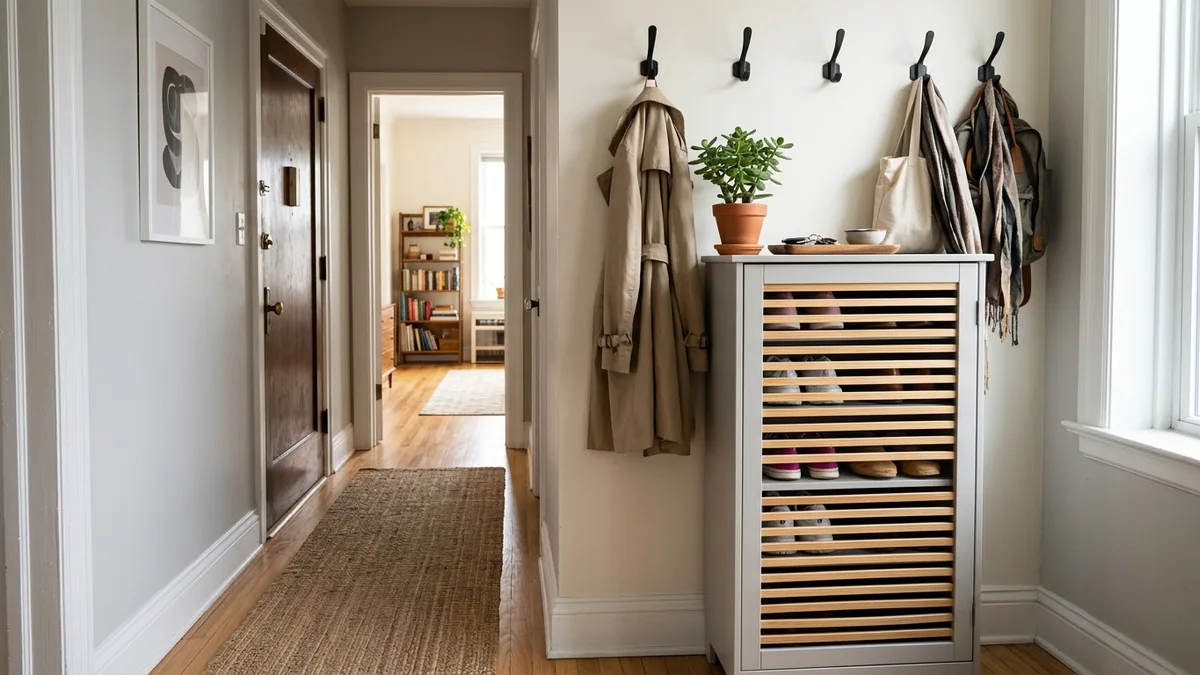
If your entryway is only a few feet wide, a slim vertical shoe cabinet can make a dramatic difference without eating up precious floor space. These cabinets typically measure between 10 and 14 inches deep, which means they fit comfortably against most walls. Many models feature flip-out or slanted shelves that hold more pairs per vertical foot than a flat shelf would.
Open Floating Shelves
Floating shelves mounted at staggered heights look polished, keep everything visible, and are surprisingly affordable to install. A set of three to four shelves in your entryway can hold between eight and sixteen pairs depending on the shelf width. This approach works best if you are comfortable keeping your shoes consistently tidy, since everything is on display.
Over-the-Door Shoe Organizer
The back of your front door or coat closet door is prime real estate you may not be using. An over-the-door organizer with clear pockets holds anywhere from 24 to 36 pairs of flats, sandals, sneakers, and kids' shoes without using a single inch of floor space. It is one of the most budget-friendly ideas for shoe storage available, often costing less than $30.
Ideas for Shoe Storage in Closets
Your closet is one of the most logical places to keep shoes organized, whether you have a sprawling walk-in or a modest reach-in. Here are several approaches that work beautifully in closet settings.
Floor-Level Shoe Racks
A simple tiered shoe rack placed on the closet floor is one of the most classic and dependable ideas for shoe storage. A three-tier rack can hold between nine and fifteen pairs in a footprint as small as 24 inches wide by 12 inches deep. Look for chrome wire or bamboo options that feel a little more elevated than basic plastic.
Angled Display Shelves
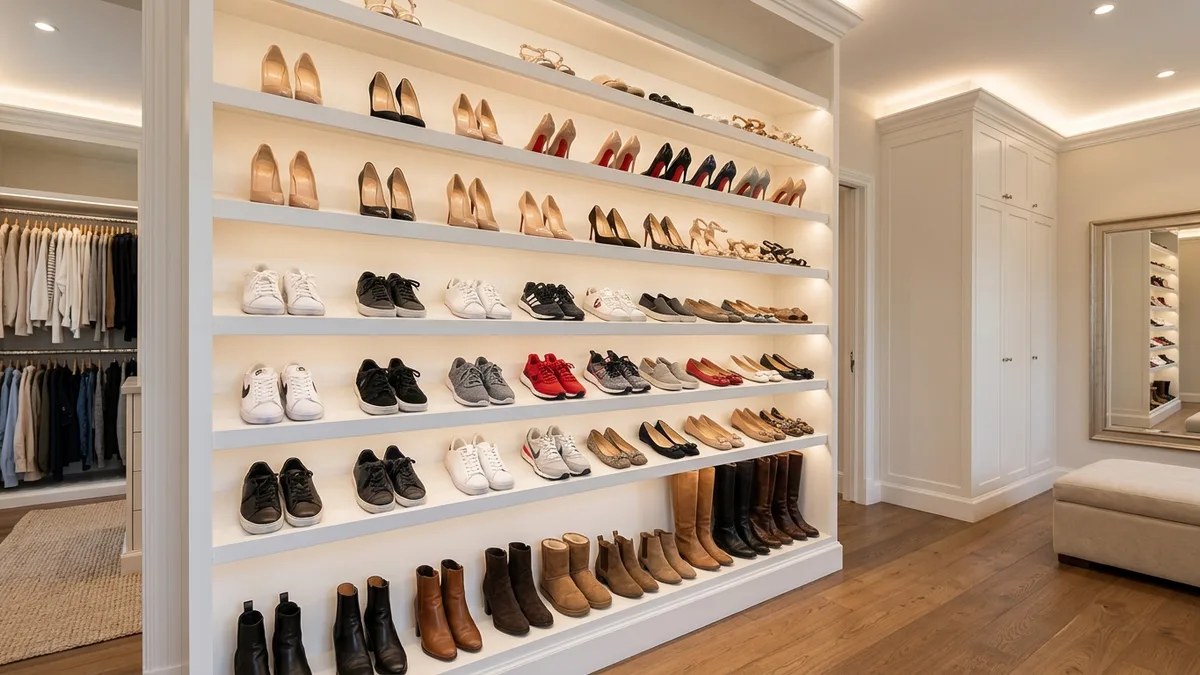
Angled shelves show off your shoes at a slight tilt, making each pair easier to identify and grab quickly. They are especially popular in walk-in closets and give any wardrobe the look of a boutique shoe display. According to The Spruce, angled shelving is one of the most requested closet upgrades among homeowners in 2026 because it combines aesthetics with practicality.
Stackable Clear Shoe Boxes
Stackable clear shoe boxes protect your footwear from dust and crushing while keeping everything visible at a glance. They are particularly useful for shoes you wear less frequently, such as special occasion heels or formal dress shoes. Label the end of each box with the shoe type and color so you never have to open every box to find what you need.
- Standard clear shoe boxes are typically 14 inches long by 8 inches wide by 5 inches tall, fitting most adult shoes • Choose drop-front boxes for easy access without unstacking the entire column • Use uniform boxes from the same product line so they stack perfectly
Hanging Shoe Organizer for Closet Rod
A fabric hanging organizer that hooks over your closet rod is a smart solution for reach-in closets that lack floor space. These organizers dangle below your hanging clothes and hold between ten and twenty pairs of shoes in individual fabric pockets. They work especially well for flats, sandals, and kids' sneakers.
Built-In Closet Shoe Tower
If you are ready to invest in a more permanent solution, a built-in shoe tower is a game-changer. A tower that runs from floor to ceiling in a walk-in closet can accommodate 30 or more pairs in a single column that takes up only 12 to 14 inches of depth. Pair it with a closet organization system for a cohesive, professional finish.
Creative and DIY Ideas for Shoe Storage
Some of the most satisfying shoe storage solutions are the ones you build or assemble yourself. These DIY and creative approaches can be customized to your exact space, style, and budget.
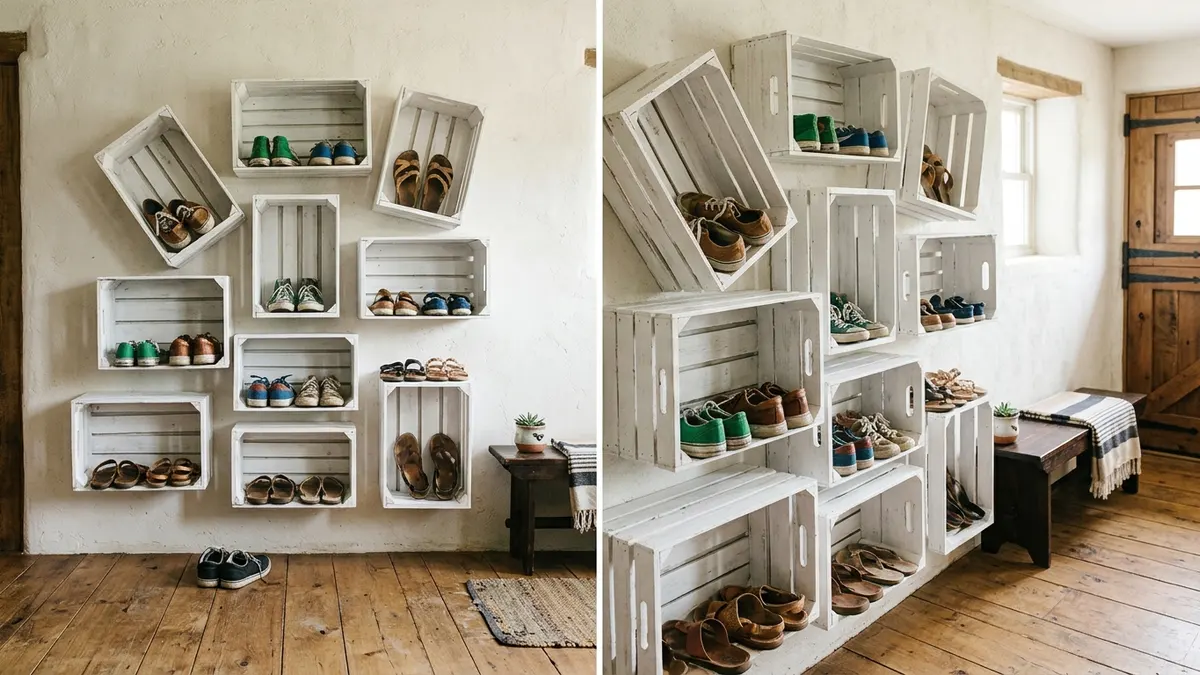
Wooden Crates Mounted on the Wall
Wooden crates from a craft or home improvement store can be sanded, painted, and mounted directly to the wall at varying heights to create an eye-catching shoe display. Each crate typically holds two to four pairs of shoes and costs only a few dollars, making this one of the most affordable ideas for shoe storage for creative homeowners. Stagger the crates in a grid or honeycomb pattern for a truly unique look.
PVC Pipe Shoe Organizer
Lengths of PVC pipe cut to about 10 to 12 inches and stacked inside a wooden frame create cylindrical slots that cradle each shoe on its side. This approach works especially well for boots and sneakers, and the finished product has a modern, industrial look. It is a popular project featured on Pinterest boards dedicated to DIY home organization.
Repurposed Wine Rack
A wine rack happens to be almost perfectly sized for rolled-up sneakers and flats stored toe-in. A countertop wine rack can hold four to eight pairs and looks unexpectedly charming in an entryway or mudroom. This is a great way to give a thrifted or secondhand piece a completely new purpose.
Tension Rod Shoe Rack
Install two tension rods side by side inside a cabinet and rest shoes horizontally across them with the heels hanging down. This method doubles the number of pairs a single shelf can hold without any drilling or permanent hardware. It works especially well for heels and flats.
Ideas for Shoe Storage in Small Spaces
Living in a small apartment or compact home does not mean you have to sacrifice shoe organization. These space-saving solutions are specifically designed for tight quarters.
Vertical Shoe Tower
A vertical shoe tower takes advantage of height rather than floor space, making it ideal for apartments and small homes. Some towers hold up to 30 pairs in a column that measures only about 10 inches wide by 12 inches deep. Place it just inside your front door or in a bedroom corner to keep shoes contained without sprawl.
Under-Bed Shoe Storage
The space under your bed is one of the most underused storage zones in any home. Shallow under-bed rolling drawers or flat zippered fabric organizers can hold between 12 and 20 pairs of shoes in a spot that would otherwise collect dust. Use this space for out-of-season footwear or shoes you wear less frequently. Pair this idea with other bedroom storage solutions for a fully optimized room.
Corner Shoe Rack
A triangular corner shoe rack fits into a 90-degree corner that would otherwise be wasted space. These racks typically hold 10 to 16 pairs and work well in bedrooms, closets, or even bathrooms where you store house slippers.
Magnetic Shoe Strip
For metal-tipped heels and certain types of dress shoes, a magnetic wall strip can hold shoes upright against the wall in a truly unique display. It is minimal, space-efficient, and conversation-starting.
Repurposed Ladder
A wooden or metal ladder leaned against the wall with shoes hung over each rung by their heels is one of the quirkiest and most charming ideas for shoe storage for small spaces. It holds eight to fourteen pairs and doubles as a decorative element.
Ideas for Shoe Storage in Garages and Mudrooms
The garage and mudroom are natural drop zones for outdoor shoes, work boots, and sports gear. Here are solutions built for these harder-working spaces.
Heavy-Duty Metal Shoe Rack
A steel wire shoe rack designed for garage use can hold work boots, rain boots, and heavy sneakers without bowing or rusting. Look for powder-coated finishes that resist moisture. Many garage shoe racks can be wall-mounted to keep the floor completely clear.
Boot Tray with Raised Grid
A boot tray placed just inside the garage door or mudroom catches mud, water, and debris from shoes and boots before it tracks through the house. A raised grid keeps shoes elevated above the collected moisture so they dry properly. At around 30 inches long by 15 inches wide, a standard boot tray holds four to six pairs of adult shoes.
Mudroom Cubby System
A built-in or freestanding cubby system with individual bins for each family member is one of the most organized ideas for shoe storage in a mudroom setting. Assign each person their own cubby and pair it with a coat hook above and a labeled bin for sports gear. This approach is especially effective for families with kids.
How to Choose the Right Shoe Storage System for Your Home
With so many ideas for shoe storage available, choosing the right one comes down to a few key factors. Use this decision framework to narrow your options.
Count Your Collection
Start by counting every pair of shoes in your household. A family of four typically has anywhere from 40 to 80 pairs to organize. Once you know the number, you can choose a system with enough capacity rather than one that fills up immediately.
Assess Your Space
Measure the exact dimensions of the area where you plan to put your shoe storage. Note the width, depth, and height available, and check whether the wall can support any mounted hardware. Houzz recommends measuring twice and leaving at least 2 inches of clearance around any freestanding furniture for easy cleaning.
Consider Access Frequency
Shoes you wear every day need to be the most accessible. Reserve the easiest-to-reach spots, at roughly knee to waist height, for everyday footwear. Put seasonal or formal shoes in higher, deeper, or more enclosed storage.
Think About Shoe Types
Tall boots need vertical storage at least 14 to 16 inches tall. Heels display best on angled or open shelves. Sneakers and flats work in almost any system. Make sure your chosen solution accommodates your specific mix of footwear.
Match Your Aesthetic
A shoe storage solution should feel like part of your home, not an afterthought. If your entryway is modern and minimal, a sleek closed cabinet in white or black is a natural fit. If you love a rustic farmhouse vibe, wooden crates or a natural bamboo rack will feel right at home. Browse the Sesoris collections for options that complement a range of home styles.
The best shoe storage system is not the most elaborate one. It is the one you will actually use consistently every single day.
Smart Organization Tips to Maximize Any Shoe Storage Setup
Even the best storage system falls apart without good organizational habits. These tips will help you get the most out of whichever setup you choose.
- Edit your collection first. Before organizing, donate or discard any shoes that no longer fit, are beyond repair, or have not been worn in over a year. A smaller collection is always easier to organize. 2. Group by category. Keep everyday sneakers together, work shoes together, athletic footwear together, and formal shoes together. This makes finding any pair fast and intuitive. 3. Rotate seasonally. Store off-season shoes in a separate, less accessible spot, such as under the bed or on a high closet shelf, and rotate them with the changing seasons. 4. Use consistent containers. Uniform boxes, bins, or trays create visual calm even in an open storage setup. Mixing different sizes and styles of containers makes even an organized space look messy. 5. Label everything. Clear labels on boxes and bins eliminate guessing and make it easy for every family member to return shoes to the right spot. 6. Dedicate five minutes weekly. A quick weekly reset is all it takes to maintain a shoe storage system. Put strays back where they belong, wipe down any visible surfaces, and check for shoes that have migrated out of place.
For more whole-home organization inspiration, explore the full range of home organization ideas on the Sesoris blog, or check out our best sellers for top-rated storage products.
Related Products from Sesoris
If you want to turn this guide into a real setup, start with Foldable Storage Bins and Floating Wall Shelf Set. For broader options, browse the Home & Decor collection so the article journey does not stop at reading only.
Our practical rule: choose one product that solves the main clutter problem first, then add supporting organizers only when the daily workflow is already clear. This keeps the shopping path useful, not pushy.
FAQ: Frequently Asked Questions About Ideas for Shoe Storage
Q: How many pairs of shoes can a standard entryway bench hold?
Most entryway storage benches with open cubbies below the seat can hold between six and twelve pairs of adult shoes, depending on the bench width and cubby configuration. Wider benches with additional shelving above can accommodate even more.
Q: What is the best shoe storage solution for boots?
Tall boots require at least 14 to 16 inches of vertical clearance and should be stored upright to prevent creasing. Dedicated boot slots in a wide cubby system, a boot tray on the floor, or boot clips that hang boots upside down from a closet rod are all excellent options. Boot shapers or rolled magazines stuffed inside the shaft keep boots standing upright without dedicated hardware.
Q: How can I organize shoes in a very small closet?
In a small closet, maximize vertical space with a stackable clear box system, add an over-the-door organizer on the inside of the closet door, and use the floor efficiently with a compact tiered rack. Read more detailed strategies in our guide to ideas for shoe storage in small closets.
Q: Should shoe storage be open or closed?
Open storage is more convenient for daily-use shoes because you can grab a pair at a glance without opening drawers or doors. Closed storage looks tidier and protects shoes from dust, making it better for formal or special-occasion footwear. The best setups combine both: open access for everyday pairs and closed cabinets or boxes for the rest.
Q: How do I keep shoes from smelling inside a closed storage cabinet?
Place cedar shoe inserts, activated charcoal pouches, or small sachets of baking soda inside your closed storage unit. These absorb moisture and odors naturally without any chemicals. Make sure shoes are fully dry before placing them in closed storage, since dampness is the primary cause of shoe odors.
Q: What is the most space-efficient shoe storage idea for an apartment?
For apartment living, an over-the-door organizer combined with a slim vertical shoe cabinet near the front door is typically the most space-efficient combination. Together, these two solutions can handle 40 or more pairs without consuming significant floor space. Under-bed rolling drawers add even more capacity for out-of-season shoes.
Conclusion
There is no shortage of brilliant ideas for shoe storage in 2026, and the perfect solution for your home is out there regardless of your space, budget, or style preferences. From built-in closet towers and mudroom cubby systems to budget-friendly over-the-door organizers and creative DIY crate walls, the options are genuinely exciting. The key is to start with an honest count of your collection, measure your available space carefully, and choose a system that fits your daily routine rather than fighting against it.
Once you have the right setup in place, maintaining it is easy. A consistent weekly reset keeps things from sliding back into chaos, and a twice-yearly seasonal rotation ensures that the shoes you wear most often are always the easiest to reach.
Ready to put these ideas into action? Explore the full range of organization products at Sesoris and find everything you need to build a shoe storage system that actually works. Check out our new arrivals for the latest home organization solutions designed to help you live more organized every single day.
Weekly Home Tips
Get home organization ideas, product picks, and exclusive deals delivered weekly.
No spam. Unsubscribe anytime.

Explore More Articles
- Wooden Kitchen Tables: Timeless Classics That Never Go Out of Style
- Dish Rack Above Sink: Ultimate Guide to Kitchen Space Organization
- How to Organize Your Home: Expert Guide to a Tidy Living Space
- 15 Brilliant Toy Storage Ideas for Living Room: Transform Your Family Space in 2026
- IKEA Garage Storage Solutions: Complete Guide to Organizing Your Garage in 2026
- Best Desk Organizers for a Productive Work Desk
- Aluminum Stove Tables: Lightweight & Rust-Resistant Kitchen Solutions 2026
- Small Entryway Shoe Storage Ideas: 30 Smart Solutions for Tiny Spaces in 2026