
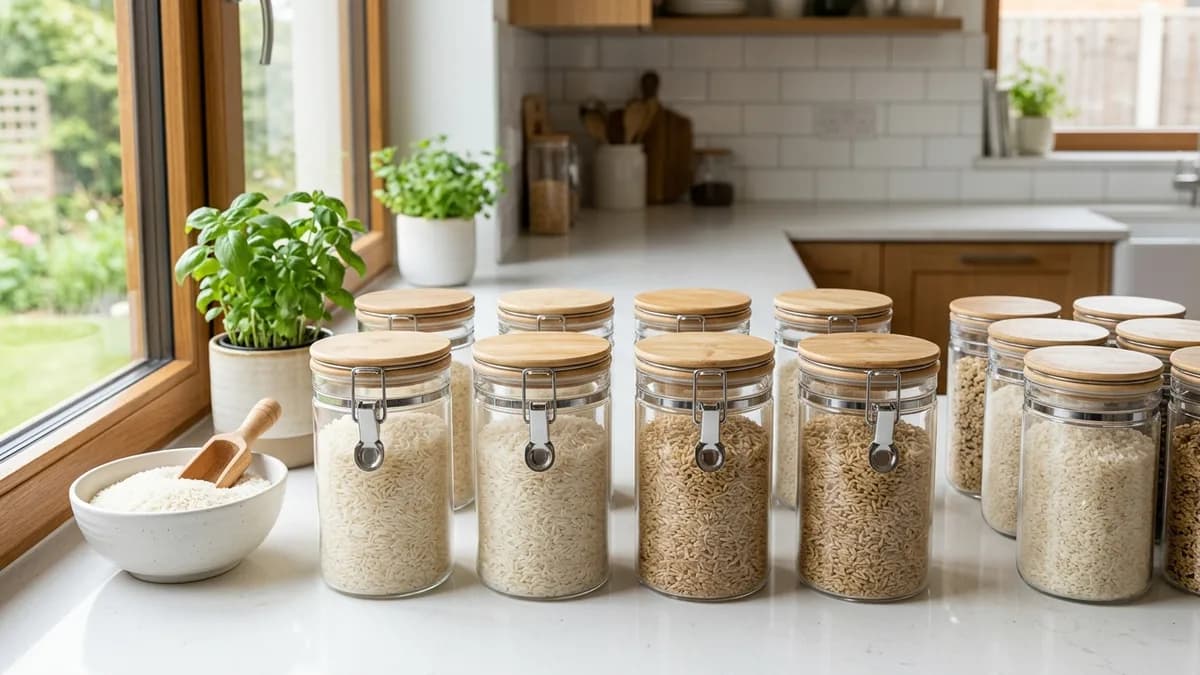
Food Storage Containers for Rice: The Complete 2026 Tutorial Guide to Keeping Rice Fresh
If you cook rice regularly, you already know how quickly it can go stale, attract pests, or absorb moisture from the air. The solution is simpler than you might think: the right food storage containers for rice can make a night-and-day difference in freshness, shelf life, and kitchen organization. Whether you are storing a 5-pound bag of jasmine rice or a bulk supply of brown rice, this step-by-step tutorial will walk you through everything you need to know, from choosing the right container material to labeling, stacking, and maintaining your rice supply for maximum freshness in 2026.
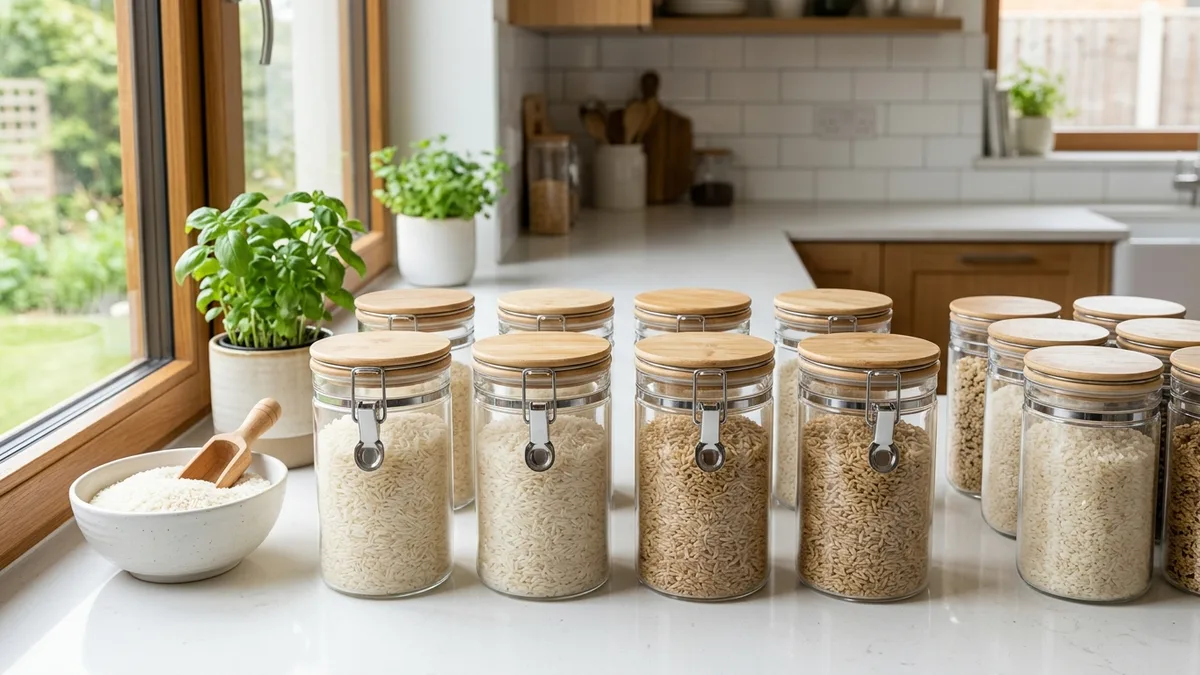
Why Proper Food Storage Containers for Rice Matter
Rice seems like one of those pantry staples that can just sit in its original bag indefinitely. In reality, leaving rice in a torn paper or plastic bag is one of the fastest ways to invite problems. Moisture seeps in and causes clumping or mold, ambient odors from spices or cleaning products get absorbed, and pantry pests like weevils find their way through even tiny gaps in packaging.
According to The Spruce, white rice stored correctly in a cool, dry environment can last up to 25 to 30 years, while brown rice has a shorter shelf life of around 6 to 12 months due to its natural oils. That huge difference in shelf life is largely determined by how you store it. Investing in the right food storage containers for rice is one of the smartest kitchen organization moves you can make.
The benefits go beyond freshness. Proper containers stack neatly in your pantry, make it easy to see your stock at a glance, and eliminate the visual clutter of half-open bags. If you have been working on your kitchen pantry organization, a set of uniform rice containers is a great place to start.
Step 1: Choose the Right Type of Food Storage Container for Rice
Not all containers are created equal. Here is a breakdown of the main material options and how they perform for storing rice specifically.
Clear Airtight Plastic Containers
BPA-free airtight plastic containers are the most popular choice for rice storage. They are lightweight, shatter-resistant, and available in a wide range of sizes from 1 quart all the way up to 10 quarts or more. The transparency lets you see exactly how much rice you have left without opening the lid.
- Best for: Everyday rice storage on countertops or pantry shelves
- Look for: Locking lids or silicone gasket seals for a truly airtight closure
- Capacity tip: A standard 5-pound bag of white rice fits comfortably in a 4- to 6-quart container
If you are exploring BPA-free options, our guide to BPA-free food storage containers covers all the key safety features to look for.
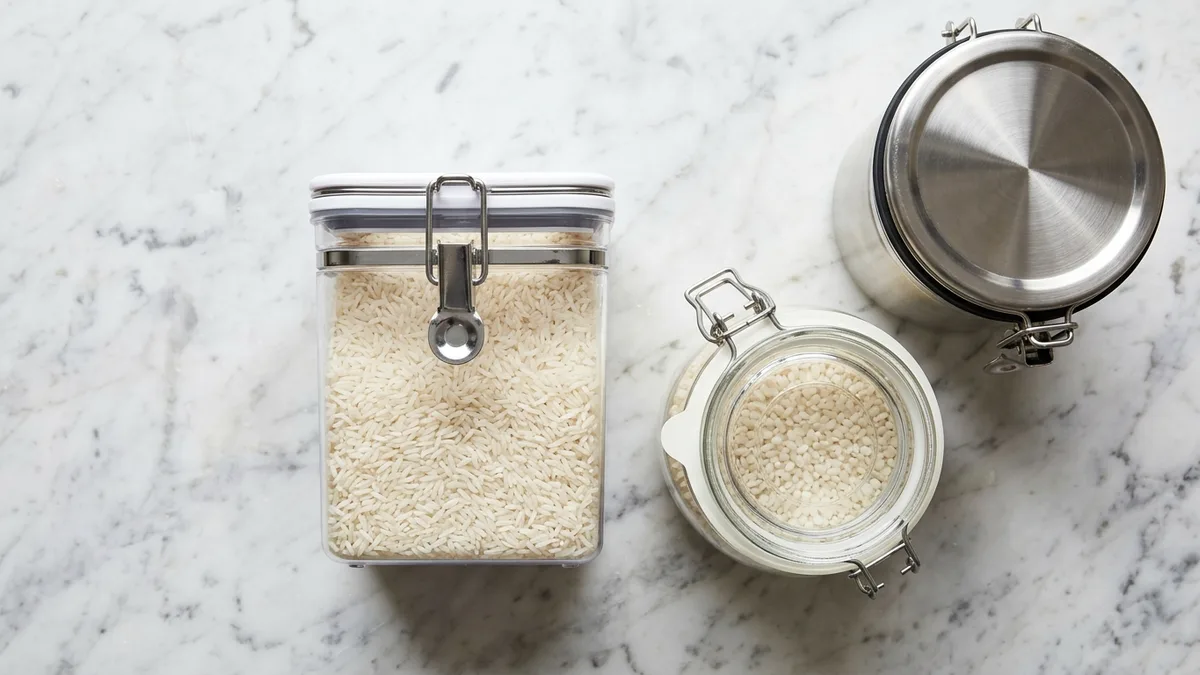
Glass Containers with Locking Lids
Glass containers are odor-neutral, stain-resistant, and non-porous, which means they will never absorb smells from adjacent pantry items. They are heavier than plastic, but their airtight locking lids make them excellent for medium-term rice storage.
- Best for: Countertop display storage or refrigerator storage of cooked rice
- Look for: Borosilicate or tempered glass with a four-point locking lid mechanism
- Size tip: A 2-quart glass container is ideal for storing opened rice you plan to use within a few weeks
Stainless Steel Canisters
Stainless steel containers block light completely, which is ideal for protecting brown rice from oxidation. They are virtually indestructible and have a sleek, modern look that suits minimalist kitchens.
- Best for: Long-term storage of brown rice or specialty grains
- Drawback: You cannot see the contents without opening, so labeling is essential
Large Plastic Storage Bins with Dispensers
For households that buy rice in bulk, 10- to 25-pound capacity bins with built-in dispensers are a game-changer. Some models feature a lever or spout at the base so you can pour rice directly without scooping.
- Best for: Bulk buying families or meal prep households
- Look for: BPA-free certification and a tight-sealing lid with a rubber gasket
Step 2: Determine the Right Container Size for Your Rice Supply
Matching container size to your actual usage is key. Too small and you are constantly refilling; too large and you leave unnecessary air space, which can accelerate spoilage especially for brown rice.
Here is a quick size reference guide to help you choose:
- 1 to 2 quarts: Holds roughly 2 to 4 pounds of rice. Great for a single person or small household using rice occasionally.
- 4 to 6 quarts: Holds a standard 5-pound bag. The most versatile size for most American households.
- 8 to 10 quarts: Holds 10 to 15 pounds. Suitable for families of 4 or more who cook rice several times per week.
- 15 to 25 quarts: Holds 20 to 40 pounds. Ideal for bulk buying from warehouse stores.
Pro Tip: When storing brown rice, choose a container that allows only a small amount of air headspace. Brown rice's natural oils make it more sensitive to oxidation, so a snug fit matters more than it does for white rice.
Step 3: How to Transfer and Prepare Rice for Storage
This is the hands-on part. Follow these steps carefully to set your rice up for long-term freshness.
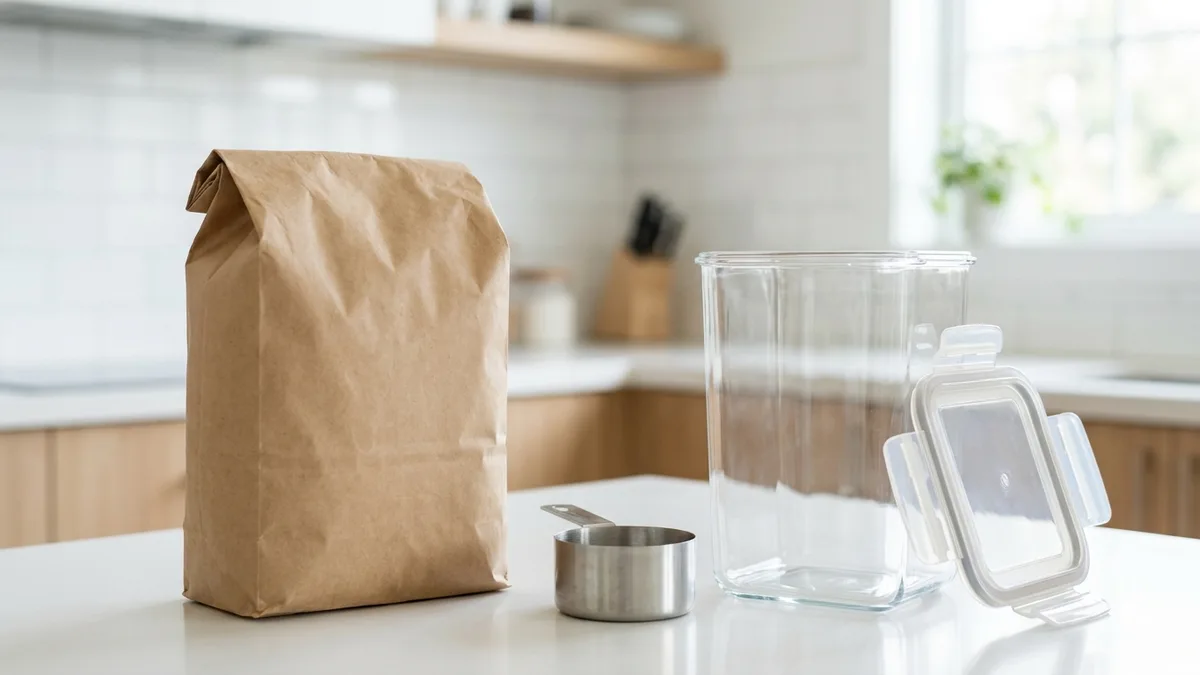
Tools You Will Need
- A clean, dry food storage container for rice (your chosen type from Step 1)
- A wide-mouth funnel or scoop
- Labels or a marker
- Optional: oxygen absorbers or food-grade desiccant packets for long-term storage
The Step-by-Step Transfer Process
- Inspect the rice first. Pour your rice onto a clean, dry surface and look for any signs of moisture, discoloration, or tiny bugs. If you see any weevils, do not transfer them into your new container.
- Freeze the rice for 72 hours (optional but recommended). Placing the unopened bag of rice in your freezer for three days before transferring kills any insect eggs that may already be present. This is especially useful for bulk rice purchases.
- Dry your container completely. Even a small amount of residual moisture can cause rice to clump or develop mold. Wipe the inside of the container with a clean, dry cloth and let it air dry for at least 30 minutes.
- Use a funnel or wide scoop to transfer the rice. Avoid pouring directly from the bag, which can scatter grains and create mess. A wide-mouth funnel keeps things tidy.
- Add oxygen absorbers for long-term storage. If you are storing white rice for more than 6 months, drop one or two food-grade oxygen absorber packets into the container before sealing. These are inexpensive and significantly extend shelf life.
- Seal the container firmly. Engage all four locking clips if using a locking-lid container, or press down firmly and check that the gasket seal is fully engaged on twist-top containers.
- Label clearly. Write the type of rice, the date it was stored, and the use-by date. Use a waterproof label or a piece of masking tape with a permanent marker.
- Store in a cool, dark place. A pantry shelf away from the stove or dishwasher is ideal. Heat and humidity are the enemies of long-term rice storage.
Step 4: Best Practices for Storing Different Rice Varieties
Not all rice is the same, and your storage approach should reflect that. Here is how to handle the most common varieties you will find in an American kitchen in 2026.
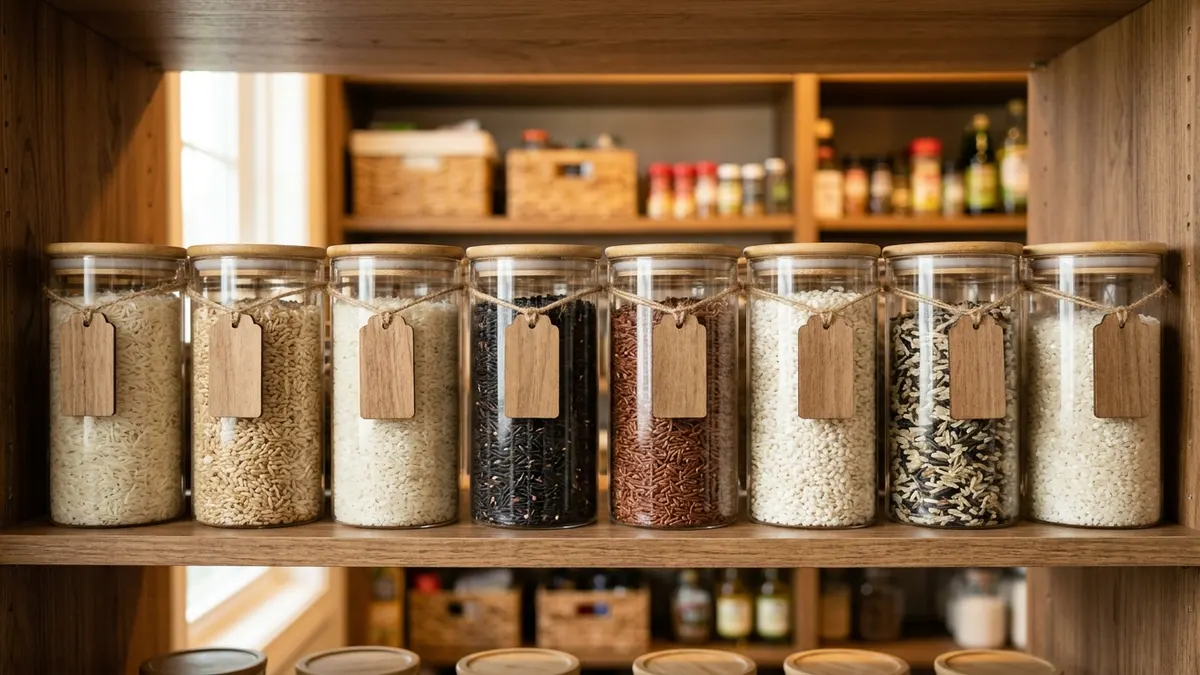
White Rice (Long-Grain, Jasmine, Basmati)
White rice is the easiest to store long-term because its outer bran layer has been removed, eliminating the natural oils that cause faster spoilage. In a proper airtight container stored at room temperature below 70 degrees Fahrenheit, white rice stays fresh for 1 to 2 years easily, and up to 25 years with oxygen absorbers.
- Use a clear airtight plastic or glass container for everyday use
- Store in a pantry away from direct sunlight and heat sources
- Label with variety and storage date
Brown Rice
Brown rice retains its bran and germ, which makes it more nutritious but also much more prone to going rancid. Plan to use brown rice within 6 months of opening, or within 12 months if storing an unopened, sealed quantity.
- Consider stainless steel or opaque airtight containers to block light
- Refrigerate opened brown rice in a glass container with a locking lid to extend freshness by several months
- Always smell brown rice before cooking. A rancid or off odor means it is past its prime
Wild Rice and Black Rice
These specialty varieties behave more like white rice from a shelf-life perspective. Store them in airtight containers in a cool, dark pantry.
Cooked Rice
Cooked rice needs to go into the refrigerator within two hours of cooking, per food safety guidelines from Good Housekeeping. Use a glass container with a tight-fitting lid for cooked rice in the fridge. Cooked rice keeps for 3 to 5 days refrigerated.
- For freezing cooked rice, use freezer-safe plastic or glass containers in portion-sized amounts
- Spread cooked rice in a thin layer to cool before sealing, which prevents condensation and sogginess
- Frozen cooked rice keeps for up to 6 months
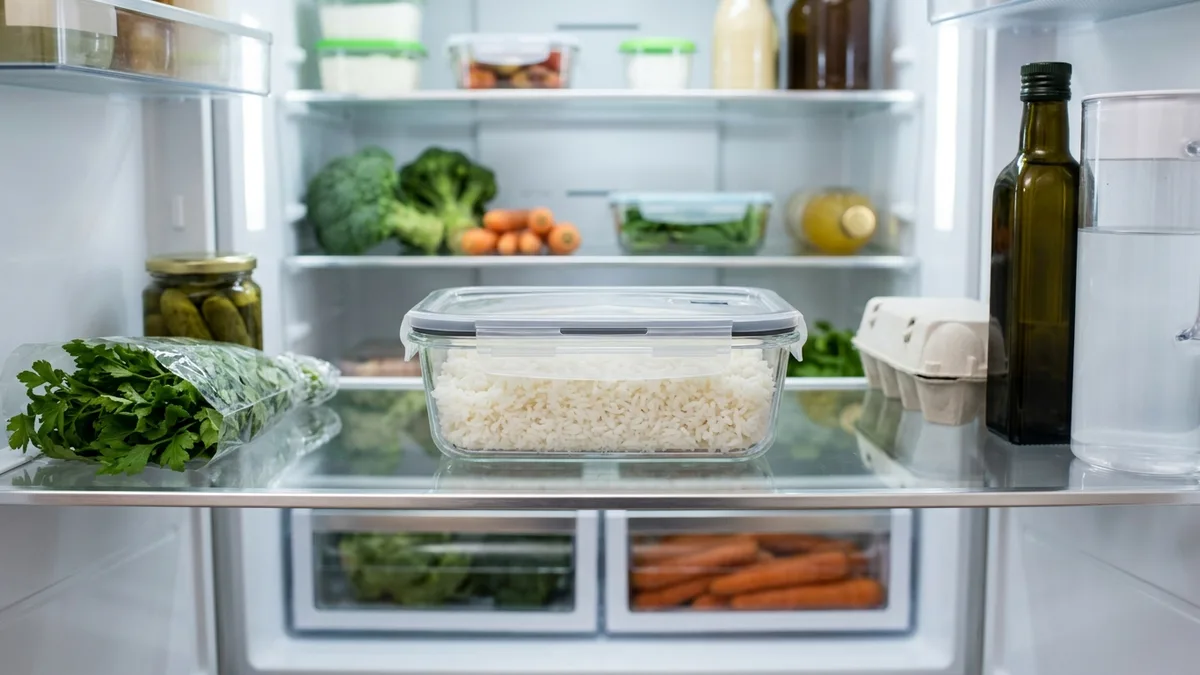
Step 5: Organize Your Rice Containers in Your Pantry
Once you have the right containers and the right storage process, the final step is making sure your pantry setup actually works for your daily routine.
Stacking Strategy
Square and rectangular containers stack far more efficiently than round ones. If you are storing multiple rice varieties, a set of uniform square containers allows you to build a neat tower or row that maximizes vertical pantry space.
- Place the most-used rice at eye level or within easy reach
- Stack secondary or bulk containers on higher or lower shelves
- Use a pantry storage rack to create additional tiers if your pantry shelf space is limited
Labeling System
A clear labeling system saves time and prevents mix-ups, especially if you store several rice varieties.
- Use uniform label sizes for a clean, cohesive look
- Include: rice type, date stored, and use-by date
- Color-coding labels by grain type (white, brown, wild) makes identification instant
For a full labeling system tutorial, check out our guide to storage bin labels.
First In, First Out (FIFO)
Always use the oldest stock first. When you refill a container, place new rice at the back or bottom and move the existing rice to the front. This habit prevents any rice from sitting at the back of the pantry past its prime without you noticing.
What to Look for When Buying Food Storage Containers for Rice
If you are shopping for new containers in 2026, here are the non-negotiable features to look for:
- Airtight seal: A gasket seal (usually silicone or rubber) is essential. Test it by pressing the lid and listening for a satisfying snap or click.
- BPA-free materials: For plastic containers, always verify that they are labeled BPA-free or BPA-free and food-safe.
- Wide-mouth opening: Makes filling, scooping, and cleaning dramatically easier.
- Stackable design: Square or rectangular shapes stack more efficiently than round.
- Clear or semi-clear body: Lets you monitor your supply without opening the container.
- Dishwasher-safe: Saves cleaning time between rice varieties.
You can find a curated selection of kitchen organization essentials including food-safe airtight containers at Sesoris. Browse new arrivals for the latest kitchen storage picks.
Common Mistakes to Avoid When Storing Rice
Even with the best container, a few common errors can undermine your efforts. Here is what to avoid:
- Storing rice near heat sources. Placing rice containers above the stove or next to the refrigerator motor shortens shelf life significantly. Heat accelerates oxidation and moisture buildup inside the container.
- Using a damp scoop. Always use a completely dry scoop when measuring rice out of the container. Even a slightly wet scoop introduces moisture that can lead to mold over time.
- Mixing old and new rice. Pouring a new bag of rice on top of old rice in the same container makes it impossible to track freshness and often results in old rice never getting used. Always use FIFO.
- Skipping the freeze step for bulk rice. If you buy large quantities, skipping the 72-hour freezer step risks introducing weevil eggs into your clean container. It is a small effort with a big payoff.
- Choosing round containers. Round containers leave wasted space in your pantry. Square or rectangular containers use every inch of shelf space efficiently.
- Not labeling. Brown rice looks nearly identical to some other grains. Without a label, you will eventually lose track of what is in which container and when it was stored.
Related Products from Sesoris
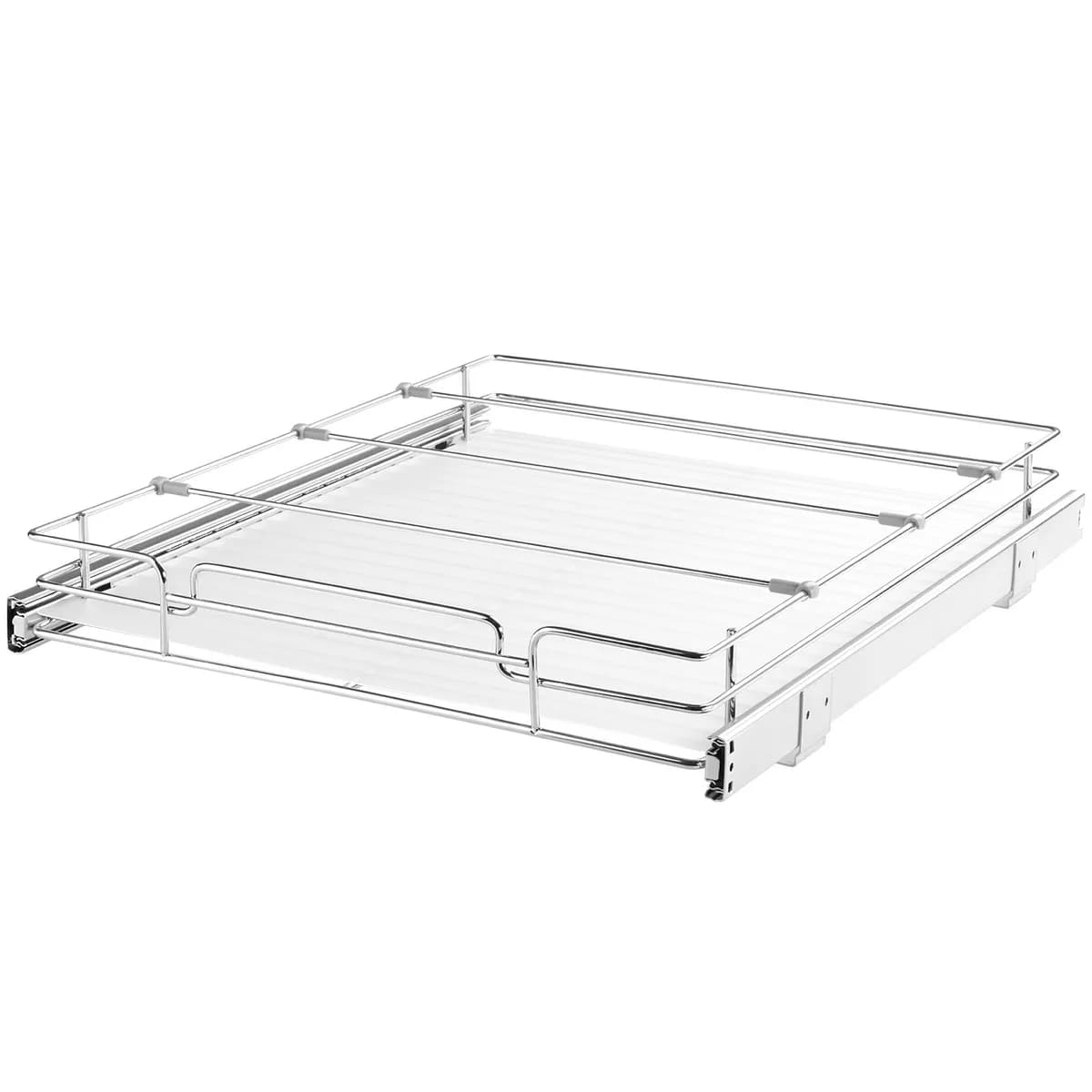
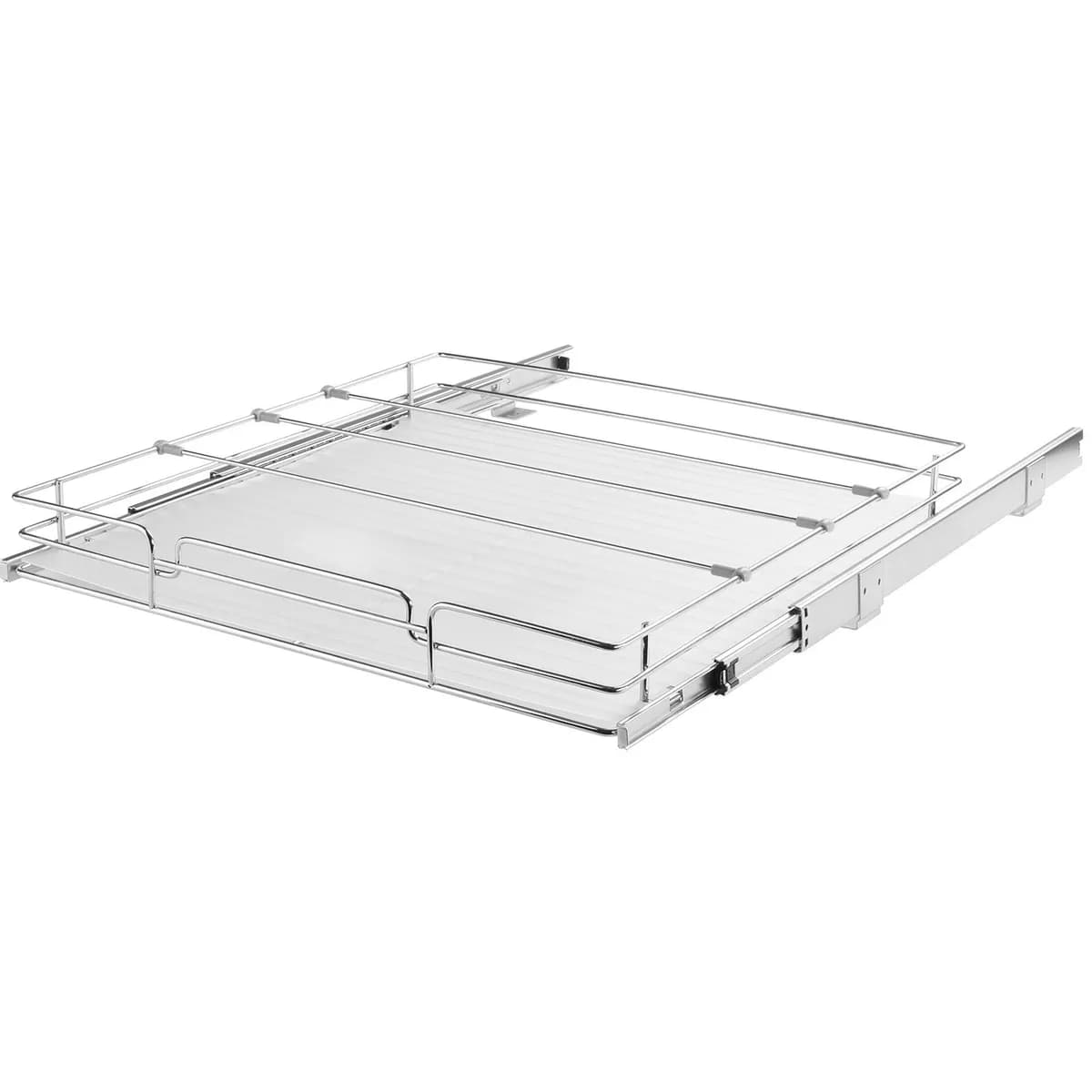
If you want to turn this guide into a real setup, start with Pull-Out Cabinet Organizer, 14 in. Wide and Double-Layer Bamboo Bread Box. For broader options, browse the Kitchen & Dining collection so the article journey does not stop at reading only.
Our practical rule: choose one product that solves the main clutter problem first, then add supporting organizers only when the daily workflow is already clear. This keeps the shopping path useful, not pushy.
FAQ: Frequently Asked Questions About Food Storage Containers for Rice
Q: How long does rice stay fresh in an airtight container?
White rice stored in a proper airtight container at room temperature stays fresh for 1 to 2 years for everyday use, and up to 25 to 30 years with oxygen absorbers in ideal conditions. Brown rice should be used within 6 to 12 months even in an airtight container.
Q: What size container do I need for a 5-pound bag of rice?
A 4- to 6-quart airtight container comfortably holds a standard 5-pound bag of rice with a little room for easy scooping. If you buy 10-pound bags, step up to an 8- to 10-quart container.
Q: Can I store cooked rice in the same containers I use for uncooked rice?
Yes, as long as the container is dishwasher-safe and fully cleaned between uses. However, for cooked rice, it is practical to dedicate a separate set of smaller glass containers that go directly from the fridge to the microwave for easy reheating.
Q: How do I get rid of weevils in my rice?
If you find weevils, discard the infested rice and thoroughly wash and dry the container before using it again. Freeze new rice for 72 hours before storing it to kill any eggs. Bay leaves placed in or around rice containers can act as a natural deterrent, though they will not eliminate an existing infestation.
Q: Is plastic or glass better for rice storage?
Both work well. BPA-free plastic is lighter and less fragile, making it better for larger bulk containers. Glass is completely odor-neutral and is excellent for medium-term storage and cooked rice. For long-term bulk storage, high-quality BPA-free plastic with an oxygen absorber is the most practical choice for most households.
Q: Do I need oxygen absorbers for storing rice?
For everyday use with a turnover of 1 to 2 years, a good airtight seal is sufficient and oxygen absorbers are optional. If you are preparing an emergency food supply or buying rice in bulk quantities intended to last 5 or more years, oxygen absorbers are strongly recommended.
Conclusion
Choosing and using the right food storage containers for rice is one of the simplest, highest-impact upgrades you can make to your kitchen organization routine in 2026. From selecting an airtight BPA-free plastic container for everyday jasmine rice to setting up a bulk storage system for long-grain white rice with oxygen absorbers, the steps in this tutorial give you everything you need to keep your rice fresh, pest-free, and pantry-ready for months or years at a time.
The key takeaways are straightforward: choose airtight over loose-fitting, go square over round for better stackability, label every single container, and always freeze new bulk rice before transferring it. Follow these steps and your pantry will look organized, function efficiently, and keep your rice tasting exactly the way it should every time you cook.
Ready to upgrade your kitchen storage game? Explore our full range of food-safe airtight containers and pantry organization essentials at Sesoris. Check out our best sellers for the most popular kitchen organization picks, or browse our collections to find the perfect storage solution for every corner of your kitchen. Live More Organized.
Weekly Home Tips
Get home organization ideas, product picks, and exclusive deals delivered weekly.
No spam. Unsubscribe anytime.



Explore More Articles
- Craft Storage Room Ideas: Transform Your Creative Space with Smart Organization in 2026
- 20+ Creative Kitchen Cabinet Organizer Ideas to Transform Your Cooking Space in 2026
- Best Storage Solutions for Bathroom: Transform Your Space with Smart Organization Ideas in 2026
- Stainless Steel Food Storage Containers: Ultimate Guide to Durable Food Storage in 2026
- Dry Bag: Complete Guide to Choosing Waterproof Bags for Outdoor Activities (2026)
- Best Containers for Dog Food Storage: Keep Your Pet Food Fresh in 2026
- Packing Cubes: Efficient Packing Method That Transforms Your Travel Style (2026)
- Plastic Dish Racks: Affordable and Lightweight Kitchen Solutions