
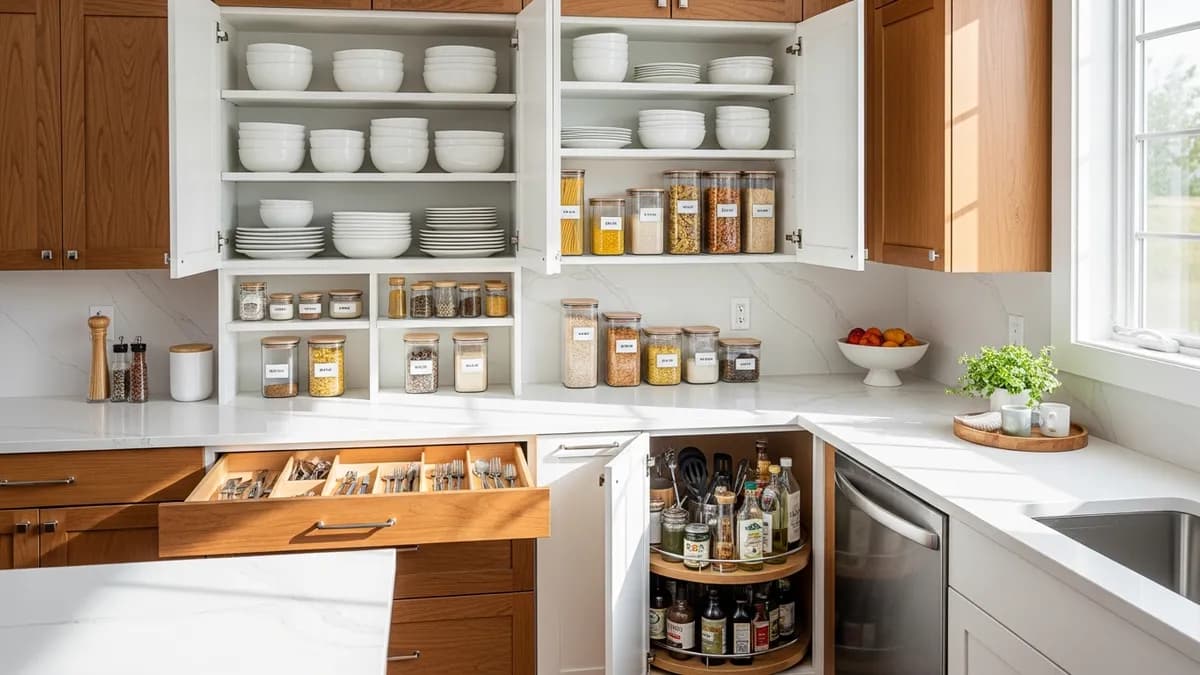
30+ Best Kitchen Cabinet Organization Ideas to Transform Your Cooking Space in 2026
If your kitchen cabinets feel like a black hole where pots, lids, and snacks disappear never to be found again, you are not alone. Kitchen cabinet organization ideas are one of the most searched home topics in 2026 because a disorganized kitchen genuinely affects your daily life, from stressful morning routines to wasted groceries buried at the back of a shelf. The good news is that transforming your cabinets does not require a full renovation or a massive budget. With the right strategies, products, and a little planning, you can turn even the most chaotic cabinet into a functional, beautiful storage space. In this guide, I am sharing 30+ of the best kitchen cabinet organization ideas that actually work for real American homes.
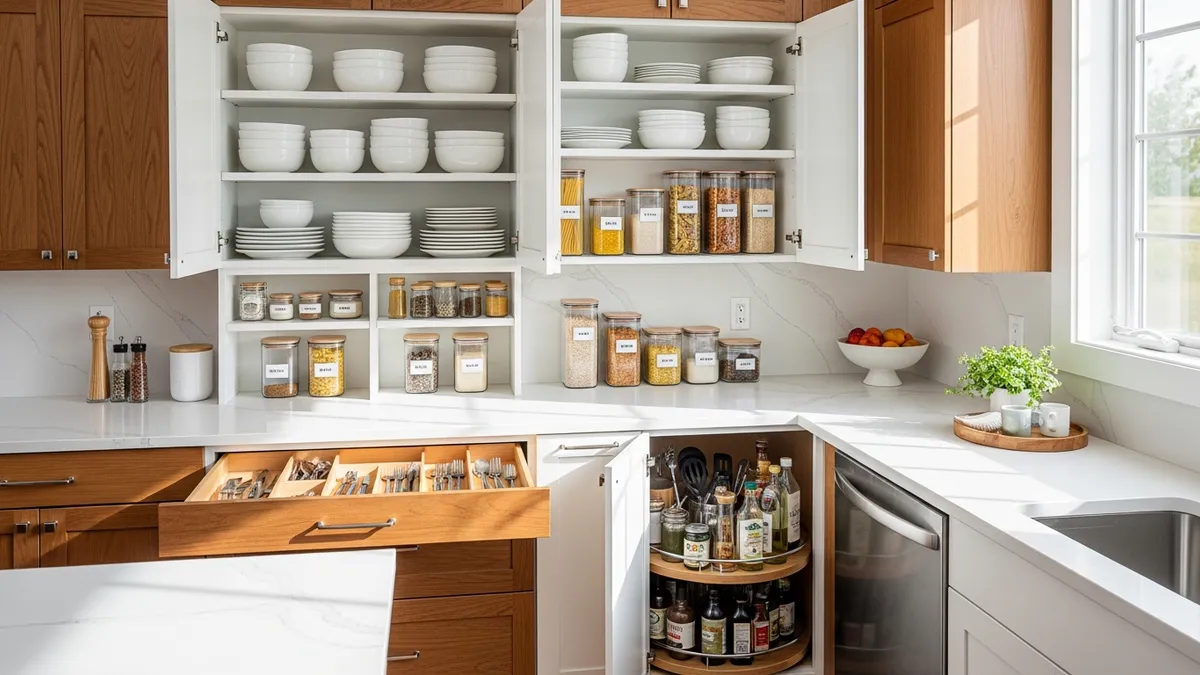
Why Kitchen Cabinet Organization Ideas Matter in 2026
It is easy to underestimate how much your cabinet setup affects your kitchen experience. According to Houzz, a well-organized kitchen can save you meaningful time every single week by reducing the time you spend hunting for items, double-buying groceries you already have, or cleaning up spills from poorly stacked containers.
In 2026, more American households are cooking at home more than ever, which means cabinet organization has become a genuine quality-of-life issue. Whether you have a spacious suburban kitchen or a compact apartment galley, smart cabinet organization makes cooking more enjoyable and your home feel calmer.
Here are the core benefits of investing in kitchen cabinet organization:
- Save time by knowing exactly where every item lives
- Reduce food waste by keeping pantry items visible and accessible
- Maximize space in cabinets of any size
- Reduce stress with a clutter-free cooking environment
- Protect your cookware by storing it properly
Start with a Full Declutter Before Organizing
Before you buy a single bin or shelf riser, the most important step in any kitchen cabinet organization project is a thorough declutter. Pull everything out of every cabinet and lay it on your countertop or kitchen table. You will likely find expired pantry items, duplicate tools, and appliances you have not touched in years.
I always recommend asking yourself three questions about every item:
- Have I used this in the last six months?
- Does it earn its place in a prime cabinet location?
- Is it in good working condition?
If the answer to any of these is no, it is time to donate, discard, or relocate it. Only after decluttering should you measure your cabinet dimensions and start planning your organization system. This step alone can free up a surprising amount of cabinet real estate.
A decluttered kitchen is not just prettier, it is genuinely more functional. Start with less, then organize what truly belongs.
30+ Kitchen Cabinet Organization Ideas by Zone
1. Use Shelf Risers to Double Your Vertical Space
One of the simplest and most effective kitchen cabinet organization ideas is adding shelf risers inside your cabinets. Most standard cabinets leave a huge gap of wasted vertical space between shelves. A stackable shelf riser lets you store dishes or mugs on two levels instead of one, effectively doubling your storage capacity without any installation.
Look for risers in bamboo, coated wire, or sturdy plastic. Sizes typically range from 6 inches wide up to 18 inches wide, so measure your cabinet depth before buying.
2. Install Pull-Out Cabinet Drawers
Pull-out drawers or sliding cabinet organizers are game-changers for deep lower cabinets. Instead of crouching down and digging to the back of a cabinet, you can simply slide the drawer forward to see and reach everything at once. These work especially well for pots, pans, and pantry items.
Many pull-out organizers are tension-mounted, meaning no tools or drilling are required.
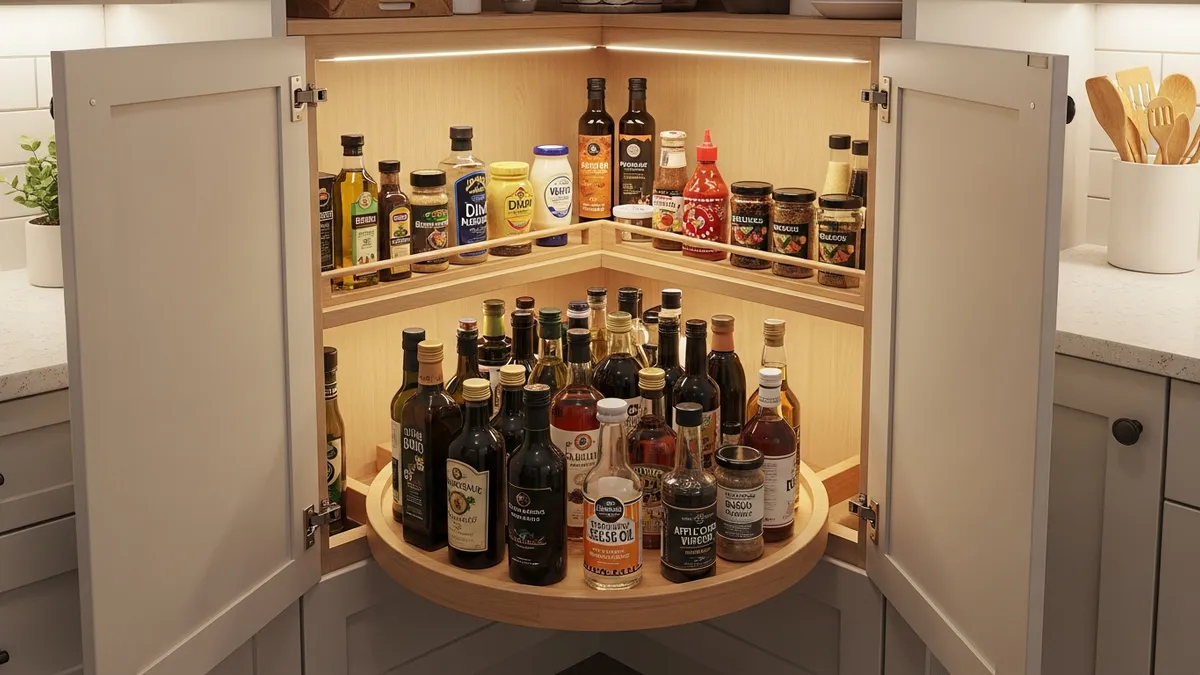
3. Add a Lazy Susan to Corner Cabinets
Corner cabinets are notoriously difficult to use efficiently. A lazy Susan turntable is the classic solution, and for good reason. A spinning tray lets you rotate items to the front without reaching awkwardly into the back. Use them for oils, vinegars, spices, or canned goods.
Two-tier lazy Susans are especially useful if your corner cabinet is tall, giving you a second rotating level for extra storage.
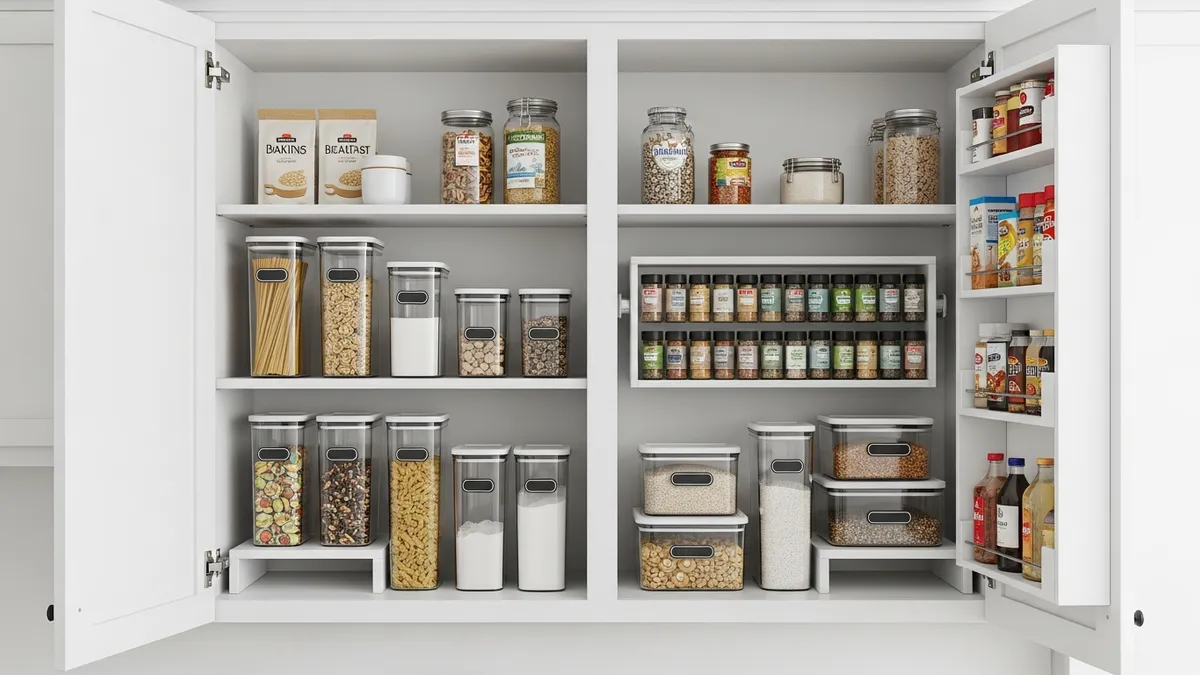
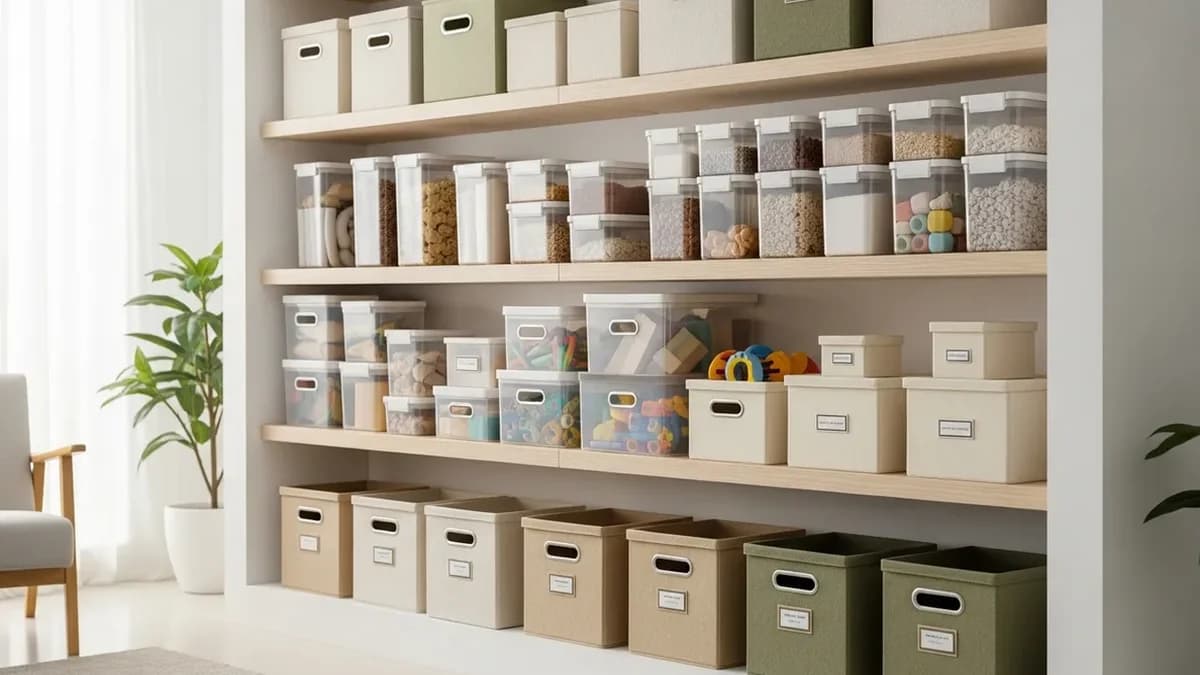
4. Use Clear Stackable Containers for Pantry Cabinets
If you store dry goods like pasta, rice, flour, or cereal in a cabinet, clear airtight containers are one of the best investments you can make. When everything is visible, you never accidentally buy a second bag of something you already have. Uniform containers also stack far more efficiently than oddly shaped original packaging.
Check out Sesoris's best sellers for a curated selection of stackable pantry containers that fit neatly in standard cabinet shelves. You can also browse our full collection for matching sets.
For more detailed guidance on containers, read our food storage containers for pantry complete guide.
5. Mount Door-Mounted Organizers on Cabinet Doors
The inside of your cabinet doors is prime real estate that most people completely ignore. Over-the-door organizers, small wire racks, and adhesive hooks can turn that blank surface into functional storage for spice packets, measuring spoons, aluminum foil boxes, plastic wrap, and more.
For upper cabinet doors, slim wire racks work well for spice jars. For lower cabinet doors, hooks or racks can hold pot lids, cutting boards, or cleaning supplies.
6. Group Items by Use Category
One of the most underrated kitchen cabinet organization ideas is simply grouping items by how and when you use them. Keep your baking supplies together in one cabinet, your pasta and grains in another, your breakfast items in a third. This zone-based approach means you always know exactly which cabinet to open, saving you mental energy every single day.
Common kitchen zones to consider:
- Baking zone: flour, sugar, baking powder, vanilla, measuring cups
- Breakfast zone: cereals, oats, coffee, mugs, travel cups
- Snack zone: chips, crackers, nuts, granola bars
- Cooking zone: oils, vinegars, canned goods, spices
- Serving zone: plates, bowls, serving dishes
7. Invest in a Lid Organizer for Pots and Pans
Pot lids are one of the most frustrating things to store in a kitchen cabinet. They slide, clatter, and never seem to fit neatly. A dedicated lid organizer, whether a vertical rack that stands inside a cabinet or a door-mounted holder, solves this instantly. Lids stored vertically take up far less space and are easy to grab.
8. Stack Pots and Pans with Protectors
If you stack pots and pans directly on top of each other, you risk scratching the surfaces, especially on nonstick or enamel cookware. Use felt pan protectors or thin cloth separators between each piece to keep them scratch-free while still stacking neatly.
Alternatively, a vertical pot rack insert lets you store pans upright like files in a filing cabinet, which makes grabbing the exact pan you need much faster.
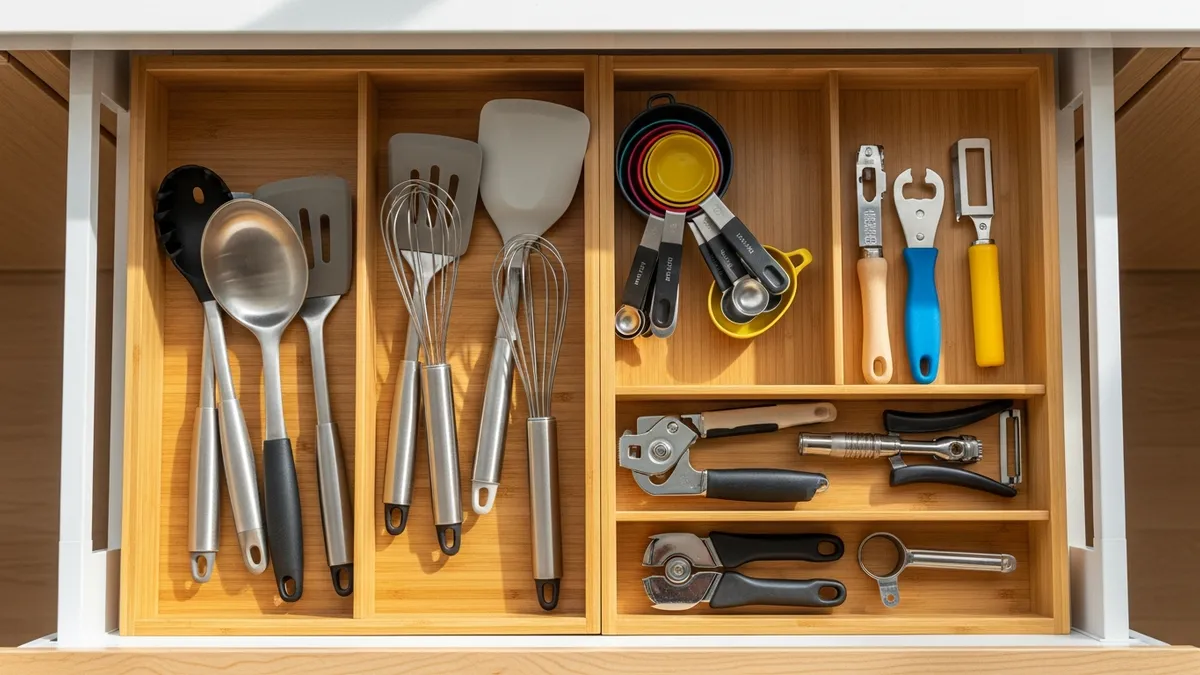
9. Use Drawer Dividers for Utensil Drawers
Kitchen drawers that hold utensils, gadgets, and tools can become chaotic fast. Expandable bamboo or plastic drawer dividers let you create custom compartments sized exactly for your items. Assign one section for spatulas, one for whisks, one for tongs, and so on.
For small gadgets like peelers, zesters, and thermometers, a small bin within the drawer keeps them grouped and easy to find.
10. Label Everything
Labels are the secret weapon of truly organized kitchens. Once you have grouped and containerized your cabinet contents, labeling each container or bin ensures that everyone in the household knows where things go, and more importantly, where to put them back.
You can use a label maker, chalkboard labels, or printable labels. Consistency in label style also makes your cabinets look polished and intentional.
For a complete labeling system guide, read our label organizer smart labeling system guide.
11. Add Tension Rods for Vertical Dividers
Tension rods are one of the most versatile and budget-friendly kitchen cabinet organization ideas available. Place two or three tension rods vertically inside a lower cabinet to create individual slots for baking sheets, cutting boards, and wire racks. This keeps flat items upright and organized instead of stacked in a teetering pile.
12. Use Baskets and Bins for Grouping
Baskets and bins are excellent for grouping items that do not stack neatly on their own, such as snack pouches, seasoning packets, or small boxed items. Place a basket inside the cabinet and toss the category of items into it. When you need something, pull out the whole basket, find what you need, and slide it back.
Woven baskets add warmth if you have open shelving, while clear plastic bins work better inside closed cabinets where visibility matters more.
13. Maximize Upper Cabinet Space with Risers and Stacking
Upper cabinets are often used for dishes and glasses. To make the most of the vertical space, use stackable mug trees or cup holders to stack mugs two or three high. For plates, a plate organizer with dividers keeps stacks stable and prevents chips.
If you have extra height in an upper cabinet, add a small floating shelf or a wire shelf insert to create a second level for smaller items like small bowls or saucers.
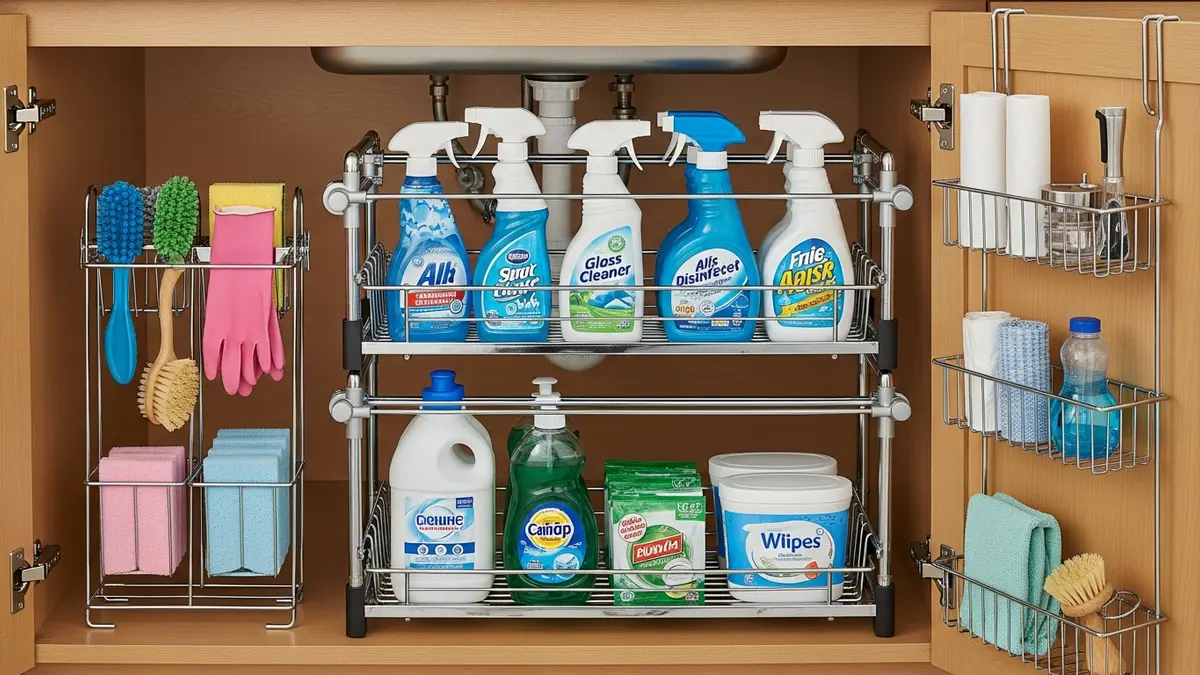
Kitchen Cabinet Organization Ideas for Under-Sink Storage
The cabinet under the kitchen sink is one of the trickiest spaces to organize because of the pipes that take up a significant portion of the interior. Here are the best approaches:
- Use stackable pull-out bins on either side of the pipes to maximize the available floor space
- Add a tension rod across the middle to hang spray bottles upside down, freeing up floor space below
- Mount a small wire rack on the cabinet door for sponges, scrubbers, or small cleaning tools
- Use a two-tier sliding organizer designed specifically for under-sink cabinets with cutouts for pipes
- Group cleaning supplies into categories using small bins: dishwashing supplies in one, surface cleaners in another
For more under-sink inspiration, check out our 30+ creative under kitchen sink organizer ideas.
Spice Storage: One of the Most Popular Kitchen Cabinet Organization Ideas
Spice storage is its own art form. Whether you have a dedicated spice cabinet or just a shelf, getting spices organized makes a huge difference in your daily cooking experience. Here are the top approaches in 2026:
Tiered Spice Shelf Inserts
A tiered shelf insert placed inside a cabinet creates two or three visible rows of spice jars, so you can see every label at a glance. This is especially helpful if you have a large spice collection and tend to push jars to the back and forget about them.
Read our 3-tier spice rack complete buying guide for detailed recommendations.
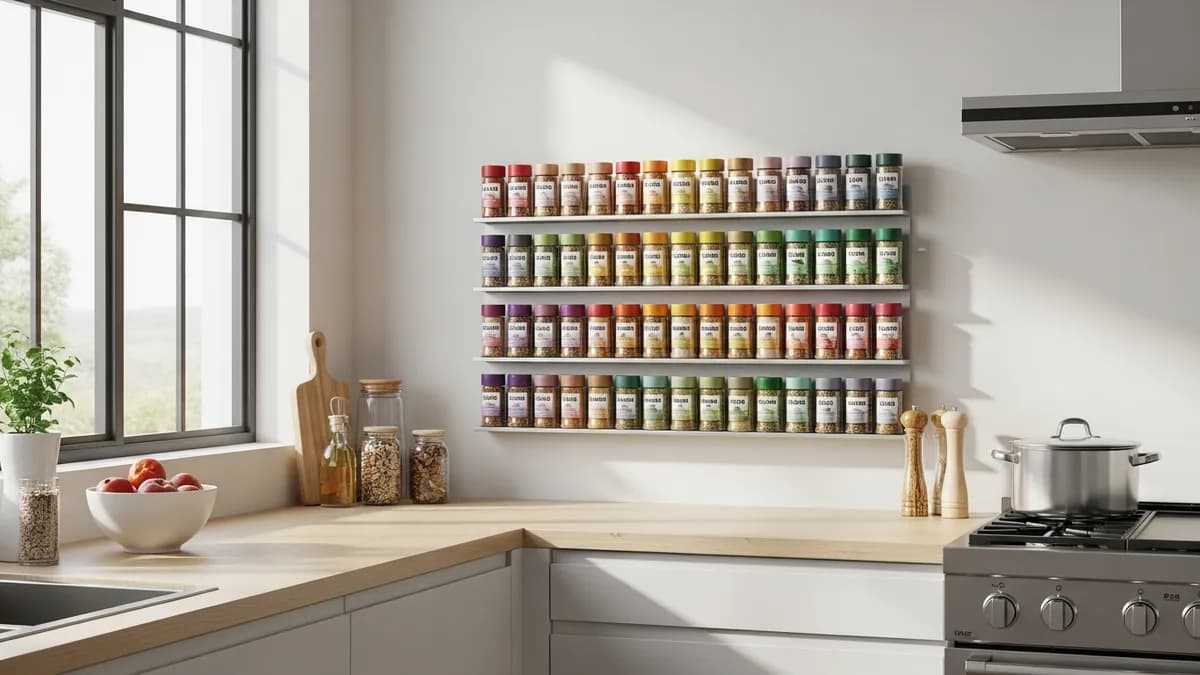
Uniform Spice Jars with Labels
Transferring your spices into matching uniform jars and labeling the lids or sides transforms a messy shelf into a Pinterest-worthy cabinet. Square jars pack more efficiently than round ones and maximize every inch of shelf space.
Pull-Out Spice Drawers
If you are willing to invest a bit more, pull-out spice drawer inserts slide into a lower cabinet and display all your spices horizontally, label-side up. You can see every spice at a glance without picking anything up.
For more spice storage inspiration, visit our kitchen spice rack ideas guide.
Small Kitchen Cabinet Organization Ideas
If you have a small kitchen, every inch inside your cabinets is precious. Here are the best kitchen cabinet organization ideas specifically for compact spaces:
- Go vertical first. Install as many shelf risers, stackable bins, and tiered organizers as possible to use the full height of each cabinet.
- Mount a pegboard inside a cabinet door to hang small tools, measuring spoons, and bag clips.
- Use magnetic strips on the inside of cabinet doors to hold spice tins or small metal containers.
- Nest bowls and pots by size to minimize the footprint each set takes up.
- Relocate infrequently used items to higher or harder-to-reach cabinets, reserving prime real estate for daily-use items.
- Downsize duplicate items. If you have three spatulas, keep one or two and donate the rest.
For more small kitchen tips, explore our full guide on how to organize a tiny kitchen.
In a small kitchen, organization is not optional. It is the difference between a kitchen that works for you and one that constantly frustrates you.
Budget-Friendly Kitchen Cabinet Organization Ideas
You do not need to spend a fortune to get your cabinets in order. According to Houzz, some of the most effective kitchen organization solutions are also the most affordable. Here are ideas that cost very little but deliver big results:
- Tension rods for vertical dividers: typically just a few dollars each
- Adhesive Command hooks on cabinet doors for hanging light items
- Repurposed shoe boxes or gift boxes as temporary bin dividers while you figure out your system
- Rubber shelf liner cut to fit cabinet bases, preventing sliding and protecting surfaces
- Inexpensive lazy Susans from dollar stores or discount retailers
- Mason jars for storing dry pantry items in a visible, uniform way
For product ideas across all price ranges, browse our all products page or check out the new arrivals at Sesoris for the latest kitchen organization tools.
Maintaining Your Organized Kitchen Cabinets
Getting your cabinets organized is only half the battle. Maintaining the system over time is where most people struggle. Here are the habits that make the difference:
- Put things back in their designated spot immediately after use, not later
- Do a quick cabinet reset once a week, taking just five minutes to return misplaced items
- Purge expired pantry items monthly so your cabinets never get cluttered with old food
- Resist the urge to stuff cabinets full. Leave a little breathing room so the system can absorb new purchases without collapsing
- Update labels whenever you change a system or introduce a new category
For broader home organization inspiration, Houzz is a fantastic resource for real-home photos of kitchen cabinet setups that you can adapt to your own space.
Related Products from Sesoris
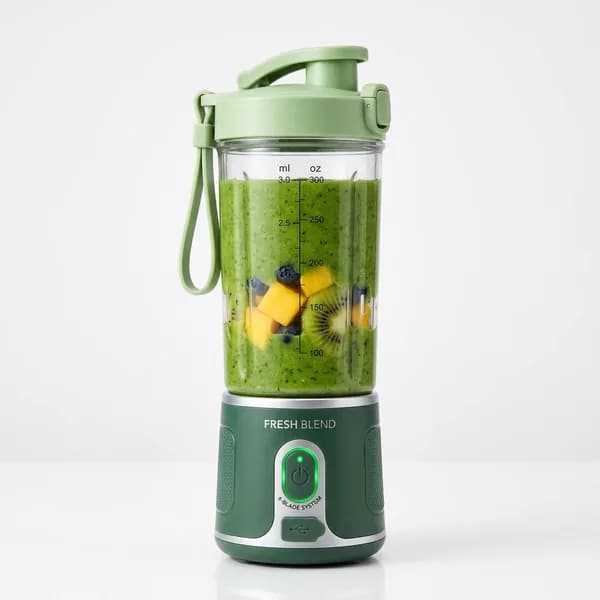
If you want to turn this guide into a real setup, start with Stainless Steel 2-Tier Dish Rack and Portable Blender. For broader options, browse the Kitchen & Dining collection so the article journey does not stop at reading only.
Our practical rule: choose one product that solves the main clutter problem first, then add supporting organizers only when the daily workflow is already clear. This keeps the shopping path useful, not pushy.
FAQ: Frequently Asked Questions About Kitchen Cabinet Organization Ideas
Q: What is the best way to organize deep kitchen cabinets?
Deep cabinets are best tamed with pull-out drawer inserts or sliding organizers. These let you access the back of the cabinet without digging through everything in front. Grouping items in labeled bins also helps, since you can pull the entire bin forward to find what you need.
Q: How do I organize kitchen cabinets on a tight budget?
Start with a thorough declutter, which costs nothing and immediately frees up space. Then use inexpensive solutions like tension rods, shelf risers, and small baskets from discount stores. Clear containers for pantry items are a worthwhile investment because they improve visibility and reduce food waste.
Q: Should I use open shelving or closed cabinets in my kitchen?
Both have their place. Open shelving works beautifully for items you use daily and want to display, like dishes, glasses, and plants. Closed cabinets are better for pantry items, cleaning supplies, and anything that looks messy. Many kitchens in 2026 use a mix of both for a functional and stylish result.
Q: How do I maximize corner cabinet storage?
A lazy Susan turntable is the most popular solution for corner cabinets. A full-circle or half-circle rotating tray makes every inch of the corner accessible. Alternatively, pull-out shelf systems designed for blind corners are another effective option, though they typically require installation.
Q: How often should I reorganize my kitchen cabinets?
A full reorganization once or twice a year is usually enough. However, doing a small reset weekly and purging expired pantry items monthly will keep the system working smoothly between deep-clean sessions.
Conclusion: Transform Your Kitchen with These Cabinet Organization Ideas
Getting your kitchen cabinets organized is one of the highest-return home improvement projects you can tackle in 2026. The right kitchen cabinet organization ideas do not just make your kitchen look better, they make your whole daily routine feel smoother, less stressful, and more enjoyable. From shelf risers and lazy Susans to pull-out drawers and labeled pantry containers, every strategy in this guide is practical, achievable, and adaptable to kitchens of any size or budget.
Whether you are starting from scratch or just looking to refine a system that has gotten a little chaotic, the key is to start with a declutter, zone your categories, maximize every inch of vertical and door space, and maintain the system with simple weekly habits.
Ready to get started? Explore the full range of kitchen organization tools and storage solutions at Sesoris to find everything you need to bring these ideas to life. Check out our best sellers for the most loved products among US households, or browse our complete shop to find the perfect fit for your kitchen. Live More Organized.
Weekly Home Tips
Get home organization ideas, product picks, and exclusive deals delivered weekly.
No spam. Unsubscribe anytime.

Explore More Articles
- Under Bed Storage: Maximize Your Bed's Hidden Storage Space
- Vacuum Storage Bag: Compress Clothes and Blankets by Up to 75%
- 30+ Best Closet Storage and Organization Ideas to Transform Your Wardrobe in 2026
- 35+ Brilliant IKEA Pantry Organization Ideas to Transform Your Kitchen Storage in 2026
- Complete Guide to Closet Organization: Transform Your Wardrobe in 2026
- Mudroom Organization: 30+ Smart Ideas to Transform Your Entryway in 2026
- Cable Management: How to Organize Cables at Your Desk and Home
- Simple Ramadan Decoration Ideas to Create a Festive Home Atmosphere