
How to Organize a Tiny Kitchen: 20+ Smart Ideas for 2026
Learn how to organize a tiny kitchen with practical tips, the right products, and smart small-kitchen layout ideas to make it tidier and more efficient.
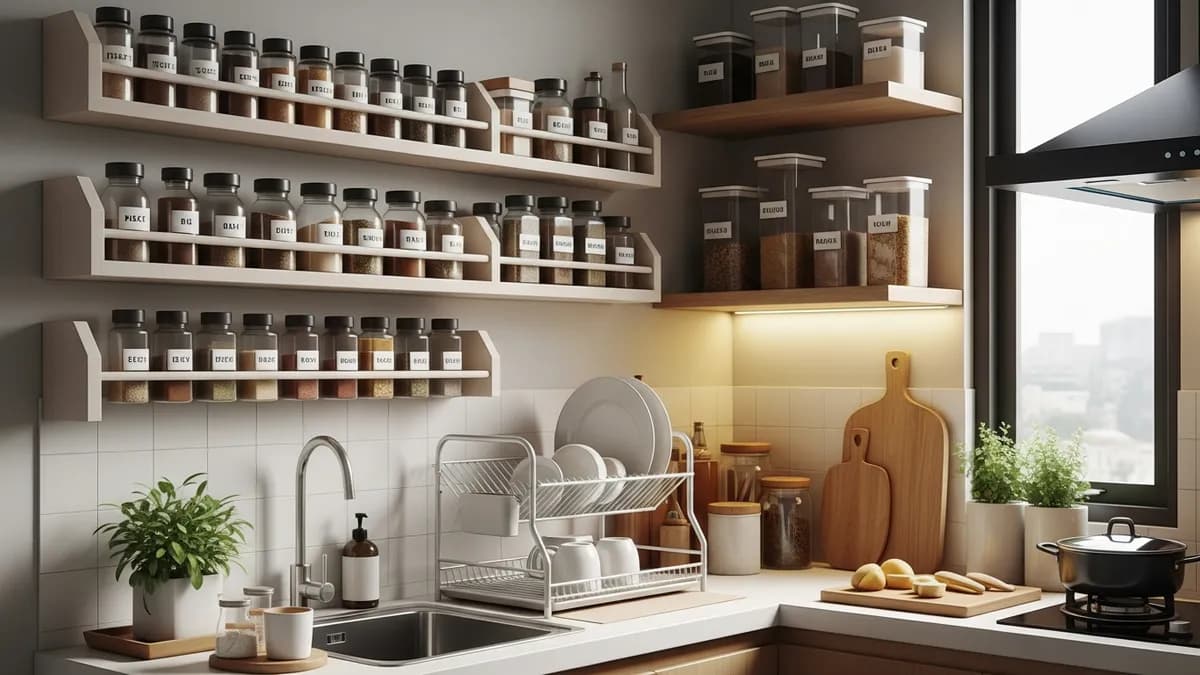
Having a small kitchen doesn't mean you have to accept a cluttered mess. In fact, understanding how to organize a tiny kitchen is the key to keeping your compact kitchen fully functional, comfortable to cook in every day, and pleasant to look at. In 2026, more and more homes, especially studio apartments and smaller houses, come with very limited kitchen space. The challenge isn't about square footage, it's about how smartly you manage every inch you have. This article walks you through it step by step, from the core principles to the right products, so your tiny kitchen can truly become an efficient and enjoyable place to cook.
Why Learning How to Organize a Tiny Kitchen Matters
A small kitchen is a reality for many households, especially those living in cities and compact homes. According to The Spruce, one of the biggest obstacles for small-kitchen owners is the lack of a structured storage system, not the lack of space itself. In other words, with the right system, even a tiny kitchen can feel roomy and comfortable.
A disorganized kitchen also has a real impact on everyday cooking: time wasted hunting for spices, food that spoils quickly because it's stored improperly, and even small accidents caused by piled-up tools. A tidy kitchen, on the other hand, makes cooking faster, cheaper, and far more enjoyable.
At Sesoris, we believe a more organized life starts in the kitchen. The kitchen is the heart of the home, and organizing a tiny kitchen the right way is a valuable investment in your quality of life.
Core Principles Before You Start Organizing a Tiny Kitchen
Before buying products or moving furniture around, there are a few fundamental principles you need to understand about how to organize a tiny kitchen the right way.
1. Declutter First
The first and most important step is to remove everything you don't need. Take everything out of your cabinets and drawers, then ask yourself: have I actually used this in the last three months? If not, it's time to donate or toss it. Organizing a kitchen that's still full of unused items only creates new clutter in tidier packaging.
2. Group Items by Function
After decluttering, group items by function. Cooking tools together, food storage containers together, herbs and spices together, and tableware together. This grouping system makes it easy to find things and put them back consistently.
3. Apply the "Everything Has a Place" Principle
In home-organization philosophy, every item should have a clear, fixed home. The moment something has no definite "home," it easily ends up scattered everywhere. This principle is the foundation of a kitchen that always stays tidy.
4. Prioritize the Items You Use Most
Place the items you use most often in the easiest-to-reach spots, right in your line of sight and in areas that don't require digging around. Rarely used items can go in higher or deeper storage.
Maximize Vertical Space: The Best Solution for a Cramped Kitchen
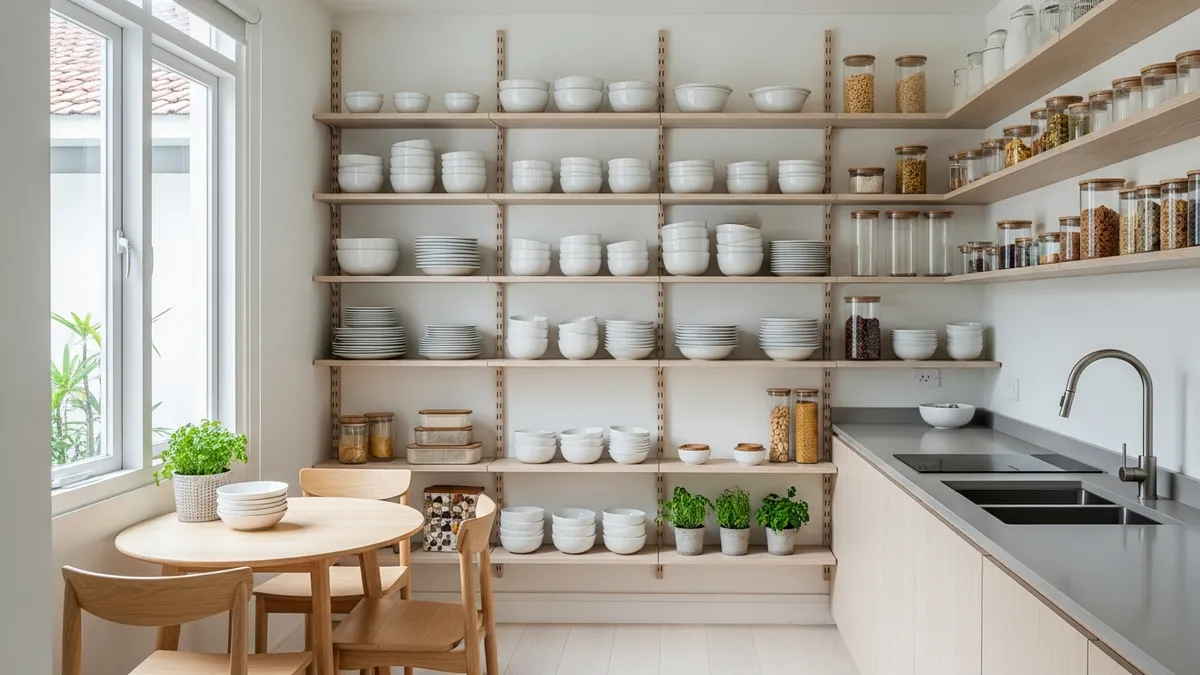
One of the most effective strategies in how to organize a tiny kitchen is to shift your attention upward instead of sideways. Your kitchen walls are storage real estate that often goes underused.
Open Wall Shelves
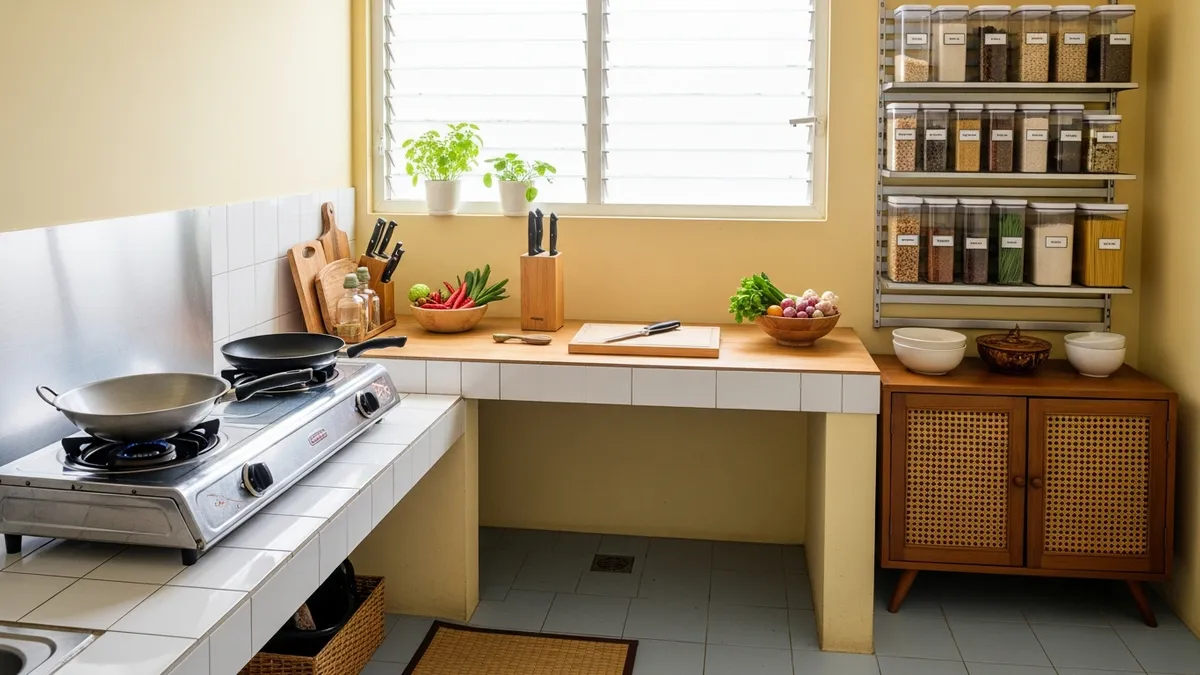
Open wall shelves are a classic solution that never goes out of style. By installing kitchen wall shelves, you can store plates, bowls, glasses, and spice jars without using up any floor or counter space at all. Wall shelves also give you easy visual access, so you know exactly what's available without opening a cabinet door.
For a tidy look, use uniform, clearly labeled storage containers. Airtight food storage containers with a transparent design are ideal because you can see the contents at a glance.
Hanging Racks Above the Stove or Sink
The area above the stove and sink is often left empty. Yet it's a strategic spot for a hanging kitchen shelf that can hold cookware, towels, or frequently used spices. This type of rack is perfect for inline kitchens or cramped apartment kitchens.
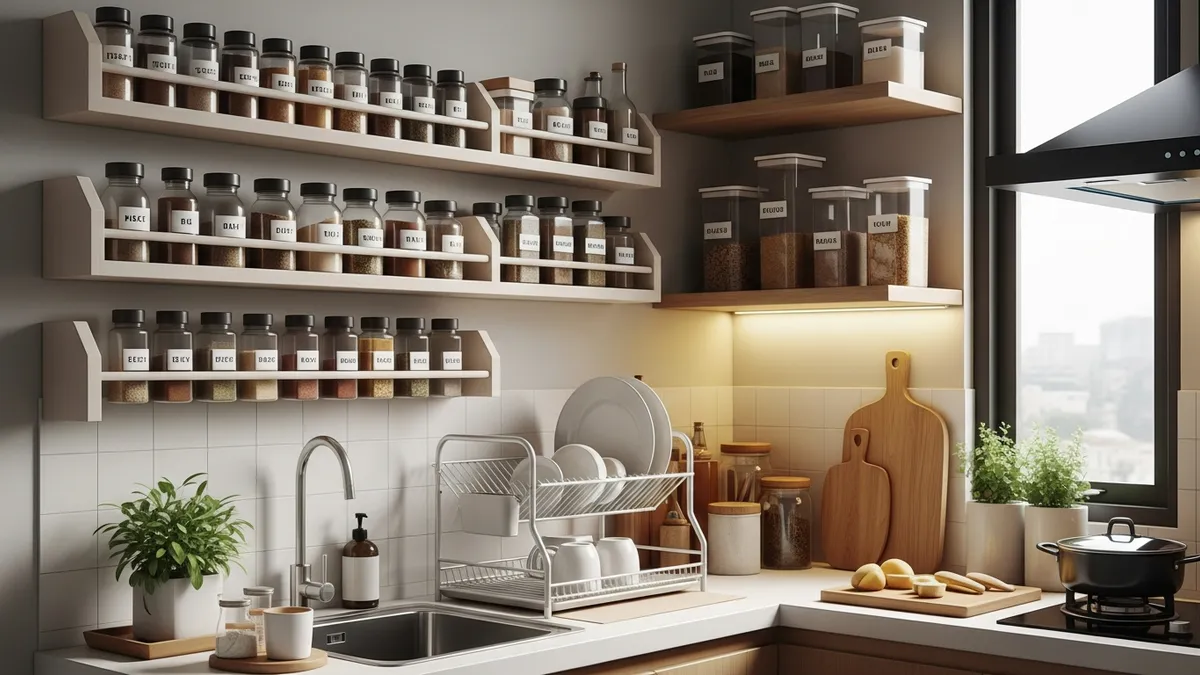
Wall-Mounted Spice Rack
A spice and herb collection is one of the main culprits behind small-kitchen clutter. The solution is a wall-mounted spice rack. With a vertical spice rack, every bottle is neatly arranged, easy to see, and takes up no counter space at all.
Cabinet and Cupboard Organization: Every Inch Counts
The inside of your kitchen cabinets and cupboards is prime storage that often isn't used to its full potential. Here's how to optimize it.
Use Stackable Containers
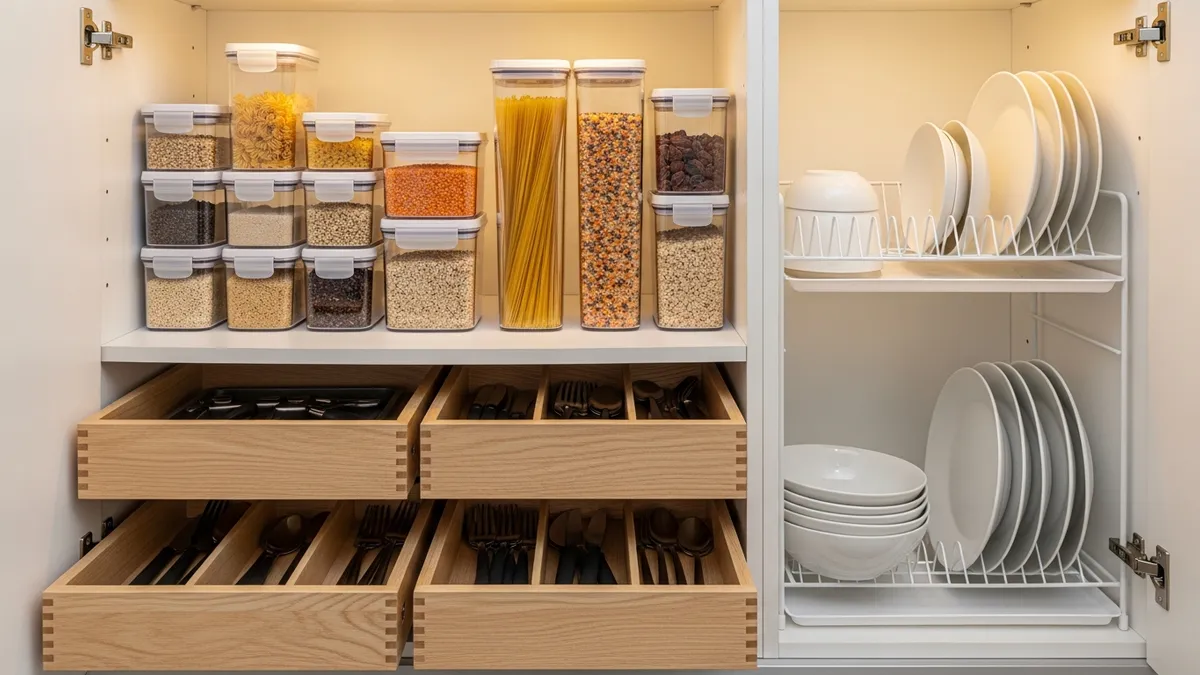
Stackable containers are the best investment for a small kitchen. Instead of mismatched boxes that can't be stacked neatly, choose one container system designed to stack. This can significantly multiply your cabinet's storage capacity.
Stackable airtight food storage containers come in a range of sizes, from small containers for spices to large ones for rice or flour. Be sure to choose BPA-free products for your family's food safety.
Add Extra Shelves Inside Cabinets
If the gap between cabinet shelves is too tall, add extra stacking shelves inside. These add-on shelves come as wire or plastic racks that install easily without drilling. This way, the vertical space inside your cabinet doesn't go to waste.
Kitchen Drawer Organizers
A messy kitchen drawer is a common problem in tiny kitchens. Use kitchen drawer organizers with modular dividers that adjust to your drawer size. Separate spoons, forks, knives, and other small cooking tools into their own compartments.
Under-Sink Cabinet Organizers
The area under the kitchen sink often becomes a disorganized "dumping ground." Yet with a dedicated under-sink organizer, this space can neatly hold dish soap, sponges, cleaning sprays, and kitchen cleaning supplies.
Style Your Countertop Smartly: Clean but Still Functional
The countertop is your main work area and should always stay clean and ready to use. That doesn't mean it has to be completely empty, though, only the items you truly use often and that have a fixed place belong there.
What Belongs on the Countertop?
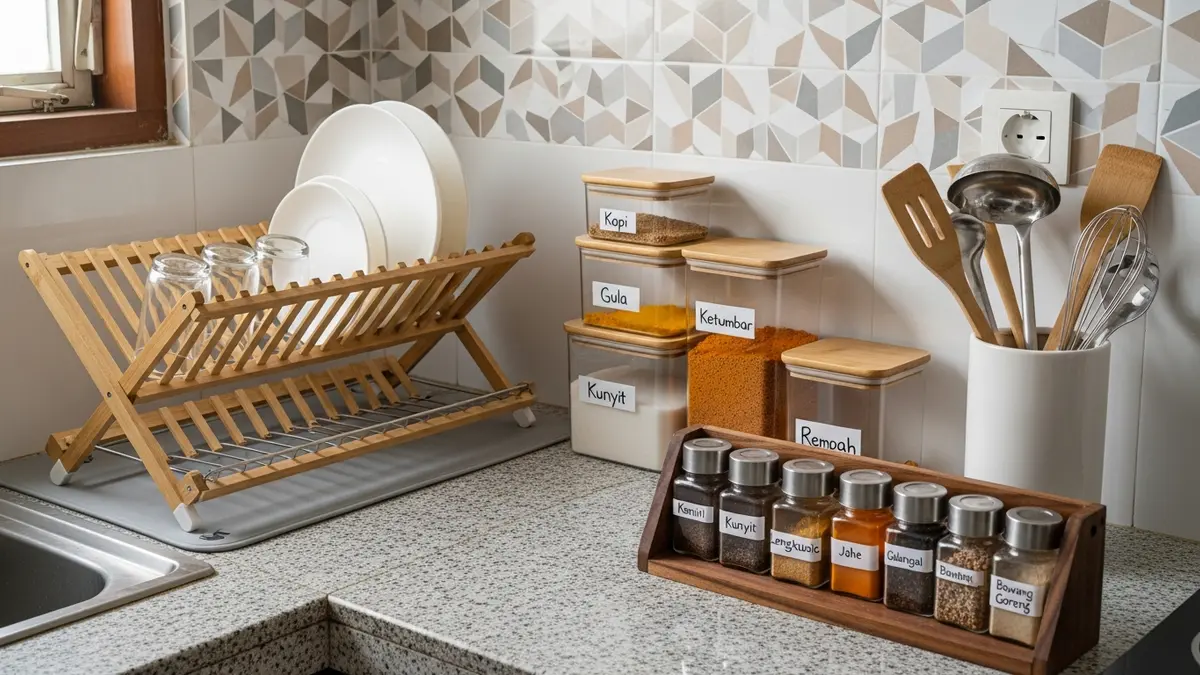
- A spatula and utensil holder: Use a vertical jar or container to store spatulas, wooden spoons, and peelers so they're within reach while cooking
- A small spice rack: Keep only the spices you use almost daily; the rest go in the cabinet
- A soap and sponge holder: Use a dedicated holder to keep the sink area tidy
- A small fruit bowl: If you have one, use a bowl or basket proportional to your counter size
Avoid Piling Things on the Counter
A countertop buried under piles of stuff isn't just unpleasant to look at, it also drastically reduces your available work area. Whenever something ends up "stranded" on the counter without a fixed place, find a storage solution for it right away, whether in a drawer, on a wall shelf, or inside a cabinet.
According to guidance from Good Housekeeping, a clutter-free countertop is one of the biggest factors in making a small kitchen feel roomier and more comfortable to use.
An Efficient Food Storage System for a Tiny Kitchen
Good food storage is at the core of how to organize a tiny kitchen in a truly functional way. With the right system, you can save space while keeping ingredients fresh longer.
Use Uniform, Transparent Containers
Swapping the various original product packages (which come in inconsistent sizes) for uniform, transparent storage containers is one of the biggest changes you can make. Uniform containers stack neatly, and transparent ones make it easy to see the contents without opening each one.
Glass food storage containers with lids are a premium option that's both attractive and food-safe. Meanwhile, for more practical everyday use, BPA-free plastic containers are a lighter, more affordable choice.
Label Every Container
Labeling is a small step with a big impact. With clear labels, every family member can find and return ingredients to the right spot easily. Use a water-resistant label organizer so labels don't get damaged in the humid kitchen environment.
Arrange by Category
Separate storage by category: grains and flour in one area, dry spices in another, canned food on its own shelf, and so on. This categorization makes cooking much faster because you know exactly where to look.
Apply the FIFO System
FIFO (First In, First Out) means ingredients that come in first should be used first. Put new items in the back and older ones in front. This system prevents ingredients from expiring before you get to use them, so you don't waste money and you reduce kitchen waste.
"An organized kitchen isn't just about looks, it's about saving time, saving money, and enjoying cooking every single day."
Create Clear Work Zones in Your Tiny Kitchen
One often-overlooked secret of how to organize a tiny kitchen is the concept of zoning, dividing the kitchen into clear functional areas even when space is very limited.
Prep Zone
This is a clean, open counter area for chopping, dicing, and prepping ingredients. Keep this zone free of clutter and close to your cutting board, knives, and temporary containers for prepped ingredients.
Cooking Zone
The area around the stove is the cooking zone. This is where pans, pots, spatulas, and frequently used spices should be within reach. A rack above the stove can be a big help for storing the spices and cookware you need most often.
Washing and Cleanup Zone
The sink area is the washing zone. Place soap, sponges, a towel, and a dish rack around it. A compact, efficient dish rack, like a mini dish rack or an over-the-sink dish rack, is a must-have investment for a tiny kitchen.
Storage Zone
All the ingredients, tableware, and kitchen supplies you're not currently using belong in the storage zone, inside cabinets, on shelves, and in drawers. Make sure this zone is well organized so finding things doesn't take forever.
Recommended Products for Organizing a Tiny Kitchen in 2026
Here are the product categories you'll need most to put all the strategies above into action. You can find the full selection in the Sesoris product collection.
- Stackable, airtight food storage containers: The foundation of a tidy, hygienic kitchen storage system
- Kitchen wall shelves: To take advantage of vertical space that often goes unused
- A wall or countertop spice rack: So your spice collection doesn't end up scattered
- Kitchen drawer organizers: To separate small tools so they're easy to find
- A compact dish rack: Choose a size that fits your kitchen's capacity
- An under-sink organizer: Turning a frequently messy area into orderly storage
- Labels and a labeling system: The key to long-term consistency in staying tidy
- Modular baskets or storage boxes: For grouping items inside cabinets
For the latest and best-selling product inspiration, visit the best sellers and new arrivals pages at Sesoris.
For small-kitchen design inspiration from around the world, you can also explore Houzz, which offers thousands of photos of real kitchens in every style and size as a visual guide.
Extra Tips: Small Habits That Keep a Tiny Kitchen Tidy
Organizing a kitchen is one thing; keeping it tidy is another. Here are simple habits that can make a big difference:
- Clean the kitchen after every cooking session: Don't let dishes, cutting boards, or leftover ingredients pile up on the counter. Five minutes of cleaning after cooking is far easier than facing a big mess at the end of the day
- Put things back right away: As soon as you're done using something, return it to its place immediately. This habit prevents the slow but steady buildup of clutter
- Do a monthly audit: Once a month, spend 15 minutes checking your kitchen cabinets. Toss expired items and reorganize any containers that have gotten messy
- Get the whole family involved: A kitchen organization system only works if everyone in the home knows and follows it. Post labels that are easy for everyone to read, including kids
- Don't buy more than you can store: This is the biggest temptation, especially during grocery runs. Buy according to your kitchen's storage capacity
For a more thorough home-decluttering guide, you can read our beginner's guide to decluttering your home.
Related Products from Sesoris
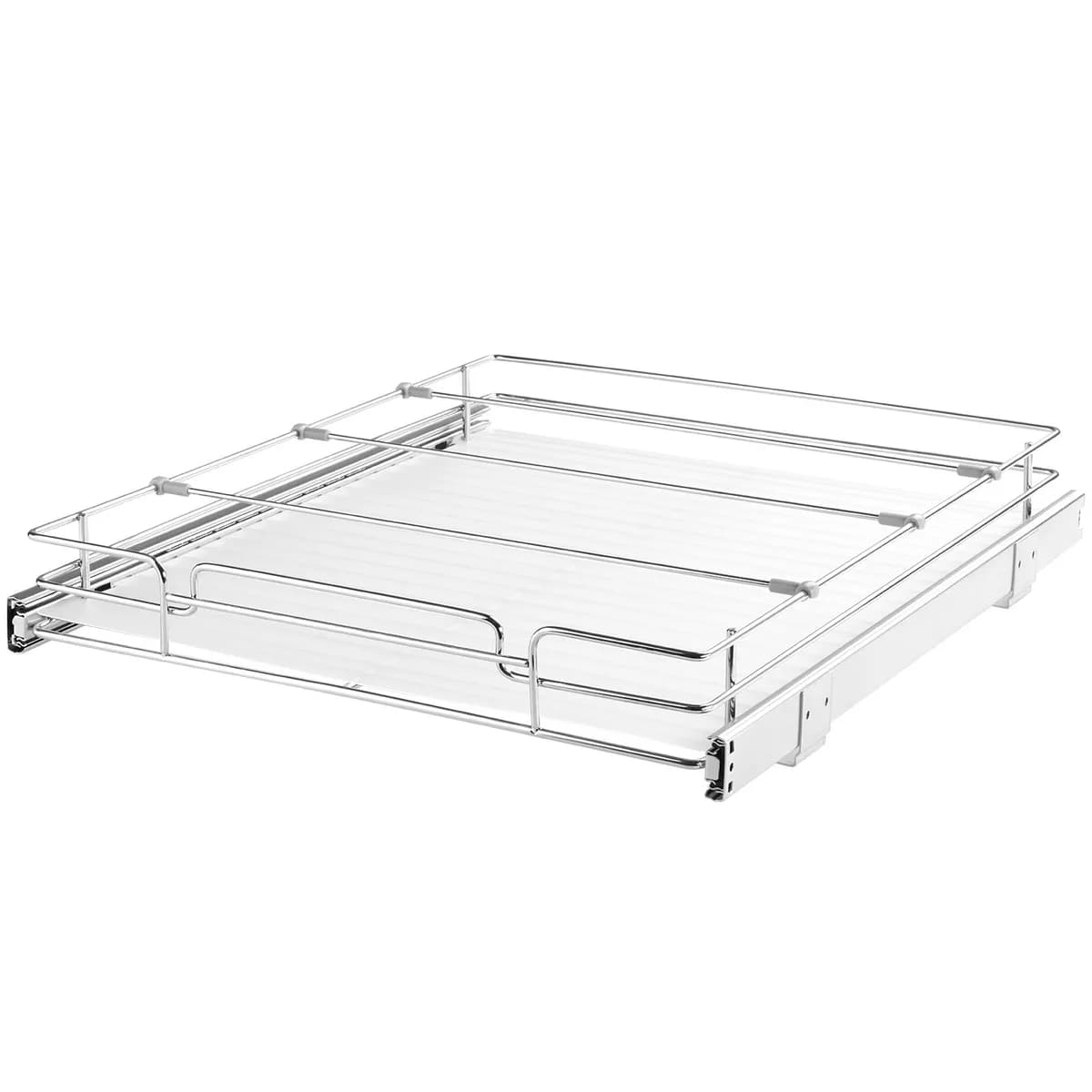
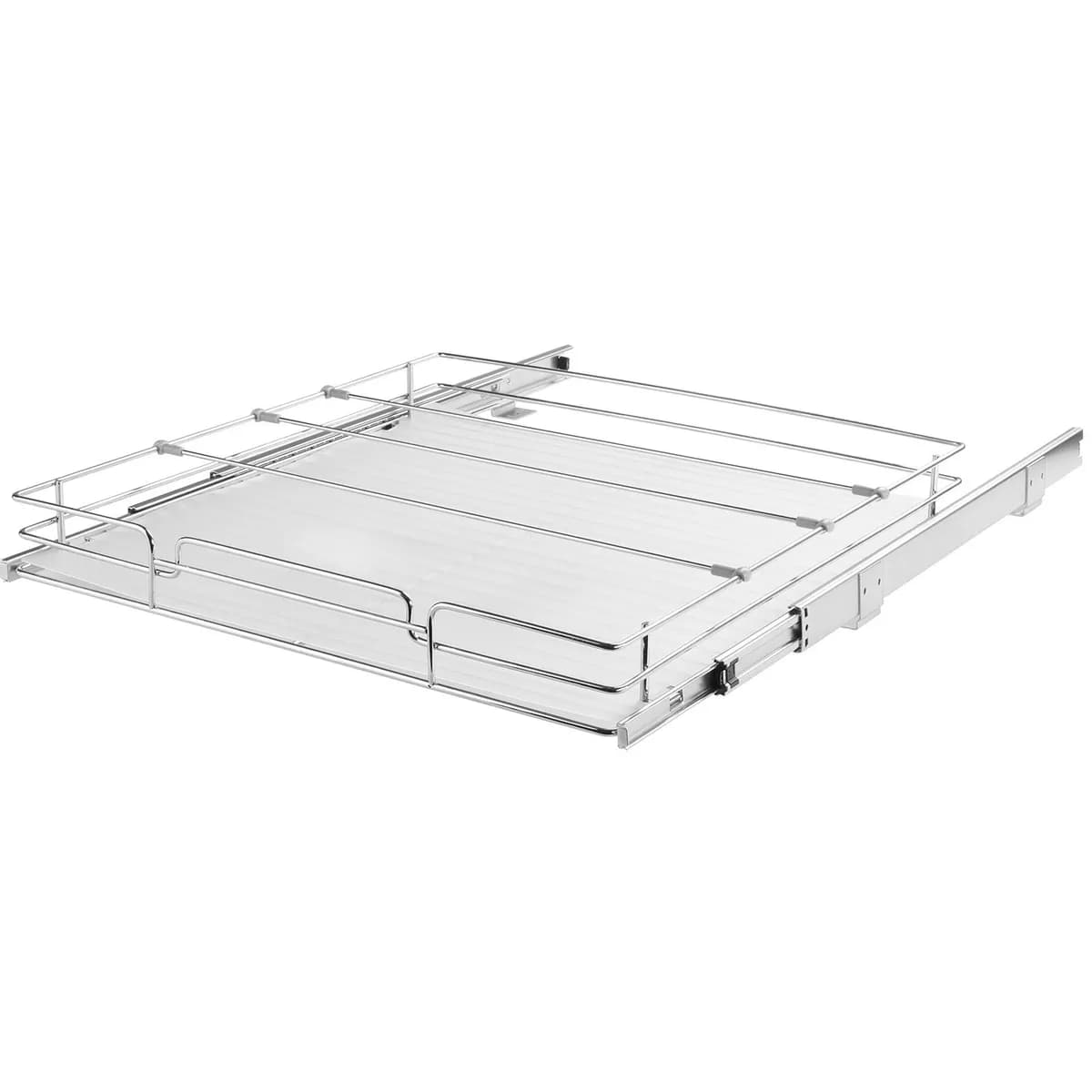
If you want to turn this guide into a real setup, start with Pull-Out Cabinet Organizer, 14 in. Wide and Double-Layer Bamboo Bread Box. For broader options, browse the Kitchen & Dining collection so the article journey does not stop at reading only.
Our practical rule: choose one product that solves the main clutter problem first, then add supporting organizers only when the daily workflow is already clear. This keeps the shopping path useful, not pushy.
FAQ: Common Questions About How to Organize a Tiny Kitchen
Q: Where should I start if my kitchen is a total mess?
Start with a full declutter: take everything out of your cabinets and off the counter, then sort what to keep and what to toss or donate. Only after that should you start putting things back based on how often you use them and their functional category.
Q: Are open wall shelves suitable for a kitchen used often for cooking?
Open wall shelves work as long as you're disciplined about keeping them clean and tidy. For a kitchen with lots of active cooking, smoke, and oil, choose lidded containers on the open shelves so the contents don't get dirty. Clean the shelves regularly.
Q: Which product is the most important to buy first?
The top priority is uniform, stackable food storage containers, because they directly and significantly affect your cabinet capacity. The second priority is a wall shelf or spice rack to take advantage of vertical space. After these two, you'll already notice a huge difference.
Q: How much of a budget do I need to reorganize a small kitchen?
It varies a lot depending on your kitchen's condition and the products you choose. But you can start on a relatively affordable budget, say around $15 to $40 for a basic set of storage containers and a drawer organizer. Add wall shelves gradually as your budget allows.
Q: Is an open kitchen harder to organize than a closed one?
An open kitchen actually demands more consistent tidiness because it's visible straight from the living or dining room. Use attractive storage containers and keep the counter area clean at all times. The upside is that an open kitchen usually feels roomier visually.
Conclusion: Start Organizing Your Tiny Kitchen Today
Understanding and applying how to organize a tiny kitchen isn't a one-night project, it's a gradual process whose results you'll enjoy every day. Start with decluttering, apply the zoning principle, make use of vertical space with wall shelves, use uniform labeled storage containers, and get into the habit of returning items to their place after use.
A tiny kitchen is no barrier to comfortable, enjoyable cooking. With the right products and a consistent system, your kitchen can become an efficient, clean, and even inspiring place to cook. Visit Sesoris to find a complete range of kitchen organization products designed to help you create the kitchen of your dreams, no matter how small it is. Explore all our products and start your journey toward a more organized kitchen today. Because as our tagline says: A More Organized Life starts with the small step you take right now.
Liked this guide?
Get new organizing guides and the occasional new product by email. No spam, unsubscribe anytime.
Related articles

Explore more articles
- Organization and Cleaning Services vs DIY: Complete Guide to Home Organization Solutions in 2026
- Complete Guide to Home Office Organization for Maximum Productivity in 2026
- Wooden Spice Racks for Kitchen: Ultimate Guide to Natural Storage Solutions 2026
- Freezable Food Storage Containers: Ultimate Guide to Safe Freezer Organization in 2026
- Pretty Food Storage Containers: Transform Your Kitchen with Stylish Organization Solutions 2026
- Guide to Choosing the Best Outdoor Backpack for Hiking and Camping (2026)
- Minimalist House Paint Colors: 25+ Best Ideas for Modern Homes 2026
- How to Organize Your Pantry Step by Step: Complete Tutorial for a Functional, Clutter-Free Kitchen in 2026