
Kitchen Sink Organizer Ideas: Caddies, Drip Trays and a Tidy Sink Area
Kitchen sink organizer ideas that keep sponges, brushes and dish soap in one dry spot: sink caddies, drip trays, over-the-sink racks, small-sink layouts, hygiene habits and what to keep beside the sink.
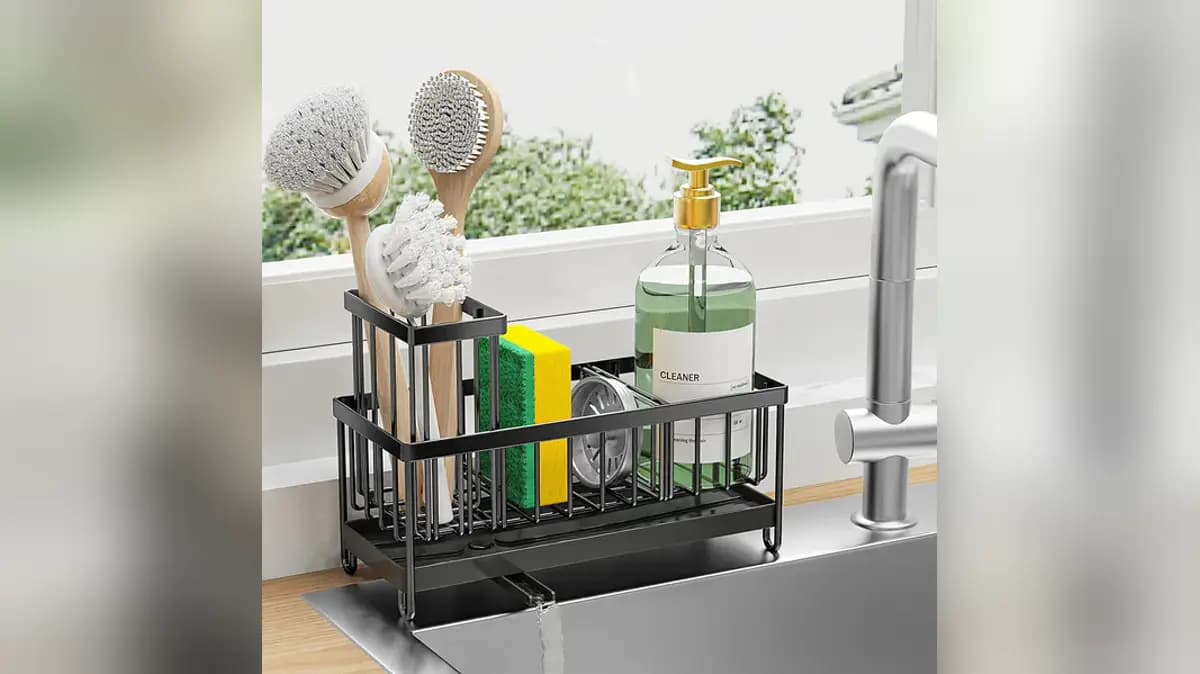
The most useful kitchen sink organizer ideas give your sponge, brushes and dish soap one compact home that drains back into the sink. Start with a sink caddy that has a drip tray or spout, keep only daily cleaning tools beside the sink, move backups underneath, and use the space above the sink with an over-the-sink rack if your counter is small. A quick daily rinse and a weekly wash of the caddy keep the area clean.
The sink is the busiest spot in most kitchens. Dishes, vegetables, hands and pets' bowls all pass through it, and the tools that keep it clean tend to sit wherever they were last dropped. A soggy sponge on the counter, a brush leaning against the faucet and three bottles of dish soap leave the area wet, cluttered and harder to wipe. This guide covers what belongs beside the sink, the main types of sink organizers, how to set up a caddy that actually stays dry, options for small sinks, and the hygiene habits that matter most in this part of the kitchen.
What Belongs Next to the Kitchen Sink
Start by clearing everything off the sink area and the windowsill above it. Only bring back what you use at the sink every day.
- Daily cleaning tools: one sponge, one dish brush, a scrubber for stuck-on food. 2. Dish soap and hand soap: in pump bottles or dispensers, one of each. 3. A drying spot: a small rack or mat if you hand-wash dishes daily. 4. Optional daily items: a bottle brush if you wash water bottles, a small plant if it gets light.
Everything else has a better home. Backup sponges and soap refills go under the sink. Specialty brushes, rubber gloves you use weekly and cleaning sprays go in a caddy or bin under the sink too. Our guide to under kitchen sink organization ideas covers that cabinet in detail.
Types of Kitchen Sink Organizers Compared
Different organizers solve different problems. Many kitchens combine a caddy for tools with a rack or mat for drying.
| Organizer type | Best for | Strengths | Watch out for |
|---|---|---|---|
| Sink caddy with drip tray or spout | Sponge, brush, scrubber, soap | Keeps tools upright and drains water into the sink | Tray needs regular cleaning |
| In-sink caddy (suction or hanging) | Very small counters | Uses space inside the sink basin | Suction cups can loosen over time |
| Absorbent stone tray | Soap bottles, a brush holder | Soaks up drips, looks tidy | Not for soaking-wet sponges left in puddles |
| Over-the-sink dish rack | Small kitchens with little counter | Moves drying and storage above the sink | Must fit sink width and faucet height |
| Roll-up drying rack | Occasional hand-washing | Rolls away when not in use | Holds fewer dishes than a full rack |
| Under-sink organizer | Backups, sprays, gloves | Keeps the counter clear | Out of sight, so restock checks are needed |
| Soap dispenser pump | Dish soap or hand soap | Removes one bottle from the counter | Refill and clean the pump regularly |
If you need a full drying solution, our review of over-the-sink dish drying racks compares sizes and features.
Sink Caddies: The Core of an Organized Sink
A sink caddy holds your daily cleaning tools upright so they can drain and dry instead of sitting in a puddle. The best caddies combine three features: an open wire basket so air reaches every surface, a separate cup for long-handled brushes and a drip tray that sends water back into the sink.
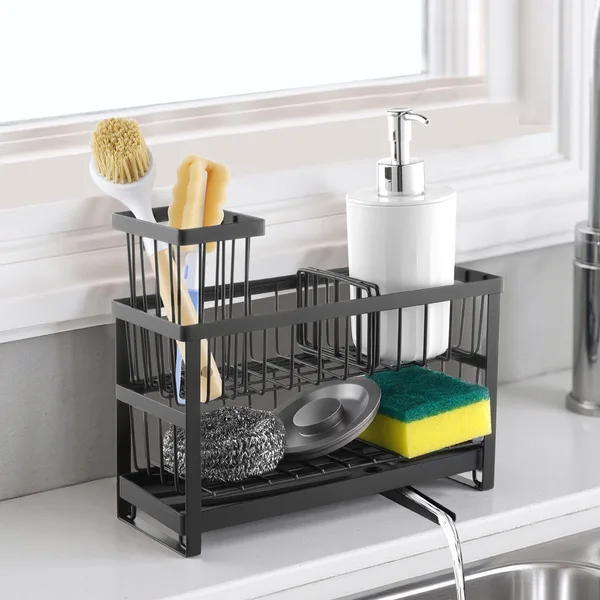
The sink caddy with brush holder and drain spout is a good example of this design. It measures about 9.37 inches long, 4.02 inches deep and 8.07 inches tall at the brush cup. A divider separates the sponge from the soap bottle, and the drip tray underneath channels water out through a spout that rotates 360 degrees, so you can point it into the sink from either side.
When setting up any caddy:
- Put brushes in the tall cup, heads up. Bristles dry faster when they are not resting in water. - Stand the sponge on its edge. A sponge lying flat stays wet underneath. - Keep the soap in the caddy, not beside it. One footprint is easier to wipe around than two. - Point the spout into the basin. Check that water actually lands in the sink, not on the counter edge.
Adjustable Dividers and Removable Brush Holders
Every household uses different tools. Some people keep a single sponge, others juggle a sponge, a scrubber, a bottle brush and a dish wand. A caddy with an adjustable divider adapts to that mix.
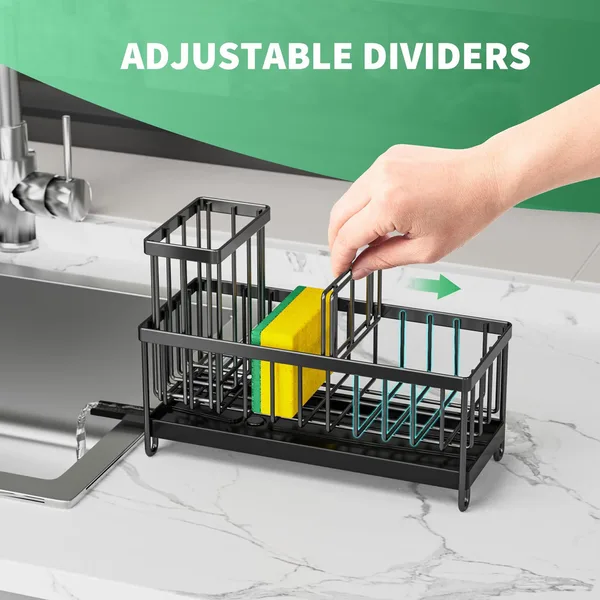
The sink caddy with removable brush holder measures 9.1 x 3.7 x 6.2 inches, and its divider can be moved to fit a sponge or a soap bottle. The brush holder lifts out, which makes it easier to clean and helps if you use longer brushes. A removable holder also means you can wash every part of the caddy without scrubbing around fixed corners.
Think about your own tools before buying. If you use a dish wand with a soap-filled handle, check that the brush cup is tall enough to keep it upright. If you use two sponges, one for dishes and one for counters, choose a basket long enough to hold both apart.
Drip Trays and Spouts: Keeping the Counter Dry
Water is the real enemy of a tidy sink area. A puddle under a sponge or soap bottle leaves marks, can damage some countertop finishes over time and makes the whole area feel dirty even when it is not.
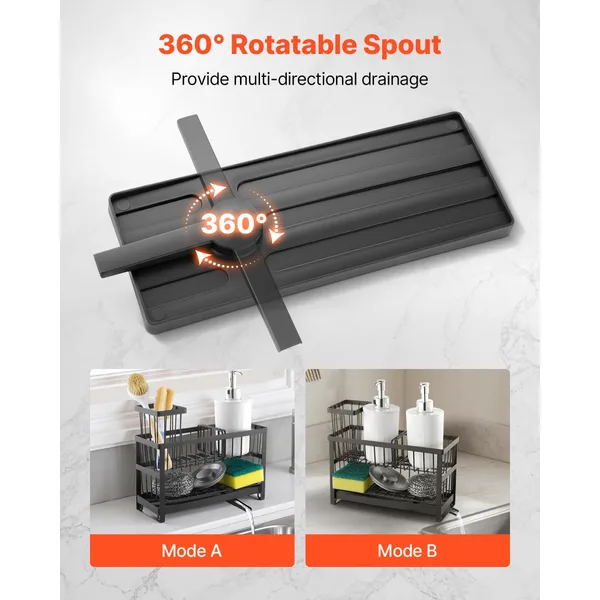
There are three common ways to manage drips:
- Drip tray with a spout. Water collects in the tray and flows out through a spout into the sink. No emptying required, as long as the spout points into the basin. - Removable drip tray without a spout. Water collects in the tray, and you empty it by hand. Simple, but easy to forget. - Absorbent tray. A stone-like tray, such as one made of diatomaceous earth, soaks up small drips under soap bottles. It works best for items that are damp, not dripping.
Whatever you choose, place the organizer where water can return to the sink. A caddy at the back corner of the sink, with its spout pointing in, keeps the front of the counter free for working.
Use the Space Above the Sink
In a small kitchen, the sink area is often the only stretch of open counter. An over-the-sink rack moves drying and storage up and out of the way.
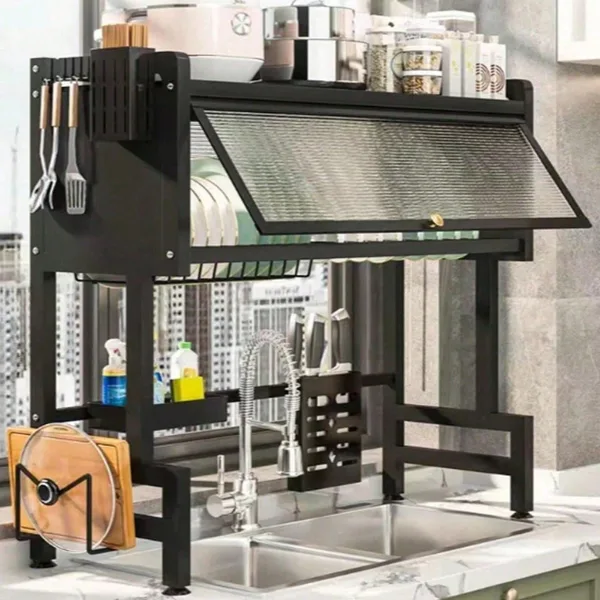
The covered over-the-sink dish rack is 25.6 inches wide, 31.9 inches tall and 11 inches deep, with about 19.7 inches of clearance under the dish tier for the faucet. It includes a storage basket for sponges and soap, a knife holder, a cutting board holder, a utensil holder and hooks, and a semi-transparent cover keeps dust off drying dishes.
Before buying any over-the-sink rack, measure three things:
- Sink width, including the counter on both sides where the legs will stand. 2. Faucet height, from the counter to the highest point, including any pull-down spray head. 3. Clearance below upper cabinets or a window, so the top of the rack fits.
Our budget-friendly dish racks guide covers lower-cost drying options if a full over-the-sink unit is more than you need.
Ideas for Small Kitchen Sinks
When the counter around the sink is only a few inches wide, every organizer needs to earn its spot.
- Choose a narrow caddy. A caddy around 4 inches deep fits on a thin ledge behind the sink. - Use the inside of the sink. A hanging or suction caddy inside the basin holds a sponge without using any counter. Remove it when washing large pots. - Swap bottles for a pump. A soap pump or a combined soap-and-sponge dispenser replaces a bottle and a sponge holder. - Hang a brush. A small hook on the side of a cabinet or the backsplash holds a dish brush by its handle. - Use a roll-up rack. A roll-up drying rack across the sink gives temporary drying space and rolls away afterward. - Keep the windowsill clear. If the sink sits under a window, a narrow sill is tempting storage. Limit it to one or two items so it does not become a second clutter zone.
For more space-saving ideas around the whole counter, see our kitchen countertop organizer ideas.
Set Up Sink Zones
A simple zone plan makes the sink area easier to use and to keep clean. Treat the space around the sink as three parts.
| Zone | Where | What goes there |
|---|---|---|
| Cleaning zone | Back corner of the sink, near the faucet | Caddy with sponge, brush, scrubber and dish soap |
| Drying zone | Beside the sink or above it | Dish rack, drying mat or over-the-sink rack |
| Prep zone | The clear counter on the other side | Nothing permanent, so you can chop and stack |
| Storage zone | Under the sink | Backups, sprays, gloves, trash bags |
Most people are right-handed, but set your zones around how you actually wash. If you load dishes from the left and dry on the right, put the caddy on the left so tools are where your hands start.
Hygiene Habits for Sponges and Brushes
Damp sponges and brushes can harbor bacteria, so the way you store and care for them matters as much as where they sit. A few habits help:
- Rinse and wring after every use. Squeeze out food and as much water as possible. - Store upright and open to the air. A caddy with an open basket dries tools faster than a closed dish. - Clean or replace sponges regularly. Follow the manufacturer's care instructions for your sponge, and replace it when it smells, frays or starts to fall apart. - Separate tasks. Use one sponge for dishes and another for counters or spills, and keep them on opposite sides of the caddy divider. - Wash the caddy weekly. Residue builds up in drip trays and spouts. Most wire caddies can be washed with hot soapy water and a brush. - Let brushes dry head up. Bristles stored face down stay damp longer.
Our guide on how to keep your kitchen organized folds these habits into a simple weekly routine.
Dish Soap, Hand Soap and Towels
Soap bottles and towels are the other everyday items that crowd a sink. A little planning keeps them useful without adding clutter.
- One dish soap, one hand soap. Many kitchens end up with several half-used bottles. Finish them one at a time and store refills under the sink. - Pump bottles save a step. A pump dispenses with one hand, which helps when your other hand is holding a dish. Label refillable pumps clearly so dish soap and hand soap are never mixed up. - Keep soap inside the caddy. A caddy with a divider holds the bottle upright beside the sponge, so the drip from the pump lands in the tray, not on the counter. - Give the hand towel a hook or bar. A towel hanging from the oven door or a cabinet front dries faster than one folded on the counter. Our kitchen towel rack ideas show options that do not need drilling. - Swap towels often. A damp towel next to the sink is used for hands, dishes and spills, so change it regularly.
Match the Organizer to Your Kitchen Style
A sink organizer sits in one of the most visible spots in the kitchen, so it is worth choosing one that blends in.
- Black wire suits modern kitchens with black faucets, handles or light fixtures, and hides minor water spots better than chrome. - Stainless or chrome matches a stainless sink and appliances, though it shows water marks sooner. - White keeps a bright, light kitchen calm, and looks best when it is cleaned often. - Stone or wood accents add warmth. Keep wood away from standing water unless it is sealed.
Repeating one material, such as a black caddy, black soap pump and black hooks, makes the sink area look intentional. If you keep anything on open shelves near the sink, our open shelving kitchen ideas explain how to style them without creating more clutter.
Choosing a Sink Organizer That Lasts
The sink area is constantly wet, so material quality matters more here than in most of the kitchen.
- Rust-resistant finishes. Look for coated or stainless metal, and check the welds and feet, where rust usually starts. - Raised feet. Small feet lift the caddy so air can reach the underside and the counter can dry. - Removable parts. Removable brush cups and drip trays are far easier to wash. - Right size for your tools. Measure your longest brush and your soap bottle before buying. - No drilling if you rent. Freestanding caddies and racks avoid holes in counters or backsplashes.
Keep the Sink Area Tidy Every Day
A sink organizer works only if tools go back into it. Build a short routine:
- After washing up: rinse and wring the sponge, stand it in the caddy, and put brushes back head up. 2. Before bed: wipe the counter around the sink and check the spout or tray for standing water. 3. Weekly: wash the caddy and drip tray, and check how worn your sponge and brushes are. 4. Monthly: restock soap and sponges from under the sink, and remove anything that has drifted onto the sink area.
Frequently Asked Questions
What is the best way to organize a kitchen sink area?
Keep only daily tools by the sink in one caddy with a drip tray or spout, put drying in its own zone and move backups under the sink. Leave the counter on the other side clear for prep.
Where should I keep my sponge by the kitchen sink?
In an open caddy or holder that lets it stand on its edge and drain into the sink. Avoid leaving a sponge lying flat on the counter or in a closed dish, where it stays wet.
Is a sink caddy with a drain spout worth it?
For most kitchens, yes. A spout sends water from wet sponges and brushes back into the sink, so you do not need to empty a tray or wipe up puddles on the counter.
How do I organize a small kitchen sink with no counter space?
Use a narrow caddy on the ledge behind the sink, an in-sink caddy, a soap pump instead of a bottle, a hook for the dish brush and a roll-up drying rack. An over-the-sink rack also adds storage above the basin.
How often should I clean my sink caddy?
Rinse it as needed and wash it with hot soapy water about once a week. Pay attention to the drip tray and spout, where residue collects.
What should go under the kitchen sink instead of beside it?
Backup sponges and soap, cleaning sprays, rubber gloves, trash bags and specialty brushes. Keep only the tools you use every day beside the sink.
How do I measure for an over-the-sink dish rack?
Measure the sink width including the counter where the legs will stand, the faucet height including any pull-down spray head, and the clearance below upper cabinets or a window.
How do I stop water pooling around the sink?
Use a caddy with a spout pointing into the sink, choose organizers with raised feet and wipe the area as part of a quick evening reset.
Final Thoughts
Good kitchen sink organization comes down to one compact cleaning station that drains into the sink. Keep only daily tools by the sink, choose a caddy with a brush cup, an adjustable divider and a drip tray or spout, and give drying its own zone, above the sink if counter space is short. Store sponges and brushes upright to dry, wash the caddy weekly and move backups underneath. For the rest of the kitchen, see our kitchen organizer ideas and our small kitchen organization ideas.
Liked this guide?
Get new organizing guides and the occasional new product by email. No spam, unsubscribe anytime.
Related articles

Explore more articles
- Minimalist Kitchen Islands: Modern Design Solutions for Small Homes
- Simple Ramadan Decoration Ideas to Create a Festive Home Atmosphere
- Overhead Garage Storage Solutions: Ultimate Guide to Transform Your Garage Space in 2026
- Steel Wire Dish Racks: Strong and Economical Kitchen Storage Solutions
- DIY Wooden Spice Rack: Step-by-Step Guide
- Craft Storage Room Ideas: Transform Your Creative Space with Smart Organization in 2026
- Freezable Food Storage Containers: Ultimate Guide to Safe Freezer Organization in 2026
- 25+ Creative Kitchen Organizer Ideas to Transform Your Cooking Space in 2026