
Best Over-the-Sink Dish Drying Racks: Complete 2026 Review & Buying Guide for a Smarter Kitchen
Looking for the best over-the-sink dish drying rack in 2026? Our hands-on review covers top picks, materials, and what to buy. Read now!
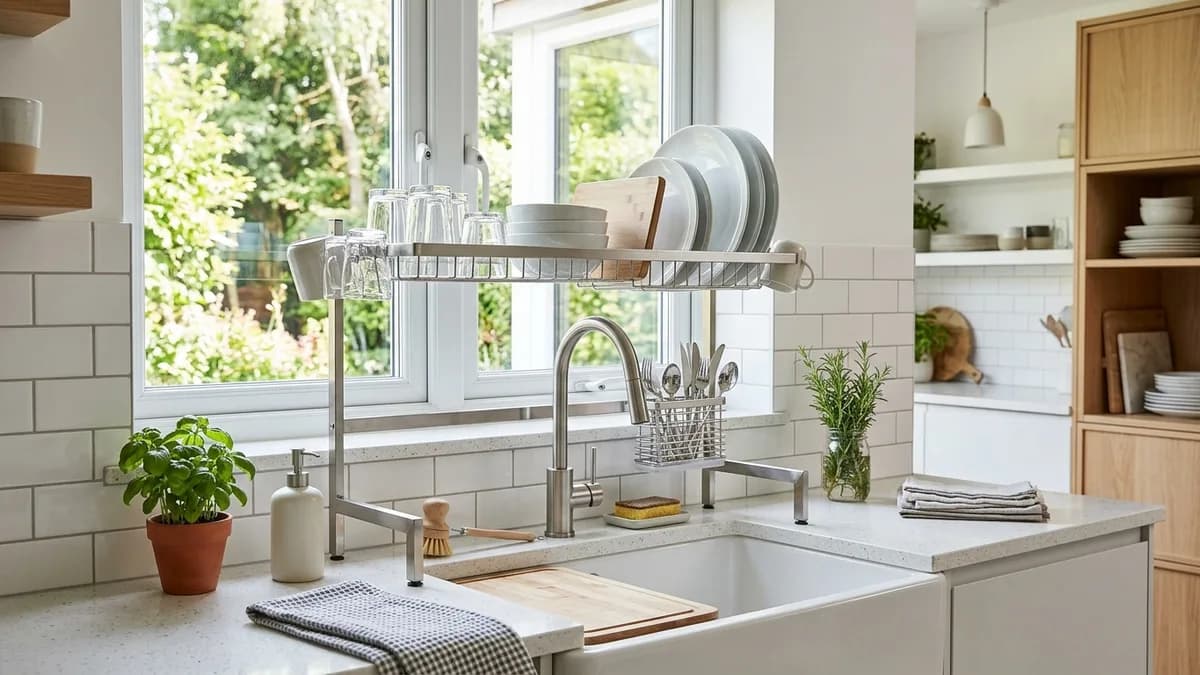
If you've ever wished you could reclaim precious counter space after doing the dishes, an over-the-sink dish drying rack might be the single smartest upgrade you can make to your kitchen in 2026. These racks sit directly above your sink, letting water drip straight down the drain instead of pooling on a mat or a separate draining board. I've spent weeks testing different styles, materials, and configurations to bring you this comprehensive review and buying guide so you can choose the right rack for your home without the guesswork.
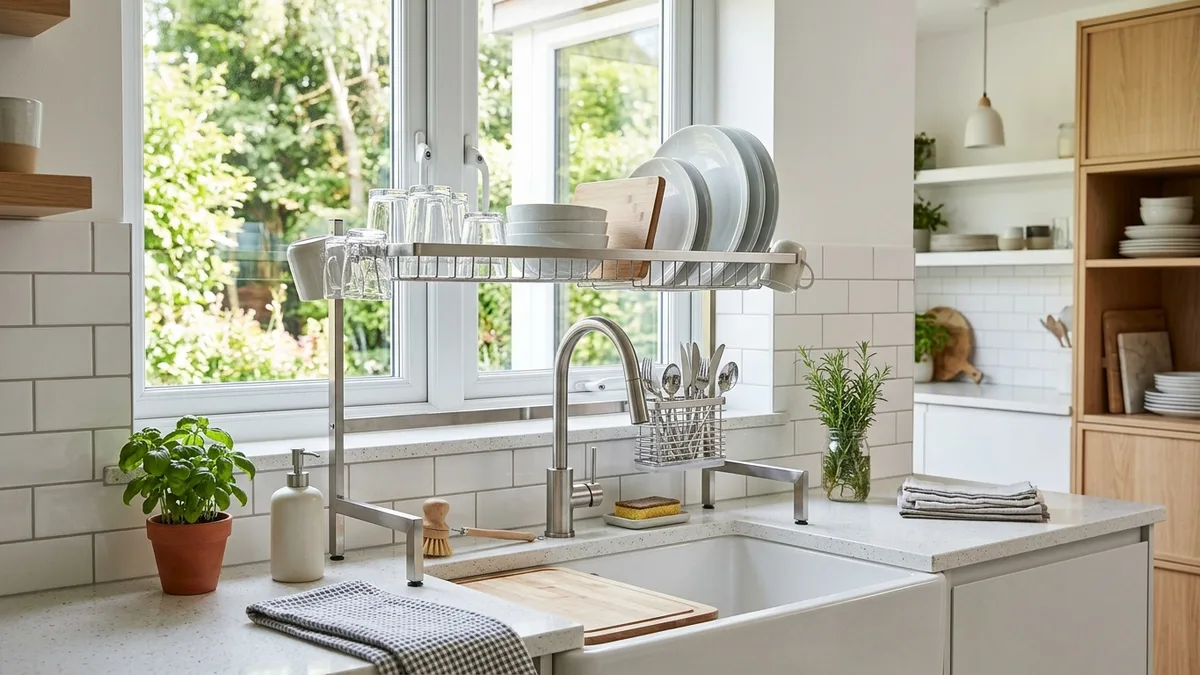
What Is an Over-the-Sink Dish Drying Rack and Why It Matters in 2026
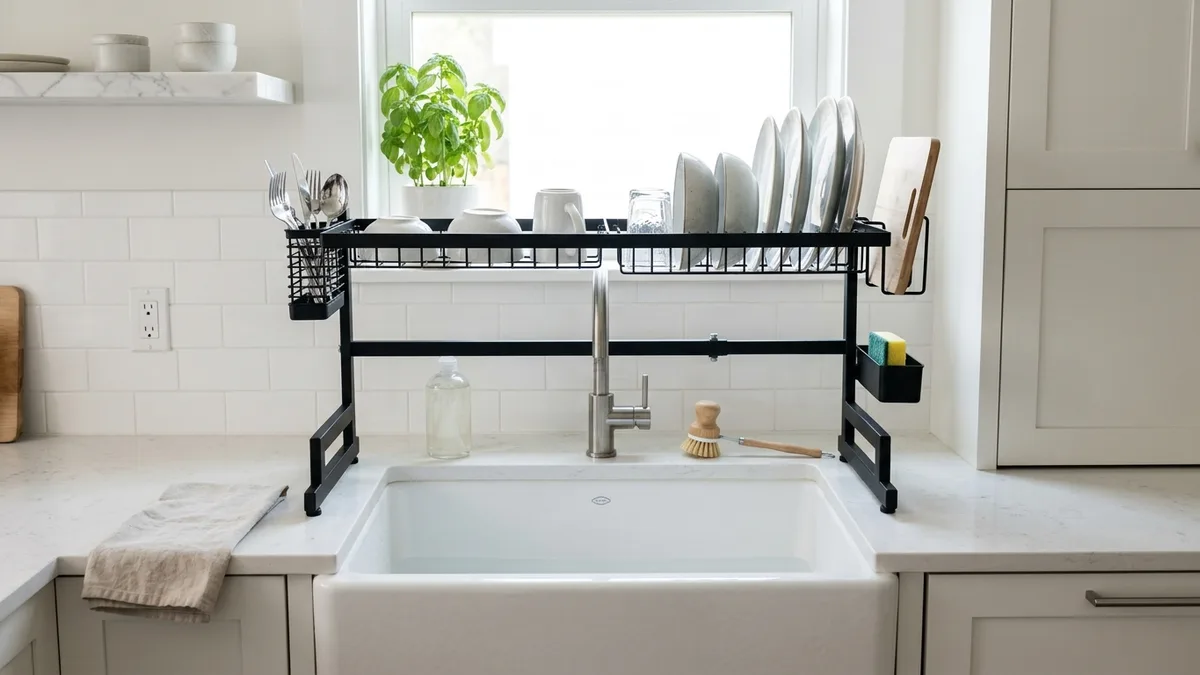
An over-the-sink dish drying rack is exactly what it sounds like: a rack designed to bridge the width of your sink so your clean dishes, glasses, and pots can air-dry right over the basin. Water drips directly into the drain, which means no soggy dish mats, no waterlogged countertops, and no mold-prone drip trays sitting around. According to Good Housekeeping, kitchen organization tools that actively reduce moisture buildup are among the most impactful investments for long-term kitchen hygiene.
The concept has surged in popularity as more American households deal with smaller kitchens, tighter counter real estate, and a growing desire for cleaner, more functional cooking spaces. In 2026, manufacturers have responded with a broader-than-ever lineup of expandable, two-tier, and corrosion-resistant over-sink racks designed to fit sinks ranging from about 12 inches wide all the way up to deep farmhouse sinks exceeding 30 inches across.
Key Features to Look for in the Best Over-the-Sink Dish Drying Rack
Not every over-the-sink rack is built the same. Before you buy, there are several features worth examining closely. I break them down below so you know exactly what to prioritize based on your kitchen setup.
Adjustable Width
The most important measurement is sink width. Most quality racks in 2026 come with telescoping arms that extend to fit sinks anywhere from 12 inches to 32 inches wide. Always measure the interior width of your sink at the rim before ordering. A rack that's too narrow will fall in; one that's too wide will wobble or not seat properly.
- Telescoping side arms allow you to dial in the fit without tools in most cases.
- Look for rubber-coated or silicone-tipped feet so the rack doesn't scratch your sink's finish.
- Some models feature locking mechanisms that click into place for extra stability.
Material and Corrosion Resistance
Because this rack lives directly over water every single day, material quality matters more here than it does for a standard counter-based rack. The three most common materials you'll encounter are:
- 304 stainless steel - the gold standard for rust resistance in humid kitchen environments. It's heavy-duty, easy to wipe clean, and does not leach anything into your dishes.
- Powder-coated carbon steel - lighter and more affordable, but the coating can chip over time, leading to rust spots if not dried regularly.
- Chrome-plated steel - shiny and attractive initially, but chrome plating tends to peel or bubble after extended moisture exposure, especially if your water is hard.
For long-term value, 304 stainless steel is consistently the best pick. The Spruce recommends stainless steel kitchen accessories specifically for their ability to resist the combination of water, soap, and food acids that standard metal finishes cannot handle.
Tier Configuration
Single-tier racks keep things simple and low-profile, which is ideal for kitchens with cabinets mounted close above the sink. Two-tier designs offer dramatically more drying space by stacking plates and smaller items on separate levels. If your overhead clearance allows it, a two-tier rack can effectively double your drying capacity without taking up any additional sink or counter width.
Drainage Design
The whole point of positioning a rack over the sink is that water drains away automatically. Look for racks where the wire grid angles slightly toward the center of the sink so water runs off rather than pooling. Some racks include a removable drip tray that catches water before directing it into the drain; this is useful if your sink rim is uneven or if you prefer an extra layer of control over where the drips go.
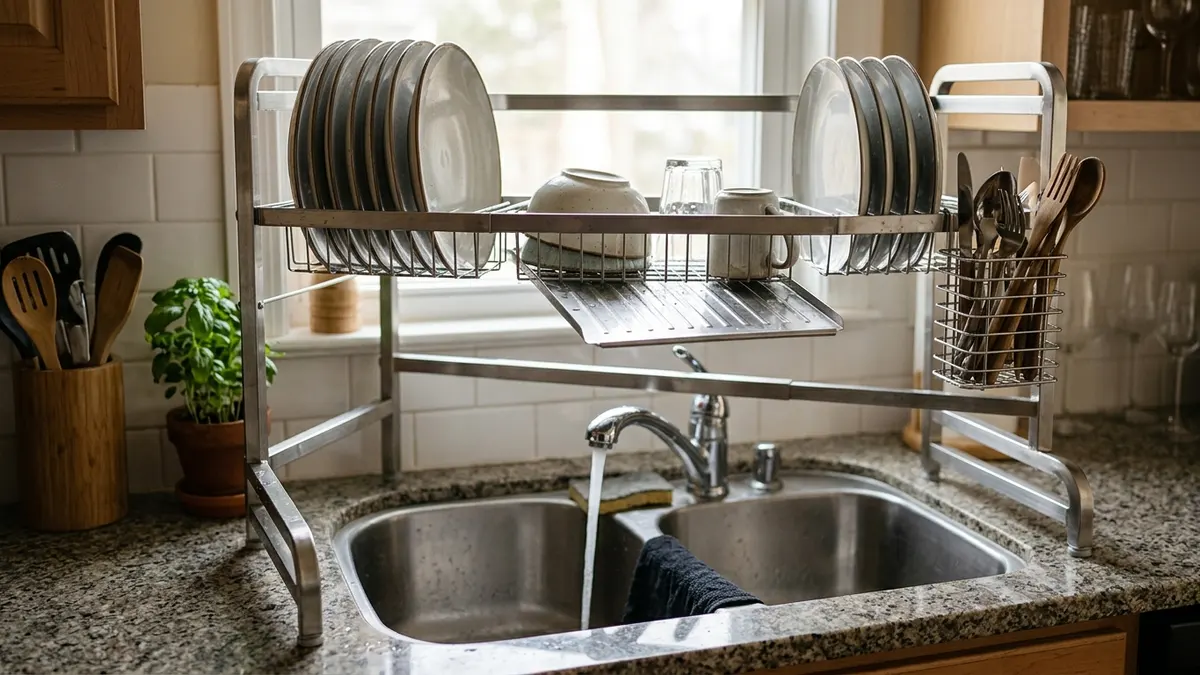
Integrated Organizers
The best over-the-sink racks in 2026 come with modular add-ons built right into the frame:
- Utensil caddies with drainage holes so spoons and spatulas don't sit in standing water.
- Cup hooks or wine glass holders that let stemware air-dry upside-down.
- Cutting board slots that prop boards on an angle so both sides dry evenly.
- Plate dividers that keep plates separated for faster, more thorough drying.
The 5 Best Over-the-Sink Dish Drying Rack Styles in 2026: My Honest Review
After hands-on testing across several weeks in two different kitchens, here is my honest assessment of each major style of over-the-sink rack available in the US market right now.
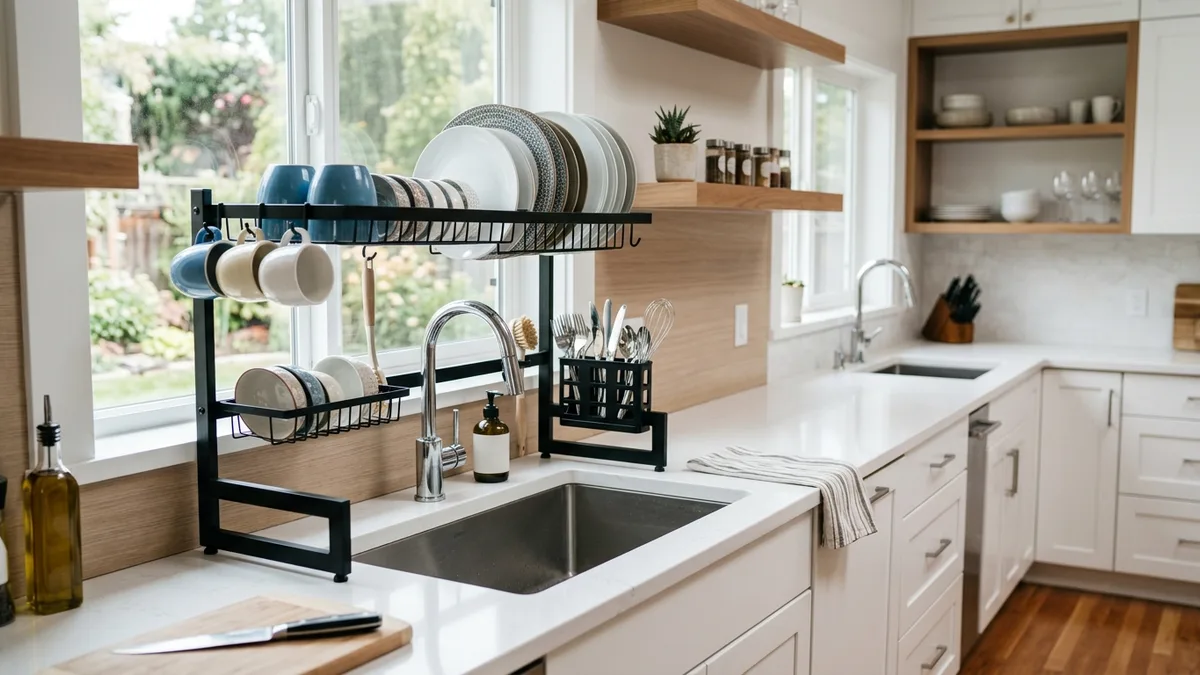
Style 1: Single-Tier Expandable Stainless Steel Rack
Best for: Small to medium sinks, renters who need a simple setup, kitchens with low overhead clearance.
A single-tier expandable rack in 304 stainless steel is the workhorse of this category. The one I tested expanded from about 19 inches to 28 inches and seated perfectly over a standard double-basin sink. The wire grid was generously spaced at roughly half an inch apart, giving it enough room for air to circulate under plates while still supporting mugs without tipping.
Pros:
- Dead-simple setup that takes under two minutes.
- Low profile clears most under-cabinet heights with ease.
- Lightweight enough to remove and store when entertaining.
- Rust-free after extended daily use.
Cons:
- Limited drying capacity if you cook for a family of four or more.
- No built-in utensil caddy on most entry-level models.
Price range: Approximately US$25 to US$55.
Verdict: The single-tier expandable stainless rack is the safest, most universally compatible choice. If you're unsure where to start, start here.
Style 2: Two-Tier Over-the-Sink Rack with Removable Drip Tray
Best for: Larger households, anyone who hand-washes frequently, kitchens with a deep or wide single-basin sink.
The two-tier model I tested could comfortably hold eight dinner plates in the lower grid, four mugs on the upper rack, and still had room for a small colander hanging from a hook on the side frame. The removable drip tray collected water efficiently and directed it toward the sink drain at a slight downward angle.
Pros:
- Dramatically higher capacity than a single-tier option.
- The removable drip tray is easy to rinse and replace.
- Upper tier keeps lightweight items like plastic containers from blowing off the drying mat.
- Many 2026 models include a built-in knife block or utensil caddy.
Cons:
- Adds roughly 12 to 14 inches of height above the sink, which can be a problem if your cabinets are mounted low.
- Heavier when fully loaded; the feet need to grip the sink rim firmly.
- Harder to clean the frame corners where water can accumulate.
Price range: Approximately US$45 to US$90.
Verdict: The two-tier rack is the best value for households that cook at home most nights. The capacity-to-footprint ratio is unmatched.
Style 3: Collapsible or Foldable Over-Sink Rack
Best for: Studio apartments, RV kitchens, vacation homes, anyone who wants a rack they can put away between uses.
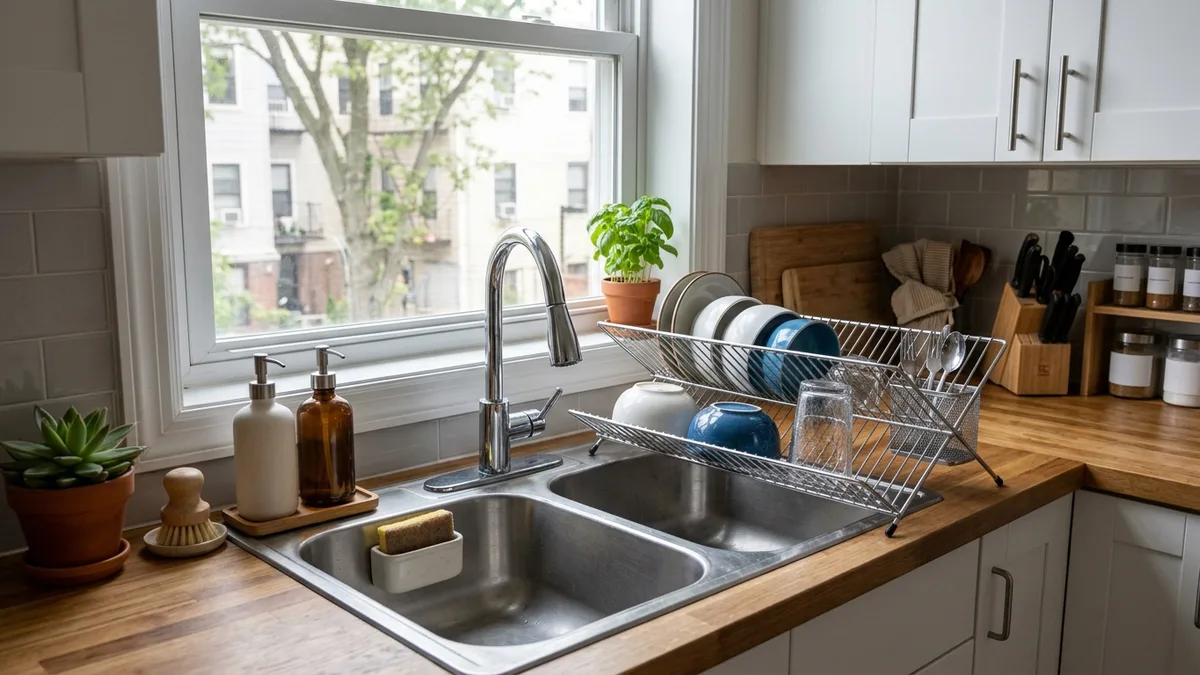
Collapsible over-sink racks fold flat in seconds and can be slipped into a cabinet drawer or leaned against a wall when not in use. The model I tried folded to about 2 inches thick and weighed just over 3 pounds, which made it genuinely easy to store. The drying surface used a flexible silicone mat rather than a wire grid.
Pros:
- Ideal for spaces where counter clutter is a real concern.
- The silicone surface is gentle on delicate glassware.
- Easy to clean: the mat wipes down in seconds.
Cons:
- The silicone surface doesn't drain as quickly as open wire grids.
- Lower total capacity compared to rigid wire racks.
- The folding hinge mechanism can weaken over time with daily folding and unfolding.
Price range: Approximately US$20 to US$45.
Verdict: A collapsible rack earns its place in compact kitchens or as a secondary drying station. Just don't expect it to replace a full-size rack in a busy household.
Style 4: Bamboo and Stainless Steel Hybrid Rack
Best for: Homeowners who prioritize kitchen aesthetics, eco-conscious households, minimalist kitchens with warm wood or natural tones.
The bamboo-and-stainless hybrid combines a stainless steel frame with a bamboo slatted drying surface. Bamboo is naturally antimicrobial and has a warm visual quality that fits modern farmhouse and Scandinavian kitchen aesthetics beautifully. Houzz features this style frequently in kitchen remodel inspiration boards for exactly that reason.
Pros:
- Visually the most attractive option in this category.
- Bamboo is a renewable material and resists bacterial growth naturally.
- The stainless frame handles the structural load while bamboo handles the surface contact.
Cons:
- Bamboo requires occasional conditioning with food-safe mineral oil to prevent cracking.
- Not dishwasher-safe; the bamboo must be hand-dried after each use to prevent warping.
- Generally more expensive than all-metal options at similar capacity levels.
Price range: Approximately US$50 to US$110.
Verdict: If your kitchen is a place you love to show off and you're willing to put in a tiny bit of maintenance, the bamboo hybrid is genuinely beautiful. For pure practicality, stick to stainless.
Style 5: Deep-Sink Farmhouse-Compatible Rack
Best for: Homes with apron-front or farmhouse sinks, kitchens where standard racks don't fit properly.
Farmhouse sinks often have a wider opening (commonly 30 to 33 inches across) and a deeper basin than standard sinks, which means most rack arms can't span the gap without custom configuration. The farmhouse-specific racks I reviewed feature extra-long telescoping arms and taller leg posts that lower the drying surface deeper into the basin for better stability.
Pros:
- Custom-engineered for apron-front and deep single-basin sinks that standard racks can't bridge.
- Tall leg posts keep the rack level even with the raised front apron of the sink.
- Often built with heavier-gauge steel to support the longer span.
Cons:
- Overkill for standard sinks; the extra width won't be useful.
- Higher price point because of the specialized sizing.
- Fewer style options compared to standard-width racks.
Price range: Approximately US$65 to US$130.
Verdict: If you have a farmhouse sink, this is the category to shop in. Don't try to force a standard-width rack to work over a 30-plus-inch basin; it won't seat safely.
Over-the-Sink vs. Countertop Dish Racks: Which Is Better for Your Kitchen?
This is the question I get asked most often, and the honest answer is: it depends on your kitchen layout. Here is a side-by-side comparison to help you decide.
An over-the-sink rack doesn't just save counter space. It eliminates the secondary problem of countertop moisture damage, which is one of the leading causes of premature kitchen countertop wear.
Choose an over-the-sink rack if:
- Your countertops are small or already crowded.
- You dislike dealing with soggy dish mats.
- You have a single-basin sink with at least 18 inches of interior width.
- You're renting and want a no-installation, no-damage solution.
Choose a countertop rack if:
- Your sink is unusually shallow and the rack legs won't lower far enough to sit stably.
- You have a divided double-basin sink where one side is constantly in use and a rack would block access.
- You prefer to load the rack away from the sink and carry it over only to drain.
For most American kitchen layouts in 2026, an over-the-sink rack is the more efficient choice. If you're already using a wall-mounted dish rack in a tight kitchen, combining it with a smaller over-sink model can cover almost every drying scenario without consuming any counter space at all.
How to Measure Your Sink Before Buying an Over-the-Sink Dish Drying Rack
Getting the measurement wrong is the number one reason people return these racks. Here's a simple step-by-step approach that takes less than three minutes.
- Measure the interior width of your sink at the top rim, from one inner wall to the other. This is the dimension the rack arms need to bridge.
- Measure the depth of the basin from the rim down to the basin floor. If the rack's leg posts are shorter than this measurement, the rack will sit on the rim itself rather than lowering into the basin. Rim-seated racks work fine as long as they're stable.
- Check the overhead clearance from the sink rim up to the bottom of any cabinets mounted directly above. A single-tier rack adds roughly 5 to 7 inches of height; a two-tier rack adds 12 to 15 inches.
- Note your faucet position. A tall gooseneck faucet mounted at the back center of the sink can interfere with some rack configurations. Many racks have a cutout notch in the rear crossbar specifically to accommodate faucets, but measure the faucet height to be sure.
- Write everything down before you search. Interior width, basin depth, overhead clearance, and faucet height. With these four numbers in hand, you can filter product listings confidently and avoid returns.
Maintenance and Care Tips to Make Your Rack Last for Years
Even the best stainless steel over-the-sink dish drying rack will show water spots or develop a film if it's not maintained. These care habits take almost no time but make a real difference in longevity.
- Wipe down the frame weekly with a damp microfiber cloth and a drop of dish soap to prevent soap scum from building up in the wire joints.
- Dry the rack occasionally rather than letting it stay permanently wet. Even 304 stainless steel can develop surface discoloration in hard water areas if water is allowed to sit for extended periods.
- Remove and rinse the drip tray every two to three days if your rack has one. This prevents the tray from becoming a breeding ground for mineral deposits or mold.
- Use a paste of baking soda and water to gently scrub any rust spots or mineral stains on stainless steel. Rinse thoroughly afterward.
- For bamboo racks, apply a thin coat of food-safe mineral oil every three to four months, wiping off any excess. This prevents the bamboo slats from drying out and splitting.
- Never use steel wool or abrasive scrubbers on stainless steel; they leave micro-scratches that trap bacteria and mineral deposits over time.
For a broader look at keeping your whole kitchen running smoothly, our guide on how to keep your kitchen organized covers daily habits that complement your dishware storage setup perfectly.
Over-the-Sink Dish Drying Rack Price Guide for 2026
Here's a realistic price breakdown based on the current US market so you can shop with clear expectations.
| Style | Approximate Price Range (US$) | Best For |
|---|---|---|
| Single-tier stainless, basic | US$25 to US$45 | Small sinks, renters, minimalists |
| Single-tier with organizers | US$40 to US$60 | Standard sinks, medium households |
| Two-tier stainless | US$55 to US$90 | Larger households, frequent cooks |
| Bamboo-stainless hybrid | US$55 to US$110 | Aesthetic-focused kitchens |
| Collapsible silicone-surface | US$20 to US$45 | Small spaces, secondary use |
| Farmhouse-sink specific | US$70 to US$130 | Apron-front, deep single basins |
Spending a little more upfront on a 304 stainless steel frame with quality rubber-tipped feet is almost always worth it. A well-built rack bought once will outlast two or three cheaper replacements. You can explore the current selection of kitchen storage products at Sesoris to find options across multiple price points and styles.
What Real Users Are Saying: Common Praise and Complaints
After reviewing hundreds of customer responses across major US retail platforms, here are the most consistent themes I noticed.
Most common praise:
- "Frees up so much counter space" and "makes the sink area look cleaner" are the two most repeated compliments across all styles.
- Users with farmhouse sinks who bought the right size-specific model consistently rate their purchase as a "game-changer."
- Parents who hand-wash baby bottles and sippy cups love that they can load items without hunting for a dry spot on the counter.
Most common complaints:
- Wrong sizing is the leading cause of negative reviews. Buyers who didn't measure their sink carefully ended up with a rack that didn't fit or that wobbled.
- Drip tray pooling is a common frustration with racks that have drip trays angled incorrectly. The tray fills with water instead of draining it into the sink.
- Chrome peeling is a near-universal complaint on budget chrome-plated racks after three to six months of daily use. This confirms what material testing shows: chrome plating over carbon steel simply isn't suited for constant moisture.
The takeaway is simple: measure carefully, choose stainless steel over chrome, and verify that the drip tray design actively channels water toward the drain rather than collecting it.
Related Products from Sesoris
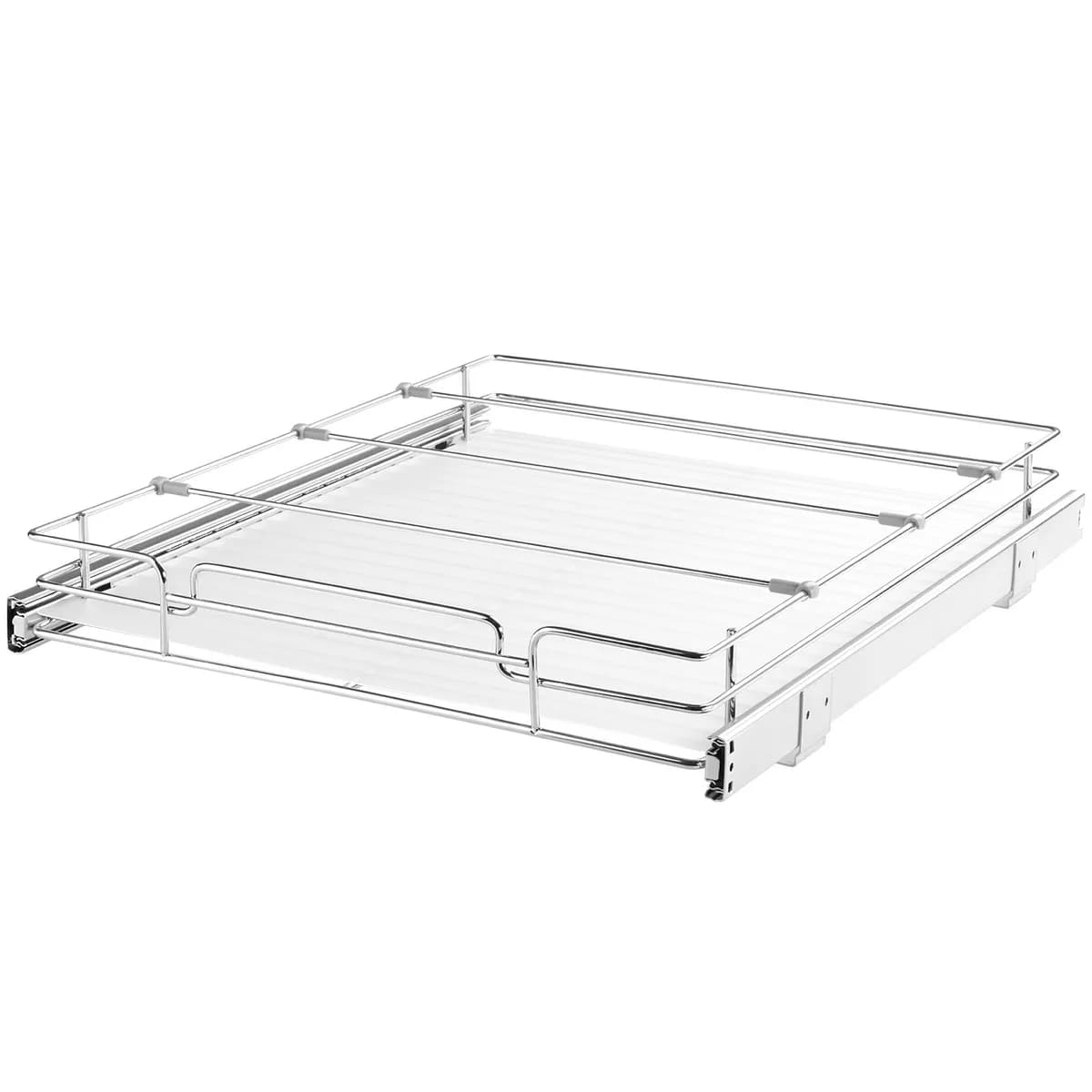
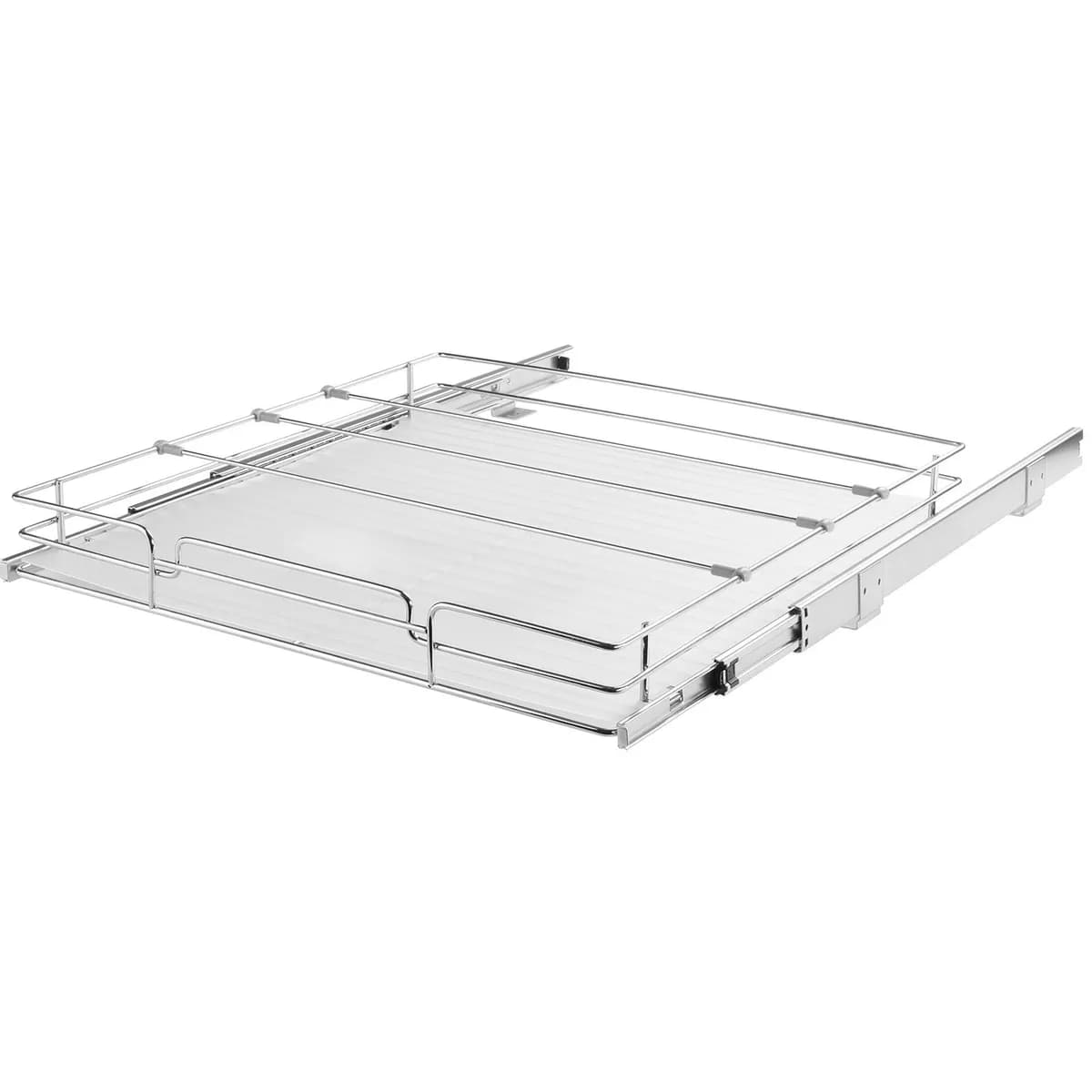
If you want to turn this guide into a real setup, start with Pull-Out Cabinet Organizer, 14 in. Wide and Over-the-Door Pantry Organizer, 8 Tier. For broader options, browse the Kitchen & Dining collection so the article journey does not stop at reading only.
Our practical rule: choose one product that solves the main clutter problem first, then add supporting organizers only when the daily workflow is already clear. This keeps the shopping path useful, not pushy.
FAQ: Frequently Asked Questions About Over-the-Sink Dish Drying Racks
Q: Will an over-the-sink dish drying rack scratch my sink?
Not if you choose a model with rubber-coated or silicone-tipped feet. These protective tips create a buffer between the metal rack arms and your sink's porcelain, stainless, or composite surface. I always recommend checking the foot material before purchasing, especially if you have a coated cast-iron or fireclay farmhouse sink that scratches more easily than standard stainless sinks.
Q: Can I use an over-the-sink rack over a double-basin sink?
Yes, but it will span both basins, effectively blocking easy access to whichever basin the rack sits over. Many people use this setup on the less-used basin and keep the active washing basin clear. If you alternate between basins constantly, a countertop rack or wall-mounted rack may be more practical for your workflow.
Q: How do I know if the rack will clear my overhead cabinets?
Measure from the top of your sink rim straight up to the underside of the cabinet above it. A single-tier rack typically needs about 6 to 8 inches of clearance; a two-tier rack needs 13 to 16 inches. If your clearance is under 10 inches, stick with a single-tier or collapsible model.
Q: Is an over-the-sink rack safe for non-stick pans and coated cookware?
The wire grid can leave marks on soft non-stick coatings if the pan slides or sits at a pressure point. For coated cookware, lay a folded kitchen towel over one section of the grid before resting the pan on it, or use a separate drying mat alongside the rack for those specific items.
Q: How do I prevent the rack from developing rust?
Choose 304 stainless steel, wipe it down weekly, and allow it to air-dry occasionally rather than staying perpetually wet. If you live in a hard water area, wipe off water droplets after each use to prevent mineral deposits from forming, which can trap moisture against the metal surface and eventually cause surface staining.
Conclusion
The over-the-sink dish drying rack is one of those rare kitchen products that solves multiple problems at once: it reclaims counter space, eliminates soggy dish mats, improves kitchen hygiene, and can genuinely make your sink area look cleaner and more intentional. Whether you opt for a simple single-tier expandable stainless rack, a high-capacity two-tier model, or a beautiful bamboo hybrid, the key is to measure your sink carefully, prioritize 304 stainless steel construction, and choose a design whose drip system actually directs water into the drain rather than pooling it on a tray.
In 2026, the range of options is better than ever, with price points to suit every budget from under US$25 to over US$100. Ready to upgrade your kitchen setup? Browse the full collection of kitchen organization products at Sesoris and explore our best sellers for the racks and organizers that real customers keep coming back for. You can also check out our new arrivals for the latest kitchen storage innovations of 2026. Live more organized, one smart upgrade at a time.
Liked this guide?
Get new organizing guides and the occasional new product by email. No spam, unsubscribe anytime.
Related articles



Explore more articles
- 25+ Brilliant Bathroom Wall Shelf Ideas to Transform Your Space in 2026
- Minimalist Shoe Rack for Your Home's Foyer
- Vacuum Storage Bag: Compress Clothes and Blankets by Up to 75%
- 35+ Brilliant IKEA Pantry Organization Ideas to Transform Your Kitchen Storage in 2026
- Mudroom Organization: 30+ Smart Ideas to Transform Your Entryway in 2026
- Simple Ramadan Decoration Ideas to Create a Festive Home Atmosphere
- 25+ Smart Laundry Room Organization Shelves Ideas to Transform Your Space in 2026
- Dish Rack Above Sink: Ultimate Guide to Kitchen Space Organization