
Pantry Door Organization Ideas: Racks, Pockets and Zones That Fit Your Door
Pantry door organization ideas: how to measure the door, over-the-door basket racks, clear pocket organizers, zones for spices, cans and snacks, and what to do when the door cannot take more weight.
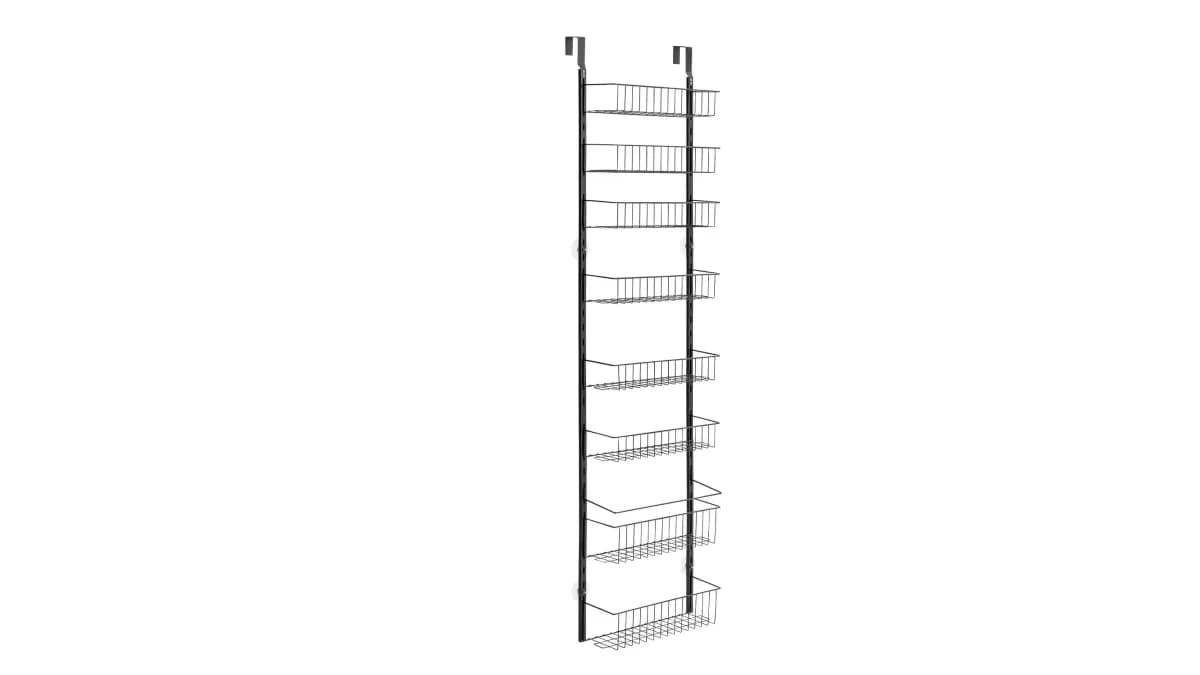
The best pantry door organization ideas turn the back of the door into a tall, shallow shelf for small items that get lost on deep pantry shelves. An over-the-door rack with adjustable wire baskets suits spices, cans, sauces and snacks, a clear pocket organizer holds packets and small bags, and narrow door-mounted racks work on cabinet-style pantry doors. Before buying, check the door thickness, the gap at the top of the door and the space behind the door when it closes, and keep heavy items low and within the rack's weight limit.
A pantry door is easy to overlook because it moves. But it is often the tallest flat surface in the pantry, and it sits right where you stand when you reach for food. Putting it to work frees shelf space for bulky items and makes small things visible at a glance. This guide covers how to measure, which organizers fit which doors, what to store on the door, how to arrange it and how to keep it from becoming another cluttered spot.
Measure the Door and the Space Behind It
Door storage only works if the door still closes. Take four measurements before choosing anything.
- Door thickness. Over-the-door hooks are made for a range of thicknesses. Measure the top edge of the door with a tape. 2. Top gap. Close the door and check the gap between the top of the door and the frame. Hooks need to pass through it. 3. Clearance behind the door. With the door closed, measure from the back of the door to the front edge of the nearest shelf. This is the maximum depth of anything you hang, including what you put inside it. 4. Usable height and width. Measure from the top of the door to the floor, and note door handles, hinges and any trim that might block a rack.
If the door has a lever handle or a deadbolt, mark where it sits on the back. Racks need to clear the handle mechanism, and baskets must not press against it.
Our guide to how to organize your pantry step by step explains how to plan the whole pantry, which helps you decide what belongs on the door.
Types of Pantry Door Organizers Compared
Different doors and different foods call for different organizers.
| Organizer type | Best for | Strengths | Watch out for |
|---|---|---|---|
| Over-the-door wire basket rack | Spices, cans, jars, sauces, snack boxes | Holds a lot, baskets adjust in height, easy to see | Needs clearance behind the door; weight limits per basket |
| Clear pocket organizer | Seasoning packets, drink mixes, small snack bags | Light, cheap, everything visible | Pockets sag with heavy items; not for jars |
| Door-mounted shelves (screwed in) | Solid doors, permanent setups | Very stable, can hold more weight | Requires drilling; check the door is solid, not hollow core |
| Narrow cabinet door racks | Cabinet-style pantries | Uses the inside of cabinet doors | Must clear the shelves when closing |
| Adhesive hooks and small bins | Light items such as bag clips, measuring spoons | No tools, no damage | Low weight capacity; adhesive can fail in heat or humidity |
| Wall-mount version of a door rack | Pantries where the door cannot take weight | Same baskets, mounted on a side wall | Needs studs or suitable anchors |
Wire baskets are the most versatile choice for a walk-in or reach-in pantry. Pocket organizers are a good add-on for small, light items.
Over-the-Door Basket Racks
A tall basket rack is the classic pantry door organizer. It hangs from hooks over the top of the door and holds a column of shallow baskets.
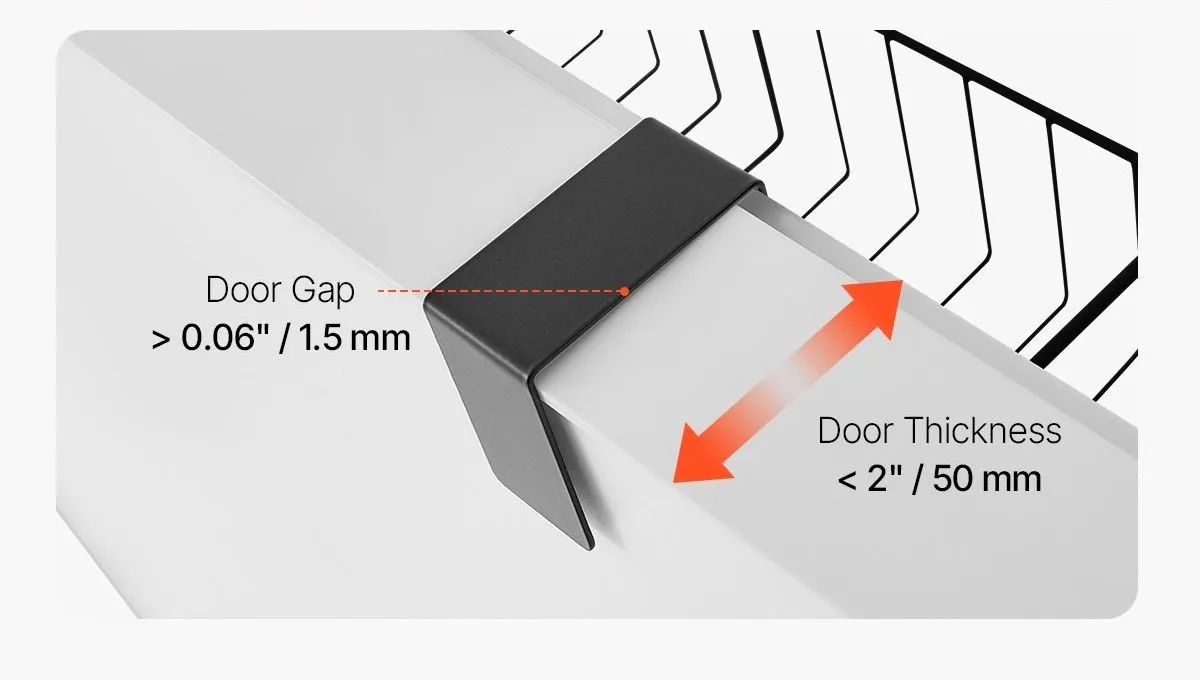
The 8-tier over-the-door pantry organizer has eight wire baskets, each 16 inches wide and 4.9 inches deep, on a black steel frame. It fits doors up to 2 inches thick with a gap over 0.06 inch at the top, and it needs at least 7.1 inches of clearance between the door and any shelves behind it so the door can still close. The spacing between baskets can be adjusted for taller bottles.
Two details matter more than the number of tiers:
- Weight limits. That rack is rated for 26.5 pounds in total and 3.31 pounds per basket. Heavy cans and large bottles add up quickly, so spread them across baskets and keep the heaviest ones low. - Stability. Adhesive pads or bumpers on the frame stop the rack from swinging and knocking when the door opens. The same rack can also be screwed to a wall if the door is not suitable.
Our guide to choosing a pantry storage rack compares freestanding and wall racks if you want more options.
What to Store on the Pantry Door
The door is best for small, frequently used items that get lost on deep shelves. A shallow basket keeps every item in the front row.
- Spices and seasonings. The door can become a full spice wall, with one row of jars per basket. - Sauces and condiments. Small bottles of hot sauce, soy sauce, vinegar and dressings. - Canned goods. Single rows of cans in the lower baskets, within the weight limit. - Snacks. Granola bars, small bags of crackers and lunchbox snacks. - Baking extras. Food coloring, sprinkles, vanilla extract and baking powder. - Drink mixes and tea. Tea boxes, coffee pods and drink mix packets. - Kitchen wraps. Foil, plastic wrap and parchment rolls in a basket sized for them.
Avoid storing large jugs, heavy bags of flour or rice and glass bottles that could break if they fall. Those belong on the floor or a sturdy shelf.
A simple test helps decide what goes on the door: if an item is small, used at least weekly and tends to get pushed behind other things on a shelf, it is a good candidate. If it is heavy, bulky or used only a few times a year, it belongs somewhere else. Moving even a dozen small items to the door often frees a whole shelf for cereal boxes, bulk containers and appliances.
Arrange the Door by Zones
A well-arranged door is easy to use because everything has a predictable place.
| Door zone | Height | What goes there |
|---|---|---|
| Top baskets | Above eye level | Backups, rarely used items, light boxes |
| Eye level | Easiest to see and reach | Spices and seasonings you use daily |
| Middle | Waist to chest height | Sauces, condiments, snacks for adults |
| Lower baskets | Knee height | Kids' snacks, canned goods, heavier items within limits |
If children grab their own snacks, put those at their height and move anything you do not want them to reach to the top.
Clear Pocket Organizers for Packets
Seasoning packets, gravy mixes and drink pouches tend to scatter on a shelf. A pocket organizer keeps each type in its own slot.
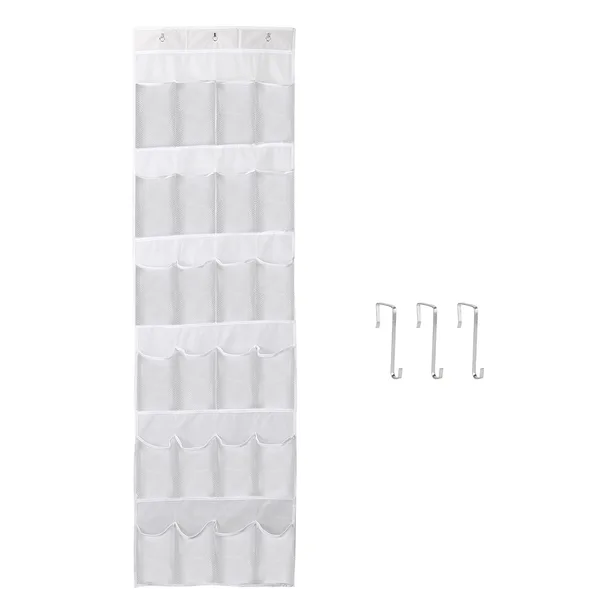
The 24-pocket over-the-door organizer is sold for shoes, but its clear pockets, each about 7.87 x 4.25 inches with an opening up to 3.15 inches, also fit flat packets and small snack bags. It hangs from three metal over-door hooks. Because fabric pockets sag under weight, keep jars and cans out of them.
A few ways to make pockets work in a pantry:
- One category per pocket: taco seasoning, gravy mixes, hot chocolate, oatmeal packets. - Label the pocket edge with a small tag so refills go back in the same place. - Put lightweight snacks at kid height and packets you cook with near eye level.
Narrow Pantry Cabinets and Cabinet Doors
Not every pantry is a closet with a full door. Many kitchens have a pantry cabinet with two narrow doors. The same principles apply on a smaller scale.
- Measure the gap between the door and the shelves. Cabinet shelves usually leave very little room, so door racks must be shallow. - Use slim racks for spices or wraps on the inside of the doors. - Move bulky spice storage inside the cabinet if the doors cannot hold it.
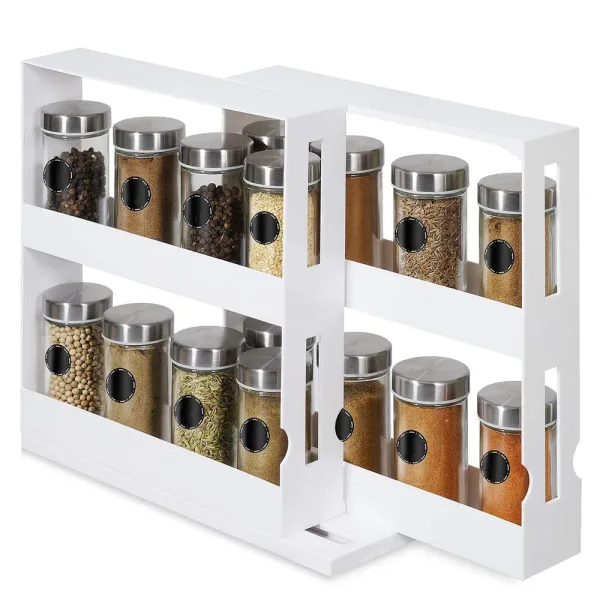
When a cabinet door is too shallow for a rack, a swivel cabinet spice rack inside the cabinet is an alternative. It measures 11 x 4.1 x 10.8 inches and holds up to 20 bottles on two racks that pull out and turn toward you. Our guides to pantry cabinet ideas and spice rack organization have more layouts for cabinet pantries.
Pull-Outs When the Door Cannot Take More
Sometimes the door is hollow, too thin or already crowded. In that case, move the small-item storage onto a pull-out inside the pantry, so items still come to you.
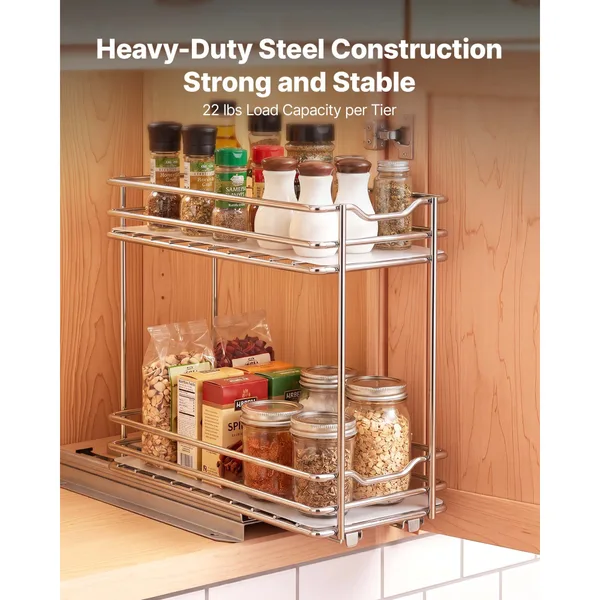
The 2-tier pull-out rack is 4.33 inches wide and slides out on ball-bearing runners, so it fits narrow gaps between other items. It screws into the cabinet floor and is not suitable for cabinets with a lip at the front. Our pull out pantry organization ideas cover more sliding options.
Make It Easy to See and Restock
The point of door storage is visibility. A few habits keep it that way.
- One row deep. Never stack items two deep in a door basket, since the back row disappears. - Labels facing out. Turn jars and boxes so the label faces you when the door is open. - Decant where it helps. Matching spice jars with clear labels use the space efficiently. Our guide to storage bin labels has simple labeling systems. - Newest to the back. When you restock, put new items behind older ones so the oldest is used first. - Keep a short list on the door. A small notepad or magnetic list on the inside of the door makes it easy to note what is running low.
Walk-In, Reach-In and Sliding Pantry Doors
The type of pantry changes how much the door can do.
- Walk-in pantries usually have a standard swinging door with plenty of space behind it. This is where a full-height basket rack shines, because you can step in and see the whole door at once. - Reach-in pantries are shallower closets with shelves close behind the door. Clearance is often tight, so measure carefully and choose shallow baskets or pockets. In some reach-in pantries, the shelf edges can be cut back a few inches to make room, but only if you are comfortable doing that work. - Bifold doors fold in the middle, which makes over-the-door racks impractical. Use slim adhesive racks on each panel, or put the storage on a side wall inside the pantry instead. - Sliding and barn doors do not swing, so nothing can hang on the inside. Use the side walls, the back of the pantry or pull-outs on the shelves.
If the pantry has two swinging doors, split the job: spices and sauces on one door, snacks and packets on the other.
Ideas for Families and Small Kitchens
A pantry door can solve problems that are specific to how a household eats.
- Snack station for kids. Give each child one basket or a row of pockets at their height. They can pack their own lunchbox snacks, and you can see at a glance when it is time to restock. - Breakfast zone. Oatmeal packets, tea, coffee pods and honey in one or two baskets near eye level make busy mornings faster. - Allergy-safe zone. If someone in the house has a food allergy, a clearly labeled basket for their safe foods reduces mix-ups. Keep it separate from other snacks. - Small kitchens without a pantry. The same racks work on a broom closet door, a laundry room door or the back of a basement door near the kitchen. Our small kitchen organization ideas have more ways to find storage when there is no pantry.
Safety and Door Care
A loaded rack changes how a door behaves, so a little care prevents damage.
- Stay within weight limits. Overloading puts strain on hinges and can bend hooks or baskets. 2. Check hollow-core doors. Many interior doors are hollow. Over-the-door hooks are fine, but screws into a hollow door hold far less than screws into solid wood. 3. Use bumpers or pads. They protect the door surface and stop the rack from rattling. 4. Close the door gently. A heavily loaded door swings with more force. Keep fragile items on shelves, not on the door. 5. Check the hinges. If the door starts to sag or rub on the frame, reduce the load or move heavy items elsewhere.
Budget Pantry Door Ideas
You can try the idea before committing to a full rack.
- A few adhesive hooks for bag clips, measuring spoons and an apron. - A tension rod across the door frame with S-hooks for small baskets, if there is space beside the door. - A shoe-style pocket organizer for packets and snacks, which is often cheaper than a basket rack. - Repurposed baskets hung from over-door hooks for lightweight items.
Use the door for a week and note what you reach for most. That tells you whether a full basket rack is worth it.
Keep the Door Organized
Door storage stays useful only with regular attention.
- Do a quick check weekly. Push items back into their zone and remove empty packets. 2. Restock after grocery shopping. Put new items into the right baskets before they land on the counter. 3. Clean monthly. Wipe baskets and check for spills, especially under sauces and syrups. 4. Edit seasonally. Move holiday baking items to the door before the season, and back to a shelf afterward.
For more ideas across the whole pantry, see our pantry organization ideas, small pantry ideas, deep pantry organization ideas and wire shelf pantry organization ideas.
Frequently Asked Questions
How do I organize the back of my pantry door?
Measure the door thickness, the top gap and the clearance behind the closed door, then hang an over-the-door basket rack or pocket organizer that fits. Put daily spices and sauces at eye level, snacks at kid height and backups at the top.
What should I store on a pantry door?
Small, frequently used items that get lost on deep shelves: spices, sauces, condiments, single rows of cans, snack bars, tea and drink mixes and seasoning packets.
How much space do I need behind a pantry door for a rack?
Measure from the back of the closed door to the nearest shelf. The rack and whatever is in it must be shallower than that. One 8-tier rack, for example, needs at least 7.1 inches of clearance.
Will an over-the-door rack damage my door?
Not if it fits the door thickness, stays within its weight limit and has pads or bumpers against the door surface. Overloading can strain hinges and bend hooks.
Can I put canned goods on a pantry door rack?
Yes, in single rows in the lower baskets, as long as you stay within the rack's per-basket and total weight limits. Keep large jugs and heavy bags on shelves or the floor.
What if my pantry door is hollow?
Over-the-door hooks work on hollow-core doors because they hang from the top edge. Avoid heavy racks screwed into a hollow door, or mount the rack on a side wall instead.
How do I stop an over-the-door rack from swinging?
Use the adhesive pads or bumpers that come with the rack, or add felt bumpers to the frame where it touches the door. Closing the door gently also helps.
Are pocket organizers good for a pantry door?
Yes, for light, flat items such as seasoning packets, drink mixes and small snack bags. Keep jars and cans out of fabric pockets, since they sag under weight.
Final Thoughts
The back of the pantry door is one of the easiest storage upgrades in the kitchen. Measure carefully, choose a rack or pocket organizer that fits, keep heavy items low and within the weight limit, and store small items one row deep so everything stays visible. With a few minutes of upkeep each week, the door becomes the most useful shelf in the pantry.
Liked this guide?
Get new organizing guides and the occasional new product by email. No spam, unsubscribe anytime.
Related articles
Explore more articles
- Laundry Room Organization: Simple Guide for Small Homes
- Closet Storage and Organization Ideas That Work
- 35+ Brilliant Small Space Clothing Storage Ideas to Maximize Your Wardrobe in 2026
- Foldable Storage Box Guide: Space-Saving Solutions 2026
- Ultimate Cleaning Closet Organization: 25+ Smart Solutions to Transform Your Storage Space in 2026
- 25+ Small Room Laundry Room Organization Ideas That Actually Work in 2026
- Budget-Friendly Dish Racks for Kitchen Sinks Under $15 (2026)
- Overhead Garage Storage Solutions: Ultimate Guide to Transform Your Garage Space in 2026