
Deep Pantry Organization Ideas: 12 Ways to Reach the Back of Every Shelf
Deep pantry organization ideas that bring the back of the shelf to you: pull-out shelves, long bins, turntables, risers and a simple front-to-back plan.
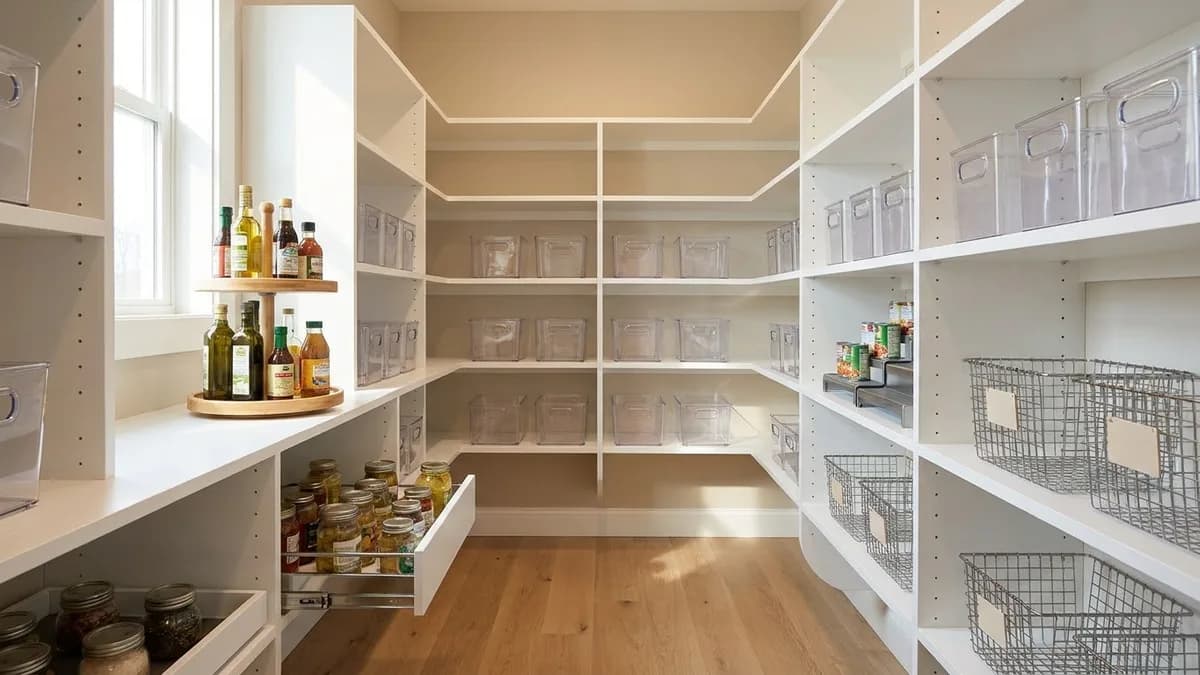
The best deep pantry organization ideas all do one thing: they bring the back of the shelf to you. Pull-out shelves, long bins with handles and turntables let you reach food stored two feet back without unloading the front row first. Put the things you use every day at the front, keep backstock behind them in containers you can slide out, and store heavy cans and bottles low, where a deep shelf is easiest to reach.
This guide covers 12 practical ideas, a simple depth plan for front, middle and back, the containers that suit deep shelves best and the mistakes that turn a deep pantry into a place where food goes to expire. If you want the wider picture first, our main pantry organization ideas guide covers every type of pantry, and this article stays focused on depth.
Why Deep Pantry Shelves Are Hard to Use
Deep shelves look like a gift. More inches front to back should mean more storage. In practice, the extra depth often becomes a dark zone that nobody can see into. You reach past the cereal for the pasta, knock over a jar and give up. Six months later you find three bags of the same rice behind a row of cans.
The problem is depth without access. A standard kitchen wall cabinet is about 12 inches deep, while base cabinets are usually about 24 inches deep, according to the kitchen cabinet entry on Wikipedia. Many pantry cabinets and walk-in pantry shelves sit somewhere in that range or deeper. At 12 inches you can see everything on a shelf at once. At 20 inches or more, the back half is hidden behind whatever sits in front of it.
There are three common pain points. First, visibility: you cannot see what is behind the front row, so you buy duplicates and let things expire. Second, reach: getting to the back means bending, stretching or moving several items. Third, stacking: deep shelves tempt you to pile things up, and stacks fall over as soon as you pull something from the bottom.
Every idea below solves at least one of these problems. You do not have to remodel the pantry. Most fixes are containers or inserts you can add in an afternoon and take with you if you move.
Measure Before You Buy Anything
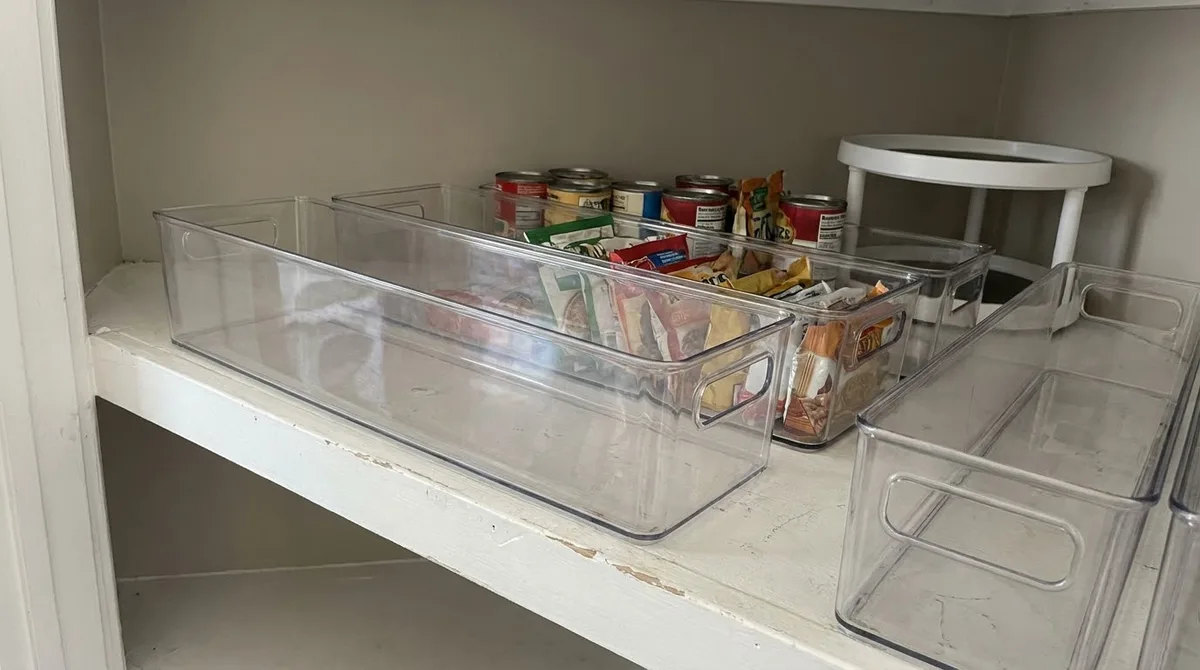
Before you choose a single bin, empty one shelf and measure it. Write down three numbers: the inside width, the usable depth from the front edge to the back wall, and the clear height to the shelf above. If the pantry has a door, measure the opening as well, because hinges and face frames can make the opening narrower than the shelf behind it.
Depth is the number that matters most here. A bin that is 4 inches shorter than the shelf leaves a gap at the back where small items disappear. A bin that is too long stops the door from closing. Aim for containers that use most of the depth while still leaving a finger's width behind them.
Then take stock of what you store. Group food into categories such as breakfast, baking, snacks, canned goods, pasta and grains, sauces and oils, and backstock. Count roughly how much of each you keep. That list tells you how many bins you need and which ones belong at the front.
If you are starting from zero, our step-by-step pantry organizing tutorial walks through the emptying, sorting and cleaning stage in detail.
12 Deep Pantry Organization Ideas
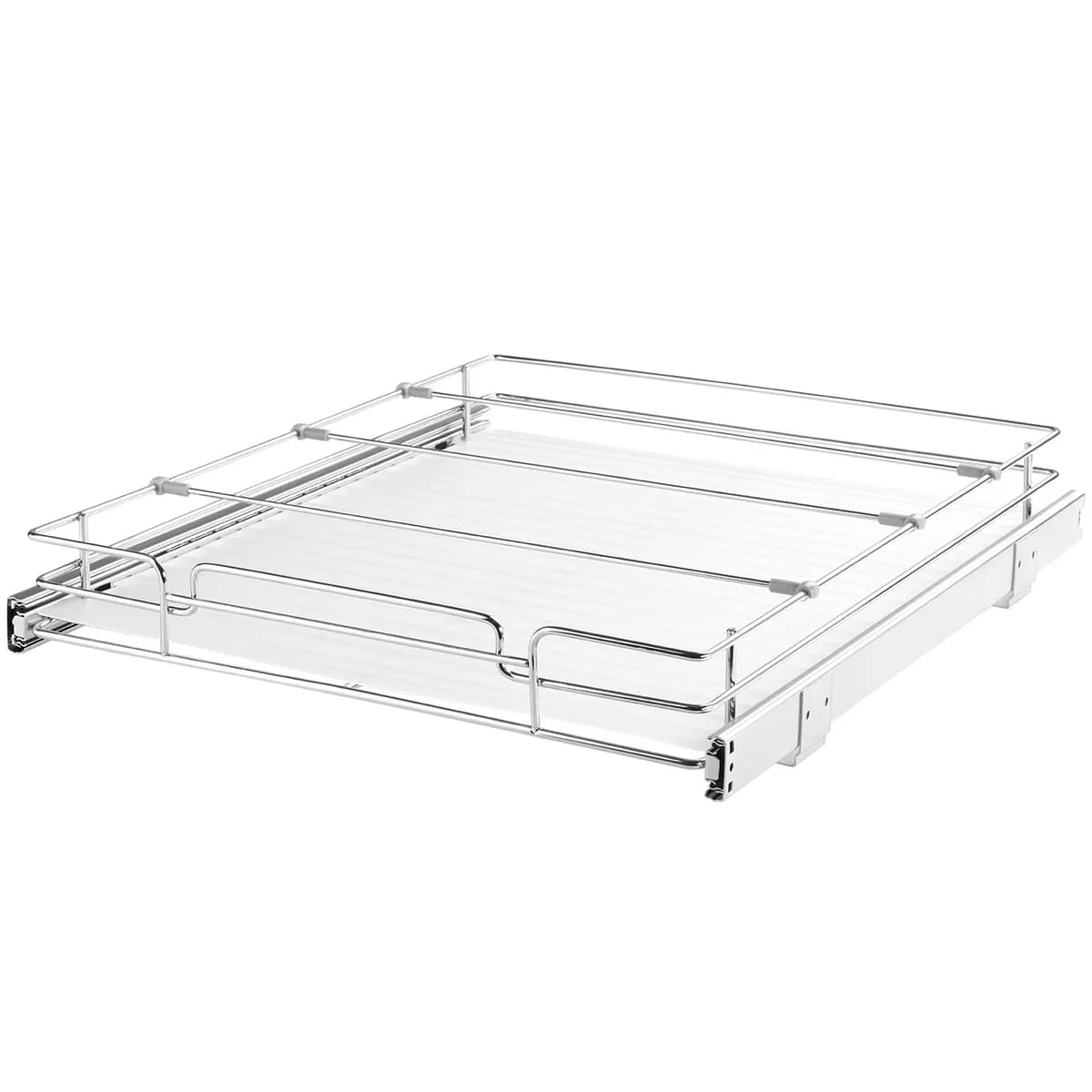
- Install pull-out shelves. A sliding shelf on full-extension rails brings the whole depth of a shelf into the light. It is the single biggest upgrade for a deep base pantry cabinet.
- Use long bins with handles. Choose bins that run front to back so each one works like a drawer. Pull the bin, grab what you need and slide it back.
- Add turntables to corners and back rows. A lazy susan spins the back of the shelf to the front. Two-tier turntables work well for oils, vinegars and sauces.
- Raise the back row on a riser. A stepped riser lifts cans and jars so the back row is visible over the front row.
- Store backstock behind the matching item. Put the spare jar of peanut butter directly behind the open one, so you always use the older one first.
- Give every bin a label. A short label on the front of each bin means you know what is inside without pulling it out. Our storage bin labels guide covers the options.
- Keep heavy items low. Drinks, cans, flour and bulk bags go on the lowest deep shelf, where you can slide them out instead of lifting them down.
- Turn the deepest shelf into a backstock zone. If one shelf is very deep, use the back half for bulk refills and the front half for the open packages you are using now.
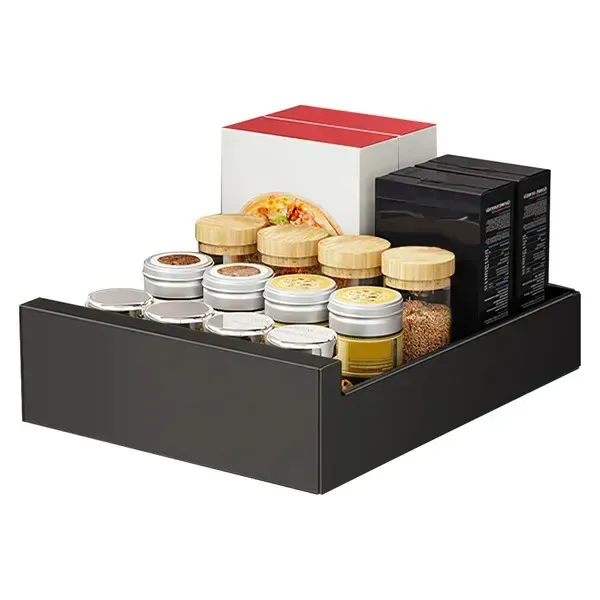
- Use slide-out drawers for small items. Spice jars, seasoning packets and tea boxes get lost on deep shelves. A shallow drawer that slides out keeps them in rows.
- Store bags in upright baskets. Chips, bread and pasta bags slump and slide. Stand them upright in a basket so you can see every bag from above.
- Use the door. A door rack holds small, light items that would otherwise vanish at the back of a deep shelf.
- Leave an empty slot. A deep shelf that is full to the back has no room to put anything back neatly. Keep one bin or one gap free on each shelf.
You do not need all twelve. Start with the one shelf that annoys you most and try two or three ideas there before you buy for the whole pantry.
Pull-Out Shelves and Drawers
Pull-out storage is the closest thing to a cure for deep shelves. Instead of reaching into the dark, you pull the shelf out and look down at everything on it. The Wikipedia entry on kitchen cabinets notes that drawers and trays reduce bending and squatting, and that modern full-extension runners let a drawer come all the way out rather than about three quarters of the way.
There is a trade-off. Slides take up a little width on each side, and the same source notes that a typical drawer is about 5 inches narrower than a comparable shelf. That is why measuring the cabinet opening, not just the shelf, matters before you buy.
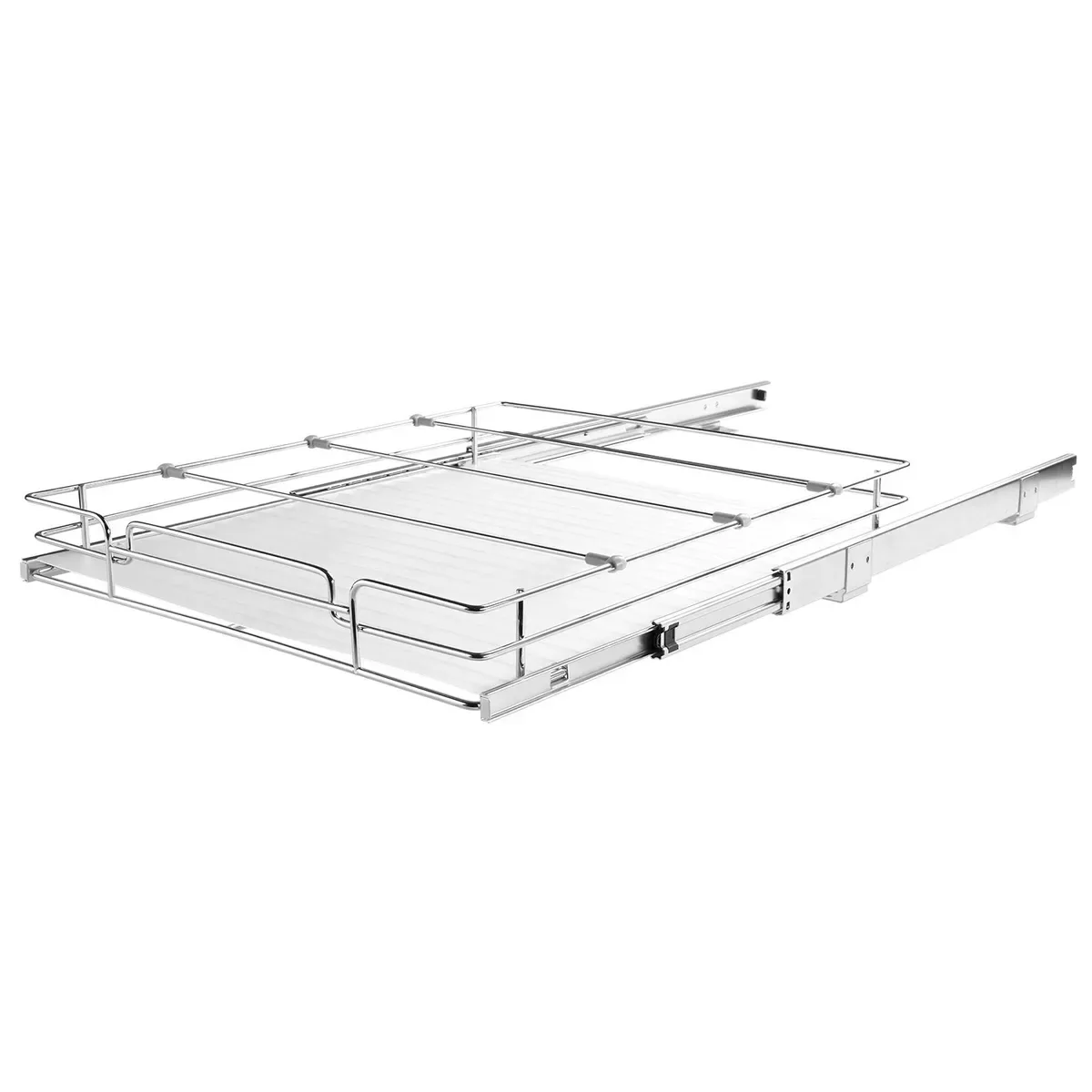
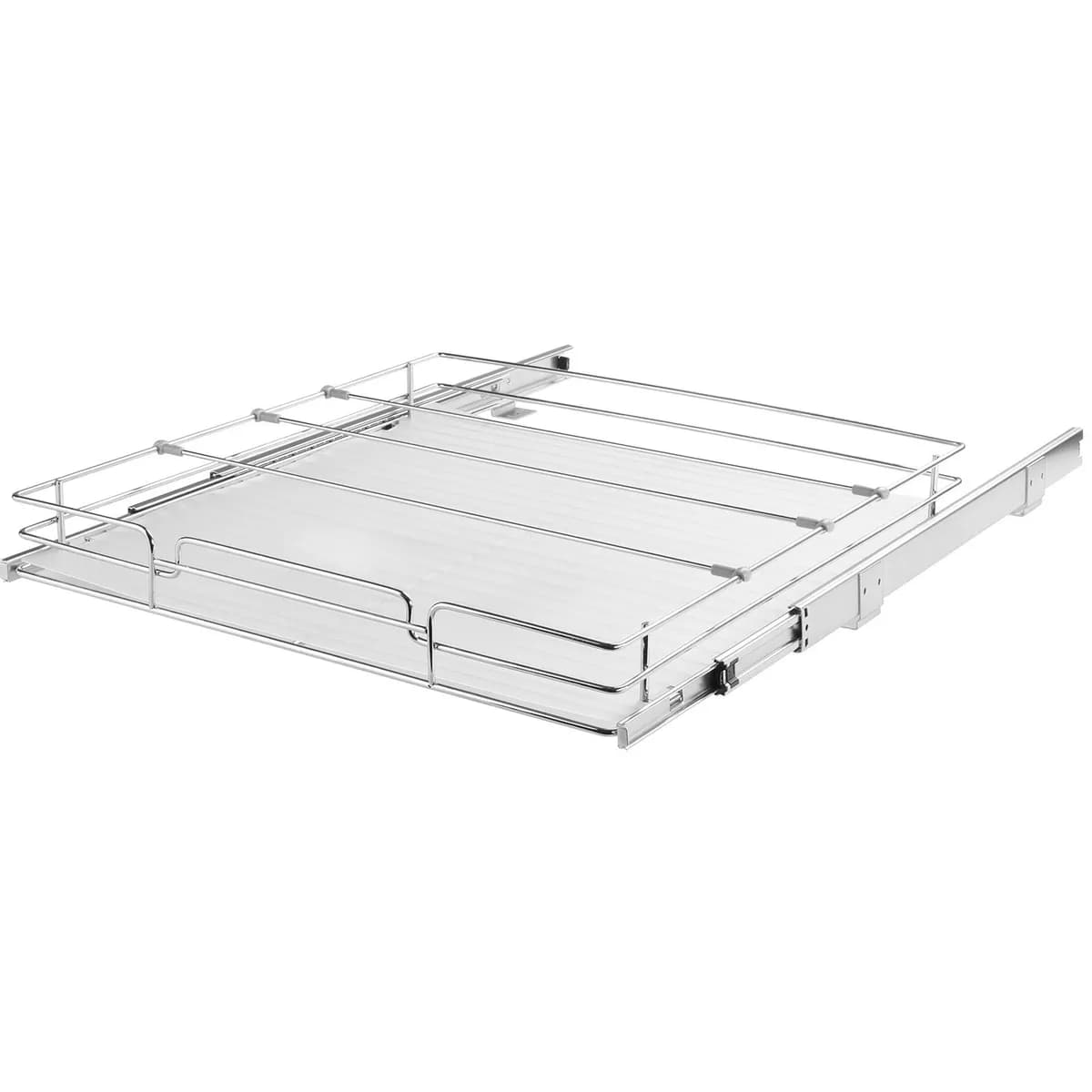
Pull-out shelves work best in base cabinets and the lower half of a walk-in pantry, where you would otherwise kneel to see the back. A product such as our 17-inch pull-out cabinet organizer screws to the cabinet floor and slides out on rails, which turns a deep cabinet into something closer to a drawer. Higher up, where lifting a loaded shelf toward you is awkward, long bins with handles are usually the better choice.
For narrow gaps and small items, a low slide-out drawer is handy. It keeps spice jars and small boxes in rows, and you can see every label when it is pulled out. If you keep spices in a drawer already, our spice drawer organization guide has more ideas for the rows themselves.
Containers That Work Best on Deep Shelves
The right container depends on how deep the shelf is and what you store on it. The table below compares the common options.
| Container | How it handles depth | Best for | Watch-out |
|---|---|---|---|
| Long bin with front handle | Runs front to back and pulls out like a drawer | Snacks, packets, baking supplies, backstock | Measure depth so it does not stop the door closing |
| Two-tier turntable | Spins the back to the front | Oils, vinegars, sauces, spice jars | Wastes the corners of a square shelf |
| Stepped can riser | Lifts the back row into view | Canned goods, small jars | Only helps if the shelf has height to spare |
| Pull-out shelf on rails | Brings the full depth out of the cabinet | Base cabinets, heavy or bulky items | Needs screws and an exact width measurement |
| Upright basket | Keeps bags standing so the back is visible | Chips, bread, pasta, rice bags | Soft bags can still slump if the basket is too wide |
| Airtight canister | Square shapes pack tightly in rows | Flour, sugar, cereal, grains | Round canisters leave gaps on deep shelves |
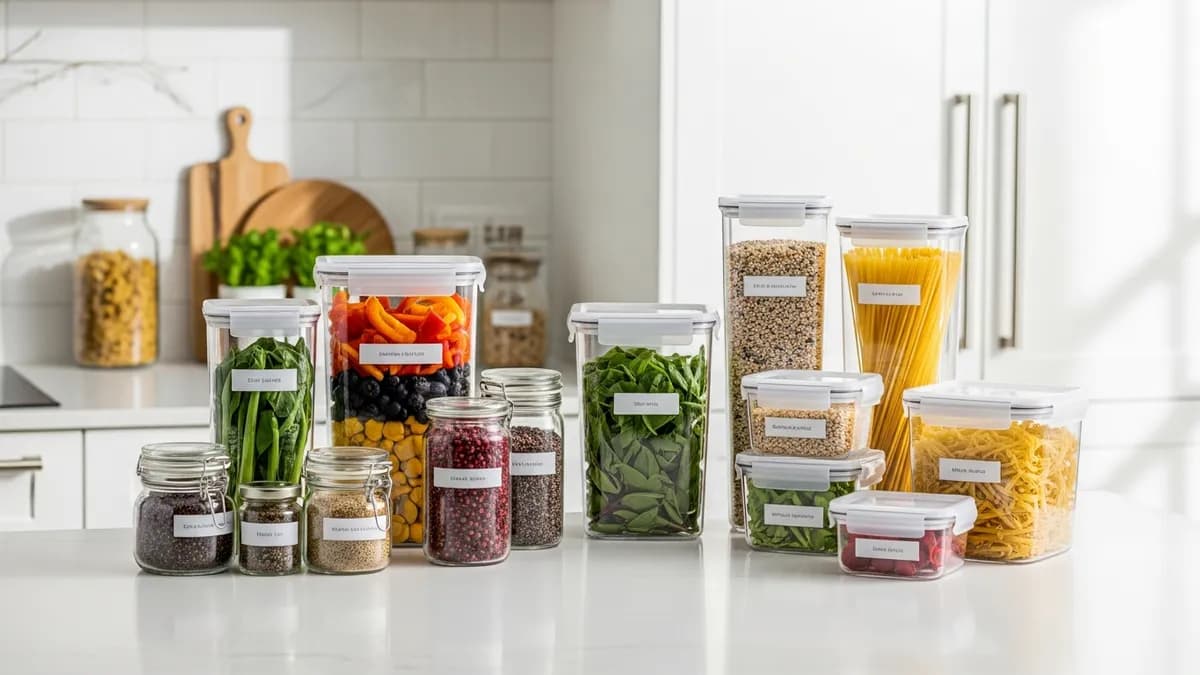
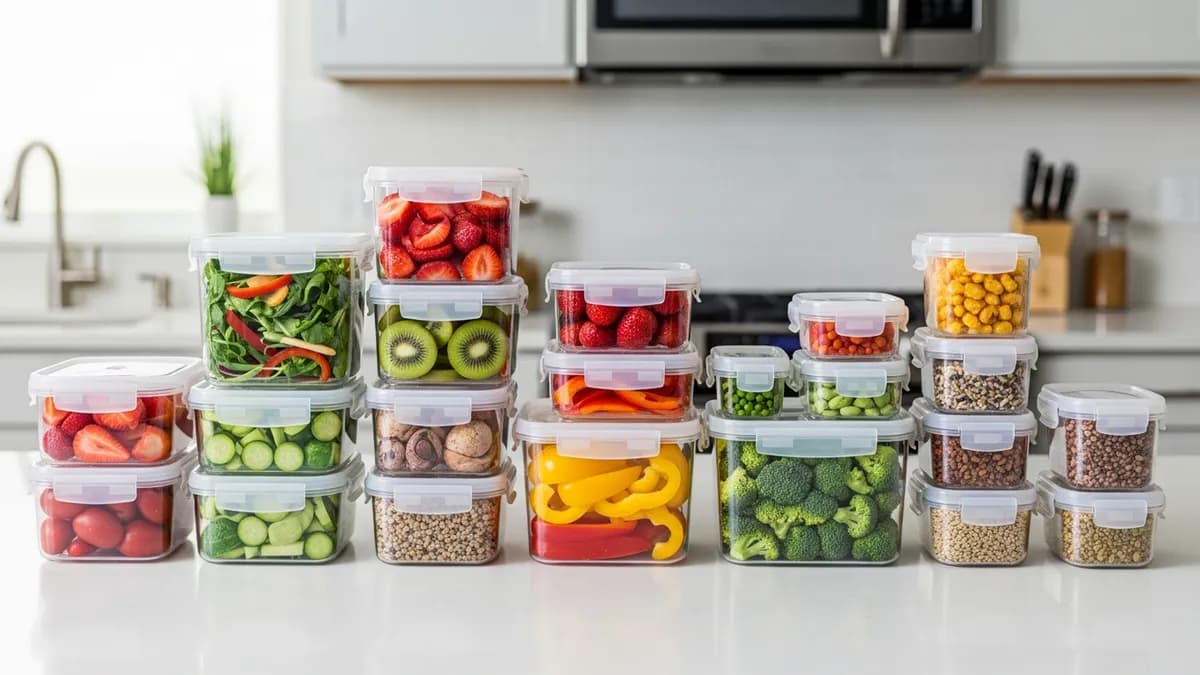
Clear containers make a real difference on deep shelves because you can see the contents even when they sit behind something else. Square or rectangular canisters waste less space than round ones. If you prefer glass, our guide to glass containers for food storage explains which shapes pack well. For a closer look at the bins themselves, see our pantry organization bins guide.
Plan Your Deep Shelves by Depth
Most pantry advice talks about height: what goes on top, what goes at eye level. On a deep shelf you also need a plan for front, middle and back. Think of each deep shelf as three strips.
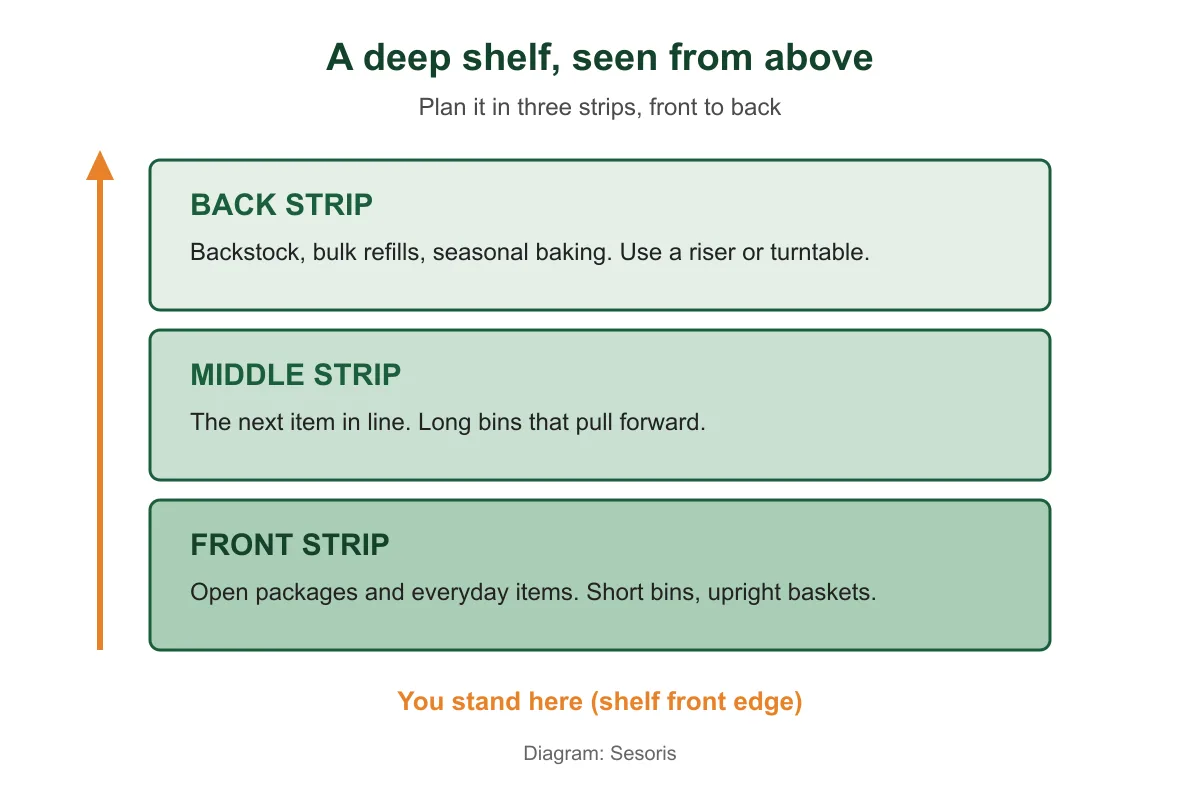
| Depth zone | What to keep there | Container that helps |
|---|---|---|
| Front strip | Open packages and things you use every day | Short bins, upright baskets |
| Middle strip | The next item in line, such as the spare jar or box | Long bins that pull forward |
| Back strip | Backstock, bulk refills, seasonal baking supplies | Risers, turntables, the back half of long bins |
Combine that with a height plan and the pantry becomes easy to read. Light items like paper goods and seasonal supplies go on the top shelves. Everyday breakfast, snack and dinner staples go at eye level. Heavy cans, drinks and bulk bags go on the lowest shelves, ideally on a pull-out shelf so you never lift them from the back. Our pantry shelving ideas cover the shelf layouts themselves.
Corners in Deep and L-Shaped Pantries
Deep pantries often have L-shaped or U-shaped shelves, and the corners are where food truly disappears. A corner on a deep shelf can be two feet back in two directions. Nothing you put there is easy to reach.
A turntable is the easiest fix. Place it in the corner, load it with jars and bottles, and spin it to bring the back items forward. For very deep corners, a large single-tier turntable usually works better than a small two-tier one because it reaches further into the corner.
Another option is to use the corner for things you rarely need, such as holiday baking supplies or a spare case of water, and keep the rest of the shelf for daily items. If your pantry is a walk-in with shelves on three sides, our walk-in pantry organization ideas show how to plan each wall.
Deep Pantry Cabinets vs Walk-In Shelves
Not every deep pantry is the same, and the best tools depend on the type you have.
A deep pantry cabinet, often a tall cabinet with doors, works best with pull-out shelves or roll-out drawers on every level. The doors give you a place to hang a door rack, and the fixed width makes it easy to buy inserts that fit. See our pantry cabinet ideas for more on this layout.
A walk-in or reach-in pantry with deep shelves is better suited to long bins, turntables and risers, because installing rails on fixed shelving can be awkward. If those shelves are ventilated wire, start with a liner so small items stay level, as we explain in our wire shelf pantry organization ideas.
A small pantry with one or two deep shelves benefits most from vertical thinking: stack-safe bins, a riser at the back and a door rack. Our small pantry ideas cover tight spaces.
How to Tell What Your Deep Shelf Needs
If you are not sure where to start, look at the problem you have most often and match it to a fix.
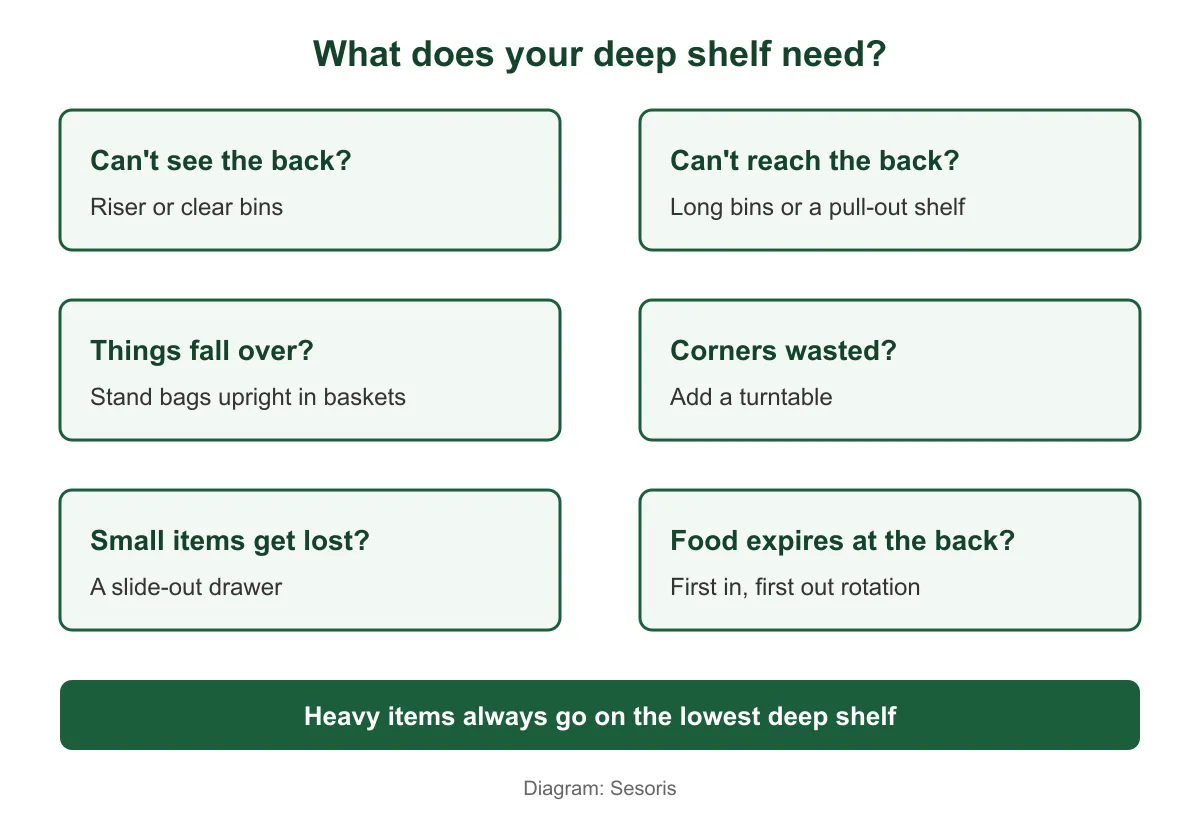
If you cannot see the back of the shelf, add a riser or switch to clear containers. If you can see it but cannot reach it, a long bin with a handle or a pull-out shelf solves the reach. If items fall over when you take something out, stand bags upright and stop stacking loose packages. If the corners are full of forgotten food, a turntable is the cheapest fix.
Keep a Deep Pantry Organized Week to Week
An organized deep pantry stays that way with a few small habits. Put new groceries behind or below the older ones, so the oldest item is always at the front. This first in, first out rotation is the single best way to stop food expiring at the back of a deep shelf.
Do a five-minute check before you shop. Pull each long bin forward, glance at what is running low and add it to the list. This also keeps you from buying duplicates of things hidden at the back.
Once a season, empty one shelf at a time, wipe it down and check dates. Donate unexpired food you will not use. If a bin keeps overflowing, the category needs a bigger bin or a second spot. For more storage ideas you can apply to the rest of the kitchen, see our pantry storage ideas.
Common Mistakes to Avoid
- Stacking loose items two rows deep. The back row becomes invisible. Use a bin or a riser instead.
- Buying bins before measuring. Depth varies more than you think. Measure the shelf and the door opening first.
- Choosing short bins for long shelves. Small items fall into the gap behind them.
- Storing heavy items high on a deep shelf. Lifting a heavy can down from the back of a high shelf is awkward and unsafe.
- Mixing categories inside one bin. A bin of "random stuff" turns into a junk drawer.
- Filling every inch. Leave room to put things back without moving three other items.
Frequently Asked Questions
How do you organize a deep pantry?
Bring the back of each shelf forward with pull-out shelves, long bins with handles or turntables. Keep everyday items in the front strip, the next item in line behind them, and backstock at the very back. Store heavy items on the lowest shelves.
What do you put on the back of a deep pantry shelf?
Use the back for backstock and things you use rarely, such as bulk refills, spare cans and seasonal baking supplies. Keep open packages and daily items at the front where you can see them.
How deep is a typical pantry or kitchen cabinet?
Standard kitchen base cabinets are usually about 24 inches deep and wall cabinets about 12 inches deep. Pantry cabinets and walk-in pantry shelves vary, so measure your own shelves before buying containers.
Are pull-out shelves worth it for a deep pantry?
Yes, especially in base cabinets and on the lowest pantry shelves. A pull-out shelf on full-extension rails brings the whole depth into view, so you stop kneeling to search the back. Measure the door opening, because slides take up some width.
What containers are best for deep pantry shelves?
Long clear bins with front handles work best because they run the full depth and pull out like drawers. Turntables suit corners and bottles, stepped risers suit cans, and square airtight canisters pack tightly in rows.
How do I stop food from expiring at the back of the pantry?
Use first in, first out. Put new groceries behind the older ones so the oldest item is always at the front, and pull each bin forward for a quick look before you shop.
Should I use a lazy susan in a deep pantry?
A lazy susan works well in deep corners and at the back of a shelf for jars, oils and sauces. It is less efficient on the open middle of a square shelf, where a long bin uses the space better.
How do you organize deep pantry shelves on a budget?
Start with long bins and a riser on the shelf you use most, and repurpose shoe boxes or baskets as pull-out containers. Add pull-out shelves later, one cabinet at a time.
Final Thoughts
A deep pantry is only wasted space when you cannot reach the back. Measure first, give every shelf a front, middle and back plan, and use containers that slide or spin the hidden food into view. Start with one shelf this weekend, and the rest of the pantry will be easier to plan once you see how much room was hiding back there.
Liked this guide?
Get new organizing guides and the occasional new product by email. No spam, unsubscribe anytime.
Related articles
Explore more articles
- Best Mudroom Storage Solutions: 30+ Smart Ideas to Transform Your Entryway in 2026
- Mini Fridge Organization Ideas for Small Spaces
- Suitcase Packing Tips: The Ultimate 2026 Guide to Stress-Free Travel
- Storage Bin Labels: The Complete 2026 Guide to a Perfectly Organized Home
- Office Supplies Organization Ideas for Desks
- 25+ Best Under Kitchen Sink Organization Ideas to Maximize Every Inch in 2026
- 20+ Smart Bathroom Towel Storage Ideas to Keep Your Space Tidy in 2026
- 35+ Best Small Home Organization Ideas to Maximize Every Inch in 2026