
Dining Room Wall Shelf Ideas: Layouts, Styling and Storage That Works
Dining room wall shelf ideas for every layout, from a single shelf over the sideboard to a full display wall, plus spacing, weight and styling rules that keep it practical.
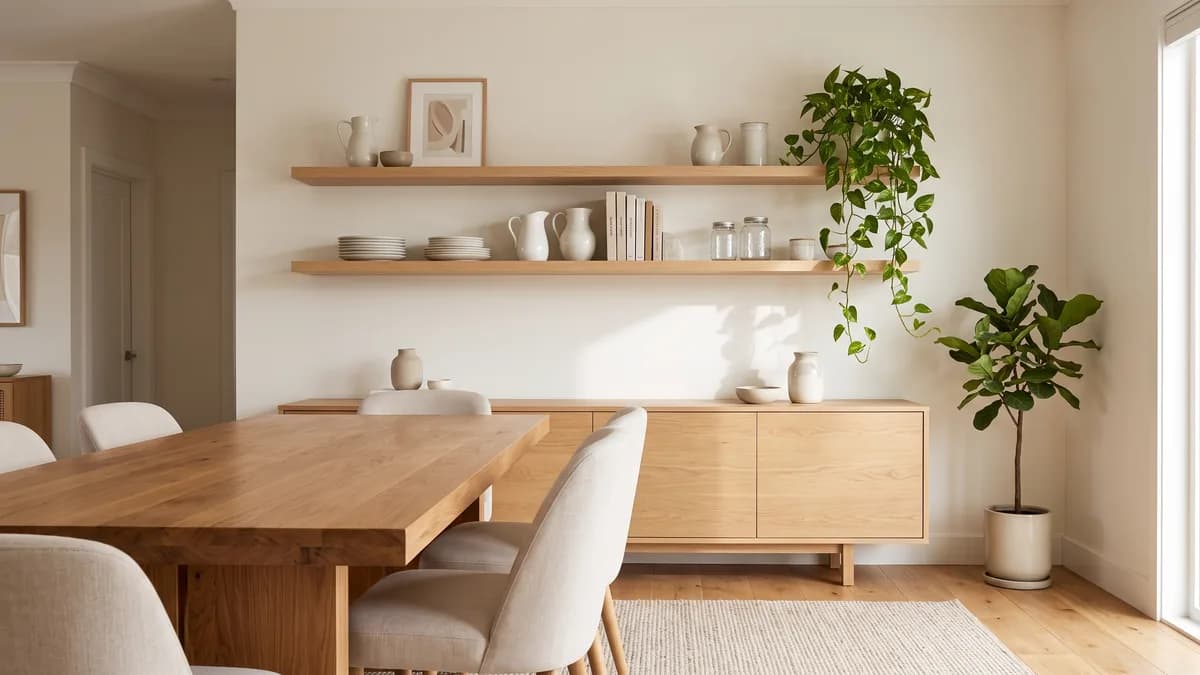
The most useful dining room wall shelf ideas are one shelf for a light display, two shelves above a sideboard for everyday serving pieces, or short corner shelves for a dining nook. Choose the layout around what you actually use, leave room to lift items off, and keep heavy dishes in low, closed storage unless the complete wall-mounted system is rated for them. Tape the outline before buying or drilling so the shelves do not crowd seated guests or the path around the table.
This guide covers the main layouts, how to plan spacing and height before you drill, what to store on dining room shelves versus what belongs in a cabinet, and how to style shelves so they look calm instead of crowded. We also include ideas for small dining nooks, open-plan spaces and rentals. If you want broader inspiration first, our floating shelf ideas and shelf on wall ideas guides cover shelves in every room, and this article focuses on what makes the dining room different.
Why Wall Shelves Suit the Dining Room
A dining room has a specific storage problem. The things it needs, such as serving platters, table linens, candles, placemats and extra glasses, are used often enough that you want them close, but not every day. They end up either crammed into kitchen cabinets or left on the table. Wall shelves solve this by putting frequently used serving pieces within reach of the table without adding a bulky hutch.
Shelves are also lighter visually than tall furniture. In a smaller dining room, a china cabinet can make the space feel tight, especially once chairs are pulled out. Two or three slim shelves above a sideboard give similar storage while keeping the floor clear and the room open.
Finally, the dining room is a room people look at while sitting still for a long time. That makes it a natural place for display. A few well-chosen pieces on open shelves, such as a stack of plates, a pitcher, a plant and a small print, give guests something to rest their eyes on and make the room feel finished.
Six Dining Room Wall Shelf Layouts
The right layout depends on the wall size, what sits below the shelves and how much you want to store. These six layouts cover most dining rooms:
- Single long shelf above the sideboard: the simplest option. One shelf the width of the sideboard creates a display ledge for art, candles and a plant.
- Two stacked shelves above the sideboard: adds real storage for plates and glasses while staying centered and balanced.
- Symmetrical pair flanking a window or mirror: short shelves on each side frame the focal point and suit traditional rooms.
- Full display wall: three or four rows of shelves across the whole wall, often used for collections of dishes or cookbooks.
- Corner shelves: short shelves wrapping a corner make use of dead space in small rooms or breakfast nooks.
- Picture ledge gallery: narrow ledges with a lip for leaning art and plates, ideal for renters who want to change things often.
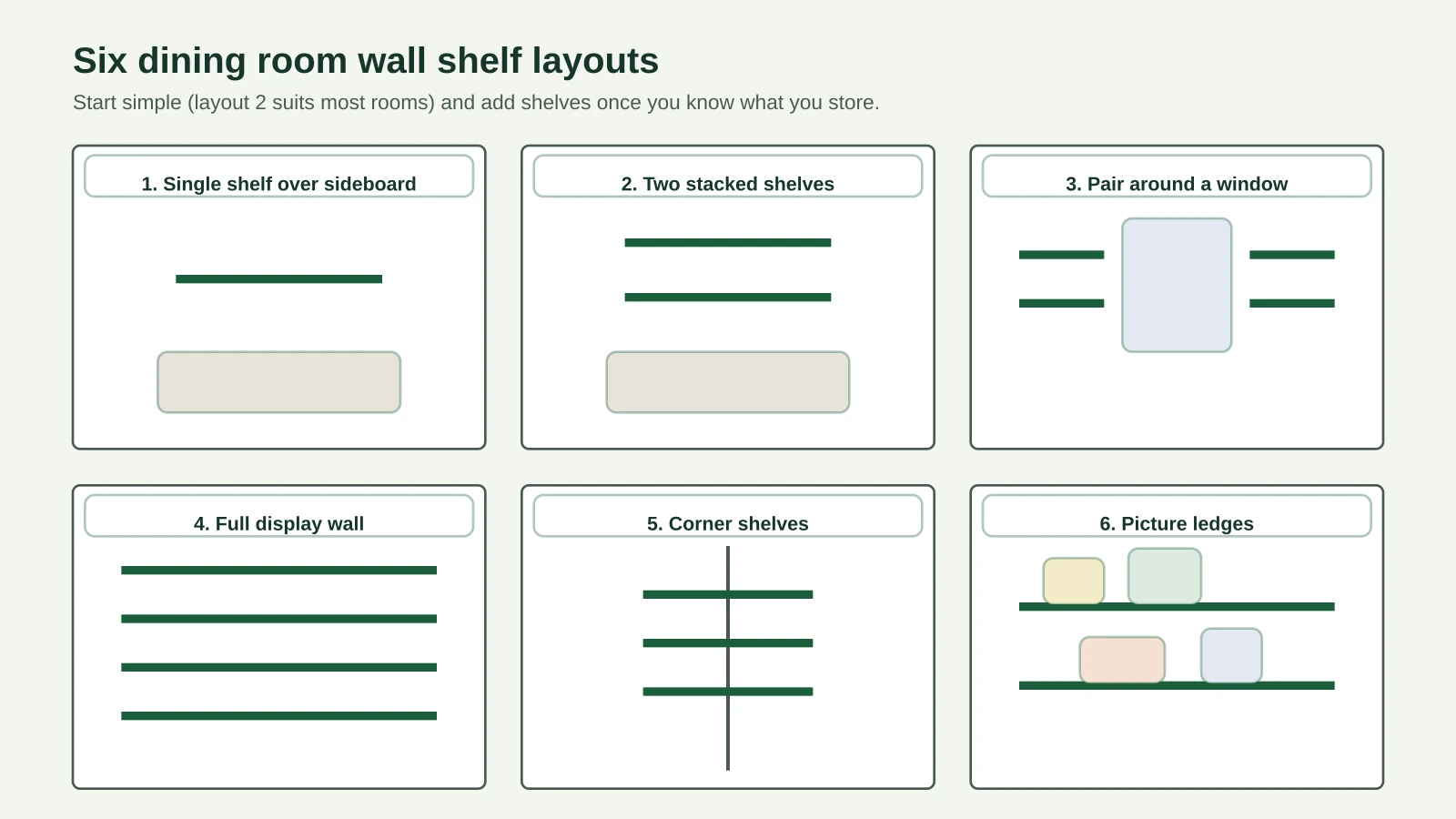
When in doubt, start with the two-shelf layout. It is easy to center, holds enough to be useful, and you can always add a third shelf later once you know what you actually need to store.
Plan Height, Width and Spacing Before You Drill
Measure the wall and mark everything that is fixed: windows, outlets, light switches, thermostats, wall sconces and the sideboard or buffet below. Then decide how wide the shelves should be. A reliable rule is to keep shelves slightly narrower than the furniture below so the arrangement looks anchored rather than top heavy.
For height, the lowest shelf above a sideboard needs enough clearance for the tallest thing you will place on the sideboard, such as a lamp, a vase of flowers or a stack of serving bowls, plus room to lift items off. Measure your tallest object and add a hand's width of breathing room as a starting point. Spacing between shelves works the same way: measure the tallest item you plan to store on the lower shelf and leave space above it.
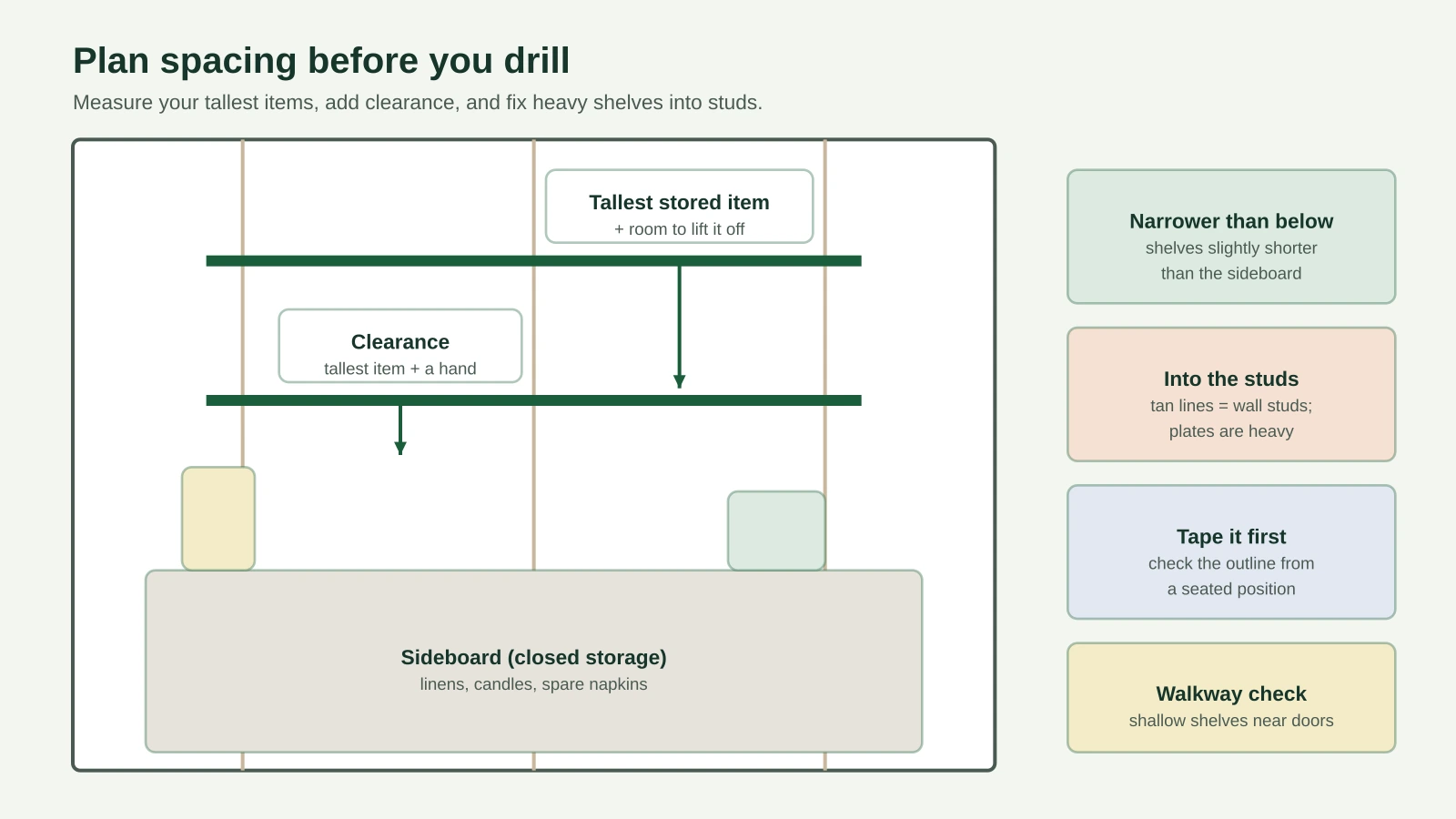
Use painter's tape or paper templates on the wall before drilling. Live with the taped outline for a day or two and look at it from the dining chairs, the doorway and the next room. It is much easier to move tape than to patch holes.
Think about traffic too. Shelves on a wall that chairs back into, or beside a doorway, should be shallow enough that nobody bumps a shoulder on them when walking past or standing up from the table.
Weight, Studs and Shelf Depth
Dishes are heavy, so do not choose fixings from appearance alone. Follow the shelf manufacturer's instructions for the exact wall type, fasteners, support spacing and total load, including the shelf itself. A fastener rating is not a guarantee for the complete installation. If you cannot verify the wall construction or load limit, keep heavy dishes in closed storage below and ask a qualified installer before drilling. For the freestanding sideboard or display cabinet, follow the CPSC Anchor It! tip card: secure furniture against tip-over, keep heavier objects on lower shelves or in lower drawers, and avoid putting tempting objects where children might climb to reach them.
Shelf depth depends on what you store:
| What you store | Suggested shelf type | Notes |
|---|---|---|
| Dinner plates and platters | Deeper shelf, stud mounted | Plates can also stand upright on a plate rail |
| Glasses and mugs | Medium depth shelf | Keep at a reachable height for daily use |
| Cookbooks | Medium depth shelf with bookends | Heavy, so fix into studs |
| Art, candles, small plants | Narrow ledge or shallow shelf | Lightweight, easy to rearrange |
| Leaning plates and prints | Picture ledge with a lip | The lip stops items sliding off |
Brackets are a style choice as well as a structural one. Visible brackets in black metal or wood suit farmhouse and industrial rooms, while floating shelves with hidden cleats look cleaner in modern spaces. If you love the floating look but need to store heavy plates, choose a solid shelf and a cleat designed for that load.
What to Store on Dining Room Shelves
Dining room shelves work best when they hold things that are both used and attractive. A good test is whether you would be happy for a guest to see the item up close. Everyday serving pieces such as a wooden board, a pitcher, a salad bowl and a stack of matching plates pass that test easily.
Glass storage jars are a smart choice for shelves near the table. They keep things like coffee beans, tea, crackers or candy fresh and visible, and they look good in rows.
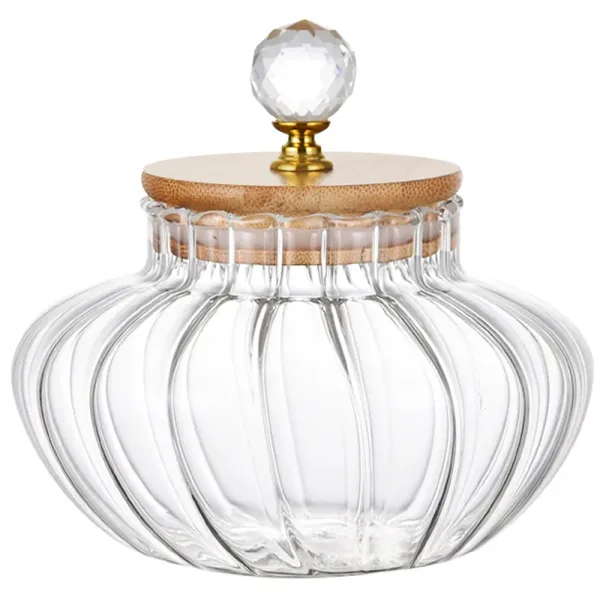
Our Ribbed Glass Storage Jar with Wooden Lid has a borosilicate glass body and a wooden lid with a gasket ring, so it works for snacks or coffee beans while doubling as a decorative piece on an open shelf.
Things that are not attractive, such as spare batteries, receipts, chargers or a pile of mail, should go into a closed sideboard drawer or a lidded basket instead. Mixing practical clutter onto open shelves is the fastest way to make a display wall look messy.
Styling Rules That Keep Shelves Calm
Open shelves can easily tip from curated to cluttered. A few simple rules keep them looking intentional:
- Limit the palette. Choose two or three colors, for example white dishes, natural wood and green plants, and repeat them across the shelves.
- Group in odd numbers. Clusters of three objects of different heights usually look more natural than pairs.
- Leave empty space. Roughly a third of each shelf can stay bare so the eye has somewhere to rest.
- Vary height and shape. Combine a tall pitcher, a low stack of bowls and a round plant pot instead of a row of identical items.
- Add one living thing. A trailing plant or a small herb pot softens the hard lines of dishes and books.
- Repeat across shelves. If a plant sits on the left of the top shelf, place something green on the right of the shelf below for balance.
Restyle seasonally if you enjoy it. Swapping a few objects, such as unlit decorative candles or a bowl of lemons, refreshes the room without buying new furniture. For a lit effect on a shelf, consider battery-operated flameless candles instead. The U.S. Fire Administration's candle fire-safety guidance recommends flameless alternatives and says lit candles need stable holders, clearance from anything that burns, and attention while in use. Do not treat a display shelf as a suitable place for an open flame just because a candle fits. Our decorating wall shelf ideas guide covers more styling techniques.
Pair Shelves With the Sideboard
The sideboard and the shelves above it should work as one unit. Closed storage below handles the practical items, while open shelves above hold display and frequently used serving pieces. That split keeps the wall looking tidy even when the sideboard drawers are full.
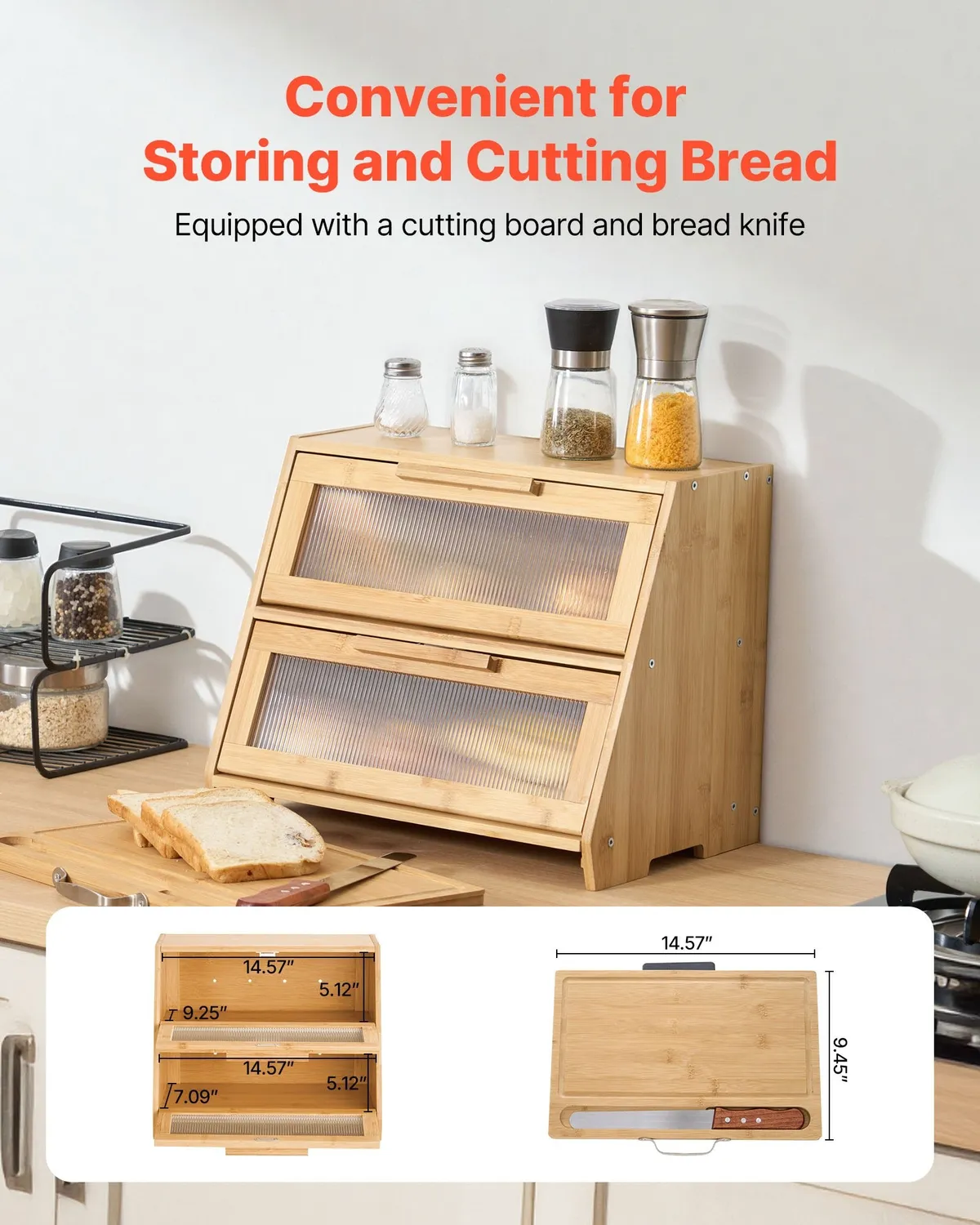
A sideboard surface can host useful pieces that tie the dining room to the kitchen, like a bread box for weekend breakfasts. Our Double-Layer Bamboo Bread Box has two compartments behind ribbed acrylic doors and includes a bamboo cutting board, so bread and a board are ready at the table.
Keep the sideboard top simpler than the shelves above it. One lamp, one larger object and a tray for keys or napkin rings is usually enough. When both the sideboard and the shelves are full, the wall feels crowded.
Ideas for Small Dining Spaces and Open Plans
In a small dining nook or a dining area that is part of a kitchen or living room, shelves need to work harder. Corner shelves make use of space that furniture cannot reach. A narrow ledge above a banquette can hold plants and a few plates without intruding on headroom. Wall-mounted shelves also keep the floor clear, which makes a small space feel larger.
In open-plan homes, dining shelves can help define the dining zone. Run the shelves only as wide as the table area, and repeat materials from the kitchen, such as the same wood tone as the cabinets or the same metal finish as the handles, so the space reads as connected. Our open shelving kitchen ideas work well alongside this approach.
Renters can use picture ledges, freestanding etageres or shelves that hang from a rail. Many rentals allow small nail holes, so check your lease and consider a single long ledge rather than multiple heavy shelves. For more small space options, see our wall shelf storage ideas.
Keep the Display Wall Clean and Useful
Open shelves collect dust, especially in rooms where people cook nearby. Plan a quick wipe-down once a week as part of your regular cleaning, and wash dishes that live on display before using them for guests. Items you use often naturally stay clean, which is another reason to store everyday serving pieces on open shelves and keep rarely used items behind doors.
Review the shelves every few months. If something has not moved since you put it there and you do not love looking at it, it can go. If a shelf has become a landing zone for mail and keys, add a small tray or basket on the sideboard so those items have a better home. Our guide to living room wall shelf decor shares the same upkeep habits.
Related Products from Sesoris
If you want to turn these dining room wall shelf ideas into a real setup, start with the Ribbed Glass Storage Jar with Wooden Lid for open-shelf storage and the Double-Layer Bamboo Bread Box for the sideboard. For more options, browse our Kitchen & Dining collection.
Our practical rule: choose one product that solves the main clutter problem first, then add supporting pieces only when the shelf layout is settled.
Frequently Asked Questions About Dining Room Wall Shelf Ideas
Q: How high should shelves be above a sideboard?
High enough to clear the tallest object you keep on the sideboard, such as a lamp or a vase, plus a hand's width of space so you can lift things off easily. Tape the outline on the wall first and check it from a seated position.
Q: What should I put on dining room wall shelves?
Items that are both useful and attractive: everyday plates, serving bowls, pitchers, glass jars, cookbooks, candles and a plant or two. Keep practical clutter such as mail and chargers in closed storage.
Q: Can floating shelves hold dishes?
Only use them for dishes when the complete shelf installation is rated for that load and follows the manufacturer's instructions for the wall construction and fasteners. A solid board or heavy-looking bracket alone does not establish capacity. If you cannot verify the limit, keep heavy stacks in the sideboard below.
Q: How wide should dining room shelves be?
Slightly narrower than the sideboard or buffet below them usually looks best, because it keeps the arrangement anchored. On an empty wall, center the shelves on the dining table instead.
Q: How do I keep open shelves from looking cluttered?
Limit the color palette, group objects in threes, vary heights, repeat colors across shelves and leave part of each shelf empty. Remove anything you do not use or enjoy looking at.
Q: Are wall shelves a good idea in a small dining room?
Yes. Wall shelves give storage without taking floor space, which keeps a small room feeling open. Corner shelves and narrow ledges are especially useful in breakfast nooks.
Q: What are good dining room shelf ideas for renters?
Picture ledges, a single long shelf with few anchors, rail-hung shelves or a freestanding etagere all work. Check your lease about wall holes before drilling.
Q: How often should I clean dining room shelves?
A quick dusting once a week keeps them looking fresh. Wash any dishes that live on display before using them, and review the shelves every few months to remove items you no longer use.
Conclusion: A Dining Wall That Works as Hard as It Looks
The best dining room wall shelf ideas combine storage and display. Choose a layout that suits the wall, plan height and spacing with tape before drilling, fix heavy shelves into studs and store pieces that are both useful and good looking. A calm palette and some empty space do the rest.
Start with two shelves above the sideboard, live with them for a few weeks, and expand only if you need more. For more inspiration, explore our indoor plant wall shelf ideas and kitchen wall shelf ideas.
Liked this guide?
Get new organizing guides and the occasional new product by email. No spam, unsubscribe anytime.
Related articles

Explore more articles
- How to Set Up an Indoor Plant Watering Station: Complete Step-by-Step Tutorial for 2026
- Bamboo vs Plastic Storage: Which Material Fits Your Home?
- How to Create a Sunday Reset Routine: Step-by-Step Tutorial for a Calm, Organized Week in 2026
- 25+ Best Kitchen Cupboards Organizer Ideas to Transform Your Storage Space in 2026
- Stainless Food Storage Containers: The Ultimate 2026 Guide to Durable, Healthy Kitchen Organization
- Storage Containers for Food BPA Free: The Complete 2026 Guide to Safe, Healthy Kitchen Organization
- Glass Food Storage Containers with Lid: The Ultimate 2026 Review & Buying Guide
- How to Build DIY Wood Shelves: Complete Step-by-Step Tutorial for 2026