
Best Modular Closet Systems: Complete 2026 Review & Buying Guide for a Perfectly Organized Wardrobe
Discover the best modular closet systems of 2026. Our in-depth review covers top picks, key features, and buying tips to transform your wardrobe storage.
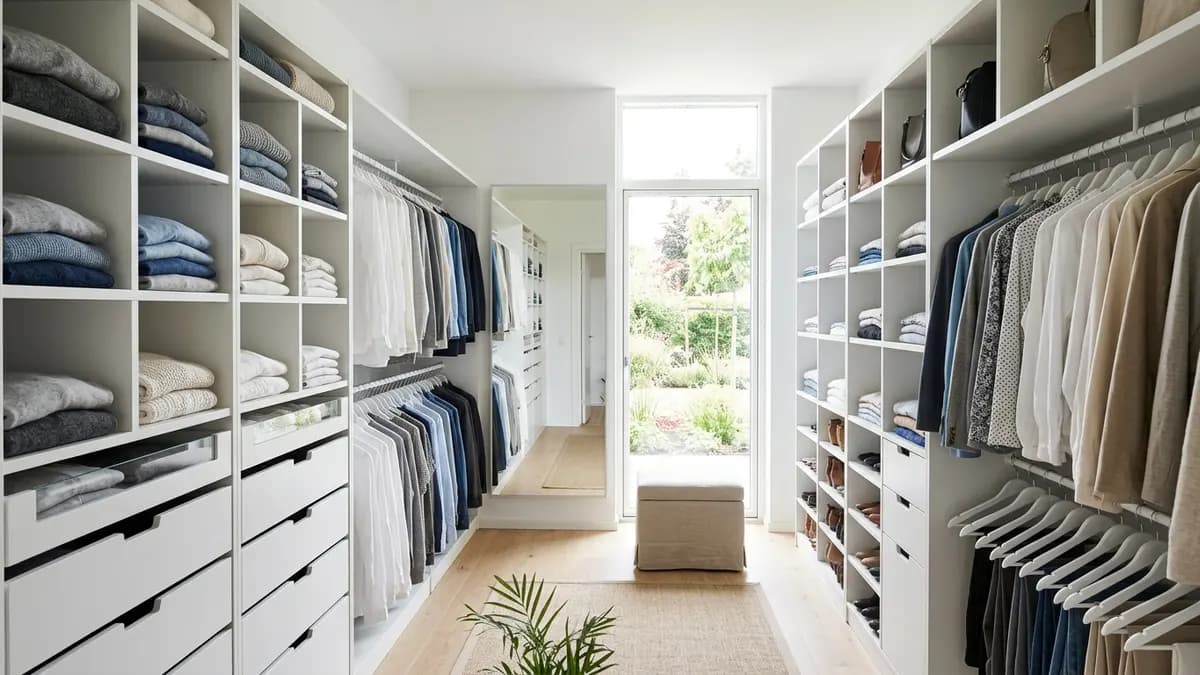
If you have ever opened your closet and immediately felt a wave of stress wash over you, a modular closet system might be exactly what your home needs in 2026. These customizable storage frameworks have surged in popularity because they let you design a wardrobe layout that fits your actual belongings, your actual space, and your actual budget, rather than forcing your life into a one-size-fits-all solution. In this complete review and buying guide, we break down how modular closet systems work, which types perform best, what features genuinely matter, and how to choose the right system for your home today.
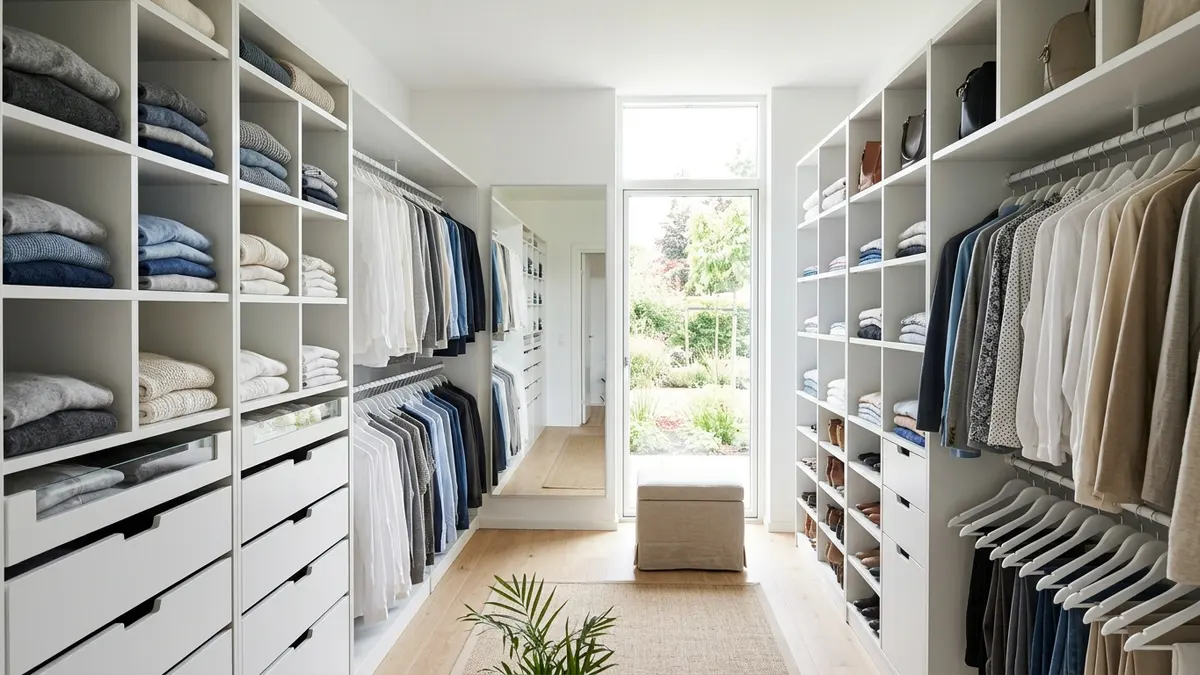
What Is a Modular Closet System and Why It Matters in 2026
A modular closet system is a collection of individual storage components, including shelving panels, hanging rods, drawer units, shoe cubbies, and accessory hooks, that connect together to form a fully customized wardrobe. Unlike built-in carpentry or fixed wire shelving, modular systems are designed to be reconfigured, expanded, or even moved to a new home as your needs change.
The appeal in 2026 is clear. Homes are getting smarter and storage needs are evolving. A growing number of Americans are working from home at least part of the week, which means bedroom closets now need to store not just clothes but also accessories, tech gear, and even fitness equipment. A rigid, builder-grade closet simply cannot keep pace. Modular systems, by contrast, can be rearranged on a weekend without professional labor.
According to Houzz research on closet renovation trends, homeowners who renovate their primary closet report high satisfaction rates and frequently cite improved daily routines as a primary benefit. The modular closet system category sits at the sweet spot of that demand.
Types of Modular Closet Systems Reviewed
Before comparing specific features, it helps to understand the main structural categories. Each type suits different closet configurations and budgets.
Here is a quick comparison of the main modular closet system types before we look at each in detail.
| System type | Best for | Installation | Flexibility later |
|---|---|---|---|
| Wire shelving on a rail | Budget reach-in closets | Wall rail, few anchor points | High: shelves and baskets move along the rail |
| Laminate or wood components | Walk-ins and finished-look closets | More parts, more measuring | Medium: units can be rearranged within the same footprint |
| Freestanding towers | Rentals and closets you cannot drill into | Little or no wall mounting | High: can move to another room |
| Hybrid kits (rail plus drawers) | Shared closets with mixed storage needs | Moderate | High: add drawers or baskets over time |
Freestanding Modular Units
Freestanding systems use stacked towers and cube shelving that do not attach to walls. They are ideal for renters or anyone who does not want to drill into drywall. The tradeoff is that they require floor space for the base of each unit and can feel less sleek than wall-mounted alternatives.
Best for: Renters, temporary living situations, large walk-in closets with open floor space.
Price range: US$80 to US$400 per tower unit, depending on height, material, and included accessories.
Wall-Mounted Panel Systems
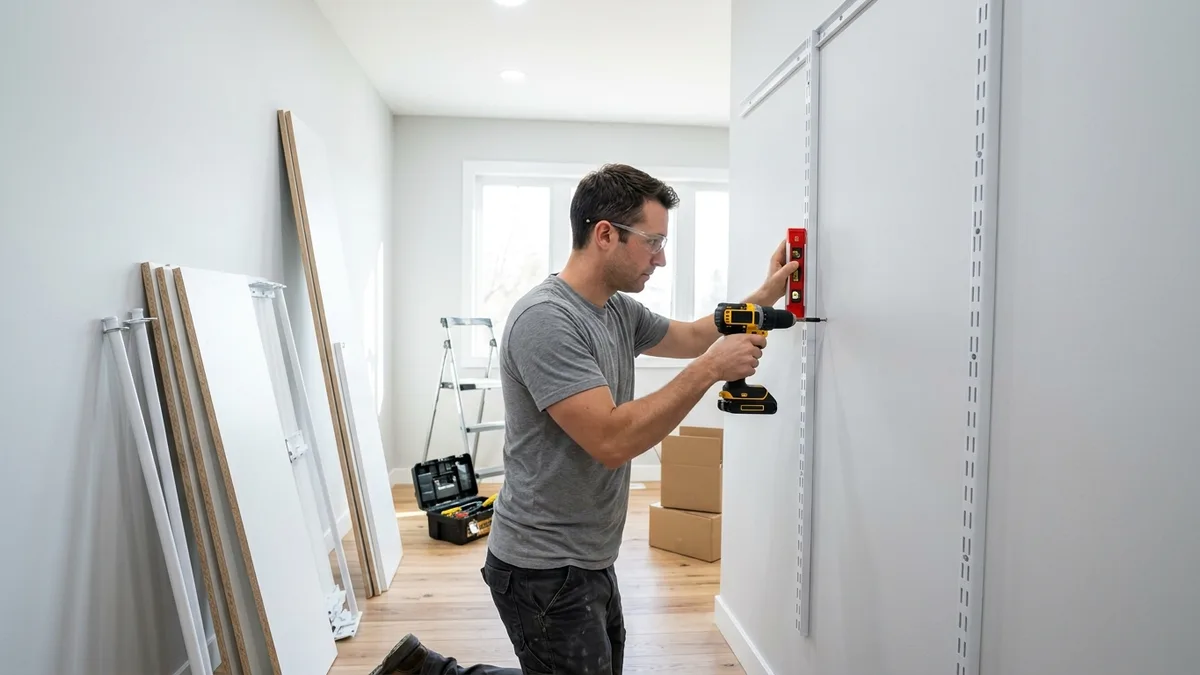
Wall-mounted systems anchor a vertical rail or bracket directly to the wall stud, then hang shelves, rods, and drawer units from that rail. This approach maximizes floor space because nothing rests on the ground, making the closet feel larger and easier to vacuum or mop beneath.
Best for: Reach-in closets, walk-in closets with limited floor space, homeowners who want a built-in look.
Price range: US$150 to US$600 per linear foot of wall coverage, depending on components chosen.
Hybrid Modular Systems
Hybrid systems combine floor-standing towers with wall-mounted rails in a single coordinated design. They offer the stability of a built-in installation with the flexibility to swap components over time. Many of the most popular systems sold at home improvement retailers fall into this category.
Best for: Permanent homes, medium to large closets, households whose storage needs change frequently.
Price range: US$300 to US$2,000+ for a full closet, depending on linear footage and add-ons.
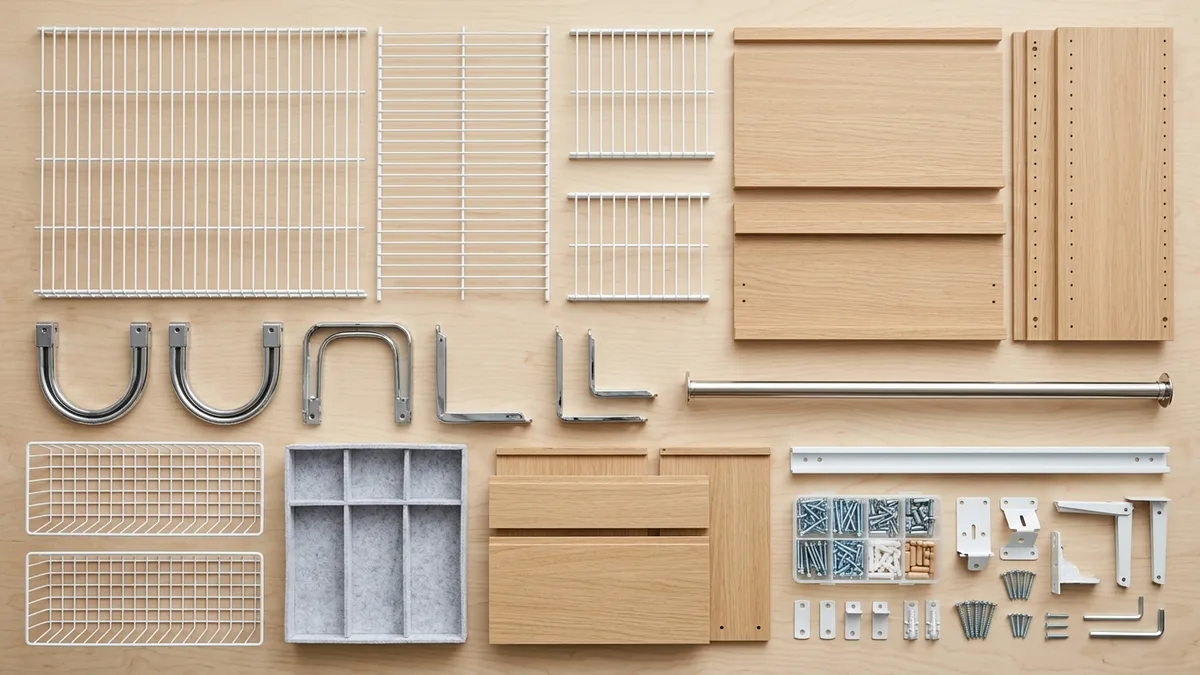
Key Features to Evaluate in Any Modular Closet System Review
When we evaluate modular closet systems for 2026, these are the criteria that genuinely separate good products from frustrating ones.
Material Quality and Durability
The backbone of any modular closet system is its material. The three most common options each have real-world tradeoffs:
- Laminated particleboard or MDF is the most affordable option and produces a smooth, paintable surface. Quality varies widely. Look for boards rated at least 5/8 inch thick to resist sagging under heavy folded clothing loads.
- Solid wood or plywood is significantly more expensive but resists sagging, handles humidity better, and accepts screws more reliably for add-on brackets. A plywood shelf of 3/4 inch thickness can typically span up to 32 inches without a center support before deflection becomes noticeable.
- Powder-coated steel wire is lightweight, allows airflow to reduce mustiness, and will not sag under normal clothing loads. Its main disadvantage is that small items can fall through the wire gaps and folded clothes may leave imprints.
Adjustability and Expansion Potential
A truly modular system should allow you to move shelves in at least 1-inch increments. Systems that only allow 2-inch or 4-inch adjustments quickly become frustrating when you are trying to store items of varying heights. Always check whether the manufacturer sells expansion components and whether those components will still be available in a few years.
Weight Capacity Per Shelf
Manufacturers should publish weight capacity ratings. A standard shelf holding folded sweaters and jeans should support at least 50 pounds. A shelf intended for shoe storage or bins should support at least 75 to 100 pounds. Hanging rods should support at least 35 pounds per linear foot for heavy coats and suits.
Installation Complexity
Most modular systems advertise tool-free or minimal-tool assembly, but the reality varies. Wall-mounted systems require locating studs and driving lag screws correctly. Poorly anchored systems are a genuine safety hazard, particularly in homes with children. The U.S. Consumer Product Safety Commission (CPSC) warns that improperly anchored furniture and shelving units pose a tip-over risk. Always follow manufacturer anchoring instructions and use a stud finder.
Aesthetic Finish Options
A closet system you will live with for years should feel visually cohesive with your bedroom. Leading systems offer finishes in white, gray, espresso, natural wood tone, and occasionally custom paint-ready surfaces. Some systems include matching trim strips and drawer fronts that give a polished, semi-custom appearance.
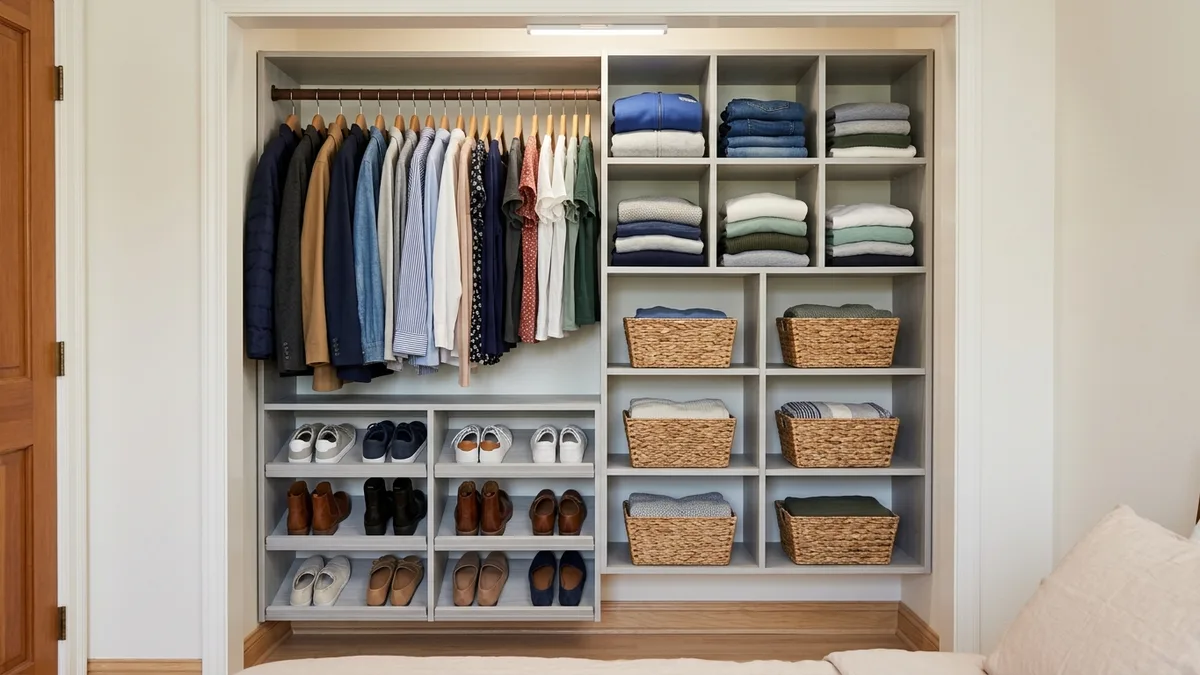
How Modular Closet Systems Perform in Real Closet Sizes
Performance looks different depending on whether you are working with a small reach-in closet or a generous walk-in layout. Here is how to match system type to your actual space.
Small Reach-In Closets (Under 6 Feet Wide)
For a standard 6-foot-wide, 24-inch-deep reach-in closet, a single-tower wall-mounted system or two flanking towers with a shared hanging rod in the center is typically the most efficient configuration. Prioritize double hanging sections on one side for short items like shirts and folded pants, and a single long-hang section on the other side for dresses and coats. Adding a shoe shelf at the bottom of the short-hang section can recover 12 to 18 inches of otherwise wasted vertical space.
Estimated budget: US$200 to US$500 for a complete system including hardware.
Walk-In Closets (60 to 120 Square Feet)
Walk-in closets benefit most from a full perimeter layout with a center island if space allows. A center island with drawers replaces the need for a separate dresser in the bedroom, which can free up significant floor space. The Spruce's closet design guide recommends allowing at least 24 inches of aisle width for comfortable access, with 36 inches preferred for two-person closets.
Estimated budget: US$800 to US$3,500+ depending on linear footage, drawer count, and material tier.
Wardrobe Closets and Armoires
For bedrooms without a built-in closet, freestanding modular towers or armoire-style systems provide a workable alternative. These units typically range from 24 to 48 inches wide and 72 to 84 inches tall. Stacking two units side by side can approximate a small reach-in closet experience. Secure them together and anchor to the wall per CPSC tip-over safety guidance to prevent instability.
Estimated budget: US$150 to US$700 for one to two freestanding tower units.
Modular Closet System Review: Comparing Popular Options at Every Price Point
The right modular closet system is not the most expensive one. It is the one that fits your closet dimensions, your storage categories, and your willingness to install and reconfigure over time.
Budget Tier (Under US$300 for a Full Setup)
Budget modular systems are typically built from thinner laminated particleboard (around 1/2 inch) with a basic white or espresso finish. Shelf adjustability may be limited to 2-inch increments, and drawer glides are often basic side-mount slides rather than full-extension undermount hardware. These systems work well for smaller closets, children's rooms, or temporary situations. Expect a lifespan of five to eight years under normal use before shelves begin to sag or peg holes strip.
What to look for: Boards at least 5/8 inch thick, included wall anchors, and a manufacturer that sells individual replacement parts.
What to avoid: Systems without published weight ratings, units that rely solely on cam-lock connectors with no wall anchoring option.
Mid-Range Tier (US$300 to US$800 for a Full Setup)
Mid-range systems step up to thicker laminated panels, better drawer slides, and more finish options. Many include a wall-mounted rail system that provides clean lines and easier reconfiguration. Some mid-range options offer a limited selection of soft-close drawer hardware, which reduces noise and extends the hardware's lifespan. This tier is the sweet spot for most American households with a standard reach-in or mid-size walk-in closet.
What to look for: Full-extension drawer slides, 3/4 inch shelf thickness, at least 1-inch shelf adjustability, and a brand with an active parts catalog.
What to avoid: Systems that mix metric and imperial components (which makes finding replacement hardware at US hardware stores difficult).
Premium Tier (US$800 to US$2,500+ for a Full Setup)
Premium modular systems use thicker plywood or MDF cores with real wood veneer or high-pressure laminate finishes that resist scratches and moisture. Drawer boxes are typically dovetail-joined wood with undermount soft-close slides. Many premium systems offer professional design consultations, either in-store or via online room-planning tools, and some include installation services. The build quality at this tier is genuinely close to custom cabinetry at a fraction of the cost.
What to look for: Dovetail or box-joint drawer construction, full-overlay door options, matching interior hardware finishes, and a warranty of at least 10 years on structural components.
What to avoid: Premium pricing on systems that still use particleboard cores thinner than 3/4 inch or basic side-mount drawer slides.
Materials Deep Dive: Which Modular Closet System Material Should You Choose?
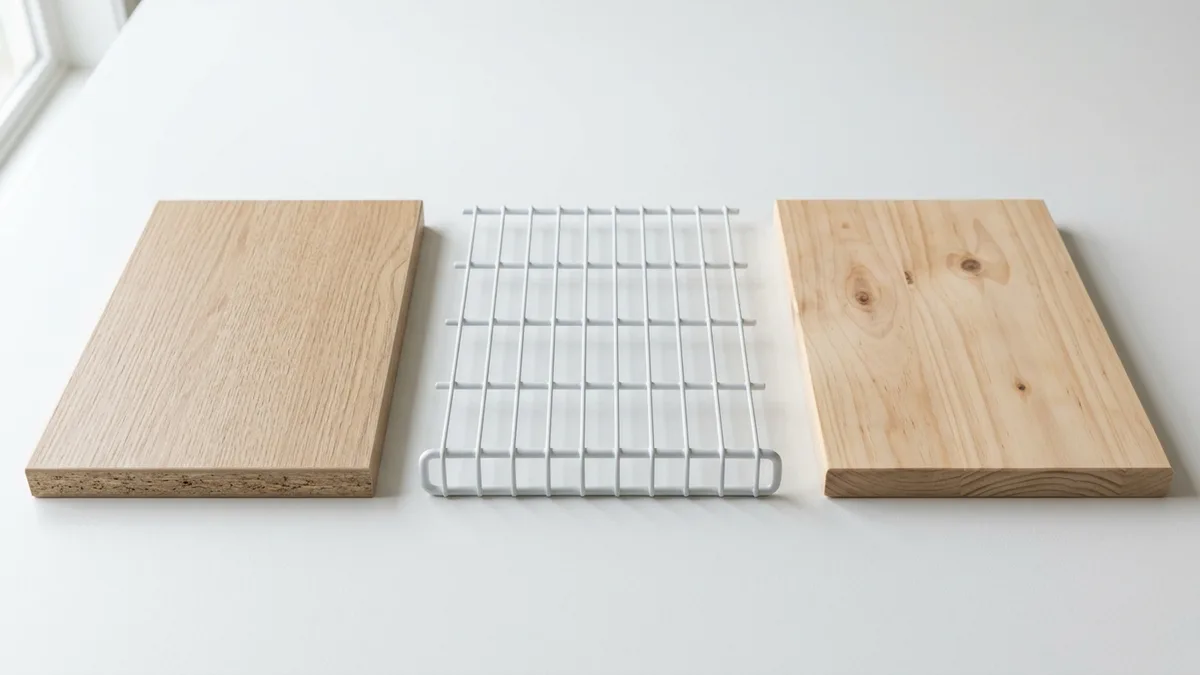
Choosing the right material is one of the most consequential decisions in any modular closet system purchase. Here is a practical breakdown:
Laminated Particleboard and MDF
This is the dominant material in the budget and mid-range tiers. Modern high-density particleboard with a melamine laminate surface is actually quite durable in dry environments. The key vulnerabilities are moisture (a humid closet accelerates edge swelling and delamination) and over-span (shelves longer than 32 inches without a center support will eventually sag under the weight of folded clothes or shoes).
Our recommendation: Use laminated particleboard systems in bedrooms with good humidity control. Add a center support bracket for any shelf longer than 30 inches.
Powder-Coated Steel Wire
Wire systems dominated the market for decades and remain popular because they are inexpensive, easy to install, and nearly impossible to damage under normal use. The ventilation factor also reduces the chance of musty odors building up in enclosed spaces. However, wire shelves are universally disliked for folded clothing because items can imprint, slide, or fall through the gaps. Many homeowners add closet liner inserts or shelf liners to resolve this.
Our recommendation: Use wire shelving for shoe storage, laundry rooms, and pantry shelves. Complement with solid shelf inserts in areas where folded clothing will be stored. Check out our guide on pantry storage rack options to see how wire shelving performs in other household contexts.
Solid Wood and Plywood
Solid wood and Baltic birch plywood offer the best structural performance of any material in this category. They resist humidity better than particleboard, hold screws more reliably, and simply feel more substantial. The tradeoff is cost: solid wood modular components can run two to three times the price of laminated particleboard equivalents. They are best suited for premium installations intended to last 20-plus years.
Our recommendation: If budget allows, choose plywood-core components for a modular system you plan to keep long-term. For a mid-range budget, focus on plywood construction only for the most heavily loaded areas, such as shoe shelves and drawer boxes.
Installation Tips That Make or Break a Modular Closet System
Even the best modular closet system will underperform if it is installed carelessly. These practical steps will help you get it right:
- Measure twice, order once. Measure your closet width, depth, and height at multiple points. Older homes often have walls that are not perfectly plumb or square, so measure at the floor, mid-wall, and ceiling separately.
- Find and mark every wall stud. Use an electronic stud finder and mark stud centers with painter's tape before cutting any brackets. Most residential wall studs are spaced 16 inches on center.
- Start with the highest component. Install the uppermost rail or bracket first, use a level to confirm it is perfectly horizontal, then work downward. This ensures all downstream components align correctly.
- Use the right fasteners for your wall type. Drywall anchors rated for the stated load are acceptable for light shelving but are not a substitute for stud mounting on systems holding heavy clothing or shoes. Always mount the primary support brackets directly into studs.
- Allow for seasonal adjustments. Build in time after installation to live with the system for a few weeks before committing every shelf to a fixed position. Your actual daily habits will quickly reveal which sections need more hanging space and which need more folded-item storage.
- Anchor freestanding units to the wall. Even freestanding tower units should be anchored with anti-tip straps or L-brackets per CPSC safety guidance, especially in homes with children or pets.
For more hands-on guidance on building out your wardrobe storage, our DIY closet shelves tutorial walks through the full process step by step.
Accessories That Maximize a Modular Closet System's Value
The core system is just the start. The right accessories can dramatically improve daily usability:
- Pull-out pant racks keep trousers crease-free and visible without folding.
- Jewelry and accessory inserts fit inside standard drawer boxes and add velvet-lined compartments for delicate items. See our jewelry organization ideas guide for more options.
- Valet rods extend from the cabinet side to hold tomorrow's outfit, reducing morning decision fatigue.
- LED interior lighting strips transform a dark closet into a functional dressing room without an electrician.
- Bin and basket labels help every household member maintain organization without daily policing. Our storage bin labels guide covers the best labeling approaches.
- Shoe cubbies and boot organizers use the floor-level space efficiently and prevent shoes from toppling into a pile.
- Hamper frames integrate laundry sorting directly into the closet footprint, eliminating the freestanding hamper from the bedroom floor.
Related Products from Sesoris
If you want to turn this guide into a real setup, start with Stackable Storage Bins, 24 Pack and Pull-Out Cabinet Organizer, 17 in. Wide. For broader options, browse the Home & Decor collection so the article journey does not stop at reading only.
Our practical rule: choose one product that solves the main clutter problem first, then add supporting organizers only when the daily workflow is already clear. This keeps the shopping path useful, not pushy.
FAQ: Frequently Asked Questions About Modular Closet Systems
Q: How long does it take to install a modular closet system in a standard reach-in closet?
For a confident DIYer with a mid-range wall-mounted system, a standard 6-foot reach-in closet typically takes four to six hours from unboxing to finished installation. Larger walk-in configurations can take a full weekend. Adding a second person cuts time significantly for the mounting and leveling steps.
Q: Can I take my modular closet system with me when I move?
Yes, and this is one of the key advantages over custom built-ins. Freestanding systems disassemble completely. Wall-mounted rail systems can be unbolted, patched, and repainted, leaving the wall in move-out-ready condition. Always photograph your wall mounting points before removal so you can reinstall efficiently in your new home.
Q: Are modular closet systems worth the investment compared to simple wire shelving?
For most households, yes. Good Housekeeping's home storage coverage consistently notes that well-organized storage reduces daily stress and saves time. The added cost of a modular system over basic wire shelving pays off in convenience and the ability to adapt the layout over years, rather than replacing the entire system when your storage needs change.
Q: What is the weight limit I should plan for when sizing modular closet shelves?
A practical planning rule: assume 10 pounds per linear foot of hanging clothing (light garments), 20 pounds per linear foot for heavy coats and suits, and 50 to 75 pounds per shelf for folded clothing and accessories. Always verify against the manufacturer's published weight ratings for the specific products you select.
Q: Can modular systems handle a shared couples' closet?
Absolutely. The most effective approach for a shared walk-in closet is to divide the space into two clearly defined zones, one per person, with a shared accessory area (mirrors, drawer unit, hooks) in the center or at the entry. This layout reduces daily friction and makes it easier for each person to maintain their own section. Our walk-in closet organization ideas guide covers shared closet layouts in detail.
Q: Can a modular closet system work in a rental?
Yes, if you pick a freestanding or tension-mounted design, or one that needs only a few small wall anchors. Check your lease before drilling, and keep the original hardware so the closet can be returned to its original condition when you move out.
Q: How do I measure a closet for a modular system?
Measure the width at the back wall and at the door opening, the depth from the back wall to the door frame, and the height to the ceiling or existing shelf. Note outlets, light switches, and baseboards, since they can change where a tower or rail can go.
Q: Should I choose drawers or open shelves in a modular closet?
Open shelves make folded sweaters and bags easy to see and grab, while drawers hide small items like socks and accessories and keep dust off. Many closets work best with a mix: shelves at eye level and drawers lower down.
Conclusion: The Best Modular Closet System Is the One Built for Your Life
After reviewing the full landscape of modular closet systems available in 2026, the clearest takeaway is this: the best system is not necessarily the most expensive one or the one with the most Instagram-worthy finish. It is the system that matches your closet dimensions, accommodates the categories of items you actually own, can grow or shift as your needs change, and is installed safely and correctly.
For most households, a mid-range hybrid system with 3/4 inch laminated panels, full-extension drawer slides, and a wall-mounted rail for the main hanging sections will deliver the best balance of performance, durability, and value. If budget is tight, start with a quality freestanding tower in the most critical zone and expand from there. If you are building a forever home, invest in plywood-core components and soft-close hardware that will perform beautifully for decades.
Ready to get started? Browse the full range of home organization solutions at Sesoris and explore our best sellers to find the storage components that fit your wardrobe and your life. For more inspiration and step-by-step guidance, visit the Sesoris blog where we cover every corner of the organized home.
Liked this guide?
Get new organizing guides and the occasional new product by email. No spam, unsubscribe anytime.
Related articles
Explore more articles
- Glassware Food Storage Containers: The Complete 2026 Guide to Fresh, Safe Kitchen Organization
- 25+ Best Over the Toilet Storage Ideas to Maximize Every Inch of Your Bathroom in 2026
- 30+ Best Kitchen Floating Shelf Ideas to Transform Your Cooking Space in 2026
- 30+ Best Shoe Rack Ideas to Organize Your Home in 2026
- 25+ Best Laundry Room Cabinet Ideas to Transform Your Space in 2026
- 30+ Best Small Walk In Closet Ideas to Maximize Every Inch of Your Space in 2026
- Mini Fridge Organization Ideas for Small Spaces
- 25+ Best Nightstand Organization Ideas to Transform Your Bedroom in 2026