
Corner Closet System: Complete 2026 Guide to Maximizing Every Inch of Your Wardrobe
If you have ever looked at the corner of your closet and felt like it was doing absolutely nothing for you, you are not alone. That awkward 90-degree space is one of the most underused spots in any American home. Installing a corner closet system is one of the most impactful upgrades you can make to your bedroom or walk-in wardrobe in 2026. Whether you are dealing with a small reach-in closet or a sprawling walk-in, a well-designed corner closet system can double your usable storage, eliminate clutter, and make getting dressed every morning feel effortless. In this guide, I am going to walk you through everything you need to know about choosing, planning, and setting up the right corner closet system for your space.
What Is a Corner Closet System and Why Does It Matter?
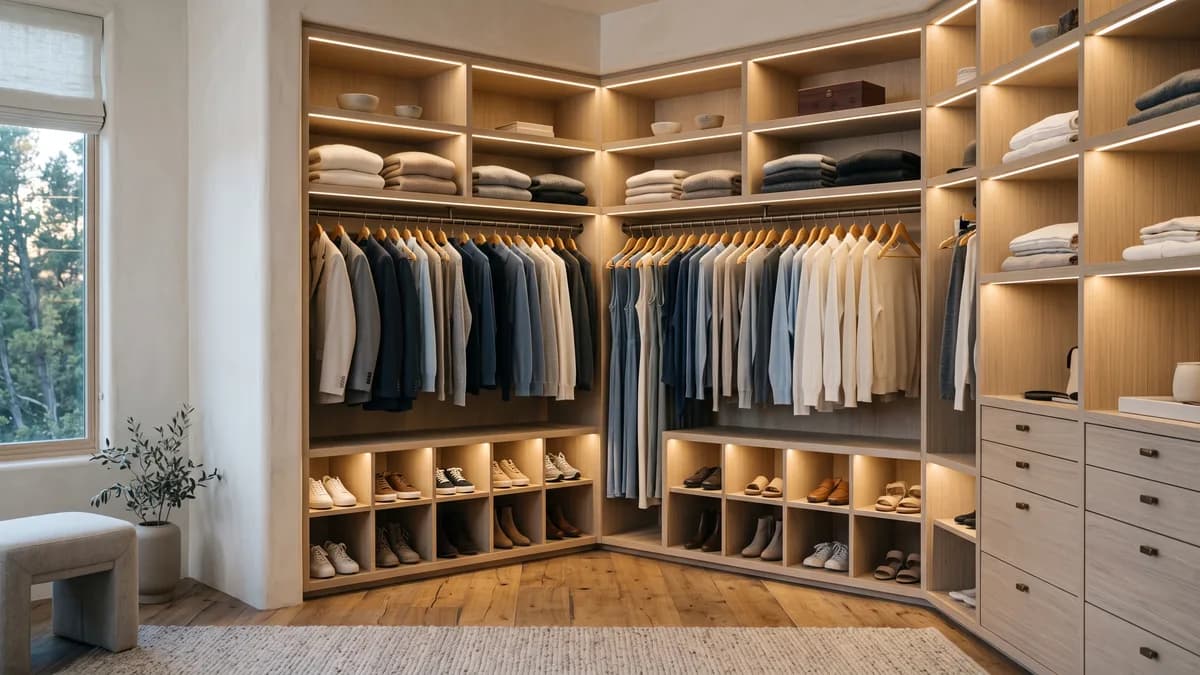
A corner closet system is a storage configuration specifically designed to make use of the corner area inside a closet or wardrobe space. Instead of leaving that 90-degree junction of two walls bare or stuffing it with random items, a corner system fills it with purposeful shelves, hanging rods, drawers, or specialty inserts. According to The Spruce, corners are among the most commonly wasted spaces in home storage, yet they hold tremendous potential when treated with the right system.
The reason corners tend to get ignored is simple: standard rectangular shelf units and single hanging rods do not naturally wrap around a corner. They leave dead zones that are awkward to reach and impossible to organize neatly. A purpose-built corner closet system solves this problem with angled shelves, lazy-Susan-style rotating units, wrap-around rods, or L-shaped configurations that follow the natural geometry of the space.
For anyone serious about closet organization, understanding how to work with your corners instead of against them is a total game-changer.
The Real Cost of Ignoring Your Closet Corner
Leaving your corner unused does not just waste square footage. It also creates a dumping ground. Items get tossed into the corner because there is no system to contain them. Shoes pile up. Bags get buried. Seasonal items disappear. Before long, that one dead corner is the reason your entire closet feels chaotic. A corner closet system brings structure to the area that needs it most.
Types of Corner Closet Systems to Know in 2026
Not every corner closet system is built the same way, and the right choice depends on your closet size, budget, and how handy you are with basic tools. Here is a breakdown of the main types available to US shoppers in 2026.
1. Freestanding Corner Units
These are standalone furniture pieces shaped to fit into a corner. They require no installation, no drilling, and no permanent commitment. Freestanding corner units are ideal for renters or anyone who wants flexibility. They typically feature open shelves or a mix of shelves and a short hanging rod. The downside is that they may not maximize vertical height as effectively as built-in options.
2. Modular Built-In Corner Systems
Modular systems are the gold standard for corner closet organization. Brands like IKEA's PAX, Closet Factory, and The Container Store's Elfa line offer components that you can configure in an L-shape or diagonal to wrap around a corner. These systems use wall anchors and connect seamlessly, giving you a custom-looking result without a full custom price tag. Prices for modular corner systems typically start around US$200 to US$300 for a basic setup and can go well above US$1,500 for a fully loaded walk-in configuration.
3. Tension Rod and Shelf Configurations
For very small reach-in closets, a combination of tension rods and freestanding corner shelves can create a functional corner closet system without any major commitment. This is the most budget-friendly route, often costing under US$100 for the full setup.
4. Custom Built-In Corner Closets
A professional custom closet installation offers the most tailored use of corner space. Designers will measure your exact dimensions, account for ceiling height, door swing, and any architectural quirks, and build a system that fits perfectly. Custom built-ins are the most expensive option, often ranging from US$1,000 to US$5,000 or more depending on materials and complexity, but they deliver the highest return in both function and home value.
5. DIY Corner Closet Systems
If you enjoy hands-on projects, a DIY closet approach using pre-cut plywood, melamine boards, or lumber can produce a stunning corner system at a fraction of the cost. Pair it with affordable hardware from your local home improvement store and you have a setup that looks completely custom.
How to Plan Your Corner Closet System Layout
Planning is the most important step in building a successful corner closet system. Rushing into buying shelves without measuring first is the number one mistake I see people make. Here is how to do it right.
Step 1: Measure Your Space Carefully
Use a tape measure to record the following dimensions in feet and inches:
- The width of each wall that makes up the corner
- The ceiling height from floor to ceiling
- The distance from the floor to any existing shelf brackets or tracks
- The depth of the closet from the back wall to the door frame
- The location of any light fixtures, outlets, or vents
Most standard reach-in closets are 24 inches deep. Walk-in closets typically range from 5 feet by 5 feet for a tight L-shape up to 10 feet by 12 feet for a generous U-shape. Knowing your exact measurements helps you avoid the frustration of buying a system that does not fit.
Step 2: Identify Your Storage Needs
Before you pick a system, figure out what you are actually storing. Ask yourself:
- How many hanging garments do you have? Are they mostly short items like shirts and jackets, or long items like dresses and coats?
- How many pairs of shoes do you own?
- Do you need drawer space for folded items or undergarments?
- Are there bulky items like bags, hats, or seasonal bins that need open shelving?
Answering these questions first ensures your corner closet system has the right mix of hanging space, shelf space, and drawer space for your actual wardrobe.
Step 3: Choose Your Corner Configuration
There are three main layouts for corner closet systems:
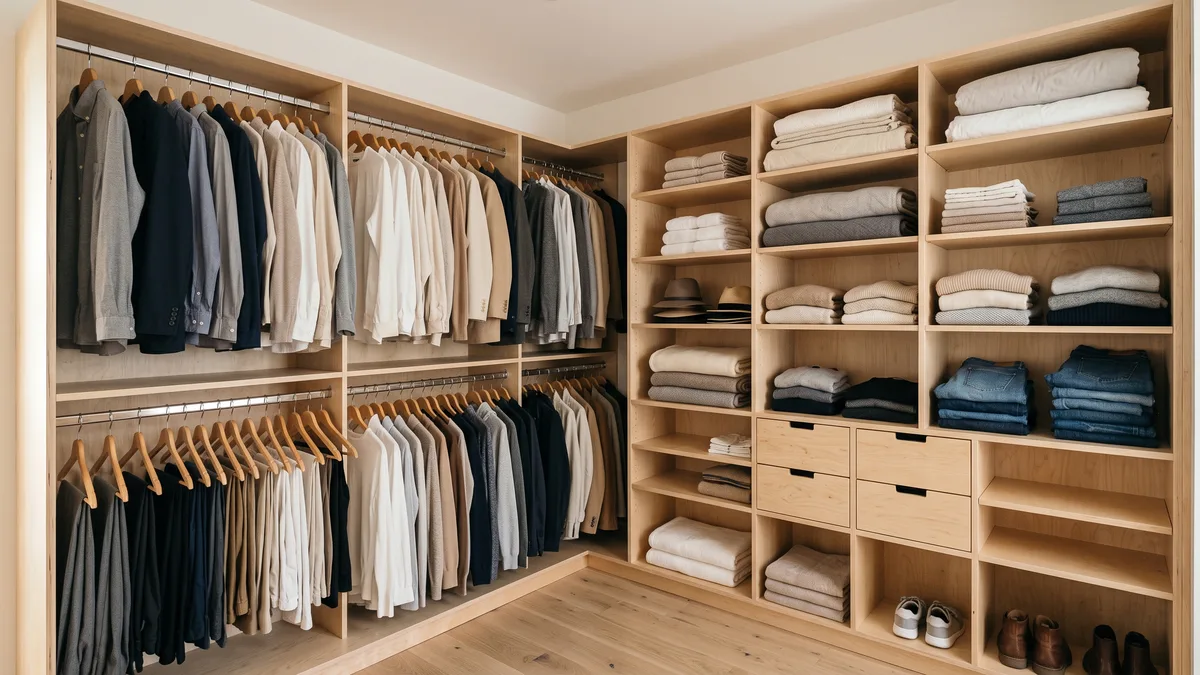
- L-Shape: Shelves and rods run along two perpendicular walls, meeting at the corner. This is the most common and space-efficient layout for walk-in closets.
- Diagonal Corner Shelf: A single angled shelf or unit cuts across the corner at a 45-degree angle, softening the look and creating accessible storage right in the dead zone.
- Wraparound Hanging Rod: A curved or angled rod wraps from one wall around the corner to the adjacent wall, maximizing hanging capacity in a single sweep.
According to Houzz, L-shaped configurations are consistently rated as the most efficient use of corner space in residential closets.
Step 4: Plan Your Zones
Think of your corner closet system in zones:
- High zone (above 72 inches): Seasonal items, rarely used bags, extra bedding
- Prime zone (36 to 72 inches): Hanging clothes, eye-level shelves, daily-use items
- Low zone (below 36 inches): Shoe storage, drawers, bins, folded items
Keeping your most-used items in the prime zone means less bending and reaching, which makes your morning routine genuinely faster.
Corner Closet System Ideas for Every Budget
You do not need to spend a fortune to transform your corner into a fully functional storage zone. Here are practical ideas that work across different budget levels.
Budget-Friendly Ideas (Under US$150)
- Install two sets of over-the-door organizers on both walls of the corner to handle shoes, accessories, and small items
- Use a freestanding 5-tier corner shelf unit to hold folded clothes, shoes, or bins
- Add a simple tension rod at an angle across the corner for extra hanging space
- Use labeled storage bins on open corner shelves to corral accessories and seasonal items
Mid-Range Ideas (US$150 to US$500)
- Purchase a modular closet kit from IKEA or The Container Store and configure it in an L-shape around your corner
- Add a pull-out corner drawer unit that slides out for easy access to folded items
- Install a curved corner hanging rod paired with adjustable shelves above and below
- Use a mix of open shelving and one double-hang section to create a versatile layout
High-End Ideas (US$500 and Up)
- Commission a semi-custom or fully custom corner closet system from a professional closet company
- Include built-in LED lighting inside the corner unit to illuminate every shelf
- Add velvet-lined jewelry drawers and glass-front accessory cabinets to the corner zone
- Install a rotating lazy-Susan-style corner shelf system for maximum accessibility
A well-planned corner closet system does not have to be expensive. Even a US$100 freestanding unit beats an empty corner every single time.
Best Accessories to Maximize a Corner Closet System
The hardware and accessories you choose can make or break the functionality of your corner closet system. These are the add-ons I recommend for getting the most out of your setup in 2026.
Velvet Hangers
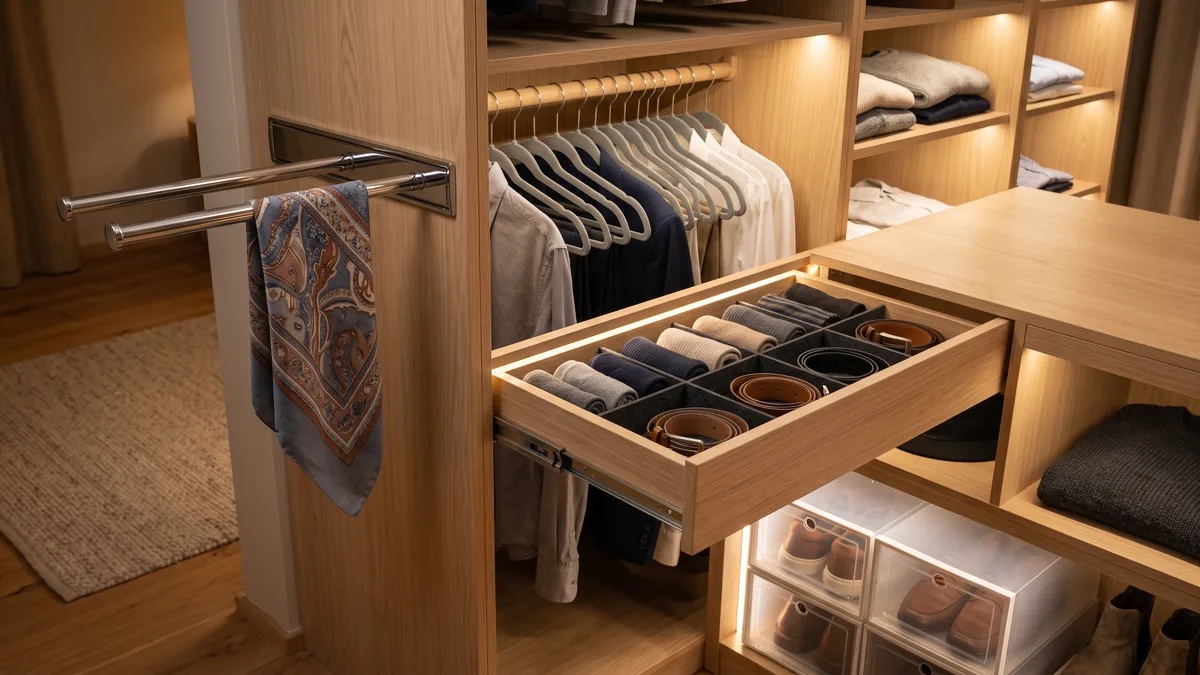
Standard plastic hangers take up far more horizontal rod space than slim velvet hangers. Switching to velvet hangers alone can increase your hanging capacity by 30 to 50 percent. When your rods wrap around a corner, every inch of rod space matters.
Pull-Out Baskets and Drawers
Corner shelves can develop a dead zone in the very back where items get lost. Pull-out baskets and wire drawers that slide forward bring those hidden items right to your fingertips. They are essential in any deep corner configuration.
Lazy-Susan Corner Shelf Inserts
A rotating lazy-Susan shelf insert placed in the corner of a built-in system means you never have to reach awkwardly to the back again. These are particularly effective for shoe storage and folded items.
LED Strip Lighting
Corner closets are often darker than the rest of the closet. A simple plug-in or adhesive LED strip light along the underside of each shelf changes the experience completely. You can actually see everything you own, which means you actually use everything you own.
Clear Shoe Boxes
Stacking clear shoe boxes in the low zone of your corner closet system keeps your shoe collection visible and protected. Label each box for an instantly polished look. Check out the best sellers at Sesoris for storage solutions that pair perfectly with a corner closet setup.
Drawer Dividers
If your corner system includes built-in drawers, adding drawer dividers transforms each drawer from a jumbled mess into an organized grid. This is especially useful for socks, undergarments, and accessories stored in the low zone.
Corner Closet Systems for Small Spaces
Not everyone has a spacious walk-in wardrobe. Many American homes have smaller reach-in closets where the corner is even more critical to maximize. If that sounds like your situation, here is how to approach your corner closet system in a compact space.
Focus on Vertical Space
In a small closet, height is your best friend. Stack shelving from floor to ceiling on both walls of the corner. The top shelves can hold seasonal items in labeled bins. The middle shelves hold everyday folded items. The bottom shelves handle shoes and bags.
Use a Double-Hang Configuration
If your corner walls are long enough, install a double-hang rod system on the non-corner walls. This gives you two rows of hanging space for shorter items like shirts, jackets, and folded pants on hangers. Reserve the corner itself for shelves rather than trying to make a rod work in the tightest spot.
Choose Slim, Stackable Organizers
Bulky organizers eat into the already-limited floor space of a small closet. Opt for slim, stackable solutions that build vertically rather than spreading out horizontally. Stackable clear bins, slim shoe racks, and narrow drawer units keep your footprint small while maximizing capacity.
For more ideas specifically tailored to compact wardrobes, I highly recommend reading our small closet organization ideas guide.
Keep It Simple
In a small closet, an overcomplicated system will make the space feel more chaotic, not less. Stick to a clean combination of one hanging section, one shelf section, and one drawer or bin section. Simplicity wins every time in tight spaces.
You can also find inspiration for bedroom storage solutions for small bedrooms to complement your corner closet upgrade.
Common Corner Closet System Mistakes to Avoid
Even with the best intentions, it is easy to make mistakes when setting up a corner closet system. Here are the pitfalls I see most often and how to sidestep them.
Not accounting for door swing: If your closet has a door that swings inward, make sure your corner system does not block it. Always map out the door arc before finalizing any layout.
Buying without measuring: This sounds obvious, but it happens all the time. A unit that is 2 inches too wide for your corner will not slide into place no matter how much you want it to. Always measure twice, buy once.
Ignoring the ceiling height: Standard modular units are built for 8-foot ceilings. If your closet has a 9-foot or 10-foot ceiling, you are leaving valuable top-shelf space unused unless you plan for it with extension panels or additional shelving.
Overloading the hanging rods: Hanging rods have weight limits. Overloading them leads to sagging or, in the worst case, total collapse. Check the manufacturer's weight rating and stay within it.
Skipping lighting: A beautiful corner closet system that is poorly lit becomes a frustrating daily experience. Always budget for at least a basic lighting solution.
Forgetting to declutter first: Setting up a new corner closet system without decluttering first means you are just reorganizing clutter. Before installing anything, declutter your house or at least your wardrobe so that only the items that deserve a place in your new system actually make it in.
According to Real Simple, decluttering before organizing is the single most important step for long-term closet success.
Related Products from Sesoris
If you want to turn this guide into a real setup, start with Foldable Storage Bins and Floating Wall Shelf Set. For broader options, browse the Home & Decor collection so the article journey does not stop at reading only.
Our practical rule: choose one product that solves the main clutter problem first, then add supporting organizers only when the daily workflow is already clear. This keeps the shopping path useful, not pushy.
FAQ: Frequently Asked Questions About Corner Closet Systems
Q: What is the best corner closet system for a renter who cannot drill into walls?
Freestanding corner shelf units and tension-rod configurations are the best options for renters. They require no drilling or wall anchors, can be set up and taken down without damage, and are available at a wide range of price points. Some modular systems also use floor-to-ceiling tension poles that add stability without wall attachment.
Q: How deep should corner closet shelves be?
Standard closet shelf depth is 12 to 16 inches for folded items and 20 to 24 inches for hanging clothes below. For shoe shelves, 10 to 12 inches is typically sufficient. In a corner configuration, the two perpendicular shelves are often the same depth as the rest of the system for visual consistency.
Q: Can I add a corner closet system to a reach-in closet, or is it only for walk-in closets?
Absolutely. Corner systems work in both reach-in and walk-in closets. In a reach-in closet, the corner is often where one set of shelves meets another on the side wall. Adding a freestanding corner shelf unit or a modular L-shaped configuration makes that junction genuinely useful rather than wasted.
Q: What materials are most durable for a corner closet system?
Melamine-coated particle board is the most common and affordable material used in modular closet systems. It is durable enough for everyday use and easy to wipe clean. Solid wood or MDF (medium-density fiberboard) offers more premium aesthetics and higher durability. For a budget build, plywood with a painted finish is a strong and affordable choice.
Q: How long does it take to install a modular corner closet system?
For a moderately handy person, a basic L-shaped modular corner closet system typically takes 3 to 6 hours to assemble and install. More complex configurations with multiple drawers, pull-out inserts, and custom lighting can take a full weekend. Professional installation typically takes 4 to 8 hours depending on the system's complexity.
Q: Are corner closet systems worth the investment?
Yes, without question. A corner closet system transforms one of the least useful spaces in your home into one of the most functional. Beyond the daily quality-of-life improvement, a well-organized closet is also widely considered a selling point when it comes time to put your home on the market.
Conclusion: Transform Your Corner, Transform Your Closet
A well-chosen corner closet system is one of the smartest home organization investments you can make in 2026. It turns dead, frustrating corner space into purposeful, accessible storage that works for your real life. Whether you go the budget-friendly freestanding route, choose a flexible modular system, or invest in a full custom build, the key is to plan carefully, measure accurately, and match the system to your actual storage needs. Start by decluttering what you own, map out your zones, choose the right type for your budget and skill level, and finish it off with smart accessories like LED lighting, pull-out baskets, and drawer dividers. The result will be a closet that genuinely makes your mornings easier and your home feel more put together from the inside out. Ready to get started? Explore the full range of home organization products at Sesoris and find everything you need to build your perfect corner closet system today. Live More Organized.
Weekly Home Tips
Get home organization ideas, product picks, and exclusive deals delivered weekly.
No spam. Unsubscribe anytime.
Explore More Articles
- 30+ Best Kids Bedroom Storage Ideas to Create a Fun, Tidy Space in 2026
- Home Office Desk Organization: 20+ Smart Tips to Build a Productive Workspace in 2026
- 25+ Creative DIY Plant Stand Ideas to Elevate Your Home Decor in 2026
- 30+ Best Office Desk Setup Ideas to Build a Productive Workspace in 2026
- Small Laundry Room Organization: 20+ Smart Tips to Transform Your Compact Space in 2026
- Best Office Organization Supplies in 2026: Complete Review & Buying Guide for a Productive Workspace
- 30+ Best Fridge Organization Ideas to Transform Your Kitchen Storage in 2026
- 30+ Best Book Storage Ideas to Organize Your Home Library in 2026