
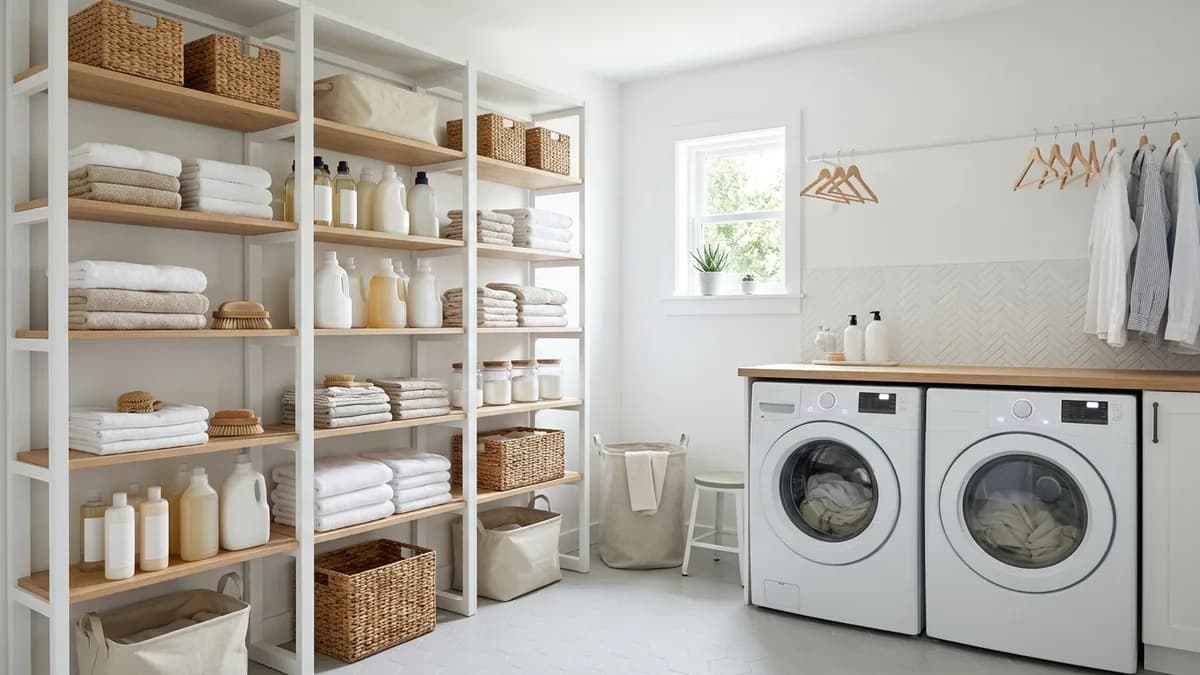
Laundry Room Organization Tips That Actually Work in 2026
If your laundry room feels more like a chaotic pile of clothes and half-empty detergent bottles than a functional space, you are not alone. Applying the right laundry room organization tips can completely transform even the smallest utility space into a room that works as hard as you do. Whether you have a dedicated laundry room, a hallway closet setup, or a shared mudroom area, the strategies in this guide are grounded in practical, documented home-organization principles that you can act on today in 2026. We are skipping vague advice and focusing on what actually makes a difference in how your laundry routine runs day to day.
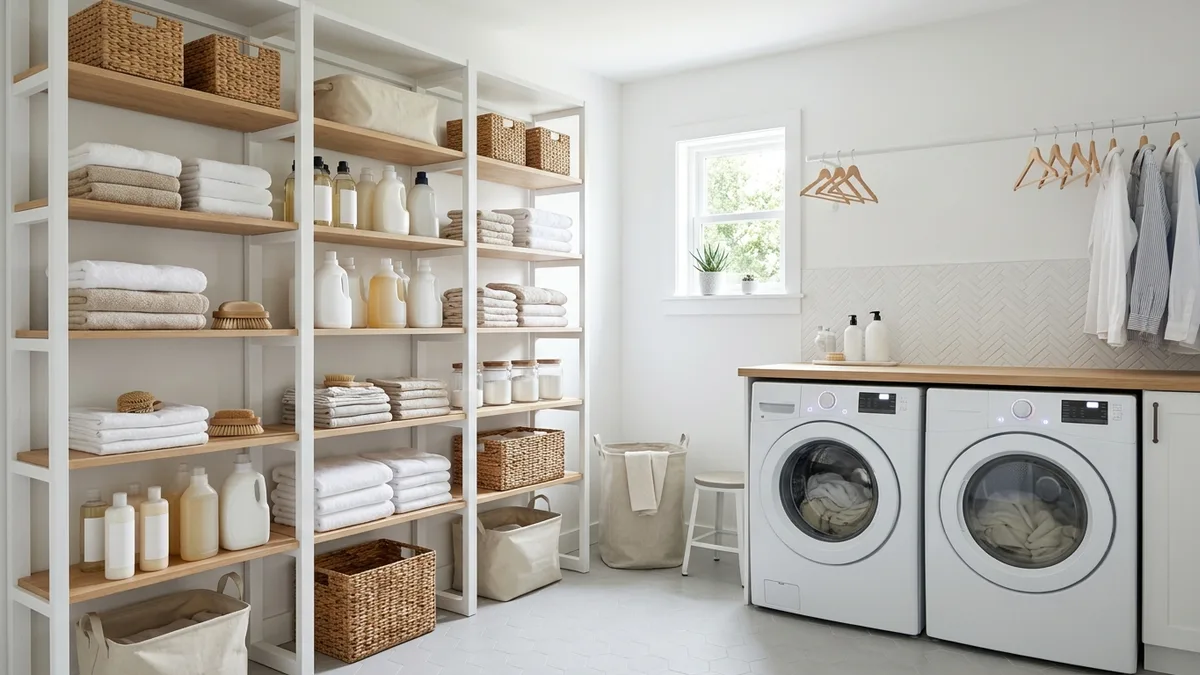
Why Laundry Room Organization Tips Matter More Than You Think
Most homeowners treat the laundry room as an afterthought, but according to The Spruce, a well-organized laundry space can meaningfully cut down on the time it takes to complete the full wash-dry-fold cycle. When every supply has a home and every step in the process has a designated zone, you eliminate the hunting, second-guessing, and backtracking that add friction to an already repetitive chore.
The core principle behind effective laundry room organization is zoning. Think of your laundry room as having three distinct activity zones:
- A washing and drying zone centered on your machines
- A sorting and prep zone where clothes get separated before washing
- A folding and hanging zone where clean clothes get finished and put away
When those three zones are clearly defined and properly supplied, the whole laundry process flows naturally from one step to the next. The tips below build on that framework.
Tip 1: Start with a Thorough Declutter Before Organizing
The most common mistake people make when tackling laundry room organization is adding storage solutions on top of clutter. Before you buy a single bin or shelf, pull everything out of the space and sort it ruthlessly.
What to toss or relocate
- Expired or nearly-empty cleaning products that have been sitting unused for months
- Duplicate items you do not need two of, like three lint rollers when one will do
- Items that do not belong in a laundry room at all, such as old tools, shoes, or sports gear
- Socks and clothing with no match that have been sitting in the lost-and-found basket longer than three months
Once the space is cleared, you have an accurate picture of what storage solutions you actually need. This prevents over-buying and ensures every organizer you bring in earns its spot. For a structured approach to clearing clutter throughout your home, our guide on home decluttering tips offers a reliable room-by-room framework.
Tip 2: Use Vertical Space with Wall-Mounted Shelving
In most laundry rooms, the walls above the washer and dryer are the most underused real estate in the house. Installing wall-mounted shelves transforms that dead space into practical storage for detergent, fabric softener, dryer sheets, stain removers, and more.
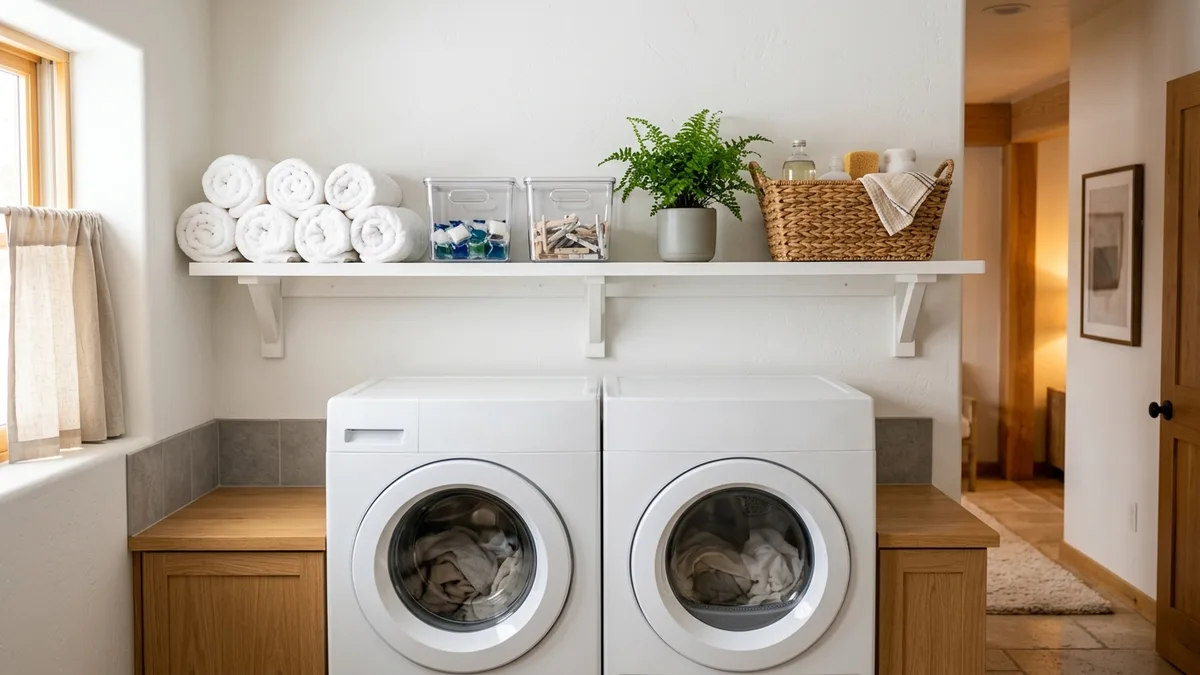
Shelving tips that make a difference
- Mount shelves at least 15 to 18 inches above the top of your machines to allow lids or doors to open fully
- Use shelves that are at least 10 to 12 inches deep so standard detergent bottles do not tip forward
- Place the most-used items at eye level and reserve upper shelves for seasonal or backup supplies
- Add a non-slip liner to each shelf so bottles and containers stay put during machine vibration
For households with a stacked washer-dryer unit, a single floating shelf or a narrow cabinet mounted to the wall beside the machines works just as well. You can find shelf ideas that translate beautifully into laundry spaces by browsing our bathroom wall shelf ideas post, which covers installation approaches that work equally well in a utility room context.
Tip 3: Sort Laundry Before It Piles Up
One of the most impactful laundry room organization tips is the simplest: sort at the point of deposit, not at the point of washing. When every family member drops clothes directly into a sorted hamper, you eliminate one entire step from your laundry routine.
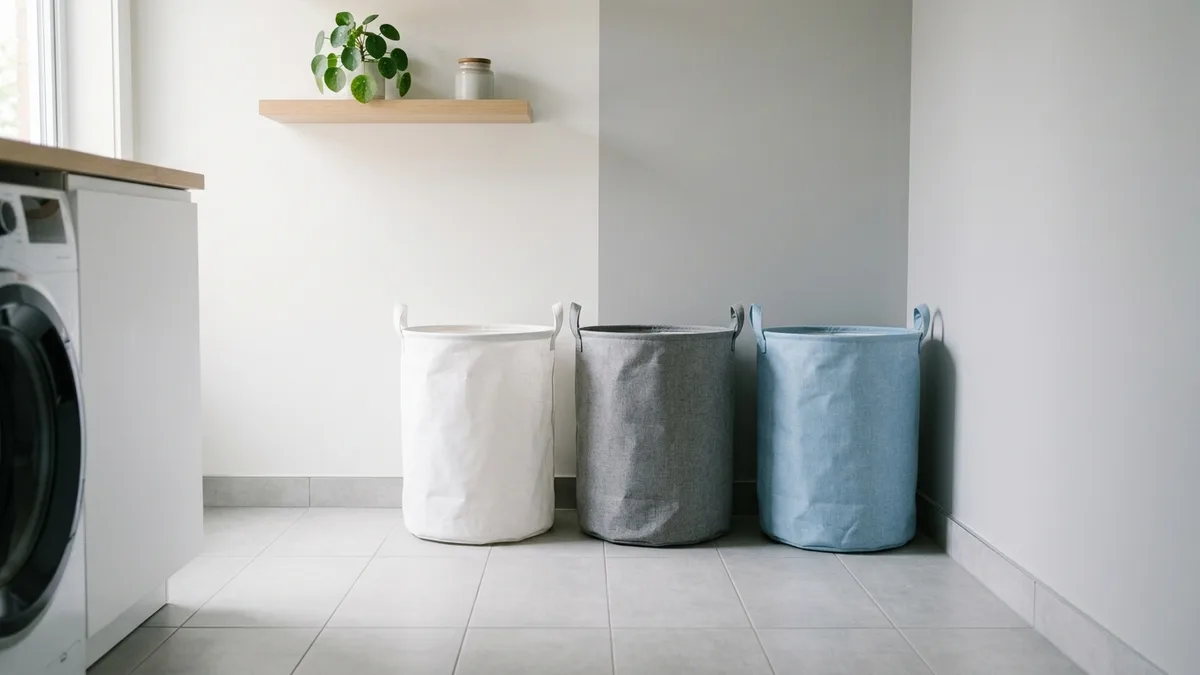
Setting up a sorting system that sticks
- Use two to three separate bins or hampers labeled for lights, darks, and delicates (or colors)
- Choose bins that fit your space, whether that is a triple-section laundry sorter on a rolling frame, three individual fabric bags hung from hooks, or slim pull-out drawers
- Place the sorting station somewhere accessible, ideally right inside the laundry room door or next to the machines
- Make the system easy enough for kids to use by labeling bins with both words and simple color-coded tags
A sorting system does double duty: it keeps the floor clear and gives you an at-a-glance read on when a load is actually ready to run. You know a load is full when the bin is full, which means fewer half-loads and better energy efficiency.
Pro tip: Add a small mesh bag to your sorting station for delicates so lingerie, hosiery, and anything with a care label goes directly into its own wash bag from the start.
Tip 4: Dedicate a Folding Station and Use Every Inch of It
Folding laundry on your bed or kitchen counter is a productivity killer because it scatters the task across the house. A dedicated folding station inside the laundry room keeps the job contained and done in one place.
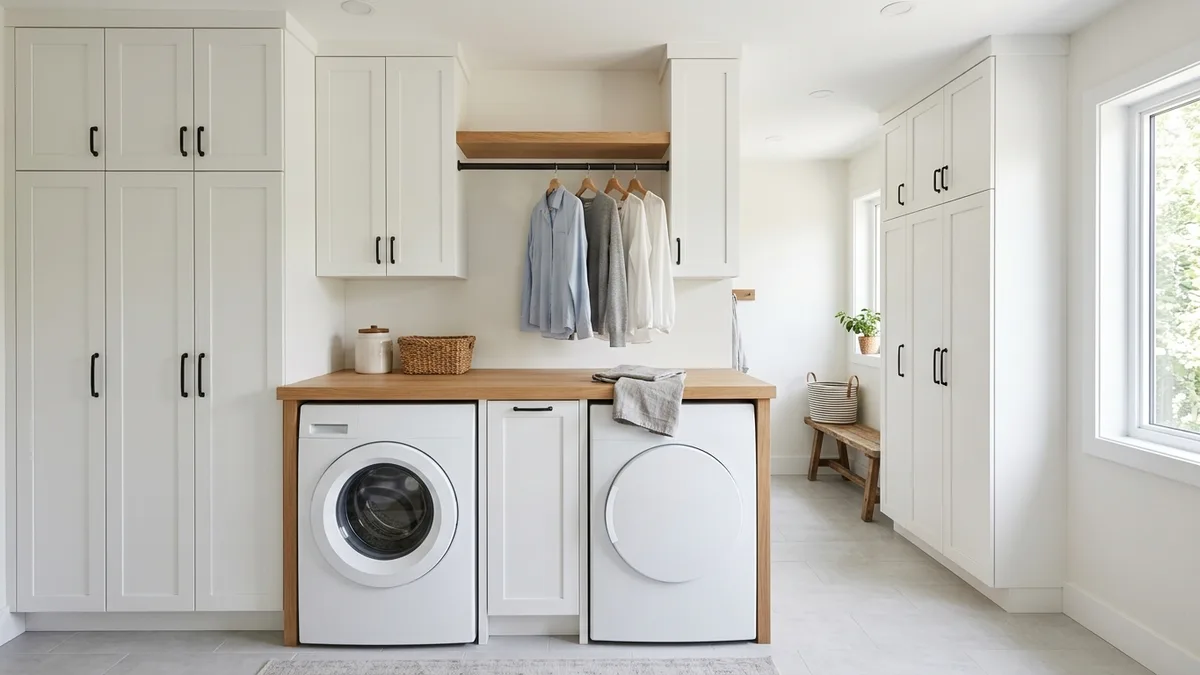
How to create a folding station in any size room
- If your washer and dryer are side by side, a countertop installed above them creates an immediate folding surface at a comfortable standing height. Standard countertop depth of 24 to 25 inches fits most side-by-side setups
- If space is limited, a wall-mounted fold-down table gives you a full-size folding surface that folds flush against the wall when not in use
- A rolling utility cart with a flat top surface works as a portable folding station and doubles as mobile storage for supplies
- Keep a small basket or bin on the folding surface for items that need to be hand-delivered to different rooms so you are not walking back and forth mid-fold
Good Housekeeping recommends adding a hanging rod near the folding station for items that come out of the dryer and need to hang immediately, like dress shirts, blouses, or anything prone to wrinkling. Even a simple tension rod between two cabinet sides or a single hook on the wall works perfectly for this purpose.
Tip 5: Contain Supplies with Bins, Baskets, and Caddies
Loose bottles, scattered dryer sheets, and random stain sticks create visual clutter that makes any space feel disorganized. Corralling your laundry supplies into clearly designated containers is one of the most immediately satisfying laundry room organization tips you can apply.
The container categories that cover most laundry rooms
- A detergent caddy or tray to group your detergent, softener, and any boosters in one easy-to-grab unit
- A small bin for dryer sheets so they are not scattered across the shelf
- A zip or mesh bag for stain removers and spot-treatment products, especially if you have kids
- A lidded container for clothespins, safety pins, and lingerie bags so small accessories do not get lost
- A lost sock basket or small tray so single socks have a designated waiting area instead of cluttering the machine tops
If you are also storing cleaning supplies in your laundry room, keep them in a separate, clearly marked bin away from laundry products to avoid any mix-ups. Our cleaning supply organization guide covers exactly how to separate and label those categories safely.
Tip 6: Label Everything for a System That Runs on Autopilot
Labels are not just aesthetic. They are functional tools that make a shared organizational system work without constant management. When every bin, basket, and shelf section is labeled, anyone in your household can find what they need and put things back correctly without asking.
Labeling strategies for laundry rooms
- Use waterproof labels since the humidity from your machines can cause paper labels to curl or peel quickly
- For fabric bins, use tag-style labels threaded through the handle or clipped to the rim
- Chalkboard labels are a popular choice because they are easy to update if you reorganize
- Label both the container and the shelf space beneath or behind it so you know exactly where things belong even when the container is removed
If you want to take your labeling system further across the whole house, our label organizer guide walks through the smartest ways to create a consistent system from room to room.
Tip 7: Maximize a Small or Awkward Laundry Space
Not every home has a dedicated laundry room. Many households work with a laundry closet, a hallway nook, or a corner in the basement. The good news is that the same organizational principles apply at any size. The key is choosing storage solutions that are proportional to the space.
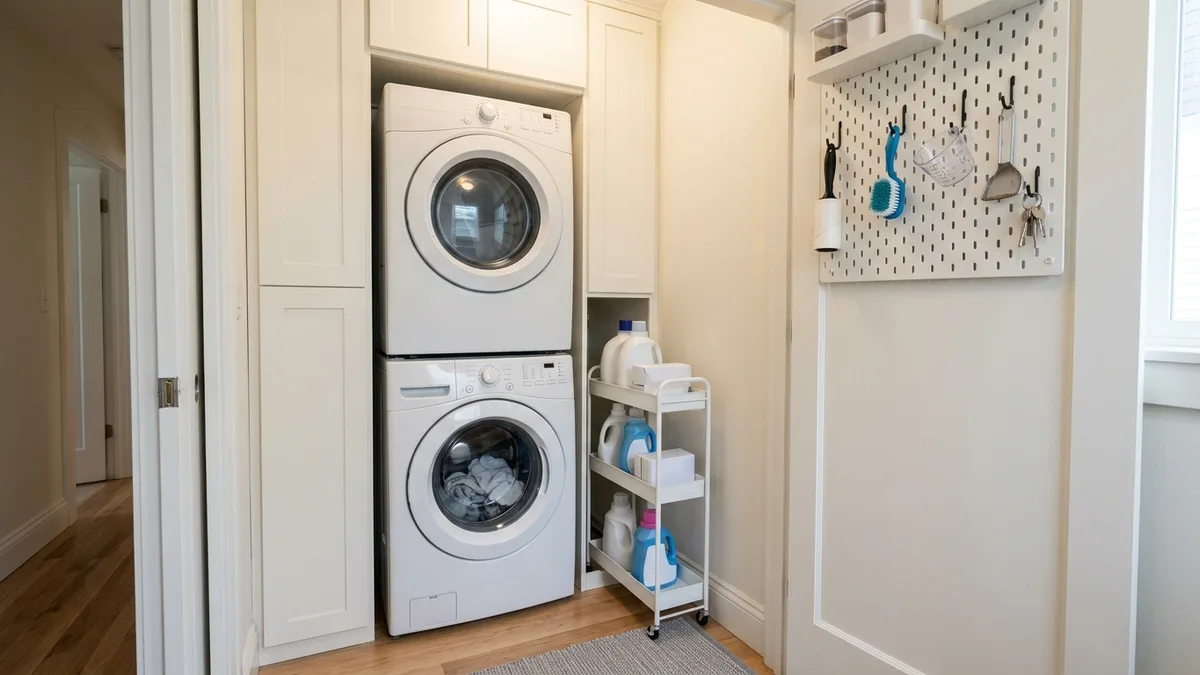
Smart storage moves for compact laundry setups
- A slim rolling cart that fits in the gap between the machine and the wall (typically 5 to 7 inches wide) uses otherwise wasted space for dryer sheets, stain removers, and small accessories
- Over-the-door organizers on a laundry closet door hold spray bottles, lint rollers, and small tools without taking up any floor or shelf space
- Pegboard panels mounted to the side wall of a laundry nook let you hang supplies on hooks and move them around as your needs change
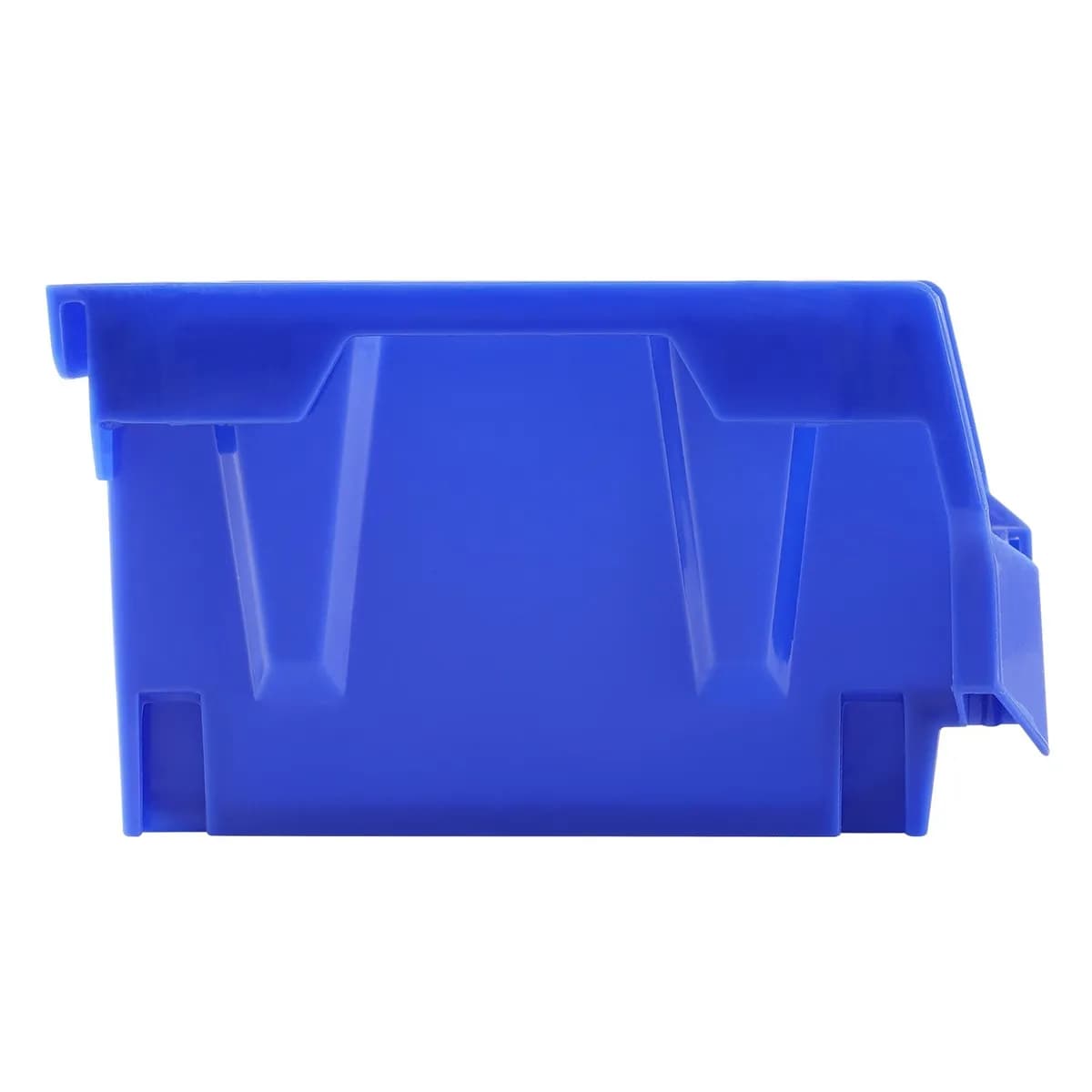
- Stackable bins make use of vertical space in a closet more efficiently than wide horizontal storage
- A tension rod installed inside the closet above the machines gives you a hanging spot for freshly dried clothes in a footprint of zero square feet
For households managing the full laundry workflow in a tight footprint, our article on organization for small laundry room goes even deeper on space-specific solutions.
Tip 8: Build a Routine That Keeps the Organization Intact
The best organizational systems in the world fall apart without a maintenance habit behind them. Laundry rooms are high-traffic, high-activity spaces, and they need a quick reset routine to stay functional.
A simple weekly reset takes less than 10 minutes
- Wipe down machine surfaces and the folding countertop
- Restock any supplies that are running low so you do not discover an empty detergent bottle mid-cycle
- Return any items that migrated out of their containers back to their correct spots
- Empty the lint trap and dispose of the lint (doing this every single load is ideal, but a weekly audit catches any forgotten ones)
- Check the lost-sock basket and make any matches before the pile grows
Building this reset into your existing weekly cleaning routine, perhaps immediately after your last load of laundry for the week, keeps the space from sliding back into chaos. The reset is always faster than a full reorganize.
Related Products from Sesoris
If you want to turn this guide into a real setup, start with Stackable Storage Bins, 24 Pack and Pull-Out Cabinet Organizer, 17 in. Wide. For broader options, browse the Home & Decor collection so the article journey does not stop at reading only.
Our practical rule: choose one product that solves the main clutter problem first, then add supporting organizers only when the daily workflow is already clear. This keeps the shopping path useful, not pushy.
FAQ: Frequently Asked Questions About Laundry Room Organization Tips
Q: What are the most important laundry room organization tips for a tiny space?
For small laundry spaces, prioritize vertical storage with wall-mounted shelves or over-door organizers, use a slim rolling cart in any gap beside the machines, and keep only the supplies you use regularly in the space. Everything else should be stored elsewhere and restocked as needed.
Q: How do I keep my laundry room smelling fresh as part of my organization routine?
Ventilation is the first priority. Make sure your dryer vent is clean and fully functional since a clogged dryer vent is a common source of musty smells and is also a fire hazard according to the U.S. Fire Administration. Beyond that, leave the washing machine door slightly ajar between uses to prevent mildew buildup, and store damp cleaning cloths outside the laundry room rather than letting them sit in a closed bin.
Q: Should I fold laundry in the laundry room or somewhere else in the house?
Folding in the laundry room is almost always more efficient because it keeps the task self-contained. When you fold near the dryer, you also catch items that need to be re-dried or that have wrinkles you want to shake out immediately. A dedicated folding surface, even a small one, makes this habit sustainable.
Q: How many laundry hampers or sorting bins do I actually need?
Most households do well with two to three bins covering lights, darks, and delicates. If your household does a high volume of laundry or has very specific sorting needs, four bins can help. More than four bins tends to create confusion rather than clarity, especially in shared spaces.
Q: What is the best way to organize laundry supplies on a budget?
Repurpose containers you already own, such as a spare plastic bin for dryer sheets or a mason jar for clothespins. Look for uniform baskets at a discount rather than mismatched containers that create visual clutter. Adding labels to inexpensive bins from any home goods store immediately upgrades the look and function of the space.
Conclusion: Put These Laundry Room Organization Tips to Work Today
Transforming your laundry room does not require a full renovation or a big budget. The most effective laundry room organization tips come down to knowing your zones, clearing the clutter, using vertical space wisely, containing your supplies, and building a maintenance habit that keeps everything in place. Start with one or two changes this week and build from there. Small, consistent improvements add up to a laundry room that actually supports your routine instead of fighting it.
Ready to find the storage bins, baskets, and organizational tools that make these tips a reality? Browse the full range of home organization essentials at Sesoris and check out our best sellers for the most popular picks. You can also explore our new arrivals for the latest storage solutions designed to help you live more organized.
Weekly Home Tips
Get home organization ideas, product picks, and exclusive deals delivered weekly.
No spam. Unsubscribe anytime.



Explore More Articles
- Minimalist House Paint Colors: 25+ Best Ideas for Modern Homes 2026
- Food Storage Containers for Rice: The Complete 2026 Tutorial Guide to Keeping Rice Fresh
- Organization Laundry Room: 30+ Smart Tips to Transform Your Space in 2026
- Rubbermaid Brilliance Food Storage Containers: Complete Review & Buying Guide for 2026
- 30+ Best Organization Closet Ideas to Transform Your Storage Space in 2026
- 30+ Best Pantry Cabinet Ideas to Transform Your Kitchen Storage in 2026
- 25+ Best Lego Organizer Ideas to Tame the Brick Chaos in 2026
- Office Organization Ideas: Complete 2026 Guide to a Productive, Clutter-Free Workplace