
How to Plan Wall to Wall Shelf Ideas That Actually Work: A Practical 2026 Guide
Discover practical wall to wall shelf ideas for every room. Learn how to plan, measure, and build built-in shelving that maximizes storage in 2026.
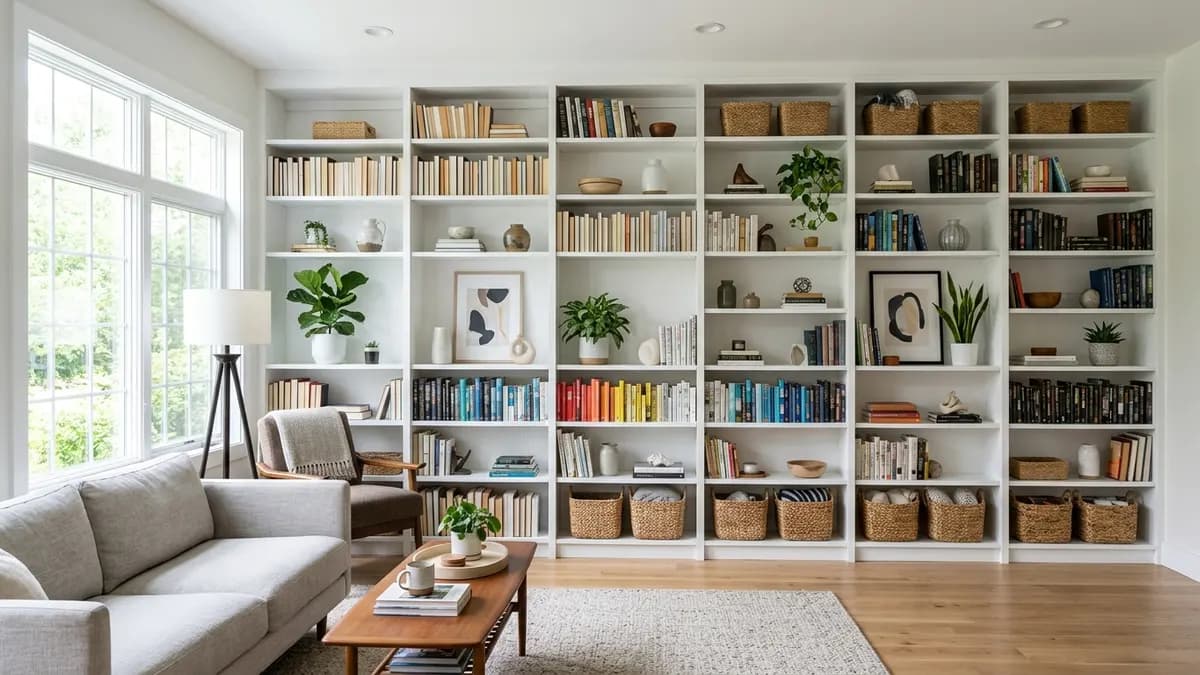
If you have ever stared at a bare wall and thought 'there has to be a better use for this space,' you are not alone. Wall to wall shelf ideas are among the most searched storage solutions for American homes in 2026 because they deliver maximum storage without sacrificing floor space. Whether you are working with a narrow hallway, a cramped home office, or an entire living room wall, a built-in or modular wall-to-wall shelving system can completely change how a room feels and functions. This guide takes a practical, planning-first approach to help you get your shelving project right the first time, from measuring your wall to styling your final shelves.
Why Wall to Wall Shelf Ideas Are Worth the Investment
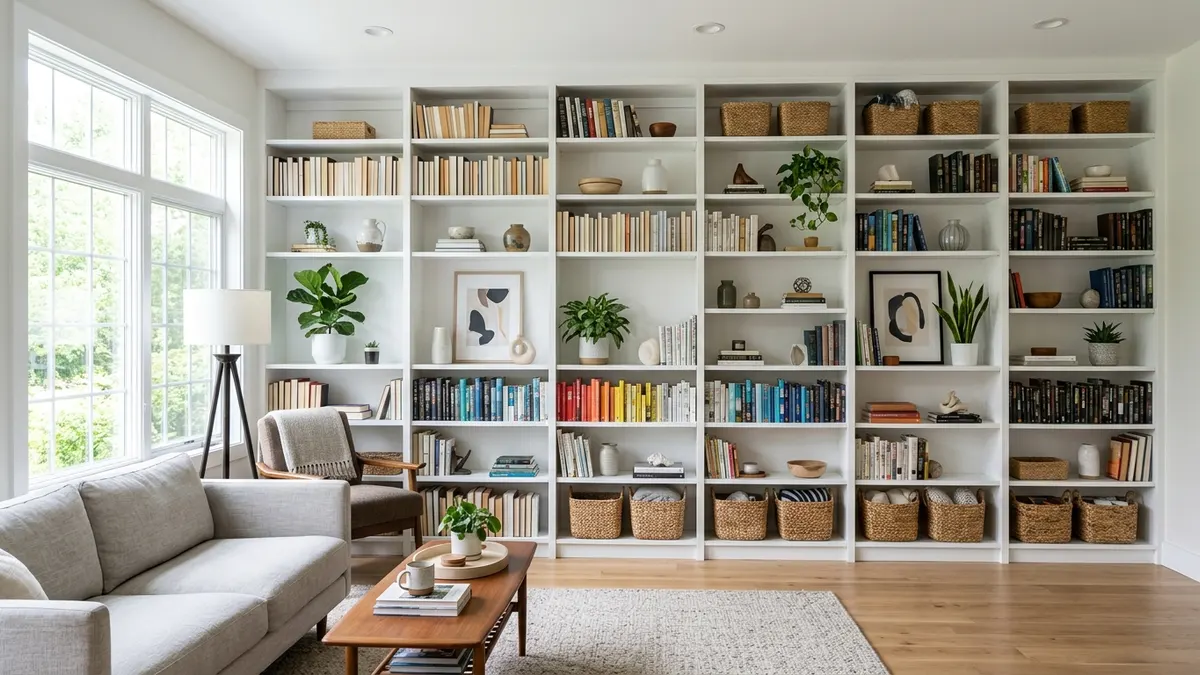
Built-in or modular wall-to-wall shelving is one of the most efficient storage strategies available for American homes. Unlike freestanding furniture, a true wall-to-wall shelf system uses every inch of vertical and horizontal space from one side of the room to the other. According to Houzz, built-in shelving consistently ranks as a top feature buyers look for in homes, and it is one of the few storage upgrades that can add perceived value to a property.
The practical advantages go beyond looks. A well-planned wall-to-wall shelf system can:
- Replace multiple individual pieces of furniture, reducing visual clutter
- Store books, media, office supplies, toys, kitchen pantry items, or wardrobe overflow depending on the room
- Create a dedicated display wall that doubles as functional storage
- Make a small room feel intentional and designed rather than cramped
- Be customized to your exact wall dimensions, something off-the-shelf furniture rarely achieves
A wall-to-wall shelving system is not just storage. It is architecture. When it fits the room perfectly, it looks like it was always meant to be there.
The key is planning carefully before you buy a single bracket or board. The rest of this guide walks you through exactly how to do that.
How to Measure and Plan Wall to Wall Shelf Ideas Correctly
The most common mistake homeowners make when planning wall-to-wall shelves is skipping or rushing the measuring phase. A shelf that is even half an inch too wide or too narrow will not sit flush against the baseboard, trim, or adjacent wall, and it will look off no matter how well it is styled.
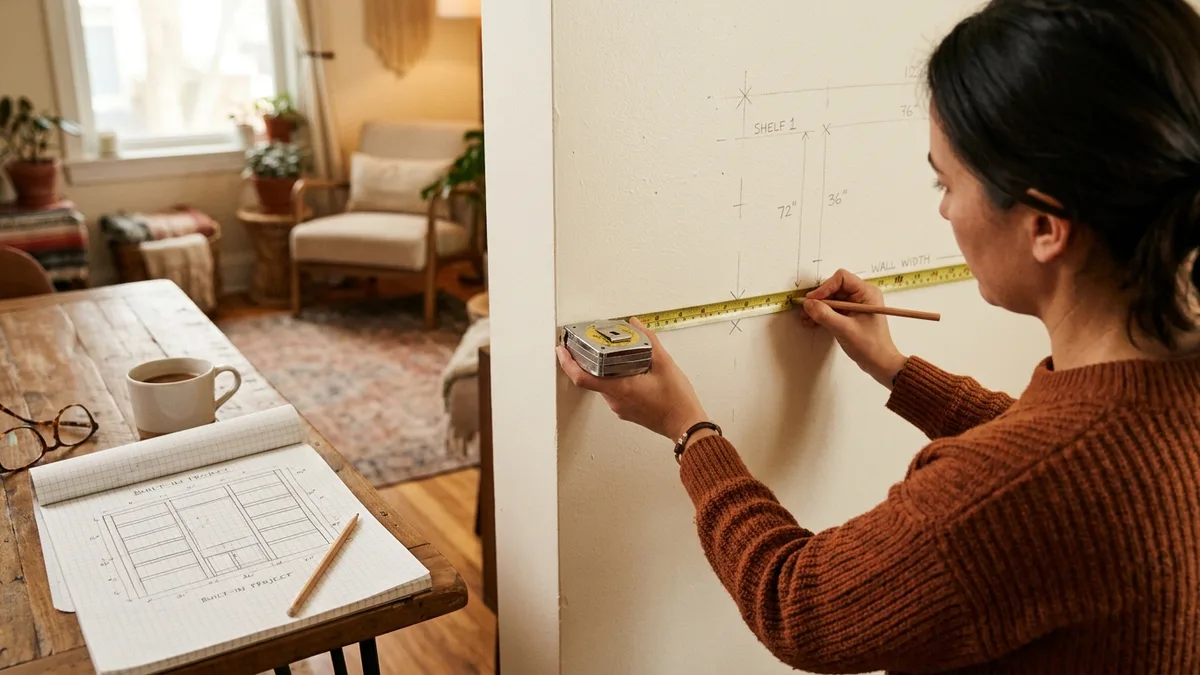
Step 1: Measure the Wall in Three Places
Walls are rarely perfectly square, especially in older homes. Use a tape measure to record the width of the wall at the floor, at mid-height, and at the ceiling. Note the smallest measurement. That is your safe maximum width.
Step 2: Record Ceiling Height and Note Obstructions
Measure from floor to ceiling at multiple points. Write down the location of any electrical outlets, light switches, heating vents, or window casings that will need to be worked around.
Step 3: Decide on Shelf Depth
Standard shelf depth choices for different rooms:
- Living room books and decor: 10 to 12 inches deep
- Home office files and binders: 12 to 15 inches deep
- Pantry or kitchen: 12 to 16 inches deep
- Wardrobe overflow or linen: 14 to 18 inches deep
- Hallway display: 6 to 8 inches deep (keeps pathways clear)
Step 4: Sketch a Layout on Graph Paper
Graph paper planning is a step many DIYers skip and then regret. Assign each square a specific measurement, say 6 inches, and draw the wall to scale. Sketch in fixed shelves, adjustable shelves, any upper cabinet doors, and open cubbies. This helps you visualize the finished look and catch proportion problems before you buy materials.
Step 5: Check for Studs and Electrical
Use a stud finder to locate wall studs, which are typically spaced 16 inches on center in US homes. Mark each stud with painter's tape. Any shelf standard or cleat that carries serious weight needs to be anchored into a stud, not just drywall. Have an electrician check behind the wall if you plan to cut in for outlets or cable management.
The Best Materials for Wall to Wall Shelf Ideas in 2026
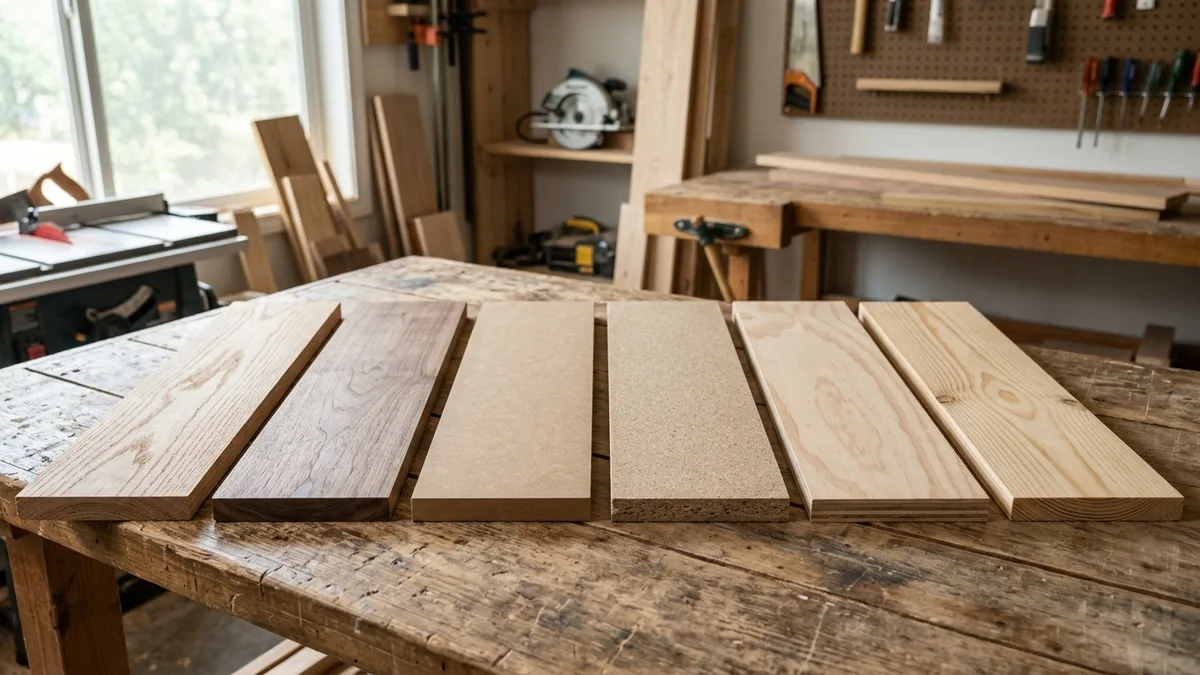
Choosing the right material affects durability, cost, how the shelves look, and how much weight they can hold. Here is a practical breakdown of the most common options American homeowners are using in 2026.
Solid Wood
Solid hardwood boards such as oak, maple, or poplar are the most durable and the most attractive. They hold weight well, take paint or stain evenly, and last for decades. The trade-off is cost. Solid wood shelves can run significantly higher per board foot than manufactured alternatives. Best for high-visibility living room or library installs where appearance matters most.
Plywood
Finish-grade plywood (sanded on both faces, sometimes with a hardwood veneer) is the material most professional cabinet makers use for built-in shelving. It is dimensionally stable, meaning it resists warping better than solid wood, holds screws well, and is more affordable. Three-quarter-inch plywood is the standard for shelves up to 36 inches long without a center support.
MDF (Medium Density Fiberboard)
MDF is smooth, easy to paint, and very affordable. It is a good choice for painted built-ins. Its downsides are weight (it is heavy), and it does not hold screws at the edges as well as plywood. It also does not tolerate moisture well, so avoid it in bathrooms or laundry rooms. Use half-inch or three-quarter-inch MDF for painted shelves in dry rooms.
Wire or Metal Shelving
Wire and metal shelving systems are popular for garage walls, laundry rooms, and utility spaces. They are usually adjustable, easy to install, and allow air circulation. They are not typically the choice for living spaces where aesthetics matter, but for a functional wall-to-wall pantry or garage system, they are practical and cost-effective.
Modular Shelf Systems
Modular systems, where you buy standardized uprights, brackets, and shelf boards that can be rearranged over time, are a flexible middle ground between DIY built-ins and fully custom cabinetry. They require no specialized carpentry skills, can be installed by one person in a few hours, and can be taken apart and reinstalled if you move. The Spruce notes that adjustable shelf systems remain one of the most popular choices for renters and homeowners who want built-in aesthetics without a permanent commitment.
Wall to Wall Shelf Ideas by Room
The right shelving design depends heavily on which room you are working with. Here are practical, room-specific approaches to wall to wall shelf ideas that work in real American homes.
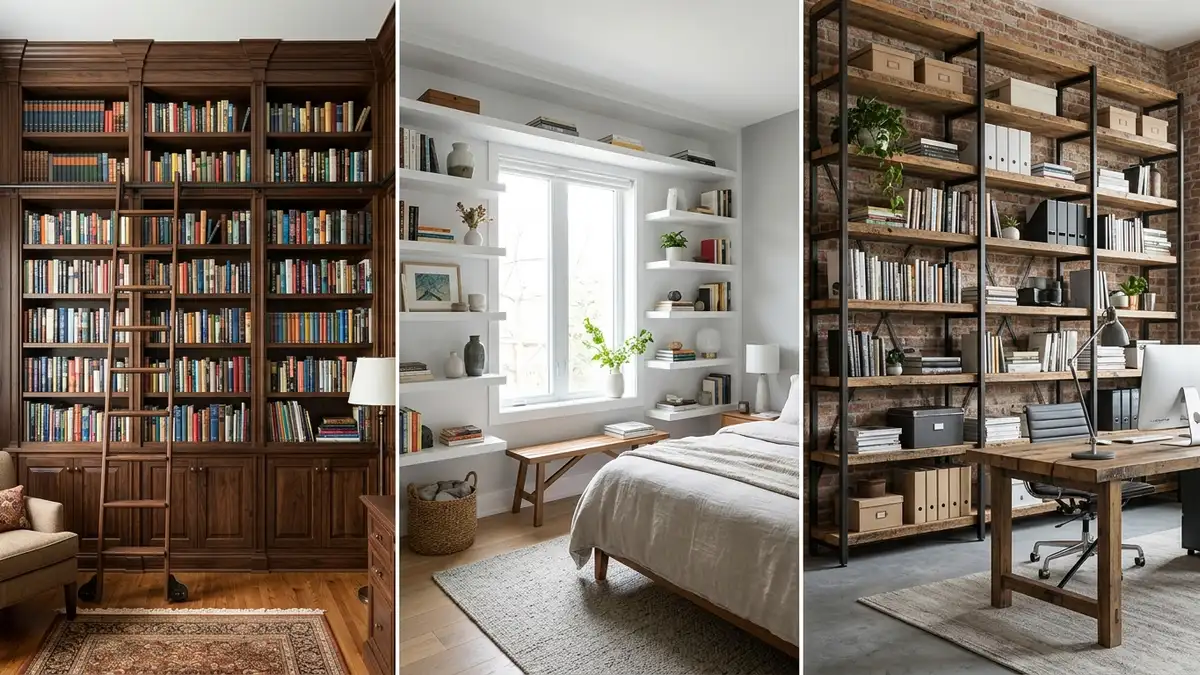
Living Room: The Full-Wall Library Look
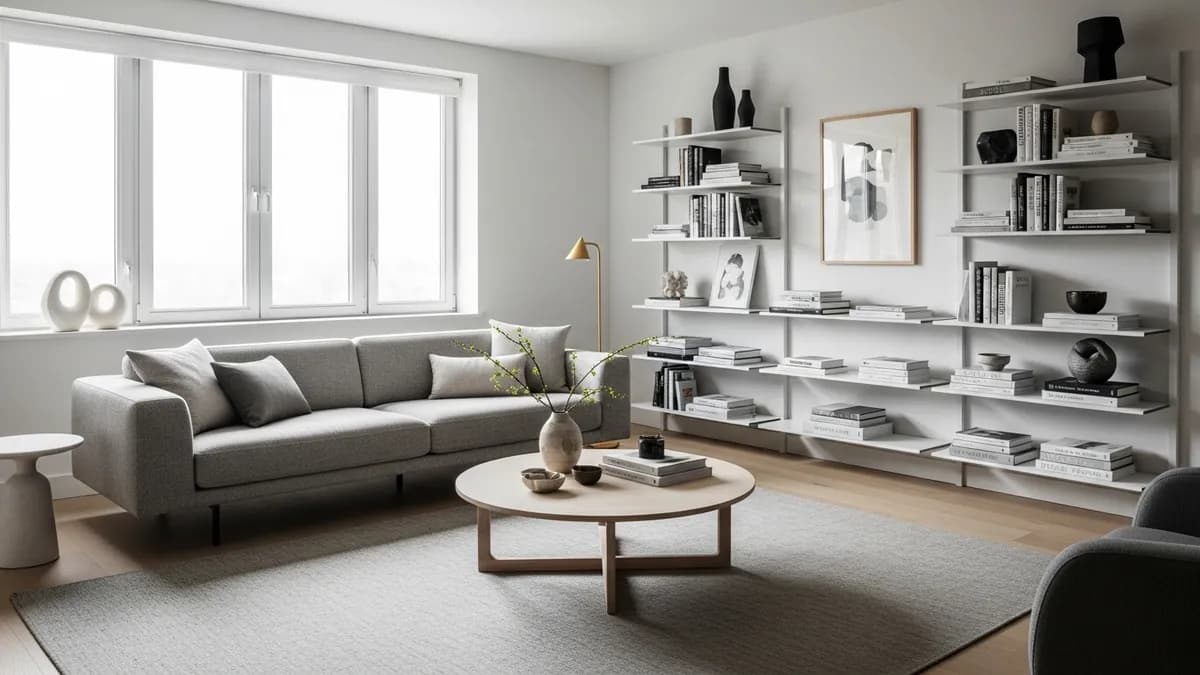
The floor-to-ceiling built-in bookcase is one of the most timeless wall to wall shelf ideas for a living room. The key to making it look custom rather than cobbled together is to frame the unit with face frames (the vertical and horizontal boards at the front edges) and crown molding at the top. Paint the whole unit, including the back wall inside the shelves, in a single color to unify the look. A rolling library ladder on a rail adds drama and genuine function if your ceiling is 9 feet or higher.
Practical tips for the living room:
- Leave the center section open for a TV, fireplace surround, or large art piece
- Use closed cabinets at the bottom 18 inches for items you want hidden
- Vary shelf heights to accommodate tall art books, small paperbacks, and decorative objects
- Install interior lighting inside the unit using plug-in LED strip lights for an evening ambiance effect
Home Office: Functional Wall to Wall Storage
A wall-to-wall shelving unit in a home office needs to balance open display with closed or concealed storage. Consider a design that uses upper open shelves for books and reference materials and lower closed cabinets for equipment, supplies, or anything you want out of sight during video calls. Adjustable shelves at the upper level let you reconfigure as your needs change.
Practical tips for the home office:
- Include at least one section deep enough (15 inches) for binders and hanging file storage
- Build in a dedicated space for your router, power strip, and cable management
- If the room doubles as a guest room, include a section sized for a Murphy bed or fold-out surface
For more ideas, check out our guide on home office desk organization to complement your shelving setup.
Bedroom: Wardrobe and Display Combined
A wall-to-wall shelving unit that runs behind the bed or along a full side wall can replace both a dresser and a traditional closet in smaller bedrooms. Use a combination of hanging space (one section with a rod), folded clothing cubbies, open display shelves for plants or books, and a few closed drawers or cabinet doors at the bottom.
For full bedroom shelving inspiration, our bedroom shelving ideas article covers the range of options available.
Pantry and Kitchen: Wall to Wall Pantry Shelves
A dedicated pantry wall or a full kitchen wall of open shelving requires deeper shelves and a food-safe finish. Use 14 to 16-inch-deep shelves to accommodate canned goods, appliances, and bulk storage containers. Adjustable shelf positions are important here because the height of pantry items varies enormously. For food organization on those shelves, airtight storage containers and clear bins with labels make a wall pantry far more functional.
Kids Room or Playroom: Low-to-High Accessibility
In a kids room, design the wall-to-wall shelves so the bottom 36 inches are accessible to children, with toy bins, art supplies, and books within reach. Upper shelves can hold out-of-rotation toys, seasonal items, or display pieces. Use open cubbies sized for standard storage bins so items can be grabbed and returned easily.
How to Style Wall to Wall Shelf Ideas So They Look Great
A fully built wall-to-wall shelf system that is poorly styled can look cluttered and overwhelming. Great styling is what separates a shelf wall that looks like a Pinterest board from one that looks like a storage disaster.
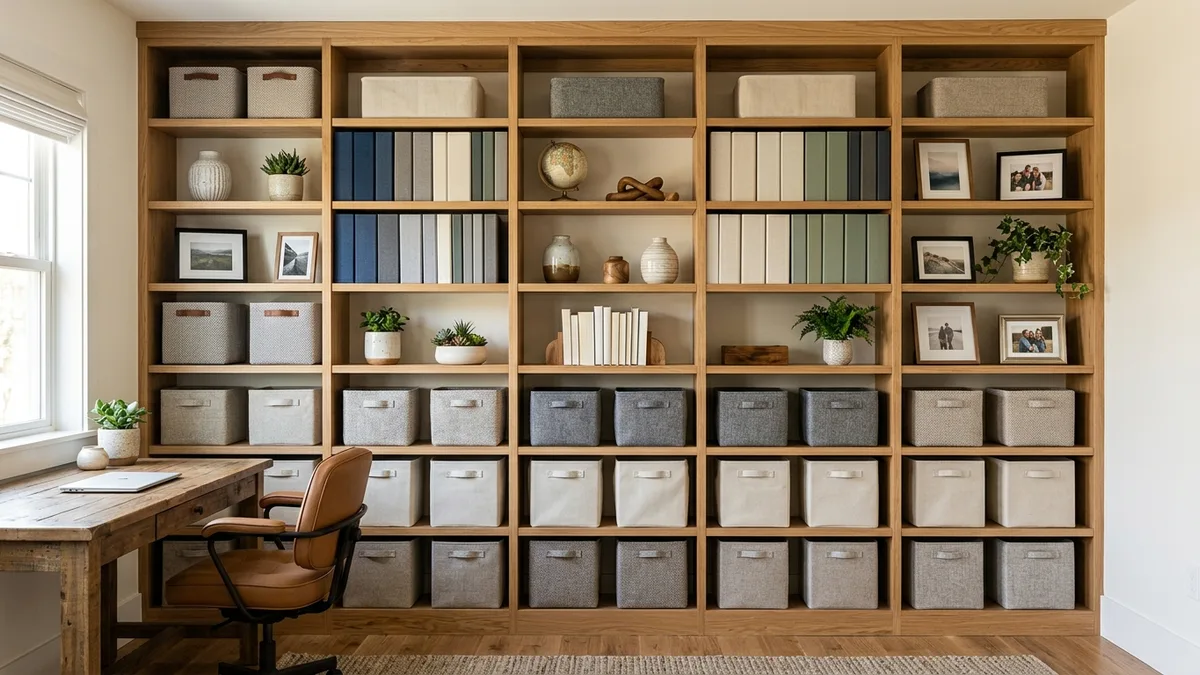
The Rule of Thirds for Shelf Styling
Divide each shelf visually into thirds. Use one-third for books or practical items, one-third for decorative objects, and one-third of empty space. Empty space is not wasted. It gives the eye a place to rest and makes the shelves feel curated rather than crammed.
Use Bins and Baskets Strategically
Woven baskets, fabric bins, and lidded boxes do two things at once: they contain visual chaos (remotes, charging cables, miscellaneous small items) and they add texture to the overall display. Stick to two or three basket styles throughout the entire unit to keep the look cohesive. For home storage ideas that pair well with shelving, check out our broader roundup.
Color and Contrast
Painting the back panel of each shelf bay a different color from the front frame creates depth and visual interest. A dark navy or forest green back panel against a white frame is a popular approach in 2026 interiors. Alternatively, wallpaper on the back panel adds pattern and personality without requiring the whole unit to be repainted if you want to change the look later.
Group Items by Height
Vary the height of objects grouped together on each shelf. Pair a tall vase with a short stack of books and a medium-height plant. This creates a rhythm across the shelves that feels intentional rather than random.
Edit Ruthlessly
The biggest styling mistake is putting everything on the shelves. Pull back at least 20 to 25 percent of what you initially placed. If a shelf looks full before you step back, it will look overcrowded from across the room. Real Simple consistently advises that the most beautiful shelfies begin with editing, not adding.
Common Mistakes to Avoid With Wall to Wall Shelf Ideas
Even a well-planned wall-to-wall shelf project can go sideways if you walk into common traps. Here are the ones most worth avoiding.
1. Ignoring weight limits. A three-quarter-inch plywood shelf spanning 36 inches with no center support can start to sag under the weight of books. Limit unsupported spans to 32 inches max for heavy loads, or add a center vertical divider.
2. Making all shelves the same height. Fixed uniform shelf spacing is efficient on paper but inflexible in practice. Plan at least half your shelves as adjustable using shelf pin holes drilled at 1-inch or 2-inch intervals.
3. Forgetting the baseboard. Baseboards along the bottom of most US walls project out 3/4 inch to 1 inch from the wall surface. Your bottom shelf support or cabinet side panels need to account for this with a notch or a toe kick that sits in front of the baseboard.
4. Skipping the primer. Painting MDF or raw plywood without primer first will leave you with a blotchy, uneven finish even with multiple coats of paint. Always prime, especially MDF edges.
5. Building shelves too deep for the room. In a hallway, shelves deeper than 8 inches will feel intrusive. In a bedroom, 14-inch-deep shelves on a wall parallel to the bed can make the room feel narrower. Match depth to the room's proportions, not just the items you want to store.
6. Not planning for lighting. Dark rooms with deep shelves will not show off your styling. Plan LED strip lighting under each shelf or inside the unit from the start. Retrofitting lighting after the fact is much harder.
Related Products from Sesoris
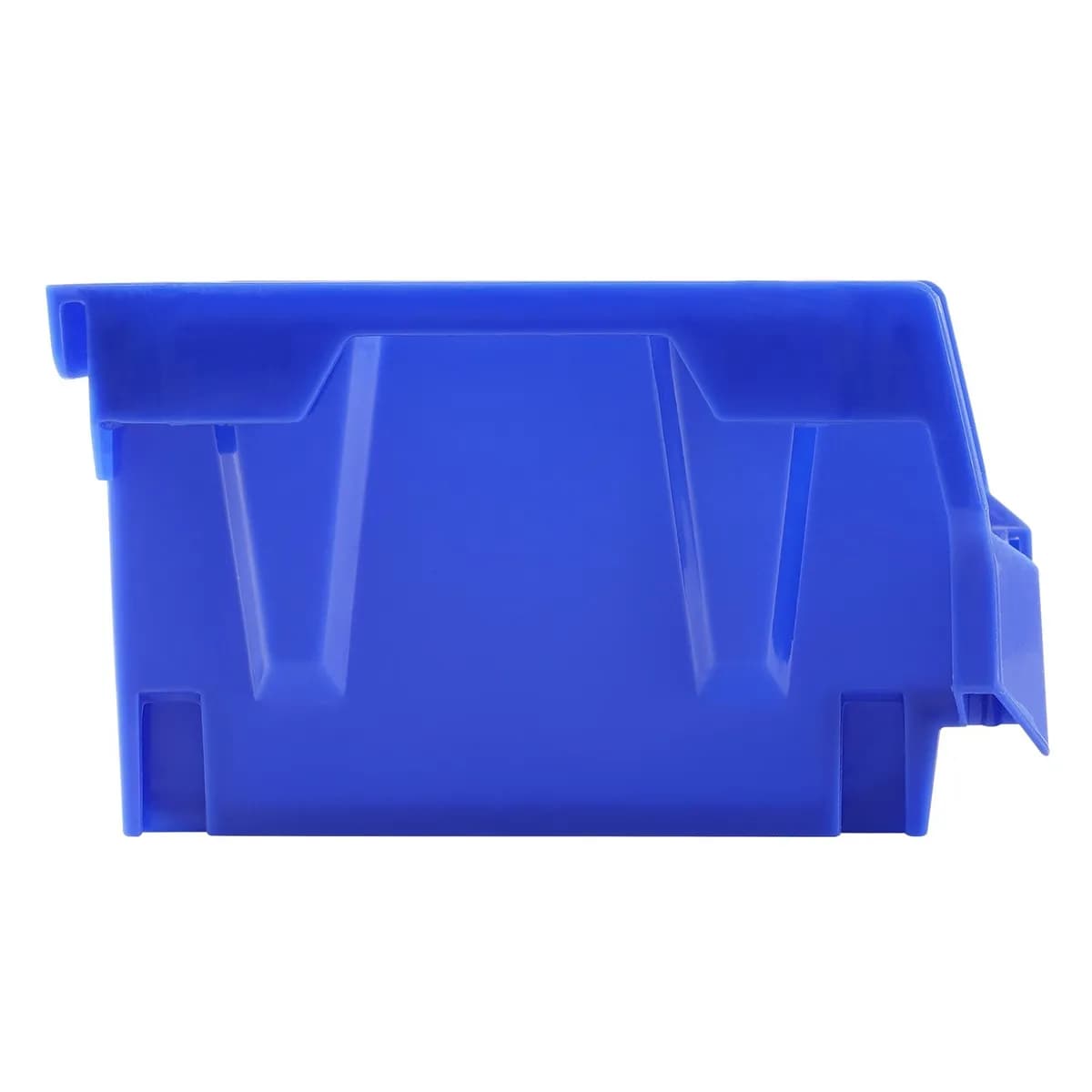
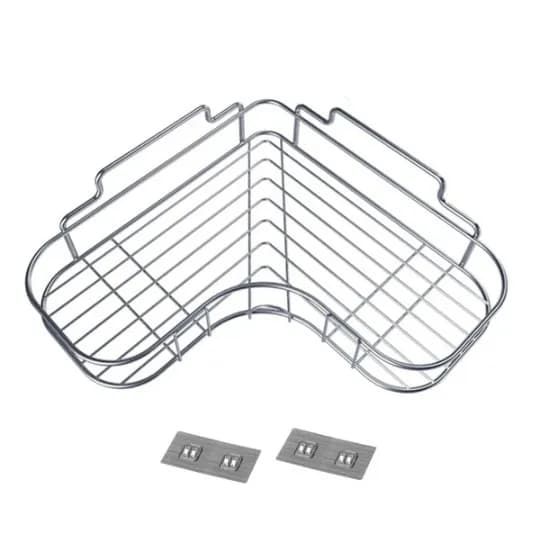
If you want to turn this guide into a real setup, start with Stackable Storage Bins, 24 Pack and Pull-Out Cabinet Organizer, 17 in. Wide. For broader options, browse the Home & Decor collection so the article journey does not stop at reading only.
Our practical rule: choose one product that solves the main clutter problem first, then add supporting organizers only when the daily workflow is already clear. This keeps the shopping path useful, not pushy.
FAQ: Frequently Asked Questions About Wall to Wall Shelf Ideas
Q: How much does it cost to build a wall-to-wall shelving unit in a living room?
Costs vary widely based on materials, room size, and whether you hire out the labor or DIY. A basic plywood and MDF painted built-in for a 10-foot wall typically runs anywhere from a few hundred dollars in materials for a DIY project to several thousand dollars if you hire a custom cabinet maker. Modular systems from home improvement stores fall in the middle range.
Q: Do I need a permit to install wall-to-wall shelves?
In most US jurisdictions, built-in shelving does not require a permit unless you are moving electrical, adding lighting that requires new wiring, or making structural changes. Always check with your local building department if you are unsure, especially in a condo or HOA-governed community.
Q: What is the standard shelf spacing for books?
Standard paperbacks fit comfortably on shelves spaced 9 inches apart. Hardcovers need 11 to 12 inches. Oversized art books or coffee table books require 13 to 15 inches. Planning a mix of these spacings into your design from the start saves a lot of frustration later.
Q: Can I install wall-to-wall shelves as a renter?
Yes, with some restrictions. The safest approach for renters is a freestanding modular system that spans the full wall and touches the ceiling with a friction or pressure fit rather than screws. This gives the wall-to-wall look without permanent installation. Always check your lease before drilling into walls.
Q: How do I make a wall-to-wall shelf look built-in even if it is modular?
Add trim. Run baseboard molding along the bottom of the unit, crown molding along the top where it meets the ceiling, and vertical casing strips on either side where the unit meets the adjacent wall. Paint everything the same color. This three-step trick makes modular shelving look custom-built.
Conclusion
Great wall to wall shelf ideas come down to three things done well: precise planning, appropriate materials, and thoughtful styling. Whether you are building a floor-to-ceiling library in your living room, a practical wall pantry in your kitchen, or a versatile system in your home office, the process is the same. Measure twice, plan on paper first, choose materials suited to the room's conditions and your budget, and then style with restraint. The result is a shelving system that feels like it was always part of the home rather than something you added later. Ready to get organized? Start by exploring Sesoris storage solutions to find the bins, baskets, and containers that will make your new shelves work even harder for your household.
Liked this guide?
Get new organizing guides and the occasional new product by email. No spam, unsubscribe anytime.
Related articles

Explore more articles
- Small Living Room Organization Ideas: 30+ Smart Fixes
- 30+ Kitchen Food Storage Ideas for a Tidy 2026
- Aluminum Kitchen Rack: Choose, Install & Care Guide 2026
- Storage Boxes for Home: The Best 2026 Buying Guide
- Multipurpose Storage Rack: How to Choose the Best One
- Ideas for Shoe Storage in Small Closet: 25+ Picks
- 30+ Best Closet Organization Ideas for Nursery: Create the Perfect Baby Storage Space in 2026
- Practical Home Organizing Tips That Keep Your House Tidy