
Laundry Room Wall Organization: Shelves, Rails, Pockets and Door Racks
Laundry room wall organization ideas: how to plan the wall above the washer, shelves, rails and hooks, hanging pockets, over-the-door racks, drying space, safe mounting and layouts for laundry closets and small rooms.

Good laundry room wall organization moves detergent, supplies and drying space off the floor and the top of the machines. Start with a shelf or cabinet above the washer and dryer for detergent, add a rail with hooks for hangers and tools, use hanging pockets or an over-the-door rack for small items, and keep a fold-down or wall-mounted drying spot for clothes that cannot go in the dryer. Mount everything into studs or with rated anchors, and keep heavy bottles at the lowest shelf you can reach comfortably.
Laundry rooms are usually small, and the floor is often taken up by the machines, a hamper and a basket or two. That leaves the walls as the most valuable storage space in the room. Used well, a few square feet of wall can hold everything from detergent and stain remover to hangers, a drying rack and the iron. This guide covers how to plan the wall, the main wall storage options, how to store specific laundry items, ideas for laundry closets and tiny rooms, and how to mount everything safely.
Plan the Wall Before You Buy
Every laundry wall has the same basic zones. Thinking in zones prevents the common mistake of buying a shelf first and then trying to make everything fit on it.
| Wall zone | Typical height | What goes there |
|---|---|---|
| Above the machines | Just above the top of the washer and dryer, with lid clearance | Detergent, softener, stain remover, dryer sheets |
| Eye level | Easy to see and reach while standing | Daily supplies, a small basket of clothespins or lint rollers |
| Top of the wall | Above eye level | Backups, bulk refills, seasonal items in labeled bins |
| Beside the machines | Narrow gaps and side walls | Hooks for the ironing board, broom, mop or step stool |
| Back of the door | Inside face of the laundry room door | Over-the-door rack or pocket organizer for small items |
Before measuring, note where outlets, water valves, the dryer vent and any light switches sit. Shelves and rails should never block access to water shut-off valves or cover the dryer vent. If you have a top-loading washer, measure how high the lid opens and keep that space clear.
Our laundry room shelving ideas cover shelf types in more depth, and the laundry room storage ideas guide looks at the whole room.
Wall Storage Options Compared
Most laundry walls combine two or three of these options.
| Option | Best for | Strengths | Watch out for |
|---|---|---|---|
| Open shelves | Detergent, baskets, folded towels | Simple, cheap, everything visible | Bottles can look cluttered without bins |
| Wall cabinets | Chemicals, backups, things to hide | Closed doors, can be locked or childproofed | Takes more space, costs more |
| Rail with hooks | Hangers, tools, lint roller, small bags | Flexible, easy to rearrange | Hooks fill up fast without limits |
| Pegboard | Tools, small baskets, cleaning gear | Fully customizable layout | Needs spacers behind it for hooks |
| Hanging rod | Hang-dry clothes, freshly ironed shirts | Keeps clothes from wrinkling | Needs clear space below |
| Fabric hanging pockets | Small items, socks, clothespins | Light, no hardware beyond a hook | Holds only light items |
| Over-the-door rack | Bottles, sprays, sponges | Uses the back of the door | Check door thickness and clearance behind it |
| Fold-down drying rack | Delicates and air-dry items | Folds flat when not in use | Needs secure wall mounting |
Shelves Above the Washer and Dryer
The wall directly above the machines is usually the first place to add storage. A shelf or two here keeps detergent within arm's reach while you load.
- Mind the clearance. Leave enough space above a top-loading washer to open the lid fully, and enough room above front-loaders to see and reach controls on the back panel. - Put heavy bottles low. Large detergent containers are heavy. Keep them on the lowest shelf you can reach without stretching. - Use bins and baskets. Small items like dryer sheets, stain sticks and laundry pods stay neater in a bin than loose on a shelf. Choose bins with handles so you can pull them down easily. - Add a lip or rail. Machine vibration can walk bottles toward the shelf edge. A shelf with a front lip, or bins, keeps things in place. - Decant thoughtfully. Pouring detergent into a dispenser can look tidy, but keep the original label or a copy of the dosing and safety information nearby.
Keep laundry pods and other detergents up high and out of children's reach. The American Association of Poison Control Centers operates the US poison help line (1-800-222-1222) if someone swallows or is exposed to a household product.
Our laundry room cabinet ideas cover closed storage if you prefer doors.
Rails, Hooks and Pegboards
A wall rail with sliding hooks is one of the most flexible pieces of laundry storage. You can hang hangers, a lint roller, a small dustpan, a mesh bag for delicates and even a folded drying rack, and move the hooks when your needs change.
Good rail layouts follow a few rules:
- Group by task. Hang everything for drying on one section, and cleaning tools on another. - Leave space between hooks so items do not overlap and fall when you grab one. - Set a hanger limit. A small hook or rail section for empty hangers stops them from piling up on the dryer. - Use pegboard for many small items. Pegboard with small baskets and hooks gives every tool a defined spot. Make sure it is mounted with spacers so hooks can seat properly.
Hanging Pockets for Small Items
Small items are the hardest part of laundry organization: clothespins, mesh bags, a sewing kit, safety pins, spare buttons and the odd sock. A fabric organizer with pockets keeps them visible and contained, and it hangs from a single nail or hook.
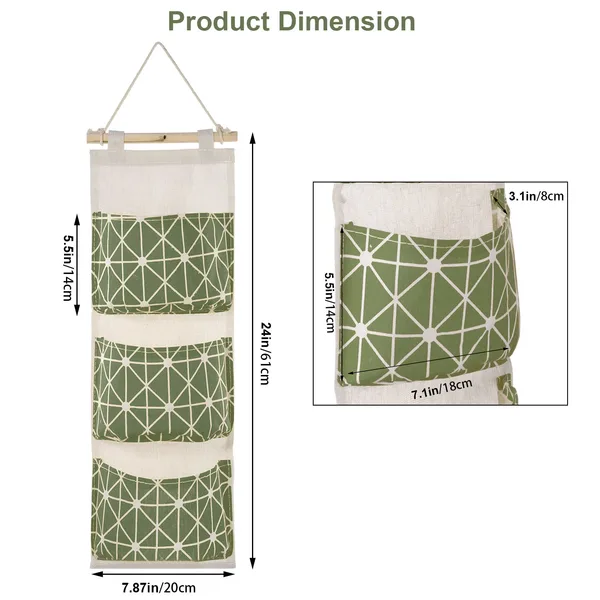
The 3-pocket hanging wall organizer measures 7.87 x 24 inches and has three stacked pockets, each about 7.1 inches wide, 5.5 inches tall and 3.1 inches deep. It is made of stiff linen-cotton fabric with a wooden rod at the top, and hangs by a rope loop. In a laundry room, it works well beside the dryer or on a side wall:
- Top pocket: stain stick, travel-size detergent for hand-washing. - Middle pocket: mesh delicates bags, clothespins. - Bottom pocket: lone socks waiting for their pair, small items found in pockets.
A "lost and found" pocket for coins, hair ties and receipts emptied from pockets is a simple habit that stops small items from ending up in the washer.
Over-the-Door Racks
The back of the laundry room door is often completely unused. An over-the-door rack turns it into a full column of storage for bottles, sprays and supplies.
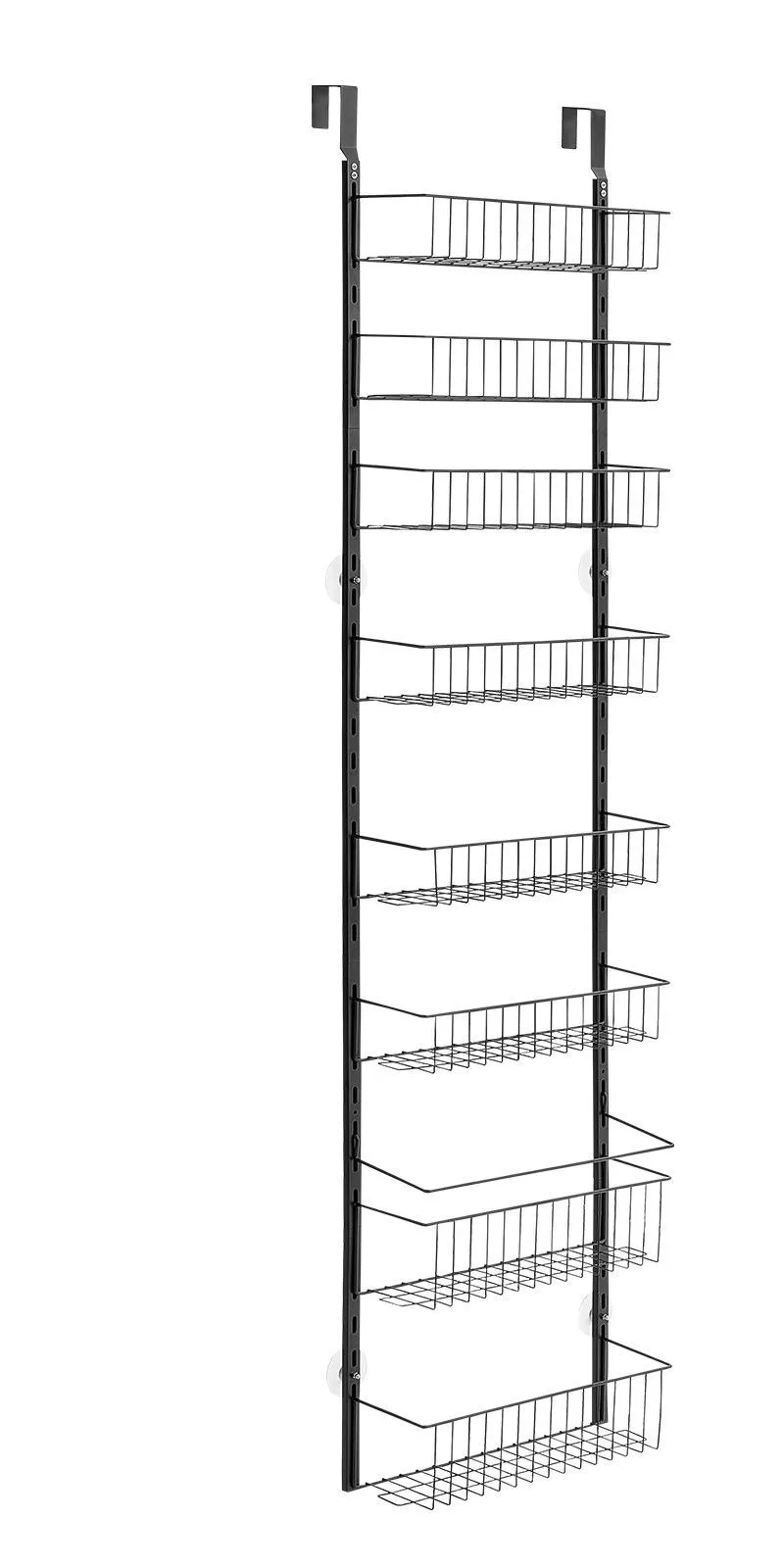
The 8-tier over-the-door organizer has eight wire baskets, each 16 inches wide and 4.9 inches deep, with adjustable spacing for taller items. It fits doors up to 2 inches thick and needs at least 7.1 inches of clearance behind the door so it still closes. The total weight capacity is 26.5 pounds, or 3.31 pounds per basket, so it suits spray bottles, dryer sheets, stain removers and sponges rather than large jugs of detergent. It can also be wall mounted with included screws.
Load an over-the-door rack with the heaviest items in the lowest baskets, and avoid overfilling, since a heavy rack puts strain on the door and hinges.
Make Room for Drying
Not every load goes in the dryer. Delicates, sweaters and some activewear need to hang or lie flat. Planning wall space for drying prevents clothes from ending up draped over the machines.
- A tension or wall-mounted rod above the machines holds hangers for air-dry items and freshly ironed clothes. - A fold-down drying rack mounts to the wall and folds flat when not in use. - A retractable clothesline pulls across the room and retracts into a small case. - Hooks for a folding floor rack keep it off the floor between loads.
Check the care labels on your clothes for drying instructions, and leave some airflow around hanging items so they dry evenly.
Keep Hampers and Baskets Off the Path
Hampers and baskets are not wall storage, but where they sit affects how much wall you can use. A tall hamper with a lid takes up less floor space than an open basket and keeps the room looking tidier.
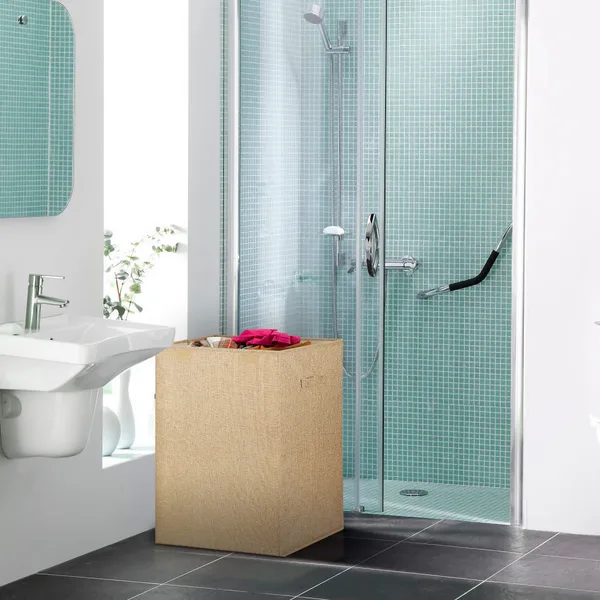
The foldable laundry hamper with lid measures 15.75 x 15.75 x 24.8 inches, has fabric handles on the sides and a removable bottom board that keeps it square when full.
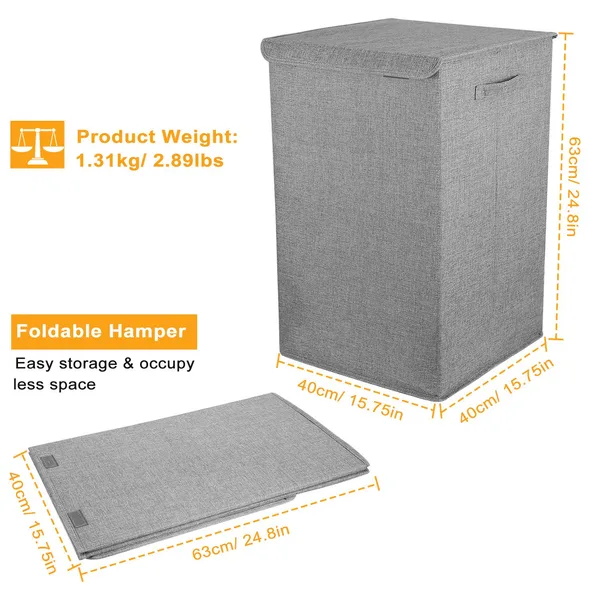
Line hampers along one wall, under shelves or between the machines and a side wall, so the main walking path and the wall in front of the machines stay clear. Our guide to laundry room organization containers compares bins and baskets in more detail.
Ironing Boards, Irons and Steamers
Ironing gear is bulky and awkward. Moving it onto the wall saves a lot of floor space.
- Ironing board hooks or holders hold the folded board flat against the wall or the back of a door. - An iron holder or small shelf keeps the iron upright and the cord wrapped. Always let the iron cool completely before storing it. - A garment steamer can hang from a sturdy hook with its hose looped loosely. - Keep ironing gear away from water and close to an outlet you can reach safely.
Laundry Closets and Small Rooms
Many homes have a laundry closet rather than a room, with the machines behind bifold or sliding doors. The same ideas apply, just smaller.
- Use the full height. Add a shelf above the machines and a second near the top of the closet for backups. - Use the doors. Slim pocket organizers or narrow racks on the inside of the doors hold small items. Check that the doors still fold or slide. - Fill the gaps. A narrow rolling cart or slim shelf between the machine and the wall holds detergent or dryer sheets. - Choose stackable machines if possible. A stacked washer and dryer frees wall space beside them for shelves and hooks.
Our laundry closet ideas and small laundry room organization ideas have layouts for tight spaces.
Cleaning Supplies on the Laundry Wall
Many laundry rooms double as the home's cleaning closet. That works well if the wall is divided clearly, so laundry products and cleaning products never get mixed up.
- Separate the two groups. Keep laundry products on one shelf or side of the wall and household cleaners on another. - Store chemicals in original containers. Original labels carry the directions and safety warnings you need, and they prevent mix-ups between similar-looking bottles. - Hang long-handled tools. Brooms, mops and dusters on wall clips stay off the floor and dry faster than when stood in a corner. - Keep a small caddy ready. A carry caddy with the cleaners you use most can sit on a shelf and go room to room. - Store anything hazardous high or locked if children or pets use the room.
Our cleaning supply organization guide goes deeper into storing cleaning products, and utility closet organization ideas help if you have a separate closet for them.
Labels, Colors and a Calm Look
A wall full of brightly colored detergent bottles can look busy even when it is perfectly organized. A few simple choices make the wall feel calmer.
- Use matching bins on open shelves so mismatched packaging is hidden from view. - Label every bin with what is inside, so anyone doing laundry can find supplies and put them back. - Repeat one finish for hooks, rails and baskets, such as all black or all white metal. - Leave some empty wall. A wall covered from corner to corner feels cramped. Leaving gaps around shelves makes the room look bigger. - Keep the top of the machines clear. It is tempting to use the dryer as a shelf, but it should stay free for folding.
Budget-Friendly Wall Ideas
Wall storage does not have to be expensive. Start small and add pieces as you see what you need.
- A single shelf with brackets above the machines. - A row of adhesive or screw-in hooks for hangers and bags. - A tension rod across a laundry alcove for hanging clothes. - A fabric pocket organizer on a nail for small items. - Repurposed baskets or boxes on the shelf in place of new bins.
Live with the setup for a few weeks before adding more. Most people discover that one or two well-placed pieces solve the majority of the clutter.
Mount Everything Safely
Laundry rooms vibrate, and shelves often hold heavy liquids, so mounting matters.
- Find the studs. Use a stud finder and fix shelf brackets and rails into wall studs whenever possible. 2. Use rated anchors where there is no stud. Choose drywall anchors rated for the load you plan to store, and follow the manufacturer's weight ratings. 3. Check for pipes and wires. Water lines and electrical wiring often run behind laundry walls. A stud finder with wire detection helps, and if you are unsure, ask a professional. 4. Respect weight limits. Every shelf, rail and rack has a rating. Liquid detergent is heavy, so add up bottle weights before loading a shelf. 5. Keep clearances. Leave the dryer vent, water valves and outlets accessible.
Keep the Laundry Wall Organized
A wall system stays useful only if items go back where they belong.
- Return supplies after each load. Detergent back on the shelf, stain stick back in its pocket. 2. Empty the lost-and-found pocket weekly. 3. Restock monthly. Move refills down from the top shelf before you run out. 4. Edit seasonally. Remove dried-up products, broken hangers and anything that no longer fits your routine.
For more ideas across the whole room, see our laundry room organization ideas and laundry room organization tips.
Frequently Asked Questions
How do I organize a laundry room wall?
Plan zones first: shelves above the machines for detergent, a rail with hooks for hangers and tools, pockets or an over-the-door rack for small items and a rod or fold-down rack for drying. Then choose storage that fits each zone.
What should go on shelves above the washer and dryer?
Detergent, fabric softener, stain remover and dryer sheets, ideally in bins. Keep heavy bottles on the lowest shelf you can reach, and leave clearance for the washer lid and controls.
How high should a shelf be above a washer?
High enough that a top-loading lid opens fully and front-loader controls stay easy to see and reach. Measure the open lid height before you install anything.
Where should I store laundry pods?
High up and out of children's reach, in a closed container or cabinet. If anyone is exposed to a household product, contact Poison Help at 1-800-222-1222 in the US.
How do I add storage to a laundry closet?
Use the full height with shelves above the machines, add slim organizers on the inside of the doors, and use a narrow rolling cart or shelf in the gap beside the machines.
Can I use an over-the-door rack in a laundry room?
Yes, for lighter items such as sprays, dryer sheets and sponges. Check the door thickness, the clearance behind the door and the weight rating, and keep heavy jugs on a wall shelf instead.
How do I hang an ironing board on the wall?
Use an ironing board hook or holder mounted on the wall or the back of the door, fixed into a stud or with rated anchors. Let the iron cool fully before storing it nearby.
How do I mount shelves safely in a laundry room?
Fix brackets into studs where possible, use anchors rated for the load elsewhere, check for pipes and wiring behind the wall, and stay within each shelf's weight rating.
Final Thoughts
Laundry room wall organization turns a cramped floor into a workable room. Plan the wall in zones, put detergent on shelves above the machines with heavy bottles low, add a rail or pegboard for hangers and tools, use pockets and over-the-door racks for small items and leave space for drying. Mount everything into studs or rated anchors, keep vents and valves clear and return supplies after each load. For the rest of the room, read our laundry room organization ideas.
Liked this guide?
Get new organizing guides and the occasional new product by email. No spam, unsubscribe anytime.
Related articles


Explore more articles
- 25+ Best Entryway Organization Ideas to Transform Your Home's First Impression in 2026
- Costco Garage Storage Solutions: What to Compare
- Best Food Storage Solutions: Complete Guide to Organizing Your Kitchen in 2026
- Ultimate Cleaning Closet Organization: 25+ Smart Solutions to Transform Your Storage Space in 2026
- Simple Ramadan Decoration Ideas to Create a Festive Home Atmosphere
- 25+ Creative Walk In Pantry Organization Ideas to Transform Your Kitchen Storage in 2026
- Stove Cabinet: Integrated Design Solutions for Organized Kitchens
- 15 Shoe Storage in Garage Ideas: Safe Layouts for 2026