
Utility Closet Organization Ideas: A Practical Plan for Tools, Supplies and Safety
Utility closet organization ideas that keep the water heater clear, hang tall tools, use the door and store cleaning products safely, with a step by step plan.
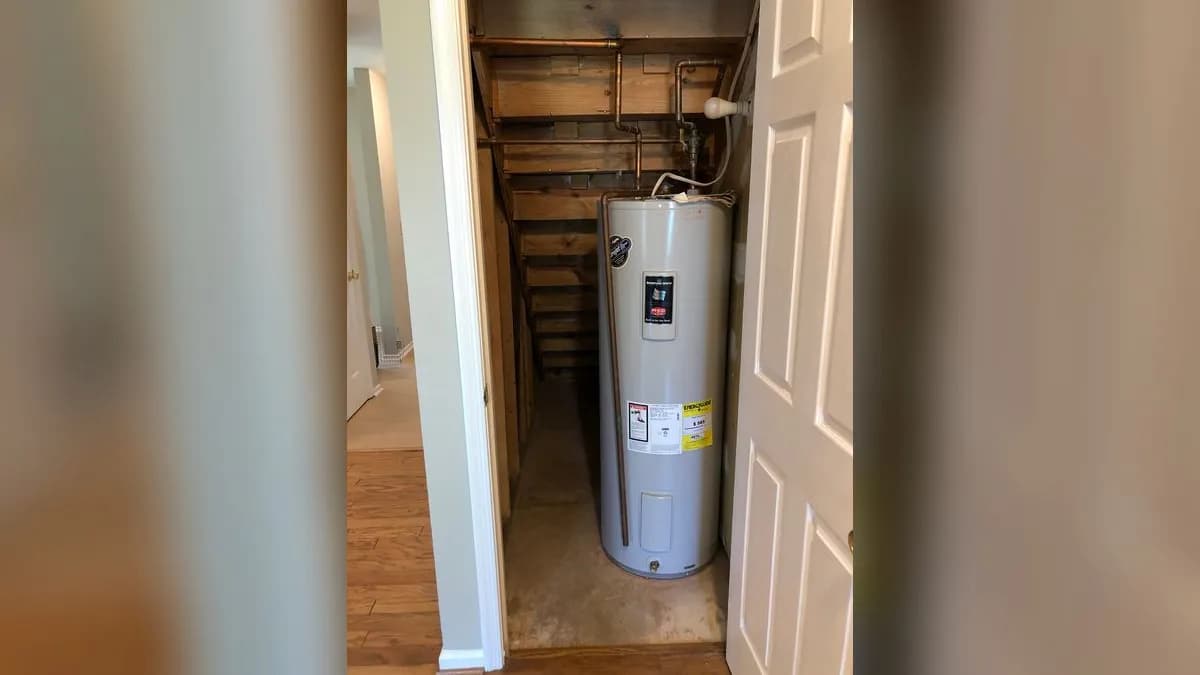
A utility closet is the hardest-working storage space in many American homes, and often the messiest. It may hold the water heater or furnace, the vacuum, the mop and bucket, spare light bulbs, the toolbox and a shelf of cleaning products, all behind one narrow door. Good utility closet organization ideas turn that jumble into a space where every item has a fixed spot, the appliances stay accessible and the chemicals stay safe.
This guide walks through a practical plan: what to clear out first, how to zone the closet, which shelves, hooks and door racks work in tight spaces, how to store cleaning products responsibly and how to keep the system tidy after the first big sort. If your closet doubles as a cleaning station, our cleaning closet organization guide and essential cleaning supplies organization are good companions.
Hero photo credit: Famartin / Wikimedia Commons, CC BY-SA 4.0
What Belongs in a Utility Closet (and What Does Not)
Start by deciding the job of the closet. A utility closet usually serves three roles at once: it houses mechanical equipment, it stores cleaning tools, and it keeps household maintenance supplies in one place. Anything outside those roles is a candidate to move elsewhere.
Typical items that earn a place here include the vacuum and its attachments, a broom, dustpan, mop and bucket, everyday cleaning sprays and refills, paper towels and trash bags, light bulbs and batteries, furnace or HVAC filters, a small toolbox, a flashlight and a step stool. Seasonal decor, sports gear, out-of-season clothes and paint for a project you finished years ago usually belong in the garage, attic or a linen closet instead.
Two categories need extra care. Flammable liquids such as gasoline, paint thinner and solvents should not live in a closet with a gas water heater or furnace. Manufacturer manuals for gas water heaters warn that flammable vapors are heavier than air, can travel along the floor and can be ignited by the burner. Store those products in a detached shed or another well-ventilated space, in their original sealed containers.
Step 1: Empty, Sort and Measure
Every lasting closet system starts with an empty closet. Take everything out, wipe the shelves and floor, and look at the bare space. This is the moment to spot leaks around the water heater, check the condition of the floor and note where the outlets, valves and access panels are.
Sort what you removed into four piles:
- Keep here: tools and supplies you use weekly or that belong with the equipment.
- Keep elsewhere: items that belong in another room.
- Donate or recycle: duplicates, unused gadgets and tools you replaced.
- Dispose of safely: expired or unlabeled chemicals. Many communities run household hazardous waste collection days, so check your city or county website rather than pouring products down the drain.
Then measure. Note the closet width, depth and height, the door swing, the distance from the floor to any shelf you plan to keep, and the clear space the appliance manual asks you to leave around the water heater or furnace. Write the numbers down before you buy a single organizer.
Step 2: Zone the Closet Around the Equipment
Zoning is the core of most successful utility closet organization ideas. Instead of filling every inch, you assign each part of the closet a job, with the mechanical equipment setting the boundaries.
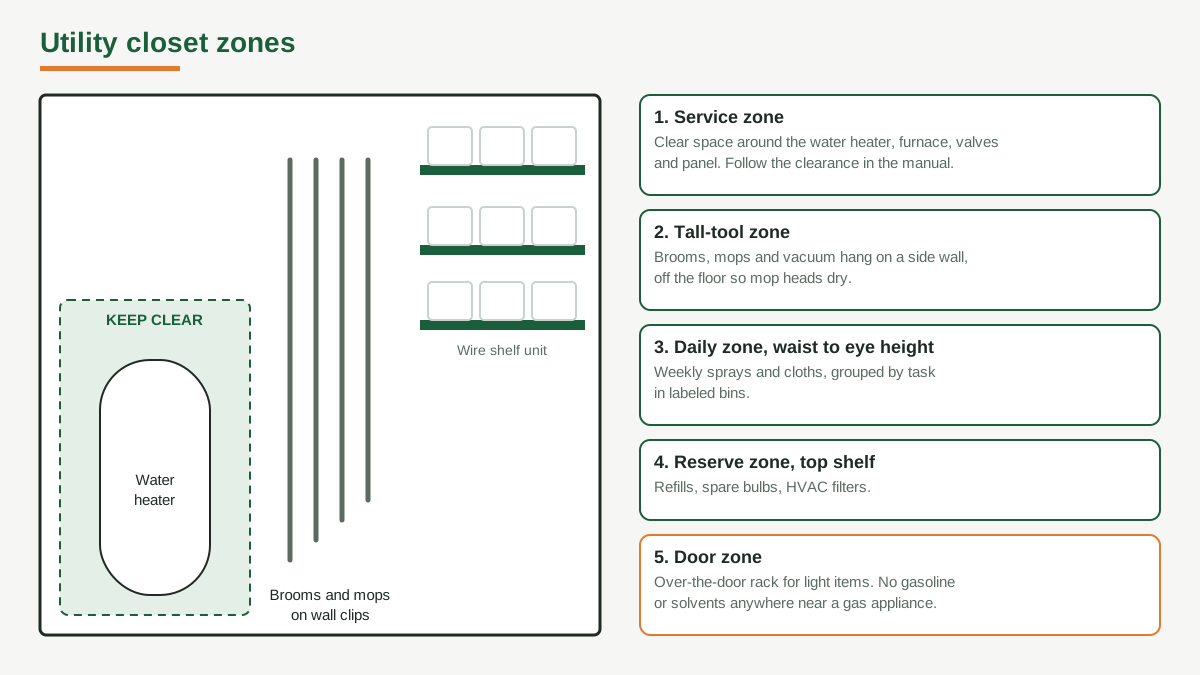
The service zone. Keep the area in front of and around the water heater, furnace, electrical panel or shutoff valves completely clear. A technician should be able to reach the controls without moving anything, and you should be able to see drips or rust at a glance. Follow the clearance printed in the appliance manual or on its label rather than guessing.
The tall-tool zone. Brooms, mops, dusters and the vacuum stand or hang along one side wall. Wall clips and hooks keep them upright and off the floor, which also helps mop heads dry.
The daily zone. Shelves between waist and eye height hold the sprays, cloths and supplies you reach for every week.
The reserve zone. The top shelf holds refills, spare bulbs, filters and anything you need only a few times a year.
The door zone. The back of the door is prime real estate for small, light items such as sponges, gloves and spray bottles.
Utility Closet Storage Options Compared
Different closets need different hardware. Use this table to match storage types to the space you have.
| Storage type | Best for | Space needed | Watch out for |
|---|---|---|---|
| Wall clips and hooks | Brooms, mops, dusters, vacuum hoses | A free side wall | Mount into studs or rated anchors |
| Freestanding wire shelving | Sprays, paper goods, bins | Floor space clear of equipment | Keep it out of the appliance service zone |
| Over-the-door rack | Sprays, sponges, gloves, cloths | Door with a gap at the top | Door must still close fully |
| Clear lidded bins | Bulbs, batteries, small tools, filters | Shelf depth | Label every bin |
| Pegboard panel | Hand tools, tape, scissors | A flat wall section | Use hooks that lock in place |
| Rolling cart | Cleaning kit you carry room to room | A parking spot on the floor | Lock wheels near the water heater |
Shelving That Works in a Tight Closet
Most utility closets are narrow and deep, which means shelves can swallow items at the back. Shallow shelves, between 12 and 16 inches deep, keep everything visible. If your closet came with one deep builder shelf, add a freestanding wire unit beside the equipment rather than stacking more on the old shelf.
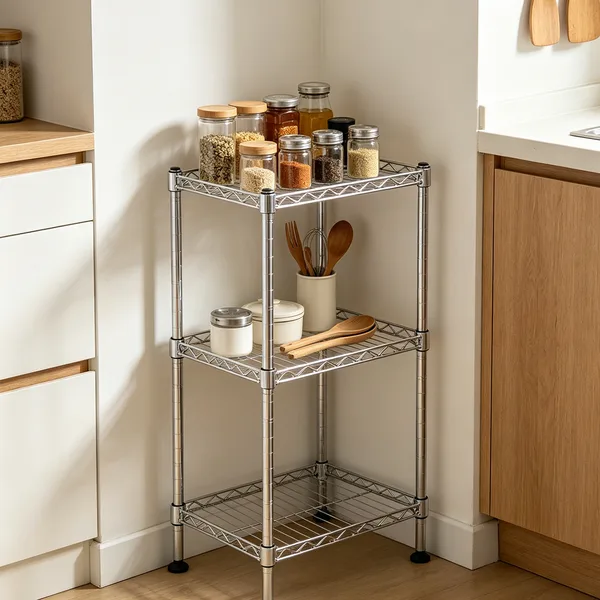
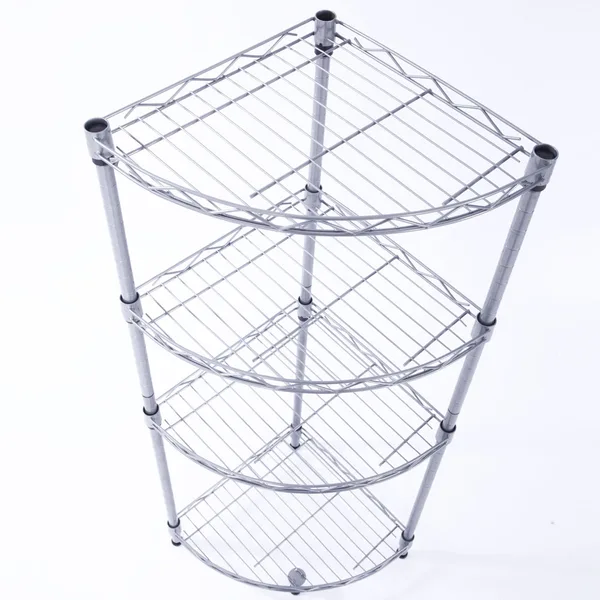
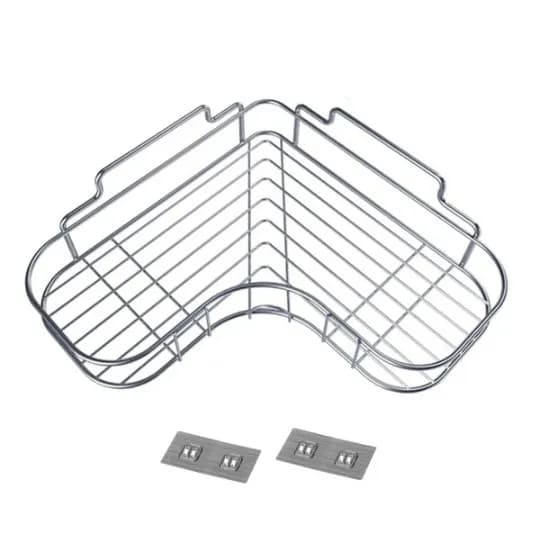
Wire shelving is popular in utility spaces for good reasons: it lets air circulate, it does not hide dust, and leveling feet help on uneven floors. A narrow unit like the 3-Tier Wire Shelving Rack fits beside a water heater or in the corner opposite the door. For a square corner, a corner wire shelf uses space that flat shelves leave empty.
Group items by task rather than by product type. One bin can hold everything for the bathroom, another everything for floors, a third everything for windows and glass. When you clean a room, you grab one bin and go. Our label organizer guide and free printable storage bin labels make it easy to mark each bin so the system survives busy weeks.
Hang Tall Tools Off the Floor
Brooms and mops leaning in a corner are the classic sign of a closet that has no plan. They slide, tip over and take up floor space that the vacuum needs.
Spring-grip wall clips hold handles of different thicknesses. Mount a rail of four or five clips on a side wall, spaced far enough apart that broom heads do not tangle. Hang mops head up after use so they dry, which helps keep the closet smelling fresh.
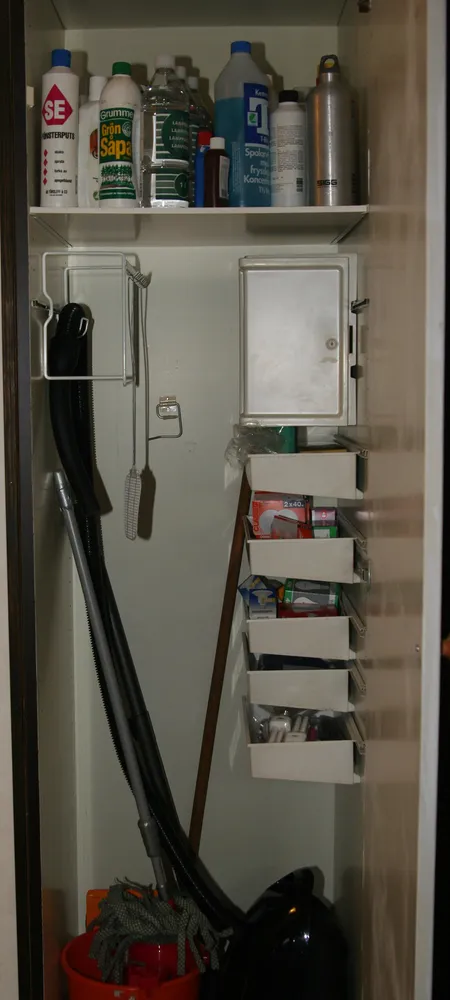
Photo: Dnor / Wikimedia Commons, public domain
For the vacuum, a pair of sturdy hooks or a dedicated bracket keeps a stick vacuum and its attachments together. If the vacuum charges on a wall dock, place it near an outlet and away from any water heater drip pan. Canister and upright vacuums usually sit on the floor; give them a marked parking spot so nothing else creeps into that space.
Use the Back of the Door
The door is often the most underused surface in a utility closet. An over-the-door rack adds several shelves without drilling, and it keeps light items in plain view.
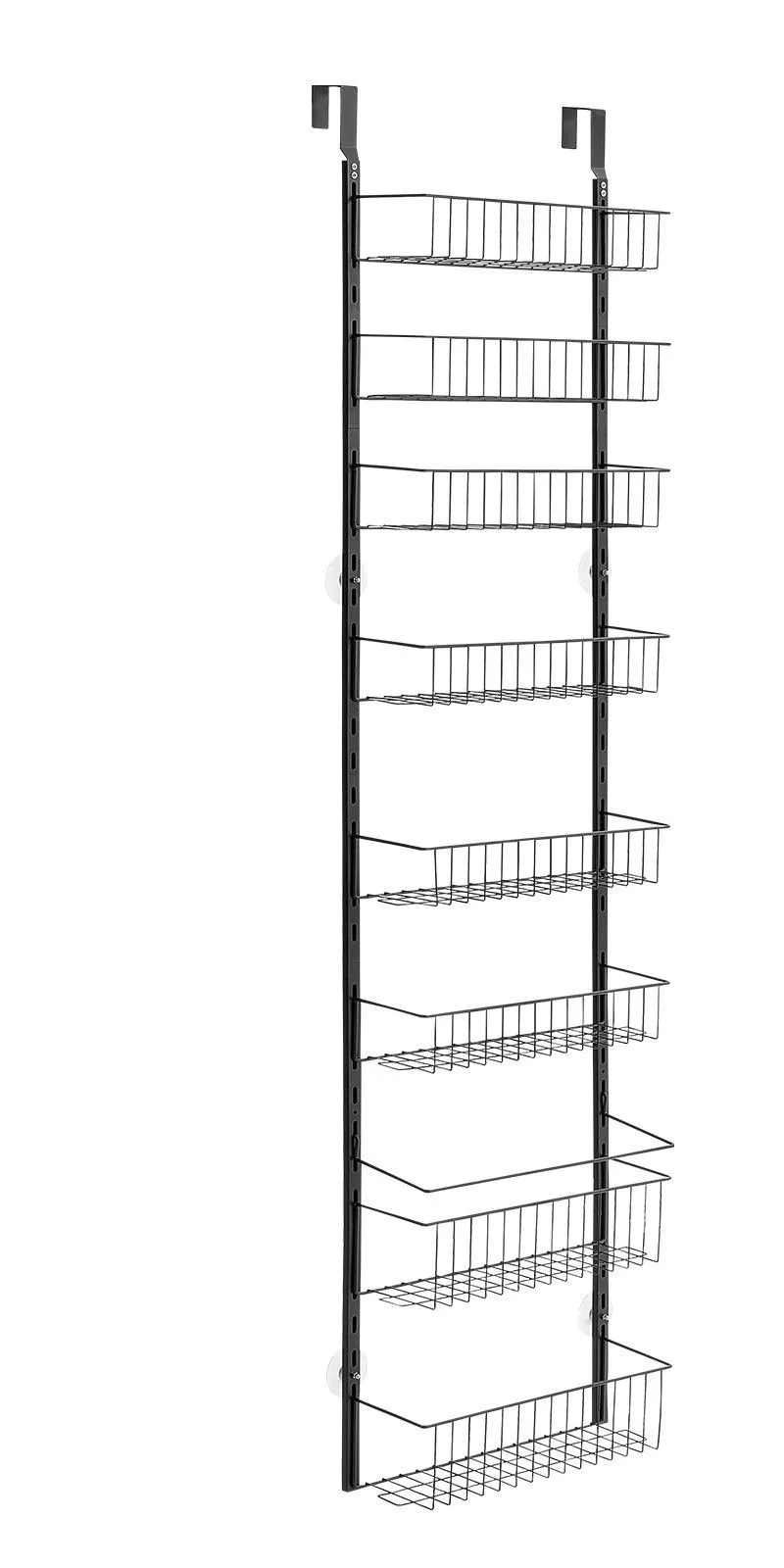
A multi-tier unit such as the Over-the-Door Pantry Organizer, 8 Tiers holds spray bottles in the lower baskets and sponges, gloves and cloths up top. Before you buy, check that the door has a small gap at the top for the hooks and that the loaded rack still lets the door close and clear the equipment inside.
Keep the heaviest bottles in the lowest baskets. That lowers the load on the hooks and keeps heavy items below the reach of small children who might climb.
Store Cleaning Products Safely
A utility closet is often where the strongest products in the home are kept, so organization and safety go together. The U.S. Environmental Protection Agency's guidance on storing pesticides safely is a useful model for any household chemical: keep products in their original labeled containers, store them out of reach of children and pets, use a locked cabinet in a well-ventilated utility area if possible, and never store them with or near food, animal feed or medical supplies.
Practical habits that follow from that guidance:
- Never pour a product into a drink bottle or unlabeled container.
- Store bleach and ammonia-based products on separate shelves so a leak cannot mix them.
- Put a washable tray under bottles that tend to drip.
- Add a child-safety latch to the closet door if young children live in the home.
- Buy only what you will use soon, so old bottles do not pile up.
If you need more storage for products, a cleaning supply organization setup with caddies and bins keeps each category contained.
Small Utility Closet Ideas
Apartment and condo utility closets can be barely wider than the water heater. In a small closet, every idea has to earn its place.
- Go vertical. A tall, narrow shelf unit beside the equipment beats a wide one.
- Use the door. A slim door rack holds most daily sprays and cloths.
- Choose a stick vacuum that hangs on the wall instead of a bulky upright.
- Keep a cleaning caddy you can carry, so supplies do not need permanent shelf space.
- Store reserves elsewhere. Bulk paper towels and spare bulbs can go to a garage shelf or the top of a hallway closet.
If your utility closet also holds a stacked washer and dryer, see our laundry closet ideas for layouts that leave room for both appliances and supplies.
Furnace, Filters and Maintenance Supplies
Many utility closets hold the furnace or air handler, which brings its own supplies: replacement air filters, a flashlight and the appliance manuals. Keep filters flat on the top shelf or in a slim box beside the unit so they do not bend. Write the filter size on the front edge of the shelf so anyone can buy the right one.
Keep a plastic sleeve or folder with the manuals, warranty cards and service records on a hook inside the door. When something goes wrong, the model number and service history are right where the technician is standing.
A small, clearly marked bin for maintenance basics also helps: a flashlight, spare batteries, a utility knife, painter's tape and a few common screws. For a larger tool collection, our garage storage solutions guide covers wall systems that hold more than a closet can.
Keep the System Working
A closet stays organized when putting things back is as easy as taking them out. A few habits make the difference:
- Give everything a labeled home. If a bin has no label, it becomes a junk bin.
- Do a five-minute reset each week. Return stray items and wipe any drips.
- Check the service zone monthly. Look for leaks, rust or anything that has crept in front of the equipment.
- Review supplies each season. Use up near-empty bottles before opening new ones and dispose of expired products properly.
- Change the filter on schedule and note the date on the box.
For a whole-home approach, our organization and cleaning tutorial shows how to build these routines room by room.
Related Products from Sesoris
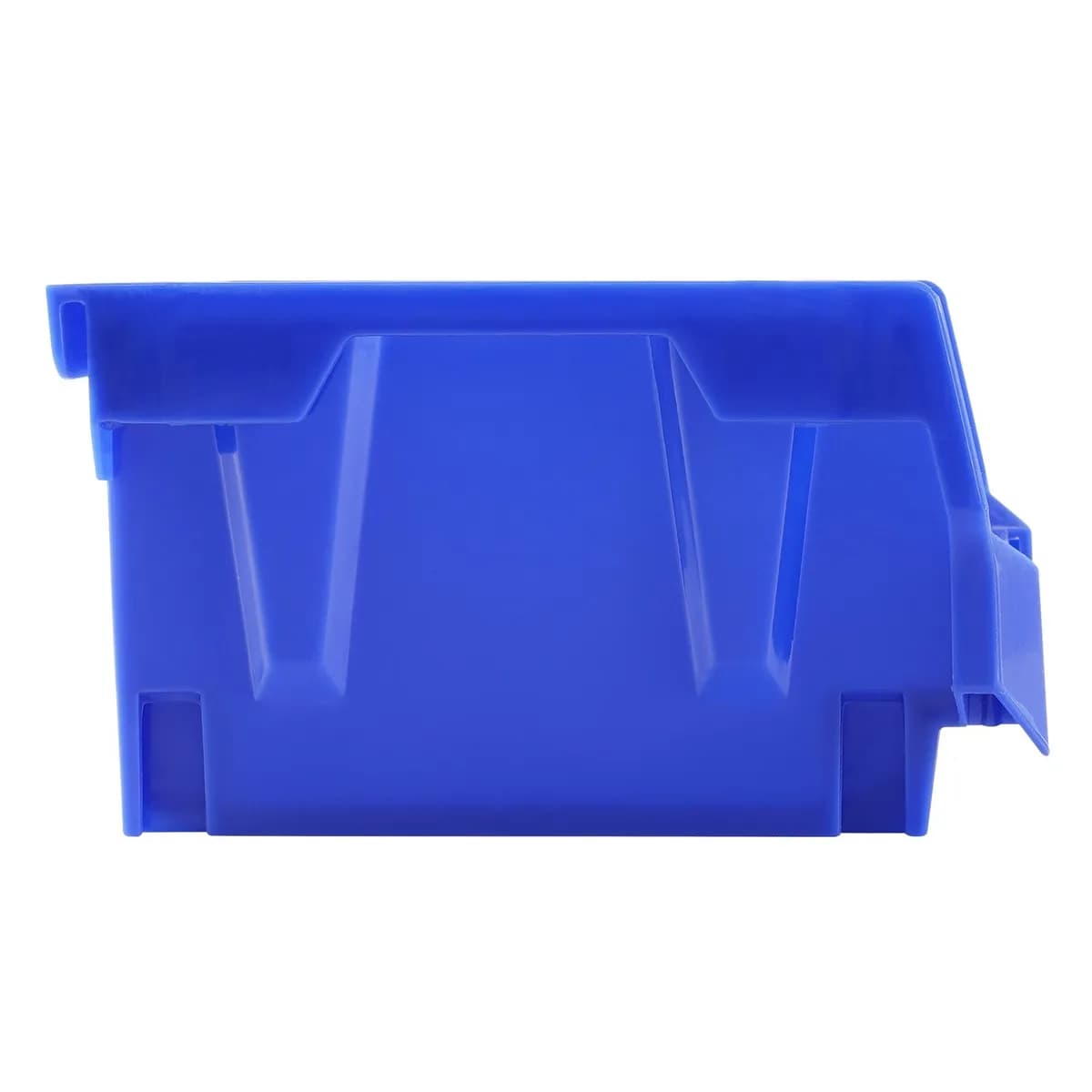
To put these utility closet organization ideas into practice, start with the Over-the-Door Pantry Organizer, 8 Tiers for sprays and cloths, the 3-Tier Wire Shelving Rack for a narrow side wall, and Clear Plastic Storage Boxes for batteries, bulbs and small parts. Browse more options in our Home Living collection.
Frequently Asked Questions About Utility Closet Organization Ideas
What should be stored in a utility closet?
Cleaning tools such as the vacuum, broom and mop, everyday cleaning supplies, paper goods, light bulbs, batteries, HVAC filters and a small set of maintenance tools. Seasonal items and rarely used gear are better stored elsewhere.
Can I store things next to a water heater?
Keep the space around the water heater clear, following the clearance in the appliance manual or on its label. Never store gasoline, solvents or other flammable liquids near a gas water heater, because their vapors can travel along the floor to the burner.
How do I organize a small utility closet?
Use vertical space with a narrow shelf unit, hang brooms and mops on wall clips, add an over-the-door rack for sprays and cloths, and move bulk reserves to another storage area.
How do I store brooms and mops in a utility closet?
Mount spring-grip clips or hooks on a side wall and hang tools off the floor. Hang mops head up so they dry between uses.
Is it safe to store cleaning products in a utility closet?
Yes, if you keep them in their original labeled containers, out of reach of children and pets, away from food and medicine, and ideally behind a latch or lock in a ventilated space.
What kind of shelves work best in a utility closet?
Shallow shelves 12 to 16 inches deep keep items visible. Wire shelving is a practical choice because it allows airflow, shows dust and adjusts to different item heights.
How often should I reorganize my utility closet?
A quick weekly reset keeps it tidy, a monthly look at the service zone catches leaks early, and a seasonal review clears out expired or unused products.
Where should I keep the furnace filters and appliance manuals?
Store filters flat on a top shelf near the furnace with the size written on the shelf edge, and keep manuals and service records in a sleeve hung inside the closet door.
Conclusion: A Closet That Works as Hard as You Do
The best utility closet organization ideas start with respect for the equipment: keep the service zone clear, keep flammables out, and build storage around what is left. From there, hang tall tools, use the door, group supplies by task in labeled bins and keep strong products safely stored. A few minutes each week keeps the system running.
For more storage inspiration, explore our laundry room organization ideas and mudroom storage solutions.
Liked this guide?
Get new organizing guides and the occasional new product by email. No spam, unsubscribe anytime.
Related articles

Explore more articles
- 3 Tier Spice Rack: Complete 2026 Buying Guide
- 25+ Under Sink Organizer Ideas for a Tidy 2026
- Holiday Cookie Storage Containers: 2026 Buyer's Guide
- Aluminum Kitchen Rack: Choose, Install & Care Guide 2026
- 30+ Storage Organizer Ideas for a Tidy Home 2026
- Minimalist Shelf Ideas: 25+ Stylish Picks for 2026
- Minimalist Kitchen Decor Ideas: 25+ Modern Looks 2026
- Small Kitchen Cabinet Set Ideas for Tiny Homes