
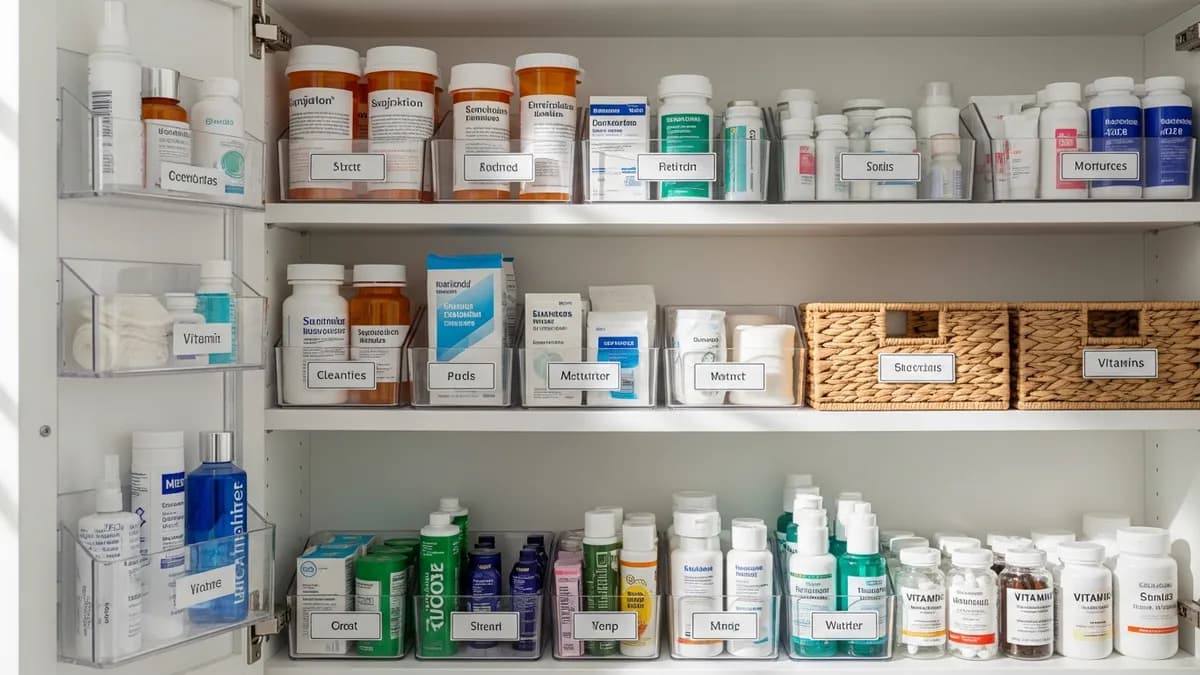
25+ Best Medicine Cabinet Organization Ideas to Transform Your Bathroom in 2026
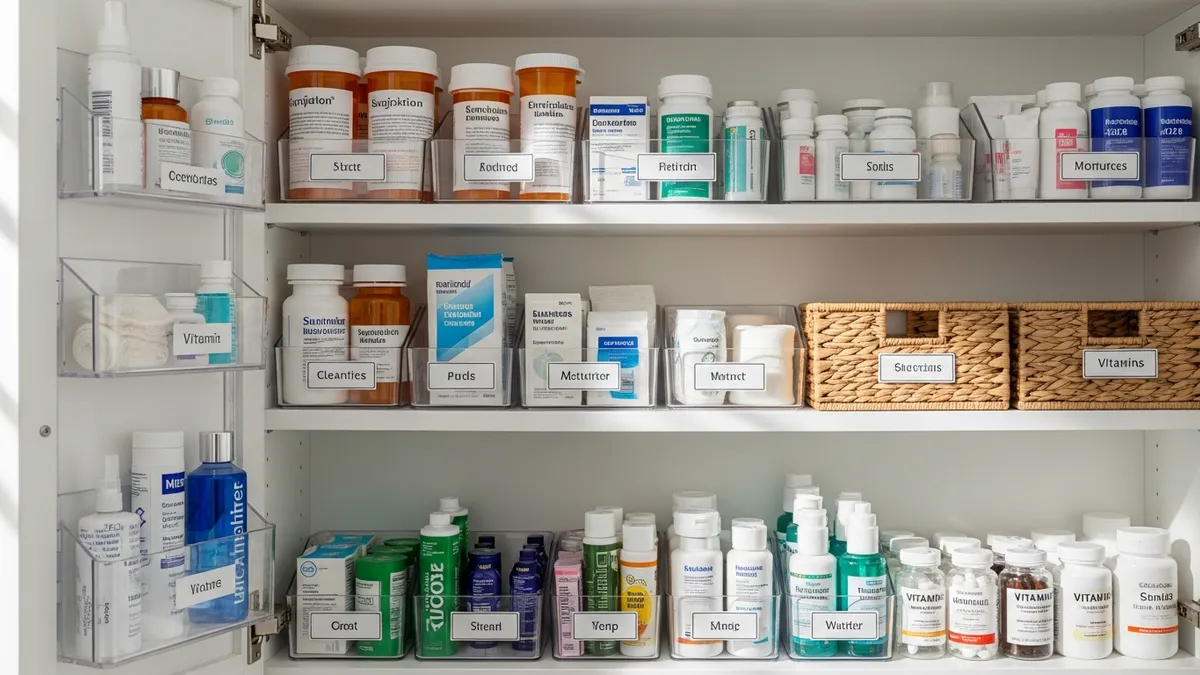
If your medicine cabinet is a jumbled mess of expired pills, mystery tubes, and half-empty bottles tumbling out every time you open the door, you are definitely not alone. Good medicine cabinet organization ideas can completely transform one of the most overlooked storage spaces in your home. A well-organized medicine cabinet means you can find what you need quickly during a headache, a late-night cough, or a minor kitchen cut, without digging through chaos. In 2026, the approach to bathroom organization has evolved far beyond just tossing things onto a shelf. This guide covers more than 25 practical, creative, and budget-friendly ideas to help you reclaim your medicine cabinet and keep it that way.
Why Medicine Cabinet Organization Ideas Actually Matter
It might be tempting to dismiss medicine cabinet organization as a minor cosmetic fix, but there are real, practical reasons to get it right. First, a cluttered cabinet makes it hard to locate medications in an emergency. Second, expired products can take up valuable shelf space and, in the case of medications, can lose potency or even become harmful over time. According to the US Food and Drug Administration, proper storage and timely disposal of medications is essential for household safety.
Beyond safety, an organized medicine cabinet simply reduces daily stress. When your morning routine does not involve hunting for the right band-aid or knocking over three bottles to find your allergy pill, you save time and mental energy every single day.
Here is a quick look at what you gain with good medicine cabinet organization:
- You can find what you need fast, especially in emergencies
- You naturally track expiration dates and replace items before you run out
- You avoid buying duplicates of things you already have
- Your bathroom looks cleaner and feels more relaxing
- You reduce the risk of children or guests accessing medications accidentally
Start With a Full Declutter: The Foundation of Great Medicine Cabinet Organization Ideas
Before you can organize anything, you need to clear it all out. This step is non-negotiable. Pull every single item out of your medicine cabinet and lay it on a clean surface like a towel on your bathroom counter.
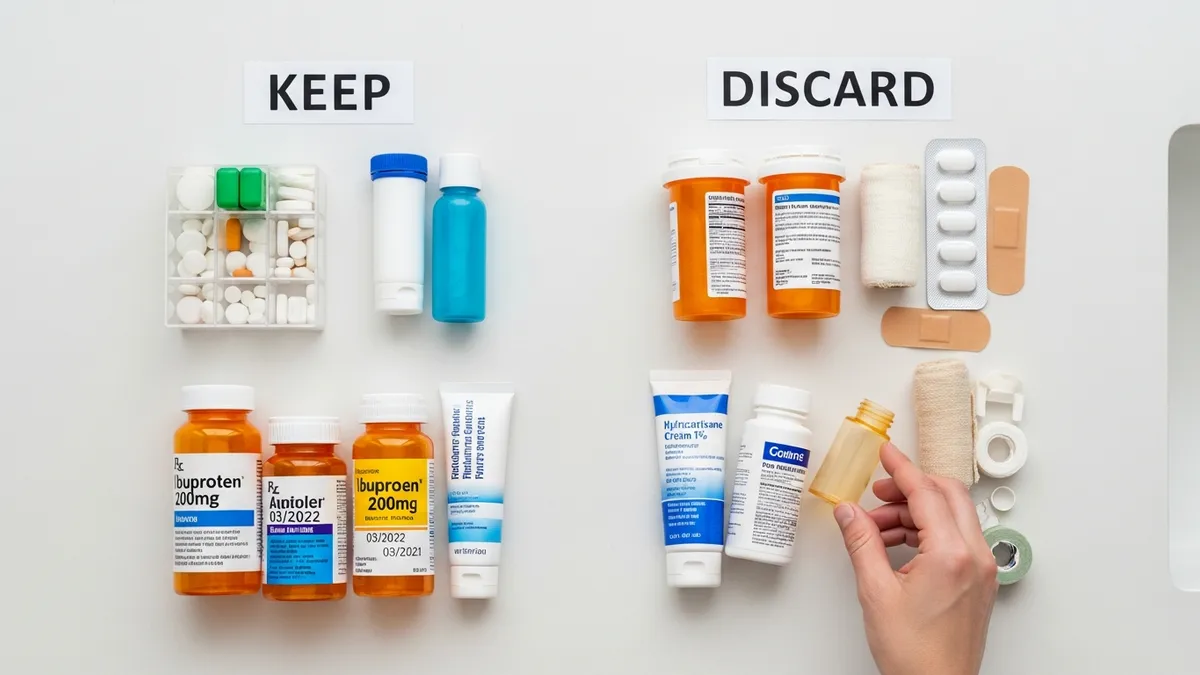
Go through each item and ask yourself three questions:
- Is this expired? Check the date on every medication, supplement, ointment, and eye drop.
- Do I actually use this? If it has been sitting untouched for over a year, it is clutter.
- Does it belong in the medicine cabinet? Some items like heavy perfume bottles or bulky hair tools belong elsewhere.
For expired medications, do not simply toss them in the trash or flush them down the sink unless the label specifically says to. Many communities offer drug take-back programs, and the DEA's National Prescription Drug Take Back Day happens twice a year with drop-off locations across the US.
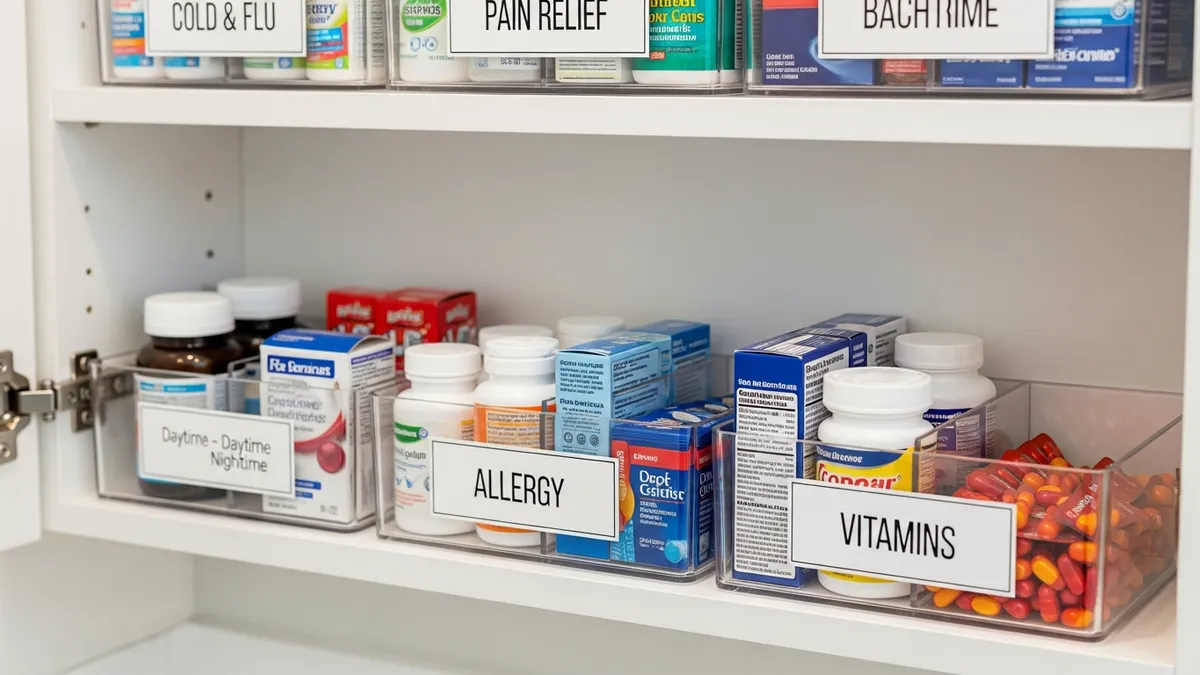
After decluttering, group what remains into broad categories: pain relief, cold and allergy, vitamins and supplements, first aid, skin care, and dental. This grouping will guide every organization decision you make next.
25+ Medicine Cabinet Organization Ideas by Category
Now for the fun part. Here are more than 25 actionable ideas organized by strategy so you can mix, match, and apply what works best for your specific cabinet size, household needs, and budget.
1. Use Clear Acrylic Bins for Every Shelf
Clear acrylic bins are the single most popular medicine cabinet organization tool for good reason. They let you see exactly what is inside, they are easy to pull out entirely, and they keep like items corralled so nothing rolls to the back of the shelf. Assign one bin per category. Label each bin with a simple printed or hand-written label.
2. Install a Lazy Susan on a Deep Shelf
If your medicine cabinet is deeper than average, a small turntable or lazy Susan is a game changer. Instead of knocking things over to reach items in the back, you simply spin the turntable. Mini lazy Susans sized around 6 inches in diameter fit most standard cabinets.
3. Add a Magnetic Strip to the Inside Door
The inside of your medicine cabinet door is prime real estate that most people waste. A small magnetic strip mounted vertically can hold metal nail clippers, tweezers, small scissors, and even bobby pins. This frees up shelf space for bulkier items.
4. Use Magnetic Spice Jars for Small Supplies
Magnetic spice jars with clear lids are a brilliant hack for cotton balls, cotton swabs, hair ties, and small bandages. Mount a magnetic board or use the magnetic strip mentioned above to store them on the door.
5. Sort Medications by Use Frequency
Place items you reach for daily, like your morning vitamins or daily allergy pill, on the most accessible shelf at eye level. Items you use occasionally, like cold medicine or a heating pad spray, go on higher or lower shelves.
6. Use a Tiered Shelf Riser
A small tiered riser inside your medicine cabinet instantly doubles your visible storage. You can see items in the back row without moving anything in the front. These work especially well for small bottles and prescription containers.
7. Assign a Dedicated First Aid Zone
Keep all first aid supplies together in one clearly labeled bin or section. This should include bandages of multiple sizes, antibiotic ointment, gauze pads, medical tape, and antiseptic wipes. When someone gets hurt, you want to find this zone instantly.
8. Store Vitamins in a Single Container
If you take multiple vitamins and supplements, consider decanting them from bulky bottles into a small weekly pill organizer or a compact stackable container. This can cut the space vitamins take up significantly.
9. Keep a Running Shopping List Inside the Door
Tape a small notepad or a dry-erase label inside the door. When you use the last of something, write it down immediately. This simple habit prevents the frustrating experience of reaching for ibuprofen and finding an empty bottle.
10. Use Small Zippered Pouches for Travel-Size Items
Group all your travel-sized items in a small clear zippered pouch. When you need to pack for a trip, grab the whole pouch. It keeps tiny bottles from scattering across your shelves.
11. Label Everything, Even if It Seems Obvious
Labeling is the difference between an organization system that lasts and one that falls apart within a month. Labels help every member of your household put things back in the right spot, not just you. You can use a label maker, printable sticker labels, or even a Sharpie on masking tape.
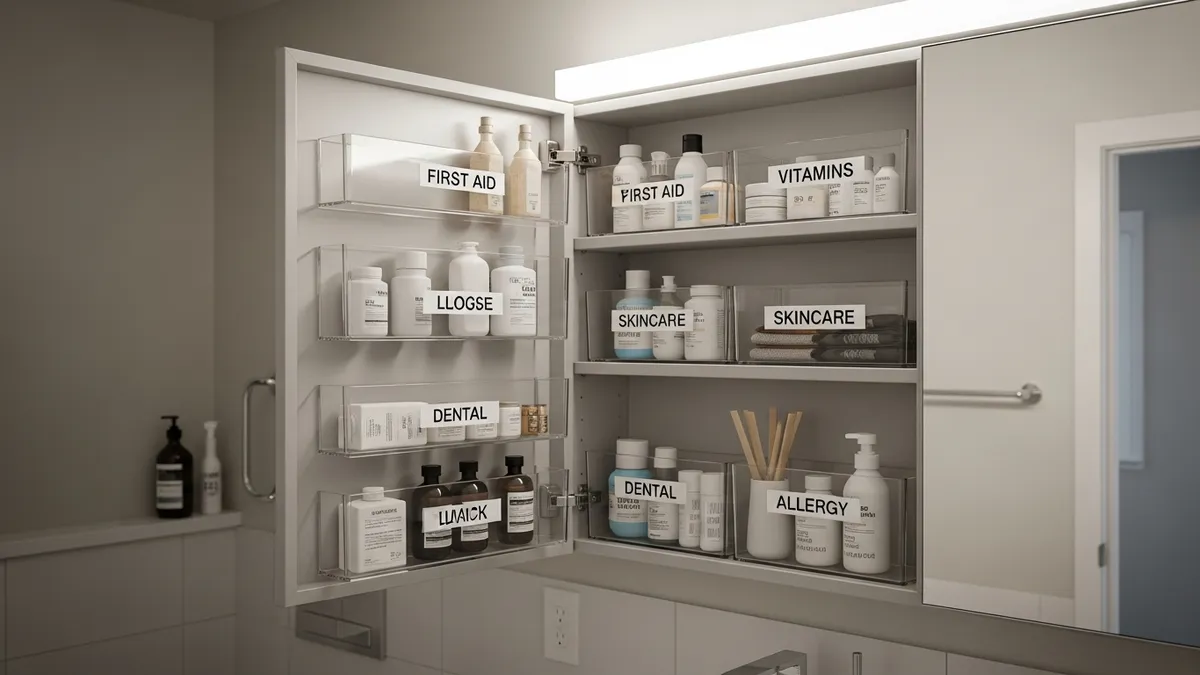
12. Use the Door for Frequently Accessed Items
If your medicine cabinet has a mirrored door, consider adding slim over-door organizers or small adhesive pockets. Store your daily items here: deodorant, a hair brush, or your everyday skincare essentials.
13. Separate Kids' Medications from Adults'
If you have children, keep their medications clearly separated from adult medications, ideally in a labeled bin on a higher shelf. Child-resistant lids are helpful but not foolproof, so physical separation adds another layer of safety.
14. Add Shelf Liner for Grip and Easy Cleaning
Thin non-slip shelf liner prevents bottles from sliding and tipping. It also makes cleaning spills from cough syrup or liquid medicine incredibly easy. Cut it to fit each shelf and replace it every six months or whenever it gets stained.
15. Use a Small Basket for Bulky Items
Some items like an ice pack, a wrist wrap, or an ace bandage are too bulky for standard bins. A small woven or wire basket on the bottom shelf of a larger medicine cabinet works well for these oversized necessities.
16. Rotate Stock Like a Grocery Store
When you restock a medication or supply, place the new items behind the older ones. This ensures you always use the oldest supply first and avoid letting things expire at the back of the shelf.
17. Keep Skin Care Minimal Inside the Cabinet
Medicine cabinets are often exposed to heat and humidity from showers, which can degrade some skin care formulas. According to The Spruce, many dermatologists actually recommend storing serums and vitamin C products outside the bathroom entirely. Keep only your basic daily moisturizer and sunscreen inside the cabinet, and move specialty formulas to a cool, dry bedroom shelf.
18. Create a Seasonal Swap System
Some medications and supplies are highly seasonal. Allergy medication, sunscreen, and insect bite relief creams see heavy use in spring and summer. Cold and flu remedies and heating balms see more use in fall and winter. Rotate the front of your cabinet seasonally so your current-season items are most accessible.
19. Use Rubber Bands or Hair Ties to Prevent Rolling
Round tubes of ointment, lip balm, and small medication bottles love to roll around. A simple rubber band around a group of similar items keeps them corralled without needing an extra bin.
20. Dedicate One Shelf to Dental Care
Toothpaste, floss, mouthwash, whitening strips, and a spare toothbrush all belong together on a dedicated dental shelf or in a labeled dental bin. This keeps your cabinet visually tidy and makes your morning routine faster.
21. Store Prescriptions in a Private Spot
If guests use your bathroom, consider moving prescription medications out of the main medicine cabinet and into a lockable box or a cabinet in your bedroom. This protects your privacy and adds a layer of medication safety in your home.
22. Use Stackable Containers for Supplements
If you take several supplements daily, stackable small containers let you build a compact column rather than a sprawling row of giant bottles. Look for stackable options at any major home goods retailer.
23. Add a Small Hook for Nail Files and Brushes
A single small adhesive command hook inside the cabinet door can hold a nail file, a small makeup brush, or even your floss holder. It gets these narrow items off the shelves entirely.
24. Create an Emergency Quick-Access Kit
Designate one small bin or zippered pouch as your emergency kit and place it at the absolute front of the most accessible shelf. Include a few bandages, an alcohol wipe, a pain reliever, and an antacid. When something goes wrong, you grab this and deal with it fast.
25. Do a Monthly Five-Minute Reset
Organization is not a one-time project. Set a five-minute monthly reminder to quickly scan your medicine cabinet, pull anything expired, and put misplaced items back in their zones. This tiny habit keeps the system running smoothly all year.
26. Consider a Mirror Cabinet Upgrade for More Space
If you are constantly fighting a too-small medicine cabinet, it might be worth upgrading to a recessed mirror medicine cabinet that fits between wall studs. These can offer 4 to 6 inches of depth and significantly more shelf area. Houzz has excellent inspiration galleries showing how a cabinet upgrade can completely transform a bathroom wall.
How to Organize a Medicine Cabinet for Different Household Types
Not every household has the same needs, and your medicine cabinet organization ideas should reflect who actually lives in your home.
For singles and couples: Focus on efficiency. A simple three-bin system covering daily essentials, first aid, and medications is usually plenty. Keep your countertop clear and let the cabinet do all the work.
For families with young children: Safety is the top priority. Store all medications on the highest shelves. Use child-resistant containers even for over-the-counter items. Consider a cabinet with a magnetic push-to-open latch rather than a simple mirror door that a curious toddler can easily swing open.
For households with seniors: Prioritize visibility and ease of access. Use large-print labels. Avoid deep shelves where items can get lost. A tiered riser at eye level makes it much easier to identify medication bottles without bending or straining.
For frequent travelers: Keep a separate ready-to-go travel pouch inside the cabinet stocked with travel-size versions of your essentials. When you need to pack, the pouch is ready. Check out our guide to the best organizer travel bags for more smart packing ideas.
A well-organized medicine cabinet is not just about aesthetics. It is a practical safety system for your entire household.
Choosing the Right Storage Products for Your Medicine Cabinet
The market in 2026 offers a wide range of products specifically designed for small cabinet spaces. Here is what to look for when shopping for medicine cabinet organizers:
Clear acrylic or plastic bins: Look for bins that are roughly 2 to 3 inches wide and 4 to 5 inches tall for standard medicine cabinet shelves. Clear is almost always better than opaque so you can see contents at a glance.
Turntables and lazy Susans: A turntable around 6 inches in diameter fits most standard medicine cabinets. Look for ones with a raised edge to prevent items from falling off.
Shelf risers: Tiered risers work best in cabinets with at least 8 inches of vertical clearance per shelf. Measure before buying.
Label makers: A basic label maker costs between US$15 and US$40 and is one of the best investments for any home organization project, not just your medicine cabinet.
Magnetic organizers: Ensure any magnetic strip or holder is rated for the weight of what you plan to hang. Lightweight items like nail clippers and bobby pins are ideal.
You can explore a curated selection of home organization tools in the Sesoris collections to find products that work perfectly for small bathroom spaces.
Medicine Cabinet Organization Ideas for Small Cabinets
Many American bathrooms, especially in apartments, condos, and older homes, come with a standard surface-mounted medicine cabinet that is roughly 14 inches wide and 20 inches tall. Working with limited space requires smart vertical thinking.
Stack everything you possibly can. Use stackable bins instead of side-by-side bins. A stack of two or three narrow bins takes up the same footprint as one wide bin but gives you triple the separation.
Use every inch of door space. The inside door is often the most overlooked real estate in a small cabinet. Even one slim adhesive pocket or a magnetic strip can meaningfully increase your usable storage.
Reassign items that do not belong. Over-the-counter items that you use rarely, like specialized wound care or seasonal medications, can be stored in a small lidded box under the sink or in a linen closet instead of occupying prime medicine cabinet real estate.
Go vertical with a tiered riser. On a standard 7-inch-tall cabinet shelf, a two-tiered riser can let you store two rows of products while still leaving room to close the door.
For more small bathroom storage inspiration, our article on storage solutions for bathroom covers creative approaches to maximizing every square inch.
Maintaining Your Medicine Cabinet Organization System
Creating a great organization system is only half the battle. The other half is keeping it that way. Here are the habits that make the biggest difference:
- Always put items back in their designated bin immediately after use. The "I'll deal with it later" mindset is how cabinets fall back into chaos.
- Check expiration dates every time you open a new prescription or over-the-counter product. Toss what is expired right then, not later.
- Do a full reset every three months. Pull everything out, wipe the shelves, and reassess. Your needs change seasonally, so your cabinet layout should too.
- Brief every household member on the system. If only you know where things go, only you can maintain it. Five minutes showing your partner or kids where each category lives makes a huge difference.
- Shop with your cabinet in mind. Before buying a new supplement or medication, check what you already have. Avoid building up duplicates that create clutter.
According to Real Simple, one of the top reasons medicine cabinets fall back into disorder is that households never establish clear zones to begin with. The zone-based approach, giving every category a defined home, is the single most effective long-term strategy.
Related Products from Sesoris
If you want to turn this guide into a real setup, start with Foldable Storage Bins and Floating Wall Shelf Set. For broader options, browse the Home & Decor collection so the article journey does not stop at reading only.
Our practical rule: choose one product that solves the main clutter problem first, then add supporting organizers only when the daily workflow is already clear. This keeps the shopping path useful, not pushy.
FAQ: Frequently Asked Questions About Medicine Cabinet Organization Ideas
Q: How often should I clean out my medicine cabinet?
A full cleanout twice a year is the minimum recommended. A quick monthly scan to pull expired items and reset misplaced products keeps the cabinet tidy between full cleanouts. Many people tie their full cleanout to spring cleaning and a fall reset before cold and flu season.
Q: Is it safe to store all medications in a medicine cabinet?
Not always. Standard medicine cabinets in bathrooms are exposed to heat and humidity from showers, which can actually degrade certain medications and supplements faster than ideal. The FDA recommends storing most medications in a cool, dry place. If your bathroom runs humid, consider storing sensitive medications in a bedroom or kitchen cabinet instead, and use your medicine cabinet primarily for topical products and first aid supplies.
Q: What is the best way to dispose of old medications?
The safest approach is to use a local drug take-back program. The DEA runs a National Prescription Drug Take Back Day program with drop-off locations across the US. For everyday disposal between take-back events, many pharmacies offer year-round disposal kiosks. Avoid flushing medications unless the label specifically instructs it.
Q: How do I organize a medicine cabinet that is shared by a family?
Use color-coded bins or label each bin with the relevant person's name or category. Keep adult medications on higher shelves, children's medications clearly labeled and out of easy reach, and keep a shared first aid section centrally located. A simple visual system everyone can follow is more effective than a complex one only one person understands.
Q: What products do I actually need to keep in a medicine cabinet?
A well-stocked medicine cabinet should include pain relievers, an antacid, antihistamine, cold and flu medication, a thermometer, first aid basics like bandages and antibiotic ointment, and your daily vitamins or prescriptions. Everything beyond these core items should be evaluated for whether it is earning its space.
Conclusion
Getting your medicine cabinet organized is one of those projects that pays dividends every single day. The best medicine cabinet organization ideas are the ones you will actually stick to, which means keeping the system simple, visual, and easy to maintain for everyone in your household. Whether you start with a full declutter and a set of clear acrylic bins, or you work up to adding a tiered riser and magnetic door organizers, every small improvement makes a real difference.
In 2026, home organization is all about creating systems that reduce daily friction and support your well-being. Your medicine cabinet might be small, but it is one of the highest-impact spaces in your home to get right. Start with one shelf, get it perfect, and build from there.
Ready to upgrade your home organization game beyond just the medicine cabinet? Explore the full range of home organization solutions at Sesoris and browse our best sellers to find the tools that help you live more organized, every single day.
Weekly Home Tips
Get home organization ideas, product picks, and exclusive deals delivered weekly.
No spam. Unsubscribe anytime.

Explore More Articles
- Home Decluttering Guide for Beginners
- Tips to Keep Your Kid's Room Tidy
- Vacuum Storage Bag: Compress Clothes and Blankets by Up to 75%
- Laundry Room Organization IKEA: 25+ Smart Ideas to Transform Your Space in 2026
- Living Sustainable Life: 30+ Eco-Friendly Home Organization Ideas to Reduce Waste in 2026
- Refrigerator Organizer: How to Arrange Your Fridge Neatly and Save Electricity
- 30 Brilliant Blanket Storage Ideas for Living Room: Transform Your Cozy Space in 2026
- Simple Ramadan Decoration Ideas to Create a Festive Home Atmosphere