
Mini Storage Boxes: 15 Smart Ways to Organize Small Items
How to use mini storage boxes for jewelry, beads, office supplies, screws, batteries and more, with a sizing table, labeling tips and safety advice for small items at home.
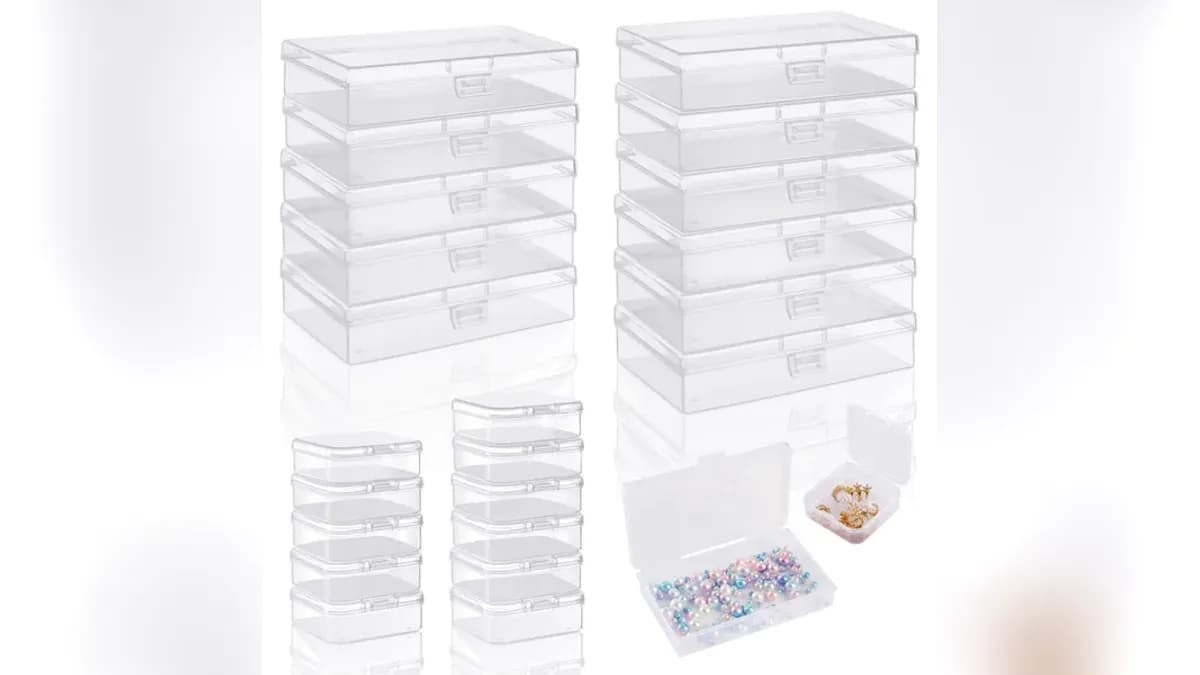
Mini storage boxes are small lidded containers, usually a few inches long, that give tiny items like beads, earrings, screws, batteries, hair ties and sticky notes a fixed home. They work best when you use one box per type of item, pick clear boxes so you can see the contents, put several boxes inside a larger drawer or bin, and label each one so the system survives a busy week.
Small items cause most of the clutter in a home because they have nowhere to go. They end up loose in a drawer, at the bottom of a bag or in a cup on the counter. A set of mini storage boxes fixes that by turning one messy drawer into a grid of small, sorted containers. This guide explains which kinds of mini boxes to choose, fifteen ways to use them around the house, how to size and label them, and the safety points for storing small items in a home with children.
Types of Mini Storage Boxes Compared
Mini storage boxes come in a few common styles. The right one depends on what you store and where the box will live.
| Type | Typical use | Strengths | Limitations |
|---|---|---|---|
| Clear hinged snap boxes | Beads, jewelry, office clips, small hardware | Contents visible, lid attached so it cannot get lost | Thin walls can crack if dropped |
| Stackable open-front bins | Screws, craft supplies, pantry packets | Grab items without lifting a lid, stack into a wall | Not sealed, dust can get in |
| Compartment cases with dividers | Fishing tackle, sewing notions, nail art | Many items in one case | Small items can slip between compartments if dividers are loose |
| Lidded fabric or cardboard mini boxes | Shelves and visible decor | Look neat on open shelves | Contents hidden, need labels |
| Tins and metal boxes | Matches, mints, small keepsakes | Durable, look good on display | Contents hidden, may dent |
| Drawer organizer cubes | Inside desk and dresser drawers | Fit drawer grids, no lid needed | Only work inside a drawer |
For most homes, a mix of clear hinged boxes for loose tiny items and open-front bins for things you grab often covers almost every need. If you need larger containers too, our storage boxes for home guide covers medium and large sizes.
Why Clear Boxes Work Best for Small Items
When items are tiny, seeing them matters more than with anything else in the house. A clear box tells you at a glance whether it holds earring backs or spare buttons, and whether the supply is running low. Opaque boxes force you to open each one, so they tend to become another place where things get lost.
The clear plastic storage boxes in the Sesoris shop come as a set of 24 in two sizes: 12 rectangular boxes at 5.11 x 3.14 x 1.18 inches and 12 square boxes at 2.16 x 2.16 x 0.78 inches. The lids are attached with a hinge, so they do not go missing, and the two sizes stack together inside a drawer.
15 Ways to Use Mini Storage Boxes
1. Tame the Junk Drawer
The junk drawer is the classic home for mini boxes. Use one box each for rubber bands, twist ties, spare keys, batteries, birthday candles and takeout chopsticks. Arrange the boxes in rows so they form a grid, and the drawer stays sorted every time you open it. Our junk drawer organization tutorial walks through the full sorting process.
2. Sort Jewelry by Type
Earrings, rings and small charms tangle and scratch when they share a dish. Give each type its own small box: studs in one, hoops in another and rings in a third. Small square boxes work well for single pairs of earrings you want to protect. For more layouts, see our jewelry organization ideas.
3. Keep Craft Beads and Findings Visible
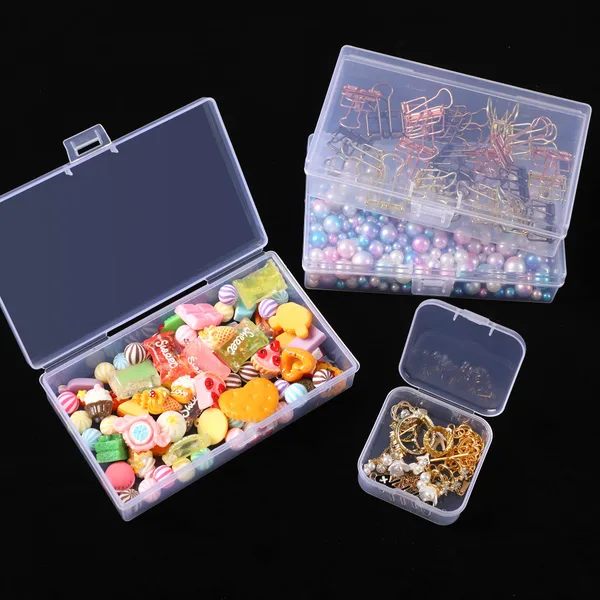
Beading and jewelry making involve many tiny pieces in many colors. Store each color or bead type in its own clear box and line the boxes up on a shelf or in a drawer so you can choose colors without opening anything.
4. Organize Sewing Notions
Buttons, snaps, safety pins, needles and bobbins all fit in mini boxes. Sort buttons by color or size, and keep needles in a box with a secure lid so they do not end up loose in a basket. Our craft room organization guide covers sewing stations in more detail.
5. Store Office Supplies in Desk Drawers
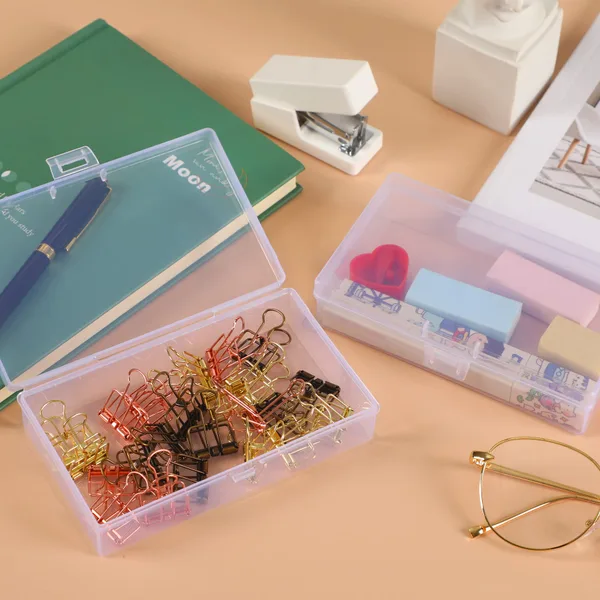
Paper clips, binder clips, pushpins, staples and sticky notes fit neatly in small boxes inside a desk drawer. The rectangular size suits clips and a pad of small sticky notes side by side.
For the rest of the desk, see our office supplies organization ideas.
6. Sort Screws, Nails and Small Hardware
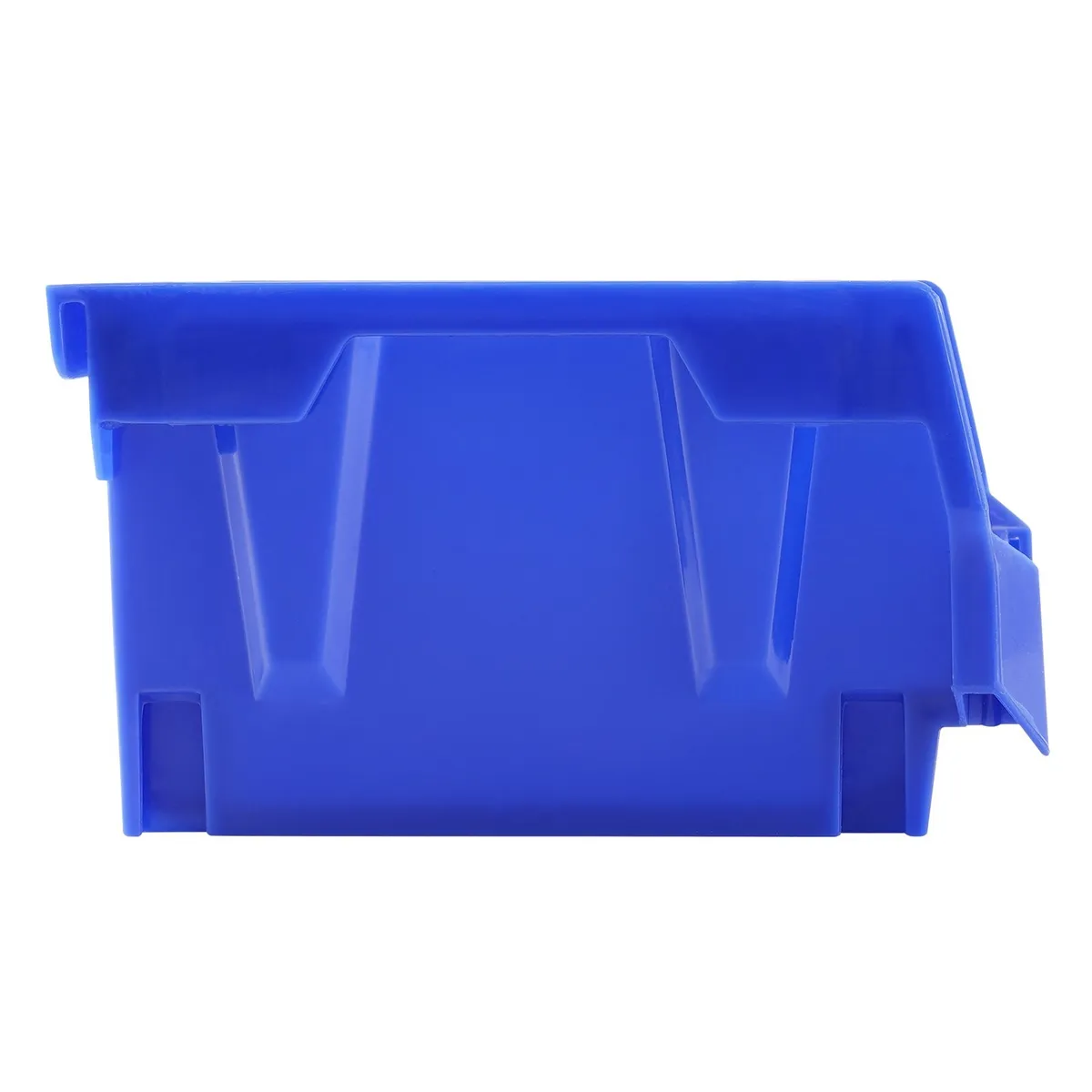
Mixed jars of screws waste time on every project. Sort hardware by type and size into small boxes and label each lid. Open-front stackable bins work well here because you can reach in with one hand while holding a tool in the other.
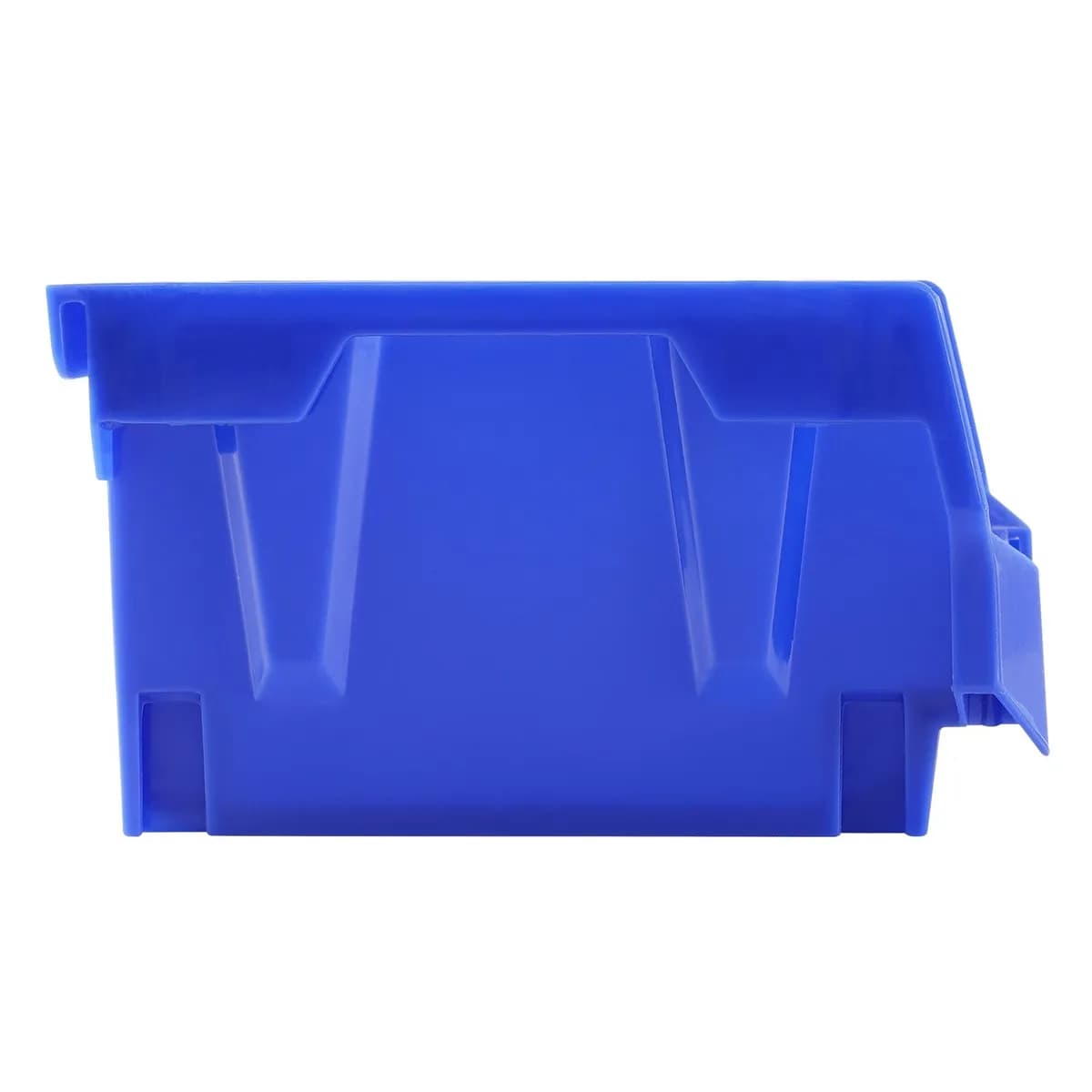
The stackable storage bins come in a set of 24 with an outer size of 5.39 x 4.13 x 3.07 inches each, plus supports and 48 label papers, so you can build a small parts wall on a garage or workshop shelf.
7. Corral Hair Accessories
Hair ties, bobby pins, clips and small claw clips spread across bathroom counters. A few mini boxes in a bathroom drawer give each type a home and keep the counter clear.
8. Organize a Makeup Drawer
Use small boxes for lip products, eyeliners, sample sizes and small compacts. Grouping by product type means you open one box instead of digging through the whole drawer.
9. Store Spare Batteries Safely
Batteries of different sizes are easier to find when sorted into labeled boxes. If you have young children, button and coin batteries need extra care. The National Capital Poison Center's battery safety tips say to store spare batteries, and batteries to be recycled, out of sight and reach of young children, and never to leave batteries sitting out. Keep the battery box in a high cabinet or a drawer children cannot open, not on a counter.
10. Keep Chargers and Small Tech Accessories
Earbud tips, USB adapters, memory cards and SIM tools are small and easy to lose. A rectangular box holds a few adapters, and a square box suits memory cards.
11. Build a Travel Kit
Small boxes fit inside a toiletry bag for jewelry, pills in their original packaging, or a mini sewing kit. A hinged lid keeps everything contained while the bag moves around in a suitcase.
12. Organize Kids' Small Toys and Game Pieces
Board game pieces, puzzle extras and small toy parts stay together in labeled boxes. For larger collections, our Lego storage ideas cover sorting systems for building sets.
13. Sort Seeds and Garden Supplies
Seed packets, plant labels and twist ties for the garden fit into small boxes stored in a cool, dry cabinet. Label each box with the plant type.
14. Store Fishing Tackle and Hobby Parts
Hooks, weights, lures and small hobby parts benefit from compartment cases or individual mini boxes. Keep sharp items in boxes with secure lids.
15. Keep Small Keepsakes
Baby teeth, small coins, ticket stubs and tiny mementos stay safe in a labeled box inside a memory bin. Clear boxes let you see them without handling them.
How to Choose the Right Size
Sizing is where most small-box systems go wrong. Boxes that are too big let items pile into a jumble again, and boxes that are too small overflow. Use these steps before you buy:
- Measure the drawer or shelf where the boxes will live, including the height. 2. Count the categories you want to store, not the items. Each category needs its own box. 3. Match the box to the largest item in each category, with a little room to spare. 4. Mix two sizes so larger and smaller categories share one drawer grid. 5. Leave one or two empty boxes for new categories that show up later.
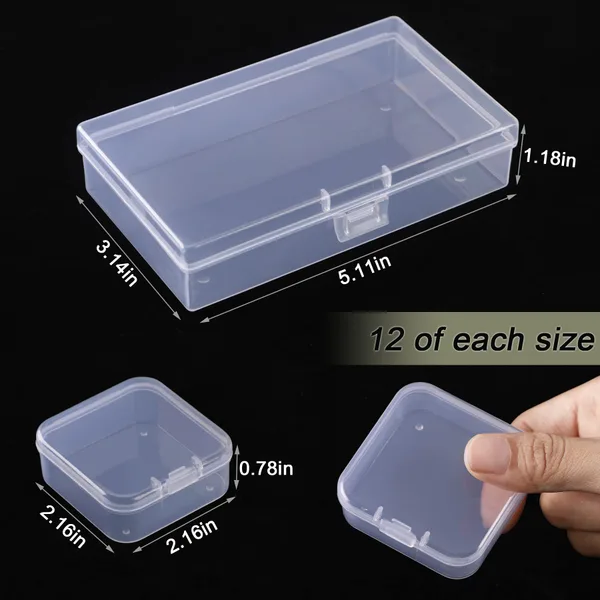
A two-size set like the one above shows why mixing sizes helps: the larger rectangular boxes suit clips, hair ties and adapters, while the small squares suit a single pair of earrings or a few spare buttons.
| Item category | Suggested box | Where it lives |
|---|---|---|
| Earrings and rings | Small square hinged box | Dresser or vanity drawer |
| Beads and craft findings | Small and rectangular hinged boxes | Craft drawer or shelf |
| Paper clips, binder clips, pins | Rectangular hinged box | Desk drawer |
| Screws, nails, wall anchors | Open-front stackable bin | Garage or tool shelf |
| Hair ties and bobby pins | Rectangular hinged box | Bathroom drawer |
| Spare batteries | Labeled lidded box | High cabinet out of children's reach |
| Memory cards and adapters | Small square hinged box | Tech drawer |
Labeling Mini Storage Boxes
Even clear boxes benefit from labels, especially when the contents look similar, like different screw sizes or bead colors. Put the label on the side that faces you when the box sits in a drawer or on a shelf, not just on the lid. Use short, specific labels such as "AA batteries" rather than "batteries".
Our guides to storage bin labels and free printable storage bin labels include label formats that fit small containers.
A Simple Routine to Keep the System Working
Mini boxes only stay useful if items go back where they belong. A short routine keeps the system from drifting.
- Put items back at the end of the task, not at the end of the week. Small things scatter quickly. 2. Do a five-minute drawer check once a week. Return strays to their boxes and close any lids that were left open. 3. Refill or replace supplies when a box looks nearly empty, since clear boxes make that easy to see. 4. Review categories every few months. Merge boxes that hold only one or two items and split any box that has started to overflow. 5. Clear out what you do not use. Dried glue dots, broken earrings and mystery screws take up a box that could hold something useful.
Common Mistakes With Mini Storage Boxes
- Mixing categories in one box. Once two types share a box, the system breaks down. - Buying boxes before sorting. Sort first, then count categories and buy the right number of boxes. - Stacking boxes too high. Tall stacks of small boxes topple and make the bottom boxes hard to reach. - Skipping labels. Similar-looking items get mixed without them. - Storing hazardous small items in reach of children. Batteries, magnets and small sharp items belong up high or behind a closed drawer.
Frequently Asked Questions
What are mini storage boxes used for?
Mini storage boxes hold small items that get lost in larger containers, such as jewelry, beads, office clips, screws, hair ties, batteries and small tech accessories. They are most useful inside drawers and on shelves, where several boxes form a sorted grid.
Are clear or opaque mini boxes better?
Clear boxes are usually better for small items because you can see what is inside and how much is left without opening them. Opaque boxes can look tidier on an open shelf but need clear labels.
How do I organize small items in a drawer?
Sort the items into categories, choose one mini box per category, arrange the boxes in a grid that fills the drawer and label each box. Put the most-used categories at the front of the drawer.
What size mini storage box should I buy?
Match the box to the largest item in each category. As a reference, the Sesoris clear box set includes rectangular boxes of 5.11 x 3.14 x 1.18 inches and square boxes of 2.16 x 2.16 x 0.78 inches, which together cover most small items.
How should I store button batteries at home?
Keep spare and used batteries out of sight and reach of young children, and never leave them sitting out, as advised by the National Capital Poison Center. Use a labeled box in a high cabinet or a drawer children cannot open.
Can mini storage boxes be stacked?
Many can. Hinged clear boxes stack flat inside drawers, and open-front stackable bins are designed to form a wall of storage on a shelf. Keep stacks low and stable so the bottom boxes stay easy to reach.
How do I keep tiny items from mixing inside a box?
Use one box per item type and choose a box that closes securely. For compartment cases, check that the dividers sit tight against the lid so items cannot slip between sections.
Where should I keep mini storage boxes?
Keep them where the items are used: jewelry boxes in a dresser or vanity drawer, office boxes in a desk drawer, hardware boxes in the garage and hair accessories in the bathroom. Storing them at the point of use makes it easy to put things back.
Final Thoughts
Mini storage boxes are one of the simplest ways to stop small items from turning into clutter. Sort first, give each category one clear box, label it and keep the boxes where the items are used. Start with the drawer that annoys you most, then expand the system room by room. For more ideas on organizing containers, see our guide to storage bins with lids.
Liked this guide?
Get new organizing guides and the occasional new product by email. No spam, unsubscribe anytime.
Related articles

Explore more articles
- Garage Storage Solutions Near Me: Complete Review & Buying Guide for 2026
- 30+ Best Closet Shelf Organization Ideas to Transform Your Storage Space in 2026
- 30+ Best Hallway Closet Organization Ideas to Transform Your Storage Space in 2026
- 30+ Stunning Decorating Wall Shelf Ideas to Transform Your Home in 2026
- Garage Wall Shelf Ideas for Better Storage
- Minimalist Shoe Rack for Your Home's Foyer
- Wardrobe Organizer Guide: How to Organize Your Closet
- 25+ Best Entryway Organization Ideas to Transform Your Home's First Impression in 2026