
Newborn Closet Organization: The Complete 2026 Guide to a Perfect Baby Storage Space
Master newborn closet organization in 2026 with practical tips, smart storage ideas, and product picks. Create a calm, functional baby space today!
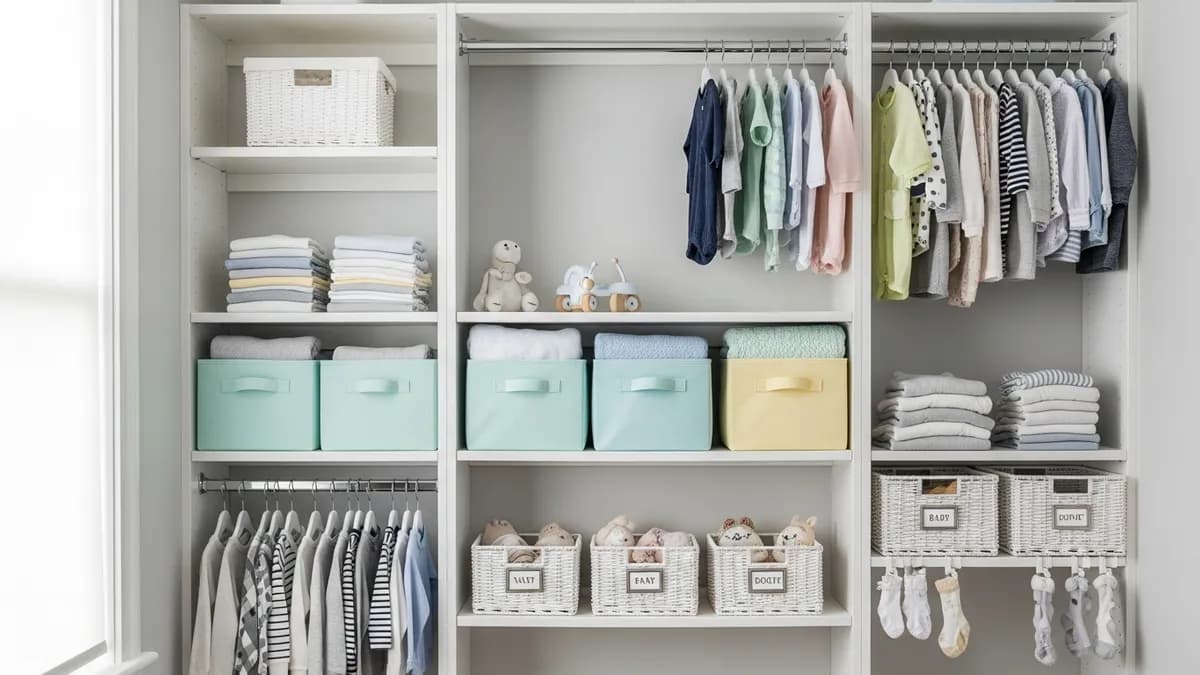
If you're getting ready to welcome a new baby, one of the most satisfying things you can do to prepare is tackle your newborn closet organization before your little one arrives. Trust me, when you're running on two hours of sleep and desperately hunting for a clean onesie at 3 a.m., having a well-organized nursery closet is an absolute lifesaver. In 2026, there are more smart, affordable storage solutions than ever to help new parents set up a functional, beautiful baby closet that actually works in real life. Whether you're working with a spacious walk-in or a small reach-in closet, this guide covers everything you need to know to get it done right.

Why Newborn Closet Organization Matters More Than You Think
It might be tempting to just toss all those adorable gifted outfits into the closet and figure out the rest later. But a little planning now will save you enormous amounts of time and stress once baby is home. Newborns go through multiple outfit changes per day, and having everything within easy reach means fewer frustrating moments during those already-overwhelming early weeks.
A properly organized baby closet also helps you keep track of what you actually have, so you avoid buying duplicates of sizes your baby will outgrow in weeks. The edit-first approach in Good Housekeeping's closet organization guide uses clear dividers, baskets, and dedicated homes for accessories. Applying the same system to baby clothes by sorting them by size makes laundry days faster, diaper changes smoother, and the whole nursery routine more manageable.
Beyond practicality, a calm and organized nursery environment genuinely supports your wellbeing as a new parent. Clutter creates mental noise. A tidy, thoughtful closet does the opposite.
How to Start Your Newborn Closet Organization Project
Before you buy a single bin or shelf divider, start with a clear plan. Walk up to your nursery closet with fresh eyes and think about what it needs to do for you every single day. Here's the step-by-step approach I recommend:
Step 1: Empty the Closet Completely
Pull everything out. This is your fresh start. Wipe down the shelves and rod, check that everything is clean and dry, and take a moment to assess the space you actually have. Measure the width, depth, and height of your closet so you can shop for storage solutions that fit properly.
Step 2: Sort Everything Before It Goes Back In
Group all newborn items by category:
- Clothing sorted by size (Preemie, Newborn, 0-3 months, 3-6 months, and so on)
- Diapering supplies (diapers, wipes, diaper cream, changing pad covers)
- Swaddles and sleep sacks
- Burp cloths and bibs
- Bath essentials (if stored in the nursery)
- Accessories (hats, socks, mittens)
- Items to grow into (clothing in larger sizes that baby won't need for months)
Once everything is categorized, you can make smart decisions about placement. Items you'll reach for multiple times a day go at eye level. Things you won't need for weeks or months go up high or in labeled boxes at the bottom.
Step 3: Set Up a Double Hanging Rod
This is one of the single best upgrades you can make for a baby closet. Newborn and infant clothes are tiny, which means a standard single closet rod wastes a huge amount of vertical space. Adding a second hanging rod beneath the first essentially doubles your hanging storage at very low cost. You can find closet rod doublers at most home stores for under US$20.
Hang newborn and 0-3 month clothes on one section, 3-6 month clothes on another, and use closet dividers between the sections. This way, when your baby grows, you just slide the divider over and transition to the next size without any re-sorting.
The Best Storage Products for Newborn Closet Organization
The right products make all the difference. Here's a breakdown of what actually works in a baby closet, based on function and common sense:
Shelf Dividers
Shelf dividers are small but mighty. They keep neat stacks of onesies and sleepers from toppling over when you grab one from the middle of the pile. Look for acrylic or coated wire dividers that attach securely to your shelves. They're affordable and make a dramatic visual difference.
Labeled Fabric Bins
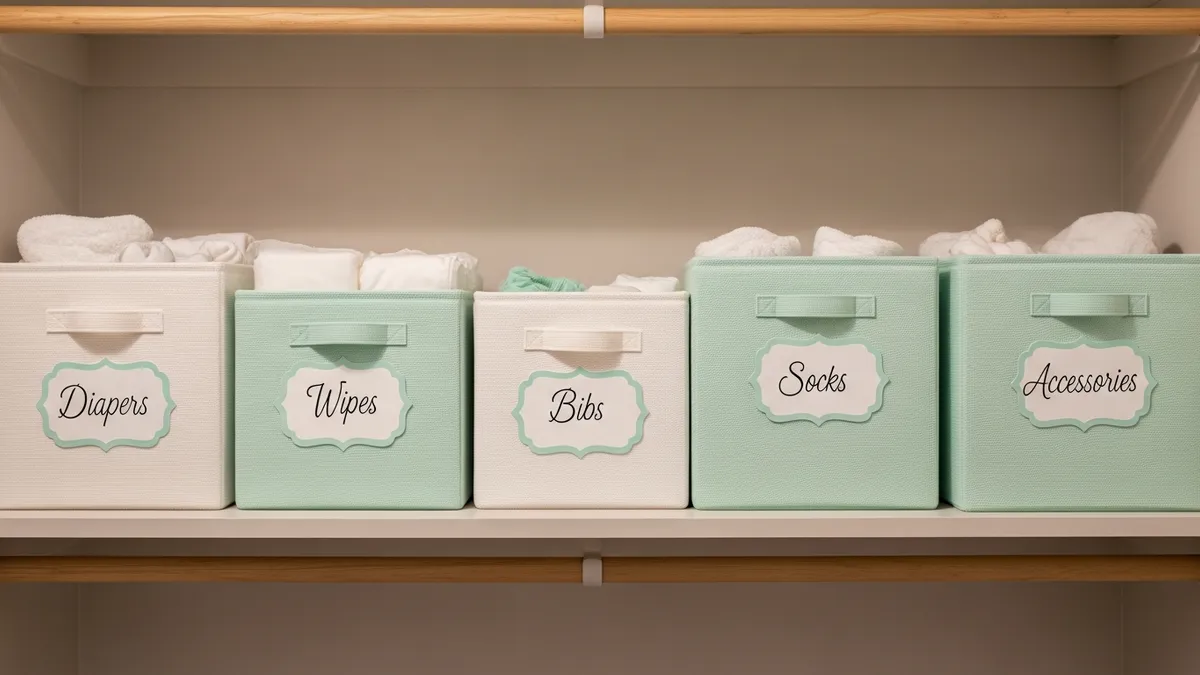
Fabric storage bins are ideal for a nursery because they're soft-sided, lightweight, and easy to move. Use them on shelves to corral swaddles, burp cloths, extra diapers, and accessories. Label each bin clearly, either with a label maker, chalkboard tags, or printable labels. When you're bleary-eyed at midnight, you do not want to be guessing which bin holds the extra wipes.
You can find a wide range of storage bins and organization tools at Sesoris that work beautifully in a nursery setting.
Clear Stackable Bins for Accessories
Tiny newborn items like socks, mittens, and hair accessories are notorious for getting lost. Clear stackable bins or small drawer organizers keep these items visible and contained. Stack them on a shelf or place them inside a dresser drawer.
Over-the-Door Organizer
Don't overlook the back of the closet door. An over-the-door organizer with pockets is perfect for storing things you need quick access to: baby lotion, nail clippers, a spare pacifier, or even a small first aid kit. It adds storage without taking up any floor or shelf space.
Hanging Closet Organizer
A fabric hanging organizer with multiple shelves drops down from the closet rod and provides instant extra shelf space. These are great for folded items like onesies, pajamas, and sleep sacks. They typically hang about 42 to 48 inches long and come in neutral colors that blend with any nursery decor.
Baskets for the Floor
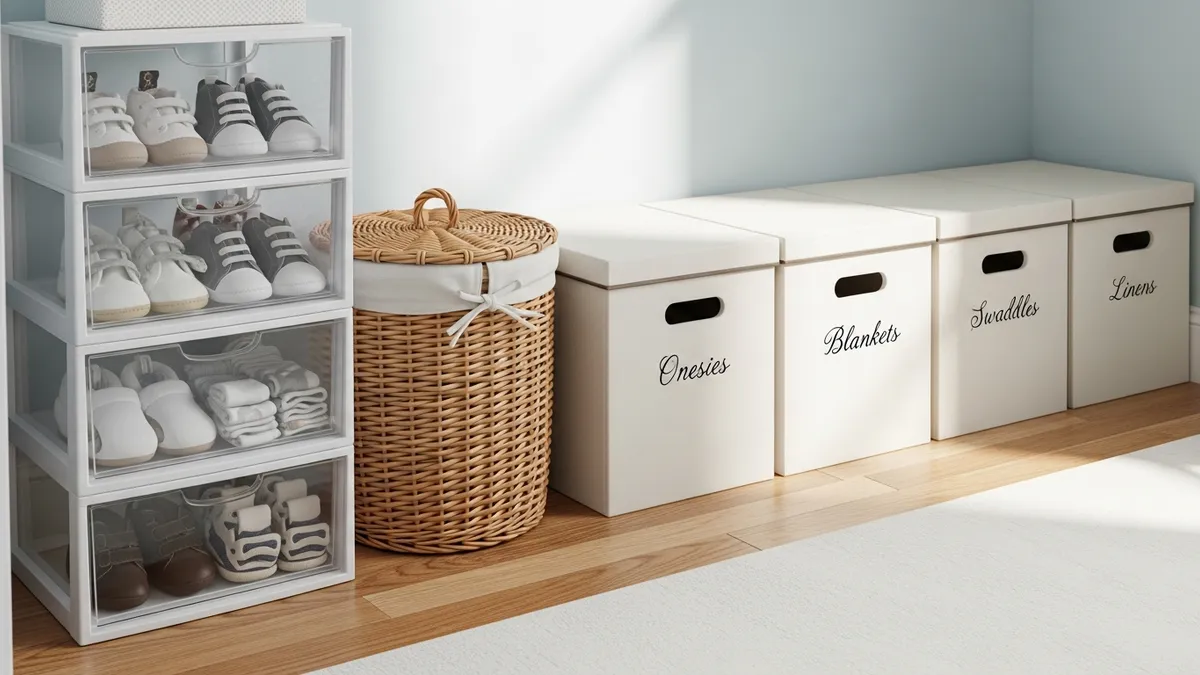
Large wicker or wire baskets on the closet floor are perfect for bulkier items: an extra baby blanket, a spare swaddle set, or a backup pack of diapers. They're easy to reach into, they look tidy, and they're inexpensive. Check out the best sellers at Sesoris for storage baskets that work in any nursery.
Organizing Newborn Clothes Like a Pro
Clothing is probably the biggest organizational challenge in any baby closet, largely because babies receive so many gifted outfits and grow out of sizes so quickly. Here's how to handle it smartly:
Sort by Size First, Always
Before anything goes in the closet, sort by size. Keep only Newborn and 0-3 month items immediately accessible. Everything else (3-6 months, 6-9 months, 9-12 months) should be stored separately, either in labeled bins on an upper shelf or in a flat storage box under the crib.
This is critical because newborns grow fast. Keeping only current sizes within reach follows the edit-first logic in Good Housekeeping's closet organization guide, which recommends pared-back wardrobes, dividers, and baskets that keep each category visible. Compare that approach with our nursery closet organization guide and nursery drawer organization guide for adjacent storage zones. Your closet stays manageable even as your baby grows.
Use Closet Dividers to Mark Size Transitions
Circular closet dividers slide right onto the hanging rod and mark where one size ends and another begins. You can find them in sets that label Newborn, 0-3M, 3-6M, 6-9M, and so on. They're inexpensive, they're practical, and they make transitions between sizes effortless.
Hang What You Can
As small as newborn clothes are, hang as many items as you reasonably can on the double rod. Hanging keeps clothes visible and prevents the dreaded buried-under-a-pile problem. Fold only what truly needs folding: onesies, pajamas with feet, and tiny pants.
Create a Laundry-to-Closet Routine
Decide right now where clean laundry lands when it comes back from the wash. If there's no system, clean clothes pile up on a chair or dresser and the closet never stays organized. Assign every item a home and commit to returning it there after laundry.
Organizing Diapering Supplies in the Nursery Closet
Diapering supplies deserve their own dedicated zone in the nursery closet, especially if your changing table or dresser top is nearby. Here's how to set it up:
- Designate a full shelf for diapering essentials at a height you can easily reach with one arm while holding the baby with the other.
- Use a caddy or small bin to group the items you reach for constantly: diapers, wipes, diaper cream, and a spare change of clothes for blowouts.
- Stack diapers flat in a fabric bin or basket rather than leaving them in the bulky original packaging. This saves space and looks much tidier.
- Keep a small backup stash on an upper shelf so you always know when you're running low before you completely run out.
- Label everything. Even if it seems obvious now, you may have a partner, grandparent, or babysitter using the nursery closet, and clear labels help everyone find things quickly.
A well-stocked, clearly labeled diaper station in the nursery closet can shave precious minutes off every diaper change during those exhausting early weeks.
Smart Zoning: How to Lay Out Your Newborn Closet
Think of your baby closet in zones based on frequency of use. This is the same principle professional organizers use for bedroom closet organization and small closet organization, and it works just as well for a nursery.
Zone 1: Daily Use (Eye Level and Easily Reachable)
- Current-size hanging clothes on the double rod
- Diapering supplies caddy
- Swaddles and sleep sacks in a labeled bin
- Burp cloths in a small basket
Zone 2: Frequent Use (One Shelf Up or Down from Eye Level)
- Extra diapers and wipes backup
- Onesies and pajamas folded in hanging organizer
- Bath supplies (if stored in nursery)
- Extra changing pad covers
Zone 3: Seasonal or Future Use (Upper Shelves or Floor)
- Clothing in sizes 3-6 months and beyond
- Keepsake items (hospital outfit, first shoes)
- Seasonal items (snowsuit, warm layers for winter)
- Spare bedding sets
This zoning approach means that 90% of what you need during those newborn weeks is within arm's reach, while the closet still stays tidy and organized overall. For more zoning inspiration, explore the collections at Sesoris for nursery-friendly storage options.
Newborn Closet Organization Tips for Small Closets
Not every nursery comes with a generous closet. If you're working with a small reach-in or even just a wardrobe, these tips will help you maximize every inch:
- Go vertical. Add a second shelf above the existing one if the ceiling height allows. Most reach-in closets have wasted space above the top shelf.
- Use the door. An over-the-door organizer can hold a surprising amount of small items without taking up any interior space.
- Choose slim velvet hangers. Baby clothes are small, but bulky plastic hangers waste a lot of rod space. Slim velvet hangers let you fit significantly more items on the same rod.
- Repurpose a bookshelf. If the closet simply doesn't have enough shelving, a small bookshelf placed inside or next to the closet can serve as extra nursery storage.
- Edit ruthlessly. A small closet forces you to keep only what is actually needed in the current size. Store everything else elsewhere.
IKEA's clothes organizer collection illustrates the range of hanging storage, boxes, and compartment dividers that can make a small wardrobe easier to use. That approach translates well to a nursery where the clothes are small but the accessories are plentiful. Labels and clear storage also make it easier to find items and return them to the right place.
For more small-space closet ideas, check out the Sesoris blog for a wide range of organization guides.
Maintaining Your Newborn Closet Organization Over Time
Getting the closet organized before baby arrives is one thing. Keeping it that way once your newborn is home is a different challenge entirely. Here are a few habits that make it sustainable:
- Do a size sweep every month. Newborns grow fast. Set a recurring reminder to pull out anything that no longer fits and move the next size into the accessible zone.
- Return items to their home immediately after laundry. This single habit prevents the pile-up that destroys most nursery organization systems.
- Reassess the system at three months. Your baby's needs change rapidly. What worked for the first four weeks may need adjusting once they're more active and changing routines shift.
- Declutter gifted items you genuinely won't use. Babies receive enormous amounts of clothing and gear as gifts, and not all of it fits your lifestyle or your baby's size window. Donate or pass along items that won't get used.
- Keep the floor clear. A clear closet floor makes the whole space feel larger and easier to navigate during those bleary midnight wake-up calls.
Related Products from Sesoris
If you want to turn this guide into a real setup, start with Stackable Storage Bins, 24 Pack and Pull-Out Cabinet Organizer, 17 in. Wide. For broader options, browse the Home & Decor collection so the article journey does not stop at reading only.
Our practical rule: choose one product that solves the main clutter problem first, then add supporting organizers only when the daily workflow is already clear. This keeps the shopping path useful, not pushy.
FAQ: Frequently Asked Questions About Newborn Closet Organization
When should I start organizing the newborn closet?
Ideally, start your newborn closet organization project around 32 to 35 weeks of pregnancy, when the nursery furniture is in place and you have enough energy to tackle it. This gives you time to wash and sort all baby clothes and identify any missing essentials before your due date.
How many outfits should I keep accessible in a newborn size?
For most newborns, having 8 to 12 outfits in the current size accessible at any one time is plenty. Babies go through 2 to 4 outfit changes per day, and you'll be doing laundry frequently regardless. Keeping fewer items in rotation actually makes the closet easier to manage.
Do I really need closet dividers for baby clothes?
They're not strictly necessary, but closet dividers are one of the most useful and inexpensive tools in a baby closet. They keep size sections clearly separated, make transitions between sizes effortless, and help caregivers who aren't as familiar with the system find the right size quickly.
What's the best way to store baby clothes in larger sizes that aren't needed yet?
Use airtight flat storage bins or large zippered bags to store future-size clothing. Label each container clearly with the size and season (for example, "6-9 Months, Summer"). Store them on the upper shelf of the nursery closet, under the crib, or in another closet. This keeps your active closet decluttered while protecting clothes you'll need soon.
How do I keep a small nursery closet from getting overwhelming?
The key is ruthless editing and a clear zoning system. Keep only current-size items and daily essentials at eye level. Store everything else out of the way. Revisit the system monthly as your baby grows, and don't be afraid to relocate items that have no business being in the nursery closet.
Are clear bins or fabric bins better for a baby closet?
Both have their place. Clear bins are ideal for small accessories and items where you need to see exactly what's inside at a glance. Fabric bins are softer, quieter (no snapping lids), and often more aesthetically pleasing on open shelves. I like using a combination of both in a nursery closet.
Conclusion
Getting your newborn closet organization right before baby arrives is one of the best investments of time and energy you can make as an expecting parent. A thoughtful system with double hanging rods, labeled bins, size-sorted clothes, and clear zoning will save you time, reduce stress, and help you navigate the newborn weeks with a little more calm and confidence. Remember to start with a clear plan, choose the right storage products for your space, and build in simple habits to keep the system going as your baby grows.
Ready to build your perfect baby closet? Explore the full range of home organization products at Sesoris and browse our new arrivals for the latest storage solutions designed to help your family live more organized. At Sesoris, we believe that a well-organized home makes every stage of life a little easier, and that definitely includes the beautiful, wild, wonderful newborn stage.
Liked this guide?
Get new organizing guides and the occasional new product by email. No spam, unsubscribe anytime.
Related articles
Explore more articles
- Corner Closet System: Complete 2026 Guide to Maximizing Every Inch of Your Wardrobe
- 30+ Best Pantry Storage Ideas to Transform Your Kitchen Organization in 2026
- Playroom Organization: 30+ Smart Ideas to Create a Fun, Tidy Kids' Space in 2026
- 30+ Best Shoe Rack Ideas to Organize Your Home in 2026
- 25+ Best Corner Cabinet Kitchen Ideas to Maximize Every Inch in 2026
- 30+ Best Butler Pantry Ideas to Transform Your Kitchen Storage in 2026
- 30+ Best Small Walk In Closet Ideas to Maximize Every Inch of Your Space in 2026
- 25+ Best Small Space Organization Hacks to Maximize Every Inch of Your Home in 2026