
Shoe Storage Ideas for Bedroom Spaces Without the Clutter
Shoe storage ideas for the bedroom: where daily, seasonal and special pairs should live, with under-bed boxes, foot-of-bed benches, over-the-door racks and narrow towers for small rooms.
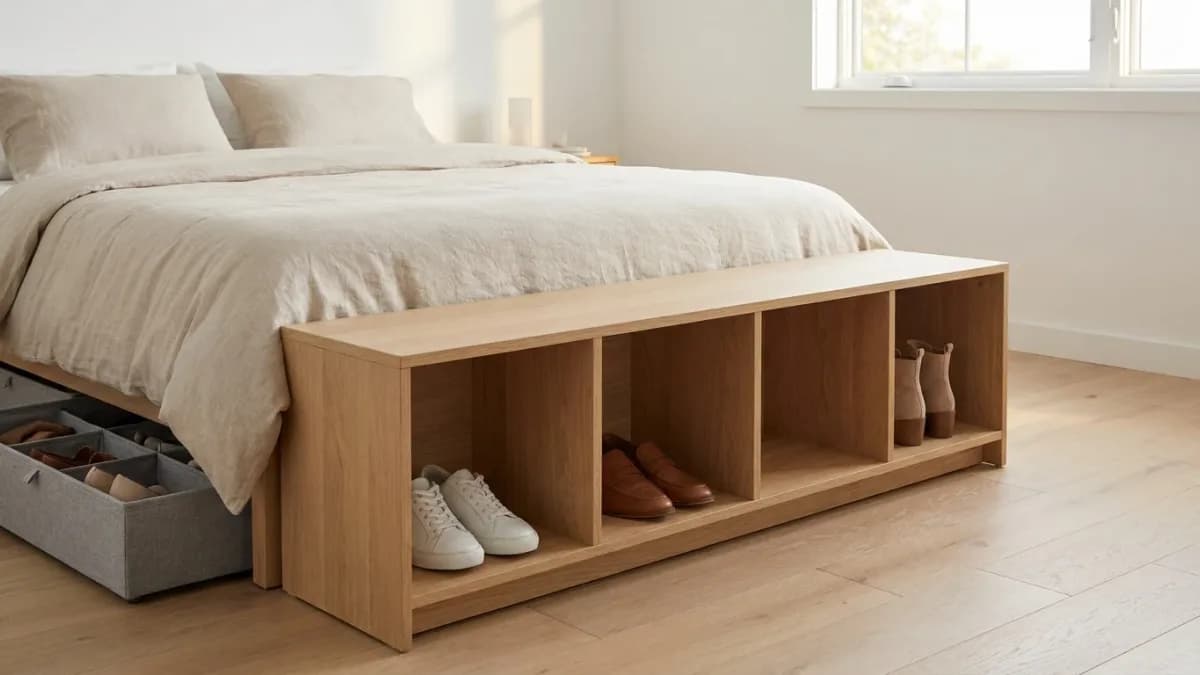
The best shoe storage ideas for a bedroom match each pair to how often you wear it. Daily shoes belong within two steps of where you sit to put them on, so a bench at the foot of the bed or a rack on the back of the door. Off-season and special pairs go under the bed in covered boxes or on a closet shelf. In a small room, go vertical with a narrow tower in a corner. Keep walkways and the door swing clear, give every pair a fixed spot, and the floor stays tidy without a dedicated closet system.
Many homes do not have an entryway big enough for shoes, so pairs end up in the bedroom anyway. That is fine, as long as they have a home. This guide walks through where shoes can live in a bedroom, which storage suits which kind of shoe, how to fit storage into a small room, and how to keep it from becoming a pile again. If your shoes live in a closet, see our shoe storage ideas for closets; for the front door, see our entryway shoe storage ideas.
Start With a Shoe Count
Before you buy a rack, count your shoes and sort them into three groups. This one step decides how much storage you need and where it should go.
- Daily pairs. The three to six pairs you wear in a normal week: work shoes, sneakers, slippers, the pair you walk the dog in.
- Seasonal pairs. Sandals in winter, boots in summer, and sports shoes for activities you do part of the year.
- Special pairs. Dress shoes, heels and anything you wear a few times a year.
While you sort, set aside pairs that no longer fit, hurt to wear, or are worn past repair. Donate the wearable ones and recycle the rest where you can. Most people find that the daily group is small and the seasonal group is what takes over the floor.
Now measure two things: the clear height under your bed frame, and the width of the wall behind the bedroom door. These two spaces hold more shoes than most people expect, and neither one uses floor you walk on.
Six Places Shoes Can Live in a Bedroom
Every bedroom has the same handful of spots that can hold shoes without crowding the room. The floor plan below shows them.
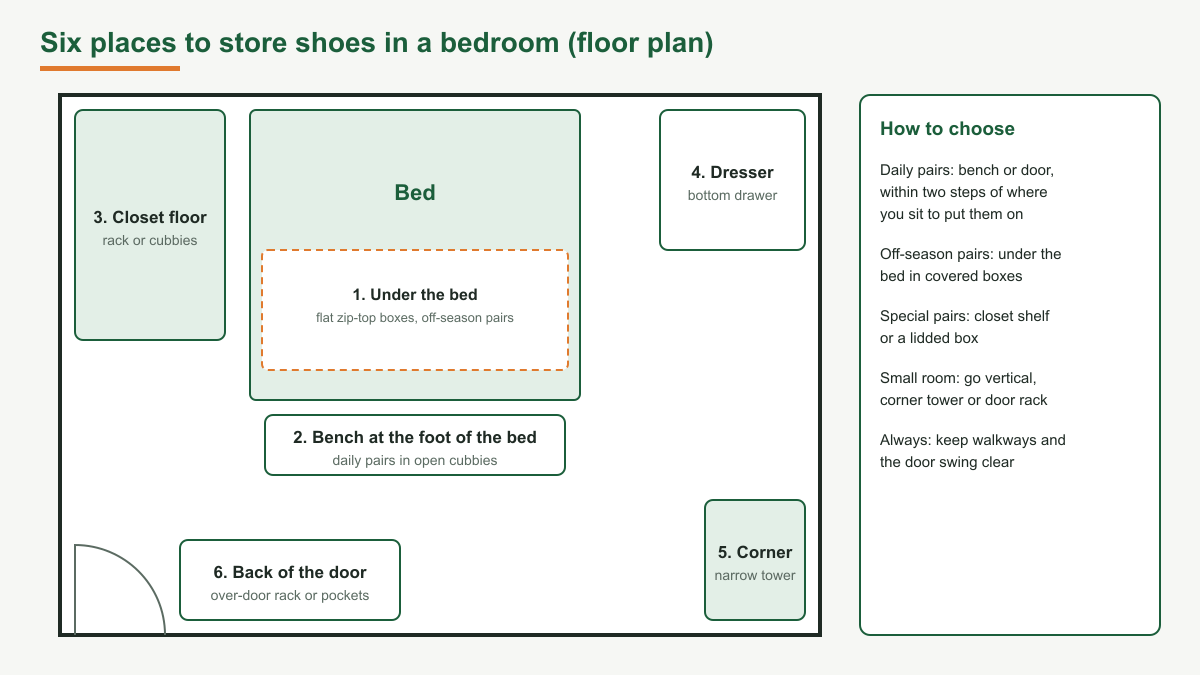
Use the table to match each spot to the shoes it suits best.
| Spot | Best for | Storage that works | Watch out for |
|---|---|---|---|
| Under the bed | Seasonal and special pairs | Flat zip-top boxes with dividers, rolling drawers | Measure clearance first; dust if boxes are open |
| Foot of the bed | Daily pairs | Bench with open cubbies or a low two-tier rack | Do not block the path around the bed |
| Back of the door | Daily pairs, flats, slippers | Over-door rack or clear pockets | Door thickness and hook fit; heavy boots |
| Corner | Daily pairs in a small room | Narrow vertical tower | Tip-over on tall units; keep it against the wall |
| Closet floor | Mixed daily and seasonal | Low rack, stackable cubbies | Hanging clothes covering the top tier |
| Dresser drawer | A few special pairs | Bottom drawer with dust bags | Only clean, dry shoes |
Under-Bed Shoe Storage
The space under the bed is the largest unused storage in most bedrooms. It suits shoes you do not need every day, because pulling out a box takes a few seconds. Covered boxes keep dust off, and dividers stop pairs from tumbling together when you slide the box out.
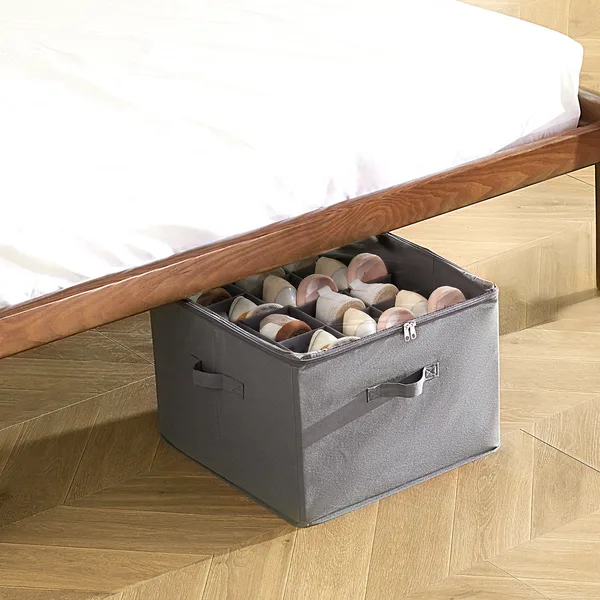
The Under-Bed Shoe Storage Box is listed with 16 compartments and movable dividers, a clear PVC zip-top lid that shows the contents, side handles for pulling it out, and a size of 17 x 17 x 12.4 inches. Before you buy any under-bed box, measure the clear height under your bed frame at the lowest point, which is often the side rail rather than the middle. A box that is too tall will scrape the frame every time you pull it out.
Tips for under-bed shoe storage:
- Put seasonal pairs in one box and special pairs in another, then label the end that faces out.
- Store shoes clean and dry. Wipe soles and let wet shoes air out before you box them.
- Use the compartments for one shoe each, or one pair each for flats and sandals.
- If your bed sits low, consider bed risers or a bed frame with drawers; our guide to under-bed storage covers both, and our under-bed storage containers review compares box types.
A Bench or Rack at the Foot of the Bed
Daily shoes need a spot near where you sit to put them on. For most people that is the edge of the bed. A bench with open cubbies underneath gives you a seat and a shoe rack in one, and it reads as furniture rather than storage.
If a bench does not fit, a low two-tier rack at the foot of the bed does the same job. Keep it to the pairs you actually wear that week. When the rack fills up, that is the signal to move a pair into the under-bed box, not to buy a second rack.
Leave enough space to walk around the bed comfortably. If the bench forces you to turn sideways to get past, it is too deep for the room, and a door rack will serve you better. For more ideas on what fits around a bed, see our bedroom storage ideas and our guide to bedroom organization.
Over-the-Door Shoe Storage
The back of the bedroom door is flat, vertical and almost always empty. Over-the-door storage uses it without any floor space at all, which makes it one of the best shoe storage ideas for a small bedroom.
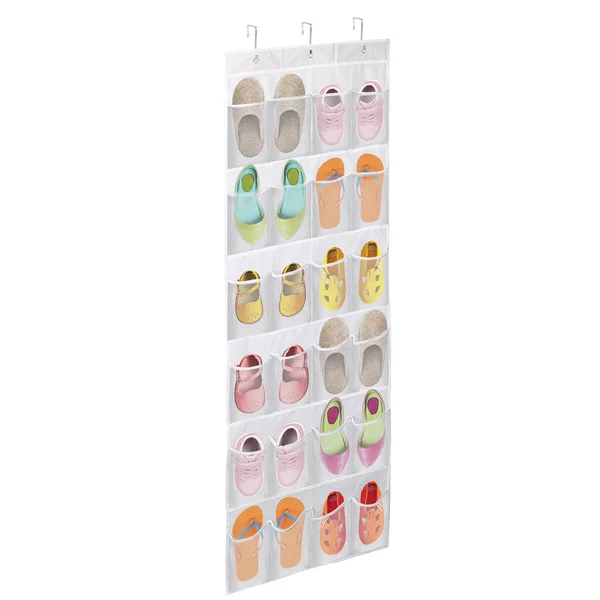
Clear pocket organizers suit flats, sandals, slippers and kids' shoes. The Over-the-Door Shoe Organizer is listed with 24 clear pockets in six rows, each pocket 7.87 x 4.25 inches, hanging on three included metal door hooks, and the listing names flats, heels, slippers and kids' shoes as the best fit. The clear fronts let you see every pair from across the room.
For sneakers and heavier shoes, a steel over-door rack is the better choice. The Over-the-Door Shoe Rack is listed with 12 shelves for up to 36 pairs and adjustable hooks for doors up to 1.57 inches thick. Check three things before you hang either type:
- Door thickness. Hooks only fit doors up to a certain thickness, and the listing will say what it is.
- Top gap. The hooks sit between the top of the door and the frame. If the door rubs the frame already, hooks can stop it from closing.
- What is behind the door. Make sure the door can still open fully once the rack adds depth on the back.
Narrow Shoe Towers for Small Bedrooms
In a small bedroom, floor space is the scarcest thing you have, so go up. A narrow tower in a corner holds a pair per tier on a footprint about the size of a single shoe box.
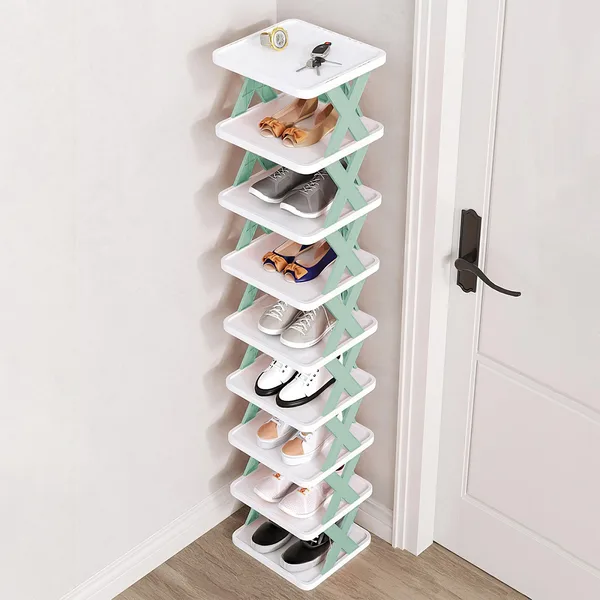
The 9-Tier Narrow Shoe Rack is listed with a 9.45 x 10.12 inch footprint and a height of 50.59 inches, one pair per tier, tool-free snap-in assembly, and the option to split it into shorter stacks such as 4 plus 5 or 3 plus 3 plus 3 tiers. That last point matters in a bedroom: two short stacks can sit on either side of a dresser or under a window, where one tall tower would look out of place.
Place tall towers against a wall and away from the door swing. If you have small children or the floor is uneven, keep heavier shoes on the lower tiers so the tower stays stable.
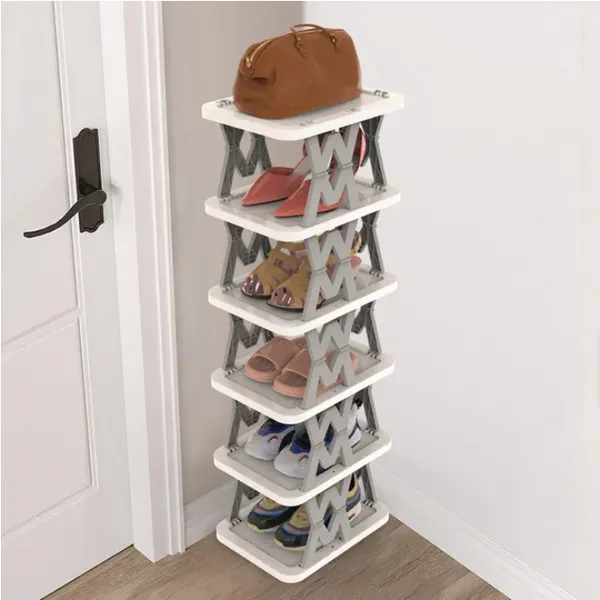
If you move often or want to put the rack away in summer, a folding rack is easier to live with. The 6-Tier Foldable Narrow Shoe Rack is listed with a 12.01 x 10.24 inch footprint, shelves for shoes up to 10.63 inches long, 6.69 inches of clear height between tiers, and a folded height of 3.74 inches. Check your longest shoe against the shelf length before you buy; large sneakers may hang over the front edge.
For more small-room tips, our shoe storage ideas for small spaces and bedroom storage solutions for small bedrooms cover furniture that does double duty.
Closet Floor and Dresser Storage
If your bedroom has a closet, the floor under the hanging clothes is a natural shoe zone. A low rack or stackable cubbies keep pairs off the carpet and easy to see. Keep the top tier low enough that long coats and dresses do not hide it, or move long items to one end of the rod. Our bedroom closet organization ideas show how to split a closet into hanging, folded and shoe zones.
A dresser bottom drawer is an option for a few special pairs you want to keep out of sight, such as dress shoes in dust bags. Only store clean, dry shoes in a drawer that also holds or sits near clothing, and leave the drawer open for a while after you put shoes in if they have been worn that day.
Shoe Storage by Shoe Type
Different shoes need different storage. A rule of thumb for each:
- Sneakers. Open racks or cubbies so they can air out. Avoid sealed boxes right after a workout.
- Boots. Store them upright with boot shapers or rolled-up magazines inside so the shafts do not crease. Tall boots usually need the floor of a closet or the bottom tier of a rack.
- Heels. Shelves or cubbies where they stand on their own. Clear pockets work for low heels.
- Flats and sandals. Pockets, shallow drawers or one compartment per pair in an under-bed box.
- Slippers. A spot right by the bed, such as a basket under the bench or the lowest door pocket.
- Dress shoes. Dust bags or a lidded box, with shoe trees if you have them.
Keep Bedroom Shoe Storage Tidy
Shoe storage only stays tidy if putting shoes away is easier than dropping them. A few habits help.
- One pair out, one pair back. When you take a pair from the rack, the pair you wore yesterday goes back first.
- Seasonal swap twice a year. In spring and fall, move the coming season's pairs to the daily spots and box the rest under the bed.
- Air before you store. Leave worn shoes out overnight before they go into a box or drawer.
- Wipe the racks. Dust and grit collect on shelves; a quick wipe each month keeps them from tracking onto the floor.
- Cap the count. If a new pair comes in and every spot is full, one pair goes out.
If the whole closet needs work, our step-by-step guide on how to organize your bedroom closet is a good next read.
Frequently Asked Questions
Where should I put shoes in a bedroom without a closet?
Use the back of the door, a bench or low rack at the foot of the bed, a narrow tower in a corner and the space under the bed. Daily pairs go on the door or bench, and seasonal pairs go under the bed in covered boxes.
Is it bad to keep shoes in the bedroom?
No, as long as they are stored clean, dry and off the walkways. Wipe soles, let worn shoes air out before you box them, and keep the storage where you will actually use it.
How do I store shoes under the bed?
Measure the clear height under the bed frame at its lowest point, then use covered boxes with dividers that fit under it. Label the end that faces out and keep seasonal and special pairs in separate boxes.
What is the best shoe storage for a small bedroom?
Vertical storage that uses no extra floor: an over-the-door rack or pocket organizer, a narrow tower in a corner, and under-bed boxes. Avoid deep benches if they block the path around the bed.
Will an over-the-door shoe rack fit my door?
Check the door thickness listed for the hooks and make sure there is a gap between the top of the door and the frame. Also check that the door still opens fully with the rack on the back.
How do I store boots in a bedroom?
Stand them upright on the closet floor or the bottom tier of a rack, with boot shapers or rolled paper inside to keep the shafts from creasing.
How do I stop shoes from smelling in storage?
Let shoes air out after wearing them before you put them away, store sneakers on open racks rather than in sealed boxes, and keep only clean, dry shoes in drawers and covered boxes.
How many pairs should I keep out in the bedroom?
Keep only your daily pairs out, usually the three to six you wear in a normal week. Store seasonal and special pairs under the bed or in the closet and swap them twice a year.
Conclusion: A Home for Every Pair
Good shoe storage ideas for a bedroom are less about buying a big rack and more about matching each pair to the right spot. Count and sort your shoes, keep daily pairs close to where you sit, send seasonal pairs under the bed, and use the door and corners before you use the floor. With a fixed home for every pair and a swap twice a year, shoes stop drifting across the bedroom and the floor stays clear.
Liked this guide?
Get new organizing guides and the occasional new product by email. No spam, unsubscribe anytime.
Related articles
Explore more articles
- Bathroom Storage Ideas to Keep a Small Bathroom Tidy
- Craft Room Storage Furniture: Buying Guide
- Eid Table Setting Tips for Small Homes
- Under Bed Storage: Maximize Your Bed's Hidden Storage Space
- 25+ Brilliant Storage Space Ideas for Small Bathroom: Maximize Every Inch in 2026
- 30+ Creative Under Kitchen Sink Organizer Ideas to Transform Your Storage Space in 2026
- Ultimate Nursery Organization Guide: 35+ Creative Ideas to Transform Your Baby's Space in 2026
- Multi-Purpose Spice Racks: Ultimate Guide to Versatile Kitchen Storage Solutions in 2026