
Organizing Children's Closet: The Complete 2026 Guide to a Tidy, Kid-Friendly Wardrobe
Master organizing children's closet with practical tips, smart storage solutions, and product ideas. Create a tidy, functional kids' wardrobe today!
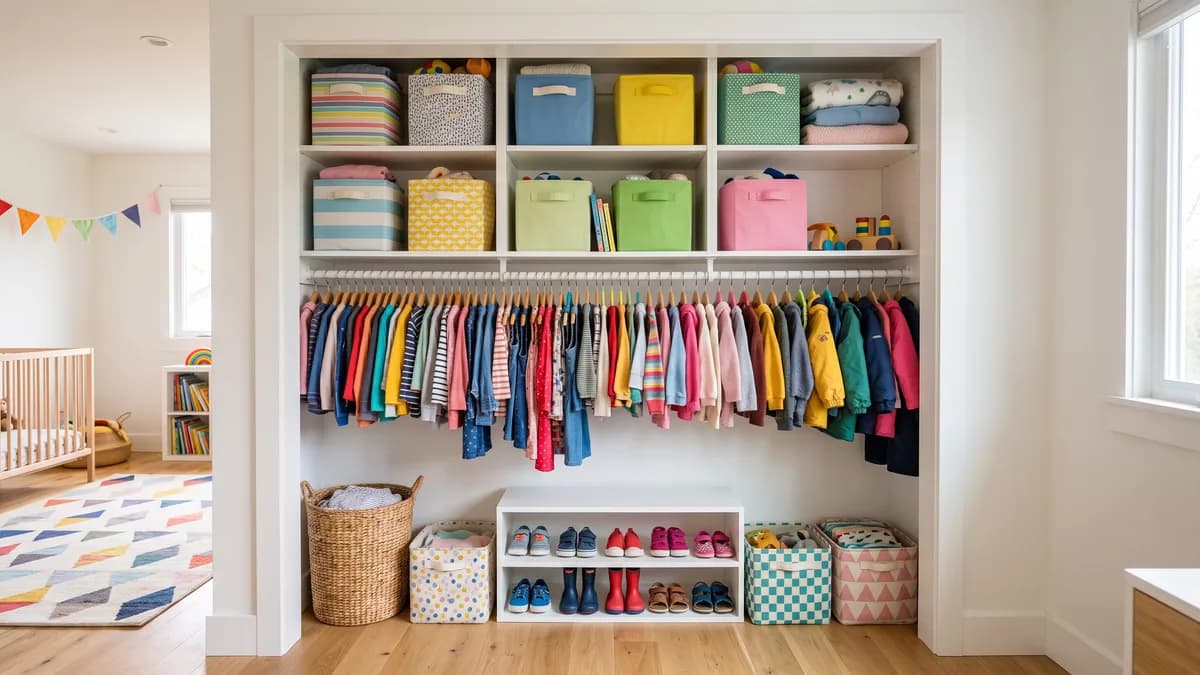
If you have ever opened a children's closet only to find a avalanche of tiny sneakers, tangled hangers, and mystery socks, you are not alone. Organizing children's closet spaces is one of the most common household challenges parents face in 2026, and it is one that pays off enormously when you finally get it right. A well-organized kids' closet means faster morning routines, less frustration, and a room that actually stays tidy between cleanups. In this complete guide, I am going to walk you through every step, from decluttering and zoning to choosing the right storage tools, so you can build a closet system your child will actually use.
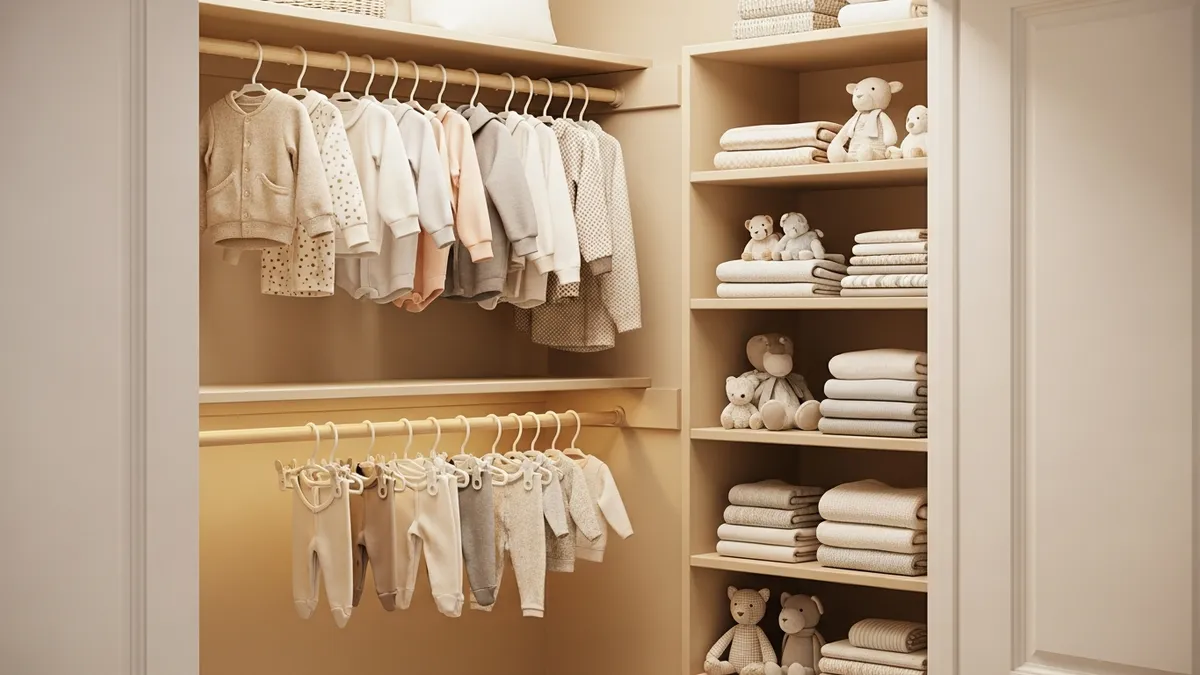
Why Organizing a Children's Closet Is Different from an Adult Closet
Kids' closets come with a unique set of challenges that adult wardrobes simply do not have. Children grow fast, their interests change constantly, and they are still developing the habits needed to maintain order on their own. Understanding these differences is the first step toward building a system that actually works long-term.
The biggest mistake parents make is setting up a children's closet the way they would organize their own. Adult closets are built for independence and efficiency. A kids' closet needs to be built for accessibility, visibility, and simplicity. When a child can see every item and reach everything without help, they are far more likely to put things back where they belong.
According to Good Housekeeping's closet organization guide, one of the most effective organizing principles for children's spaces is making sure everything has a clearly defined home that a child can manage on their own. This reduces clutter buildup and builds healthy organization habits early.
- Keep hanging rods at a height your child can reach, ideally between 36 and 48 inches from the floor depending on their age
- Use open shelving instead of closed cabinets so items are always visible
- Limit the number of categories so the system stays simple enough for a child to follow
- Build in extra space for growth, both physical growth and wardrobe growth
Step 1: Declutter Before You Organize a Children's Closet
Before you buy a single bin or shelf, you need to clear everything out. I always recommend pulling every single item out of the closet and sorting it into four piles: keep, donate, store (for seasonal items), and toss. This step alone can cut your closet volume in half, which makes the rest of the process significantly easier.
When going through your child's clothing, be ruthless about sizing. Kids' clothes that are even half a size too small will never be worn again, yet they take up valuable real estate in the closet. Good Housekeeping's closet organization guide suggests doing a closet purge every season to stay ahead of fast-growing kids. In 2026, many families are also turning to clothing swap groups and apps to rehome outgrown items quickly.
How to Sort Kids' Clothing Efficiently
- Lay everything flat on a bed or clean floor so you can see every item at once
- Check sizing labels and immediately remove anything that does not fit
- Assess condition: anything with stains, tears, or broken zippers goes in the toss pile
- Separate by season: current-season items stay, off-season items go into labeled storage bins
- Identify duplicates: if your child has 15 t-shirts but only wears 6, consider donating the rest
- Involve your child in the process if they are old enough, it builds ownership and makes them more likely to maintain the system
A good rule of thumb: if your child has not worn it in the last 30 days during its appropriate season, it is a strong candidate for donation.
Step 2: Plan Your Zones for an Organized Children's Closet
Once the closet is decluttered, the next step is to divide the space into logical zones. Zoning is the secret weapon of any great closet system. It means assigning a specific area of the closet to a specific type of item so that everything has a predictable home.
For most kids' closets, I recommend dividing the space into five core zones:
- Hanging zone for dresses, button-up shirts, jackets, and anything that wrinkles easily
- Folded clothing zone on shelves or in drawers for t-shirts, shorts, leggings, and pajamas
- Shoe zone at the bottom of the closet, ideally on a low rack or in individual cubbies
- Accessories zone for hats, belts, scarves, and hair accessories, usually on a small hook rack or in a shallow bin
- Seasonal and overflow zone on the top shelf for off-season clothing, extra bedding, or special occasion outfits stored in clear bins
The key is to put the zones your child uses every day at their eye level and within arm's reach. The zones they access less frequently, like formal wear or off-season items, can go up high where you can retrieve them as needed.
For more inspiration on closet zone layouts, Houzz's kids bedroom closet gallery has a collection of real-home designs you can browse before committing to a configuration.
Step 3: Choose the Right Storage Products for Organizing a Children's Closet
This is where the fun begins. The right storage products can transform an ordinary closet into a genuinely functional system. Here is what I recommend for most kids' closets in 2026:
Fabric Storage Bins and Baskets
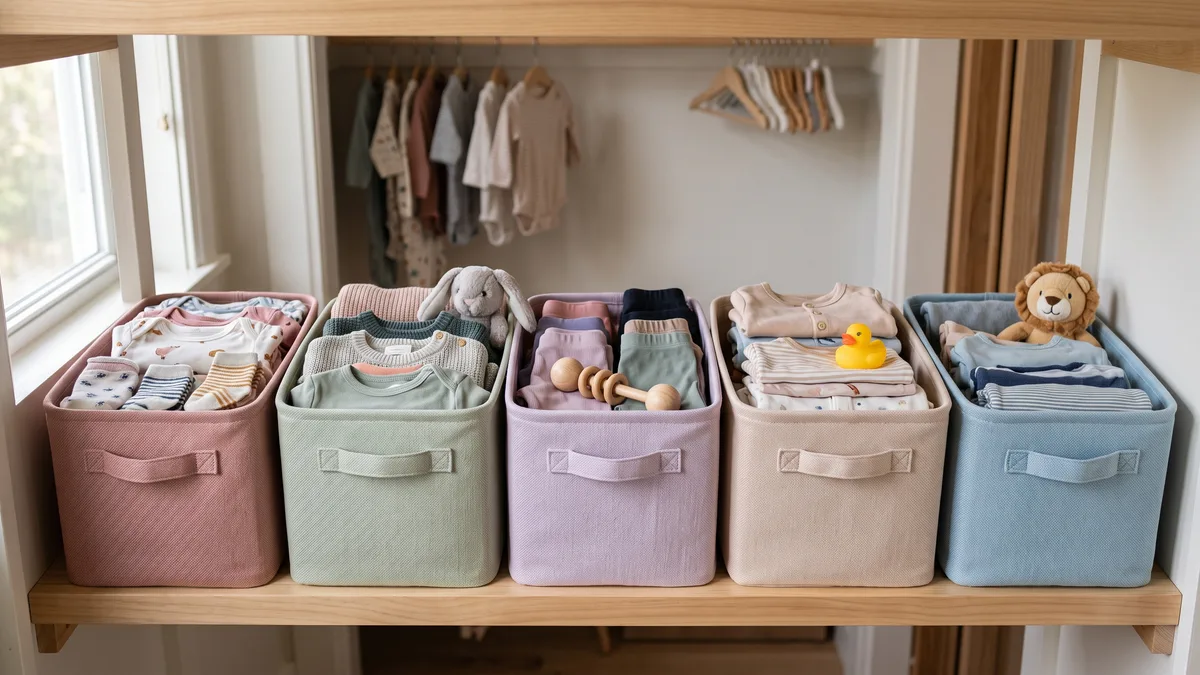
Fabric bins are my top pick for children's closets because they are soft-sided (no sharp corners), lightweight enough for kids to handle, and available in cheerful colors and patterns. They work perfectly on open shelves for folded items like t-shirts, pajamas, and shorts. Look for bins with reinforced handles so little hands can pull them off shelves easily.
For a nursery-specific setup, compare this system with our complete nursery closet organization guide and our nursery drawer organization guide before choosing bins and shelves.
You can find a great selection of fabric storage bins and baskets at Sesoris that are sized perfectly for kids' closet shelves.
Clear Stackable Bins for Seasonal Storage
For the top shelf, clear stackable bins are ideal for storing off-season clothing, holiday costumes, and hand-me-downs waiting for the next child. The clear sides mean you can see exactly what is inside without labeling, though I still recommend adding a label for quick identification.
Double Hanging Rods
Children's clothing is short, which means a standard single hanging rod wastes the bottom half of the closet. A double hanging rod system stacks two rods vertically, instantly doubling your hanging capacity. The lower rod sits around 36 to 40 inches from the floor, perfectly reachable for most school-age kids.
Labeled Bins and Cubbies
Labels are a game-changer for kids' closets. When every bin has a label (with both text and a picture icon for younger children who cannot read yet), even a 3-year-old can put things back in the right place. You can use a label maker, printed labels, or handwritten tags attached with a simple hook. Check out our guide on how to organize your closet for more labeling tips that work for the whole family.
Shoe Racks and Cubbies
A low shoe rack at the bottom of the closet keeps footwear off the floor and easy to find. For younger kids, individual cubbies work better than open racks because shoes stay paired together. For older kids, a tiered rack that holds 8 to 12 pairs is usually sufficient.
Step 4: Set Up the Hanging Section of Your Children's Closet
Getting the hanging section right is crucial for day-to-day functionality. Here is how to set it up properly:
- Install a double hanging rod if your closet does not already have one, the investment is usually under US$30 for a basic tension or bolt-on version
- Use slim velvet hangers instead of bulky plastic ones to save horizontal space, slim hangers can increase your hanging capacity by up to 30 percent
- Hang clothing in categories: dresses together, jackets together, button-ups together
- Within each category, arrange by color from light to dark so your child can quickly spot what they want
- Keep the lower rod stocked with everyday items like school clothes and the upper rod reserved for special occasion or seasonal pieces
- Add a few S-hooks or a small hook strip on the inside of the closet door for backpacks, hats, or tomorrow's pre-selected outfit
For households with multiple children sharing a closet, consider color-coding each child's section with a different colored hanger or a strip of washi tape on the rod to mark boundaries. This small step eliminates a surprising amount of conflict.
Step 5: Tackle Seasonal Clothing Storage in a Children's Closet
One of the biggest pain points in organizing a children's closet is managing seasonal clothing. Kids outgrow things so fast that you might be storing next winter's hand-me-downs while still in the middle of summer. Here is a system that works:
Create a dedicated seasonal shelf at the top of the closet. Use clearly labeled clear bins, one per season per child. Label each bin with the child's name, season, and size range so you know exactly what is inside without opening everything.
Swap seasonally, not randomly. Twice a year, in spring and fall, do a full seasonal swap. Pull the current-season bin down, assess for fit, donate what no longer works, and refill with properly sized items. This twice-yearly routine keeps the main closet space clutter-free throughout the year.
Use vacuum storage bags for bulky items. Winter coats, snow pants, and heavy sweaters compress dramatically in vacuum storage bags, freeing up significant shelf space. A single vacuum bag can compress a stack of bulky sweaters from 12 inches tall down to about 4 inches.
If your child's closet does not have enough top shelf space, consider using under-bed storage bins for overflow seasonal items. This keeps off-season clothing accessible but out of the main wardrobe space.
Step 6: Organize Shoes and Accessories in a Children's Closet
Shoes and accessories are often the most chaotic part of a children's closet. Tiny shoes multiply mysteriously, and accessories like hair ties, belts, and hats seem to escape containment no matter what you try.
Shoe Organization Tips
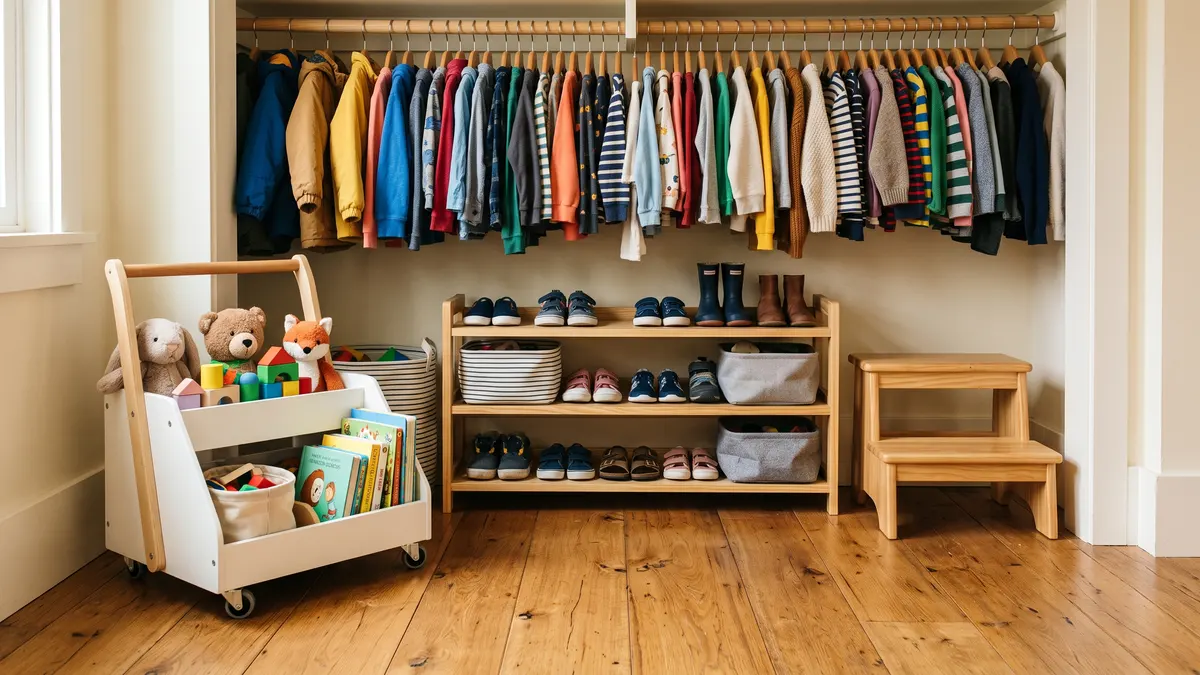
- Use a low-profile shoe rack at the base of the closet, positioned so your child can see and reach every pair
- Limit the number of shoes stored in the main closet to everyday pairs: one pair of sneakers, one pair of dress shoes, one pair of sandals or boots depending on the season
- Store sports cleats, rain boots, and other specialty footwear in a mudroom or garage cubby rather than the bedroom closet
- For toddlers and young children, individual cubbies work better than tiered racks because shoes stay matched together
Accessories Organization Tips
- Use a small over-the-door organizer with clear pockets for hair accessories, sunglasses, small toys, and other tiny items
- Install a simple hook strip on the inside of the closet door or side wall for hanging backpacks, sports bags, and belts
- Keep a small shallow bin on a shelf specifically for accessories that do not hang, like headbands, snap clips, and small wallets
- For hats, a row of wall hooks inside the closet or a hat rack on the door works much better than trying to stack hats on a shelf
How to Make an Organized Children's Closet Stay Organized
Setting up a beautiful closet system is satisfying, but keeping it that way is the real challenge. Here are the strategies that actually work for maintaining an organized children's closet over the long term:
Involve your child from day one. When kids help set up their own closet system, they feel ownership over it and are significantly more likely to maintain it. Let them choose the bin colors, pick where their shoes go, and help apply labels. Even a 4-year-old can participate in meaningful ways.
Do a 5-minute reset each week. Pick one day per week, Sunday evenings work well for many families, to do a quick closet reset. Return anything that drifted to the wrong spot, refold items that got rumpled, and pull out anything that no longer fits. This weekly habit prevents the slow slide back into chaos.
Use the one-in, one-out rule. Every time a new clothing item enters the closet, one item leaves. This is especially important after birthdays, holidays, and back-to-school shopping. The rule keeps the closet from filling up beyond its capacity.
Keep the system age-appropriate and update it as your child grows. A system that works perfectly for a 5-year-old will need to evolve when that child is 8 or 10. As kids grow, they can handle more complexity, more hanging items, and more responsibility for their own organization. Revisit the system each year and adjust accordingly.
For more home organization ideas across every room, browse the full collection at Sesoris and check out our best sellers for the most popular storage solutions among American families in 2026.
Related Products from Sesoris
If you want to turn this guide into a real setup, start with Stackable Storage Bins, 24 Pack and Pull-Out Cabinet Organizer, 17 in. Wide. For broader options, browse the Home & Decor collection so the article journey does not stop at reading only.
Our practical rule: choose one product that solves the main clutter problem first, then add supporting organizers only when the daily workflow is already clear. This keeps the shopping path useful, not pushy.
FAQ: Frequently Asked Questions About Organizing Children's Closet
At what age can kids start managing their own closet organization?
Most children can begin following a simple closet system around age 3 to 4, especially if it uses picture labels. By age 6 to 7, many kids can independently hang clothing, sort laundry into the right bins, and put away folded clothes. The key is making sure the system is simple enough and physically accessible for their current age and height.
How many clothes does a child actually need in their closet?
There is no one-size-fits-all answer, but a practical baseline for school-age children is 7 to 10 everyday outfits, 2 to 3 dress or special occasion outfits, 1 to 2 sets of pajamas, and appropriate seasonal outerwear. Keeping wardrobes streamlined reduces decision fatigue for both kids and parents and makes the closet much easier to maintain.
What is the best way to organize a very small children's closet?
In a small closet, maximize vertical space first. Install a double hanging rod to stack clothing vertically, use the top shelf for seasonal storage bins, and add an over-the-door organizer to capture accessories and small items. Use slim velvet hangers to maximize horizontal hanging space and opt for open shelving over bulky drawer units. Our article on small closet organization ideas has more detailed solutions for tight spaces.
Should I use open shelves or drawers in a children's closet?
Open shelves win for most kids' closets because children can see everything at a glance, which makes both choosing outfits and putting things away much easier. Drawers can work well for very young children's clothing stored in a dresser-style unit, but deep dresser drawers inside a closet often become a dumping ground. If you do use drawers, keep them shallow and limit each drawer to one clothing category.
How do I handle hand-me-downs in a children's closet?
Hand-me-downs that are too large for the current child should never live in the main active closet. Store them in clearly labeled clear bins on a high shelf or in an under-bed storage container, labeled with the size and season. Only move items into the active closet when they fit. This keeps the daily wardrobe clutter-free and makes it easy to grab the next size up when needed.
Conclusion: Build a Children's Closet System That Grows With Your Kids
Organizing a children's closet does not have to be an overwhelming project. When you approach it step by step, starting with a thorough declutter, then zoning, then choosing the right storage products, you end up with a system that genuinely makes daily life easier for the whole family. The best children's closet is one that your child can actually use independently, with every item visible, accessible, and stored in a logical place.
In 2026, the most effective kids' closet systems combine smart physical tools like double hanging rods, labeled fabric bins, slim velvet hangers, and clear seasonal storage containers with simple maintenance habits like weekly resets and the one-in, one-out rule. Start with what you have, add the tools that fill your specific gaps, and revisit the system each season as your child grows.
Ready to find the perfect storage solutions for your kids' closet? Browse Sesoris for a curated collection of home organization products designed to help American families live more organized. Check out our new arrivals for the latest kids' closet organization tools, or explore our full collections to find exactly what your family needs. Live more organized, starting today.
Liked this guide?
Get new organizing guides and the occasional new product by email. No spam, unsubscribe anytime.
Related articles

Explore more articles
- Eid Table Setting Tips for Small Homes
- Bathroom Corner Shelves: Make Use of Dead Space
- Wardrobe Organizer Guide: How to Organize Your Closet
- 20+ Best Towel Rack Ideas for Kitchen: Stylish & Functional Solutions in 2026
- IKEA Laundry Room Organization: Smart Ideas
- 35+ Brilliant Small Space Clothing Storage Ideas to Maximize Your Wardrobe in 2026
- Best Food Storage Solutions: Complete Guide to Organizing Your Kitchen in 2026
- Nursery Dresser Drawer Organization: Complete Guide to Perfect Baby Storage in 2026