
Aluminum Kitchen Rack: Choose, Install & Care Guide 2026
A complete aluminum kitchen rack guide for 2026: how to choose, install, and care for an aluminum kitchen rack so your kitchen stays tidy and efficient.
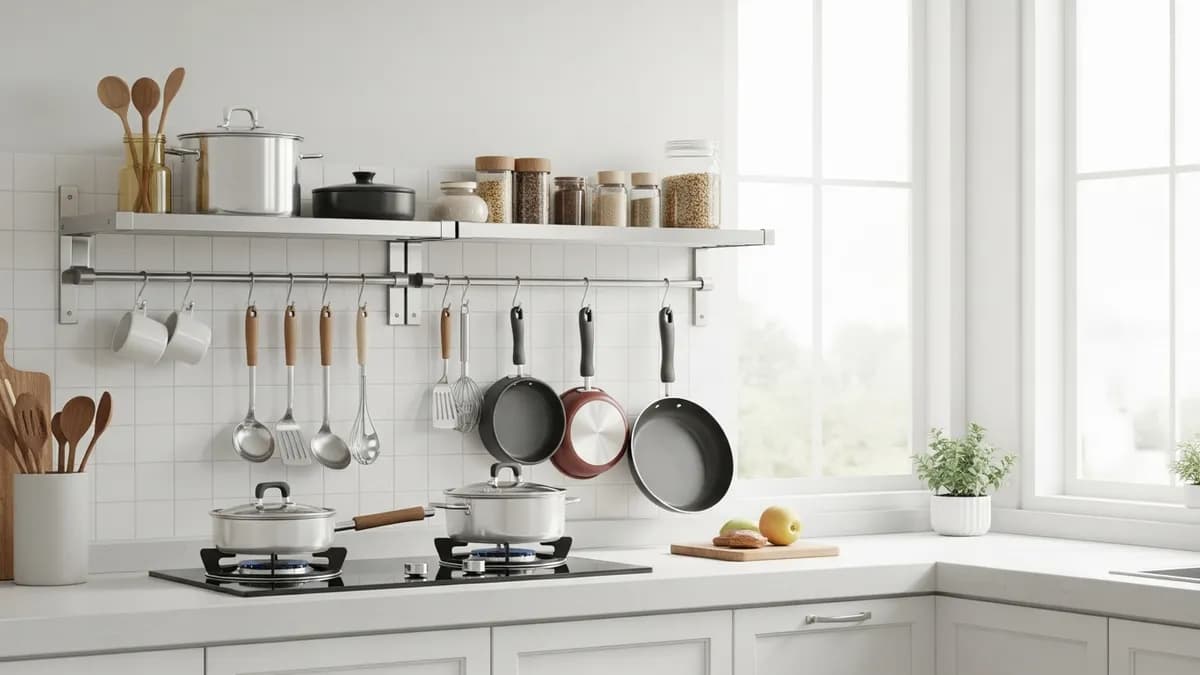
A tidy kitchen isn't just about aesthetics, it's about the comfort of cooking every day. One of the most practical solutions many households choose in 2026 is an aluminum kitchen rack. Lightweight, rust-resistant, easy to clean, and modern-looking, this type of rack suits almost any kitchen style, from minimalist to industrial. In this tutorial, I'll walk you through everything, from how to choose the right aluminum kitchen rack and the installation steps to organizing its contents and caring for it so it lasts for years.
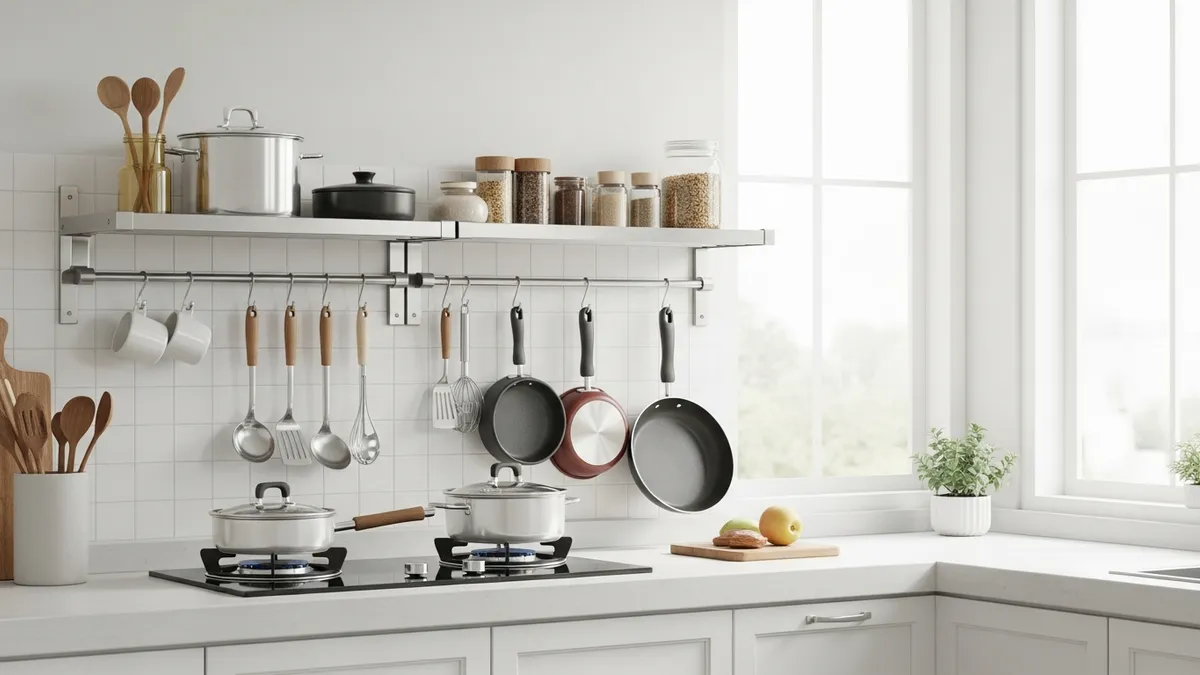
What Is an Aluminum Kitchen Rack and Why Choose One?
An aluminum kitchen rack is a kitchen rack made from aluminum, a lightweight metal known for its resistance to rust and humidity. In warm, humid kitchen environments, aluminum is a highly relevant choice compared to plain steel racks or wood, which are prone to corrosion and mold.
Aluminum naturally forms a protective oxide layer on its surface, so it doesn't rust easily even with frequent exposure to steam and oil splatter. This makes it an ideal material for kitchen furnishings, as explained in The Spruce's guide to kitchen materials.
Advantages of an Aluminum Kitchen Rack Over Other Materials
- Rust- and corrosion-resistant: Won't rust even with frequent exposure to water and cooking steam
- Lightweight yet strong: Easier to move and install than a steel rack, while still holding kitchen tools
- Easy to clean: The smooth, non-porous aluminum surface wipes free of oil stains and grime
- Long-lasting: With minimal care, an aluminum rack can last more than 10 years
- Modern look: The metallic silver of aluminum gives a kitchen a clean, contemporary feel
- Eco-friendly: Aluminum is nearly 100 percent recyclable
If you'd like to compare with other options, also read our guide on stainless steel racks as a long-term investment and multipurpose kitchen racks.
Types of Aluminum Kitchen Racks Available on the Market
Before buying, it's important to know that an aluminum kitchen rack comes in several types, each with a different function and fit. Understanding the differences will help you choose the one best suited to your kitchen.
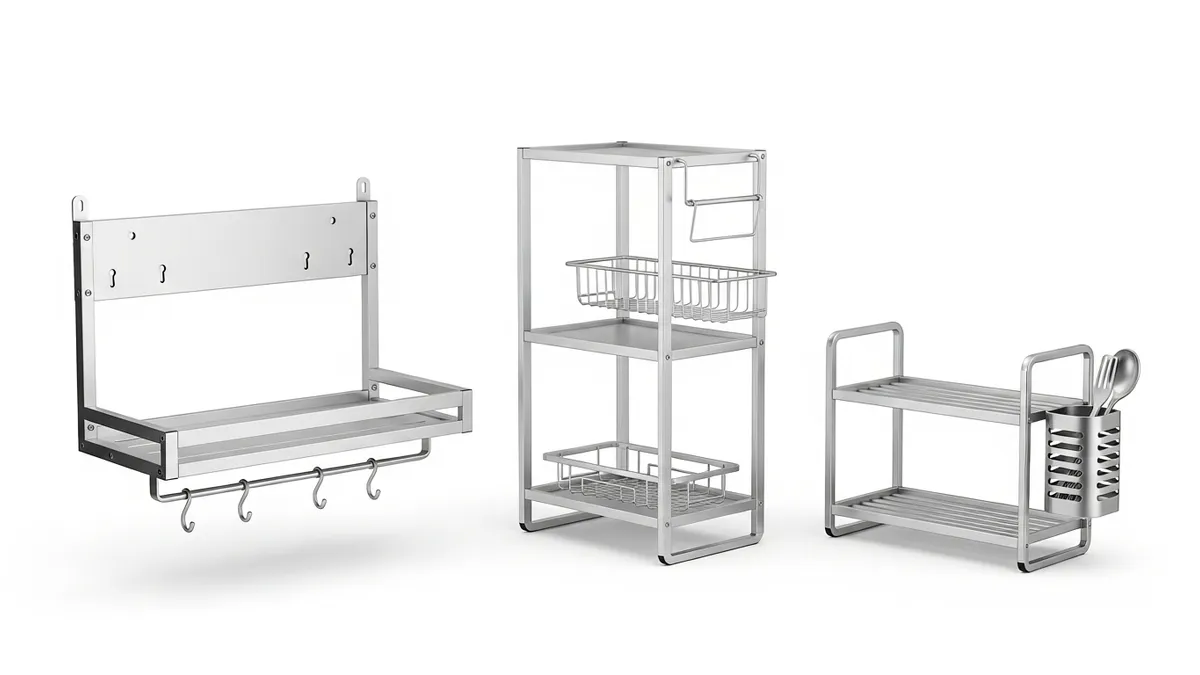
1. Wall-Mounted Rack
This type installs directly onto the kitchen wall using bolts and anchors. A wall-mounted aluminum kitchen rack is ideal for small kitchens because it uses no floor or counter space. It usually comes with hanging hooks for cookware, tiered shelves for spices, and a versatile hanging rail.
2. Freestanding Rack
A freestanding rack stands on its own on the floor with four legs. This type suits larger kitchens or can serve as a replacement for a storage cabinet. It's available in a range of sizes, from mini to full-set cookware capacity.
3. Countertop Rack
Placed on the counter, this type is smaller and typically used for spices, cutting boards, or frequently used cooking tools. It's very practical because it needs no installation.
4. Ceiling-Mounted Rack
This type hangs from the ceiling using metal rods. It's often used in industrial-style or open kitchens. It's great for hanging pots, pans, and large cookware. Installation is more complex and requires careful load calculation.
5. Sliding Rack
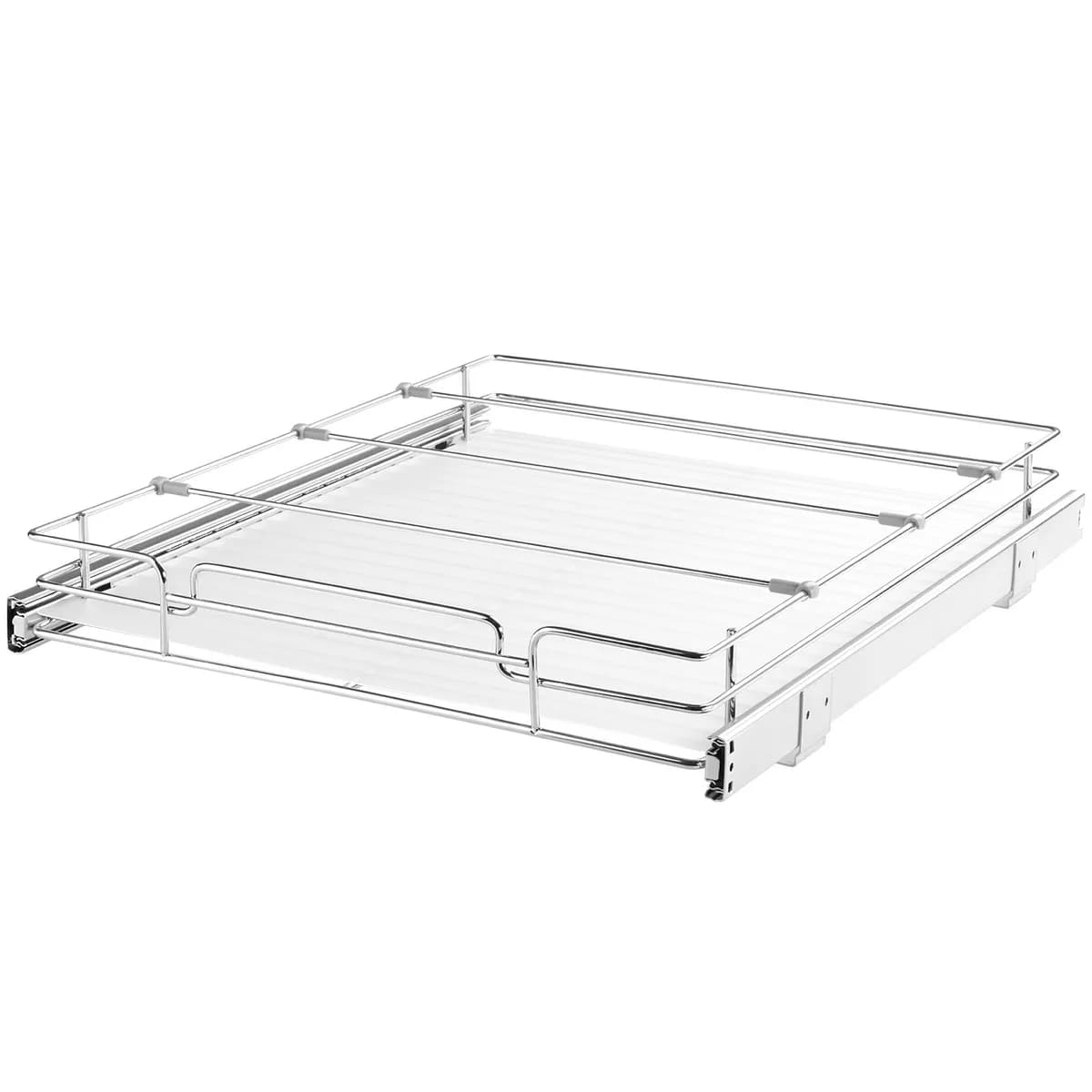
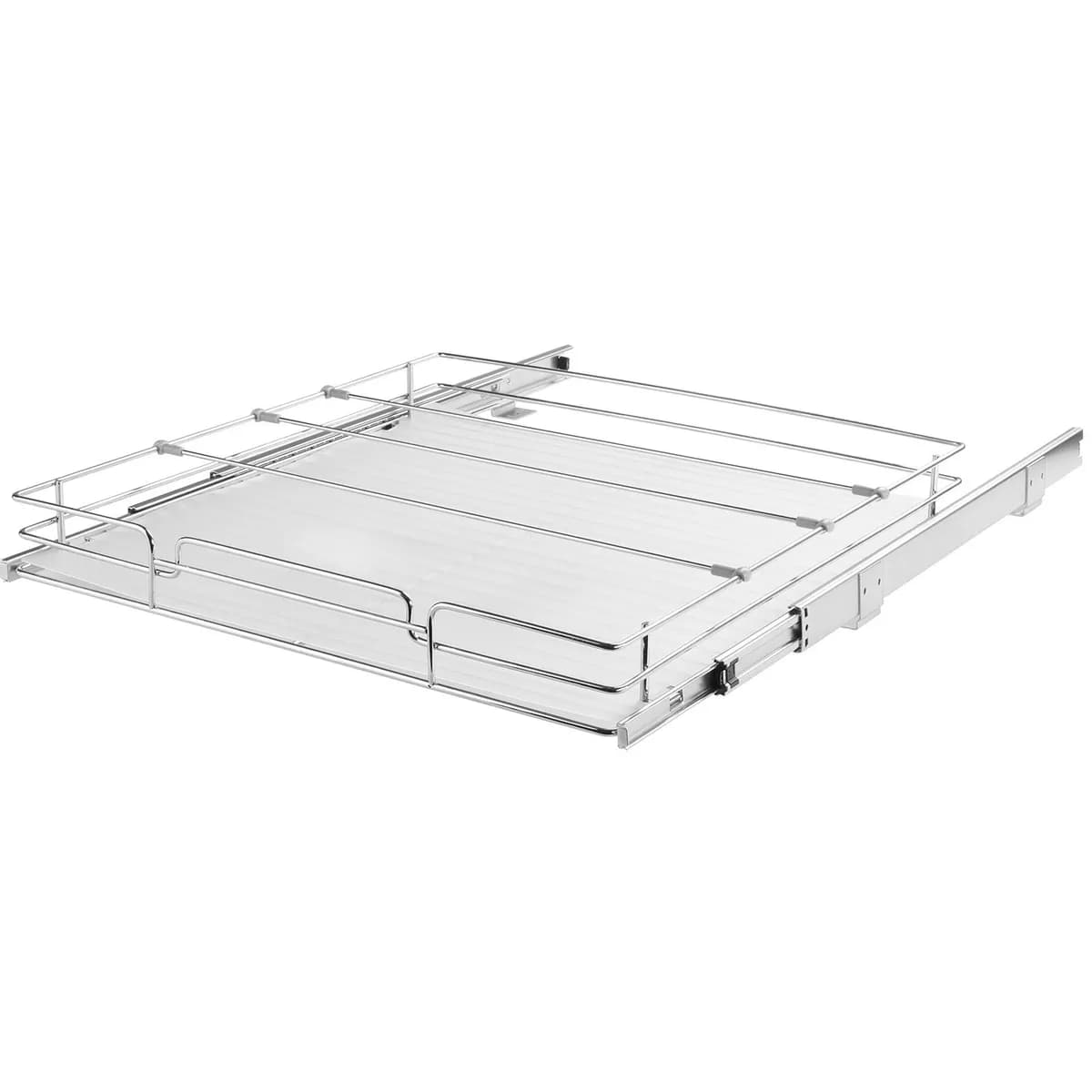
An aluminum rack installed inside a cabinet with a sliding-drawer system. It makes it easier to access tools stored at the back of the cabinet.
For more inspiration on organizing your kitchen overall, visit our article on creative kitchen organizer ideas for 2026.
Tutorial: How to Choose the Right Aluminum Kitchen Rack
Choosing the wrong rack can waste your budget. Here's a step-by-step guide to make sure you get an aluminum kitchen rack that truly fits your needs.
Step 1: Measure Your Kitchen Space
Before anything, grab a tape measure and note the size of the area where the rack will go. For a wall rack, note the available wall width and height. For a freestanding rack, note the usable floor area. Leave at least 24 inches of clearance in front of the rack so you have room to reach it while cooking.
Step 2: Determine the Capacity You Need
Inventory the kitchen tools you want to store on the rack. Estimate their total weight. As a general guide, home-grade aluminum kitchen racks typically have a capacity between about 30 and 110 pounds per rack depending on the model. Make sure the rack's capacity exceeds the total weight of what you'll store.
Step 3: Check the Aluminum Quality
Not all aluminum is the same quality. Pay attention to the following when inspecting a product:
- The thickness of the aluminum profile or bar, thicker is usually stronger
- Whether it has an anodized layer (an electrochemical process that strengthens and colors aluminum) or powder coating for extra protection
- Neat, strong joints and welds with no gaps or rough protrusions
- A quality-standard certification from the manufacturer
Step 4: Match It to Your Kitchen Style
An aluminum kitchen rack comes in many designs, from simple minimalist straight lines to more decorative options. If your kitchen is Scandinavian or modern minimalist, choose a rack with a clean design and no excess ornamentation. For an industrial kitchen, a rack combining aluminum and steel wire can even become an attractive decor point.
The key to choosing the right aluminum kitchen rack is balancing three factors: the available space, the load capacity you need, and a design that matches your kitchen style.
Step 5: Consider Price and Budget
In 2026, aluminum kitchen rack prices vary quite a bit. A simple countertop rack can start around $12, while a medium wall-mounted rack runs roughly $25 to $60. For a large freestanding rack or a high-quality ceiling-mounted rack, prices can reach $90 and up. Match your choice to your budget, but don't sacrifice quality on a product you'll use every day.
Tutorial: How to Install an Aluminum Kitchen Rack on the Wall
Installing a wall-mounted aluminum kitchen rack is really not as complicated as it sounds. With the right tools and by following these steps, you can do it yourself in about 30 to 60 minutes.
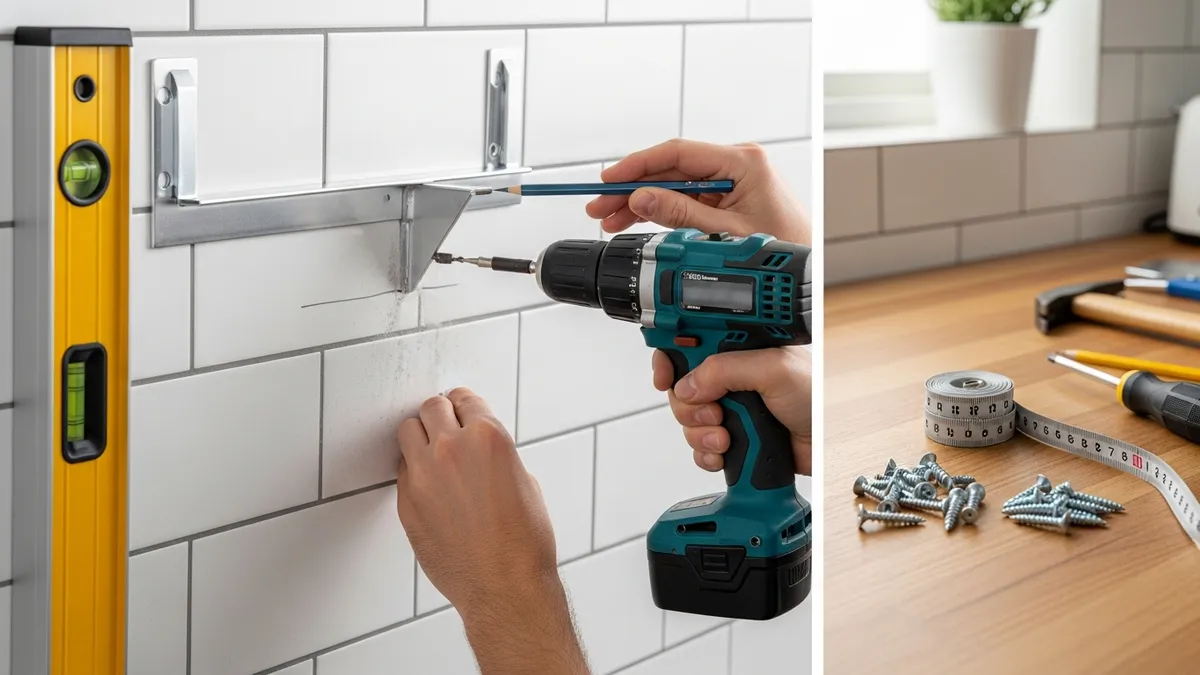
Tools You'll Need
- A power drill with a bit sized to your anchors
- Wall anchors and bolts (usually included in the purchase)
- A level (a traditional spirit level or a phone app)
- A tape measure and pencil to mark the drill points
- Phillips and flathead screwdrivers
- A cloth to wipe away drilling dust
Installation Steps
- Determine the rack position: Hold the rack in the desired position and mark it with a pencil at the four corners or at the bolt-hole points. Ideally, the bottom of the rack sits at about 60 inches (5 feet) from the floor for easy reach.
- Check for level: Use a level to make sure the rack marks are perfectly horizontal. This step is crucial because a crooked rack ruins the look and can make items on it fall easily.
- Identify the wall material: Tap the wall gently to tell whether it's solid (concrete) or hollow (drywall). This determines which anchor to use. For a concrete wall, use standard anchors. For drywall, use dedicated drywall anchors with retaining wings.
- Drill the mounting points: Use the drill at medium speed with the appropriate bit. Drill to the depth recommended for your anchor size, usually about 1.5 to 2 inches. Clean the dust from the hole.
- Insert the anchors: Push the anchor into the hole, tapping gently with a hammer until it's flush with the wall surface.
- Attach the bracket or rack: Align the bolt holes on the bracket or rack with the anchors in the wall, then tighten the bolts with a screwdriver or a drill with a bit head. Don't overtighten, as that can damage the anchor or wall.
- Test the strength: Before placing anything on it, shake the rack by hand to make sure it's securely mounted. If it feels loose, retighten the bolts.
- Tidy up the area: Clean the dust and debris from drilling.
Important note: For a ceiling-mounted rack, installation is more complex and requires calculating the ceiling structure. I strongly recommend using a professional handyman for this type for safety.
Tutorial: How to Organize the Contents of an Aluminum Kitchen Rack
Even a perfectly installed rack won't perform well if you fill it carelessly. Here's how to organize an aluminum kitchen rack so your kitchen truly works efficiently.
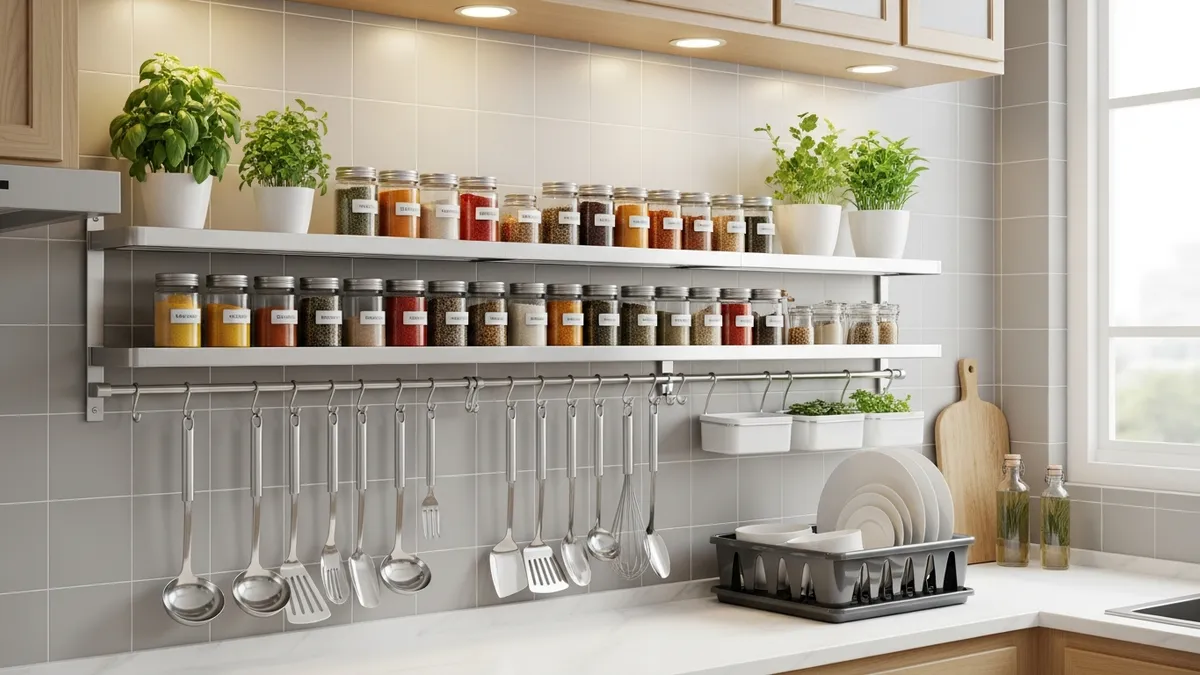
Basic Principle of Kitchen Rack Organization
Place the items you use most often within the easiest reach, and rarely used items in higher or more out-of-the-way positions.
Zone the Rack
Divide your rack into zones by function:
- Herb and spice zone: Place it in the easiest-to-reach, most visible spot. Use uniform spice containers for a tidy look. Read our guide on the best spice storage containers for product recommendations.
- Active cookware zone: Spatulas, ladles, whisks, and tools you use almost daily. Hang them on hooks along the aluminum rail.
- Rarely used tools zone: Baking molds, specialty pans, and cookware used only occasionally. Put these on the upper shelf or the farther side.
- Temporary staging zone: An area for items in process, like freshly bought ingredients or just-washed tools.
Tips for Filling the Rack Neatly
- Use uniform spice containers: Move spices out of their original packaging into transparent containers or add clear labels. This makes the rack look far more attractive and easier to search.
- Make the most of the hooks: Hang cookware by size, smallest to largest, so it's easy to grab without moving others.
- Arrange by frequency of use: Items used daily go in the easiest spots; items used once a week go next.
- Avoid overloading: Don't fill the rack beyond its capacity. Besides being dangerous, an overloaded rack actually makes the kitchen feel messy.
- Add decorative elements: One or two small herb pots like basil or scallions in a corner of the rack can make the kitchen feel fresher and more alive.
For more inspiration on organizing your kitchen overall, see our articles on kitchen cabinet organizer ideas and small-space kitchen storage solutions.
Tutorial: How to Care for an Aluminum Kitchen Rack So It Lasts
One reason so many people choose aluminum is its relatively easy care. Still, proper care is needed to keep the rack clean, strong, and looking great for years.

Daily Routine Care
- Wipe spills right away: If there's an oil or water splash, wipe it with a cloth or tissue right away so it doesn't harden and become hard to clean
- Good kitchen ventilation: Make sure the kitchen has enough ventilation to reduce steam buildup that can leave mineral scale on the aluminum surface
Weekly Cleaning
- Empty part or all of the rack's contents
- Spray all-purpose cleaner or a mix of water with a little dish soap over the whole rack surface
- Wipe with a soft microfiber cloth following the grain or lines of the aluminum surface
- Rinse with a cloth dampened in clean water
- Dry immediately with a dry cloth so no water marks are left behind
Monthly Cleaning for Stubborn Stains
For hardened oil stains or mineral scale from water, use a 1:1 mix of warm water and white vinegar. Apply it to the stained area, let it sit for 5 to 10 minutes, then scrub gently with a soft-bristled brush or a non-abrasive cloth. Avoid steel wool or harsh scrubbers, which can scratch the aluminum surface.
Things to Avoid
- Don't use strong chlorine-based cleaners (bleach), as they can damage aluminum's oxide layer
- Avoid rough scrubbing tools like steel wool or steel scrubbers
- Don't leave the rack wet for long periods
- Avoid placing harsh chemicals directly on the rack without a container
According to care guidance from Good Housekeeping, an aluminum surface just needs regular cleaning with mild soapy water to keep its shine and cleanliness over the long term.
Periodic Care Every 6 Months
- Check that all bolts and nuts are tight. Retighten any that have loosened from the vibration of everyday cooking
- Check the condition of the rubber feet or leg tips (for freestanding racks) and replace them if worn
- Apply a little silicone-based lubricant to joints or hinges if your rack has foldable or sliding components
Common Mistakes When Using an Aluminum Kitchen Rack
In many users' experience, there are several common mistakes you should avoid:
1. Buying without measuring first
This is the most common mistake. The rack you bought turns out too big or too small for the available space. Always measure twice before buying.
2. Ignoring the maximum load capacity
Every rack has a weight limit. Exceeding it can not only damage the rack but is also dangerous because it can cause the rack to fall or collapse.
3. Mounting on the wrong wall
Mounting a rack on drywall without special anchors, or on a wall with electrical wiring or water pipes behind it, is very risky. Always confirm the wall's condition before drilling.
4. Not using add-on accessories
Many aluminum kitchen racks come with extra hooks, small baskets, or bamboo insert shelves you can buy separately. These accessories can greatly increase your rack's functionality.
5. Mixing too many item categories
Loading in every kind of item with no system makes the rack look messy even if everything is stored. Apply the zoning system described in the earlier section.
Layout Inspiration for Aluminum Kitchen Racks Across Kitchen Types
Every kitchen has its own character. Here are a few common scenarios and matching aluminum-kitchen-rack layout recommendations:
Small kitchen (under about 40 sq ft)
Prioritize a wall-mounted rack to save floor space. Mount one wall rack on the side closest to the stove for quick access to spices and cookware. Also consider a rack that hangs under the upper cabinets to use space that's usually wasted.
Medium kitchen (about 40 to 85 sq ft)
Combine a wall-mounted rack with one small freestanding rack. Wall-mounted for active tools and spices, freestanding for storing larger tools or staples like rice and sugar in sealed containers.
Large or open kitchen (over about 85 sq ft)
You have more flexibility. Consider a ceiling-mounted rack as a decorative yet functional element, combined with an island rack in the center of the room if you have a kitchen island.
For more comprehensive kitchen design, read our articles on an efficient L-shaped kitchen layout and modern minimalist kitchen ideas for 2026.
Related Products from Sesoris
If you want to turn this guide into a real setup, start with Pull-Out Cabinet Organizer, 14 in. Wide and Double-Layer Bamboo Bread Box. For broader options, browse the Kitchen & Dining collection so the article journey does not stop at reading only.
Our practical rule: choose one product that solves the main clutter problem first, then add supporting organizers only when the daily workflow is already clear. This keeps the shopping path useful, not pushy.
FAQ: Frequently Asked Questions About Aluminum Kitchen Racks
Q: Is an aluminum kitchen rack safe for storing food directly?
For food stored in containers or packaging, it's certainly safe. However, avoiding prolonged direct contact between acidic foods (like fruit or pickles) and the aluminum surface is a wise move, because acid can react with aluminum. Always store those in a separate container.
Q: How long does an aluminum kitchen rack last?
With proper care, a good-quality aluminum kitchen rack can last 10 to 15 years or even longer. The key is keeping the rack clean and dry and checking bolt tightness periodically.
Q: Can I install a wall-mounted rack myself without a handyman?
Yes, for a standard concrete wall, you can install a wall-mounted aluminum kitchen rack yourself as long as you have a power drill and follow the installation guide above. But for drywall, old brittle plaster, or a ceiling-mounted rack, using a professional is recommended.
Q: What's the difference between an aluminum kitchen rack and a stainless steel one?
Both are rust-resistant, but aluminum is far lighter than stainless steel. Aluminum is also usually more affordable. On the other hand, stainless steel is generally stronger and more scratch-resistant. The choice depends on your priorities: light and budget-friendly (aluminum) or maximum strength (stainless steel).
Q: Where can I buy a quality aluminum kitchen rack?
You can find a range of aluminum kitchen racks at home goods stores, hardware stores, or e-commerce platforms. Be sure to buy from a trusted seller and check the product specs carefully before buying.
Q: Is an aluminum kitchen rack suitable for an outdoor kitchen?
Aluminum does hold up to weather, but constant direct sunlight and rain can speed up surface oxidation. If you want to use it in a semi-outdoor area, choose a rack with a thicker anodized or powder-coated layer for extra protection.
Conclusion: Create Your Dream Kitchen With an Aluminum Kitchen Rack
An aluminum kitchen rack is a simple investment with a big impact on your kitchen's tidiness and efficiency. From choosing the right type and installing it correctly to organizing its contents systematically and caring for it regularly, every step I've laid out in this tutorial is designed so you can put it into practice at home right away.
The key to success with an aluminum kitchen rack isn't just the product, it's also your habit of keeping it orderly every day. Start with one rack, apply the zoning system, and see for yourself how much more enjoyable cooking can be when every tool is easy to find and reach.
If you're looking for aluminum kitchen racks and other home organization products, visit Sesoris to see the full collection of home & living products that can help you create a more organized home. Explore our best sellers or find new arrivals that might be the perfect solution for your kitchen. Because at Sesoris, we believe a more organized life starts with a tidy kitchen.
Liked this guide?
Get new organizing guides and the occasional new product by email. No spam, unsubscribe anytime.
Related articles


Explore more articles
- Storage Shelving Ideas for Every Room
- 30+ Storage Organizer Ideas for a Tidy Home 2026
- How to Declutter Your Home: Complete 2026 Guide
- 30+ Kitchen Wall Shelf Ideas for a Tidy, Stylish Kitchen
- How to Organize a Small House: Complete 2026 Guide
- Glass Containers Food Storage: The Ultimate Inspiration Guide to a Beautiful, Organized Kitchen in 2026
- RV Shoe Storage Ideas for Safer Travel
- 25+ Best DIY Garage Storage Solutions to Transform Your Space in 2026