
Bamboo vs Plastic Storage: Which Material Fits Your Home?
A practical bamboo versus plastic storage comparison using real Sesoris products, with durability, capacity, cleaning, and price criteria.
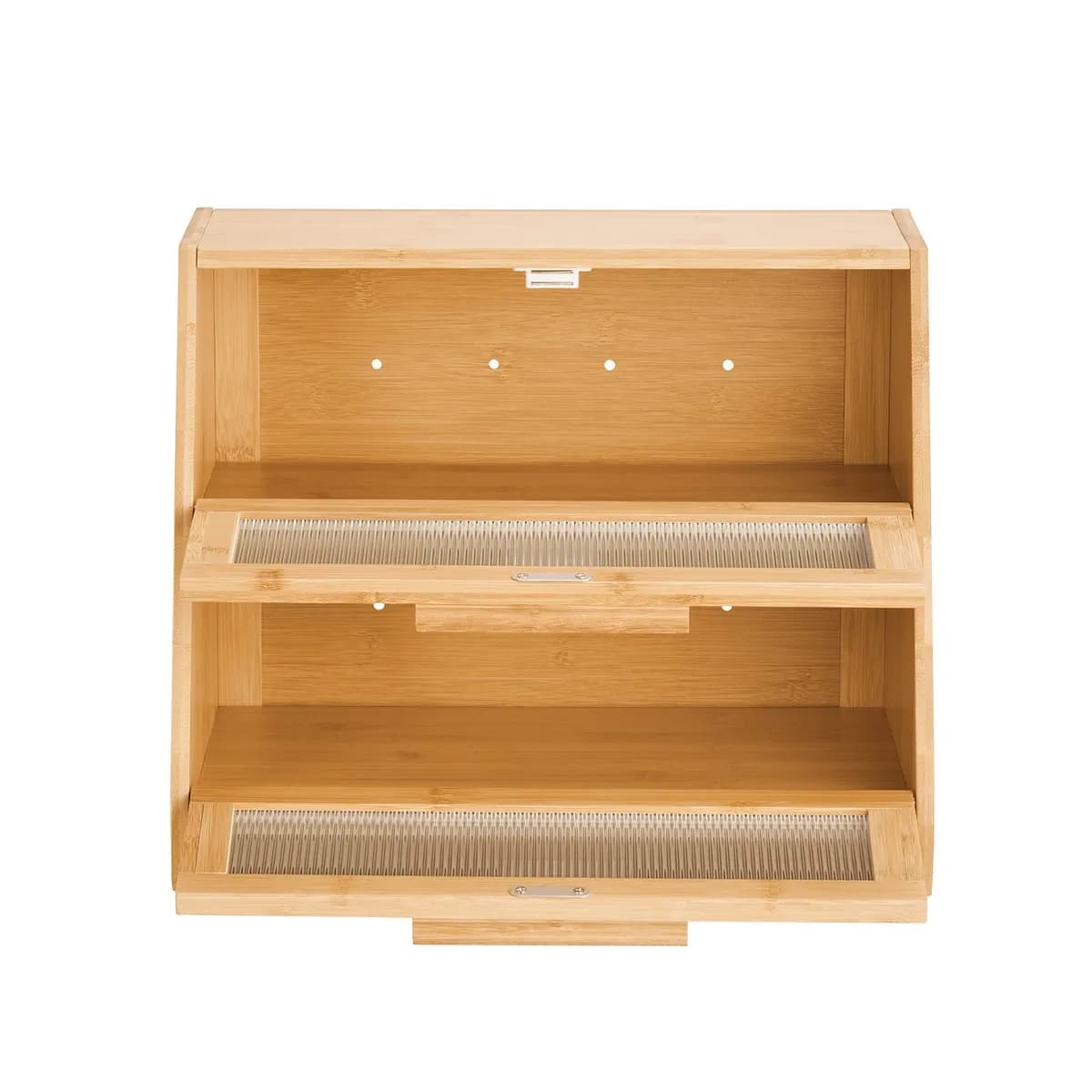
Bamboo and plastic storage solve different problems. Bamboo adds a warm countertop finish and works well for visible kitchen organization, while polypropylene plastic is lighter, easier to rinse, and better for repeated sorting. This comparison uses the real Sesoris Double-Layer Bamboo Bread Box and Stackable Storage Bins, then explains when each material is the sensible choice.
Updated October 6, 2026. The prices and product specifications below are taken from the Sesoris catalog at the time of writing. Measure your available shelf or counter before choosing a storage material.
What is the practical difference between bamboo and plastic storage?
Bamboo is a rigid natural material with a furniture-like appearance. It is most useful when the container stays visible and the contents need a little airflow. Plastic is more forgiving around spills, damp shelves, and frequent rearrangement. The better material depends on the room, the item being stored, and how often the container will be washed or moved.
| Criterion | Bamboo option | Plastic option | Practical reading | --- | --- | --- | --- | Durability | Rigid bamboo frame | Flexible PP plastic | Bamboo feels more furniture-like; PP handles everyday sorting | Capacity | Two fixed compartments | 24 individual bins | Plastic wins for many small items; bamboo suits grouped items | Cleaning | Wipe and keep dry | Wipe or rinse | Plastic is easier around spills | Price | $36.99 | $27.99 | Plastic costs less for a larger sorting set | Best location | Countertop or pantry shelf | Closet, workbench, or utility shelf | Choose based on exposure and access |
|---|
Which material lasts longer in everyday use?
A material does not last in isolation. A bamboo box can stay attractive for years when it is kept away from standing water and wiped dry after cleaning. Plastic bins do not need the same moisture caution, but thin plastic can deform if overloaded or exposed to high heat. For a busy household, the best durability test is whether the product matches the job rather than whether one material sounds stronger.
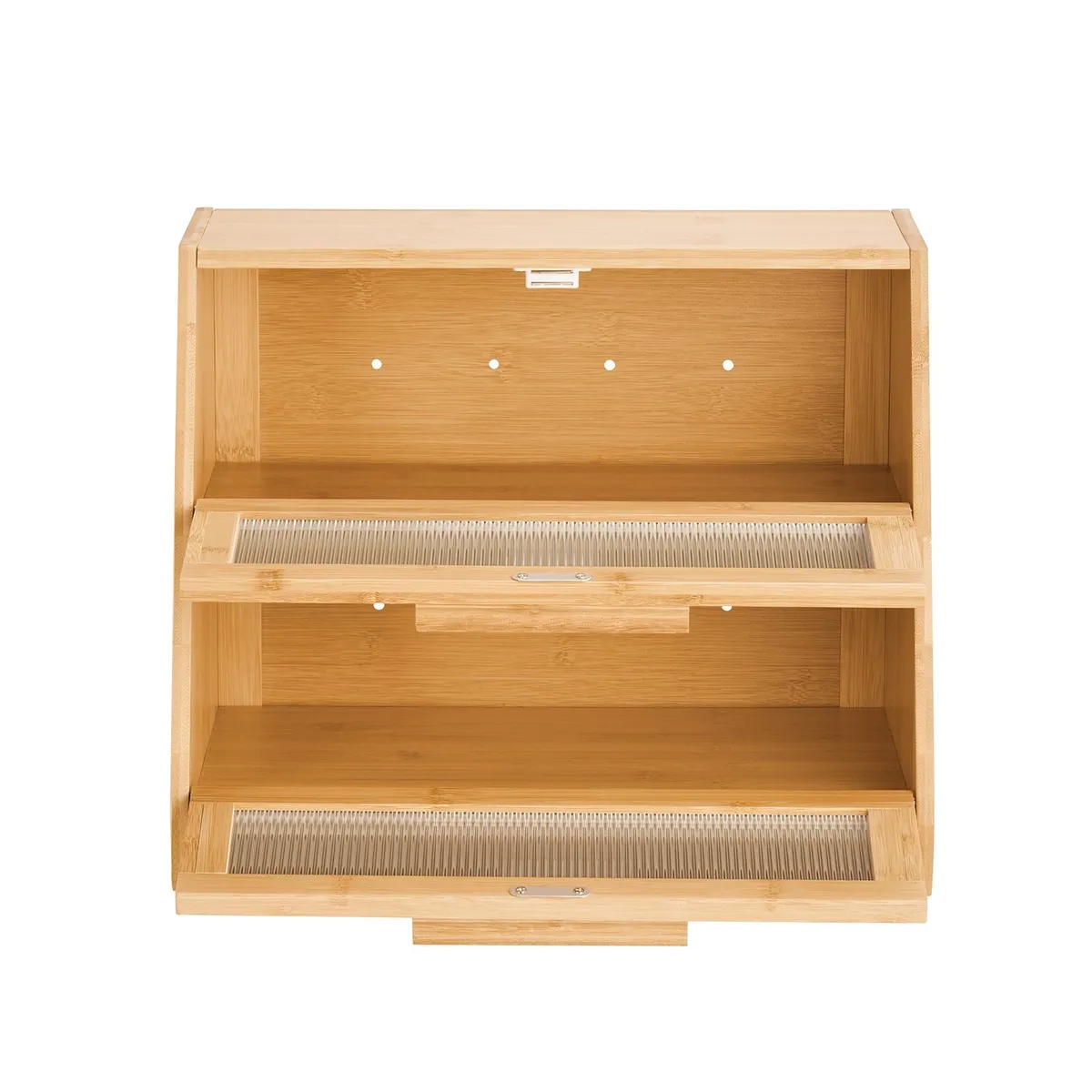
The Double-Layer Bamboo Bread Box uses natural bamboo, ribbed acrylic doors, rear ventilation holes, and two compartments. It is designed for bread, rolls, and pastries. It also includes a cutting board and stainless steel bread knife, so its value comes from combining storage with a daily countertop routine.
The Stackable Storage Bins set contains 24 open-front PP bins, 96 supports, and 48 labels. Each bin has an open front for quick access, and the two colors can separate categories. This makes it a better fit for small parts, craft materials, office supplies, or small pantry items than for a single large food item.
How much capacity do you get for the price?
The bamboo product costs $36.99 and provides two large compartments. It is not meant to maximize the number of separate categories. Instead, it keeps a small group of bread products together and visible. The plastic set costs $27.99 and provides 24 smaller compartments, which is a lower cost per sorting location when the items are small enough to fit.
Capacity should be measured in usable access, not only volume. A deep box that forces you to empty the contents is less useful than several shallow bins that keep categories visible. Before ordering, list the actual objects you want to store and compare their dimensions with the product dimensions.
Is bamboo or plastic easier to clean?
Plastic is the easier choice for messy areas because PP can be wiped without worrying about a finish. The Stackable Storage Bins should still be emptied before cleaning, and the supports should be dried fully before stacking. The bamboo bread box should be wiped with a lightly damp cloth and dried promptly. Avoid soaking bamboo or trapping moisture behind a closed door.
For food storage, cleaning also includes the surrounding counter. A bread box that looks good but blocks airflow can create stale or damp conditions. The rear ventilation holes on the bamboo model help, but they do not replace drying bread before storage.
When should you choose the bamboo option?
Choose the Double-Layer Bamboo Bread Box when the storage stays visible on a kitchen counter, the contents are bread or pastries, and appearance matters as much as capacity. The two tiers make it easy to separate loaves from rolls, while the included cutting board and knife reduce the number of loose accessories on the counter.
The bamboo option is not the best choice for a damp bathroom, a garage workbench, or a large collection of small parts. Those environments benefit from washable or individually labeled plastic containers.
When should you choose the plastic option?
Choose the Stackable Storage Bins when you need many categories, fast visual identification, and a lower entry price. The labels are useful for a family workspace, a hobby area, or a pantry where small packets need a consistent home. Because the fronts are open, these bins work best on a shelf where dust and splashes are limited.
The set is also useful as a sorting layer inside a larger storage system. Group the bins by task, label the supports, and leave a small gap so the front of each bin remains reachable. Do not treat the stated set count as a promise that every bin will fit on one shelf.
What should you measure before ordering?
For the bamboo bread box, measure the full counter footprint and the height needed to open both doors. The catalog dimensions are 15.35 by 10.24 by 12.60 inches. Leave clearance above the top door and enough space behind the box for airflow and cleaning.
For the plastic bins, measure shelf width, depth, and height with the supports installed. Each bin is 5.39 by 4.13 by 3.07 inches externally, while the interior is smaller. Plan for the support structure and labels, not just the outside of one bin.
Which choice is better for a small home?
Small homes benefit from storage that makes the next action obvious. The bamboo box reduces countertop clutter by giving bread a single visible home. The plastic set reduces search time by creating many small homes. If your main problem is one repeated category, choose bamboo. If your problem is many small categories, choose plastic.
Method and update date
This comparison scores the products against five visible criteria: durability, capacity, cleaning, price, and placement. It does not claim laboratory testing or a universal winner. Product names, dimensions, prices, and included parts were checked against the Sesoris catalog on October 6, 2026. Recheck the live product page before purchase because inventory and pricing can change.
Shop the compared products
Frequently asked questions
Is bamboo better than plastic for every kitchen? No. Bamboo is attractive for visible, dry countertop storage. Plastic is more practical for frequent washing, many small categories, or areas exposed to spills.
Do plastic bins save more space? They can improve access and sorting, but you still need to measure the shelf and support height. A larger number of bins does not automatically mean more usable capacity.
Can the bamboo bread box be washed under running water? Wipe it instead and dry it promptly. Avoid soaking natural bamboo or leaving moisture trapped inside.
Which option is cheaper? The catalog price checked on October 6, 2026 was $27.99 for the 24-pack plastic bins and $36.99 for the bamboo bread box. Compare the job each product performs, not only the ticket price.
Conclusion
Bamboo is the better fit for visible, dry, grouped storage where the container contributes to the room. Plastic is the better fit for many small categories, frequent sorting, and easier cleanup. Start with the five criteria in the table, measure the real space, and choose the material that makes your daily routine simpler.
How should a family organize the first week?
Use the first week to observe the routine before buying more containers. Put the items you reach for most often in the easiest position, then note which categories are repeatedly mixed together. The bamboo box can anchor one visible food routine, while the plastic bins can separate small categories that tend to spread across a shelf. Label the category rather than the brand so the system continues to work when the contents change. At the end of the week, remove any container that nobody used. A storage system earns its space by reducing decisions, not by holding the maximum number of objects.
What are the common buying mistakes?
The most common mistake is choosing a material before identifying the environment. A beautiful natural box is a poor fit for a damp shelf, and an open plastic bin is a poor fit for a category that sits untouched for months. The second mistake is measuring the outside of the cabinet instead of the usable interior. The third is ignoring cleaning access. Leave enough room to lift a bin, open a door, or wipe behind the container. Finally, avoid filling every compartment on day one. Empty capacity gives the system room to adapt and makes it easier to keep categories visible.
Liked this guide?
Get new organizing guides and the occasional new product by email. No spam, unsubscribe anytime.
Related articles
Explore more articles
- Complete Guide to Home Office Organization for Maximum Productivity in 2026
- 35 Creative Wall Shelf Storage Ideas to Transform Your Home Organization in 2026
- 30+ Walk-In Closet Organization Ideas to Transform Your Dream Wardrobe Space in 2026
- 25 Creative Wall to Wall Shelf Ideas That Transform Your Home Storage in 2026
- 20+ Creative Kitchen Cabinet Organizer Ideas to Transform Your Cooking Space in 2026
- Enclosed Dish Racks: Dust-Free & Pest-Free Kitchen Storage
- Wooden Dish Racks: Natural Aesthetic Beauty for Your Kitchen
- 25+ Creative Kitchen Organizer Ideas to Transform Your Cooking Space in 2026