
Modular vs Fixed Storage: Which System Fits Your Space?
Compare modular and fixed storage using real Sesoris pull-out organizers, with capacity, installation, access, price, and flexibility scored in one guide.
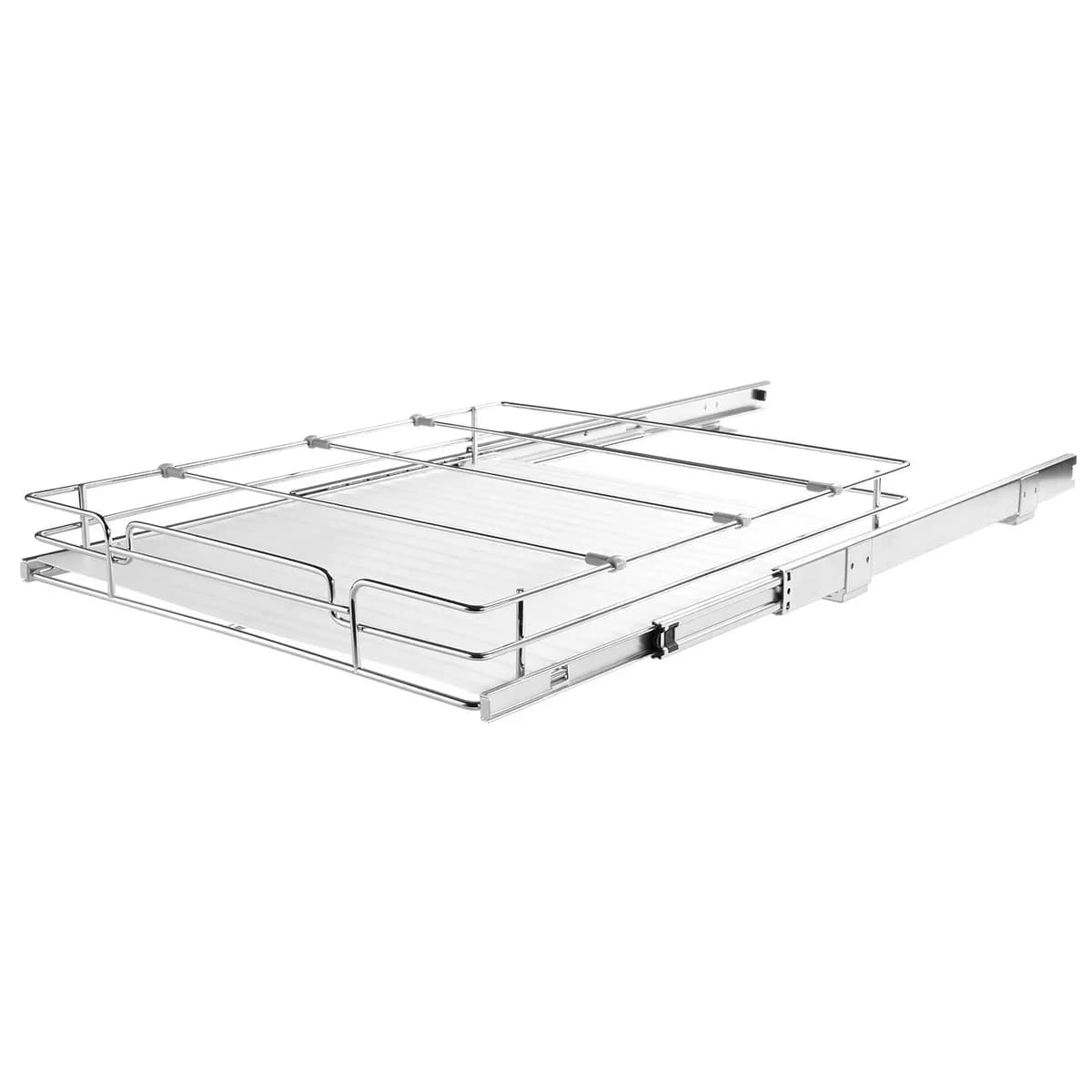
Modular storage is designed to grow or move with your layout. Fixed storage is designed to fit one measured space and stay there. This comparison uses three real Sesoris pull-out organizers to show how width, installation, access, price, and future flexibility change the buying decision.
Updated October 6, 2026. The products below are catalog items, not hypothetical examples. Check the cabinet opening and current stock before ordering.
What makes a storage system modular or fixed?
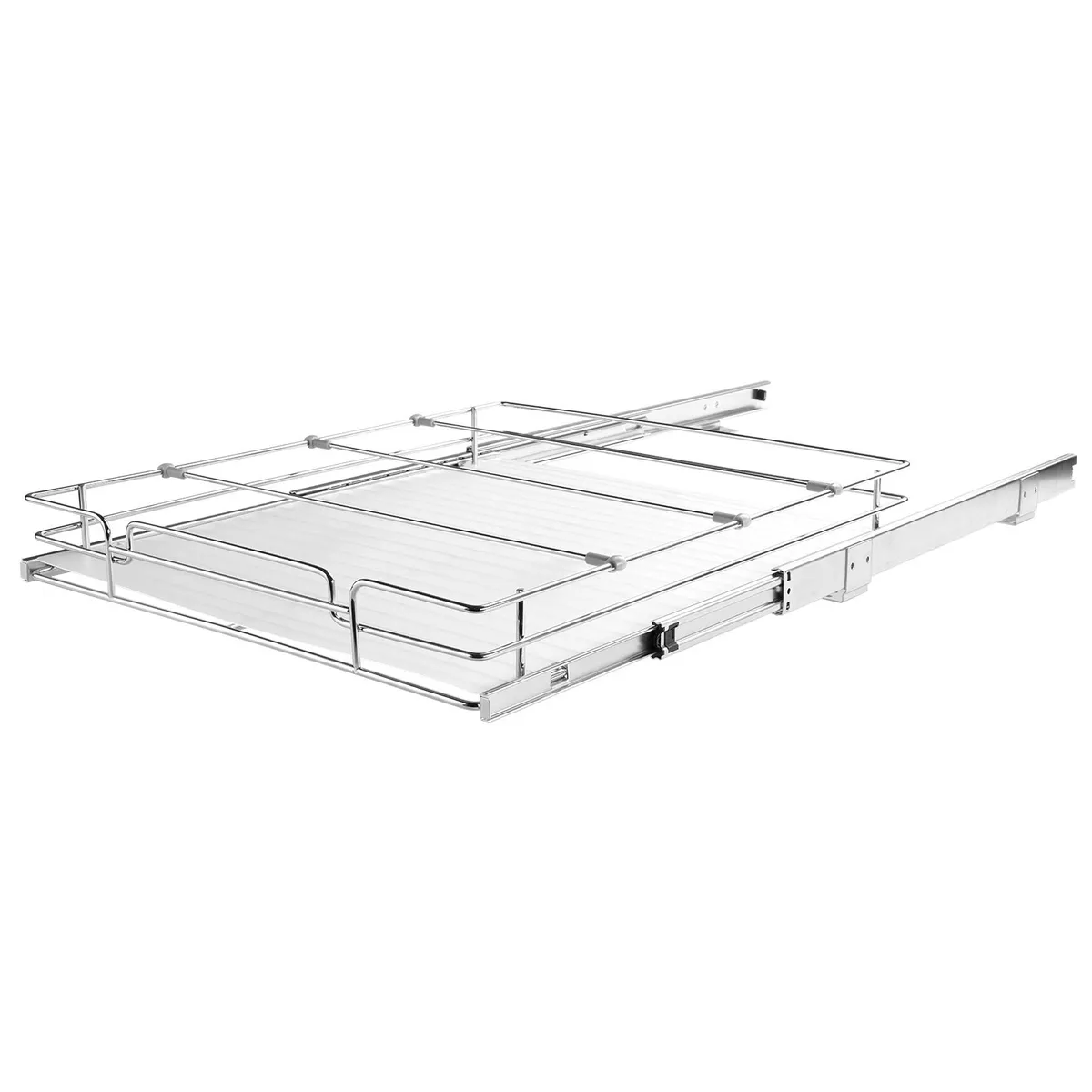
A modular system can be expanded, rearranged, or reused in another compatible space. A fixed system is selected for a precise opening and usually needs a more permanent installation. The Sesoris pull-out organizers are fixed-fit products for a cabinet opening, but choosing among 11.5, 14, 17, and 20 inch widths lets you build a measured system around the room rather than forcing one universal size.
| Criterion | Modular approach | Fixed-fit approach | Practical reading | --- | --- | --- | --- | Capacity | Add compatible units over time | Uses one measured opening | Fixed wins when the cabinet is known | Installation | May move or reconfigure | Screw-mount or adhesive fit | Fixed needs careful measuring | Access | Rebuild layout as needs change | Full or partial pull-out access | Fixed gives predictable reach | Price | Pay as the system grows | Pay for the selected unit | Compare the actual opening | Flexibility | High across compatible spaces | High only in its target opening | Modularity has a compatibility cost |
|---|
How do the Sesoris sizes compare?
The 11.5 inch organizer is the narrowest option and reaches 27.2 inches when extended. It needs at least a 14 inch wide, 17.5 inch deep, and 7 inch high internal opening. At $25.99, it is the most economical route for a narrow base cabinet or an under-sink area with pipes and hinges to work around.
The 14 inch organizer is 21 inches deep and holds up to 28.6 pounds. It needs at least 15.1 inches of width, 21 inches of depth, and 3.3 inches of height. Its $53.99 price includes a liner and three divider rods, so it suits a shallow, low cabinet where the contents need to slide forward.
The 17 inch organizer needs at least 19.3 inches of width, 22.2 inches of depth, and 7.3 inches of height. It extends to 41.8 inches and costs $42.99. The 20 inch model uses the same 41.8 inch extension and 28.6 pound capacity, needs 22.3 inches of width, and costs $52.99. These are fixed-fit choices because a few inches of mismatch can prevent installation.
Which system gives better access?
Pull-out access changes the workflow more than a deeper shelf does. Instead of reaching past the front row, you pull the basket toward you and see the back. That makes fixed-fit organizers strong for cabinets where the problem is wasted depth. The 17 and 20 inch products are especially useful when a full-extension basket can be installed without hitting hinges, plumbing, or a door frame.
A modular approach is better when the room changes often. You can assign one unit to baking supplies, one to cleaning refills, and another to cookware, then change the labels as the household changes. The tradeoff is that every new unit still needs a compatible width and a safe load plan.
What is easier to install?
The 14, 17, and 20 inch organizers screw into the cabinet floor and include rails, a liner, and divider rods. Installation is predictable but not reversible in the same way as a freestanding bin. Measure twice, locate hinges and face frames, and confirm that the basket can extend without striking the opposite cabinet.
The narrow 11.5 inch model also uses screw-mounted rails. Its smaller footprint helps in tight spaces, but narrow does not mean measurement-free. Pipes under a sink and uneven cabinet floors can still make the installation unsuitable.
Which option is best for a rental or changing layout?
A fixed screw-mount organizer is best when the cabinet is yours and the improvement will stay in place. For a rental or a frequently changing layout, a freestanding or adhesive modular solution may be easier to remove. The Sesoris slide-out drawer in black steel is another catalog option with adhesive mounting and a 55 pound capacity, but it has a different footprint and should be measured separately.
Do not call any storage system modular just because it has dividers. Modularity means the system can change without replacing the whole unit. A divider rod changes the inside of one basket, while a compatible set of separate units changes the layout.
How should you compare price and value?
The lowest price is not automatically the best value. The $25.99 narrow organizer can be the right choice if it solves a cabinet that no wider unit can fit. The $42.99 17 inch model may provide more reachable width for a cabinet that meets the opening requirements. The $52.99 20 inch model is sensible only when the extra width is usable and the cabinet can accept it.
Compare the price against the space recovered, the time saved per use, and the likelihood that you will reuse the unit. A fitted pull-out that removes daily bending can be worth more than a cheaper bin that still leaves the back of the cabinet inaccessible.
What should you measure before choosing?
Record internal width at the narrowest point, internal depth with the door open, clear height, hinge position, face-frame thickness, and the path the basket will travel. Use the product minimums as a hard gate. Also measure the height of the items you want to store so the basket and divider rods do not create a new fit problem.
Method and update date
This comparison uses five criteria: capacity, installation, access, price, and flexibility. It is based on the catalog specifications checked October 6, 2026, not on a physical installation test. The products and prices can change, so the live product page is the source to recheck before ordering.
Shop the compared products
- Pull-Out Cabinet Organizer, 11.5 in. Wide - Pull-Out Cabinet Organizer, 14 in. Wide - Pull-Out Cabinet Organizer, 17 in. Wide - Pull-Out Cabinet Organizer, 20 in. Wide - Slide-Out Cabinet Drawer, Black Steel
Frequently asked questions
Is a fixed organizer better than a modular system? It is better when the opening is measured and the problem is deep, hard-to-reach storage. Modular systems are better when the room or categories change often.
Which organizer is best for a narrow cabinet? Start with the 11.5 inch model, then verify the listed 14 inch minimum opening and 17.5 inch depth.
Can I install a 20 inch basket in a 19 inch cabinet? No. The listed minimum opening is 22.3 inches, and forcing a mismatch risks the cabinet and the slide rails.
Does a divider make the product modular? No. Dividers organize one basket. A modular system lets you add or rearrange compatible units.
Conclusion
Choose fixed-fit storage when accurate measurement and predictable access matter most. Choose modular storage when the household, room, or categories are likely to change. The Sesoris catalog gives several widths, so the best decision is not the largest unit. It is the unit that fits the real opening and removes the most daily friction.
How can you plan a system that can change later?
Start with the most stable category and reserve the easiest-to-reach opening for it. For example, a cabinet that will always hold daily cooking supplies is a good candidate for a fixed pull-out organizer. A cabinet that may become a cleaning station or pantry later should have a more flexible plan. Record the internal measurements in a note, including the narrowest width and the position of hinges or pipes. That record lets you compare future products without measuring again. If you add several units, use one naming system for labels and leave one small area uncommitted so the layout can change without a full rebuild.
What does a successful installation look like?
A successful installation is quiet, stable, and easy to reverse from the contents side. The basket should travel without scraping the cabinet, the door should close normally, and the load should remain balanced when the basket is extended. Test the empty rails first, then add a light load, and only then organize heavier items. Keep the heaviest objects low and near the center. If the cabinet floor flexes or the rails do not sit level, stop and correct the fit before loading it. A measured installation is safer and usually faster than repairing a rushed one.
Liked this guide?
Get new organizing guides and the occasional new product by email. No spam, unsubscribe anytime.
Related articles
Explore more articles
- Budget-Friendly Dish Racks for Kitchen Sinks Under $15 (2026)
- Organization and Cleaning: Complete Tutorial Guide to Transform Your Home in 2026
- Complete Guide to Home Office Organization for Maximum Productivity in 2026
- Craft Storage Room Ideas: Transform Your Creative Space with Smart Organization in 2026
- Rubbermaid Food Storage Containers: Buying Guide
- Makeup Organizer: Ultimate Guide to Beauty Storage Solutions 2026
- Best Foldable Travel Bags: Light, Practical, and Hassle-Free (2026)
- Best Over-the-Sink Dish Drying Racks: Complete 2026 Review & Buying Guide for a Smarter Kitchen