
Lidded Box vs Open Basket Storage: Which Keeps Items Easier to Use?
Compare lidded and open storage for visibility, dust control, access, cleaning, and price using real Sesoris products and a five-criterion decision table.
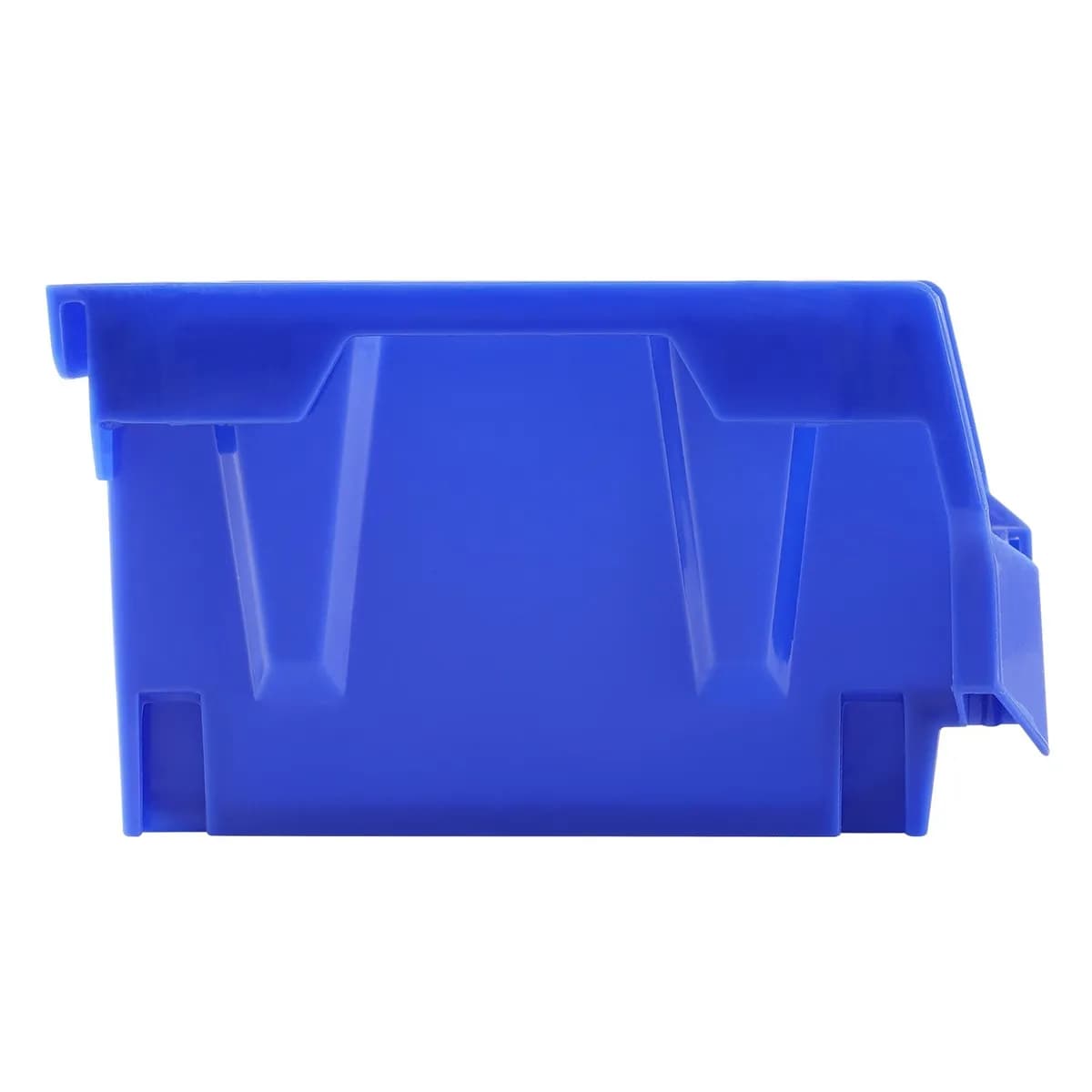
A lidded box protects and hides its contents, while an open basket makes the next item quick to see and reach. Neither format is universally better. This Sesoris comparison uses the real Stackable Storage Bins, Pull-Out Cabinet Organizers, and Double-Layer Bamboo Bread Box to match storage form to daily behavior.
Updated October 6, 2026. Catalog prices and specifications were checked on this date. Measure the storage area and the items before ordering.
What is the main difference between a lidded box and an open basket?
A lidded box creates a barrier between the contents and the room. That helps with dust, visual clutter, and seasonal storage, but it adds a step every time you need something. An open basket removes that step. It is strongest when the contents are used often, need ventilation, or benefit from immediate visual sorting.
| Criterion | Lidded box | Open basket | Practical reading | --- | --- | --- | --- | Visibility | Contents are hidden until opened | Contents are visible immediately | Open wins for daily retrieval | Dust control | Stronger barrier | Needs a clean shelf | Lidded wins in dusty areas | Access speed | Open, then search | Reach and take | Open wins for high-frequency items | Cleaning | Clean the box and lid | Wipe exposed surfaces | Choose based on the room | Price | Often one large container | Can be many smaller units | Compare the useful compartments |
|---|
Which format is better for frequently used items?
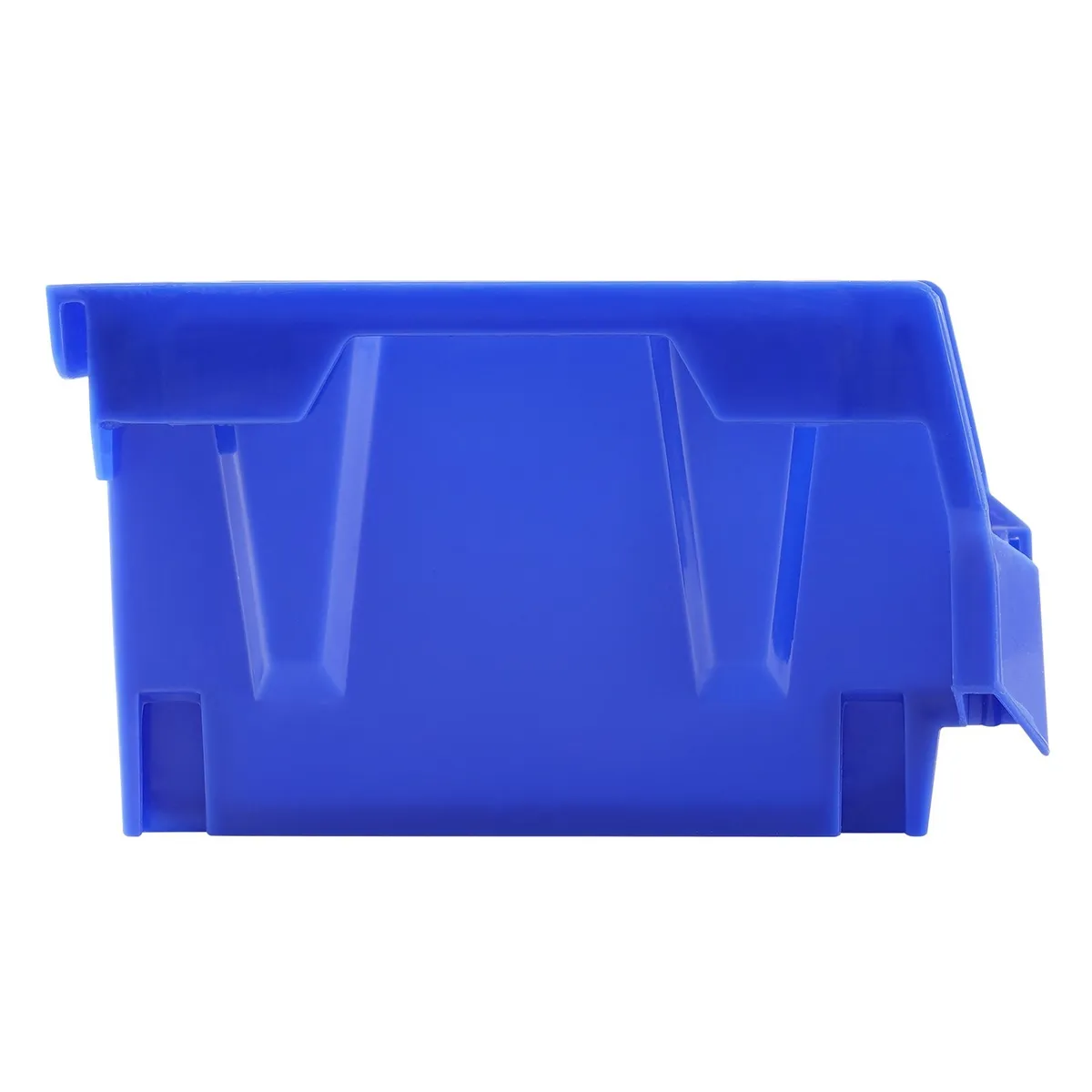
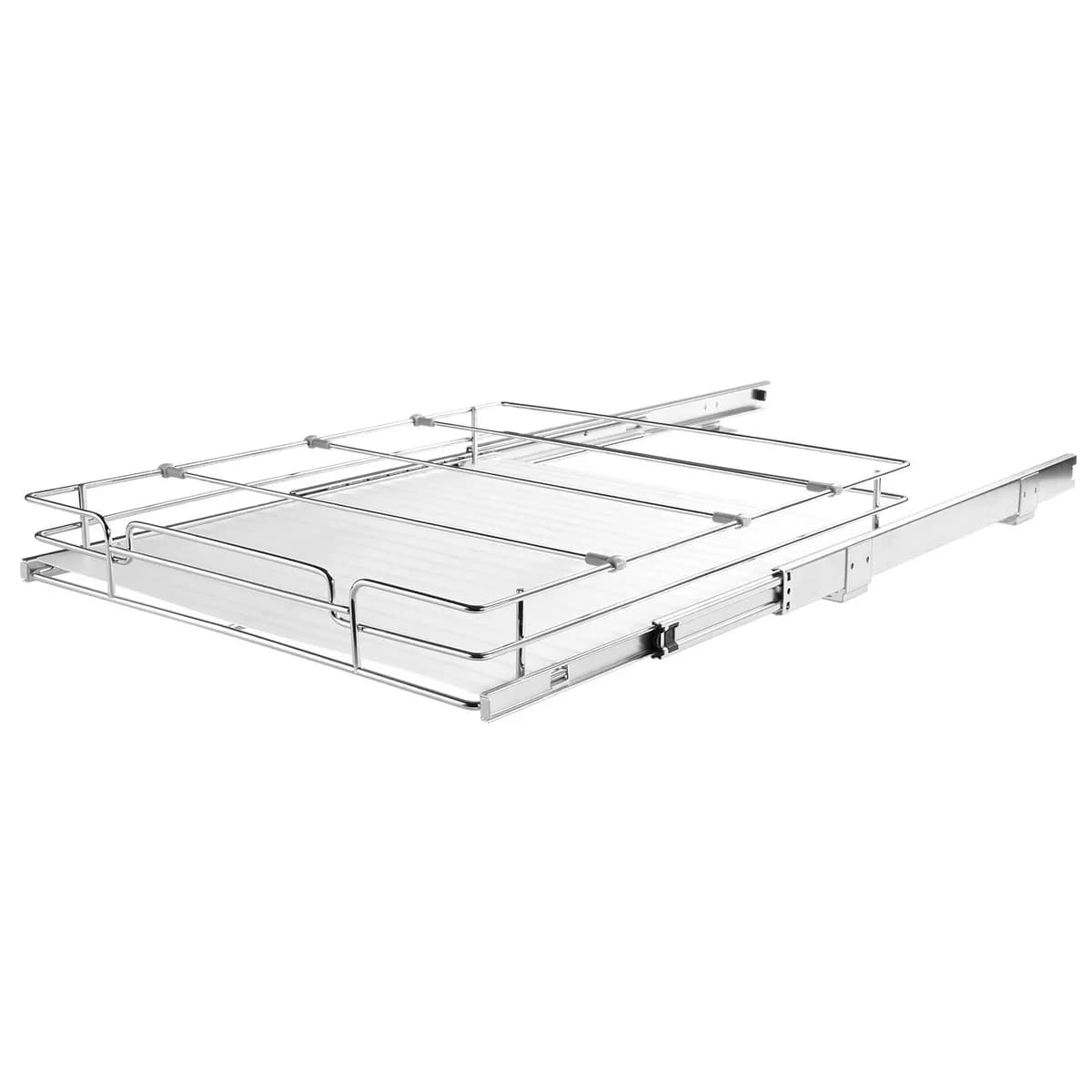
Open storage is usually better for items used every day. The Stackable Storage Bins have open fronts, labels, and included supports, so a small part or supply can be identified without opening a lid. The Pull-Out Cabinet Organizers add another access advantage by bringing a basket forward from a deep cabinet.
The open format only works when the shelf is maintained. If items are returned to the wrong bin, visibility turns into visual noise. Use one label per category and leave a little space at the front so the contents remain identifiable.
When does a lidded box make more sense?
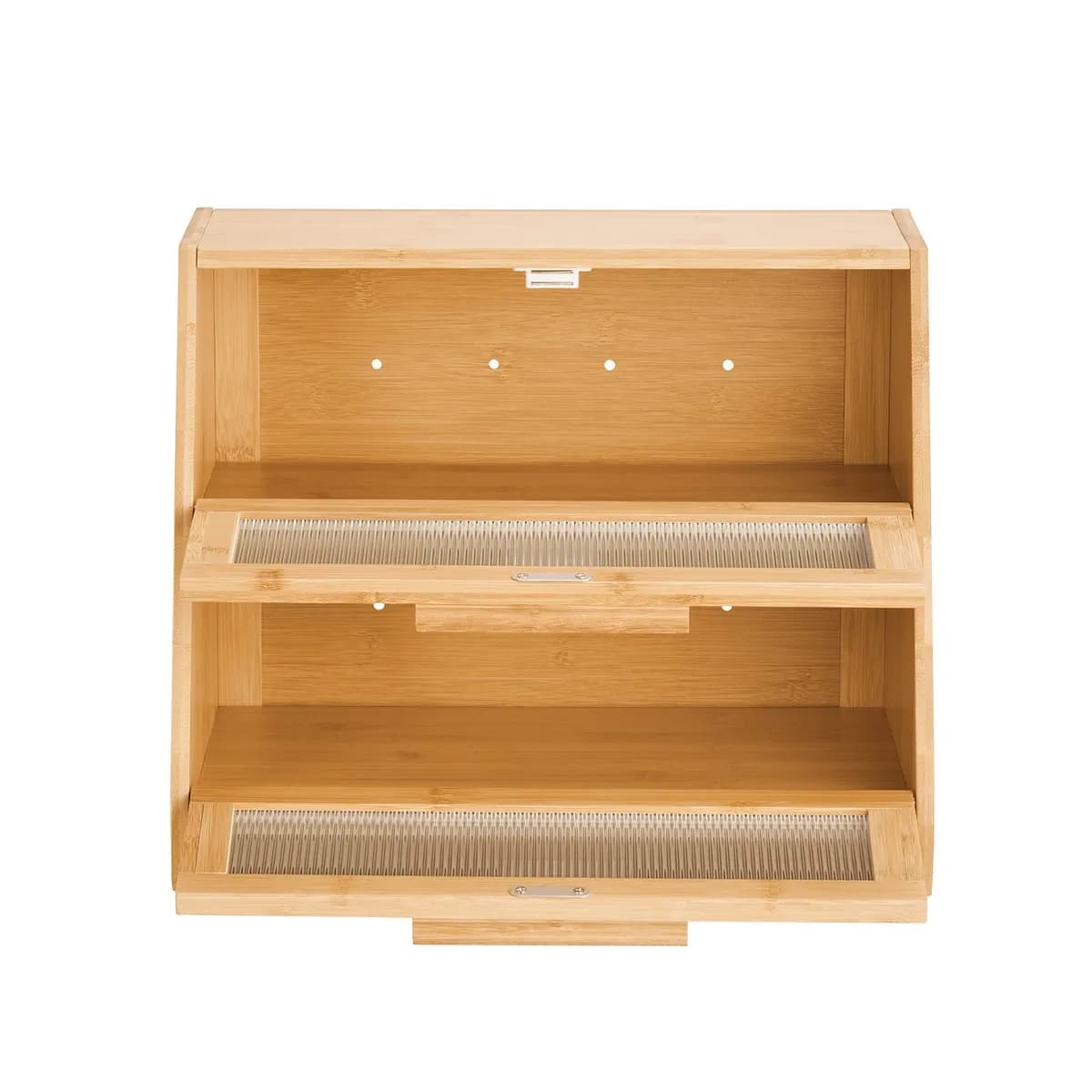
A lidded box is useful for seasonal items, delicate materials, dust-sensitive accessories, and categories that are not accessed every day. It also helps when an open shelf would make a room look busy. For food-related storage, the Double-Layer Bamboo Bread Box uses doors and ventilation holes, creating a contained countertop zone without turning the bread into a loose pile.
Do not use a sealed container as a substitute for drying damp items. Let shoes, textiles, or food cool and dry as appropriate before closing a lid. The protection benefit depends on the condition of the contents when they go inside.
How does a pull-out basket change the decision?
A pull-out basket is open storage with improved reach. The 14 inch organizer brings the contents of a 21 inch deep cabinet forward and includes three divider rods. The 17 and 20 inch versions extend to 41.8 inches, which can make a fixed cabinet behave more like a drawer. They are useful when the main problem is access rather than dust.
The product must fit the cabinet. The 14 inch organizer needs a minimum 15.1 inch opening, while the 17 inch model needs 19.3 inches and the 20 inch model needs 22.3 inches. The open basket cannot compensate for a cabinet that is too narrow or too shallow.
What is easiest to clean?
Open plastic bins are easy to wipe because there is no lid track or hinge. The Stackable Storage Bins are made from PP plastic and can be separated from their support structure before cleaning. Keep the bins dry before restacking them so labels and supports remain useful.
The bamboo bread box needs more care. Wipe its surfaces rather than soaking them, and dry the interior. A pull-out wire basket can be wiped in place, but the cabinet floor and rails should also be checked for crumbs or spills because hidden debris reduces the benefit of improved access.
How do visibility and dust control trade off?
Visibility helps people return items correctly. Dust control protects items that sit for long periods. A practical home often needs both formats in different zones: open baskets at eye level for daily supplies, and lidded containers on higher shelves for seasonal or occasional items.
If a household has children, use open bins for safe, frequently used categories and lidded or locked storage for anything that needs supervision. The storage format should support the safety rule, not work against it.
Which format gives more value for the price?
The Stackable Storage Bins cost $27.99 for 24 bins, supports, and labels. Their value comes from many small compartments. The bamboo bread box costs $36.99 and combines two compartments with a cutting board and knife. The pull-out organizers range from $25.99 to $53.99 depending on width and opening requirements.
Compare useful access points, not only the number of pieces. Twenty-four tiny bins are not better than one large box if your items are bulky. A two-tier bread box is not better than a bin wall if you are sorting dozens of small categories.
What should you measure before buying?
Measure the storage opening, usable depth, height above the container, and the path needed to open a door or pull out a basket. For bins, include the supports and the label area. For the bread box, include door clearance above the 12.60 inch height. For cabinet organizers, use the product minimum opening, not the nominal cabinet width.
Method and update date
The comparison uses five criteria: visibility, dust control, access speed, cleaning, and price. Product details were checked against the Sesoris catalog on October 6, 2026. This is a practical buying framework, not a laboratory test. Recheck the live product page for current stock, price, and measurements.
Shop the compared products
- Stackable Storage Bins, 24 Pack - Double-Layer Bamboo Bread Box - Pull-Out Cabinet Organizer, 14 in. Wide - Pull-Out Cabinet Organizer, 17 in. Wide - Pull-Out Cabinet Organizer, 20 in. Wide
Frequently asked questions
Are open baskets unhygienic? Not by default. They need a clean shelf and regular wiping. They are often more practical for items that are used and returned every day.
Do lidded boxes prevent all dust? They reduce dust exposure, but the lid, seal, and contents still need cleaning. A closed container should not trap damp items.
Are pull-out organizers open baskets? They are open baskets with slide rails. They improve access in deep cabinets, but they are still a fixed-fit installation.
Which format is best for a small room? Use open storage for a few daily categories and lidded storage for low-frequency items. This balances quick access with visual calm.
Conclusion
Choose open baskets when visibility and speed matter, lidded boxes when protection and visual calm matter, and pull-out organizers when a deep cabinet is the real problem. A mixed system is usually strongest. Start with the five criteria, measure the space, and give each category the format that matches how often it is used.
How should you divide categories between the two formats?
Use a simple frequency rule. Daily items go in open storage at the most reachable height. Weekly items can use a pull-out basket or an open bin behind a clear label. Seasonal and spare items can use a lidded box on a higher shelf. The rule is easy for other household members to understand, which matters more than a complicated color system. If an item repeatedly ends up outside its assigned container, either the category is too broad or the container is inconvenient. Change the system instead of blaming the user. Storage should make the correct action the easiest action.
How can you keep open storage from looking cluttered?
Limit each open basket to one category and avoid filling it above the point where the front label disappears. Use matching labels and group containers by frequency rather than by the color of the contents. A shallow open basket is often easier to keep tidy than a deep one because objects do not disappear beneath the front row. Schedule a short reset when the shelf is wiped. For a closed box, label the outside with the category and the date of the last check. The combination of visible labels and limited categories gives open storage speed without making the room feel unfinished.
A simple monthly review routine
Once a month, empty one shelf at a time and check whether each category still matches its container. Wipe exposed surfaces, replace damaged labels, and move low-frequency items into a lidded zone. This short review prevents an open basket from becoming a catch-all and prevents a closed box from becoming forgotten storage. Keep the product dimensions and the date of the last review in your household notes so future purchases can be compared with the space you already have.
Liked this guide?
Get new organizing guides and the occasional new product by email. No spam, unsubscribe anytime.
Related articles
Explore more articles
- Storage Bins with Lids: Complete 2026 Home Guide
- Kitchen Storage Rack: How to Choose the Best One 2026
- 25+ Best DIY Garage Storage Solutions to Transform Your Space in 2026
- Practical Home Organizing Tips That Keep Your House Tidy
- Small Apartment Kitchen Organization Guide
- Productive WFH Setup for a Small Home
- 20+ Brilliant Storage Space Ideas for Small Bedrooms: Maximize Every Inch in 2026
- Container Storage Box: Best Space-Saving Solutions Guide 2026