
Recessed Wall Shelf Ideas: 15 Built-In Niches for Every Room
Recessed wall shelf ideas for bathrooms, kitchens, living rooms and bedrooms, plus how deep a niche can be, how to check the wall and a simple between-the-studs build.
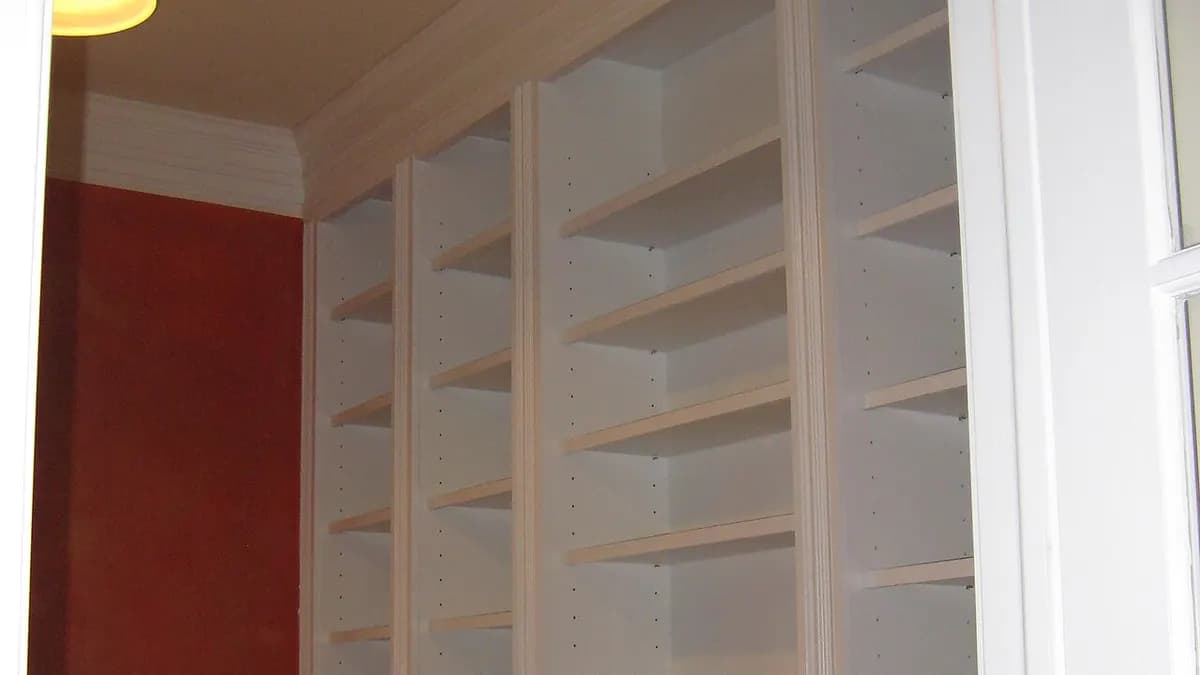
A recessed wall shelf is a shelf built into the wall cavity instead of hung on the surface, so it adds storage without sticking out into the room. In a typical interior wall framed with 2x4 studs at 16 inches on center, the hollow space between two studs is about 14.5 inches wide and 3.5 inches deep, which is enough for books, toiletries, spices, plants and small decor. The best spots are interior walls in bathrooms, hallways, kitchens and beside a bed, as long as no wires, pipes or ducts run through that bay.
Hero photo credit: The Finishing Company Richmond Va.jpg) / Wikimedia Commons, CC BY 2.0, cropped
This guide walks through 15 recessed wall shelf ideas room by room, how deep and wide a niche can really be, how to check a wall before you cut, a step-by-step build for a simple between-the-studs shelf, and when a surface shelf is the smarter choice. If you would rather not open a wall at all, our roundup of floating shelf ideas covers the no-demolition route.
What Is a Recessed Wall Shelf?
A recessed shelf, often called a wall niche, is an opening cut into the drywall and finished as a small box, with one or more shelves inside. Because it uses the empty space between the wall studs, the shelf sits flush with the wall or only slightly proud of it. Nothing hangs into a walkway, and there are no brackets to bump into.
Wall studs are the vertical framing members inside the wall. According to the Wikipedia article on wall studs, they are usually spaced 16 or 24 inches apart. A standard 2x4 stud actually measures 1.5 by 3.5 inches, as shown in the dimensional lumber table on Wikipedia's lumber page. Those two numbers decide almost everything about the size of a recessed shelf you can build without changing the framing.
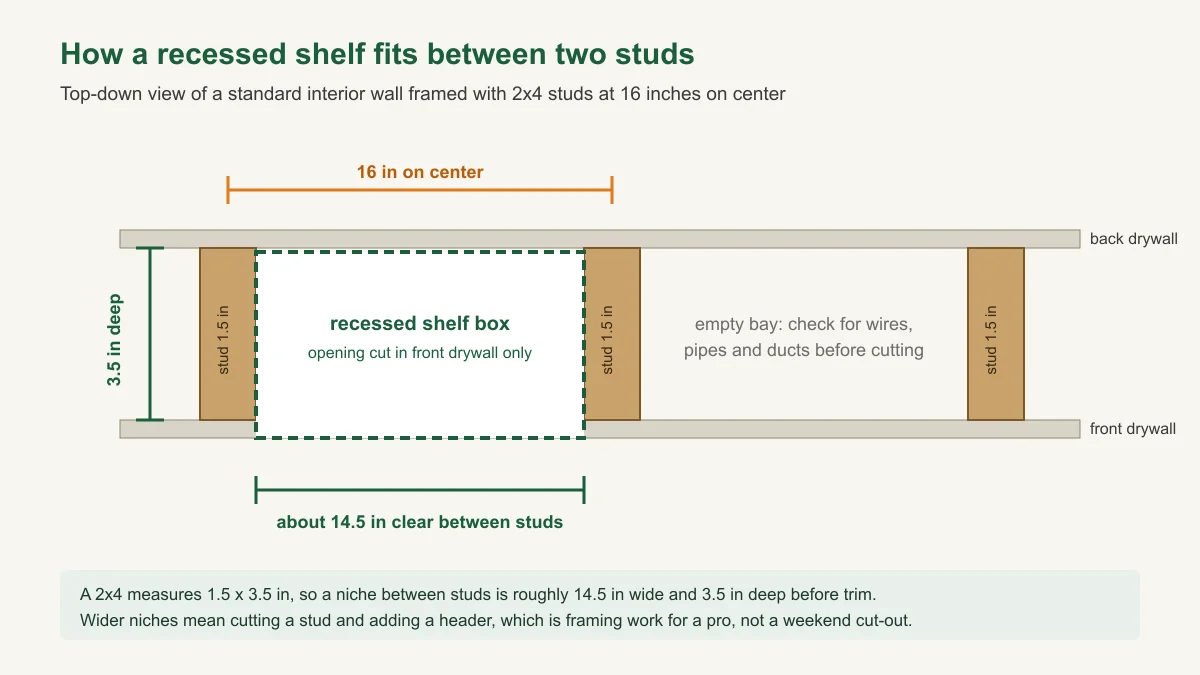
Recessed shelves work best for items that are shallow but used often. Think shampoo bottles in the shower, a row of paperbacks in a hallway, spice jars next to the stove, or a phone and glasses beside the bed. They are less useful for deep items such as dinner plates, large baskets or a printer, which need the 10 to 12 inches of depth a cabinet or surface shelf gives.
Recessed vs Surface-Mounted Shelves at a Glance
Before you pick an idea, it helps to see what a niche gives you and what it costs you compared with a normal wall shelf.
| Feature | Recessed wall shelf | Surface-mounted shelf |
|---|---|---|
| Depth available | About 3.5 in in a 2x4 wall, 5.5 in in a 2x6 wall | Whatever the bracket allows, often 8 to 12 in |
| Width without reframing | One stud bay, about 14.5 in at 16 in spacing | Any width, as long as it reaches studs or anchors |
| Sticks into the room | No, sits flush with the wall | Yes, by the full shelf depth |
| Skill level | Cutting drywall, building a box, finishing and painting | Drilling, leveling and anchoring |
| Easy to undo | No, the wall must be patched | Yes, fill a few screw holes |
| Best rooms | Bathrooms, showers, hallways, beside beds, kitchen backsplash walls | Living rooms, offices, above desks and sofas |
Table 1. Recessed and surface-mounted wall shelves compared. Depth figures assume standard 2x4 or 2x6 framing with actual dimensions of 3.5 in and 5.5 in.
Recessed Wall Shelf Ideas for the Bathroom
The bathroom is where recessed shelves earn their keep, because floor space is tight and anything that sticks out gets knocked off. If your bathroom wall is already tiled or you rent, start with our bathroom shelf ideas instead, which do not need any demolition.
- Shower niche for bottles. A horizontal niche at chest height keeps shampoo, conditioner and body wash off the floor and the tub edge. Plan it during a remodel, before the tile goes up, because the niche needs the same waterproofing as the rest of the shower wall and its bottom should slope slightly toward the shower so water does not pool.
- Two-shelf niche beside the vanity. A tall, narrow niche between two studs next to the sink holds cotton pads, a toothbrush cup and a small plant without crowding the counter.
- Niche above the toilet. The wall behind a toilet often has an empty stud bay. A shallow niche there replaces the classic over-the-toilet rack and holds spare toilet paper and a candle.
- Recessed medicine cabinet. If you want doors, a recessed medicine cabinet is the same idea with a mirror on front. It hides clutter and leaves the wall above the sink flat.
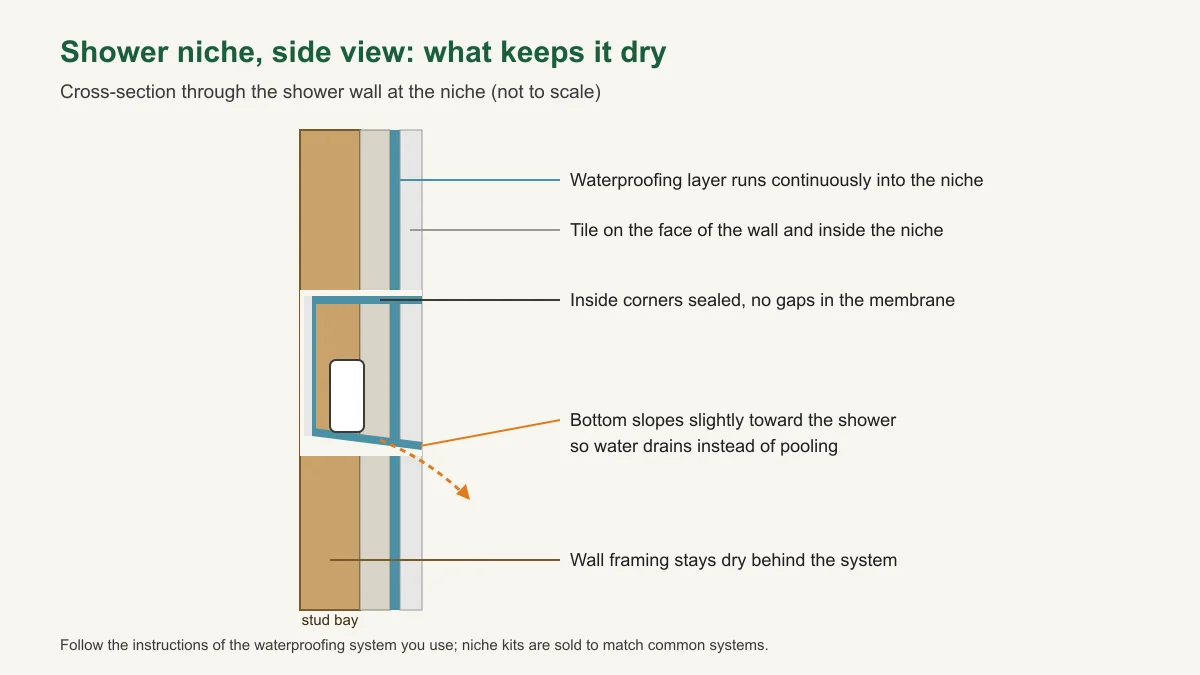
For more ways to use every inch around the sink and tub, see our guide to bathroom wall shelf ideas.
Recessed Shelf Ideas for the Living Room and Hallway
In living spaces, a recessed shelf is more about display than daily storage. It gives a wall a built-in look without adding furniture that eats into the floor.
- Book nook between the studs. A narrow niche with three or four shelves fits a vertical row of paperbacks. Line the back in a darker paint so the books stand out.
- Lit display niche. Add a small LED strip to the top of the opening to light a vase, a sculpture or a framed photo. Plan the wiring before you close the wall, and use a fixture rated for the space.
- Built-in bookcase wall. For a full wall of shelves, carpenters often build cabinets that fill an alcove or a whole wall from floor to crown molding, so the shelving looks like part of the room. That is a bigger project than a single niche, but it follows the same principle of making storage sit flush with the wall.
- Hallway key and mail niche. A small niche near the front door holds keys, sunglasses and the day's mail. Keep it shallow and at about chest height so it does not catch bags as people pass.
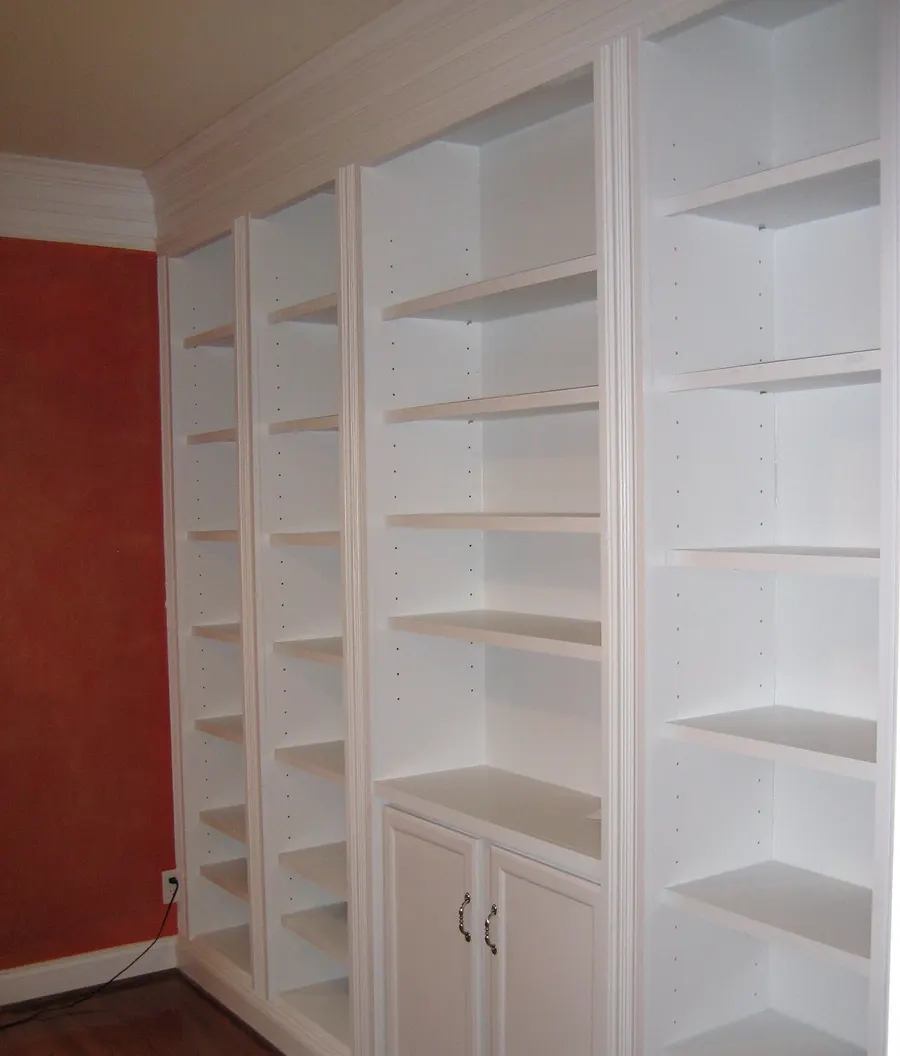
Photo credit: The Finishing Company Richmond Va.jpg), cropped / Wikimedia Commons, CC BY 2.0
If you want shelving that frames a television instead, our floating shelf TV wall ideas show layouts that need no wall cutting, and our living room shelving ideas cover freestanding options.
Recessed Shelf Ideas for the Kitchen
Kitchen walls carry more plumbing, wiring and venting than most rooms, so check carefully before cutting. When a bay is clear, a niche keeps everyday items close to where you cook.
- Spice niche next to the range. Spice jars are only 2 to 3 inches deep, so they fit a 3.5 inch niche well. Keep the niche to the side of the cooktop rather than directly behind it, where heat and splatter are worst.
- Cookbook niche. A single wide shelf holds a few cookbooks on their sides at eye level, off the counter and away from spills.
- Pantry wall niche for cans. Between-the-studs shelves on the inside of a pantry wall turn dead space into a rack for cans and small jars, one row deep so nothing gets lost behind something else.
For more kitchen storage on the surface of the wall, see our kitchen wall shelf ideas.
Recessed Shelf Ideas for the Bedroom
- Niche nightstand. A niche in the wall beside the bed holds a phone, glasses and a book, which frees up floor space in a small bedroom where a nightstand does not fit.
- Headboard wall niche. A long, shallow niche across the headboard wall works as a ledge for lamps and books. Because it spans several studs, it usually needs framing changes and is a job for a pro.
- Closet wall niche. The wall inside a closet is rarely seen, which makes it a forgiving place to practice. Small shelves there hold folded scarves, belts or shoe-care supplies.
- Kids' room toy display. A row of small niches at a child's height shows off favorite figures and books without anything that can tip over.
See our bedroom wall shelf ideas for surface options that pair well with a niche.
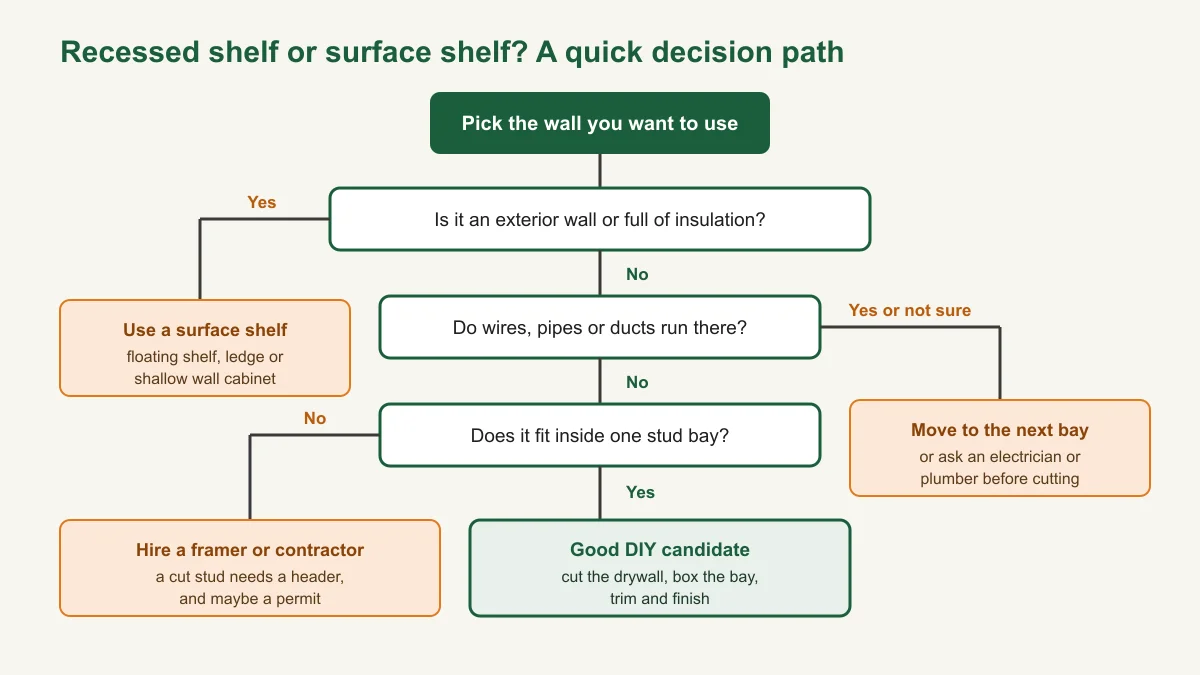
Before You Cut: How to Check the Wall
A recessed shelf is only as good as the wall behind it. Work through these checks before you mark anything on the drywall.
- Find the studs. Use a stud finder or tap for the solid sound, then confirm with a thin finish nail in a spot that will be cut out anyway. Mark both edges of the bay.
- Look for what is inside. Outlets, switches, vents and fixtures on either side of the wall are a sign of wires, pipes or ducts nearby. Cut a small inspection hole first and look in with a flashlight before you cut the full opening.
- Rule out exterior walls. An exterior wall is filled with insulation, and opening it reduces that insulation and can let moisture into the cavity. Building insulation in exterior walls is what keeps heat in during winter and out in summer, so keep niches to interior walls.
- Check for fire blocking. Some walls have horizontal fire blocking between studs partway up. They limit how tall a single opening can be, and they are there for a reason, so plan the niche around them.
- Know whether the wall is load bearing. Staying inside one stud bay leaves the framing untouched. Cutting a stud to make a wider niche changes the structure, especially in a load-bearing wall, and in most US homes the International Residential Code or a local version of it governs how that can be done. That is a job for a framer or contractor, and your local building department may require a permit.
How to Build a Simple Recessed Shelf Between Studs
This method suits a single niche inside one stud bay on an interior drywall wall. Give yourself a weekend, because the joint compound and paint need time to dry between coats.
- Mark the opening. Draw the outline on the wall, keeping the sides on the inside faces of the two studs. Use a level so the top and bottom lines are straight.
- Cut the front drywall only. Score along the lines and cut with a drywall saw, keeping the blade shallow so you do not hit anything inside. Do not cut the drywall on the far side of the wall.
- Add top and bottom blocking. Cut two short pieces of 2x4 to fit between the studs and screw them in flush with the top and bottom of the opening. They give the box something solid to fasten to.
- Build or buy the box. You can line the cavity with thin plywood or drywall pieces, or buy a pre-made recessed niche insert sized for a stud bay. Pre-made inserts are the fastest route for a first project.
- Install the shelves. Cut shelves from plywood or hardwood to the inside width and fix them on small cleats or shelf pins. Keep the spacing even, or size each gap to what will live there.
- Trim, fill and paint. Add trim around the opening or finish the edges with corner bead and joint compound. Sand, prime and paint the inside in the wall color or a contrasting shade.
If you build your own shelves for the niche, our guide to DIY shelf brackets explains how to support boards so they do not sag, and our DIY wall shelf ideas has more weekend builds.
Sizes That Work for Common Uses
Height is the dimension you control most freely, because the bay runs from floor to ceiling. Width and depth are set by the framing unless you reframe.
| Use | Typical items | Shelf gap to plan | Fits a 3.5 in deep niche? |
|---|---|---|---|
| Shower or tub | Shampoo and body wash bottles | Measure your tallest bottle and add about an inch | Yes, most standard bottles fit |
| Spices | Standard spice jars | Measure a jar and add about an inch | Yes |
| Paperbacks | Mass-market and trade paperbacks | Measure the tallest book and add about an inch | Yes, spines out |
| Hardcover books | Larger hardcovers | Measure the tallest book and add about an inch | Often not, many are deeper than 3.5 in |
| Bedside | Phone, glasses, a small book | One open shelf at mattress height | Yes |
| Dinner plates | Full-size plates | Not practical | No, choose a cabinet or open shelf |
Table 2. Planning a recessed shelf by what it will hold. Always measure your own items, because bottle, jar and book sizes vary.
Styling a Recessed Wall Shelf
A niche is small, so a little contrast goes a long way. Painting the back in a darker tone than the wall makes the opening read as a deliberate feature. In a bathroom, running the same tile into the niche looks seamless, while a contrasting tile or a slim stone ledge turns it into an accent.
Keep each shelf to a few items. In a niche, three bottles look tidy and eight look crowded. Group items by height, put the tallest at the back corner, and leave a little empty space on each shelf. Plants that tolerate low light, such as pothos, do well in a bright hallway niche, and our indoor plant shelf ideas list more options.
Lighting changes a niche more than any object you put inside it. A warm LED strip hidden behind the top trim washes the back wall in light and makes even a simple vase look intentional. If wiring is not an option, a small battery-powered puck light on the underside of the top board is a simple alternative.
For decor ideas you can borrow, browse our decorative wall shelf ideas and book shelf on wall ideas.
Common Recessed Shelf Mistakes
- Cutting before checking. The most expensive mistake is a saw blade meeting a wire or pipe. Always cut a small inspection hole first.
- Choosing an exterior wall. It reduces insulation and invites condensation. Use an interior wall instead.
- Skipping waterproofing in wet areas. A shower niche needs the same waterproofing as the rest of the shower, plus a slight slope on the bottom so water drains.
- Making it too deep for the wall. You cannot get more than the stud depth without bumping into the drywall on the other side, so measure from the face of the wall to the back of the cavity.
- Overfilling it. A niche looks best with a few items and some breathing room.
- Placing it where people walk into it. Even a flush niche has an edge. Keep it out of tight door swings and narrow hallway pinch points.
Frequently Asked Questions
How deep is a recessed wall shelf?
In a wall framed with 2x4 studs, the cavity is about 3.5 inches deep, because a 2x4 actually measures 1.5 by 3.5 inches. In a 2x6 wall the cavity is about 5.5 inches. The usable depth inside a finished niche is slightly less once you add a back panel and trim.
How wide can a recessed shelf be without cutting studs?
With studs 16 inches on center, the clear space between two studs is about 14.5 inches. With studs 24 inches on center it is about 22.5 inches. Anything wider means cutting a stud and adding a header, which is structural work for a professional.
Can I put a recessed shelf in any wall?
No. Avoid exterior walls, which are filled with insulation, and any bay that holds wires, pipes, ducts or fire blocking you cannot work around. Interior walls in bathrooms, hallways, kitchens and bedrooms are the usual candidates.
Do I need a permit to build a recessed wall shelf?
A small niche inside one stud bay usually does not change the structure, but rules differ by city and county. If you plan to cut a stud, move wiring or work in a load-bearing wall, check with your local building department before you start.
What is the difference between a wall niche and a recessed shelf?
They are mostly the same thing. A wall niche is the opening built into the wall, and a recessed shelf is a niche with one or more shelves inside it. People also use the terms recessed niche and built-in wall shelf.
How do I waterproof a shower niche?
Treat the niche as part of the shower wall, using the same waterproofing system as the surrounding area and sealing every inside corner. Slope the bottom slightly toward the shower so water runs off, and follow the instructions of the waterproofing product you use.
Is a recessed medicine cabinet the same as a recessed shelf?
It uses the same idea of setting storage into the stud bay, but it comes as a finished cabinet with a mirrored door. It is a good choice if you want to hide items rather than display them.
Can renters add a recessed wall shelf?
Usually not, because it means cutting the wall and most leases forbid that. Renters get a similar look with a slim floating shelf or a shallow wall-mounted cabinet, which only leave small screw holes to patch.
Conclusion: Turn Empty Wall Space into Storage
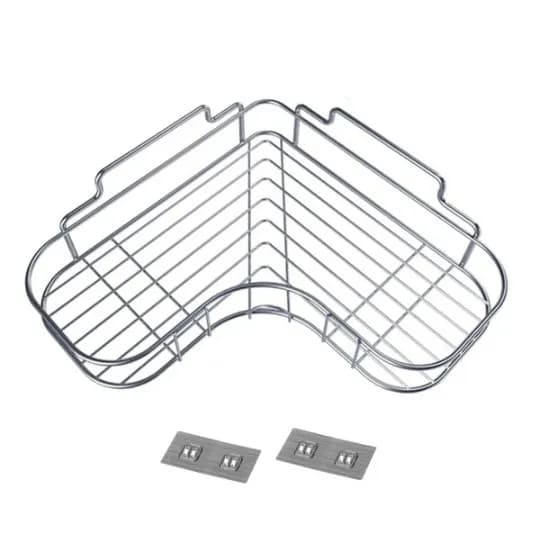
A recessed wall shelf works because it uses space your home already has. Start with one niche in an interior wall, check the bay for wires, pipes and insulation, keep it inside a single stud bay, and size each shelf to the items it will hold. A shower niche, a spice niche or a bedside nook will make the room feel tidier without adding a single piece of furniture. When the wall will not cooperate, a surface shelf is a perfectly good plan B, and our corner shelf ideas are a smart place to start.
Liked this guide?
Get new organizing guides and the occasional new product by email. No spam, unsubscribe anytime.
Related articles

Explore more articles
- Cheap Kitchen Storage Racks: Best Budget-Friendly Options to Organize Your Kitchen in 2026
- 40+ Best Kitchen Decor Inspiration Ideas to Transform Your Cooking Space in 2026
- How to Store Food to Last Longer: Complete 2026 Guide
- Wall Mounted Spice Rack: 2026 Buying and Install Guide
- How to Keep Your Kitchen Organized: Complete 2026 Guide
- Holiday Cookie Storage Containers: 2026 Buyer's Guide
- Spring Cleaning Checklist 2026: Room-by-Room Deep Clean
- Dish Rack for Kitchen Cabinet: 2026 Buying Guide